 Your new post is loading...

|
Scooped by
mhryu@live.com
September 19, 2:12 PM
|
Recent work has established septation as a critical process for virulence in A. fumigatus, as strains lacking septa are avirulent. While our work has focused on the well-studied Septation Initiation Network (SIN), understanding of septation machinery upstream and downstream of SIN remains limited in filamentous fungi. Proximity labeling techniques are powerful tools to study pathway interactions, especially those that are transient. Recent advances have seen TurboID used to study pathways and processes important for fungal pathogenesis. In this study, we adapt TurboID for use in Aspergillus fumigatus and use overlapping datasets of two SIN components, the terminal NDR kinase SidB and its binding partner MobA, to identify putative septation effectors. Many known septation effectors, including septins and cell wall synthesis proteins, were enriched in our datasets, validating the approach. Phenotypic characterization of hits identified by LC-MS/MS revealed several previously uncharacterized gene products involved in septum formation and cell wall stress tolerance. These included the PP2A regulatory subunit PabA and IQGAP SepG, which have been shown to regulate septation in Aspergillus nidulans. Thus, TurboID is a useful tool to study fungal signaling and physiology in A. fumigatus and may be used to improve understanding of pathogenic processes.
|
|
Scooped by
mhryu@live.com
September 19, 1:45 PM
|
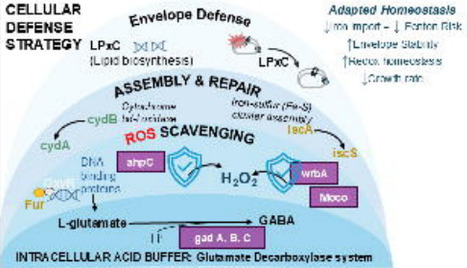
Hydrogen peroxide imposes linked redox and metal stress on bacteria by promoting ferrous iron-dependent Fenton chemistry, generating reactive species that damage DNA, proteins, iron-sulfur cofactors, and membranes. Because siderophores expand iron acquisition, their continued production during peroxide exposure may increase cytotoxicity by enlarging the labile iron pool. Here, we identify an adaptive iron-restriction response that connects siderophore repression, envelope integrity, and metabolic remodeling during bacterial peroxide stress. Using Acinetobacter baumannii, E. coli, Pseudomonas aeruginosa, and Staphylococcus aureus, we evaluated cellular oxidation kinetics, growth-normalized extracellular siderophore release, membrane permeabilization, and viability following sub-inhibitory H2O2 exposure. Acute peroxide treatment significantly elevated general fluorophore oxidation across all species (p < 0.0001), while prolonged exposure reduced biomass-normalized siderophore output, most strongly in E. coli and S. aureus. Membrane permeability accounted for a substantial fraction of extracellular siderophore variation, indicating that envelope alterations link peroxide-induced damage to iron-acquisition dynamics. We further integrated these physical phenotypes with differential transcriptomics, oxidation gene expression regression, E-Flux-constrained genome-scale metabolic modeling, flux variability analysis, shadow price analysis, and in silico gene-essentiality mapping in acute and 500-generation H2O2-adapted E. coli. Acute stress transiently co-activated iron uptake, efflux, NADPH regeneration, and stress-defense genes. In contrast, long-term adaptation systematically repressed enterobactin biosynthesis and uptake components (fepA, entE, fes, ryhB) while inducing persistent peroxide- and acid-resistance modules (ahpC, gadA, gadB). Genome-scale metabolic modeling independently verified that this evolutionary adaptation contracted flux variability, relieved envelope bottlenecks, and eliminated acute stress-specific single-gene vulnerabilities at the cost of reduced maximal growth capacity. Together, these results define siderophore repression as a system-level adaptive response that limits Fenton-reactive iron influx while reallocating metabolic resources toward redox buffering, membrane stabilization, and genetic robustness.
|
|
Scooped by
mhryu@live.com
September 19, 1:12 PM
|
Peptide classification remains challenging in bioinformatics because of limited labeled data, particularly the scarcity of verified negative examples, and the complex relationship between amino acid sequences and biological functions. This study introduces Pep-PU-GAN, a deep learning framework that combines positive-unlabeled (PU) learning, generative adversarial networks (GANs), and graph neural networks (GNNs) for peptide classification. Peptides are represented as sequence-derived residue graphs, with amino acids as nodes and edges connecting adjacent residues, enabling attention-based message passing over local neighborhoods. The architecture includes a generator that produces synthetic peptide embeddings in encoder space and a dual-function discriminator that distinguishes real from synthetic embeddings while performing PU classification. Training uses a custom loss integrating non-negative PU (nnPU) risk estimation with adversarial objectives. A self-training mechanism further incorporates high-confidence synthetic positive embeddings to augment the training set and improve performance. Evaluated on neuropeptide classification using 4,049 positive neuropeptides and 8,558 unlabeled peptides, Pep-PU-GAN outperformed baseline models, achieving an F1 score of 0.93 and an AUROC of 0.98 on an independent held-out benchmark. Pep-PU-GAN provides a promising approach for peptide classification tasks with scarce labeled and abundant unlabeled data, with potential applications in computational biology and drug discovery.
|
|
Scooped by
mhryu@live.com
September 19, 10:49 AM
|
High-throughput sequencing (HTS) has revolutionized virosphere exploration. However, characterizing highly divergent viral sequences remains a bottleneck known as Viral Dark Matter (VDM). Numerous tools were developed to unravel such diversity, but they usually require complex prior HTS data analysis processes. Consequently, a common bottleneck to VDM exploration is the manual, chained execution of complex command-line applications. To address the need for automated and scalable viral discovery, we developed DeepVir, a reproducible Snakemake pipeline that integrates classical homology-based alignments with profile Hidden Markov Model (HMM) mining of the RNA-dependent RNA polymerase (RdRp). To validate the pipelines efficacy, we analyzed 385.23 GB of publicly available transcriptomic data (203 Sequence Read Archive libraries) from 49 American bat species. DeepVir successfully identified 179 distinct viral groups. This included 903 contigs spanning nine known viral families, enabling the characterization of novel genomes within Orthomyxoviridae (Influenza A H7N9), Picornaviridae, Alphaflexiviridae, Retroviridae (Spumaretrovirinae), Papillomaviridae, Herpesviridae, and Adenoviridae. Furthermore, the pipeline uncovered 170 putative novel VDM lineages. By employing deep homology searches and Sequence Similarity Network (SSN) visualization, we contextualized these highly divergent VDM sequences, revealing significant evolutionary relationships with the orders Mononegavirales and Bunyavirales. Notably, human-driven curation of the pipelines outputs allowed for the cross-library assembly of the first putative exogenous Spumavirus in the Americas. Ultimately, by automating complex bioinformatic processing steps, scalable pipelines like DeepVir empower researchers to prioritize the biological and epidemiological interpretation of their findings, accelerating the characterization of wildlife virospheres and enhancing pathogen genomic surveillance.
|
|
Scooped by
mhryu@live.com
September 18, 4:58 PM
|
Synthetic biology enables the rational reprogramming of microorganisms into living therapeutics and agents for bioremediation. However, such genetically modified organisms (GMOs) disseminate their synthetic genetic information into natural microbial communities through horizontal gene transfer (HGT), posing biosafety risks that limit clinical and environmental deployment. Reassigning sense codons to an alternative amino acid identity establishes a genetic firewall that simultaneously prevents incoming and outgoing gene flow, but reported implementations compromise fitness, precluding clinical and industrial use. Here, we overcome this limitation using genome design and laboratory evolution to create a high-fitness genetically firewalled E. coli commensal. By directly altering the amino acid identity of TCA and TCG serine codons in the genetic code without an unassigned intermediate, we establish a robust genetic firewall that remains stable for thousands of generations. This firewalled commensal stably colonizes the mouse gastrointestinal tract for more than 100 days and blocks viral infections and HGT. As the long-term within-gut evolution of this firewalled organism identified adaptive mutations in genes responsible for carbon source utilization, we rationally redesigned the strain′s genome to increase fitness. Together, this work establishes a genetically firewalled commensal for safer living therapeutics development and provides a strategy for designing high-fitness, virus- and gene-transfer-resistant organisms for clinical and environmental use.
|
|
Scooped by
mhryu@live.com
September 18, 4:30 PM
|
Targeted mutagenesis is a crucial tool for in vivo continuous evolution. However, existing methods for long-range targeted mutagenesis in vivo often face limitations such as low efficiency, poor host compatibility, operational complexity, and uneven distribution of mutations across these windows. In this study, we developed a novel in vivo Targeted Assisted Mutagenesis via Endogenous RNAP tool (TAMER) by functionally fusing the endogenous ω subunit of RNAP with a deaminase and dCas9. This tool achieved a mutagenesis efficiency of 1.28 × 10⁻³ substitutions per base (s.p.b.), which represents a 4.2 × 10⁵-fold increase over the natural mutation rate. Additionally, this method enables uniform mutation distribution, an even mutation rate, a broad mutagenesis window, low off-target effects, and cross-host portability. Overall, TAMER offers a simple, efficient, and broadly applicable strategy for in vivo targeted long-range mutagenesis.
|
|
Scooped by
mhryu@live.com
September 18, 4:08 PM
|
The oxidation of manganese from Mn(II) to Mn(III) or Mn(IV) is a common trait in the Pseudomonas genus. Many pseudomonads oxidize Mn enzymatically using one or more multicopper oxidases (MnxG and McoA) and in some cases a heme peroxidase (MopA). The oxidation of Mn leads to the extracellular precipitation of reactive Mn oxides in association with extracellular polymeric substances (EPS). Here, we review the current state of knowledge on Mn oxidation and biomineralization in pseudomonads. While most of the genetic, biochemical, and physiological insights we present derive from studies on Pseudomonas putida GB-1, we also examine the mechanisms of Mn oxidation in other Mn-oxidizing pseudomonads and survey the potential for Mn oxidation across the genus through phylogenetic analysis. Although the physiological and microbial community function(s) for Mn oxidation and biomineralization have yet to be elucidated, we discuss possible roles for Mn oxidation and identify key knowledge gaps regarding the mechanism and function of this trait in the Pseudomonas genus.
|
|
Scooped by
mhryu@live.com
September 18, 1:08 PM
|
Why species coexist and how diversity sustains ecosystem functioning are usually studied apart. A long-established concept captures both: the complementarity effect---the additional biomass produced by species in mixture. Here, we demonstrate that mixtures of species with negative complementarity are almost always either unfeasible or unstable, whereas a strong positive complementarity indicates a large potential for coexistence. Because a community's total yield settles long before the community composition does, this signal can be read as a predictor in communities still in flux: our analyses of four long-term biodiversity experiments show that transient negative complementarity precedes species loss. Thus, stable coexistence and higher productivity are intrinsically linked in multispecies communities. Biodiversity does not merely have beneficial effects on average; biodiversity that endures can only improve ecosystem functioning.
|
|
Scooped by
mhryu@live.com
September 18, 12:42 PM
|
Bacterial extracellular vesicles (BEVs) are nanoscale, lipid bilayer–enclosed structures released by both Gram-negative and Gram-positive bacteria that act as active mediators of microbial and host–microbe communication rather than simple byproducts of membrane turnover. By packaging proteins, nucleic acids, lipids, and metabolites, BEVs participate in quorum sensing, biofilm regulation, horizontal gene transfer, and immune modulation, with functional outcomes that depend strongly on microbial origin and environmental context: pathogen-derived BEVs frequently promote inflammation and tissue damage, whereas commensal- and probiotic-derived BEVs are more often linked to epithelial protection and immune regulation. These properties have positioned BEVs as promising translational tools for biomarker discovery, vaccine development, and engineered drug delivery. However, vesicle heterogeneity, inconsistent isolation and purification methods, and an incomplete understanding of in vivo behavior continue to limit reproducibility and slow clinical translation. Here, we synthesize current evidence on BEV biogenesis, cargo selection, and biological function, and outline the methodological and translational challenges that must be addressed to establish BEVs as a validated interface between microbial activity and host physiology. omv
|
|
Scooped by
mhryu@live.com
September 18, 12:22 PM
|
High-throughput functional assays, such as multiplexed assays of variant effect (MAVE), increasingly demand stable, precise integration of large DNA libraries into mammalian genomes. While CRISPR-based technologies excel at localized, small-scale edits, they are constrained by payload size limits, heterogeneous editing outcomes, and, depending on the specific modality and repair pathway utilized, potential variability in junction fidelity during multikilobase insertions. In this review, we highlight large serine recombinases (LSRs) as highly efficient, single-enzyme alternatives for unidirectional, site-specific integration of large payloads with deterministic junctions. We survey targeted genomic integration strategies and detail best practices for implementing recombinase-based landing pad architectures. By enforcing single-copy, orientation-fixed integration at defined loci, landing pads decouple variant delivery from local chromatin effects to ensure the uniform, isogenic expression required for quantitative genotype–phenotype mapping. We further outline scalable applications of LSR-mediated integration across pooled and arrayed MAVE, CRISPR screens, and precise gene expression tuning. Finally, we assess current technological bottlenecks, particularly large donor delivery and the requisite pre-installation of canonical att recognition sites, while exploring emerging innovations in virus-like particle delivery, one-step CRISPR-recombinase systems, and computationally engineered programmable recombinases that promise to bypass these limitations and broaden mammalian genome engineering.
|
|
Scooped by
mhryu@live.com
September 18, 2:06 AM
|
Adenosine triphosphate (ATP) is the primary energy currency of microbial cells and a system-wide signal coordinating metabolism, gene expression and cellular physiology. Yet, ATP homeostasis is often treated implicitly in strain and process engineering. This review presents an ATP-centered framework for microbial cell factory design, integrating mechanistic interpretation, quantitative measurement, computational modeling and engineering strategies. ATP homeostasis is maintained through a dynamic balance between ATP-generating and ATP-consuming processes. ATP is mainly generated by substrate-level phosphorylation and oxidative phosphorylation, and consumed by biosynthesis, transport, maintenance, stress protection, and protein quality control. Beyond energy supply, the adenylate pool regulates transcription through ATP-dependent initiation and regulatory factors, translation through nucleotide availability and ribosome activity, proteostasis through ATP-dependent chaperones and proteases, and metabolism through allosteric control. We critically assess ATP measurement methods, including luciferase-based assays, chromatography and mass spectrometry, and genetically encoded biosensors. ATP-explicit modeling frameworks are discussed for quantifying ATP supply and demand and guiding rational engineering. ATP-centered engineering strategies are organized by their effects on ATP supply, consumption and allocation, including optimizing ATP yield and energy-conversion efficiency, minimization of nonproductive expenditure, dynamic control of ATP homeostasis, enhancement of ATP turnover, attenuation of ATP-dependent feedback inhibition, and implementation of synthetic ATP-regeneration modules and orthogonal energy systems. Strategy selection depends on pathway ATP balance, cellular state and industrial process. ATP engineering should therefore optimize, rather than simply maximize or minimize, ATP generation, consumption and allocation. Together, integrating ATP sensing, mechanistic modeling, and ATP-explicit engineering can support energy-aware design of robust, high-performing microbial cell factories.
|
|
Scooped by
mhryu@live.com
September 18, 2:00 AM
|
Achieving tumor-specific delivery and sustained activation of both cytotoxic and immune-modulating agents remains a critical challenge in chemoimmunotherapy. Here, a bacterial platform was engineered to combine enzyme/prodrug chemotherapy with immunotherapy, in which tumor-homing E. coli Nissle 1917 expressed cytosine deaminase to convert the prodrug 5-fluorocytosine into the cytotoxic drug 5-fluorouracil and concurrently produced an IL-15 superagonist and a PD-L1 blocking nanobody in tumors. This platform demonstrated potent antitumor effects in murine MC38 and B16-F10 solid tumor models. Mechanistic analyses showed that bacterial enzyme/prodrug therapy alone elicited both immune activation and compensatory immunosuppressive responses, whereas inclusion of IL-15 superagonist and PD-L1 blockade enhanced activation of antigen-presenting cells, T cells, and natural killer cells and attenuated immunosuppressive pathways. Abscopal and rechallenge experiments indicated that this bacterial chemoimmunotherapy strategy induces systemic antitumor immunity and durable immune memory. In summary, our approach integrates enzyme/prodrug therapy and immunotherapy into a single bacterial delivery system, overcoming key limitations of conventional therapies by providing a rationally designed framework for spatially controlled chemoimmunotherapy.
|
|
Scooped by
mhryu@live.com
September 18, 1:47 AM
|
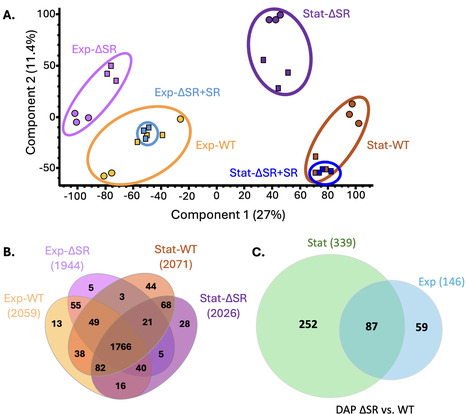
Pseudomonas aeruginosa (P.a) is a clinically important opportunistic pathogen capable of adapting and surviving a wide range of environments and stress conditions. A central regulator of this adaptability is the stringent response, mediated by the alarmones (p)ppGpp. Activation of the stringent response triggers a global physiological shift away from active metabolism toward stress management and cellular quiescence, a key transition to stationary phase. To date, few studies have investigated the protein-level processes under stringent response control. In this study, we performed shotgun proteomic profiling (LC-MS/MS) of a (p)ppGpp-null relA spoT double knockout mutant (ΔSR) and its isogenic PAO1 parent during late exponential and stationary phase planktonic growth in rich medium. In this first characterization of the stringent response proteome in P.a, we identified 146 differentially abundant proteins (DAP) in late exponential phase ΔSR cells, and 2.3-fold greater DAP (339) in stationary-phase cells. Functional characterization and system-level analysis of the differentially abundant stationary phase proteome highlighted the key role of (p)ppGpp in shutting down a wide range of metabolic processes while inducing adaptive processes such as responses to oxidative stress. Comparative RNA-seq analysis also uncovered incongruent protein and mRNA responses in the ΔSR relative to wild-type cells in several processes, including iron homeostasis and antioxidant defenses. Transcriptomic analysis of the ΔSR also revealed differential expression of numerous sRNAs, including PrrF1/2, raising the possibility that sRNAs may mediate certain stringent-response-dependent post-transcriptional control. Phenotypic validation of the ΔSR proteome confirmed multiple defects in antioxidant defenses and dysregulated pyoverdine biosynthesis.
|
|
|
Scooped by
mhryu@live.com
September 19, 1:51 PM
|
The Pseudomonas aeruginosa type III secretion system (T3SS) is an important virulence determinant used to mute and/or impair host immune defenses. Traditional transposon mutagenesis screens have been instrumental in identifying genes required for T3SS gene expression but our understanding of how those genes orchestrate regulatory control remains incomplete. A comprehensive inventory of the genes involved in the control of T3SS gene expression would help define regulatory mechanisms and provide additional targets for anti-virulence therapeutics. Here, we designed a fluorescently tagged transposon mutagenesis screen (FT-Tn-seq) and identified over 70 new genes important for T3SS gene expression. A role for 31 of those genes was validated using a secondary screen. Several candidate genes were selected for further studies. We demonstrate that deletion of shaC, which encodes a sodium-proton antiporter subunit, results in a significant defect in T3SS gene expression. That defect results from a combined effect on exsA transcription and ExsA translation. Deletion of wspF, a cyclic-di-GMP phosphodiesterase, results in a significant reduction of T3SS expression in strain PAK, but not in PA103. The effect on the T3SS is likely due to elevated levels of c-di-GMP in PAK. Finally, we identified a new sRNA (ivy) that participates in the control of the T3SS. Expression of ivy inhibits T3SS gene expression and requires the RNA-chaperone Hfq for inhibitory activity. Findings from this study will open new research avenues to better understand regulation of T3SS gene expression in P. aeruginosa and develop T3SS-specific therapeutic interventions.
|
|
Scooped by
mhryu@live.com
September 19, 1:30 PM
|
Inorganic polyphosphate (polyP) is a ubiquitous, multifunctional biomolecule that supports stress survival in bacteria. During nitrogen (N) starvation, E. coli rapidly accumulates polyP, which drives the formation of RNA protein granules that sustain long term survival. What triggers this upregulation has remained unknown. Here we show that polyamines, a group of highly conserved, amino acid-derived polycations, regulate polyP accumulation during N starvation. We found that deleting all nine polyamine biosynthesis genes elevates polyP during exponential growth and by more than 5-fold under N starvation, with shorter chains preferentially accumulating. To dissect which polyamine matters, we further deleted the three catabolic enzymes that consume polyamines as a nitrogen source, which enabled complementation assays. Supplying any one of the three physiological polyamines, putrescine, spermidine, or cadaverine, restored wild type polyP levels during N starvation. We found that the absence of polyamines did not affect the steady state levels of either the polyP synthesizing kinase PPK or the exopolyphosphatase PPX, pointing instead to posttranslational control of enzyme activity or to as yet unidentified polyamine dependent regulators. These findings establish a direct metabolic link between two universal, functionally intertwined biomolecules and suggest that the polyamine decline upon N starvation contributes to the observed polyP accumulation.
|
|
Scooped by
mhryu@live.com
September 19, 11:04 AM
|
The Big Fantastic Virus Database (BFVD) v3 is the most comprehensive resource for ColabFold-AlphaFold2-predicted viral protein structures. It holds 5,776,417 structures of nearly all viral sequences in UniProt 2025_03, a 16.4-fold increase compared to the representative-only catalogs of BFVD v1 and v2. Structure prediction quality has also improved, with high-confidence predictions accounting for 75.3% of BFVD v3 entries. This is due to Logan's enormous sequence assembly, now mined for the entire BFVD v3 instead of only for shallow alignments, alongside continued prediction quality improvements. BFVD v3 covers 72.7% of ICTV's virus species, 1.54-fold more than BFVD v2. With this version, the fraction of fully covered viral reference proteomes increases from 1.5% to 72.6%. BFVD v3 thus brings us closer to a structural catalog of the known virosphere and is freely available at bfvd.steineggerlab.workers.dev and https://bfvd.foldseek.com/
|
|
Scooped by
mhryu@live.com
September 18, 5:04 PM
|
The tricarboxylic acid cycle is central to cellular metabolism, yet its disruption offers an attractive opportunity to redirect carbon toward biotechnological products. A key challenge is that severe TCA cycle interruption often results in auxotrophic phenotypes, limiting their practical application. Here, we used adaptive laboratory evolution ALE to restore growth of the strictly aerobic bacterium Acinetobacter baylyi ADP1 following major disruption of the TCA cycle during growth on glucose minimal medium. Evolved strains recovered rapid growth through extensive reorganization of central metabolism, including reduced flux through the oxidative branch of the TCA cycle, enhanced anaplerotic cycling, increased acetate overflow, and remodeling of oxidative phosphorylation. Adaptation involved coordinated changes in quinone-linked electron transport and intracellular redox balancing, enabling continued growth despite reduced respiratory efficiency. These results demonstrate that adaptive evolution can overcome fundamental physiological constraints imposed by TCA cycle disruption and establish a framework for engineering carbon-partitioning phenotypes in aerobic production hosts.
|
|
Scooped by
mhryu@live.com
September 18, 4:42 PM
|
Antiviral defence systems frequently utilize cyclic nucleotide second messengers. A prominent example is the type III CRISPR-Cas system, which generates cyclic oligoadenylates (cOA) on detecting viral RNA. cOA molecules can bind and activate a wide range of effectors to provide antiviral defence. In both prokaryotes and higher plants, activation of a catalytic Toll/Interleukin Receptor (TIR) domain by multimerization results in degradation of NAD+, limiting cell metabolism and thus viral replication. Here, we describe a CRISPR-associated TIR-containing effector that includes a SAVED (SMODS-associated and fused to various effector domains) domain for nucleotide sensing and a cOA-degrading ring nuclease Crn4 domain. We demonstrate that the TIR-SAVED-Ring nuclease (TSR1) effector binds cA3, resulting in activation of the TIR NADase activity. The Crn4 domain, which imposes an unusual dimeric quaternary structure on the effector, degrades cA3, providing a mechanism to auto-deactivate the effector. TSR1 is thus a highly unusual example of a dimeric and self-limiting TIR effector in antiviral immunity.
|
|
Scooped by
mhryu@live.com
September 18, 4:21 PM
|
In response to the global threat posed by multidrug-resistant Klebsiella pneumoniae, this study established an efficient heterologous expression system for the antimicrobial peptide N6 in Pichia pastoris X-33. By employing an innovative 6His-2Flag dual-tag fusion strategy coupled with formic acid-mediated cleavage, we achieved a high-yield production of N6, with a final titer of 1.02 g/L—significantly surpassing previous reports and meeting the threshold for scalable industrial production. The expressed N6 exhibited potent and broad-spectrum antibacterial activity against clinical isolates of K. pneumoniae, with MIC values ranging from 2 to 8 μg/mL. Mechanistic studies revealed that N6 exerted rapid bactericidal and biofilm-eradicating effects through a multimodal action involving membrane disruption, metabolic interference, and induction of oxidative stress. In a murine systemic infection model, the N6 treatment significantly improved survival rates of mice to 70% and reduced bacterial burdens in key organs. This work not only identifies N6 as a promising therapeutic candidate against drug-resistant bacterial infections, but also provides a streamlined and cost-effective synthetic biology platform for the high-level production of antimicrobial peptides, thereby facilitating their clinical translation and industrial application.
|
|
Scooped by
mhryu@live.com
September 18, 3:57 PM
|
The filamentous fungus Trichoderma reesei represents a highly promising chassis cell for the efficient synthesis of both protein and non-protein metabolites. Despite the availability of diverse genetic manipulation tools for T. reesei, the engineering of chassis cells frequently requires coordinated regulation of multiple genes, a process that remains laborious and time-consuming with current methods. Here, we designed a modular and inducible artificial gene cluster (AGC) by repurposing functional DNA elements from the quinic acid (QA)-responsive gene cluster in T. reesei. This AGC is capable of expressing up to six functional genes for the assembly of genetic circuits. Under culture conditions utilizing a mixed carbon source of glycerol and QA, both robust cellular vegetative growth and activation of the gene cluster are compatible. Moreover, we identified qai1 as a gene encoding a putative transcriptional activator that governs the expression of the qai gene cluster. Notably, its overexpression alone is sufficient to bypass QA-sensing induction. Leveraging this insight, we engineered a QA-independent, constitutively expressed version of the AGC. As a proof of concept, we reconstructed the biosynthetic pathways for ilicicolin H and erythritol in T. reesei using the above QA-dependent and QA-independent AGCs, successfully achieving the synthesis of ilicicolin H and enhanced erythritol production in the T. reesei chassis cells. In summary, our study establishes novel genetic manipulation tools for engineering T. reesei chassis cells, allowing for rapid, multiplexed gene expression regulation to facilitate metabolite biosynthesis.
|
|
Scooped by
mhryu@live.com
September 18, 12:50 PM
|
Engineered living materials (ELMs) offer a promising route to biologically manufactured materials for healthcare, construction and manufacturing. However, their rational design is limited by the lack of quantitative relationships linking design parameters to material properties. Here, we show that a tabular foundation model (TabPFN), informed by a small library of living hydrogels, accurately predicts macroscopic material properties from genetic and process parameters. Models were evaluated for predicting storage modulus (G′), fibre content, thickness, and permeability of E. coli-produced living hydrogels containing CsgA-based fibres fused to genetically encoded PEG-like biopolymers. On an independent validation set, TabPFN achieved the strongest prediction for G′ (R2 = 85.1%), reducing RMSE by 48.0% compared to linear regression. Property-guided design further enabled identification of parameters for achieving living hydrogels with desired properties. These results establish a broadly applicable framework for predictive design of ELMs, reducing experimental screening and accelerating the discovery of materials with targeted properties.
|
|
Scooped by
mhryu@live.com
September 18, 12:35 PM
|
The microbial utilization of carbohydrates produces metabolic byproducts that are associated with health benefits, such as short-chain fatty acids (SCFAs). The rapid absorption of SCFAs by intestinal epithelial cells makes them challenging to study in vivo. Culturing methods address this limitation by providing controlled conditions that allow for monitoring substrate utilization and the production of fermentation byproducts. In this paper, we describe an easily implemented, cost-effective method for screening inter-individual differences in carbohydrate degradation potential among gut microbiota from different individuals using batch cultures in 96-deep well plates. In addition to culturing methods, we describe procedures for obtaining stool samples from human volunteers, as well as for processing and storing them. We demonstrate that complete or near-complete substrate utilization is typically reached within 24 hours of culturing in buffered media in 96-deep well plates, and inter-individual differences in substrate utilization rate and SCFA production are observable by 12 hours.
|
|
Scooped by
mhryu@live.com
September 18, 10:03 AM
|
Artificial intelligence (AI) in biomedicine has evolved from pattern-recognition for medical image analysis to generative models like AlphaFold that predict protein structures. Tools such as Elicit, GPT-Rosalind, and Claude Science now bridge prediction and reasoning through literature synthesis, domain-tuned models, and agentic workbenches. Three recent systems (Co-Scientist, Robin, and Biomni) demonstrated agentic AI capable of generating hypotheses, designing experiments, computational analysis, and refining reasoning through experimental feedback. This perspective traces the emergence of agentic scientific reasoning, discusses scaling laws and autonomous laboratories, and argues that AI’s transformative potential is inseparable from challenges in hallucination, bias, irreproducibility, and dual use. Scientific progress will depend on responsible human-AI collaboration.
|
|
Scooped by
mhryu@live.com
September 18, 2:02 AM
|
Artificial enzymes engineered by site-specific incorporation of catalytically active noncanonical amino acids (ncAAs) into protein scaffolds represent a rapidly advancing class of biocatalysts, particularly for chemical transformations lacking natural enzymatic counterparts. Integrating biosynthesis and genetic incorporation of ncAAs has rapidly expanded the toolkit for enzyme design and catalysis. This review surveys engineered metabolic routes and precursor feeding strategies that supply diverse ncAAs in vivo, and contrasts cell-free and cellular approaches for their production. We examine advances in orthogonal translation systems and site-specific incorporation that enable installation of catalytic, redox, and spectroscopic functionalities, and highlight applications where ncAA-bearing proteins catalyze new-to-nature reactions, and improve selectivity for directed evolution. Recent work on in-cell biosynthesis of ncAAs coupled to on-demand incorporation is discussed for its potential to streamline workflows and enable enzyme design and catalysis in one-pot. Finally, we identify remaining challenges and outline opportunities for coupling metabolic engineering and protein engineering to create next-generation artificial enzymes.
|
|
Scooped by
mhryu@live.com
September 18, 1:54 AM
|
Microbial cell surface display systems represent a promising and robust approach for engineering whole-cell biocatalysts, with broad applications in biotechnology and biomedicine. This methodology overcomes limitations in substrate transport, eliminates the laborious and time-consuming process of enzyme purification, and enhances reusability and regenerability in repeated batch processes, thereby delivering economic benefits. Among various host systems, yeast surface display (YSD) offers unique advantages, such as large cell size, ease of culture and genetic manipulation, and the capacity for complete post-translational processing of secreted proteins. This review highlights strategies to improve the efficiency of YSD from novel perspectives, including intracellular molecular transcription, cell surface engineering, and external spatial expansion. Additionally, it comprehensively summarizes the practical applications of YSD in biocatalysis, underscoring their transformative potential in industrial and biomedical contexts
|











methods, inserts the TurboID coding sequence in frame at the 3' end of sidB or mobA. TurboID converts free biotin to biotinoyl-5'-AMP, a reactive anhydride, which then attacks free lysines on any protein nearby.
Grow the tagged strain overnight in medium with 50 µM biotin. Filter mycelium, flash freeze, grind under liquid nitrogen, lyse. Take 3 mg total protein, incubate with streptavidin magnetic beads for an hour, wash, elute with excess biotin. Trypsin digest on an S-Trap, then LC-MS/MS. Three replicates per strain.