 Your new post is loading...

|
Scooped by
mhryu@live.com
September 21, 1:14 PM
|
Protein–protein interaction (PPI) networks accurately map environmental perturbations to their molecular consequences in cells, yet the effects of natural genetic variation on PPIs remain poorly understood. Here we measured 61 reporter PPIs across inbred strains of Saccharomyces cerevisiae harboring ~12,000 single-nucleotide polymorphisms and identified protein-interaction quantitative trait loci (piQTLs) linking genomic variation to in vivo PPI strength. trans-acting piQTLs were significantly enriched and exhibited stronger per-variant effect sizes than cis-acting piQTLs. Consistent with the small-world architecture of PPI networks, trans-piQTLs often mapped to genes encoding proteins in close network proximity to reporter PPIs. We identified and validated piQTLs in poorly annotated regions, including noncoding RNAs and 3′UTRs, with effects comparable to coding single-nucleotide polymorphisms. piQTLs also overlapped more with protein abundance QTLs than expression QTLs, highlighting how PPI networks capture post-transcriptional and proteome-level regulation. This study provides a roadmap for dissecting complex traits through PPI network analysis. This study uses budding yeast as a model system to link genetic variants with quantitative changes in protein–protein interaction strength under different environmental perturbations by leveraging a protein-fragment complementation assay targeting 61 pairs of interacting proteins.
|
|
Scooped by
mhryu@live.com
September 21, 12:43 PM
|
Microfluidics has emerged as a powerful technology for precisely controlling mechanical and chemical environments across a wide range of biological systems, from single cells to complex co-cultures. In microbiology, the microscale dimensions of bacteria pose experimental challenges that microfluidic systems have effectively addressed, offering compatibility with live imaging and enabling quantitative investigations of bacterial behaviors and host-bacteria interactions. Historical microfluidic designs are now routinely used to quantify bacterial growth and lineage with unprecedented temporal-spatial resolution and precise control of external conditions. In parallel, organ-on-chip technologies are increasingly applied in microbiology to study host-bacteria interactions within physiologically relevant and well-controlled microenvironments. Recently, cancer tissues have been recognized as unexpected hosts for bacteria, with mounting impactful evidence showing that intratumoral microbes can influence cancer progression and response to therapy. Despite growing interest, the application of microfluidics to cancer-bacteria interactions remains limited. Addressing this gap requires the development of appropriate methodological tools that replicate the relevant tumor microenvironment features and allow the quantification of both cellular responses and bacterial colonization dynamics upon the bacterial-host interaction. In this review, we first outline the foundational applications of microfluidics in microbiology from single-cell to collective behavior studies. We then describe how organ-on-chip technology enables the fine-tuned formation of organ-specific conditions, which are critical for modeling the complex tumor microenvironment. We further examine recent findings on intratumoral bacteria across cancer types and discuss how microfluidics, especially tumor-on-chip approaches, can advance this emerging field, from mechanistic insights to therapeutic development. A review microfluidics in microbiology, organ-on-chips to study the tumor microenvironment and how tumor-on-chip approaches advance investigating intratumoral bacteria.
|
|
Scooped by
mhryu@live.com
September 21, 12:33 PM
|
Phages have evolved various anti-CRISPR (Acr) proteins or RNA-based anti-CRISPR (Racr) to evade host CRISPR immunity by direct interference. However, whether other counter-CRISPR mechanisms exist remains unexplored. Here, we report a phage-encoded two-protein system, termed Healer, which neutralizes CRISPR immunity via a post-cleavage DNA repair mechanism. This phage replication-associated system comprises two proteins: Gp63 (a DUF669 domain-containing protein), and Gp64 (an AAA domain-containing protein). Mechanistic investigations elucidate that Gp63 acts as a rapid-response effector of CRISPR-induced DNA breaks. After Gp63 binds ssDNA, it promotes Gp64-mediated homologous recombination, which repairs CRISPR-generated phage DNA breaks and supports phage viability. Notably, co-expression of the Healer system with Cas9/Cas12 in E. coli, P. aeruginosa, and A. baumannii demonstrated high phage genome-editing efficiency. Collectively, our findings reveal an important anti-CRISPR complementary strategy, providing a promising tool for genome engineering. Using affinity purification-mass spectrometry, these authors identified the Healer system, a phage two-protein effector that repairs CRISPR-mediated DNA breaks via homologous recombination.
|
|
Scooped by
mhryu@live.com
September 20, 1:41 PM
|
Deoxyribonucleoside triphosphates (dNTPs) are crucial reagents widely utilized in nucleic acid amplification. However, current synthesis methods are often plagued by environmental pollution for chemical synthesis and the high costs of phosphate donors for enzymatic synthesis. To address these challenges, this study developed a fully enzymatic method that utilizes inexpensive polyphosphate as the phosphate donor to recover deoxyribonucleoside monophosphates (dNMPs) from waste biomass and further synthesize all four dNTPs. Initially, the dNMPs were recovered from discarded E. coli cell paste via genomic DNA extraction and enzymatic hydrolysis. Secondly, two enzymatic catalysis systems were developed including the engineered MrPPK2 for purine substrates achieving 69% conversion rate and a tailored two-enzyme cascade comprising dTMP-K, dCMP-K, and SmcPPK2 for pyrimidine substrates achieving 64% and 60% conversion rates. Finally, the produced dNTPs demonstrated functional performance comparable to that of commercial counterparts in PCR amplification across multiple genomic templates. This study provides an environmentally friendly enzymatic synthesis route for dNTPs with greater promise in cost control.
|
|
Scooped by
mhryu@live.com
September 20, 1:27 PM
|
The outer membrane (OM) of Gram-negative bacteria forms a protective barrier that combines selective permeability with mechanical load-bearing capacity, properties linked to its asymmetric bilayer structure with lipopolysaccharides (LPS) in the outer leaflet and phospholipids (PLs) in the inner leaflet. Unlike most PL bilayers, the OM typically exhibits limited lateral diffusion, resulting in a gel-like surface with spatially organized proteins and LPS. The molecular basis of this physical state and its relationship with envelope mechanics remain unclear. Here, we show that increasing PL levels in the outer leaflet or truncating LPS core oligosaccharides increases OM fluidity by disrupting LPS packing. In contrast, reduced LPS abundance or disruption of divalent cation-mediated crosslinking primarily reduces OM stiffness with little effect on fluidity. Thus, OM fluidity and mechanical stiffness can be tuned independently through distinct molecular interactions. This separation of physical control mechanisms provides a framework for understanding how Gram-negative bacteria modulate OM properties during environmental adaptation and envelope homeostasis.
|
|
Scooped by
mhryu@live.com
September 20, 12:46 PM
|
Photosynthesis underpins global food production and energy conversion across the biosphere and remains a central target for improving biological and agricultural productivity. Previous methods to improve photosynthetic efficiency in land plants include enhancing carbon fixation, bypassing photorespiration, and optimizing Rubisco efficiency; however, recent advances in algal biology reveal alternative strategies. Here, we review three key traits of algal biology with translational potential for plant biotechnology: chlorophyll c–based light-harvesting systems, pyrenoid-associated carbon-concentrating mechanisms, and high-value biosynthetic pathways. We highlight recent progress toward integrating these characteristics in planta, including engineering chlorophyll c biosynthesis, reconstructing components of pyrenoid-based carbon-concentrating mechanisms, and transferring biosynthetic pathways to produce nutritionally and industrially valuable metabolites. We also discuss the molecular tools enabling functional genomics in algae, which are accelerating the identification of novel candidate genes for crop engineering, as well as the challenges associated with translating algal traits into functional improvements in plants.
|
|
Scooped by
mhryu@live.com
September 20, 12:36 PM
|
The core bottleneck for desert vegetation restoration is extreme water stress during early seedling establishment, with hydraulic failure as the primary lethal mechanism. Traditional engineering measures (e.g., irrigation) and single-strain inoculation cannot adequately address these challenges due to high cost, weak sustainability, or limited functionality. Synthetic microbial communities (SynComs) offer a new approach to synergistically regulate plant water use and soil microenvironment by integrating functionally complementary taxa. This review discusses the soil water characteristics of deserts and the bottlenecks in seedling water use, indigenous microbial resources and their adaptive mechanisms, principles and design strategies for constructing SynComs, as well as the mechanisms by which SynComs improve seedling water use efficiency and survival. We also analyze key challenges and future research directions. Although SynComs have been extensively studied for enhancing plant stress resistance, their application in desert vegetation restoration is still in its infancy. Future research needs to clarify how to design SynComs to ensure their ecological compatibility, persistence, and functionality in the highly variable and extreme environments of desertified landscapes. This review provides a theoretical basis for advancing SynComs application in arid land ecological restoration.
|
|
Scooped by
mhryu@live.com
September 19, 4:09 PM
|
Oxidoreductases are valuable biocatalysts, but their industrial use is limited by the cost and instability of natural nicotinamide cofactors under harsh conditions. Here, we report CNMN+, a thermostable carbocyclic nicotinamide mononucleotide with a more negative redox potential than NADP+ and NMN+. An engineered nicotinamide riboside kinase from Kluyveromyces marxianus enabled chemoenzymatic CNMN+ synthesis in 97% yield, approximately 5.7-fold higher than that achieved by chemical synthesis. We further engineered Zymomonas mobilis glucose-6-phosphate dehydrogenase to regenerate CNMNH. The best variant, M12, showed a 202-fold increase in catalytic efficiency and a 145-fold increase in specific activity toward CNMN+ relative to wild type. The CNMNH regeneration system was coupled with thermostable hydrogenase for H2 evolution and ene-reductase for levodione production, resulting in higher product yields at 60°C than the NMN⁺- or NADP⁺-based systems under the tested conditions.
|
|
Scooped by
mhryu@live.com
September 19, 3:31 PM
|
Sustainable economy and social development require a paradigm shift in the modes of production of edible proteins. Komagataella phaffii is a preferred host for food protein expression. However, its methanol-dependent production mode and host improvement with exogenous bioelements pose challenges for the manufacturing and approval of bulk food proteins. In this study, we report an endogenous streamlined promoter–regulator integrated transcriptional (ESPRIT) system for efficient expression on non-methanol substrates in K. phaffii. A strong and simplified PAOX1 variant, PAA13-t13, was obtained through core promoter mining and streamlining of upstream regulatory sequences, with a 57% reduction in promoter length and expression increased to 3.4-fold that of PAOX1 under methanol conditions. Overexpression of the transactivator Mit1 enabled PAA13-t13 to drive high-level expression on glucose, glycerol, and ethanol. Endogenous zinc-finger transactivators were screened from genome, and their activation regions were fused with the DNA-binding domain of Mit1, resulting in 25 synthetic transactivators. Combinatory function of the engineered endogenous promoter and transactivator established the ESPRIT system, which achieved 6.8-fold and 10.1-fold expression levels on glucose that of methanol-inducible PAOX1 on methanol and constitutive PGAP on glucose, respectively. It also allowed efficient production of three food proteins under methanol-free conditions. In the bioreactor, the ESPRIT system produced 5.14 g/L β-lactoglobulin and 1.95 g/L brazzein on glucose, achieving 3.0-fold and 1.9-fold as compared to the commercial methanol-dependent PAOX1 system, respectively. These results established the ESPRIT system as an alternative expression platform for efficient food protein production from non-methanol substrates in K. phaffii.
|
|
Scooped by
mhryu@live.com
September 19, 3:21 PM
|
Confronting the dual crisis of escalating global protein demand and unsustainable agriculture necessitates transformative solutions. Here, we pioneer evolutionary insights from maize nitrogen optimization via asparagine synthetase (ASNS) to rewire metabolism in Pichia pastoris. Empirically, the tri-copy ASNS strain achieved superior protein titers: 62.48% crude protein, 47.86% total amino acids, and 8.05% branched-chain amino acids, nutritionally surpassing conventional protein sources. Genome-scale modeling and transcriptomic studies provided convergent evidence that ASNS overexpression drove global metabolic rewiring through predicted synergistic coupling between aspartate metabolism and the tricarboxylic acid cycle. Mechanistically, ASNS overexpression unlocked a previously uncharacterized nitrogen sensor-regulator circuit by inducing PAS_chr1-1_0158, validated in amplifying intracellular nitrogen flux and driving a self-reinforcing cycle of ammonia assimilation. This work validated evolutionary conservation of nitrogen optimization strategies across kingdoms, established the first scalable blueprint for carbon–nitrogen co-optimized microbial cell factories, decouples sustainable SCP production from agricultural constraints, and offers a scalable solution to the global protein crisis.
|
|
Scooped by
mhryu@live.com
September 19, 3:06 PM
|
Strigolactones are phytohormones that regulate shoot branching and facilitate communication with neighboring plants, bacteria and arbuscular mycorrhizal fungi. In seed plants, strigolactone perception begins with the enzyme-receptor DWARF14 (D14), an α/β-hydrolase likely to have evolved via gene duplication within a larger gene family that includes the karrikin receptor, KARRIKIN INSENSITIVE 2 (KAI2) and other D14-like (DLK) proteins of uncertain function. However, it is unclear when the functional characteristics that define a bona fide strigolactone receptor evolved. Here, we apply ancestral sequence reconstruction to generate a D14 protein representative of seed plants to study the evolution of ligand specificity and the conservation of signalling mechanisms and to explore desirable traits for protein engineering. Ancestrally reconstructed D14 is structurally and functionally comparable to D14 from Arabidopsis thaliana. The ligand specificity of ancestral D14 does not meaningfully differ, despite having unusual active site geometry and altered enzyme kinetics. We show that the catalytic aspartic acid residue of ancestral D14 is not required for strigolactone signalling when expressed in A. thaliana, suggesting that this mechanistic feature is conserved throughout seed plants. We find that ancestral D14 exhibits higher recombinant yields, greatly increased thermostability and enhanced catalytic activity relative to D14 from A. thaliana. This work provides insight into the evolution of phytohormone signalling and presents a robust scaffold for the application of D14-type proteins in diverse applications.
|
|
Scooped by
mhryu@live.com
September 19, 2:51 PM
|
Characterizing CRISPR interference (CRISPRi) phenotypes presents a fundamental temporal challenge: pre-existing overabundance of target proteins can mask early silencing, requiring extended growth for dilution, yet prolonged repression rapidly selects for escaper mutants. To resolve this, we integrated a tightly regulated CRISPRi system in Pseudomonas putida with an automated mini bioreactor platform operating in turbidostat mode. By maintaining continuous exponential growth, we mapped the exact temporal dynamics of essential gene silencing. We identified a critical observation window between 7.8 and 26.7 h (corresponding to 6.4−23.5 cumulative cell doublings of the uninduced condition) where repression exerts its maximum physiological impact, directly preceding population takeover by target-site mutated escapers. Applying this workflow to the arginine biosynthesis pathway, multi-omics profiling disentangled transient physiological buffering from long-term mutational events, revealing that argH and argG knockdowns trigger highly diverse metabolomic perturbations. This scalable framework overcomes batch culture limitations for CRISPRi experiments, ensuring precise temporal control for accurate phenotypic characterization and reliable functional genomics.
|
|
Scooped by
mhryu@live.com
September 19, 2:26 PM
|
Single stranded RNA (ssRNA) and single stranded DNA (ssDNA) bacteriophages represent a key component of the global virome, yet the host genetic networks supporting their infection cycles remain poorly understood. Here, we present a comprehensive, genome-wide mapping of the genetic landscape regulating infection cycles for F pilus-dependent ssRNA and ssDNA phages in E. coli. Genetic screens across ssRNA phages spanning all four genogroups of the Leviviricetes revealed a highly conserved network of host dependencies, with the notable exception of the F plasmid gene traD. While primary structural receptor components and dsbA mediated disulfide bond formation are universally required across all lineages to ensure F pilus integrity, traD exhibits a strict genogroup-specific requirement during entry, showing variable essentiality across different viral groups despite sharing an identical primary receptor. Our gene dosage screens revealed that an elevated copy number of the hslU protease or the RNA chaperone stpA restricts infection, identifying clear genetic barriers that can perturb the viral life cycle. Parallel assays with filamentous ssDNA phages produced host factor profiles consistent with published literature, while revealing additional variations in host dependency. These screens confirmed that ssDNA phages strictly rely on the host TolQRA complex for entry downstream of pilus engagement. The assays tracked prominent negative fitness signatures across homeostatic clusters, highlighting how the physiological burden of continuous, non-lytic virion extrusion strains the host envelope. Finally, this comparative approach traced the selectivity of our isolation host (E. coli HSF) to a horizontally acquired capsule architecture from Klebsiella. This surface shield excludes a large panel of double stranded DNA phages isolated on diverse E. coli strains, while allowing virions from ssDNA and ssRNA phages to engage the extended F pilus and bypass the barrier via native pilus retraction. Together, this work provides a systematic, class-wide map of single stranded phage-host interactions, bridging classical genetics with modern viral discovery while establishing a robust host platform to access uncultured viral diversity and a functional blueprint to design next generation diagnostics, protein antibiotics, and biocontrol tools to halt horizontal gene transfer.
|
|
|
Scooped by
mhryu@live.com
September 21, 12:48 PM
|
The tiny power sources, tested in pigs, dissolve inside the digestive tract after several months. Traverso built a swallowable battery entirely from materials the body absorbs: magnesium and molybdenum trioxide electrodes, a biodegradable ionic liquid electrolyte, and a cellulose packaging inspired by edible rice paper candy wrappers, sealed in beeswax to resist stomach acid. In simulated gastric fluid it starts breaking apart within two weeks and dissolves over several months. In pigs it powered an RFID tag transmitting from inside the gut and a gastric stimulator that raised ghrelin levels. Biodegradable batteries date to 2014, and an outside expert notes the electrical performance is comparable to existing ones, so the real advance is integrating a degradable battery into working ingestible systems over multiple days in a large animal. The capsule is 75% empty by volume to carry a conventional pill, aimed at tracking medication adherence, with human testing projected in under two years.
|
|
Scooped by
mhryu@live.com
September 21, 12:37 PM
|
Protein pores used for molecular sensing are generally assembled from large, multi-subunit natural proteins. Their ion conductance, and thus performance in sensing applications, depends on lumen geometry and chemistry. Here rather than designing a new pore or relying only on mutations to a natural scaffold, we show that installing additional de novo subunits to native protein pore complexes enables large-scale architectural changes. We design de novo proteins that integrate seamlessly with CsgG, a pore widely used in sensing applications, to form 18-subunit, 315-kilodalton semisynthetic conduction pores. This required designing within a confined, nonuniform pore under ninefold symmetry and maintaining an open conducting lumen with a stable, low-noise baseline current. The complexes exhibit distinct current–voltage responses relative to the native pore, including clear rectification, while cryo-electron microscopy confirms the designed lumen architecture, establishing a strategy for modifying existing nano-assemblies with designed protein components under stringent symmetry and structural constraints. Schnaider et al. develop a protein design strategy for building a new component within a confined, symmetric pore. Cryo-EM confirms the designed lumen architecture, while electrical recordings reveal distinct and tunable current rectification.
|
|
Scooped by
mhryu@live.com
September 21, 12:21 PM
|
Compartmentalization enables cells to spatially organise essential biochemical processes. This is exemplified by the eukaryotic nucleolus, which concentrates the machinery for ribosome biogenesis. Bacteria are generally thought to lack an equivalent compartment. Here we discover a nucleolus-like condensate in E. coli that emerges at rDNA loci during cold adaptation to spatially organise and promote ribosome biogenesis. Low temperatures, which stabilize RNA secondary structures, induce accumulation of the RNA-remodelling enzyme CsdA. This raises the cellular CsdA concentration above its condensation threshold, driving condensate formation at rDNA loci when rRNA transcription is active. CsdA compartments enrich the rRNA transcription machinery and ribosome-biogenesis factors, spatially linking rRNA synthesis to downstream processing and assembly. Disrupting CsdA condensation impairs ribosome maturation and reduces bacterial adaptation to cold temperature, demonstrating functional importance of condensate formation. Comparative genomics suggests that analogous condensate-forming RNA remodelling enzymes have evolved repeatedly across diverse bacterial lineages. Our findings establish biomolecular condensates as a unifying organisational principle of ribosome biogenesis across the tree of life and suggest that adaptive compartmentalisation can emerge when environmental conditions challenge the efficiency of essential biochemical processes.
|
|
Scooped by
mhryu@live.com
September 20, 1:40 PM
|
Hosts must control symbiont abundance to ensure stable associations with their beneficial microbes, while also minimizing potentially harmful unrestricted microbial proliferation. Yet, the microbial stimuli and involved host responses that shape this colonization control, are usually unknown, in spite of their central role in shaping host-microbe and, more broadly, host-microbiota interactions. Here, using the natural association between Caenorhabditis elegans and its symbiont Pseudomonas lurida MYb11, we combine an unbiased bacterial genetic screen with a host response reporter to identify the biosurfactant massetolide as a key regulator of host-microbe interaction. Our subsequent host functional genetic analyses revealed that massetolide triggers host TGF-beta and serotonergic signaling to promote intestinal peristalsis, limiting colonization. Indeed, massetolide deficiency enhances colonization, while its presence specifically facilitates serotonin-dependent expulsion. Together, our findings reveal a symbiont-derived biosurfactant that links host neuroimmune control of intestinal peristalsis with bacterial susceptibility to expulsion, coupling host and microbial physiology to regulate symbiont abundance.
|
|
Scooped by
mhryu@live.com
September 20, 1:14 PM
|
Microbial communities associated with plants are dynamic ecosystems whose structure and functions influence host health and fitness. While the ecological roles and beneficial function of plant microbiomes are increasingly well understood, the evolutionary dynamics that shape them over time remain unclear. Experimental evolution constitutes a powerful tool to study microbial adaptation, but so far, its application has been largely focused on free-living or single-species populations. Here, we use experimental evolution to test whether taxonomically complex synthetic bacterial communities can adapt to novel plant hosts. We show that replicate microbial communities undergo rapid and parallel genomic evolution, with measurable gains in colonization fitness. Adaptive changes involved mutations in regulatory processes, motility, and core metabolism, leading to significant fitness gains across diverse taxa. Our findings demonstrate that the plant host can drive microbiome evolution without disrupting the stability of the root microbiota.
|
|
Scooped by
mhryu@live.com
September 20, 12:42 PM
|
Biological surfaces perform a wide range of functions, including communication, molecular exchange, defense, and movement. While these architectures have long inspired biomimetic surface engineering, most existing reviews focus on fabrication methods, often overlooking the biological mechanisms underlying the functions. This review examines how the structural and functional properties of biological surfaces can inform the design of advanced biomimetic systems. Using an integrative framework combining systems and synthetic biology, we establish key design principles derived from biological surfaces and illustrate their translation into engineered systems. Communication mechanisms such as directional reflection and electrochemical signaling, along with exchange processes like aquaporins or vesicle-based delivery, have informed advances in sensing, filtration, and drug delivery. Similarly, defensive strategies, including adaptive camouflage and antimicrobial surface architectures, offer opportunities for protective and responsive designs. In the context of movement, drag-reducing and adhesive surfaces have enabled innovations in robotics, smart textiles, and transport technologies. Systems biology provides quantitative, multiscale models of pattern formation, surface-mediated signaling, and organism-environment interactions, allowing the identification of key design rules. Complementarily, synthetic biology enables the engineering of living cells, tissues, and biohybrid systems capable of producing tailored surface chemistries, multiscale micro-nano architectures, and dynamic or stimuli-responsive behaviors inspired by laboratory observations. By synthesizing principles underlying surface-mediated communication, exchange, defense, and movement, this review outlines how integrating biological insight with systems-level modeling and synthetic engineering can redefine the next-generation of biomimetic designs.
|
|
Scooped by
mhryu@live.com
September 19, 4:12 PM
|
Mammalian gene switches enable programmable cell behavior. However, current switches on transcriptional and translational layers require de novo RNA and protein synthesis, and secreted outputs must additionally undergo folding, post-translational processing, and intracellular trafficking, imposing delays that limit rapid extracellular responses. Rapid secretion-control switches instead act on pre-synthesized proteins by controlling retention, trafficking, storage, or release. Most current platforms exploit the classical endoplasmic reticulum (ER)-Golgi pathway, including engineered stimulus-secretion coupling in specialized secretory cells and ER retention, retrieval-signal cleavage, or synchronized trafficking in general mammalian hosts. Although these strategies improve response kinetics, they remain limited by ER dependence, host-cell specificity, cargo compatibility, basal leakage, and post-release transport delays. Here, we review current secretion-control architectures and highlight unconventional protein secretion as an underexplored source of design principles for positioning regulatory control closer to terminal protein export and expanding the architectures available for mammalian secretion control.
|
|
Scooped by
mhryu@live.com
September 19, 3:52 PM
|
Genome engineering is moving from local sequence modification to manipulation of megabase-scale regions and whole chromosomes. This shift reflects the growing recognition that many biological functions and disease states are shaped by chromosome-scale features, including gene dosage across multiple loci, long-range regulation, chromatin context, replication timing, competition for limiting epigenetic factors, and three-dimensional genome organization. Here, we review the toolkit for chromosome-scale manipulation in higher eukaryotes, focusing on chromosome transfer, targeted chromosome elimination, and their integration into chromosome transplantation workflows. We discuss how these approaches, together with advances in large DNA assembly, synthetic biology, and genome-wide validation, are making chromosome-scale genome engineering an increasingly tractable experimental framework for understanding, building, and repairing genomes, while outlining the analytical requirements and current technical barriers that limit routine implementation.
|
|
Scooped by
mhryu@live.com
September 19, 3:25 PM
|
Microorganisms must dissipate some energy as heat to keep energy-capturing reactions thermodynamically favorable. For methane-oxidizing bacteria (methanotrophs), circumstantial evidence, such as temperature increases within biofilters and landfills, suggests that the metabolic heat they generate might be valorized. However, the precise rate and yield of heat produced by different methanotrophic species have not been measured. Here, we measured heat flux from pure cultures of two methanotrophs, Methylomonas methanica S1 (type I) and Methylosinus trichosporium OB3b (type II). Isothermal calorimetry of sealed batch cultures at 30°C under methane concentrations of 8%, 4%, and 2% (vol/vol) in air showed that both species dissipated approximately 60% of the substrate energy as heat. Biomass-specific heat yields ranged from 1,473 to 2,000 kJ/Cmol for M. methanica S1 and from 2,638 to 3,728 kJ/C-mol for M. trichosporium OB3b. These values exceed experimentally reported heat yields for other aerobic microorganisms, suggesting that methane-oxidizing bacteria may represent the upper limit of metabolic heat production among aerobic microorganisms and are unique in their ability to dissipate significant metabolic heat at comparative biomass yields. This work provides the first direct quantification of heat generation during biological methane oxidation, establishing a necessary foundation to leverage this resource within methane mitigation biotechnologies and wider engineering applications.
|
|
Scooped by
mhryu@live.com
September 19, 3:17 PM
|
Metabolomics has become a mainstream approach that examines the metabolic composition of biological systems in relation to their physiological and disease states. Using analytical techniques such as nuclear magnetic resonance spectroscopy and mass spectrometry, metabolomics enables detailed profiling of small molecules in cells, tissues, and biofluids. Recent methodological advances, along with the integration of big data analytics and expanding metabolite databases, have significantly enhanced the accuracy and scope of metabolomics research. However, despite over twenty years of development, metabolomics still encounters challenges in annotation, automation, and standardization, which are crucial for fully leveraging recent advances in machine learning and applying metabolomics in biological and clinical studies. Recently, a group of experts assembled to discuss future strategies for standardization and automation and their potential in clinical research. This review underscores critical and unresolved issues in current metabolomics research and suggests pathways toward solutions.
|
|
Scooped by
mhryu@live.com
September 19, 2:55 PM
|
Understanding what drives the choice between homologous recombination (HR) and non-homologous end joining (NHEJ) as the DNA double-strand break (DSB) repair pathway can help to elucidate mechanisms of genome repair and acquired drug resistance in cancer cells. This choice is intimately linked with a highly regulated process of DNA end resection, mediated by several nuclease entities. Concerted efforts by many laboratories have identified several factors involved in DNA end resection, but we are only beginning to appreciate the mechanisms that underpin DSB repair pathway choice. In this Review, we highlight how DSB repair factors, DSB repair regulators and chromatin modifications determine whether HR or NHEJ is engaged as the repair pathway, with a focus on the antagonistic roles of the tumour suppressor complex BRCA1–BARD1 and the 53BP1 axis in repair pathway choice. How RNA–DNA hybrids affect HR execution and how they are processed by helicases and HR factors is also discussed. Moreover, we describe how dysfunction in repair pathway choice affects tumorigenesis and drives chemotherapeutic resistance. This Review focuses on the choice between homologous recombination and non-homologous end joining in DNA double-strand break repair. The antagonistic roles of 53BP1 and BRCA1–BARD1, the contribution of RNA–DNA hybrids and implications for targeting repair imbalance in cancer are discussed.
|
|
Scooped by
mhryu@live.com
September 19, 2:42 PM
|
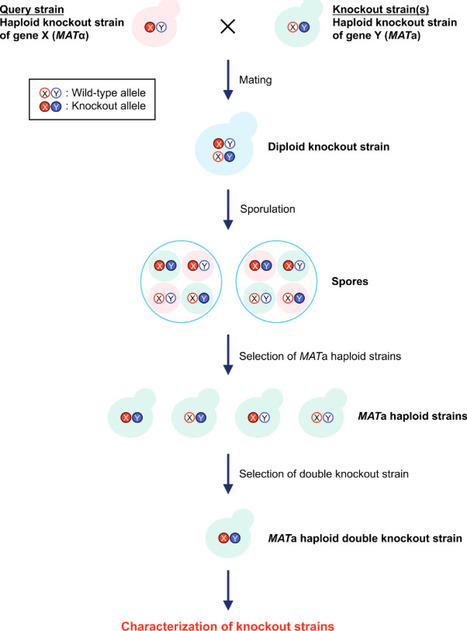
The knockout strain collection of Saccharomyces cerevisiae has served as a valuable resource for functional genomics and yeast-based biotechnology studies. A comprehensive single-gene knockout strain collection, covering nearly all non-essential genes, together with complementary mutant collections for essential genes, including temperature-sensitive and transcriptionally regulated strains, has enabled systematic genome-wide analyses of gene function. These resources have facilitated extensive studies of genetic interaction networks, cellular stress responses, metabolic regulation, and adaptive evolution. The yeast knockout strain collection has also been widely utilized in biotechnological research including the identification of genes affecting tolerance to toxic compounds, improvement of metabolite production, and design of synthetic microbial communities, and human disease research such as identification of disease-related genes and treatment targets. This review summarizes the construction and characteristics of the yeast knockout strain collection, key technologies for their application, and recent representative studies in fundamental, biotechnological and human disease research. Furthermore, important considerations for the reliable utilization of the yeast knockout strain collection, including genome instability, neighboring gene effects, and the influence of genetic background, are discussed. Finally, future prospects for applications of the yeast knockout strain collection are outlined.
|












ppi tool: dihydrofolate reductase cut it into two halves. Fuse one half to protein A, the other half to protein B, both at their native genomic loci so expression stays normal. If A and B touch, the two halves come within about 8 nm and reassemble into a working enzyme.
target genes: ERG11 is fluconazole's target. Other members include PIS1, ORM2, HYR1, SSH1, ERG5, ERV25, ALO1, UIP4, MID2, TPO2, PGM2, ADE17, TPO4. So membrane and lipid biology, transport, cell wall integrity, some metabolism.