Your new post is loading...

|
Scooped by
mhryu@live.com
October 9, 8:12 PM
|
Phages and integrative and conjugative elements (ICEs) drive bacterial evolution, but how their interplay shapes bacterial adaptation and antimicrobial resistance (AMR) dissemination remains unclear. Here, we characterize phage-ICE tandems formed by site-specific accretion of phages and ICEs into cotransferable units. In Streptococcus, phage-encoded integrases (IntIEPhage) drive stress-inducible excision and circularization, after which ICE machinery mediates conduction of the tandem. When excision is impaired, phage and phage-ICE fragments disseminate by transformation and integrate via RecA-dependent homologous recombination (HR), providing a fail-safe route. This pathway enables cotransfer of flanking chromosomal DNA, generating length-variable integrations that remodel transcriptional programs and increase oxidative stress tolerance. A global screen identified 612 phage-ICE tandems across seven phyla and 135 species, including multidrug-resistant pathogens, with lineage-specific repertoires of AMR, virulence, and metabolic genes. Rather than a hybrid element, these structures represent functional interplay where prophages exploit ICE conjugation while facilitating mobilization of the composite region. By coupling excision, transfer, and recombination, phage-ICEs shape adaptation and accelerate AMR spread.
|
|
Scooped by
mhryu@live.com
October 9, 7:59 PM
|
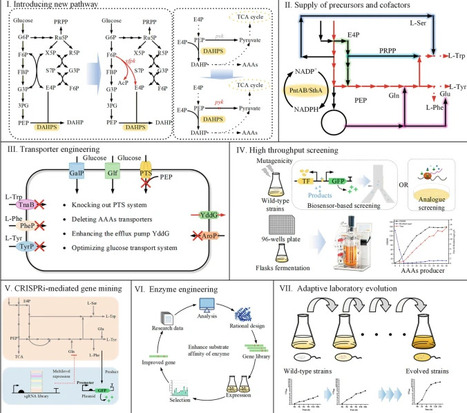
Proteins are one of the essential macromolecules that constitute the foundation of life. Amino acids are the building blocks of proteins. Since the early production of monosodium glutamate (MSG), many amino acids have been widely produced for applications in pharmaceuticals, feed additives, and animal nutrition. In livestock and poultry industries, feed amino acids help reduce crude protein content and balance animal nutrition. Amid global food security concerns, demand is growing for amino acids to lessen the reliance on soybean meal in feed. Thanks to their higher quality and lower cost relative to chemical methods, most amino acids are now produced via microbial fermentation. Among these, l-lysine, l-methionine, and l-threonine account for the majority of global consumption, representing approximately 80–90% of the total feed amino acid market. Other amino acids such as l-tryptophan, l-isoleucine, l-valine, l-histidine, and l-arginine command a small market share due to their limited production capacity. Therefore, improving the efficiency of producing amino acids for animal feed is crucial. This is not only about securing better feed supply chains but also a major step toward building a more sustainable livestock industry. Synthetic biology uses renewable resources or CO2 as raw materials, replacing traditional chemical synthesis. Synthetic biology has been continuously improving in areas such as gene editing, metabolic pathway regulation, and AI-assisted design, leading to a continued decline in the production costs of minor amino acids such as valine, tryptophan, isoleucine, arginine, and histidine. This technological advance is expected to drive further expansion in demand for these minor amino acids, thereby pushing the whole feed amino acid market growth even higher. we review the technologies and strategies employed in developing high-yield strains for the five feed minor amino acids (l-tryptophan, l-isoleucine, l-valine, l-histidine, and l-arginine).
|
|
Scooped by
mhryu@live.com
October 9, 7:34 PM
|
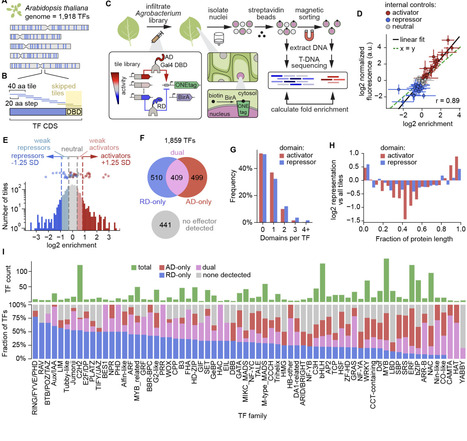
Eukaryotic life spans species that diverged over a billion years ago, yet our molecular view of gene regulation remains heavily skewed toward Opisthokonta model systems, particularly yeast and humans. The degree to which the protein features governing transcriptional regulation are conserved across eukaryotes or have diversified within individual eukaryotic supergroups remains unresolved. To provide a distinct evolutionary reference point, we used a massively parallel reporter assay in plant cells to identify transcriptional effector domains and define their sequence constraints, measuring ~26,000 protein fragments tiling nearly all Arabidopsis transcription factors (1,859 proteins). Comparison with the activity of the same peptide sequences in yeast revealed that activation is governed by a mixture of deeply conserved biochemical features and lineage-dependent functional differences across widely divergent eukaryotic lineages. Likewise, plant repression domains are governed by flexible sequence grammars that extend beyond conserved repression motifs. Together, these results reveal both broadly conserved and clade-specific principles governing eukaryotic transcriptional regulation.
|
|
Scooped by
mhryu@live.com
October 9, 7:05 PM
|
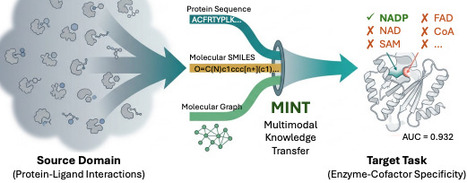
Protein-cofactor selectivity prediction is important for enzyme annotation, metabolic engineering, and biocatalyst discovery, but it remains challenging because experimentally supported associations are limited and unevenly distributed, and because biologically relevant differences can be subtler than those captured by general protein-ligand interaction models. Here, we present MINT (Multimodal Interaction Network with Teacher supervision), a multimodal framework for cofactor specificity prediction. MINT combines protein sequence features with cofactor sequence and graph representations and is trained with a gradual adaptation strategy that transfers useful information from a pretrained protein-ligand interaction model to the cofactor prediction task. On a fixed balanced held-out test set, MINT achieved the best overall performance among all compared methods (AUC = 0.932), and this ranking was reproduced in an independent family-stratified evaluation at the natural positive rate (pooled AUC = 0.939). Further analyses suggest that the pretrained model provides transferable structural information, while the gradual training scheme helps adapt that information to cofactor specificity. In a case study of the chemically near-identical NAD/NADP pair, MINT recovered 95.0-98.6% of true binders and resolved a single-phosphate-level distinction with direct relevance to engineering enzyme cofactor specificity. These results show that gradual transfer learning is an effective approach to cofactor specificity prediction when annotation is limited.
|
|
Scooped by
mhryu@live.com
October 9, 6:17 PM
|
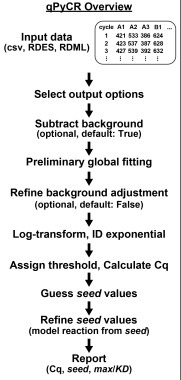
Real-time qPCR data are commonly analyzed to obtain a Cq values, which are used to compare the relative abundance of a targeted template. However, improper background subtraction distorts Cq and changing the assigned threshold can alter experimental conclusions. In addition, a Cq values provide no information on the quality of the qPCR for a given sample. Alternatively, global fitting of qPCR data provides agnostic quantification without the use of Cq or thresholds, and the fitting terms provide a useful metric of reaction performance. Current implementations of global fitting are limited to custom in-house programs. qPyCR is comprehensive analysis tool written in Python that performs background signal subtractions, computes a threshold, and reports Cq values in a traditional manner. The program also performs global fitting and reports template abundances along with reaction quality values. The quality values can be used to assign performance standards, which allow researchers to distinguish aberrant reactions from true changes in template abundance. Availability and Implementation: Code and example data are freely available on GitHub (https://github.com/sdmoore-labs/qPyCR) and on Zenodo (https://doi.org/10.5281/zenodo.21115342).
|
|
Scooped by
mhryu@live.com
October 9, 1:18 AM
|
This review systematically summarizes the features of Bacillus subtilis expression systems, the regulatory effects of various promoters on heterologous expression efficiency, and rational modification strategies of promoter core regions. B. subtilis WB600 or WB800 are the preferred hosts for autonomous plasmid-based expression systems due to their multiple protease deletions, which reduce recombinant protein degradation. In contrast, wild-type strains are more suitable for chromosomal integration systems because of native genomic background and physiological characteristics, which are advantageous for long-term stable expression. Constitutive promoters are suitable for stable and large-scale industrial enzyme production, while inducible promoters realize accurate and tunable control of gene expression. Dual promoters can effectively enhance transcription and protein yield, but are not universally superior to single promoters, and the final expression efficiency mainly depends on the downstream promoter adjacent to the target gene. Core region modification, such as optimizing the consensus sequences of the −35 and − 10 regions and adjusting the spacer length, can significantly improve promoter strength and consequently protein expression. The coordinated optimization of host-promoter-critical elements is critical to achieve highly efficient expression of target products. This review provides a theoretical basis for the further development and application of B. subtilis expression systems, offering valuable references for the rational development of high-efficiency promoter engineering strategies and heterologous gene expression optimization.
|
|
Scooped by
mhryu@live.com
October 9, 1:03 AM
|
Bacteriophages exhibit staggering genomic diversity, yet phenotypic characterization remains bottlenecked by assays that generally yield simple binary infection outcomes. Quantitative traits can be extracted from standard liquid cultures, but many phages fail to produce a measurable effect in these settings, necessitating an improved quantitative approach on semi-solid media. While end-point plaque size is commonly used for quantitative phenotyping, it only provides a static snapshot that fails to disentangle phage performance across changing bacterial growth phases. Here, we report a cost-effective, scalable method to quantify the bacterial killing rates of diverse phages by continuously tracking plaque development using a consumer-grade flatbed scanner and custom open-source computer vision software. By fitting a minimal, five-parameter phenomenological model to the diverse BASEL collection of Escherichia coli phages, we accurately captured plaque expansion dynamics across all bacterial growth phases. We discovered that plaque expansion parameters vary significantly across individual phages and taxonomic families, with the initial expansion rate demonstrating an inverse correlation with viral genome size. Notably, these plaque expansion dynamics did not correlate with bacterial collapse times in liquid culture, indicating that they represent distinct physiological and kinetic processes. Finally, we demonstrated that phage taxonomic family can be predicted with 72.1% accuracy solely from dynamic plaque parameters using a random forest classifier, whereas conventional endpoint plaque sizes held no predictive power. This time-lapse phenotyping approach yields robust kinetic data superior to end-point measurements, establishing a scalable platform to accelerate phage discovery and genotype-phenotype mapping.
|
|
Scooped by
mhryu@live.com
October 9, 12:09 AM
|
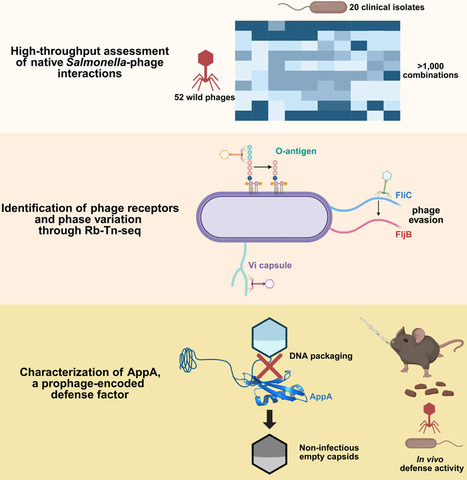
Bacteriophages drive pathogen evolution, yet the mechanisms governing phage susceptibility in native bacterial backgrounds, and their consequences within mammalian hosts, remain poorly understood. Here, we mapped >1,000 interactions between 20 diverse Salmonella isolates and 52 wild phages from global disease reservoirs, integrating genome-scale fitness profiling with comparative genomics. Receptor identity and surface phase variation, including Hin-mediated flagellar switching, explained ∼67% of phage susceptibility patterns, identifying cell-surface architecture as the major determinant of phage host range in Salmonella. Among resistance phenotypes not explained by surface features, we discovered anti-phage-packaging agent (AppA), a prophage-encoded defense factor that abrogates phage replication within its native host. AppA inhibits phage DNA packaging through functional mimicry of a terminase assembly interface, revealing a previously unrecognized mechanism of phage defense. AppA is expressed under conditions encountered during mammalian infection and suppresses phage expansion in the murine gut, demonstrating that prophage-encoded single-gene defenses can shape disease outcomes in vivo.
|
|
Scooped by
mhryu@live.com
October 8, 11:26 PM
|
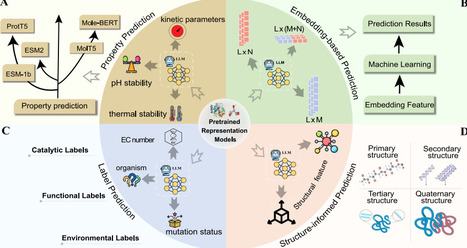
The prediction of enzyme kinetic parameters, particularly kcat and Km, is rapidly evolving from physics-based modeling toward datadriven artificial intelligence (AI) approaches, driven by expanding biochemical databases and advances in machine learning (ML) and deep learning (DL). We focus on AI-based enzyme kinetic parameter prediction, with an emphasis on kcat and Km, while also considering related parameters, such as Ki and kcat/Km. The key findings reveal that: (i) Representation learning increasingly relies on pretrained protein language models, while structural embeddings often show limited additional performance gains over sequence-based approaches; (ii) Model performance is highly data-dependent: classical ML regressors can outperform DL architectures on small datasets when using comparable feature representations, though multimodal feature integration can improve generalization; and (iii) Multitask frameworks for the joint prediction of kcat and Km may provide synergistic benefits, although the magnitude of the improvement may be limited. Future progress will require standardized benchmarks, mechanistically informed model architectures, uncertainty-aware prediction, and robust out-of-distribution validation to improve biochemical relevance, interpretability, and real-world utility
|
|
Scooped by
mhryu@live.com
October 8, 6:47 PM
|
The efficient, rapid, and reliable assembly of DNA fragments is essential for advancing metabolic engineering and synthetic biology. With the rapid advancement of DNA synthesis and assembly technologies, the scale of DNA assembly has expanded from single genes to metabolic pathways and even genomes. Large DNA fragment assembly, in particular, has developed into a pivotal tool for microbial cell factory engineering, significantly contributing to the understanding and construction of biological systems. This review summarizes recent advancements in large DNA fragment assembly methods, encompassing in vitro and in vitro methods for multiple-gene assemblies, as well as genome-scale technologies, including synthetic genome and neochromosome construction. We systematically compare their key features in terms of assembly principle, capacity, and efficiency. Especially, we highlight their applications in microbial cell factory engineering, including heterologous pathway construction, reprogramming host metabolism, and expanding complex biosynthetic networks. Finally, we discuss the challenges and prospects of applying large DNA fragment assembly to advance cell factories. In summary, this review provides a theoretical and technical framework for engineering high-performance microbial cell factories, contributing to the advancement of industrial biomanufacturing. cloning, genome editing
|
|
Scooped by
mhryu@live.com
October 8, 6:36 PM
|
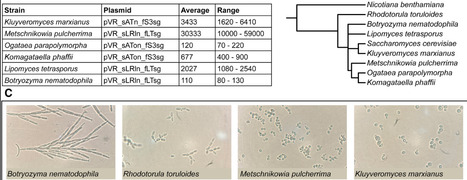
Agrobacterium-mediated transformation (AMT) is a critical method for genetic manipulation of non-model fungi, yet it remains a laborious and inefficient technique. When co-cultured in acetosyringone-supplemented induction medium, Agrobacterium transfers DNA directly into yeast cells using its virulence machinery. Membrane filters are commonly used to support the co-culture of yeast and Agrobacterium on agar plates, however some reports demonstrate that these filters are unnecessary for specific yeast species. Here we confirm across diverse budding yeasts that membrane filters are not necessary for effective AMT. Concentrating the cells via centrifugation and “spotting” the cell pellet directly onto the induction medium proved effective. This reduces hands-on time to 15 minutes and eliminates filter cost. In the oleaginous basidiomycete yeast, Rhodotorula toruloides, this simplified method increases transformation efficiency by 66% to 2,500 transformants per 106 recipient cells. We further optimized the Agrobacterium:Rhodotorula cell ratio and culture resuspension volume to achieve more than 200,000 CFU per transformation representing a 2–3 fold improvement over previously implemented protocols. This spot-plating method was successfully applied to seven yeast species of a distantly related phylum, Ascomycota, including one for which genetic transformation has not previously been reported, Botryozyma nematodophila. This approach highlights the broad applicability of the spot-plating methods across diverse yeast systems. Furthermore, this method could facilitate high-throughput transformation workflows that are critical for genome-scale functional studies.
|
|
Scooped by
mhryu@live.com
October 8, 6:29 PM
|
Biogenesis of the bacterial outer membrane is key to bacterial survival and antibiotic resistance. Central to this is the β-barrel assembly machine (Bam) complex and its associated chaperones, which are responsible for transport, folding, and insertion of outer membrane proteins (OMPs). The E. coli Bam complex is composed of two essential subunits, BamA and BamD, and three non-essential accessory lipoproteins, BamB, BamC, and BamE. Optimal Bam function is further dependent on the non-essential periplasmic chaperones DegP, Skp, and SurA. Despite intensive study, the specific function of these non-essential Bam-associated proteins is not fully understood. Here, we analysed ΔbamB, ΔbamC, ΔbamE, ΔsurA, Δskp, and ΔdegP knockout strains by phenotypic screening, conservation analysis and high-throughput genetics. We identified hundreds of synthetic-lethal interactions and revealed that Bam complex activity is impacted by changes in outer membrane lipid composition and that enterobacterial common antigen is essential in the absence of the chaperone SurA. We also show that genes responsible for synthesis of peptidoglycan are synthetically lethal with Bam accessory lipoprotein encoding genes. Together, our data indicate potential mechanisms for coordination of OMP biogenesis with other cellular growth processes, such as LPS and peptidoglycan biogenesis.
|
|
Scooped by
mhryu@live.com
October 8, 5:55 PM
|
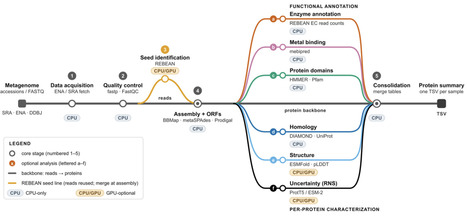
Microbial metagenomes encode vast catalytic diversity, but recovering enzymes of novel, yet-undescribed functionality typically requires whole-community assembly plus a means of identifying active proteins ab initio. The first step of the task is compute-intensive and misses low-abundance sequences. The second is complicated by our inability to predict novel functions. REBEAN, our DNA language model, sidesteps the latter by assigning each sequencing read a high-level Enzyme Commission (EC) class or a non-enzyme label without alignment. Here we build REFinder, a pipeline that addresses both steps by routing REBEAN-annotated reads to assemble only the putative enzymatic reads that have identified catalytic signatures. In our evaluation of 50 microbiome metagenomes, REFinder identified 1.2 to 2.1 fold more enzymes than could be recovered via homology-based annotation of the proteins from the corresponding full assemblies. Moreover, it was as much as 6.4-fold cheaper computationally than full assembly. Across all samples, REFinder identified at least three fourths and as many as 90% of the homology-accessible enzymes identified via full assembly of the complete metagenomes. Notably, a fraction of these, 22% to 45% per EC class, carried no similarity to Swiss-Prot proteins, i.e. a set of enzymes homology cannot annotate. For roughly two fifths of the over thirteen thousand such novel oxidoreductases from two saliva samples, ESMFold predicted structures aligned with TM-score≥0.7 to a characterized enzyme structure in the PDB - a substantial structural similarity without sequence homology. These results illustrate that targeted, alignment-free assembly turns even well-mapped microbiomes into a source of thousands of previously invisible but credible novel enzymes, raising our expectations for exploration of environmental microbiomes.
|
|
|
Scooped by
mhryu@live.com
October 9, 8:07 PM
|
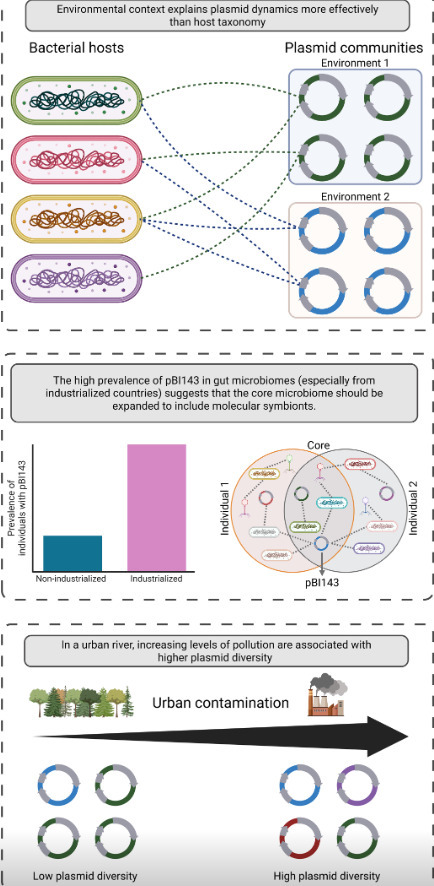
Plasmids are mobile genetic elements with autonomous replication, whose ecology extends beyond individual bacterial hosts. As molecular symbionts, they have the potential to traverse bacterial taxa and environments, disseminating adaptive genes and shaping microbial community structure through dynamics that are likely decoupled from host taxonomy. Plasmidomics – the omics discipline dedicated to the study of plasmids – has revealed that plasmid diversity and distribution respond to environmental gradients independently of their hosts, underscoring their roles as ecological entities. However, the field faces critical methodological constraints: short-read assemblies fragment plasmid sequences, culture-dependent approaches underrepresent environmental diversity and most metagenomic methods fail to capture plasmid–host associations. In addition, a universally accepted classification framework is still lacking. Advancing plasmidomics will require the integration of long-read sequencing, Hi-C proximity ligation, meta-epigenomics and ecology-informed classification frameworks grounded in genomic and functional criteria. Together, these approaches are essential to uncover the true diversity, evolutionary significance and ecological dynamics of plasmids across complex microbial ecosystems.
|
|
Scooped by
mhryu@live.com
October 9, 7:48 PM
|
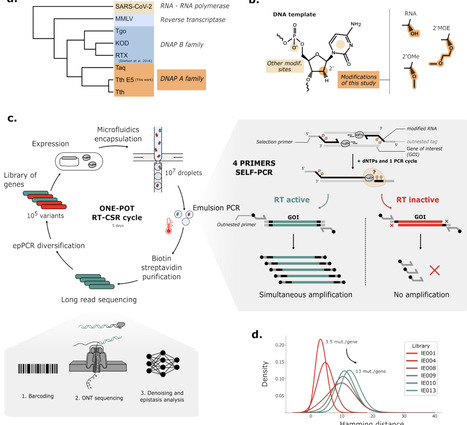
RNA-based therapeutics increasingly rely on nuclease-resistant xeno-nucleic acids (XNAs), but engineering polymerases capable of reading and amplifying these non-canonical substrates remains a major challenge. Natural DNA polymerases cannot process C2' sugar modifications, and the complete structural determinants governing this limitation remain poorly understood, limiting rational design strategies. In this study, we apply directed evolution methods to Thermus thermophilus DNA polymerase using a microfluidic implementation of the Compartmentalized Self-Replication (CSR). We identify an engineered variant, termed E5, capable of reverse transcribing C2'-modified RNA, a previously inaccessible activity for this enzyme. Next-generation sequencing allow us to track evolutionary trajectories across nine rounds of evolution. Through an integrated analysis combining statistical methods, protein language models, and crystallographic data, we reveal unknown epistatic networks controlling polymerase function. This large-scale experimental dataset (>196,000 thermostable enzyme variants) provides a robust basis for predicting sequence-to-function relationships, accelerating development of enzymes for aptamer discovery and synthetic biology applications.
|
|
Scooped by
mhryu@live.com
October 9, 7:07 PM
|
Corynebacterium glutamicum CS176 is a naturally l-arabinose-utilizing strain that lacks the ability to metabolize d-xylose, limiting its capacity to utilize lignocellulosic pentose sugars. To expand its substrate range, a synthetic xylAB cassette encoding xylose isomerase (xylA) and xylulokinase (xylB) from Xanthomonas campestris was introduced into CS176, generating the recombinant strain CSX7. CSX7 exhibited IPTG-dependent growth on d-xylose as the sole carbon source, whereas the parental strain showed no detectable xylose utilization. HPLC analysis confirmed co-consumption of d-glucose and d-xylose in mixed-substrate cultures. Importantly, CSX7 retained the native ability of CS176 to co-utilize d-glucose and l-arabinose, indicating that heterologous xylAB expression expanded substrate utilization without disrupting the endogenous arabinose catabolic pathway. Oxygen availability influenced biomass formation and extracellular glutamate secretion, with reduced aeration generally promoting glutamate accumulation. In bioreactor cultivation with 2% (w/v) d-xylose, CSX7 achieved a maximum specific growth rate of 0.201–0.212 h⁻¹, consumed 98.2% of the supplied xylose within 48 h, and produced 264.6 ± 5.5 mg L⁻¹ extracellular glutamate. In mixed l-arabinose/d-xylose cultivation, CSX7 concurrently consumed both pentose sugars, with l-arabinose consumed preferentially, to completion without a discernible diauxic lag in growth, and produced approximately twice the extracellular glutamate of the parental strain, directly confirming expanded pentose co-utilization. These findings demonstrate that xylose pathway engineering enables efficient utilization of both major lignocellulosic pentose sugars in the naturally arabinose-positive strain CS176, supporting its potential application in mixed-sugar bioconversion processes.
|
|
Scooped by
mhryu@live.com
October 9, 6:36 PM
|
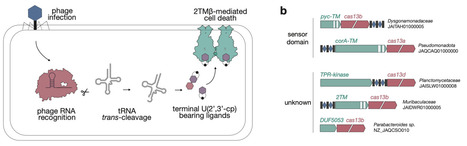
Bacterial small-molecule messengers that function in diverse immune signaling pathways have been thought to derive strictly from biosynthesis using nucleotide and cofactor substrates. Here we report a nuclease-driven immune signaling pathway in which tRNA cleavage generates a specific small molecule that triggers cell death in response to RNA-guided transcript recognition in prokaryotes. We identify a class of type VI-B CRISPR systems in which the RNA-guided nuclease Cas13 and its accessory transmembrane protein, 2TMβ, are co-encoded in an operon and are jointly required for bacteriophage defense. Upon target RNA recognition, Cas13 activates 2TMβ by producing mono- and dinucleotide messengers bearing 2′,3′-cyclic uridine phosphate ends by tRNA cleavage. Activated 2TMβ destroys infected cells by forming a multimeric complex that disrupts cell membranes to mediate cell death. These findings demonstrate RNA-programmed tRNA cleavage for second-messenger biogenesis, revealing a new logic for prokaryotic immune signaling.
|
|
Scooped by
mhryu@live.com
October 9, 1:31 AM
|
Local alignment tools struggle at querying against thousands of bacterial genomes, because the reference indexes are memory-intensive and base-level dynamic programming is slow. We present alamem (https://github.com/yunwilliamyu/alamem), an approximate local aligner that streams unprocessed reference databases and estimates average nucleotide identity (ANI) from Maximal-Exact-Match (MEM) chaining statistics. Alamem can query a bacterial genome against >85,000 prokaryotic genomes in under 30 seconds (with multithreading) using 4 GB of memory, making it over 16x faster and 21x more memory-efficient than existing local aligners using their default running modes. On top of alamem, we built alasight (https://github.com/graceoualline/alasight) for detecting signatures of horizontal gene transfer (HGT) by finding pairs of alamem hits to divergent genomes. Alasight achieves over an order of magnitude better sensitivity on data from real bovid microbiomes than existing mobile genetic element-detection software and provides depth and sparsity information supporting each putative HGT region.
|
|
Scooped by
mhryu@live.com
October 9, 1:16 AM
|
Rapid and accurate detection of pathogens is critical for clinical diagnosis, environmental monitoring, public health and food safety. Conventional diagnostic methods, such as culture-based, enzyme-linked immunosorbent assay (ELISA), and polymerase chain reaction (PCR), are well established and widely used due to their proven analytical performance; however, the time required for analysis, processing of samples, instrumentation, and the need for trained personnel can limit their usefulness for rapid and on-site detection. Biosensor technologies have therefore become attractive analytical platforms for the rapid and sensitive detection of pathogens. The highlights of electrochemical, optical, nanoparticle, microfluidic and paper-based biosensors and their fundamental sensing principles, design strategies, applications, merits and drawbacks are discussed in this review. Biosensors have the potential to provide benefits such as portability, multiplexing, high sensitivity, rapid detection and point-of-care use as compared with conventional diagnostic methods. The potential for pathogen detection has been increased through significant developments in nanomaterial's, bio recognition strategies, sensor design and signal-transduction mechanisms. However, the complexity of sampling, sensor stability, sensor reproductively, fabrication, scalability, and validation remain key challenges affecting their implementation in practice. This review critically discusses the current technologies used in biosensors and their application and future perspective in clinical diagnostics, food safety, and environmental monitoring with conventional diagnostic methods.
|
|
Scooped by
mhryu@live.com
October 9, 12:59 AM
|
O-linked β-N-acetylglucosamine modification (O-GlcNAcylation) is an essential and dynamic post-translational modification (PTM) that modulates diverse cellular processes. Dysregulation of O-GlcNAcylation is associated with numerous human diseases, yet no O-GlcNAc-targeting therapy has been approved for clinical use, underscoring the need for tools that enable precise functional dissection of this modification. In this review, we survey emerging chemical strategies over the past two years that extend beyond conventional active-site inhibition, covering both chemically induced proximity (CIP) platforms for substrate-specific O-GlcNAc editing and non-canonical global modulators including allosteric ligands and splicing modulators. We discuss the design principles of these emerging tools, their applications in functional studies, and their current limitations. The continued evolution of these chemical approaches will accelerate the functional annotation of the O-GlcNAcome and may ultimately inform therapeutic strategies targeting O-GlcNAc dysregulation.
|
|
Scooped by
mhryu@live.com
October 9, 12:06 AM
|
The release of bacterial bioactive molecules across the gut barrier is a crucial yet poorly understood step in host-microbe communication. Here, we identify a phage-driven mechanism associated with this process in the beneficial symbiont Lactiplantibacillus plantarum NC8 (LpNC8). We show that a stress-responsive prophage, pp2, undergoes activation and triggers holin-lysin-mediated bacterial lysis, leading to the production of infectious phage particles and increased extracellular recovery of bacterial vesicles carrying lipoteichoic acids. In a model of nutritional symbiosis, pp2-dependent lysis is required for LpNC8 to promote juvenile growth in undernourished Drosophila melanogaster. Disruption of prophage-mediated lysis impairs vesicle recovery and host growth promotion. Furthermore, we demonstrate that the copper cell region of the Drosophila midgut acts as a physiological trigger of prophage induction. Together, our findings link host intestinal physiology to prophage activity and bacterial lysis, revealing phage-driven lysis as a mechanism contributing to beneficial bacterial-host interactions during nutritional stress.
|
|
Scooped by
mhryu@live.com
October 8, 11:19 PM
|
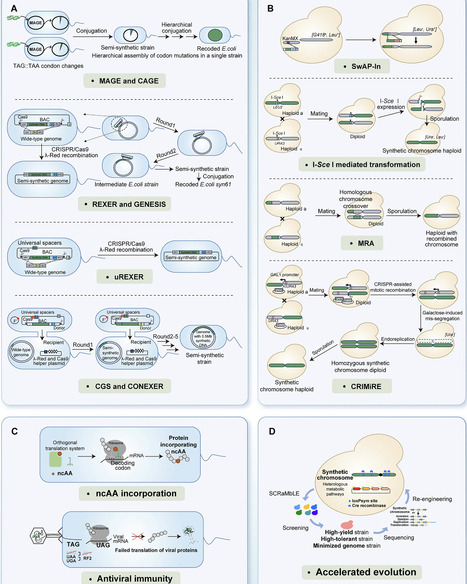
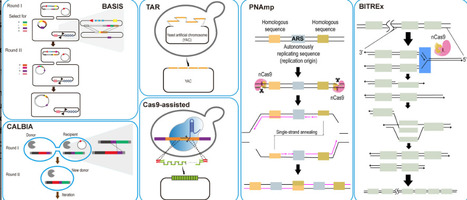
Repetitive DNA, a fundamental architectural element of genomes, is widespread across organisms and comprises about 54% of the human genome. With advances in long-read sequencing and bioinformatics approaches, highly repetitive sequences can now be characterized in depth. Nevertheless, engineering repetitive DNA is mainly limited by repeat instability. Despite these challenges, advances have been reported in the construction of short tandem repeats and the large-scale duplication of genes. This review provides a comprehensive overview of current strategies for constructing repetitive DNA, covering both in vitro approaches, including restriction endonuclease ligation, in vitro homologous recombination, and redundancy-minimizing sequences, as well as in vivo methodologies in E. coli, Saccharomyces cerevisiae, and mammalian cells. We further discuss applications of these methods for developing genetic manipulation tools, constructing models of repetitive DNA, and synthesizing biomaterials. Future progress in engineering repetitive DNA will further advance our capabilities in designing and manipulating complex biological systems and deepen our understanding of them.
|
|
Scooped by
mhryu@live.com
October 8, 6:44 PM
|
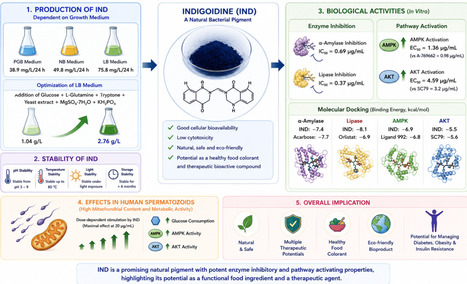
The increased focus on bacterial pigments can be attributed to their greater safety and eco-friendliness when compared to artificial food colorants, which can lead to severe health problems. This research was designed to optimize IND production at varying growth conditions, to assess its chemical stability, and to study its possible biological activities associated with diabetes, obesity, and insulin resistance. Medium types played an important role in both BL21-DE3 cell growth and IND production. The BL21-DE3 cell growth was maximum in PGB medium (2.76 g/L/24 h), then in LB-O medium (1.29 g/L/24 h), LB medium (1.14 g/L/24 h), and NB medium (0.94 g/L/24 h). The IND production was 75.8, 49.8, and 38.9 mg/L/24 h in LB, NB, and PGB media, respectively, while the experimental maximum IND production was achieved in LB-O medium (177.4 mg/L/24 h), which closely resembled the theoretical IND production of 180 mg/L/24 h. IND exhibited high cellular absorption properties, low cytotoxicity, and dose-dependent inhibition of α-amylase and lipase enzymes at IC50 values of 0.69 and 0.37 µg/mL, respectively. Furthermore, IND enhanced 5′-adenosine monophosphate-activated protein kinase (AMPK) and protein kinase B (AKT) signaling pathways at EC50 values of 1.36 and 4.59 µg/mL, respectively. The binding affinity of IND was also observed towards α-amylase, lipase, AMPK, and AKT enzymes via molecular docking with binding energies (BE) of −7.4, −8.1, −6.9, and −5.5 kcal/mol, respectively. All these findings were confirmed through human spermatozoa culture, where IND stimulated glucose metabolism and AMPK and AKT signaling pathways.
|
|
Scooped by
mhryu@live.com
October 8, 6:33 PM
|
Rhizobia are soil bacteria that establish nitrogen-fixing symbioses with legumes. While many rhizobia use a Type III Secretion System to deliver “Nodulation Outer Protein” (Nop) effectors, some uniquely use these proteins to initiate nodule organogenesis, bypassing classical signalling. The molecular functions of these effectors remain largely unknown due to extreme sequence divergence. Using AlphaFold2-mediated structural proteomics, we identified a modular architecture in rhizobial effectors composed of 22 distinct structural units. We reveal that many Nop effectors are cryptic transcriptional or post-transcriptional regulators, harbouring unrecognised nucleic acid–binding modules and RNA-dependent RNA polymerase domains. Crucially, these modules are conserved in specific plant pathogens, such as gall-inducing Pantoea, where our predicted structural units align with experimentally validated DNA-binding domains. Furthermore, we discovered the BPN (B3 and PUA-like nucleic acid binding) domain as a structural mimic of plant B3-domain transcription factors, pointing to a direct mechanism for hijacking legume development. Our findings strongly suggest that rhizobia employ a modular domain-fusion strategy to act as direct genetic modulators, uncovering a conserved mechanism used by both symbionts and pathogens to hijack host developmental programmes.
|
|
Scooped by
mhryu@live.com
October 8, 6:22 PM
|
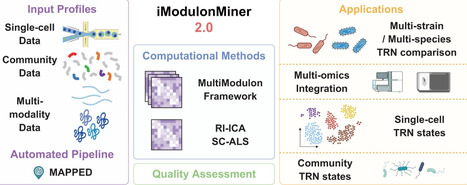
Prokaryotic gene expression datasets, including single-cell transcriptomics and community meta-transcriptomics, are growing rapidly, opening discovery opportunities while creating new analytical challenges. Module detection methods, such as independent component analysis, are powerful tools for expression analysis focused on identifying coordinated gene programs that consistently appear within gene expression compendia. Here, we present iModulonMiner 2.0, an end-to-end expression module detection workflow that adds five main capabilities to address emerging multi-dataset, multi-strain, and multi-modality challenges. First, it expands from bulk RNA-seq to support single-cell RNA-seq, community meta-transcriptomics, and multi-omics datasets, along with a standardized data pipeline. Second, it adapts multi-view learning to identify signals that are shared versus context-specific across strains, species, and modalities, supporting cross-context comparison and integration. Third, it provides new robust and prior-guided single-compendium inference methods. Fourth, it adds post-processing diagnostics for interpretability. Fifth, it supports multi-scale transfer of regulatory knowledge from bulk compendia to other modalities. Available as open-source software, iModulonMiner 2.0 provides a unified, module-based workflow for interpreting diverse prokaryotic expression compendia across modalities and biological scales.
|