 Your new post is loading...

|
Scooped by
mhryu@live.com
Today, 6:14 PM
|
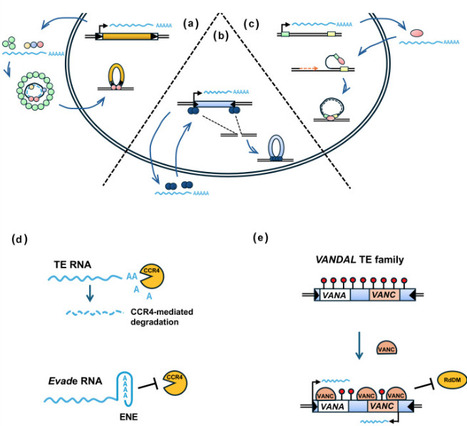
Transposable elements (TEs) constitute a major fraction of eukaryotic genomes and represent one of the most abundant classes of repetitive sequences in plants. Recent advances in sequencing technologies, together with the increasing availability of telomere-to-telomere and pan-genome assemblies, have enabled comprehensive characterization of TE sequences, revealing their complex architectures, structural variation, and evolutionary dynamics across diverse plant species. Because TE mobilization can compromise gene function and genome integrity, plants have evolved sophisticated epigenetic mechanisms to restrict TE activity. In turn, TEs have co-evolved diverse strategies to evade host silencing, reflecting a continuous evolutionary arms race between host genomes and their mobile elements. Beyond their traditional view as genomic parasites, accumulating evidence now demonstrates that TEs are major drivers of genome innovation by providing novel protein-coding modules, cis-regulatory elements, and structural variation that reshape chromatin organization and gene regulatory networks. In this review, we highlight recent advances in our understanding of how TEs promote regulatory innovation, environmental adaptation, and genome evolution in plants.
|
|
Scooped by
mhryu@live.com
Today, 9:57 AM
|
The increasing resistance of bacteria to current drugs underscores the urgent need for new antibiotics. Combination therapies offer an alternative strategy by enhancing efficacy and delaying resistance, with synergies assessed in checkerboard assays using systematically varied drug concentrations. Here, we introduce a miniaturized checkerboard assay for high-throughput combinatorial antibiotic testing against E. coli. Our platform reduces sample volume significantly, achieves high sample densities of 20832 droplets per microscopy slide, and allows generation of checkerboard arrays in under 25 min prior to incubation and analysis. We established the platform by comparing E. coli growth across different culture volumes and performed assays to determine the minimum inhibitory concentration (MIC) for various drugs. Further, we replicated the synergistic effect of amoxicillin/clavulanate against an amoxicillin-resistant strain. Testing various antibiotic combinations allowed us to determine fractional inhibitory concentration indices (FICI) of up to 1.86 ± 0.42, suggesting indifferent effects with a tendency towards antagonism. Lipidomic profiling of E. coli revealed the characteristic lipid composition of primarily phosphatidylethanolamines (PE) and phosphatidylglycerol (PG). We identified PE32:0 that showed enhanced signal intensities at the MIC region, hinting at stress-induced lipid changes. Our platform holds promise for exploring combinatorial drug effects across cell types, with unique capabilities for simultaneous cell monitoring and MALDI-MS analysis.
|
|
Scooped by
mhryu@live.com
Today, 1:23 AM
|
Horizontal gene transfer (HGT) is a major contributor to the spread of antimicrobial resistance (AMR) in microbial communities, particularly through conjugative plasmids. The dynamics of the spread of these plasmids in a susceptible microbial community requires a defined and controllable in vitro system, which is currently lacking from existing laboratory evolution systems. Here we describe the development of TriComm, an engineered microbial community of three strains with complementary amino acid auxotrophies, maintained in continuous culture under real-time optical and fluorescence monitoring. We show that two conjugative plasmids carrying resistance genes (blaOXA-48 and mcr-1) generally rescued TriComm from collapse under antimicrobial treatment, and that this protection was dependent on conjugative transfer. Community composition remained stable across most conditions, including after the AMR plasmid had spread through the population. Through mathematical modeling we predict that modulating both drug efficacy and conjugation rate can lead to the collapse of the community, suggesting potential strategies to limit the spread of AMR via HGT.
|
|
Scooped by
mhryu@live.com
Today, 1:13 AM
|
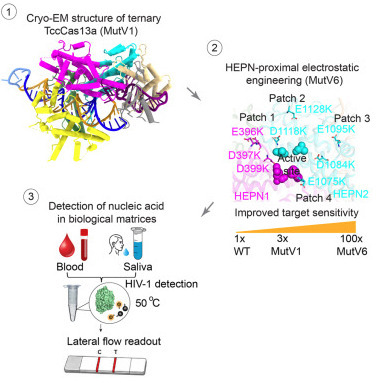
Cas13a enzymes are particularly attractive for nucleic acid detection due to their robust collateral activity. Recently, there has been a surge in the discovery and engineering of thermostable Cas13a proteins for nucleic acid detection. The thermostable Cas13a from Thermoclostridium caenicola (TccCas13a) was identified; however, its native target sensitivity and collateral activity are relatively low and require optimization for molecular diagnostic applications. Here, we report comprehensive biochemical characterization and structure-guided engineering of TccCas13a. Our analyses reveal its intrinsic thermostability, nucleotide substrate preferences, and tolerance to structured target RNA substrates. Rational engineering of the spacer-target RNA binding channel improved target engagement and enabled determination of a 3.13 Å cryo-electron microscopy ternary structure. Furthermore, extensive structure-guided engineering of active site-proximal regions yielded a variant with over ∼100-fold enhanced target sensitivity and collateral activity across diverse biological matrices. Together, our work provides mechanistic insights and establishes TccCas13a as a platform for next-generation RNA diagnostics.
|
|
Scooped by
mhryu@live.com
Today, 12:16 AM
|
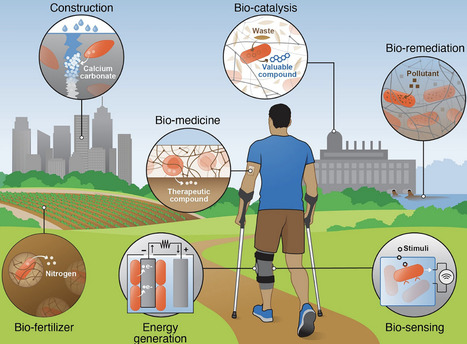
Engineered living materials (ELMs) are emerging as a new class of autonomous and self-maintainable systems that integrate metabolically active organisms within structural scaffolds to create materials capable of sensing, self-repair, adaptive response, and long-term functional persistence. Unlike conventional smart materials, which remain externally programmed and limited in regenerative capacity, ELMs leverage the intrinsic capabilities of microorganisms, fungi, algae, and mammalian cells to support continuous environmental interaction and feedback-regulated behavior. These systems retain metabolically active biological components that can grow, sense, communicate, adapt, and, in some cases, self-repair and self-regenerate, positioning autonomy as the defining capacity of these next-generation materials. Recent advances in synthetic biology, including programmable gene circuits, quorum-sensing communication, and metabolic engineering, enable living components to execute closed-loop decision-making and maintain functionality with minimal external input. These capabilities are driving innovations across construction, agriculture, environmental remediation, bioenergy, and biomedicine, where ELMs enable functions such as damage-triggered mineralization, adaptive pollutant degradation, and therapeutic self-regulation. Despite this promise, key challenges remain in evolutionary stability, biocontainment, long-term viability, and scalable manufacturing. This Review examines the design principles, current challenges, and translational pathways toward self-maintainable and autonomous living materials capable of sustained operation in real-world environments.
|
|
Scooped by
mhryu@live.com
October 14, 11:54 PM
|
Cross-feeding interactions shape gut microbial communities and contribute to the establishment of bacteria associated with beneficial fermentation products such as butyrate. However, many gut microbes involved in fiber degradation and butyrate-associated trophic networks remain poorly characterized. Here, we combined genomic analysis of candidate strains, genome-scale metabolic modeling, in vitro cultivation, and transcriptomics to investigate metabolic interactions among gut bacteria during growth on inulin. Genomic analyses identified genes associated with inulin utilization, fermentation enzymes, and amino acid synthesis and transport. In vitro screening of different bacterial combinations on inulin identified Clostridium sp. HGF2 as an inulin-degrading, butyrate-producing strain, leading us to focus on its interaction with Bifidobacterium animalis subsp. lactis PT33. Co-culture assays, transwell experiments, and batch bioreactor analyses supported metabolic interactions between both strains during growth on inulin. Although PT33 did not enhance butyrate production, the combined results were consistent with competition for readily available carbohydrates, while transcriptomics and model integration suggested that HGF2 degrades inulin and releases simple carbohydrates that can be utilized by PT33, while PT33 produces acetate and lactate that support HGF2 metabolism. Altogether, this work shows a methodology to identify and evaluate candidate cross-feeding interactions in artificial gut communities, in this case, revealing a competitive rather than synergistic interaction, and characterizes HGF2, identified here as Clostridium innocuum, as an understudied butyrate-producing, inulin-degrading strain.
|
|
Scooped by
mhryu@live.com
October 14, 11:14 PM
|
Industrial biocatalysis relies on the cost effective production of active enzymes in heterologous hosts, yet a substantial fraction of candidate sequences fails during recombinant expression because sequence-level determinants of translational efficiency are not captured by conventional codon optimization alone. Here we present an integrated computational platform for pre-clinical assessment of industrial enzyme expression potential that combines baseline sequence metrics with co-translational modeling of ribosome stalling, translation rhythm, codon harmonization, folding bottlenecks, solubility proxies, and proteolysis risk. The platform accepts DNA, protein, FASTA, and PDB inputs and returns interpretable expression risk assessments, component-level diagnostics, variant design proposals, and actionable engineering recommendations. Analyses are parameterized for industrial expression hosts (Escherichia coli, Saccharomyces cerevisiae, Bacillus subtilis, and mammalian cells) and for native enzyme sources including Streptomyces, Bacillus, filamentous fungi, actinomycetes, and extremophiles. All analyses execute locally without dependence on external databases, enabling rapid and secure screening of proprietary enzyme candidates prior to gene synthesis and fermenter scale-up. We report three layers of preliminary validation on small cohorts: (i) a retrospective public industrial-enzyme ranking benchmark (n = 20; rank subset n = 10); (ii) calibration of the solubility module on held-out eSOL enzymes with quantitative experimental solubility; and (iii) an independent collaborator wet-lab construct set retained as a true external-test holdout and never used for model fitting (n = 38 labeled constructs). On the external holdout, solubility calls achieved accuracy 68.4% (95% CI 52.5 - 80.9%), sensitivity 56.5% (36.8 - 74.4%), specificity 86.7% (62.1 - 96.3%), balanced accuracy 71.6% (bootstrap 95% CI 57.4 - 84.4%), and MCC 0.43 (0.15 - 0.69). Sensitivity remains close to chance on this small set, whereas specificity is higher; intervals are wide and the evidence should be read as directional rather than definitive. A directional arginine-surface redesign example (SrMilN insoluble parent to SrMilN_SASAR partially soluble variant; incomplete rescue with multiple soluble bands) was recovered. These findings support preliminary screening utility and transparent experimental agreement, but do not constitute high-accuracy prediction of industrial fermenter titre. Offline EC-class heuristics are retained only as optional provisional labels and are not presented as a validated platform capability (agreement 3/20 = 15%, 95% CI 5.2 - 36%; chance for six classes is 16.7%).
|
|
Scooped by
mhryu@live.com
October 14, 10:44 PM
|
Protein synthesis rate is distinct from steady-state protein abundance and must be measured independently to understand how cells regulate protein levels and respond to environments. Technologies used to predict or directly quantify protein synthesis include ribosome profiling, radioactive and stable isotope labelling, and bioorthogonal noncanonical amino acid tagging (BONCAT). Here, we emphasise BONCAT’s potential in plants, which, when combined with click-chemistry, enables the detection, enrichment, and characterisation of newly synthesised proteins themselves. We summarise lessons from BONCAT applications in cell-free systems, microbes, mammalian cells, and animals and evaluate its potential in plants. Establishing robust BONCAT approaches in plants can advance studies in proteome regulation, stress responses, development, circadian biology, and plant–microbe interactions.
|
|
Scooped by
mhryu@live.com
October 14, 10:31 PM
|
Quantifying microbial cell abundance in natural environments with taxonomic resolution remains a central challenge in microbial ecology. While epifluorescence microscopy reliably enumerates free-living cells, it lacks taxonomic specificity and is less suitable for quantifying cells in sediments, soils, and on surfaces. Furthermore, while most omics approaches profile microbial communities, they typically provide only relative abundances. Recent advances in quantitative metagenomics using single-copy marker genes and genomic internal standards enable taxon-specific abundance estimates in absolute units (e.g. haploid genome equivalents L-1). Here, we directly compared SYBR Green–based epifluorescence cell counts with spike-in metagenomic estimates derived from bacterial recA and archaeal radA gene abundances in seawater samples collected monthly at five depths (5 to 890 m) from the San Pedro Ocean Time-series (SPOT) during 2023–2024. Across all depths, quantitative metagenomic estimates of prokaryotic abundance closely matched SYBR Green–based counts (slope = 1.05; Pearson’s r = 0.85). In addition to validating total abundance, quantitative metagenomics provided high-resolution, taxon-specific estimates across depths and sampling dates. The strong agreement between microscopy cell counts and metagenomic estimates from unfractionated SPOT samples suggests that most prokaryotes were free-living rather than particle associated. These results validate quantitative metagenomics as a robust approach for estimating absolute prokaryotic abundance, establishing a framework for taxonomically resolved quantification in microbial ecology and ecosystem modeling.
|
|
Scooped by
mhryu@live.com
October 14, 5:07 PM
|
Effective modeling of chronic human diseases in vivo requires precise spatiotemporal regulation of molecular processes at defined tissue locations. Optogenetic and optoelectronic tools can provide such control but targeting internal organs such as the lungs remain challenging. To address this, we developed E-LightR-Cre recombinase, enabling precise, spatially restricted gene activation with no dark-state activity and robust blue light responsiveness. To achieve local activation of E-LightR-Cre in specific organ sites, we engineered wireless, fully implantable optoelectronic devices enabling focal illumination of murine lungs with no discernible organ damage. The size of the activated area is controlled by modulating light intensity and duration. Using implanted optoelectronic devices, we activated E-LightR-Cre in a selected area of mouse lungs and achieved local regulation of targeted genes. Light-regulated expression of the oncogenic KRas-G12D mutant in mouse lungs induced local formation of oncogenic lesions. These results show that our protein engineering and adaptable optoelectronic approaches enable facile application of optogenetic tools for locally controlled disease modeling in vivo.
|
|
Scooped by
mhryu@live.com
October 14, 3:52 PM
|
Large language models are very good at providing concise answers. But if we only see the answer without knowing the original question or the context behind it, that answer may not be very useful. The important issue is not simply how much information an AI summary removes but whether we can still recover the missing context. Thus, AI literature tools should also report how much information was removed and how recoverable their omissions are.
|
|
Scooped by
mhryu@live.com
October 14, 2:56 PM
|
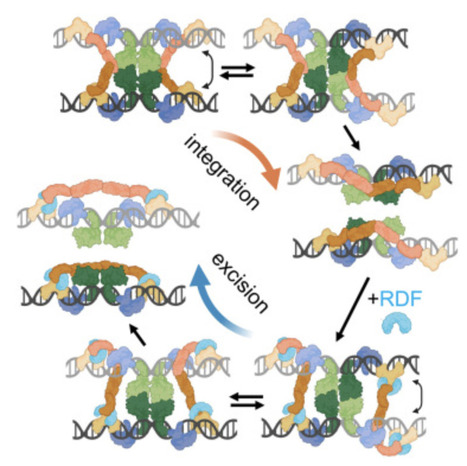
Large serine integrases catalyze unidirectional insertion of large DNA payloads and, in the presence of a cognate recombination directionality factor (RDF), catalyze unidirectional excision. Understanding how directionality is enforced has been hampered by a lack of structural information. Here, we report 8 structures of SPβ integrase-DNA complexes along the integrative (−RDF) and excisive (+RDF) reaction pathways at resolutions extending to 3.15 Å. These include tetrameric intermediates before and after strand exchange and product-bound dimers for both pathways. We find that recombination-induced conformational changes and RDF-mediated repositioning of the integrase’s coiled-coil subdomain (1) dictate which pairs of DNA sites can be assembled into active synaptic complexes and (2) dictate which product complexes will be conformationally locked, preventing back reactions. Critically, we find that the synaptic complex in which excision occurs is fundamentally different from that in which integration occurs. These insights provide a framework for engineering improved genome editing tools.
|
|
Scooped by
mhryu@live.com
October 14, 1:40 PM
|
Despite advances in de novo enzyme design, success has been largely limited to low-energy-barrier model reactions. Amide bonds such as those linking amino acids along the peptide backbone are stable for hundreds of years in neutral aqueous solution because of the high energy barrier to hydrolysis. Here we describe the de novo design of enzymes that use an activated cysteine nucleophile to hydrolyse the polypeptide backbone in a sequence-dependent manner, with a success rate of 13/69 = 19% and rate enhancements over the background reaction (kcat/kuncat) of up to 3 × 10⁷. The designed proteases have folds that are very different from proteases in nature (TM score < 0.50), and six crystal structures are very close to the design models (Cα root mean squared deviation of <1.2 Å), highlighting the capacity for generalization and the accuracy of the design methodology. Experimental and computational analyses suggest that the remaining gap in activity to the most active native cysteine proteases arises from imperfections in active-site preorganization and substrate positioning. The designed proteases efficiently cleave their targets in mammalian cells, opening the door to a wide range of synthetic biology applications. De novo-designed enzymes use an activated cysteine nucleophile to hydrolyse polypeptide backbones in a sequence-dependent manner.
|
|
|
Scooped by
mhryu@live.com
Today, 5:20 PM
|
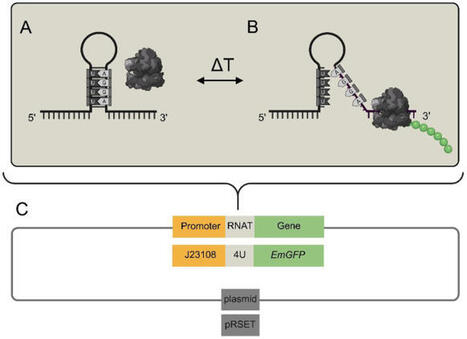
Precision fermentation is a key technology for the future sustainable production of food proteins, bulk ingredients, and high-value recombinant products. However, process efficiency is often limited by the coupling of biomass formation and recombinant protein synthesis, leading to substantial carbon losses into non-recyclable biomass. Particularly for cost-sensitive bulk products such as food proteins, economically viable production requires highly efficient and dynamically controllable bioprocesses. RNA thermometers (RNATs) offer a promising inducer-free strategy for temperature-dependent control of recombinant protein production and dynamic bioprocess regulation, with the potential to improve carbon efficiency and product yields. Results In this study, a fluorescent reporter protein (EmGFP) under the control of a fourU (4U) RNA thermometer was evaluated in E. coli BL21 across a temperature range of 25–40 °C. Temperature-dependent regulation enabled maximal recombinant protein production at 35 °C, resulting in a 2.6-fold higher specific productivity compared to the derepressed control. The strongest RNAT-mediated regulatory effect was observed at 35.5 °C, highlighting the relevance of precise temperature control for recombinant protein production. Evaluation of altered carbon partitioning revealed a substantially increased carbon allocation toward product formation, while carbon partitioning into biomass and CO2 remained largely unchanged. Furthermore, the product-per-acetate yield increased more than threefold at induction temperature, indicating controllable carbon partitioning and reveals potential for decoupling approaches of biomass formation from recombinant protein production. This study demonstrates the successful implementation of an RNAT-controlled recombinant expression system enabling temperature-dependent regulation of protein production in E. coli. Quantitative analysis revealed controllable carbon partitioning toward recombinant protein synthesis and defined target temperatures for future process induction and switching. In contrast to conventional inducer-based systems, RNAT-mediated regulation enables dynamic control without chemical additives, supporting more resource-efficient bioprocess operation. However, fully exploiting RNAT-based process control will require advanced model-based strategies integrating temperature and feeding regimes, particularly for cost-sensitive precision fermentation processes such as food protein production. Overall, RNATs represent promising molecular control elements for future high-efficiency precision fermentation processes.
|
|
Scooped by
mhryu@live.com
Today, 1:25 AM
|
High-performance promoters are essential tools for precisely regulating gene expression, yet their rational design within the vast combinatorial sequence space remains a major challenge. Here, we present a hybrid framework that integrates a large language model (LLM) with a diffusion model to enable data-driven and interpretable promoter design. The fine-tuned LLM predicts promoter strength with high accuracy and, through systematic sequence mutations, identifies biologically essential core regions. A diffusion model is then conditioned on these core regions to reconstruct non-core regions and generate complete promoter sequences. We experimentally validated this approach in E. coli by high-throughput barcoded promoter activity sequencing: 7.78% of the designed promoters outperformed the benchmark promoter BBa_J23119, with the best variants reaching approximately 2.5-fold the expression level of BBa_J23119. By explicitly coupling interpretability with generative design, this strategy provides a practical framework for promoter design in E. coli and may be adaptable to other regulatory sequence engineering tasks.
|
|
Scooped by
mhryu@live.com
Today, 1:21 AM
|
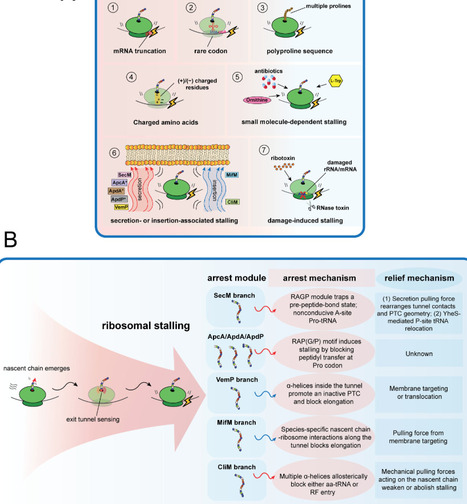
Protein synthesis by ribosomes proceeds through the sequential stages of initiation, elongation, termination, and ribosome recycling. In most bacteria, coupled transcription-translation enhances the efficiency of transcription but limits opportunities to repair or eliminate faulty mRNAs, thereby increasing the likelihood that ribosomes encounter incomplete or damaged transcripts. Furthermore, mRNA integrity can be compromised by transcriptional errors, abortive transcription, nucleolytic cleavage, or chemical damage. Translation of such defective transcripts, as well as other hard-to-translate mRNAs, can impede elongation or termination, resulting in stalled ribosome complexes that sequester ribosomes and tRNAs, thereby reducing their availability for subsequent rounds of translation. To maintain translation capacity, bacteria employ dedicated ribosome rescue and quality control pathways that resolve stalled complexes and promote the turnover of aberrant mRNAs and nascent polypeptides. Here, we summarize the molecular mechanisms underlying bacterial ribosome stalling, describe the pathways that rescue stalled ribosomes, and discuss current technologies for detecting ribosome stalling. We also highlight the physiological roles of programmed ribosome stalling and explore the potential of ribosome rescue pathways as druggable sites.
|
|
Scooped by
mhryu@live.com
Today, 1:10 AM
|
Filamentous fungi harbor numerous silent biosynthetic gene clusters (BGCs), representing an underexplored reservoir of natural products. Chemical inhibition of epigenetic regulators is an effective strategy for activating silent BGCs, but it often lacks specificity and cannot readily link activated clusters to their cognate regulators. Here, we developed a coupled cytosine base editing and auxotrophic selection platform in Aspergillus nidulans to systematically identify epigenetic regulators of silent gene clusters. An sgRNA library targeting 24 core epigenetic regulators was introduced, together with a cytosine base editor, into 21 pyrG-based PKS reporter strains, enabling growth-based selection and direct sgRNA recovery by Sanger sequencing. This screen identified five regulator-cluster activation pairs, including known interactions and two previously uncharacterized mechanisms. Specifically, KdmB represses the AN7084 gene cluster by erasing promoter H3K4me3, whereas Kmt5 silences the cichorine core pks gene through H4K20me3 deposition. This scalable platform enables rapid matching of silent BGCs with their epigenetic regulators and advances chromatin-guided fungal genome mining.
|
|
Scooped by
mhryu@live.com
October 14, 11:58 PM
|
Microbial cell factories integrate metabolic engineering, synthetic regulation, protein engineering, and computational design to improve catalytic performance and process robustness. Within this landscape, amide transforming enzymes provide diverse functions ranging from nitrogen metabolism and hydrolysis to covalent protein remodeling. This review examines amidases, asparaginases, glutaminases, nitrilases, nitrile hydratases, acylases, and carbamylases, with particular emphasis on microbial transglutaminase (MTGase). MTGase is distinguished by its ability to catalyze covalent ε-(γ-glutamyl) lysine crosslinking through acyl transfer reactions, enabling protein stabilization, molecular assembly, immobilization, and spatial organization of catalytic systems. This review critically examines the transition from classical amide transforming enzymes toward engineered biocatalytic systems and evaluates how MTGase could be leveraged as a protein level control component in microbial cell factories. Experimental developments in MTGase production, structural and protein engineering, synthetic genetic circuits, CRISPR based regulation, metabolic control, nanobiomaterials, and spatial biocatalysis are evaluated alongside computational approaches including AlphaFold assisted structure prediction, molecular docking, molecular dynamics, machine learning guided mutagenesis, and metabolic modeling. Emphasis is placed on experimentally validated outcomes and current limitations. Key unresolved barriers include intracellular off target crosslinking, proteostatic burden, variable crosslink stoichiometry, limited temporal control of MTGase activity, chassis dependence, and industrial scale up. Where direct evidence is lacking, prospective applications are distinguished from established capabilities and corresponding engineering strategies are proposed. Collectively, this review envisions MTGase as a controllable protein level platform for synthetic biology, while defining the evidence, limitations, and experimental requirements needed for its broader application in microbial biotechnology.
|
|
Scooped by
mhryu@live.com
October 14, 11:18 PM
|
Genetically encoded bioluminescent calcium indicators enable excitation-free imaging of Ca2+ dynamics with low background and without excitation-associated photobleaching. However, many exhibit lower dynamic ranges than their fluorescent counterparts, motivating the development of new sensor configurations, particularly for imaging in the red optical window, where tissue absorption and scattering are reduced. Here, we developed HyBRIC and HyBRIC2, two hybrid indicators that integrate Ca2+-dependent luciferase activation and bioluminescence resonance energy transfer (BRET) within a single molecular architecture. When paired with pyCTZ luciferin, they exhibited an approximately 55-fold Ca2+-dependent signal increase in red-window emission in vitro. Compared with HyBRIC, HyBRIC2 showed improved brightness and responsiveness in mammalian cells. It robustly resolved induced Ca2+ dynamics in HEK293T and HeLa cells, with particularly strong red-window responses. Together, these findings expand the limited repertoire of responsive red-window bioluminescent calcium indicators and establish hybrid sensing as a modular strategy for improving biosensor contrast.
|
|
Scooped by
mhryu@live.com
October 14, 10:55 PM
|
Engineering robust fermentation hosts remains a barrier to scalable biomanufacturing. In this work we replace canonical mixed-acid fermentation in E. coli with a redox‑balanced reverse β‑oxidation (rBOX) pathway that produces medium‑chain fatty alcohols and is bioenergetically equivalent to ethanol fermentation. This synthetic fermentation restores anaerobic growth, tightly coupling fitness to product formation and enabling adaptive laboratory evolution that selects for mutations increasing rBOX flux. Evolved strains increase maximum productivity fourfold (110 ± 0.15 mg/L/hr) and titer more than threefold up to 4.0 ± 0.28 g/L compared to the unevolved strain. Proteomic analyses of evolved strains indicate differential expression of enzymes at key metabolic nodes and activation of latent genes with functions overlapping those of rBOX enzymes. These results establish redox-balanced growth coupling as a powerful tool for strain improvement and demonstrate rBOX as a practical synthetic fermentation pathway. Engineering robust fermentation hosts remains a barrier to scalable biomanufacturing. Here the authors link E. coli growth to fatty-alcohol production via the reverse β‑oxidation pathway, enabling self-improvement of alcohol production through bacterial evolution.
|
|
Scooped by
mhryu@live.com
October 14, 10:39 PM
|
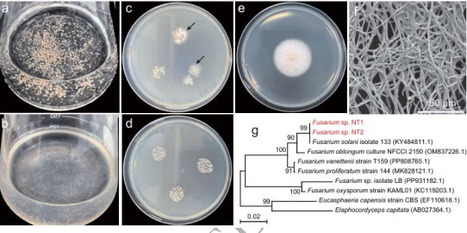
Nitrogen fertilization accelerates soil acidification by stimulating ammonia oxidation, yet the dominant active ammonia oxidizers and their acid-adaptation strategies remain unresolved. We combined DNA stable isotope probing (DNA-SIP) with enrichment cultivation, metagenomics, and metatranscriptomics to identify active ammonia oxidizers and characterize acid-tolerance responses in a maize-cultivated black soil from Northeast China. Repeated urea and NH4Cl additions stimulated nitrification and acidified the soil, with pH decreasing from 7.35 to 4.73 under NH4Cl addition. DNA-SIP showed that ammonia-oxidizing bacteria (AOB), rather than ammonia-oxidizing archaea (AOA), dominated active ammonia oxidation during acidification. Phylogenetic analysis of amoA sequences from isotope-labelled higher-density DNA fractions identified Nitrosospira-related D11 and D12 clusters among active AOB. An acid-tolerant enrichment culture retained nitrification activity at pH 5.0 and yielded a D11-affiliated Nitrosospira MAG, designated Nitrosospira sp. NT. Its amoA sequence showed 98.2% nucleotide identity to a SIP-derived D11 amoA sequence, linking the enrichment-derived population to an active soil D11 cluster. Under acidic conditions, the enrichment culture showed pronounced aggregation with increased fungal occurrence, suggesting that fungal occurrence may be associated with the aggregated phenotype. Genomic and transcriptomic analyses indicated coordinated responses involving substrate acquisition and acid buffering, respiratory energy metabolism, intracellular pH homeostasis, envelope stress responses, and candidate systems potentially related to surface-associated growth and stress responses. These findings link community-level SIP evidence with genomic and transcriptional insights from an enrichment-derived representative of an active D11 cluster and show that acid-tolerant AOB can dominate active ammonia oxidation and sustain nitrification during nitrogen fertilizer-induced acidification in the black soil examined.
|
|
Scooped by
mhryu@live.com
October 14, 6:22 PM
|
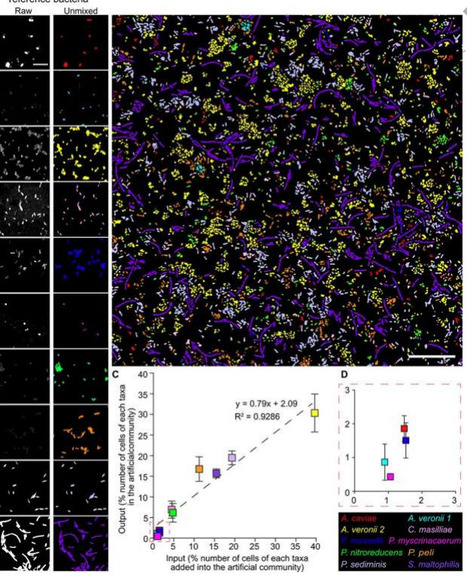
The spatial organization of microbial communities is a critical determinant of host-microbe interactions, yet species-level mapping remains challenging due to high 16S rRNA sequence homology and spectral crosstalk in multiplexed fluorescence in situ hybridization (FISH). To address this challenge, we developed Cross-hybridization Inference for Phylogenetic Resolution (CIPHR)-FISH, a pipeline that integrates strategic probe design with supervised machine learning. CIPHR-FISH transforms probe cross-hybridization, traditionally viewed as experimental noise, into informative molecular signatures. Using a gnotobiotic zebrafish model colonized with a defined mix of 10 zebrafish bacterial strains, we trained a support vector machine (SVM) on empirical hybridization patterns from pure bacterial cultures. CIPHR-FISH achieved 99.2 % macro-averaged accuracy, significantly outperforming standard linear unmixing (62.5 %), and successfully discriminated strains with 99.7% sequence homology. Applying this tool to gnotobiotic zebrafish larvae revealed distinct biogeographies: the intestinal bulb hosted highly structured, multi-layered polymicrobial aggregates, while the skin exhibited sparse, uniformly dispersed individual bacterial cells. Notably, we observed significant variation in spatial community structure that was obscured by traditional bulk 16S rRNA sequencing. CIPHR-FISH provides a robust framework for high-resolution spatial biology by converting the limitations of molecular labeling into a rich data source for taxonomic classification. This approach enables the quantification of micro-scale ecological and stochastic forces that shape the microbiome across hosts.
|
|
Scooped by
mhryu@live.com
October 14, 5:02 PM
|
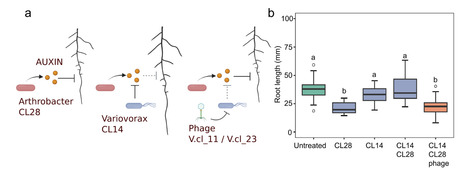
Testing microbial interaction hypotheses, including metabolite cross-feeding, remains a major challenge in microbiome research. Phages have the potential to probe organism-organism interactions within complex microbiomes yet are rarely utilized for this purpose. Here, we isolated nine narrow host-range phages that replicate in several ecologically important Variovorax species. We used three of the phages to deplete Variovorax SCN45 from complex enrichment communities (containing 18 to 31 species) to test correlation network-based hypothesis of thiamine interdependencies. Genome-resolved metagenomics revealed that a Leifsonia population decreased in relative abundance following Variovorax SCN45 depletion but could be rescued by thiamine supplementation. As a further demonstration of this approach, we used phages to eliminate Variovorax CL14 from a defined rhizosphere co-culture grown with Arabidopsis, where Variovorax CL14 degrades the plant hormone auxin produced by Arthrobacter CL28, and re-established the stunted root phenotype. Thus we confirmed thiamine production as the mechanistic basis for interdependence between Variovorax and Leifsonia. These experiments lay the foundation for research that employs wildtype and engineered phages to test interaction hypotheses and for targeted microbiome manipulation.
|
|
Scooped by
mhryu@live.com
October 14, 3:00 PM
|
Retrons are bacterial immune systems that prevent phage propagation by initiating a toxic response within infected hosts. Previously characterized retrons produce abundant multicopy single-stranded DNA (msDNA) by reverse transcription, which acts as an antitoxin in the absence of phage. However, we describe here a non-canonical mechanism for type VI retrons, which do not produce detectable msDNA in the absence of phage yet still provide defense. Focusing on Retron-Vpa2 from V. parahaemolyticus, we show broad defense against phages and identify triggers of the system when expressed in E. coli. Within the retron operon, we find a highly enriched, structured transcript that we term a hybrid RNA (hyRNA). The hyRNA contains the reverse transcription template and a toxin coding sequence that is repressed by a riboregulator. In our model of triggering, phage infection induces accumulation of msDNA, which hybridizes to the riboregulator and enables RNase H cleavage, derepressing translation of the toxin.
|
|
Scooped by
mhryu@live.com
October 14, 2:50 PM
|
The growing availability of 3D protein structures enables large-scale assessment of missense variants and their phenotypic impact. Missense3D, first developed in 2019, predicts the structural consequences of amino acid substitutions and provides mechanistic explanations by identifying features such as cavities, steric clashes and disrupted non-covalent bonds that may cause protein misfolding. The new Missense3D algorithm presented here accepts genomics, protein, and structural coordinates; models variants on both single proteins and protein-protein complexes using experimental and predicted structures, including AlphaFold models; performs automated sequence-structure mapping; and evaluates structural model quality before analysis. The Missense3D web server is freely available to all users, including commercial ones, at https://missense3d.bc.ic.ac.uk/~missense3d2/
|



















1str