Your new post is loading...

|
Scooped by
mhryu@live.com
Today, 4:43 PM
|
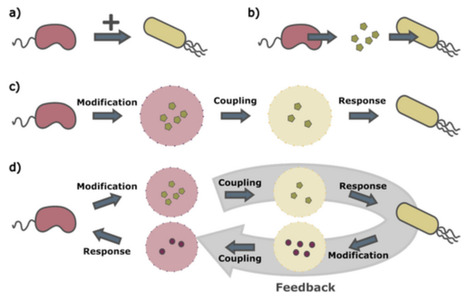
Microbial communities contribute to numerous processes that profoundly impact planetary and human health. They therefore hold potential for addressing many of today's pressing global challenges. Microbial ecosystems have been studied at many levels, ranging from the molecular processes of individual cells to the emergent properties and functions of the entire collective. One notable complexity of these ecosystems is that microbes are constantly engaged in interactions with their environment and other microbes, which in turn influences not only their own growth but also community function, assembly, and stability. While interactions are very often the subject of contemporary microbiology research, these studies often lack precise, mechanistically rooted characterizations of these interactions. In this article, we propose strategies to overcome such limitations by providing a conceptual framework for describing microbe–microbe interactions and discussing the implications of this framework for the study of microbial communities and their evolution. Starting from basic principles, we build a mechanistic description of microbial interactions that treats each interaction as a series of modular, interconnected subprocesses. We then examine how this modularity shapes microbial communities and their evolution, as well as how this modularity can improve our approaches for characterizing and mathematically modeling microbial ecosystems.
|
|
Scooped by
mhryu@live.com
Today, 4:30 PM
|
Global surveys of microbial communities across biomes have shown that environmental variables such as depth and pH are strong determinants of community composition. However, we do not understand how the traits of individual taxa, and their evolutionary conservation, conspire to give rise to these patterns. Exploiting large-scale surveys of top soil and marine microbiomes, we use canonical correlation analysis (CCA) to concurrently infer directions of environmental variation and the associated compositional changes. We find that the primary canonical direction, capturing the dominant environmental gradient, exhibits a strong phylogenetic signal: individual species' responses to environmental shifts along this direction are similar among taxa with shared evolutionary history. In contrast, secondary canonical directions show weak or no phylogenetic structure. Together, these results suggest a two-scale view of microbial community assembly. Deeply evolutionarily conserved traits govern community reorganization along the main environmental driver of community composition. Additional environmentally driven changes in community composition then reflect traits that are more evolutionarily labile.
|
|
Scooped by
mhryu@live.com
Today, 4:18 PM
|
Bilirubin, the predominant product of heme catabolism in mammals, enters the intestine via the hepatobiliary system and subsequently is metabolized by the gut microbiome. This process consumes bilirubin and generates multiple downstream derivatives, such as urobilinogen and stercobilinogen. Levels of bilirubin and its derivatives are associated with susceptibility to inflammatory and metabolic disorders, but the microbial species and enzymes that metabolize bilirubin have remained largely unknown. Here, demonstrate that metabolism of bilirubin to urobilinogen requires two separate reactions that can occur in either order and identify novel enzymes and pathway intermediates required for conversion. We find that bilirubin reductase (BilR), an enzyme that was recently discovered and proposed to convert bilirubin to urobilinogen, is specific for reducing the methine bridges of bilinoids, converting bilirubin to the novel intermediate divinylurobilinogen and mesobilirubin to urobilinogen. Using transcriptomic profiling, we identify the bilinoid vinyl reductase (BilV) responsible for reducing the vinyl groups of bilirubin and divinylurobilinogen. BilV is a flavin-dependent oxidoreductase of the Old Yellow Enzyme (OYE) superfamily with a broad distribution across human gut bacteria that overlaps with but does not completely mirror the distribution of BilR. These findings establish the complete pathway for bacterial conversion of bilirubin to urobilinogen, enabling defined studies to interrogate how this metabolism contributes to human health and disease.
|
|
Scooped by
mhryu@live.com
Today, 4:11 PM
|
Commercially available make-on-demand libraries now exceed 100 billion compounds, requiring over 50 years to screen on 2,000 CPU cores using conventional docking. We present two complementary approaches to address this challenge. CombiDOCK, a combinatorial docking framework, enables exhaustive screening at the 100-billion scale within 40 days. MINT-Dock, a generative framework, accelerates navigation of this space by integrating CombiDOCK with Monte Carlo Tree Search. Benchmarked on 46 diverse targets, CombiDOCK matched full-molecule docking accuracy, and MINT-Dock achieved a 4,800-fold enrichment over random selection. Compared with prior billion-scale brute-force campaigns against σ2, VMAT2, and VAChT, prospective CombiDOCK screens of the 100-billion-molecule library yielded higher hit rates and more potent ligands, while MINT-Dock achieved comparable outcomes across single- and multi-target objectives with >20-fold computational cost reductions. Docking-predicted poses of the best VAChT-binding compounds were confirmed by cryo-EM structures. These methods provide exhaustive and generative paths for navigating the trillion-molecule frontier of drug discovery.
|
|
Scooped by
mhryu@live.com
Today, 3:58 PM
|
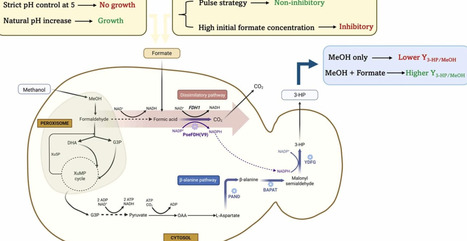
Komagataella phaffii is a promising cell factory that can use CO2 derived methanol, a sustainable carbon (C1) source, for chemical production. Introducing the ß-alanine biosynthetic pathway alongside a NADP+-dependent formate dehydrogenase (FDH) in K. phaffii enables the production of the platform chemical 3-hydroxypropionic acid (3-HP). Co-feeding of formate and methanol (MeOH) was systematically explored to enhance cellular reducing power and improve 3-HP biosynthesis. Implementing a pulsed formate strategy alongside MeOH resulted in up to a 20.7% increase in 3-HP per gram of MeOH (Yg3-HP gMeOH-1) compared to MeOH alone in shake flask cultivations. This co-feeding strategy likely enhanced NADPH availability through formate oxidation via the introduced NADP⁺-dependent FDH, thereby improving redox balance, as supported by simulation studies based on the K. phaffii genome-scale metabolic model. Similar improvements were demonstrated in repeated batch cultivations at 1-L bioreactor scale, where a formate pulse every 4-hour led to a 25.8% increase in Yg3-HP gMeOH-1 and a 41% increase in volumetric productivity over the control without formate (only MeOH). In addition to the feeding strategy, pH regulation also played a crucial mechanistic role: strict pH control at 5 inhibited growth, due to the predominance of undissociated formic acid, whereas allowing the pH to rise to 6-7 favored dissociation and supported higher productivity. These findings elucidate the pH dependent nature of formate assimilation and highlight the potential of coupling MeOH and formate co-utilization with dynamic feeding and pH strategies to enhance bioproduction in K. phaffii.
|
|
Scooped by
mhryu@live.com
Today, 3:46 PM
|
Gene silencing mediated by double-stranded RNA (dsRNA) is a promising strategy for crop protection. However, unlike applications targeting fungi or insects, effective antiviral use of exogenous dsRNA requires delivery into the plant cytoplasm, where viruses replicate. Limited cellular uptake and rapid instability on leaf surfaces have driven the development of diverse nanocarrier platforms, including layered double hydroxides, carbon nanotubes, mesoporous silica nanoparticles, chitosan complexes, lipid-based particles and bacterially encapsulated dsRNA. Although these systems often enhance dsRNA stability and apoplastic accumulation, robust symplastic delivery remains poorly characterized. Here we critically examine the gap between experimental success and agronomic performance of nanocarrier-enabled dsRNA delivery systems. Comparative analyses suggest that carrier dose, size, ζ-potential and organic phase affinity influence systemic translocation within the plant, providing a framework for rational carrier design. Defining such principles will be essential for translating RNA-based antiviral strategies into reliable field applications. This Perspective reviews emerging nanocarriers for RNA delivery in agriculture and outlines future research directions, emphasizing that efficient delivery into plant cells, where viruses replicate, remains a key bottleneck for viral disease control.
|
|
Scooped by
mhryu@live.com
Today, 3:34 PM
|
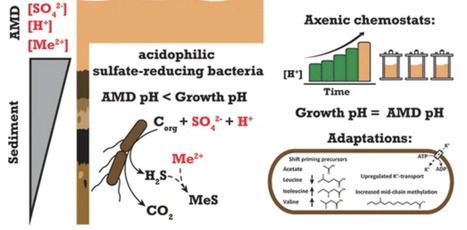
Acid mine drainage (AMD) waters are a global environmental threat due to their extremely low pH (<3) and high metal loads. Acidophilic sulfate-reducing bacteria (aSRB) can mitigate AMD by reducing sulfate to sulfide, a proton-consuming process that also precipitates metals as metal sulfides. Although sulfate reduction has been observed in AMD waters, most characterized aSRB are only moderately acidophilic. Here, we examined the pH tolerance and proton stress adaptation of the complete organic acid-oxidizing aSRB Acididesulfobacillus acetoxydans. Continuous chemostat cultivations were operated across a pH gradient, reaching steady states from pH 5.0 (optimum) to pH 2.9. In subsequent batch incubations, biomass from a pH 2.9 chemostat remained metabolically active at pH 2.5. Transcriptomic profiles remained remarkably stable across conditions, except for the upregulation of the K+-transporting ATPase (kdpABC) at lower pH, suggesting an increased reliance on the chemiosmotic gradient to impede proton influx. Lipid analysis revealed increased core lipid saturation, midchain methylation, and a shift in priming precursors from leucine to valine at low pH, indicating reduced membrane permeability and more energy-efficient biosynthetic pathways. Together, these adaptations likely reduce proton entry, explaining how aSRB adapt to AMD-like acidity and unlock the pH bottleneck for AMD bioremediation and metal recovery.
|
|
Scooped by
mhryu@live.com
Today, 1:02 AM
|
E. coli strains are widely used across numerous industrial and biotechnological applications. Yet their performance varies substantially in ways that can not be anticipated from genome annotation. Because transcriptional regulatory networks (TRNs) govern cellular functions such as motility, stress responses, metabolic flexibility, and production efficiency, differences in TRN organization and use may underlie many observed phenotypic differences. To investigate TRN differences between strains, we generated a compendium of 433 matched RNA-Seq profiles for six commonly used industrial E. coli strains (BL21, C, Crooks, MG1655, W, and W3110) and applied iModulon analysis to compare the state of their TRNs under similar growth conditions. This analysis revealed that core regulatory programs with similar functions are wired differently across the strains, and that the strains engage these programs in distinct ways when exposed to the same environmental challenges. Together, these findings highlight transcriptional regulation diversity underlying phenotypic expression among industrial E. coli strains. By providing an integrated view of TRN differences across widely used hosts, this work offers a fundamental basis for interpreting strain-specific behaviors and supports more informed approaches to strain selection and optimization.
|
|
Scooped by
mhryu@live.com
Today, 12:37 AM
|
Biotech is back. But continued investor caution, the rise of China and fast-moving AI are changing the sector’s contours. industry
|
|
Scooped by
mhryu@live.com
Today, 12:03 AM
|
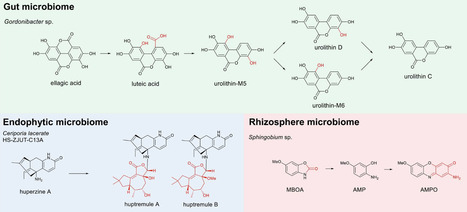
Plant-derived metabolites in foods and herbal medicines are frequently transformed by microbial communities before they reach systemic circulation. Consequently, the chemical forms responsible for biological activities often differ from the compounds originally present in plant matrices. This review examines the microbial biotransformation of plant metabolites through a mechanism-focused framework that integrates enzymology, reaction chemistry, and community-level context. We organize known transformations into recurring reaction classes, including hydrolytic activation, redox remodeling, functional-group tailoring, and scaffold rearrangement. We also discuss how omics approaches enable pathway attribution and enzyme prioritization in complex microbial communities. Finally, we highlight the emerging strategies that modulate these transformations through dietary composition, fermentation, and metabolite-focused interventions.
|
|
Scooped by
mhryu@live.com
June 10, 11:28 PM
|
As plastic is increasingly found in natural environments, concern has grown about its biological effects beyond individual-level impacts, particularly on species health, food-web dynamics and ecosystem functioning. In this Review, we summarize current evidence on plastic exposure pathways, organismal responses and potential effects at higher levels of biological organization. Impacts on individual organisms can be acute or chronic, and include physiological stress, disrupted locomotion, feeding and reproduction, internal injury, and death. Sublethal effects might not be immediately detectable but can have profound implications for individual fitness. Although macroplastics can cause mortality, their role in population declines remains largely uncertain, and demonstrated impacts beyond the individual level are rare. Clear evidence of population-level harm from microplastics to wild organisms is lacking. Nevertheless, emerging research demonstrates a growing likelihood of broader effects, particularly for species with high plastic-encounter rates. Connecting environmental exposure to individual-level fitness and population-level consequences is a critical frontier. Future research must prioritize long-term monitoring, demographic modelling and high-throughput methods to accurately quantify risks to biodiversity. Effective solutions must be context-specific, span local to global scales, account for interactions with other stressors and integrate plastic pollution mitigation policies with broader conservation strategies to safeguard biodiversity in the Anthropocene. Plastic pollution is pervasive across ecosystems, but its impacts on biodiversity remain poorly understood. This Review assesses current understanding of exposure and biological effects, evaluating the evidence for broader biodiversity impacts and outlining priorities for research, monitoring and mitigation.
|
|
Scooped by
mhryu@live.com
June 10, 5:04 PM
|
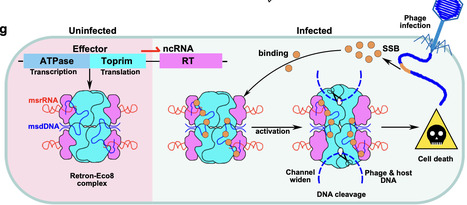
The Retron-Eco8 system, comprising a reverse transcriptase (RT), a non-coding RNA (ncRNA), and an OLD-family nuclease effector, protects bacteria from phage infection via abortive infection upon sensing a phage single-stranded DNA-binding protein (SSB). However, the molecular basis of this immunity remained unclear. Here, we report cryo-electron microscopy (cryo-EM) structures of Retron-Eco8 in inactive and activated states, revealing mechanisms of phage-triggered activation and effector function. Retron-Eco8 assembles into a tetrameric complex in which each protomer contains an RT, msrRNA–msdDNA duplex, and effector in an autoinhibited conformation. Upon phage infection, phage SSB binds msdDNA, relieving autoinhibition and activating the nuclease effector to degrade both phage and host DNA, triggering cell death to block phage propagation. Host SSB fails to activate the system, while DNA binding and oligomerization of phage SSB are essential for this activation, highlighting its specificity. These findings elucidate the molecular mechanism of Retron-Eco8-mediated immunity, facilitating retron-based biotechnological applications. Bacterial Retron-Eco8 defends against phages via abortive infection. Here, Ji et al. reveal that phage SSB binding to msDNA relieves Retron-Eco8 autoinhibition, triggering cellular DNA degradation and cell death for population protection.
|
|
Scooped by
mhryu@live.com
June 10, 4:52 PM
|
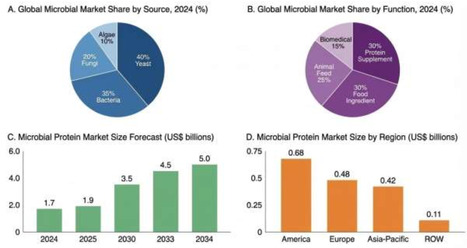
Microbial biomass fermentation, in which microbes are cultivated to produce nutrient-dense biomass, offers a scalable route to sustainable protein production with low land, water, and greenhouse gas footprints. However, its shift from a speciality to a mainstream food continues to be difficult. Here, we move beyond technological overviews and propose a three-phase adoption framework: novelty barrier, early trust-building, and mainstream normalization. This framework organises techno-economic, regulatory, and infrastructural barriers into a single trajectory. We trace single-cell proteins’ rise, decline and resurgence, map engineering and policy enablers by phase, and outline levers to move microbial proteins into resilient food systems. Microbial biomass fermentation offers a scalable route to sustainable protein production with a low environmental footprint. In this Perspective, the authors propose a three-phase adoption framework to help move microbial proteins into resilient food systems.
|
|
|
Scooped by
mhryu@live.com
Today, 4:35 PM
|
Correlations between cellular variables, such as gene-expression levels, provide insights into regulatory mechanisms. We focus here on correlations between mRNA and protein levels and re-examine previously derived analytical predictions. We test this prediction on single-cell E. coli data and see substantial disagreement. We hypothesize that this discrepancy arises from the assumption of constant cell volume and develop a theoretical framework for mRNA–protein correlations in growing and dividing cells. Within this framework, we derive an analytical expression for mRNA– protein correlations and show that explicit incorporation of growth and division substantially alters these correlations. The resulting relation is invariant to upstream transcriptional dynamics, and we validate it using stochastic simulations across multiple gene-regulatory architectures. Finally, we show that the derived predictions are consistent with the E. coli data.
|
|
Scooped by
mhryu@live.com
Today, 4:27 PM
|
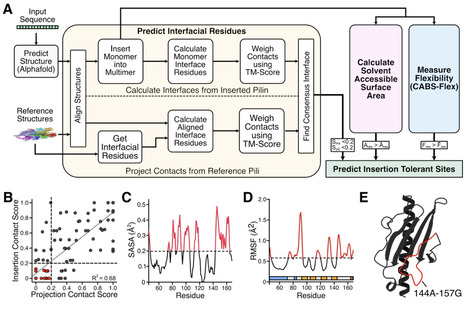
Bacterial surface structures have enabled display systems with broad impact across biotechnology, but their narrow host range limits their deployment into diverse species. Conversely, Type IV Pili (TFP, T4SS) are ubiquitous, structurally conserved appendages found across bacteria, but have been minimally explored for display. Here, we describe a computational framework for predicting viable insertion sites in major pilins for stable TFP-mediated display, which we apply to the major pilin PilA1 of the cyanobacterium Synechocystis sp. PCC 6803 to enable covalent binding to living materials. By analyzing an Alphafold3-generated PilA1 monomer alongside known multimeric TFP multimers, our pipeline identifies non-interfacial, solvent-accessible, and flexible sites for optimal PilA1 display. We probe these sites with both full-length and truncated SpyCatcher003 at two different expression levels. We show that cells expressing these PilA1-SpyCatcher 003 fusions maintain up to 8-fold higher levels of cell suspension than previous C-terminal PilA1 display platforms, suggesting improved TFP assembly despite more than a two-fold increase in cargo size. Additionally, we validate SpyCatcher003 reactivity across the engineered strains, enabling covalent attachment of SpyTag 003-containing proteins on the Synechocystis surface. Lastly, we utilize this covalent patterning to achieve a four-fold increase in Synechocystis loading into a living material without compromising its viscoelastic or mechanical properties. Taken together, this work provides a predictive framework for TFP engineering, and opens the door towards programmable surface display across the breadth of bacterial species.
|
|
Scooped by
mhryu@live.com
Today, 4:14 PM
|
Spurious protein sequences, resulting from gene prediction errors, theoretically should not yield folded structures. AlphaFold2 was previously shown to predict short spurious sequences with high pLDDT scores and was therefore unlikely to distinguish between real proteins and spurious proteins which are usually short. We evaluate whether newer structure prediction methods (ESMFold and AlphaFold3) similarly predict short sequences with high pLDDT or if they better discriminate between spurious and real proteins. All three structure prediction methods (ESMFold, AlphaFold2, and AlphaFold3) predict short spurious sequences from AntiFam with unexpectedly high pLDDT scores, however the discrimination between spurious and real proteins improves beyond 100 amino acids. By analysing sequences with disparate pTM and pLDDT scores, we identified two likely spurious shadow ORFs in Swiss-Prot and one potentially non-spurious AntiFam entry. Using the structure prediction scores, we developed a Gaussian Process Model and evaluated its performance on AlphaFold DB, identifying potential spurious proteins at scale. While limited on its own, this model can increase confidence in spurious protein identification when combined with other methods.
|
|
Scooped by
mhryu@live.com
Today, 4:03 PM
|
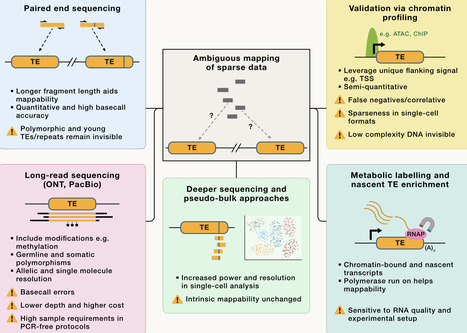
Transposable elements (TEs) comprise nearly half of mammalian genomes and have shaped genome architecture, chromatin organization, and transcriptional landscapes. Thanks to recent advances in long-read sequencing and functional (epi)genomics, the focus has shifted from TE families to individual TE loci, revealing widespread, locus-specific regulatory roles. While most TEs have lost the capacity to mobilize, they still retain a DNA form and, when transcribed, an RNA form, both of which can affect genome regulation. TEs can serve as alternative promoters, exons, splicing regulators, and 3′ end modulators. They can also act as enhancers, drive three-dimensional (3D) genome organization, and give rise to long non-coding RNAs (lncRNAs) that serve as platforms for transcriptional and chromatin regulators. Mechanistically, TE repression involves DNA methylation, histone modification, phase-separated condensates, RNA modifications, RNA degradation, and nuclear compartmentalization, yet this repression can be selectively lifted during development or stress to expand regulatory potential. TEs therefore contribute to cell-type identity, developmental transitions, and responses to environmental stimuli, while their dysregulation is linked to human disorders including neurodegeneration, cancer, and autoimmune disease. TEs also hold translational promise as biomarkers and tools for gene and cell engineering. In summary, the pervasive integration of TEs as mini-genes, structural scaffolds, and regulatory elements redefines our view of the genome: rather than a gene-centric landscape dotted with repetitive “junk,” mammalian DNA is a TE-rich ecosystem in which TEs drive gene regulatory networks and evolution.
|
|
Scooped by
mhryu@live.com
Today, 3:47 PM
|
Fermented food microbial ecosystems are dynamic and shaped by microbes, substrates, and environments, but traditional spontaneous fermentation causes variability in quality and safety, limiting standardization. This review highlighted multi-omics integration to comprehensively characterize microbial composition, dynamics, interactions, metabolites, and phages, and summarized regulation strategies including functional strains, synthetic microbial communities, bacteriophage control, and physicochemical modulation. Finally, the futures and challenges from empirical practice to predictable, scalable industrial fermentation were proposed.
|
|
Scooped by
mhryu@live.com
Today, 3:43 PM
|
Precise timing of gene expression is a common feature in natural regulatory networks but is rarely implemented in synthetic pathways, where static control often limits performance. Here, we expand the use of bacterial extracytoplasmic function (ECF) σ factors by integrating their cognate anti-σ factors to create tunable threshold-gated circuits. Anti-σ overexpression has previously limited the utility of such systems due to growth inhibition. We address this by combining targeted truncations of membrane domains with chromosomal integration, yielding a library of ECF/anti-σ pairs that maintain function while minimizing toxicity. In E. coli, these genetic circuits can enable sharper OFF/ON switching, greater dynamic range, and tunable temporal delays compared with ECF-only cascades. In the best case, single-step threshold gates achieve up to 2100-fold induction with delays spanning minutes to hours. Extending the design to two steps enables programmable cascading of gene expression, with delays ranging from 30 to 409 min, although the dynamic range is generally reduced relative to single-step circuits. In the best-performing designs, matching input-output characteristics of promoters preserves dynamic range across cascade levels. Mathematical modeling supports these findings and highlights σ/anti-σ binding affinity as a key parameter for achieving high performance in longer cascades. Together, these results provide design principles for orthogonal, lower-burden timing circuits that enable controlled, sequential gene expression with minimal intervention in synthetic pathways and highlight continuing limitations of these systems.
|
|
Scooped by
mhryu@live.com
Today, 9:25 AM
|
Corynebacterium glutamicum is a prominent industrial microorganism traditionally employed for amino acid production, and its utility has been progressively expanded as a chassis for producing diverse valuable chemicals. To fully exploit this potential, advanced synthetic biology toolkits and metabolic engineering strategies have been rapidly developed. In this review, we first summarize widely utilized and recently developed tools for genetic engineering in C. glutamicum. We then discuss key metabolic engineering strategies to enhance the production of target chemicals, with an emphasis on systems-level flux optimization, enzyme engineering, transporter engineering, dynamic regulation, and adaptive laboratory evolution. Finally, we outline current challenges and future directions for advancing C. glutamicum as a competitive platform for sustainable biomanufacturing.
|
|
Scooped by
mhryu@live.com
Today, 1:00 AM
|
Broad-spectrum antibiotics profoundly disrupt the commensal microbiota and compromise mucosal immunity, creating a vulnerable postantibiotic window that predisposes hosts to opportunistic infections such as Pseudomonas aeruginosa. Strategies for restoring host homeostasis and stimulating mucosal immunity during this period remain limited. Here, we developed a modular and programmable probiotic strategy based on engineered E. coli Nissle 1917 (EcN) that integrates metabolite replenishment with antigen-specific mucosal immunization. The butyrate-overproducing strain restored immune homeostasis after antibiotic exposure, enhanced baseline pulmonary neutrophil levels, and promoted bacterial clearance upon P. aeruginosa challenge. Additionally, synthetic EcN strains were engineered to release outer-membrane vesicles displaying P. aeruginosa antigens (PcrV or OprL), eliciting a robust pathogen-specific mucosal immunity. In antibiotic-exposed mice, metabolite and immunization modules independently reduced the pulmonary bacterial burden and improved survival following P. aeruginosa infection. Combined administration exerted synergistic protection, resulting in higher survival than the butyrate-overproducing strain alone under a lethal P. aeruginosa challenge. Together, this work establishes a versatile synthetic biology framework in which independently engineered probiotic modules can be flexibly combined to regulate microbiota function and deliver targeted immunotherapy, offering a promising alternative to antibiotic-dependent infection control.
|
|
Scooped by
mhryu@live.com
Today, 12:37 AM
|
Precision fermentation is redefining microbial food manufacturing by enabling programmable biosynthesis of nutrients and functional ingredients. Despite this progress, industrial-scale deployment is limited by metabolic burden, growth-production trade-offs, biosafety concerns, and the costs of downstream processing. Conventional intracellular systems inherently generate host-derived impurities and endotoxins, challenging food-grade standards. Here, we review platform-level advances that decouple biosynthesis from cellular constraints and streamline process design, with a focus on approaches aligned to food industry requirements. We highlight cell-free systems and non-replicative minicells as intrinsically contained production chassis, detail advances in secretion and efflux engineering for efficient extracellular product recovery, and discuss division-of-labor microbial consortia to address resource allocation limits. Together, these innovations integrate biosafety and process efficiency, providing a safe-by-design framework for next-generation microbial food systems that meet both regulatory and industrial needs.
|
|
Scooped by
mhryu@live.com
Today, 12:00 AM
|
Because mutation rates vary widely across genomes and environments, natural selection is typically presented with highly biased variation. Yet, the idea that mutational tendencies can influence adaptation is still controversial. While mutation-driven adaptation has been observed in diverse taxa, critics contend it reflects small populations or weak-effect mutations. Therefore, the importance and generality of this phenomenon remain unclear, largely due to a lack of empirical tests across broad population-size gradients and multiple fitness-relevant traits. Here, we address this gap using a system in which two E. coli mutator lineages evolve antibiotic resistance via two mutationally favored, yet genetically distinct, routes. Simulations and experiments show that the scaling of mutation-biased adaptation with population size is complex, highly dependent on biological details, and – most critically – on how closely mutation bias aligns with selection. Contrary to the common view, we find that mutation-biased adaptation may not wane in large populations, but instead intensify depending on the bias. Crucially, we demonstrate that distinct mutation biases produce markedly different collateral sensitivity profiles to multiple antibiotics, even at large population sizes. Our findings suggest that mutation-biased adaptation may be widespread, with far-reaching and unpredictable consequences both within and beyond the original selective context. Adaptation is assumed to proceed by survival of the fittest. The study shows that mutation bias can drive adaptation via survival of the likeliest, steering bacteria along divergent paths to resistance with major consequences for control strategies.
|
|
Scooped by
mhryu@live.com
June 10, 11:25 PM
|
Intensive reliance on conventional synthetic agrochemicals has been linked to environmental degradation and human health risks. Integrating nano-agrochemicals into agricultural practices could boost yields and reduce environmental footprints. In this Review, we evaluate the functions, market penetration, and benefits and risks of nano-agrochemicals in terms of crop productivity, environmental outcomes and human health. Nano-agrochemical formulations, primarily nano-fertilizers and nano-pesticides, are designed for targeted delivery and enhanced efficacy. Despite their promise, nano-agrochemicals currently represent <1% share of the global agrochemical market. Nanoformulations can boost crop yields by approximately 20%, largely through increased nutrient-use efficiency. However, their performance depends on environmental factors, such as soil texture, pH and ionic strength, which govern nanoparticle stability. Application methods (foliar versus soil) further interact with biological factors, including the above-ground and below-ground microbiotas, leaf and root exudates, and soil fauna, to influence nano-agrochemical bioavailability and uptake by plants. Nanofertilizers reduce nutrient leaching and nanopesticides minimize non-target toxicity, collectively reducing environmental and human health risks. Monitoring and regulatory frameworks remain highly heterogeneous across regions, with contrasting approaches in major agricultural producers, including the European Union, USA, China, Brazil and India. Future work should prioritize a universal ‘One Health’ assessment framework coupled with comprehensive life-cycle analyses to harmonize risk evaluation and guide the responsible global deployment of nano-agrochemicals. Improving agrochemical efficacy is important for safely meeting increasing food demand and responding to environmental change. This Review examines how nano-agrochemicals could boost food production sustainably, discusses their risks and benefits, and outlines approaches to facilitate their safe deployment.
|
|
Scooped by
mhryu@live.com
June 10, 4:59 PM
|
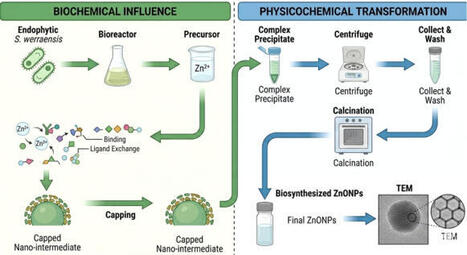
The rising prevalence of multidrug-resistant (MDR) pathogens necessitates the development of sustainable, biocompatible antimicrobial agents. Green synthesis of metal oxide nanoparticles using endophytic microorganisms offers an eco-friendly and bioactive alternative to conventional physical and chemical methods. In this study, zinc oxide nanoparticles (ZnO NPs) were biosynthesized using the cell-free supernatant of Streptomyces werraensis, a novel endophytic actinobacterium isolated from the medicinal plant Passiflora caerulea L. The formation of ZnO NPs was monitored via UV–visible spectroscopy and Fourier Transform Infrared (FTIR) spectroscopy. Morphological and structural characterizations were performed using Transmission Electron Microscopy (TEM), Selected Area Electron Diffraction (SAED), and Dynamic Light Scattering (DLS). The biological potential of ZnO NPs for human health was evaluated through antibacterial assays against a panel of human pathogens and antioxidant assays (DPPH and ABTS). UV–Vis spectra confirmed ZnONP formation with a characteristic band-gap absorption, while FTIR identified proteinaceous and phenolic capping agents. TEM and SAED revealed highly crystalline, predominantly spherical nanoparticles with an average diameter of 136 nm and a wurtzite crystal structure. The biosynthesized ZnO NPs exhibited potent, concentration-dependent antibacterial activity, particularly against Gram-negative strains; Salmonella paratyphi A and Proteus vulgaris showed maximum inhibition zones of 19.0 ± 0.64 mm and 16.4 ± 0.68 mm, respectively, which are comparable to those of commercial ampicillin. Antioxidant assays demonstrated significant radical-scavenging potential, with an IC50 of 22.15 ± 1.2 µg/mL in the ABTS assay, approaching that of ascorbic acid. The findings of the present study demonstrate that S. werraensis-mediated ZnO NPs serve as effective “nanogenerators” of oxidative stress, offering a dual-action therapeutic approach. These results highlight the potential of endophytic actinobacteria as sustainable bio-factories for producing functional nanoparticles with promising antimicrobial potential for treating MDR infections.
|