 Your new post is loading...

|
Scooped by
mhryu@live.com
Today, 1:48 AM
|
Microalgae are increasingly recognized as versatile biological platforms capable of supporting sustainable food, energy, environmental, and industrial systems. This review critically evaluates recent advances in microalgal biotechnology, with a focus on applications in which biological performance, resource recovery, and scalability intersect. Emphasis is placed on microalgal biomass composition, including proteins, lipids, polyunsaturated fatty acids, pigments, and polysaccharides, and how these components underpin applications in food, feed, biofuels, bioremediation, and bioproduct development. Environmental applications, particularly wastewater treatment and carbon capture, are examined as integrated systems that couple nutrient removal with biomass valorization. Advances in strain improvement, including genetic engineering and multi-omics approaches, are discussed alongside persistent limitations related to species-specific transformability, production costs, and downstream processing. Rather than providing an exhaustive survey, this review highlights cross-sectoral trends, quantitative performance metrics, and technological bottlenecks that constrain commercialization. By comparing biological potential with engineering and economic realities, this work identifies priority research directions needed to advance microalgae-based systems within circular bioeconomy frameworks.
|
|
Scooped by
mhryu@live.com
Today, 1:44 AM
|
Bacteria encode diverse defence systems, including restriction–modification and CRISPR–Cas, that cleave nucleic acid to protect against phage infection. Bioinformatic analyses demonstrate that many recently identified antiphage defence operons comprise a nuclease and NTPase protein, suggesting that additional nucleic acid-targeting systems remain to be understood. Here we develop large-scale comparative cell biology and biochemical approaches to analyse 16 nuclease–NTPase systems and define molecular features that control antiphage defence. Purification, biochemical characterization and in vitro reconstitution of nucleic acid degradation demonstrates that protein–protein complex formation is a shared feature of multigene nuclease–NTPase systems. We show that PaAbpAB, BtHachiman and EcPD-T4-8 system nucleases use highly degenerate recognition site preferences to enable broad nucleic acid degradation, and the Azaca system exhibits specific phage targeting through the recognition of modified phage genomic DNA. Our results uncover principles of antiphage defence system function and highlight the mechanistic diversity of nuclease–NTPase systems in bacterial immunity. A large-scale, comparative cell biology and biochemical screen defines the molecular features controlling antiphage defence systems that encode nuclease effectors and accessory NTPase proteins.
|
|
Scooped by
mhryu@live.com
Today, 1:31 AM
|
Dissecting the functional impact of genetic mutations is essential to advancing our understanding of genotype-phenotype relationships and identifying therapeutic targets. Despite progress in sequencing and genome editing technologies, proteome-wide mutation effect prediction remains challenging. Here we show that evolutionary information alone enables accurate prediction of mutation effects across entire proteomes. ProteoCast is a scalable and interpretable computational method that leverages protein sequence conservation to classify genetic variants and identify functionally important protein sites. We apply ProteoCast to the complete Drosophila melanogaster proteome (22,000 isoforms, 300 million mutations) and validate it against nearly 400,000 natural and experimental variants. It correctly classifies 85% of known lethal mutations as functionally impactful versus 13-18% of population variants. ProteoCast-guided genome editing experiments confirm these predictions. Moreover, ProteoCast successfully identifies functionally important protein modification sites and binding motifs. ProteoCast provides a publicly available resource and deployable pipeline for studying gene function and mutations in any organism. This study introduces ProteoCast, which uses protein sequence conservation to predict mutation effects proteome-wide. Validated on 400,000 Drosophila variants and genome editing experiments, it accurately identifies functionally critical sites in any organism.
|
|
Scooped by
mhryu@live.com
Today, 1:06 AM
|
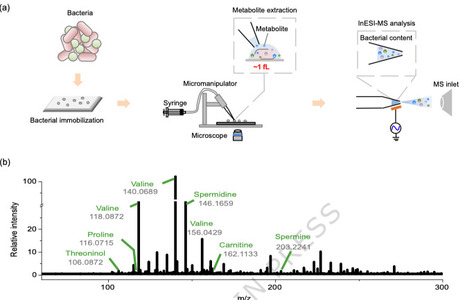
Bacterial metabolism is a complex system of interwoven pathways coordinated by an intricate, multilayered regulatory network. Dissecting the metabolism at single bacterial level is highly challenging. Herein, we greatly increase the sensitivity of the bacterial measurement with our home-made single-bacterium metabolome (SinBactM) mass spectrometry platform, which combines micro-extraction with induced nanoelectrospray ionization mass spectrometry, for mapping metabolites of the primary bacterium. The universal applicability of the SinBactM platform is demonstrated by successfully discriminating distinct metabolic profiles across different bacterial species. By measuring the bacterial uptake of antibiotics and observing the dynamic metabolic changes in response to external stimuli, the accuracy and reliability of SinBactM platform are further validated. We apply SinBactM to characterize clinical heteroresistant K. pneumoniae strains metabolic alteration under antibiotic perturbation. Several different subpopulations resulting from antibiotic perturbation are classified based on their metabolome, while pseudotemporal ordering reveals a trajectory of metabolic change across subpopulations. Thus, SinBactM platform paves the way for profiling metabolomics of individual bacterial cells, which might provide an exciting dimension to a thorough understanding of antibiotic-resistant evolution for in-depth interrogation of resistant mechanisms. Here the authors present a single-bacterium metabolomics platform that enables sensitive metabolic profiling of individual bacteria, revealing metabolic heterogeneity in heteroresistant K. pneumoniae strains and providing insights into bacterial survival and resistance.
|
|
Scooped by
mhryu@live.com
Today, 12:54 AM
|
Human bacterial pathogens can be part of the soil microbiota, but their prevalence and global distribution is unknown. Using metagenomic approaches, Xiong and colleagues identified 80 bacterial taxa of human pathogens in 1,602 soil samples collected across all continents. Among these, 25 taxa, including highly pathogenic ones, were present in high relative abundance in more than 80% of all soil metagenomes. The relative abundance of these dominant pathogens correlated positively with the presence of pathogenic features such as virulence factors in the metagenomic samples. Moreover, these distributions correlated with global mortality patterns of the associated infectious diseases, which suggests that soil-associated human pathogens represent a potential global risk. These dominant pathogens were especially prevalent in tropical and temperate ecosystems, their distribution correlating positively with rainfall and temperature but negatively with soil microbiota diversity. Predictions taking into account trends of global precipitation and temperature changes revealed a global increase in the proportion of human pathogens in the soil worldwide. These results suggest that knowledge about the prevalence of human bacterial pathogens in soils, influenced by climatic conditions and soil biodiversity, is important to improve risk assessment and management strategies against infectious diseases.
|
|
Scooped by
mhryu@live.com
Today, 12:50 AM
|
CRISPR–Cas12a is a versatile RNA-guided nuclease that has rapidly gained prominence for its dual functionality in genome editing and nucleic acid detection. In this Review, we discuss the structural, biochemical and mechanistic features of Cas12a that underpin its autonomous processing of the guide RNA and indiscriminate cleavage of single-stranded DNA, which enable Cas12a applications ranging from gene therapy to rapid diagnostics. We discuss key allosteric regulators and functional modules that orchestrate Cas12a activity, focusing on the core regulatory structural elements that control maturation of the guide RNA, target specificity, and both cis-cleavage and trans-cleavage activities, including the determinants of off-target cleavage. We provide a comparative analysis of Cas12a and the widely used Cas9, which further illuminates the distinctive attributes of Cas12a, and discuss recent advances in the characterization of its orthologues and in the development of engineered variants that expand its capabilities. Collectively, we present a comprehensive understanding of Cas12a and its increasing impact on biotechnology, therapeutics and molecular diagnostics. This Review discusses the unique features of the functionally versatile nuclease Cas12a, including allosteric regulation, structural elements controlling guide RNA maturation, target specificity, cis-cleavage and trans-cleavage activities and determinants of off-target cleavage. These features increase the applicability of Cas12a in biotechnology, therapeutics and molecular diagnostics
|
|
Scooped by
mhryu@live.com
Today, 12:37 AM
|
Microbial electrochemical technologies connect living microorganisms with electrical systems to enable sustainable processes. These systems use the natural electron transfer abilities of microbes to support clean energy generation, transform waste and pollutants, and recover valuable resources. Microorganisms act as living catalysts whose biological traits and energy requirements determine system performance. Recent advances have expanded these technologies toward chemical production and new electronic applications, while improved engineering has increased their readiness for practical use. At the same time, these systems offer a powerful platform for studying fundamental microbial processes in real time. This review outlines the biological foundations of microbe–electrode interactions, highlights current applications relevant to circular resource use, and identifies scientific and engineering challenges that must be addressed to unlock broader societal and economic benefits. The goal is to emphasize the growing potential of microbe–electrical interfaces to support transformative solutions for environmental sustainability. Microbial electrochemical technologies can enable clean energy, waste conversion, and resource recovery, according to a literature synthesis on microbe-electrode interactions and engineered bioelectrochemical systems.
|
|
Scooped by
mhryu@live.com
Today, 12:16 AM
|
Although valued for their nutritional content and flavor, peanuts are ranked among the nine major food allergens in the United States, capable of inducing life-threatening reactions mediated by immunoglobulin E (IgE). Ara h 1, Ara h 2, Ara h 3, and Ara h 6 are recognized as major allergens due to the prevalence and structural stability of their epitopes, which make them resistant to digestion and processing. To address these challenges, processing treatments of different natures have been tested (e.g., physical, chemical, and biological) to reduce the allergenic content and create safer and more nutritious nuts. Allergen degradation studies discussed in this paper highlight the roles of endogenous peanut enzymes and microbial metabolites, as well as computational tools useful to model theoretical protein transformation under degradative treatments. Fermentation is emphasized for its multifactorial potential, combining the synthesis of bioactive metabolites by generally recognized as safe (GRAS) microbes with their proteolytic and redox activity to reduce allergenicity in peanuts while improving nutritional and sensory quality. Despite significant progress of these approaches, the development of a viable hypoallergenic peanut product remains elusive. Therefore, potential fermentation enhancers are discussed, including the addition of naturally extracted polyphenols that can alter the structure of peanut epitopes while increasing their proteolytic susceptibility. This review integrates structural insights, physical, chemical, and biological interventions, and computational approaches to provide a comprehensive perspective on peanut allergen reduction. By emphasizing epitope-targeted fermentation and synergistic treatments, we outline directions for developing safer peanut-based foods that balance efficacy, feasibility, and consumer acceptance.
|
|
Scooped by
mhryu@live.com
Today, 12:06 AM
|
The exceptional pressure resistance of bacterial spores limits the application of high hydrostatic pressure (HHP) in food sterilization, yet the underlying mechanisms remain poorly understood. Here, we examined how structural modifications (coat, cortex, inner membrane [IM], α/β-type small acid-soluble proteins [α/β-type SASPs]) in Bacillus subtilis spores affect HHP-induced germination, superdormant (SD) subpopulation, and inactivation, which together define HHP resistance. Key findings reveal that (i) coat defects likely alleviate cortex compression on IM, thereby influencing germination-associated proteins. This alteration reduces germination efficiency at 200 MPa but enhances it at 500 MPa, leading to an expanded SD subpopulation and increased resistance at 200 MPa, while a diminished SD ratio and reduced resistance at 500 MPa; (ii) increased cortex cross-linking combined with core expansion potentially modifies IM properties, strongly affecting germination-related proteins. This change markedly promotes germination under both 200 and 500 MPa, resulting in decreased SD ratios and thus lower spore resistance under both conditions; (iii) reduced cardiolipin content in IM likely alters its biophysical properties, specifically increasing germination efficiency at 500 MPa. This contributes to a lower SD ratio and reduced resistance at 500 MPa; (iv) the absence of α/β-type SASPs has minimal effect on resistance at 500 MPa but reduces resistance at 200 MPa by decreasing the SD ratio, potentially due to spontaneous germination after treatment. Collectively, HHP resistance is modulated by multiple structural components through distinct mechanisms. Structural modifications that alter IM biophysical properties or the function of germination-related proteins appear to be critical regulators of pressure-induced germination.
|
|
Scooped by
mhryu@live.com
April 27, 11:16 PM
|
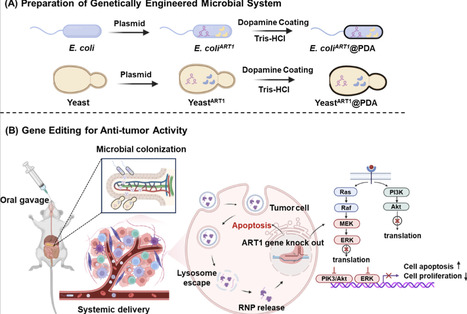
Colorectal cancer (CRC) poses a serious threat to human health. CRISPR/Cas9 technology offers new therapeutic strategies for the management of this disease, but its oral application is severely hindered by the limitations of suitable delivery systems. Herein, we develop and compare two separate orally delivered, genetically and chemically modified CRISPR/Cas9 delivery platforms based on E. coli BL21 and Pichia pastoris X33, which upon colonization in the intestine, secreted extracellular vesicles carrying the Cas9 protein and ART1-targeting sgRNA for tumor-specific gene disruption. Arginine ADP-ribosyltransferase 1 (ART1) plays a crucial role in the biological regulation of colon cancer, which was for the first time to the best of our knowledge, employed in vivo as a target gene in this study. Furthermore, we employed polydopamine (PDA) coating and gastrointestinal synthetic epithelial lining systems to facilitate microbial viability and intestinal retention, establishing on site cell factories for sustained CRISPR secretion. In subcutaneous tumor-bearing murine models, both delivery systems demonstrated comparable antitumor efficacy with significant tumor suppression. Taken together, the genetically modified microbial platform using bacterial and yeast strategies shows great potential and broad therapeutic versatility, offering a promising CRISPR-based solution for CRC treatment.
|
|
Scooped by
mhryu@live.com
April 27, 11:06 PM
|
Engineering of microbial cells, including E. coli, is essential in prototyping genetic designs used in numerous applications throughout synthetic biology. While many advanced genome editing tools, such as CRISPR-based tools, offer new capabilities with genetically recalcitrant organisms, these tools often do not offer an immediate advantage in readily manipulated microbes, such as E. coli, especially when scarless modifications are not critical. We describe a comprehensive recombineering tutorial that we commonly use for multiplex engineering of E. coli using antibiotic markers. We leverage a group of 15 antibiotic resistance cassettes, most of which can be readily included when designing double-stranded DNA donors intended for recombineering and purchased from several vendors. Using these methods, 10–15 defined modifications to a single host strain can be achieved in less than three weeks, using two-day editing cycles. We discuss sequences and protocols as well as the optimal design of genetic modifications and the associated DNA.
|
|
Scooped by
mhryu@live.com
April 27, 10:56 PM
|
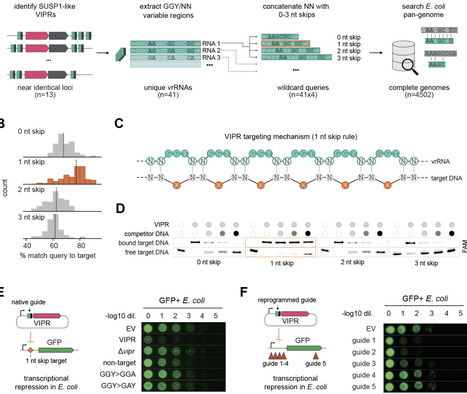
CRISPR-Cas systems use RNA-guided proteins for adaptive immunity through a mechanism whose origin is unknown. Here we report the discovery of Viral Interference Programmable Repeat (VIPR) systems consisting of a Vipr protein more ancient than CRISPR-Cas and vrRNAs comprising alternating GGY/NN motifs. Unlike canonical guide RNAs that base pair with nucleic acid targets using an uninterrupted sequence, vrRNAs recognize double-stranded DNA through a noncontiguous code in which the variable NNs of each repeat collectively specify a target that itself contains a gapped recognition sequence. Analysis of natural vrRNA targets suggests VIPR acts against competing phages. We demonstrate programmable phage defense by redirecting the complex for transcriptional repression. These results suggest that the roots of adaptive immunity lie in ancient warfare between viruses, and reveal a new logic for programmable genetic control.
|
|
Scooped by
mhryu@live.com
April 27, 7:37 PM
|
To overcome protein aggregation and poor secretion during the production of the thermophilic glycogen branching enzyme from Aquifex aeolicus (AaGBE) in Bacillus subtilis, this study developed a two-stage fermentation strategy that decouples cell growth from protein folding. This physiological approach was combined with multilevel engineering, including a protease-deficient host, a signal peptide-independent secretion pathway, a high-copy plasmid with tandem promoters, and N-terminal coding sequence optimization. The integrated strategy effectively alleviated aggregation, achieving an extracellular AaGBE titer of 0.42 g/L and an activity of 1,012 U/mL─representing a 55-fold improvement over the unoptimized strain. The purified AaGBE exhibited a specific activity of 2389 U/mg and retained robust thermostability. These results demonstrate that decoupling cell growth from protein folding provides an effective strategy for the secretion of aggregation-prone industrial enzymes.
|
|
|
Scooped by
mhryu@live.com
Today, 1:47 AM
|
Cell–cell interactions are fundamental to multicellular organisms, governing development, maintaining tissue homeostasis, and enabling responses to perturbations. Accordingly, the development of effective tools to investigate cell–cell communication in its native context is essential for addressing fundamental biological questions. In recent years, substantial progress has been made toward studying these processes directly in vivo, where cellular dynamics, tissue architecture, and environmental cues are preserved. This review discusses these in vivo advances, focusing on how chemical and synthetic biology tools enable the interrogation and control of cell- and protein-mediated communication in living organisms. We discuss the evolution of these technologies and illustrate how they are being applied to uncover general principles of cellular interaction within complex biological systems.
|
|
Scooped by
mhryu@live.com
Today, 1:34 AM
|
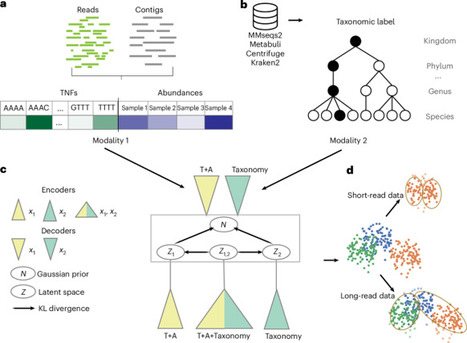
A common procedure for studying the microbiome is binning the sequenced contigs into metagenome-assembled genomes. State-of-the-art binning methods use coabundance and sequence-based motifs such as tetranucleotide frequencies, whereas taxonomic labels derived from alignment based classification have not been widely used. Here we propose TaxVAMB, a metagenome binning tool based on semisupervised bimodal variational autoencoders, combining tetranucleotide frequencies and contig coabundances with taxonomic information. TaxVAMB outperformed all other binners on CAMI2 human microbiome datasets, returning on average 29% more high-quality assemblies than the next best binner, and performed on par with the best binners on short-read datasets. On a human gut long-read dataset, TaxVAMB recovered 29% more high-quality bins. In a typical single-sample setup, TaxVAMB on average returns 83% more high-quality bins compared to VAMB. Lastly, TaxVAMB binned incomplete genomes better than any other tool, returning on average 300% more high-quality bins of incomplete genomes than the next best binner. TaxVAMB combines sequence features with taxonomic information for improved metagenome binning.
|
|
Scooped by
mhryu@live.com
Today, 1:21 AM
|
Gram-negative bacteria use a plethora of virulence factors to infect eukaryotic cells. CE-clan protease-related virulence factors were reported to act as deubiquitinases/ubiquitin-like specific proteases. Some have an additional acetyl-transferase activity. The molecular mechanisms underlying this dual activity and the physiological consequences are only marginally understood. Here, we report crystal structures for the Simkania negevensis virulence factor SnCE1 in apo-states and in complex with SUMO1. We confirm SnCE1 acting as an efficient deSUMOylase and discover an intrinsic autoacetyltransferase activity. Acetylation impairs SnCE1 tetramer formation structurally being incompatible with SUMO1 binding. We provide a model for regulation of SnCE1-mediated virulence by lysine acetylation modulating autoproteolytic processing and its subcellular distribution in the host cell. SnCE1 localizes to the endoplasmic reticulum in human cells and increases fragmentation of mitochondria. Our data provide mechanistic insights into how lysine acetylation of virulence factors is used to reprogram virulence adjusting it to the host cells’ metabolic state. Gram-negative bacteria use diverse virulence factors to infect eukaryotic cells. Here, the authors perform structure-function analyses on the S. negevensis deSUMOylase SnCE1 and provide mechanistic insights how lysine acetylation reprograms virulence adjusting it to the host cells’ metabolic state.
|
|
Scooped by
mhryu@live.com
Today, 12:59 AM
|
Since their discovery, bacteriophages—viruses that infect bacteria—have been invaluable to molecular biology and biotechnology. Renewed interest in phage-based antimicrobials, driven by the global antibiotic resistance crisis, highlights the need for improved quantitative tools. While conventional double-layer plaque assays (DLA) have provided foundational insights, they are limited by their inability to monitor infection dynamics over time and the inflexibility in experimental setups. Here, we present a high-throughput droplet microfluidics platform to quantify individual phage infection events. By co-encapsulating individual phages and bacteria in microfluidic droplets, we precisely control key experimental parameters such as exposure time and the ratio of phages to bacteria. This approach enables direct quantification of lysis events and measurement of lysis kinetics without interference from further progeny-driven infection processes inherent to bulk cultures. Applicable to diverse phage-host systems, this method offers a dynamic and accurate framework for studying phage biology and supports the development of phage-based antimicrobial strategies. Bacteriophages are key tools in molecular biology and promising agents against antibiotic-resistant bacteria. Here, the authors present a high-throughput droplet microfluidics platform that co-encapsulates single phages and bacteria to quantify individual infection events and lysis kinetics under precisely controlled conditions.
|
|
Scooped by
mhryu@live.com
Today, 12:52 AM
|
Plant-based platforms offer a sustainable alternative to chemical synthesis for producing high-value biological products, including therapeutic proteins and peptides, vaccines, antibodies, nutraceuticals, and specialised metabolites. Peptide-based therapeutics in particular hold enormous potential due to their specificity, safety, and efficacy in treating a wide range of diseases. Peptides that are comprised of the 20 canonical amino acids can be produced in plants, but challenges such as toxicity to host cells, aggregation, misfolding, susceptibility to proteolytic degradation, low expression levels, and challenges in dealing with post-translational modifications can limit successful biosynthesis. This review provides a comprehensive analysis of current successes and limitations in the field, and potential biotechnological strategies and exogenous treatments to overcome limitations, to enhance peptide production in plants.
|
|
Scooped by
mhryu@live.com
Today, 12:49 AM
|
Soil and sediment microbiomes have a central role in biogeochemical cycling, climate regulation and ecosystem resilience. However, they are increasingly degraded by land use change, pollution and climate change. Despite their foundational roles in ecosystems, these microbiomes remain under-represented in ecosystem restoration science, practice and policy. Improving the integration of microbiomes across the restoration science–practice–policy nexus is essential for achieving more effective and resilient restoration outcomes. Without this, global restoration risks neglecting the microbial foundations of functional ecosystems and long-term resilience. In this Review, we synthesize the current state of knowledge of soil and sediment microbiome restoration. We describe the major anthropogenic stressors that are degrading these microbiomes, highlighting the linked and context-dependent nature of these impacts, and evaluate existing strategies to restore them. To improve restoration effectiveness, we propose a research workflow that encompasses baseline establishment, degradation diagnostics, designing and testing interventions, research methodology selection and best practice principles. We also outline key theoretical frameworks and propose future research priorities to help soil and sediment microbiome restoration to move towards a predictive, theory-led discipline. In this Review, Wood and colleagues discuss how anthropogenic pressures are degrading soil and sediment microbiomes, propose restoration strategies and emphasize the importance of integrating microbiome science into global ecosystem restoration efforts.
|
|
Scooped by
mhryu@live.com
Today, 12:24 AM
|
The HMMER web server, available at https://www.ebi.ac.uk/Tools/hmmer, provides online access to tools from the HMMER software suite (http://hmmer.org/) for protein analysis using profile hidden Markov models. Users can perform sequence similarity searches against a range of regularly updated protein sequence databases or annotate protein sequences with domains and families using profile HMM libraries from protein family databases. Since the 2018 update, the continued exponential growth of sequence databases has necessitated substantial infrastructural improvements to maintain search performance speed and service reliability. To achieve this, the web interface has been completely reengineered using modern web technologies (JavaScript and React), providing users with an enhanced experience, including session-based search history and streamlined results visualization. The web application programming interface has been rewritten to better support programmatic access with updated endpoints and JSON-based responses. The infrastructure has been redesigned to efficiently handle searches against much larger databases through horizontal scaling and asynchronous job processing. Target database offerings have been updated to reflect current usage patterns and data availability. The HMMER web server is free and open to all users, and there is no login requirement.
|
|
Scooped by
mhryu@live.com
Today, 12:10 AM
|
Plant-associated microorganisms can break down many contaminants, including naphthenic acid fraction compounds (NAFCs)—one of the toxic contaminants in oil sands process-affected water (OSPW). One way to take advantage of these processes is to use constructed wetland treatment systems (CWTSs), where aquatic plants work in coordination with microorganisms to remediate OSPW. However, the dynamics of the microbial communities and the potential contribution of distinct bacteria and fungi inhabiting sediments, rhizosphere, and water that comprise these systems remain poorly understood. To address this, we planted water sedge (Carex aquatilis) in mesocosm-scale wetland systems and compared it with unplanted controls. Naphthenic acid fraction compound (NAFC) concentrations and microbial community dynamics among various mesocosm compartments were monitored using mass spectrometry and high-throughput sequencing of the bacterial-archaeal 16S rRNA gene and the fungal ITS2 region. Carex-planted mesocosms reduced NAFC concentrations more rapidly than the unplanted controls, which coincided with shifts in abundance for both bacterial and fungal communities, especially in the Carex rhizosphere. The strongest relationships between microbial taxa and the decrease in NAFC concentrations were for anaerobic bacteria, suggesting a prominent role for these bacteria in NAFC degradation in CWTS. This study highlights potential microbial targets for improving CWTS efficiency for NAFC detoxification during OSPW remediation.
|
|
Scooped by
mhryu@live.com
April 27, 11:58 PM
|
The number of published isothermal amplification assays has increased substantially in recent years. Unfortunately, no harmonized guidelines, such as the Minimum Information for Publication of Quantitative Real-Time PCR Experiments guidelines, exist for publishing these methods, often resulting in incomplete reporting of assay composition and performance. In this study, we systematically evaluated nine published loop-mediated isothermal amplification (LAMP) assays for the detection of Pseudomonas aeruginosa. We aimed to assess whether publications provide (i) sufficient information on assay composition to allow implementation and reproduction and (ii) robust data on assay performance to evaluate their applicability. Assays were screened for basic functionality, analytical specificity, sensitivity, and limit of detection (LOD) in head-to-head experiments with qPCR. Four assays lacked essential composition details, and almost all did not report DNA concentrations or replicate numbers. Only six assays consistently amplified target DNA. Analytical specificity testing with 19 non-target strains contradicted previously reported 100% specificity, with only 3 maintaining specificity above 90% in our evaluation. Sensitivity testing with 13 P. aeruginosa strains confirmed 100% sensitivity for two assays. However, LOD experiments revealed significantly higher values than originally reported, with qPCR outperforming all LAMP assays. These findings highlight substantial discrepancies between published data and real-world assay performance. The absence of standardized formats, consistent units, and complete methodological details undermines replicability. Although this study focused on P. aeruginosa, the identified issues are widely relevant across different microbial targets. We advocate for increased publication standards and quality controls to ensure transparency, utility, and comparability of isothermal amplification assays and to support their translation into clinical and environmental applications. benchmark
|
|
Scooped by
mhryu@live.com
April 27, 11:12 PM
|
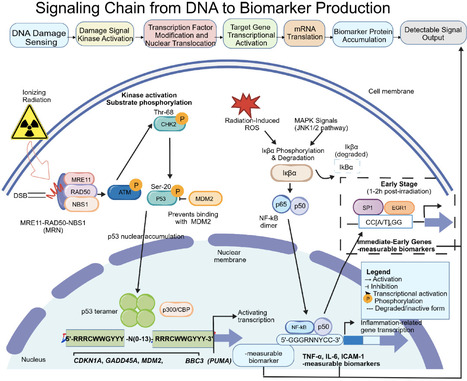
Radiation-responsive promoters represent a functionally distinct class of transcriptional regulatory elements that translate genotoxic stress signals into quantifiable gene expression outputs. These promoters occupy a unique mechanistic position within the broader radiation biomarker landscape: rather than directly measuring molecular damage products, they report the cellular interpretation of radiation-induced stress through coordinated gene regulatory networks. This review provides a systematic analysis of five major classes of radiation-responsive promoters—microRNA (miRNA) promoters, tRNA-derived small RNA (tsRNA) promoters, acute-phase protein gene promoters, DNA repair gene promoters, and long non-coding RNA (lncRNA) promoters—with emphasis on their regulatory logic, dose-response characteristics, and current evidence for clinical deployment. We further describe four complementary screening strategies: homology-based conservation analysis, functional genomics and transcriptomics, epigenetic modification profiling, and synthetic biology promoter engineering. Applications spanning biosensor development, biological dosimetry, treatment response prediction, and radiation-guided gene therapy are evaluated within a two-track framework that distinguishes biomarker-oriented applications (Track A) from tool-oriented reporter gene systems (Track B). Critical appraisal of current limitations—including insufficient clinical-grade validation, absence of standardized dose-response curves, and reproducibility deficits—is integrated throughout. Future priorities include multi-center prospective validation studies, FAIR-compliant data infrastructure, AI-driven multi-omics integration, and point-of-care detection platforms. Radiation-responsive promoter biology holds significant potential for advancing precision radiotherapy and nuclear emergency medical response, contingent upon systematic closure of the current evidence gap relative to established gold-standard cytogenetic methods.
|
|
Scooped by
mhryu@live.com
April 27, 11:00 PM
|
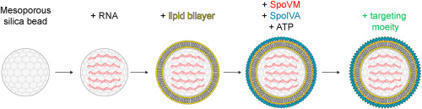
RNA therapy, which includes delivery of mRNA or siRNA, shows promise for treating various diseases, but difficulties in targeting specific cell types and low efficiency of loading RNA into nanoparticles remain hurdles to achieving widespread use. Previously, we reported the assembly of biocompatible synthetic bacterial spore-like particles, termed “SSHELs”, which are built atop a porous silica core encased in a lipid bilayer and two bacterial proteins that form a stable proteinaceous surface that may be covalently modified with targeting proteins of interest. Here, we employ micron-scale SSHELs constructed using a fusogenic lipid and decorated with affibodies targeting cell surface HER2 to specifically deliver model mRNA and siRNA molecules specifically to HER2-positive ovarian and breast cancer cells, with high RNA loading efficiency and cargo capacity. SSHEL particles therefore represent a versatile vehicle for the delivery of not only small molecules, but also therapeutic RNA to specific cell types.
|
|
Scooped by
mhryu@live.com
April 27, 7:40 PM
|
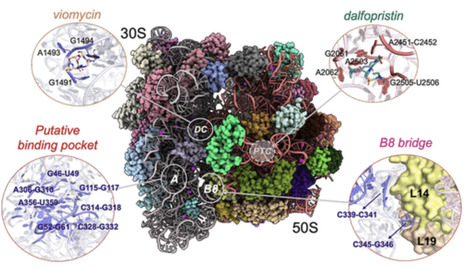
The bacterial ribosome is a key antibiotic target, yet peptide-based modulation from its functional and allosteric sites is underexplored. We developed a computational pipeline combining SiteMap-derived binding-site detection, consensus docking with Glide and rDock, all-atom truncated molecular dynamics (MD), and coarse-grained MD (CGMD) simulations to identify peptide candidates against four E. coli ribosomal sites: the decoding center, peptidyl transferase center, a putative binding pocket on 30S, and the intersubunit bridge B8. Consensus-selected peptides recapitulated hallmark contacts of the native inhibitors viomycin and dalfopristin, and their interaction fingerprints delineate site-specific scaffolds that enable prioritization of inhibitor candidates with enhanced ribosomal affinity, thereby guiding the rational design of novel and effective peptide-based therapeutics. Notably, the peptide CycPeptMPDB_2508 exhibited binding affinity across all investigated sites, nominating it as a versatile lead core for antimicrobial peptide design. Dynamic cross-correlation matrices derived from CGMD simulations captured coupled motions between distal regions of the ribosome, while residue interaction network analysis identified hub residues enriched near the putative binding pocket and B8 bridge, outlining putative allosteric pathways linking local pockets to global motions relevant to decoding and domain closure. This work provides a concise, testable framework for ribosome-targeted peptide discovery and, to the best of our knowledge, constitutes the first ribosome–peptide virtual screening study to employ the viparr module for truncated ribosome–peptide complexes, suggesting the potential applicability of this approach to complex systems and broadening its scope.
|














bioremediation