 Your new post is loading...

|
Scooped by
mhryu@live.com
Today, 3:07 PM
|
Heterotrophic nanoflagellates are the chief agents of bacterivory in the aquatic microbial loop but remain underrepresented in culture collections and in genomic databases. We isolated and characterized a representative of the previously uncultured freshwater Cryptomonad Group 1 (CRY1a) lineage using a genome-streamlined, ultra-small and abundant microbe Planktophila versatilis as a prey and Catalyzed Reporter Deposition-Fluorescence in situ Hybridization (CARD-FISH) probe–based screening. This isolate, Tyrannomonas regina, is one of the most dominant ubiquitous heterotrophic cryptomonads in freshwaters. It is a small heterotrophic nanoflagellate (ca. 3–5 μm) and has the smallest genome of any cryptomonad sequenced thus far. The compact genome (ca. 69 Mb) revealed no traces of a photosynthetic lifestyle, consistent with its phylogenomic placement as a sister clade to cryptophytes that are characterized by the acquisition of a red-algal symbiont. Moreover, in comparison to its photosynthetic counterparts, its genome presents substantially lower repeat content and endogenous viral elements. Genomes of two giant viruses, Tyrannovirus reginensis GV1 and GV2, were also recovered from the same culture and represent a viral genus that has been described so far solely by metagenome-recovered genomes. Collectively, these findings provide insights into genomic ancestry and evolution, widespread ecological impact, and interactions of an elusive protist lineage and illustrate the advantages of culture-centric approaches towards unfolding complex tapestries of life in the microbial world.
|
|
Scooped by
mhryu@live.com
Today, 3:01 PM
|
Coordinating multiple liquid handling robots is a complex logistical task when designing biological experiments. Protocol designers must consider the capabilities and constraints of each robot to distribute work optimally across multiple instruments. We developed an optimization framework that finds optimal liquid handling solutions that leverage an arbitrary number of robots. Our algorithm, called Pourfecto, abstracts the capabilities of each robot and their labware, allowing us to plan and schedule a wide range of biological experiments using commercial instruments and custom-built hardware. Pourfecto can optimize multiple objectives (minimum transfers, fewest reagents, fewest labware swaps) and scales to experiments with hundreds of thousands of liquid transfers.
|
|
Scooped by
mhryu@live.com
Today, 2:51 PM
|
Bacteria have a variety of mechanisms for limiting predation by phages. SpbK is a Toll/interleukin-1 receptor (TIR) domain-containing antiphage defence protein from Bacillus subtilis that provides protection against the temperate phage SPβ via abortive infection. Here we structurally characterise SpbK and its interaction with the SPβ protein YonE. We demonstrate that SpbK is an NADase that produces both ADP-ribose (ADPR) and canonical cyclic ADPR with a N1-glycosidic bond (cADPR, also referred to as N1-cADPR). Combining cryo-EM, in silico predictions, site-directed mutagenesis, and phage infection assays, we show that formation of two-stranded head-to-tail assemblies of SpbK TIR domains is required for both NADase activity and antiphage defence. We also demonstrate that YonE is a dodecameric portal protein that activates the NADase function of SpbK by facilitating TIR domain clustering. Collectively, our results provide insight into how bacterial TIR NADases recognise phage infection. SpbK protects Bacillus subtilis from phage infection by depleting NAD⁺. In this study, the authors uncover the molecular mechanisms underlying SpbK’s self association-dependent NADase activity and its activation by the SPβ phage portal protein YonE.
|
|
Scooped by
mhryu@live.com
Today, 2:41 PM
|
Microbial consortia show promise for bioremediation of environmental pollution, but performance optimization and risk assessment remain challenging due to unculturable species and limitations of traditional biochemical and sequencing tools. This study demonstrates how a multi-omics approach can provide deeper insight into the performance and risks of using a model aerobic ammonia-oxidizing consortium under conditions representative of wastewater treatment. Long-read DNA sequencing recovered several high-quality genomes, revealing dominance by an unclassified Nitrosospira species with expected ammonia oxidation capabilities. Lower-abundance taxa with nitrogen cycling potential were also detected, though species-level identification was limited by poor taxonomic database representation. Multi-omics and nitrogen analyses showed shifts in community composition and nitrogen cycling activity when the consortium was grown along a redox gradient typical of wastewater. All cultures accumulated ammonia over 4 weeks, with only aerobic cultures reducing ammonia levels thereafter. The dominant Nitrosospira population declined in abundance and activity in aerobic cultures while shifting toward nitrogen reduction under anoxic conditions. This metabolic shift would not have been detected using amplicon sequencing alone. Multi-omics also supported risk assessment through detection of waterborne pathogens from the Legionella genus and other lineages harboring virulence genes resembling those from known pathogens. This study highlights the value of multi-omics for optimizing microbial consortia and assessing biosafety risks but also underscores challenges related to effective data analyses and the feasibility of risk assessment under realistic conditions. Addressing these challenges will be essential to support the broader adoption of multi-omics strategies by stakeholders working with microbial consortia across diverse environmental applications.
|
|
Scooped by
mhryu@live.com
Today, 2:28 PM
|
Methane emissions from rice paddies represent a critical environmental concern in agriculture. Although genetic strategies for mitigating emissions have gained attention, the specific microbial and molecular mechanisms remain underexplored. Here, we investigated how the gs3 loss-of-function allele in the near-isogenic rice line Milyang360 modulates rhizosphere and endosphere microbial communities under distinct nitrogen regimes. Field experiments revealed that Milyang360 consistently reduced methane emissions compared with its parental line, Saeilmi, particularly under low-nitrogen conditions. Integrated plant transcriptomic and rhizosphere metagenomic analyses, including the reconstruction of Metagenome-Assembled Genomes, demonstrated that the gs3 allele upregulated genes related to root hair elongation or promoting microbial symbiosis. This physiological change limited substrate availability for methanogens and facilitated the colonization by beneficial microorganisms. Consequently, we observed a functional shift in the microbiome, characterized by the enrichment of methanotrophs and nitrogen-fixing bacteria. This microbial restructuring was most prominent under low-nitrogen conditions, indicating a strong genotype by environment interaction. Our findings highlight the gs3 allele’s dual role in reducing methane emissions and improving nitrogen use efficiency by recruiting a beneficial microbiome. This study provides a clear mechanistic link between a plant gene and rhizosphere ecology, offering a promising genetic target for developing sustainable, low emission rice cultivars.
|
|
Scooped by
mhryu@live.com
Today, 2:13 PM
|
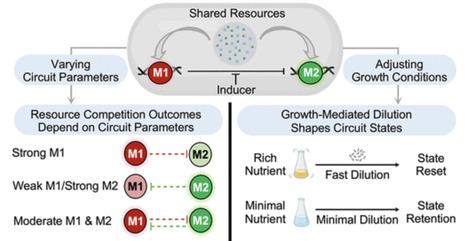
In synthetic biology, a key goal is to design robust and stable genetic circuits with accurate and predictable behavior. Modularity is a central principle in circuit design, enabling the construction of complex systems from smaller, well-characterized parts. However, resource competition presents a major obstacle to modularity by disrupting gene expression dynamics. Here, we constructed and characterized a library of inhibitory genetic cascades with varied promoter strengths, RBS strengths, and plasmid backbones. We found that increasing the expression of the downstream module could unexpectedly lead to a reduction in the expression of the upstream regulatory module by competing for shared cellular resources. These results indicate that resource limitations can transform a unidirectional inhibitory cascade into an unintended feedback loop. In addition, we found that growth-mediated dilution can reshape gene expression patterns, further influencing circuit dynamics. Together, these findings underscore the critical roles of both resource competition and growth dilution in shaping the behavior of synthetic gene circuits.
|
|
Scooped by
mhryu@live.com
Today, 1:25 PM
|
High expression of heterologous proteins is often achieved by integrating multiple copies of a gene into a host. However, such multicopy systems are prone to genetic instability due to homologous recombination between identical sequences. We present the multisequence ChimeraMap (MScMap), an algorithm for designing multiple synonymous coding sequences that minimizes recombination risk while maintaining high expression. MScMap extends the ChimeraMap framework by selecting diverse nucleotide blocks from a host genome to encode the target protein, balancing host adaptation and sequence dissimilarity. We introduce heuristics for block selection and concatenation to reduce long common substrings, a known driver of recombination. Our method outperforms a multi-objective evolutionary algorithm in both genetic stability and predicted expression across a wide range of human proteins while being significantly faster. We also show that MScMap can also be used to reduce sequence repeats within a single coding sequence. A web tool for single and multicopy coding sequence optimization is available online.
|
|
Scooped by
mhryu@live.com
Today, 1:17 PM
|
This work aims to improve RNA synthesis and manufacturing, exemplified by T7 RNA polymerase-driven in vitro transcription. We developed a novel, plasmid-compatible co-tethering strategy that functionally couples RNA polymerase to its promoter DNA immobilized on a solid matrix. As demonstrated recently, co-tethering enhances promoter binding, increases RNA yield, and suppresses RNA re-binding, especially under high-salt conditions, thereby reducing double-stranded RNA by-products. The system leverages asymmetric end-labeling of linearized plasmid DNA using a simple “Klenow fill-in” reaction with modified nucleotides, enabling stable attachment of DNA to both RNA polymerase and solid support (magnetic beads). The immobilized co-tethered polymerase–DNA complex supports efficient transcription initiation in high-salt environments (which further reduces RNA re-binding), yielding RNA of high purity. Co-tethered complex remains functionally stable over extended storage and multiple transcription cycles (10-20 rounds), re-using the enzyme–DNA catalyst. Transcripts of lengths (0.8, 5.6, and 8.6 kb) are efficiently produced. Highly sensitive in vitro assays with immune cells confirm low immunogenicity and strong translational output, while in vivo validation using a novel Matrigel-plugged mouse model demonstrates robust expression and safety. With a simple modification to the DNA template, the reusable, co-tethered enzyme–DNA catalytic complex streamlines mRNA manufacturing by producing RNA of higher purity from the outset.
|
|
Scooped by
mhryu@live.com
Today, 12:56 PM
|
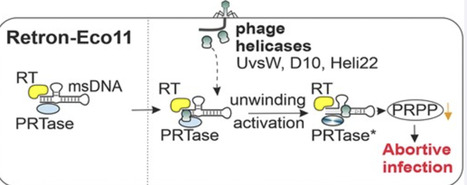
Retrons are tripartite bacterial systems composed of non-coding RNA (ncRNA), reverse transcriptase (RT), and effector proteins with diverse enzymatic domains. Here, we characterized Retron-Eco11, a type III-A3 retron associated with a phosphoribosyltransferase-like effector, and demonstrated that it mediates antiphage defense and can be harnessed for genome editing. All three components—ncRNA, RT, and effector—are essential for defense. Retron-Eco11 protects Escherichia coli against multiple phages and is specifically activated by structurally related, phage-encoded helicases, including UvsW and D10 from phages T4 and T5. We show that these helicases trigger effector-mediated toxicity, leading to abortive infection, which is associated with phosphoribosyl pyrophosphate depletion due to PRTase activation, thereby altering nucleotide metabolism. UvsW interacts directly with multicopy single-stranded DNA, and effector protein activation requires the catalytic activity of phage-encoded helicases. Our data indicate that activation occurs without detectable effector release or measurable changes in the composition of the Retron complex. Beyond its defensive role, Retron-Eco11 enables targeted genome editing in bacterial and eukaryotic cells, underscoring the biological relevance and biotechnological potential of type III-A3 retrons.
|
|
Scooped by
mhryu@live.com
December 28, 12:45 PM
|
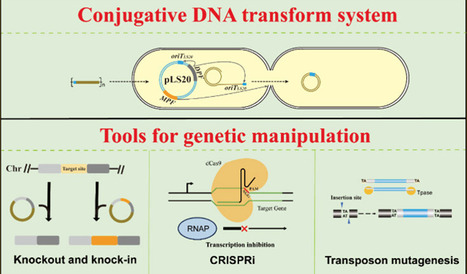
Bacillus licheniformis is a spore-forming bacterium with probiotic, environmental, and industrial applications. Many wild strains with diverse functions have been described in recent years. Nevertheless, the lack of efficient and universal genetic manipulation tools hinders the study and engineering of these strains. Here, a versatile and simple genetic manipulation toolkit is established for B. licheniformis. The cornerstone of this toolkit is a conjugative DNA transfer system. This system could effectively transfer temperature-sensitive plasmid pTSMK into all ten tested B. licheniformis strains, with efficiencies ranging from 10–5 to 10–3. Based on this DNA transfer system, the tools for maker-free knockout and knock-in, CRISPRi, as well as transposon mutagenesis, were built. A transposition frequency of 7.68 × 10⁻³ was observed. The toolkit developed in this study fulfills most tasks in the engineering of this species and will promote the basic and applied research of B. licheniformis.
|
|
Scooped by
mhryu@live.com
December 28, 12:34 PM
|
Phytohormones are compounds produced by plants that can control the processes of plant development and are involved in defense mechanisms. They can serve as sustainable enhancers for plant growth and are also better alternatives to agrochemicals because of their bio-based nature and optimal safety profile towards mammalian cells. Although phytohormones are essential for plant growth, they are naturally synthesized by plants in varying quantities, influenced both by environmental and genetic factors. The synthesis of phytohormones, however, faces several hurdles, including challenges in optimizing the production process as well as difficulties in the extraction of these compounds for downstream applications. In this review, we critically evaluate synthetic biology approaches for phytohormone production, which provides a sustainable method for the production of important phytohormones including auxin, gibberellin (GA), and salicylic acid (SA). These three compounds are highly significant for the agricultural industry because of their widespread utilization.
|
|
Scooped by
mhryu@live.com
December 28, 12:23 PM
|
Lignocellulosic biomass is the most abundant and sustainable carbon source for bioproduction, but its efficient utilization is hampered by the heterogeneous mixture of sugars released upon hydrolysis. Most industrial strains consume these mixed sugars sequentially due to strong regulation and cross-inhibition, leading to complex processes and reduced carbon efficiency. To address this, we leverage a novel central metabolism that decouples central carbon flux from native regulatory feedback by employing a Gluconate-Bypass of glycolysis. We demonstrate that the Gluconate-Bypass effectively alleviates feedback regulation in E. coli, enabling co-consumption of glucose and xylose. Further strain engineering leads to the first robust co-utilization of four major lignocellulosic sugars: glucose, xylose, arabinose, and galactose. By decoupling central carbon flux from native regulatory feedback, this architecture provides a feedstock-agnostic platform that maintains high and robust consumption regardless of extreme fluctuations in sugar composition.
|
|
Scooped by
mhryu@live.com
December 27, 9:59 PM
|
Protein-glutaminase (PG), as a novel food additive with a remarkable deamidation capacity, is naturally expressed as a proenzyme. Activation of the PG proenzyme is mostly dependent on proteases. To address this problem, an intein-mediated activation (IMA) system was developed for PG production using self-splicing inteins that can catalyze a single C-terminal cleavage. In this study, fusion proenzymes were expressed in Escherichia coli by inserting different inteins between the pro-peptide and mature PG and the C-terminal activation efficiency was evaluated in vitro. Subsequently, Mth RIR1 (RIR1) and Mxe GyrA (Mxe) were selected for construction of the IMA system in various Bacillus subtilis strains. Finally, the PG activity increased to 37.2 U/mL after promoter optimization and fed-batch fermentation in B. subtilis WB600. This approach enables one-step and nonprotease-dependent PG production in B. subtilis and establishing an alternative strategy for other proenzyme activation.
|
|
|
Scooped by
mhryu@live.com
Today, 3:03 PM
|
Antimicrobial peptides (AMP) are crucial in addressing the global crisis of bacterial resistance. However, there are still significant limitations in existing methods on de novo AMPs design, especially in designing AMPs with desirable physicochemical properties for specific bacterial pathogens. In this study, we propose a novel generative framework for designing pathogen-targeted antimicrobial peptides with programmable physicochemical properties. More specifically, a conditional Variational Autoencoder is first pretrained for generating AMPs with editable physicochemical properties. We then develop a conditional diffusion model to learn hidden representations of AMPs for targeting pathogens of interest, and construct corresponding MIC predictors for specific bacterial strains. Through comprehensive simulation experiments, we demonstrate that the proposed framework outperforms most existing models in terms of antimicrobial efficacy against specific bacterial targets. Moreover, through systematic screening and analysis, we have identified two star AMPs for each of the two target bacterial species (i.e., E. coli or S. aureus), both of which exhibit excellent performance in antibacterial activity, hemolytic properties, toxicity profiles, etc. Overall, this study provides the key technological support for developing next-generation intelligent platforms for antimicrobial agents design.
|
|
Scooped by
mhryu@live.com
Today, 2:55 PM
|
Phages are typically classified as temperate, integrating into host genomes, or lytic, replicating and killing bacteria; for this reason, lytic phages are not expected in bacterial genome sequences. Here we analyse 3.6 million bacterial genome assemblies from 1,226 species and find 119,510 lytic phage genomes, which we term bacterial assembly-associated phage sequences. This represents a ~5-fold increase in the number of phages with associated hosts and raises questions about fundamental aspects of phage biology. Our analyses of bacterial assembly-associated phage sequences revealed previously undescribed phage clusters, including clusters distantly related to Salmonella Goslarviruses in Escherichia coli and Shigella, while also substantially expanding known genera such as Seoulvirus (from 16 to >300 members). Close relatives of lytic phages used therapeutically were also detected, suggesting clinical isolate sequencing unknowingly archives potential phage candidates. The discovery of complete, lytic phage genomes within bacterial assemblies challenges assumptions about the nature of the lytic lifestyle and reveals an untapped reservoir of phages. Diverse genomes of lytic phages are found in bacterial assemblies, challenging assumptions about the nature of the lytic lifestyle.
|
|
Scooped by
mhryu@live.com
Today, 2:48 PM
|
Untargeted, also known as metagenomic, nanopore sequencing is a powerful tool for virus genomic surveillance, particularly in resource-limited settings and when paired with the portability of the MinION device (Oxford Nanopore Technologies, ONT). However, a major bottleneck for global access is the absence of a user-friendly software capable of efficiently analyzing untargeted nanopore sequencing data to generate high-quality consensus genomes. We share ViMOP, a pipeline built on our long-term experience in nanopore field sequencing. The pipeline emphasizes field user-friendliness, flexibility and versatility to analyze reads generated directly from human clinical samples. The software assembles de novo contigs, matches contigs to known viral references and uses them to assemble consensus genomes. Executed with a single Nextflow command or via the EPI2ME Desktop interface (ONT), results are summarized in an HTML report. ViMOP, through its user-centered design, lowers the barrier to high-quality virus genome reconstruction and advances capacity for genomic surveillance.
|
|
Scooped by
mhryu@live.com
Today, 2:30 PM
|
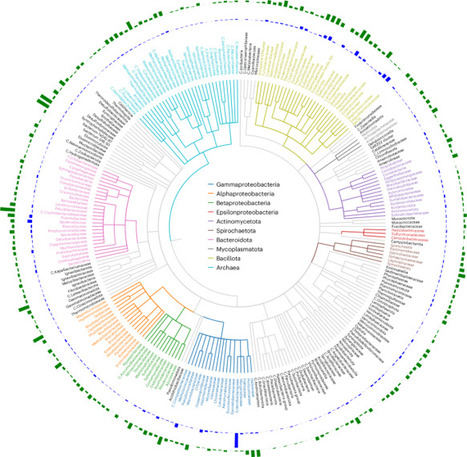
Sporulation is a strategy employed by many bacteria to survive harsh environmental conditions. The genus Paenibacillus includes spore-forming species notorious for spoiling pasteurized dairy products and for causing American foulbrood in honeybee larvae, leading to colony collapse. Human pathogens within Paenibacillus are also a growing threat, causing fatal opportunistic infections. Here, we present a comprehensive survey of sporulation genes across 1,460 high-quality Paenibacillus genomes. We find that all members of the sporulation-initiating phosphorelay are well conserved, but that the Spo0B phosphotransferase contains a predicted transmembrane domain. We confirm that this domain localizes Spo0B to the cell membrane and therefore refer to this Spo0B variant as Spo0B-TM. Spo0B-TM is present in 92% of surveyed Paenibacillus genomes. Consistent with its high level of conservation, we find that the transmembrane domain is important for detecting its interaction with its phosphorelay partners Spo0A and Spo0F. Moreover, we find that Spo0B exhibits low sequence identity across Bacillota when compared with other members of the phosphorelay. Altogether, this work highlights the potential for diversity even within the highly conserved phosphorelay that initiates sporulation in Bacillota.
|
|
Scooped by
mhryu@live.com
Today, 2:23 PM
|
AlphaFold (AF) has transformed protein structure prediction and is increasingly enabling the rational redesign of glycosyltransferases (GT) involved in the biosynthesis of human milk oligosaccharides (HMOs). AF-derived structural insights deepen our understanding of GT structure–function relationships, supporting targeted engineering to enhance the catalytic efficiency, broaden substrate scope, and improve regiospecificity─key requirements for scalable microbial production of complex long-chain HMOs. Using lacto-N-fucopentaose I (LNFP I) synthesis as a case study, we illustrate how AF-guided modeling facilitates GT redesign for efficient HMO biosynthesis, while also discussing current limitations and challenges toward precision GT engineering.
|
|
Scooped by
mhryu@live.com
Today, 2:09 PM
|
Antimicrobial resistance continues to rise globally, with biofilm-associated infections intensifying the clinical burden through persistent tolerance to antibiotics and evasion of immune responses. Biofilms, structured microbial communities embedded in a protective extracellular matrix, underlie many chronic and recurrent infections, including endocarditis, urinary tract infections, cystic fibrosis lung disease, and device-related infections. Conventional antibiotics often fail in these contexts, and the discovery pipeline for novel agents remains limited. Nano-technology has therefore emerged as a promising alternative, offering unique physicochemical features that enable enhanced penetration into biofilm matrices, improved drug stability, and targeted delivery of therapeutic agents. Diverse nanosystems, including metallic, polymeric, lipid-based, and ligand-functionalized platforms, have shown encouraging results in vitro and in vivo, demonstrating superior biofilm disruption and bacterial eradication compared with conventional therapies. Nevertheless, translating these advances into clinical practice remains challenging. Key barriers include complex and costly synthesis, scalability under good manufacturing practices, limited drug loading efficiencies, variability of preclinical biofilm models, regulatory uncertainties, and the risks of nanoparticle (NP)-induced toxicity, unpredictable biodistribution, and potential resistance development. Moreover, the dynamic interactions between NPs, host fluids, and biofilm extracellular matrices complicate pharmacokinetic and pharmacodynamic predictability. Addressing these obstacles requires coordinated efforts to refine manufacturing processes, standardize biofilm models, and implement nanospecific regulatory frameworks. With careful optimization, nanomedicine holds the potential to redefine the therapeutic landscape for biofilm-related infections.
|
|
Scooped by
mhryu@live.com
Today, 1:22 PM
|
Understanding microbial phenotypes from genomic data is crucial for studying co-evolution, ecology, and pathology. This study presents a scalable approach that integrates literature-extracted information with genomic data, combining natural language processing and functional genome analysis. We applied this method to publicly available data, providing novel insights into predicting microbial phenotypes. We fine-tuned transformer-based language models to analyze 3.83 million open-access scientific articles, extracting a phenotypic network of bacterial strains. This network maps relationships between strains and traits such as pathogenicity, metabolism, and biome preference. By annotating their reference genomes, we predicted key genes influencing these traits. Our findings align with known phenotypes, reveal novel correlations, and uncover genes involved in disease and host associations. The network’s interconnectivity provides deeper understanding of microbial communities and allowed identification of hub species through inferred trophic connections that are difficult to infer experimentally. This work demonstrates the potential of machine learning for uncovering cross-species gene–phenotype patterns. As microbial genomic data and literature expand, such methods will be essential for extracting meaningful insights and advancing microbiology research. In summary, this integrative approach can accelerate discovery and understanding in microbial genomics. Ultimately, such techniques will facilitate the study of microbial ecology, co-evolutionary processes, and disease pathogenesis to an unprecedented depth.
|
|
Scooped by
mhryu@live.com
Today, 1:11 PM
|
Acid resistance is crucial for enterobacteria to withstand host acidic environments during infection, including the gastrointestinal tract and macrophage phagosomes. A key acid resistance mechanism of the facultative intracellular pathogen Salmonella is the expression of the arginine decarboxylase AdiA. While AdiA confers acid resistance via an H+-consuming reaction, we discover that the 3′-untranslated region (UTR) of adiA mRNA is processed by RNase E into a regulatory small RNA, AdiZ. Through RNA–RNA interactome profiling and transcriptomic analysis, followed by in vitro structural probing and in vivo validations, we demonstrate that AdiZ directly base-pairs with and negatively regulates ptsG, pykF, and dmsA mRNAs involved in glucose uptake, glycolysis, and anaerobic respiration, respectively. Intriguingly, AdiZ is induced and facilitates Salmonella survival within macrophages, where acidic and hypoxic stresses prevail. Thus, simultaneous expression of AdiA and AdiZ from a single mRNA ties arginine-dependent acid resistance to metabolic reprogramming of Salmonella in the host intracellular niches.
|
|
Scooped by
mhryu@live.com
Today, 11:59 AM
|
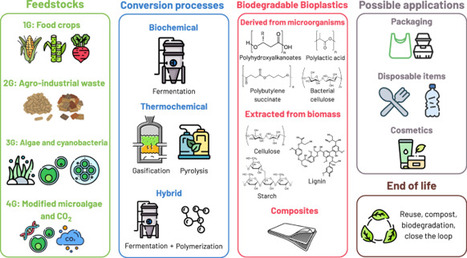
Biodegradable bioplastics have emerged as promising alternatives to conventional plastics in the current scenario of growing demand for sustainable materials. However, the high costs associated with their production still interfere with the proper dissemination of these materials. The present review will deal with the different aspects of the production of biodegradable bioplastics in biorefineries as an approach for cost reduction and low waste generation, aligning with circular bioeconomy principles. By employing different types of biomass and conversion processes, bioplastics and their composites can be considered a valuable product in biorefineries, demonstrated by actual case studies and functional industries.
|
|
Scooped by
mhryu@live.com
December 28, 12:42 PM
|
To address the growing emergence of multi-resistant phytopathogenic bacteria, innovative solutions are being explored in the field of plant health. Among them, bacteriocins, antimicrobial peptides or proteins secreted by bacteria, characterized by a highly specific spectrum of activity and involved in intra-specific competition, are gaining increasing interest. Bacteriocins can confer a positive selective advantage in both natural and agricultural environments, thereby contributing to microbiome modulation. Bacteriocin-producing rhizobacteria and lactic acid bacteria are already used as biocontrol agents against phytopathogenic bacteria, as well as plant growth stimulators. Bacteriocins can be produced in situ by using avirulent strains, or ex situ through industrial synthesis and applied as biopesticides. Nowadays, genetic engineering enables production of chimeric bacteriocins and their direct production in transgenic plants, avoiding the need for repeated treatments and limiting emergence of resistances. The selection of promising bacteriocins can be guided by omics-based approaches, notably metagenomics, which involve the direct extraction and sequencing of DNA from environmental samples and provides access to the genetic diversity in complex soil or plant-associated microbiomes. Combined with open-access databases and recently developed integrated tools, this approach not only facilitates the identification of known structures of bacteriocins, but also enables the prediction of potentially active peptides even those never experimentally characterized. Bacteriocin-based strategies, at the crossroads of molecular biology, microbial ecology and agronomy, hold significant potential for promoting sustainable agriculture through highly specific pathogen targeting. However, their large-scale implementation still faces several challenges, including standardization of strain screening protocols, compliance with regulatory frameworks and farmer acceptance.
|
|
Scooped by
mhryu@live.com
December 28, 12:28 PM
|
Pure mycelium materials (PMMs) offer sustainable alternatives to traditional animal and synthetic polymer-based leather and petroleum-based packaging materials, by using innocuous fungi and agri-food biomass residues. Fungi respond readily to growth conditions and produce mycelia with tunable material properties to yield a diverse array of products. Additionally, these properties can be further modified through various post-processing techniques. This critical review examines how process engineering approaches, such as manipulating the fungal microenvironment, via optimal growth conditions, substrate selection, and bioreactor design, as well as post-processing techniques, can be effectively employed to engineer the properties of PMMs. It specifically describes the structure-property relationships of mycelium as governed by substrate assimilation and fermentation process parameters, and their impact on the fungal phenotype. To this, a comprehensive discussion on the role of fermentation conditions to mediate changes in fungal hyphal structure, composition, orientation, and cell wall composition – all of which determine the final mycelium material properties – is provided. By examining these relationships, this review aims to provide process insights that could guide the design and implementation of PMM production systems with enhanced yield and productivity along with the provision of tunable material properties. Finally, the review highlights other considerations such as life cycle assessment and regulatory requirements, and their relationships with process engineering, which are important for PMM development and their industry exploitation.
|
|
Scooped by
mhryu@live.com
December 27, 10:02 PM
|
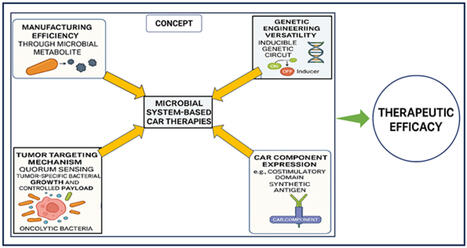
Chimeric antigen receptor (CAR)-based immunotherapies face significant translational challenges in solid tumor applications, particularly regarding manufacturing scalability, tumor targeting specificity, and antigen heterogeneity. This systematic review evaluates microbial systems as innovative platforms to address these limitations through synthetic biology-driven approaches, with a focus on bridging preclinical advances to clinical implementation. Analysis of 389 peer-reviewed studies (2015–2025) reveals that engineered probiotic strains (e.g., Escherichia coli Nissle 1917) achieve selective tumor colonization while functioning as programmable factories for: 1. Synthetic antigen production and single-chain variable fragment (scFv) expression, 2. Costimulatory domain delivery enabling antigen-agnostic CAR-T activation, 3. Tumor microenvironment modulation via immunostimulatory chemokines. Microbial platforms demonstrate superior manufacturing economics (70–90% cost reduction vs. conventional methods) and enhance CAR-T functionality through epigenetic reprogramming by microbial metabolites (e.g., short-chain fatty acids). CRISPR/Cas-engineered genetic circuits further enable precise spatiotemporal control of therapeutic payloads.Microbial systems represent transformative platforms for scalable, programmable CAR immunotherapy with significant potential for solid tumor targeting. Key barriers to clinical translation include biocontainment challenges, incomplete mechanistic understanding of tumor homing specificity, and safety validation requirements. Strategic integration of synthetic biology with microbial chassis offers a viable pathway toward accessible next-generation cancer therapies.
|















ratio circuit