Your new post is loading...

|
Scooped by
mhryu@live.com
Today, 12:10 AM
|
Human milk oligosaccharides (HMOs) are a component of breast milk which improve infant health outcomes by modulating immune responses, inhibiting pathogen adhesion, and promoting healthy gut microbiota. Although their effects are well-documented, few HMOs have been clinically or biochemically studied because only a handful of the simplest HMOs out of >200 species are currently possible to chemically synthesize or produce in microbes via metabolic engineering in microbial hosts. In contrast, plants are naturally adept at biosynthesizing a wide range of complex polysaccharides, and they have recently been established as a heterologous system for HMO production. However, much of the structural diversity of HMOs has not yet been reproduced in a plant, particularly fucosylations. Four fucosidic linkages can be found in fucosylated HMOs, but only Fucα1–2Gal has been biosynthesized in planta. Here, we screened bacterial fucosyltransferases using the model plant Nicotiana benthamiana to produce 3-fucosyllactose (Fucα1–3Glc), lacto-N-fucopentaose II (Fucα1–4GlcNAc), and lacto-N-fucopentaose III (Fucα1–3GlcNAc), demonstrating that all four fucosidic linkages can be made in planta. Just twelve glycosidic linkages make up all the HMOs found in breast milk, and our findings increase the number of linkages made in planta from seven to ten, greatly expanding the variety of HMOs accessible in a plant.
|
|
Scooped by
mhryu@live.com
Today, 12:00 AM
|
Genome editing technologies hold significant promise for the treatment of genetic disorders, but safe and efficient delivery remains a major barrier to their clinical translation. Cell-derived particles, including extracellular vesicles (EVs) and virus-like particles (VLPs), have emerged as promising non-viral delivery platforms, offering biological compatibility and the capacity to package and deliver genome editors as ribonucleoprotein (RNP) complexes in a transient manner that reduces the risk of off-target editing. The surface composition of these vehicles is shaped by their biogenesis pathway and their cell of origin, which in turn govern their cellular tropism. Through various engineering strategies, including producer cell engineering, viral-glycoprotein pseudotyping, and post-isolation surface modifications, this tropism can be expanded or redirected toward cell types and tissues beyond the liver. Here, we review the biology underlying cell-derived particle surface composition and the targeting strategies employed to engineer cell-type specificity.
|
|
Scooped by
mhryu@live.com
November 5, 11:48 PM
|
Metabolic traits mediate microbial interactions and underpin mechanistic models of community assembly. With the rapid expansion of genomic data and bioinformatic tools, it is widely assumed that metabolic traits such as substrate utilization can be reliably inferred from genomes alone. Here, we systematically evaluate this assumption by comparing genome-based predictions from four commonly used tools to high-throughput growth phenotypes of 186 marine bacteria. For simple substrates, prediction accuracy was limited and highly variable across taxa and substrates, with many strains predicted at or near chance levels. For three of four tools, most errors were false positives, indicating that apparent pathway completeness frequently fails to translate into growth under laboratory conditions. In contrast, genomic prediction of polysaccharide utilization based on carbohydrate-active enzyme content performed substantially better, suggesting that traits that depend on a few highly specific enzymes are easier to predict. While genome-based approaches can recover broad statistical patterns in metabolic strategies, their limited strain-level reliability constrains ecological inference and modelling. For the foreseeable future, large-scale experimental phenotypic characterization will remain an indispensable component of microbial ecology, both to reveal trait distributions and to ground-truth and improve genomic predictions.
|
|
Scooped by
mhryu@live.com
November 5, 11:11 PM
|
Bidirectional promoters (BDPs), intergenic regions that coordinate transcription of oppositely oriented genes, pervade eukaryotic genomes, yet sequence signatures remain poorly defined. Existing approaches to BDP identification rely on distance thresholds and cannot infer activity from DNA. Here, we use Evo2, a genomic language model, to predict BDP activity and uncover sequence-encoded regulatory principles across four plant species (Arabidopsis, maize, rice, and wheat). We stratify BDPs by co-expression strength and compare Evo2-derived embeddings against k-mer profiles, transcription factor binding site matrices, and convolutional neural networks trained on sequence. Evo2 embeddings outperform all baselines, demonstrating that genomic language models capture regulatory information underlying BDP activity. Models trained on one or multiple species transfer to held-out species, and in planta validation in Spartina alterniflora confirms predicted high-activity BDPs. Sparse autoencoder analysis links Evo2 embeddings to nucleosome positioning and species-specific transcription factor landscapes, providing insight into sequence determinants underlying BDP activity . This work establishes how genomic language models can extract bidirectional promoter logic from sequence and identify conserved regulatory rules across plants. Bidirectional promoters (BDPs) are intergenic regions that initiate transcription of two oppositely oriented genes. Here, the authors report a framework that employs Evo2 genomic language model embeddings to predict BDP activity directly from raw DNA sequence.
|
|
Scooped by
mhryu@live.com
November 5, 10:24 PM
|
Vaults are the largest ribonucleoprotein particles in eukaryotic cells, built from 78 copies of the major vault protein (MVP), yet their function remains unknown four decades after their discovery. MVP homologs occur in prokaryotes and bacteriophages, but whether they form vaults is unknown. Here, we show that prokaryotic and bacteriophage MVP homologs assemble into vault particles. We surveyed approximately 15 billion proteins, found MVP homologs in 29 bacterial and 4 archaeal phyla, and used size-exclusion chromatography to rapidly screen and isolate vault particles of eight homologs expressed in Escherichia coli. Cryo-electron microscopy structures of the phage homolog L05 at high resolution reveal a shell of 96 MVP chains enclosing a volume ~25% larger than human vaults, among the largest protein shells of defined size outside virus capsids. Prokaryotic MVPs typically carry seven wall repeats and eukaryotic MVPs nine, and adding wall repeats to L05 yields larger vaults. Prokaryotic vaults expand the known diversity of vault architecture and offer a tractable system for studying vault assembly and a size-tunable scaffold for cargo encapsulation.
|
|
Scooped by
mhryu@live.com
November 5, 4:56 PM
|
An article published by Liu et al. ( 2026, https://doi.org/10.1111/nph.71579) provides compelling evidence that manipulating Ca2+ channel activity can enhance crop resistance to devastating pathogens. The authors studied rice blast, caused by the hemibiotrophic ascomycete fungus Magnaporthe oryzae, which is a devastating disease of rice world-wide. By identifying a hyperactive allele of the rice, CYCLIC NUCLEOTIDE-GATED CHANNEL13 ( OsCNGC13), the authors demonstrate that altered Ca2+ influx can trigger hypersensitive response-like cell death and confer broad-spectrum resistance against rice blast. The hypermorphic allele of rice OsCNGC13, designated elicitor-triggered cell death 1 ( etd1), was identified by a forward genetic screen and exhibits spontaneous cell death and a pronounced hypersensitive response (HR)-like phenotype following exposure to M. oryzae elicitors. etd1 enhances blast resistance by restricting M. oryzae colonization with cell death, and remarkably, it displayed resistance against all 108 tested M. oryzae isolates. Genetic analysis revealed that a single glycine to glutamate substitution (G483E) within the highly conserved CNGC gating region, renders the etd1-encoded version of OsCNGC13 a hyperactive Ca2+-permeable channel. The mutation alters Ca2+ permeability, thereby amplifying the cellular response to pathogen-derived stimuli. This finding demonstrates that a single amino acid substitution in a Ca2+ channel can confer exceptionally broad disease resistance without the need to introduce additional pathogen-recognition specificities.
|
|
Scooped by
mhryu@live.com
November 5, 4:40 PM
|
Lager beer, made by fermentation of barley malt using the hybrid yeast Saccharomyces pastorianus, is extremely popular worldwide. The low genetic variation of S. pastorianus strains limits the scope of development for novel lager beer types. The wild ancestor Saccharomyces eubayanus has potential for use in lager brewing, but its application is constrained by formation of phenolic off-flavours (POF+ phenotype) and limited uptake of the wort α-oligoglucosides maltose and maltotriose. Here, we addressed both limitations, using screening and evolutionary engineering of the Himalayan S. eubayanus strain ABFM5L.1, one of the closest known relatives of S. eubayanus subgenome of modern hybrid lager yeasts. Prior to improving α-oligoglucoside utilisation, 4-vinylguaiacol formation was abolished by mutagenesis and screening for POF⁻ mutants. Subsequently, evolution for improved sugar utilisation and reverse engineering identified SeMALR1 (the S. eubayanus ortholog of S. cerevisiae MAL63) as a key regulatory control point. Single-nucleotide substitutions in this maltose regulon activator gene enabled rapid maltose uptake and partial maltotriose utilisation in a previously maltose-negative background. The evolved non-genetically modified POF⁻ strains showed near-complete maltose consumption (>90%–95%) and partial maltotriose consumption (∼25%–32%) in industrial wort. These results reveal substantial regulatory flexibility in Holarctic S. eubayanus and support its further development as a novel lager brewing yeast.
|
|
Scooped by
mhryu@live.com
November 5, 4:27 PM
|
Heterologous production of metabolites and proteins requires the transfer of foreign DNA into a host. One common barrier to the genetic engineering of bacteria is their plethora of phage defense systems. Targeted deletion of defense system components can improve DNA transfer for downstream applications. We sought to improve the transformation efficiency of Burkholderia sp. FERM BP-3421, a β-proteobacterial host that has great potential for the high-titer production of bioactive small molecules. We investigated restriction-modification systems and the recently described Kiwa phage defense system. Through deletion of three restriction enzyme genes, transformation efficiency was improved nearly 7-fold. The electroporation protocol was also optimized with respect to temperature, cell density, and buffer composition, which resulted in an additional 40-fold improvement in transformation efficiency, reaching 1 × 10⁶ CFU/µg plasmid DNA. Interestingly, a mimicry by methylation approach, where DNA is pre-methylated using two host DNA methyltransferases, outperformed the transformation efficiency obtained with restriction enzyme deletion mutants nearly 3-fold. Moreover, contrary to previous reports in E. coli, deletion of the Kiwa system did not improve transformation efficiency into Burkholderia sp. FERM BP-3421. Understanding the impact of bacterial innate immune systems on genetic tractability is vital to improving non-model host strains to produce high-value molecules of interest.
|
|
Scooped by
mhryu@live.com
November 5, 4:21 PM
|
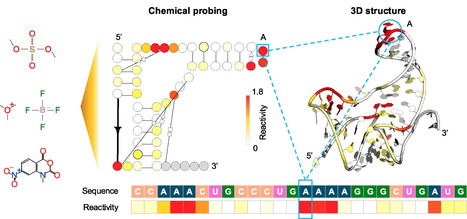
RNA chemical probing generates nucleotide-resolved profiles in vitro and in cells, while X-ray crystallographic or cryo-electron microscopy models provide high-resolution structural models but remain comparatively low throughput. Aligning these experiments from different modalities may provide insights into RNA structure formation and molecular functions. Here, we present Ribocentre-FoldBridge (https://foldbridge.ribocentre.org/), an AI-assisted, curator-reviewed database linking curated chemical-probing profiles with experimentally determined 3D structures. This database catalogues 12 types of RNAs, linking 256 929 probing profiles across five experimental categories to 5321 structure-linked cases. It interactively visualizes the probing profiles that align with RNA secondary and tertiary structures at nucleotide resolution. We demonstrate probe-specific reactivity patterns across paired, unpaired, and solvent-accessible structural contexts. The database aims to provide a reproducible evidence layer for examining RNA structure–function relationships across heterogeneous experiments, and thus facilitate the development of new RNA structure or function prediction programs.
|
|
Scooped by
mhryu@live.com
November 5, 3:57 PM
|
The BioImage Archive (https://www.ebi.ac.uk/bioimage-archive) is EMBL-EBI’s flagship resource for life sciences image data. It serves as a deposition database for biological images across scales from near-atomic through to whole organisms, and across imaging modalities. The Archive’s mission is to support the reproducibility of quantitative results based on imaging, support methods development including modern deep-learning-based approaches, and allow large-scale reanalysis of image data. Across the Archive’s ecosystem, we provide access to over 11 PB of image data. Recent developments in underpinning infrastructure now allow interactive exploration, visualization, and streaming access to a subset of the Archive’s data using the new OME-Zarr file format, and will ultimately provide access to all of EMBL-EBI’s archived image data, including data from the Electron Microscopy Public Image Archive. Migration of all holdings and a unified submission system are in progress.
|
|
Scooped by
mhryu@live.com
November 5, 2:58 PM
|
Antifungal peptides are promising drug candidates to fight fungal infections in the clinics and agriculture. However, recent data suggest that antifungal peptides might also play a role within their own producing organism to survive nutrient limiting conditions. We have therefore studied the function of the antifungal AnAFP in Aspergillus niger in more detail. To achieve this, we established a Tet-on controlled anafp expression system, which allowed us to study a null and an overexpression phenotype in the same isolate. We observed that increased intracellular AnAFP expression reduces growth of A. niger and prematurely activates autophagy. Comparative transcriptome analyses of glucose-starving mycelium demonstrated that increased anafp expression strongly impacts expression of genes important for cell wall integrity and remodeling, as well as genes with a predicted function in metabolism and transport of carbohydrates, proteins, and lipids. Notably, genes encoding regulators of conidiophore development such as flbC and flbD became induced upon anafp overexpression. Fluorescent analyses of a Tet-on driven AnAFP::eGFP fusion protein congruently unraveled that AnAFP localizes to cell walls and septa of A. niger. Moreover, AnAFP::eGFP expression is spatially restricted to selected compartments only and affected cells displayed a sudden reduction in hyphal diameter. From these data we conclude that AnAFP is important to drive vegetative growth and sporulation in A. niger during nutrient limitation through autophagic recycling. We predict that AnAFP drives nutrient mobilization through selective cell lysis to ensure the survival of the whole colony during phases of starvation.
|
|
Scooped by
mhryu@live.com
November 5, 1:11 PM
|
In vivo protein-RNA interactions are mapped almost exclusively by CLIP-seq, which profiles one protein in one cell type per experiment and needs a specific antibody; only about 10% of the roughly 2,000 human RNA-binding proteins have been assayed, and the Protein Data Bank holds around 5,000 protein-RNA complexes, a quarter of them ribosomes. Sequence-based prediction could extend coverage to unprofiled, newly discovered, or designed molecules, but existing predictors are not built for that case. One family trains a separate model per protein and cannot move beyond proteins with CLIP data; the other scores pairs but targets a single RNA class. Most are evaluated with random splits and randomly paired negatives that leave near-identical sequences on both sides of the split, and many require structure or read only short windows, discarding the context around a binding site. Their accuracy falls sharply when whole molecules are held out. We address this with two contributions. First, a strict benchmark of 2.1 million examples built from 11.6 million peaks of CLIP experiments targeting 209 proteins, taken from four public databases, in which each RNA is a spliced transcript with nucleotide-level labels, and sequence-similarity clusters are assigned whole to training, validation, and test sets, giving separate slices for unseen RNAs, unseen proteins, and unseen pairs. Negatives are matched to positives in length and in the number of other proteins binding the transcript, removing the shortcut by which a model predicts binding from how popular a transcript is without reading the protein. Second, RPI-Zero, a sequence-only model that reads any full-length protein and RNA jointly in up to 4,096 tokens, so the RNA representation is conditioned on the protein, and describes every protein as a mixture of shared motif prototypes, placing unseen proteins in the same terms as training ones. One model covers all proteins and RNA classes, uses no structure, and needs no interaction data for a new molecule. Compared with five state-of-the-art methods, it achieves the highest score in eight different metrics on unseen RNAs, unseen proteins, and unseen pairs. The model and data are available at https://github.com/ciceklab/RPI-Zero and https://zenodo.org/records/23748141, respectively.
|
|
Scooped by
mhryu@live.com
November 5, 1:05 PM
|
Protein sequence databases are growing far faster than experimentally curated annotations, limiting functional interpretation of newly identified proteins and coding variants. We developed PALM, a protein annotation language model that jointly predicts domain and functional-site occurrence, while preserving overlapping and nested annotations through a soft-target objective. PALM integrates ESM2 with low-rank adaptation (LoRA), learned layer aggregation, and a bidirectional long short-term memory (BiLSTM) encoder. PALM was trained on ~15 million InterPro-annotated UniRef50 sequences spanning 17,951 domain and 1,383 site classes. Across 2.3 million held-out proteins, PALM achieved domain- and site-occurrence F1 scores of 0.941 and 0.877, respectively, and retained substantial performance in proteins with <20% sequence identity to the training and validation data. PALM also substantially outperformed ESM3 annotation baseline. Without training on variant-pathogenicity labels, PALM embedding disruption distinguished 151,823 ClinVar missense variants more accurately than ESM2 embedding disruption (AUROC 0.835 versus 0.710), and combining PALM embedding disruption with the ESM2 likelihood-ratio signal reached an AUROC of 0.877. The same combined zero-shot score outperformed AlphaMissense on a benchmark dataset on 128,161 missense variants, that were derived from literature but not present in ClinVar database. At the protein level, PALM embeddings showed stronger CATH-Gene3D superfamily organization than frozen ESM2 and ESM3 embeddings, and improved prediction of experimental activation and repression effects when combined with ESM2. In a downstream case study, we demonstrated the ability to use PALM-derived embedding as proxy of deep mutational scanning (DMS), showcasing the broad application of PALM. Together, PALM converts curated residue-level knowledge into transferable and mechanistically interpretable representations that connect protein sequence, function, and variant consequence.
|
|
|
Scooped by
mhryu@live.com
Today, 12:04 AM
|
Bacterial cyclic-oligonucleotide-based antiphage signaling systems (CBASS) are evolutionarily related to the mammalian cyclic GMP-AMP synthase-stimulator of interferon genes (cGAS-STING) pathway. The bacterial CdnB-Cap14 CBASS system is notable for producing 2′,3′-cyclic GMP-AMP (2′,3′-cGAMP), the same second messenger used by the mammalian cGAS-STING pathway; however, its functional mechanism has remained unclear. Here, we show that CdnB-Cap14 protects against phage infection through abortive infection (Abi) by triggering cell death. Structures of apo CdnBΔC and its complexes with ATP and guanosine triphosphate (GTP), together with inactive and activated 2′,3′-cGAMP-bound Cap14, reveal that CdnB is autoinhibited by its C-terminal AGS-C domain and becomes activated by DNA together with intracellular ATP/GTP depletion to synthesize 2′,3′-cGAMP in vitro. This signal drives Cap14 assembly from dimers into zipper-like two-layered filaments that partition the membrane and disrupt its integrity. We further show that phage-encoded Acb2 sequesters 2′,3′-cGAMP to block signaling. These findings reveal mechanistic parallels between bacterial CBASS and eukaryotic cGAS-STING immunity and provide a molecular basis for therapeutic engineering.
|
|
Scooped by
mhryu@live.com
November 5, 11:54 PM
|
Watson–Crick base-pairing defines the classical paradigm of nucleic-acid interactions, but growing research reveals noncanonical modes beyond this framework. Here we uncover a mode of interactions by which two DNA strands associate through a ligand-induced conformational rearrangement. Upon binding a small molecule, a structure-switching primary aptamer folds into a conformation that exposes a previously inaccessible docking interface. An independently evolved secondary aptamer recognizes this interface primarily through noncanonical interactions rather than sequence complementarity, reporting the ligand-bound state of the primary aptamer. This interaction is conformation-sensitive: single base-pair changes in the primary aptamer modulate secondary aptamer recognition. Across four chemically distinct small-molecule targets—serotonin, dopamine, testosterone and deoxycorticosterone 21-glucoside—secondary aptamers were identified for three, and the serotonin system was translated into surface-based sandwich assays. These results demonstrate that a ligand-induced conformational state, rather than sequence complementarity or the chemical identity of the ligand, can serve as the epitope for nucleic-acid recognition, expanding the molecular features that DNA can be evolved to detect. Aptamers have generally been understood as nucleic acids that recognize a specific ligand. Now it has been shown that secondary aptamers can recognize the ligand-bound conformation of a primary aptamer, enabling recognition of molecules that lack multiple binding sites for sandwich assays. This mechanism can be integrated into lateral flow assays for targets, including serotonin.
|
|
Scooped by
mhryu@live.com
November 5, 11:39 PM
|
The high redundancy of many bacterial proteomes can be used to evaluate proteome quality and identify sequence errors. We have used MMseqs2 clustering with subsequent filtering to identify clusters that contain sequences from at least 50% of the clustered proteomes to build sets of core proteins that include proteins from 95% of the clustered bacteria. These clusters typically capture >80% of proteins in the bacteria. Because these clusters have highly uniform length (the median cluster has >99% of its proteins at the mode length), short (<75% of mode length) or long (>133%) proteins are likely artifacts. Most “outlier” proteins are found in fewer than 10% of clusters, and “high-outlier” clusters are over-represented in a small fraction of proteomes, which often have poor proteome BUSCO fragment scores. Short-outlier proteins are artifacts; at least 80% of short-outlier genomes contain mode-length copies of the protein, which were missed because of frameshifts, termination codons, or initiation codon choice. MMseqs2 clustering with 50% participation provides robust sets of core bacterial proteins and can be used to identify lower-quality proteomes and proteins.
|
|
Scooped by
mhryu@live.com
November 5, 10:47 PM
|
Robust gene regulatory architectures are critical for proper development, response to environmental cues, and adaptation in plants. Owing to technical limitations imposed by the cell wall, the understanding of gene regulation in plants has lagged behind that of other organisms. However, innovation in molecular profiling techniques now make identifying active regulatory sequences across diverse cellular, developmental, and environmental contexts in a wide range of plant species routine. Despite these advances, most studies of plant regulatory elements have focused on regulatory dynamism within a single individual organism. As a result, the functional implications and mechanistic rules governing gene regulatory evolution remain less understood. With rates of genetic diversity in plants often far greater than metazoan species, plant models are uniquely positioned to address outstanding questions in regulatory evolution. Here, we review recent advances in the fundamental principles underlying gene regulatory evolution and the consequences towards molecular, cellular, and organismal phenotypes in plants.
|
|
Scooped by
mhryu@live.com
November 5, 5:01 PM
|
Microbial life strategies are shaped by a fundamental ecological trade-off: specialization enables peak performance in a narrow niche, while generalization allows persistence across diverse environments, but may constrain maximal growth rates. In soils, this trade-off is particularly relevant in the rhizosphere and detritusphere—and at their interface, where co-occurring living roots and decaying residues are hypothesized to generate emergent biogeochemical conditions. Using H₂¹⁸O quantitative stable isotope probing (qSIP), we measured bacterial and fungal growth rates in the rhizosphere, the detritusphere, and in the combined presence of rhizosphere + root detritus. We classified taxa operationally as specialists (defined as microbes actively growing only within a single habitat) or generalists (defined as microbes actively growing in two or more habitats), reflecting realized growth breadth under the conditions tested. Bacterial specialists exhibited faster growth than generalists within the habitats where they grew, a pattern consistent with a trade-off between niche breadth and growth rate. Net relatedness and nearest taxon indices showed that total bacterial communities were phylogenetically clustered, while specialist and generalist communities were phylogenetically random, consistent with functional traits—rather than lineage—predicting realized growth-breadth strategy. In annual grassland soils, fast-growing specialists may dominate ecosystem processes when resources abound, and slow-growing generalists may sustain element transformations when conditions shift; understanding this interplay may inform predictions of soil-carbon trajectories.
|
|
Scooped by
mhryu@live.com
November 5, 4:47 PM
|
Coiled coils are a versatile class of α-helical protein motifs characterized by recurring sequence patterns that direct their assembly into defined oligomeric bundles and underpin a wide range of biological functions. The well-established sequence-structure relationships governing coiled-coil formation enable predictive control over stability, specificity, and oligomerization state, making them attractive and chemically tractable building blocks for biosensor design in applications ranging from single-molecule detection to synthetic biochemical circuits and functional nanomaterials. After revisiting the theoretical foundations of coiled-coil architecture, this review outlines strategies to engineer programmable binding interfaces that can be rationally tuned to generate orthogonal, high–affinity interaction pairs, enabling flexible and modular biosensor platforms. Particular emphasis is placed on recent advances in computational and data-driven design approaches, including machine-learning and AI-based strategies, alongside established rational and empirical methods for coiled-coil construction. These complementary design principles underpin the development of coiled-coil-based biosensors and are discussed together with selected application examples to illustrate how engineered coiled-coil interactions support sensitive and specific molecular recognition as well as switchable control in synthetic biology and chemical biology. Overall, this review highlights coiled coils as programmable, stable, and highly designable scaffolds at the interface of molecular engineering, computation, and chemical biology.
|
|
Scooped by
mhryu@live.com
November 5, 4:36 PM
|
msDNA, or multi-copy single-stranded DNA, is a small satellite DNA observed in DNA extracts from a bacterial cell. A genetic element, usually found on the chromosome, called a retron, is responsible for producing msDNA. This small single-stranded DNA has a unique structure and is synthesized by reverse transcription from an RNA template. Retrons and msDNA are found in a large variety of different bacterial species. The msDNA molecule has also been developed into an important tool for genetic engineering and genome editing. But the biological function of this unique DNA molecule remained a mystery for decades. Recent discoveries show that a retron element can protect bacteria from infection with a virus (phage) using an abortive infection strategy. And the msDNA molecule is required for this anti-phage property. A historical perspective on this unusual DNA molecule, recent breakthroughs into its functions, and a discussion of the current and possible future directions of study are presented herein.
|
|
Scooped by
mhryu@live.com
November 5, 4:22 PM
|
The gut microbiome plays an important role in maintaining human health. Despite the rapid growth of literature and publicly accessible data on the gut microbiome, a large-scale, well-curated database integrating a unified matrix with multiple analytical tools is still lacking. Here, we introduced GutBiomeDB, a comprehensive database and analysis platform for the human gut microbiome. GutBiomeDB contains 168 464 samples from 482 BioProjects, spanning 72 countries, 224 disease conditions, and seven life stages. To improve the reusability and accessibility of data, the uniformly processed taxonomic profiles generated by Abdill et al. were reused without reprocessing to construct a matrix of 4680 taxa and 3142 genera, and disease, life-stage, sex, and geographic metadata were manually curated by our team. Additionally, GutBiomeDB offers four tools for in-depth analysis: “Differential Analysis” for comparing diversity and abundance of user-selected cohorts and performing random-effects meta-analysis across projects; “Interaction Network” for comparing disease and healthy-control co-occurrence networks; “Lifecycle Atlas” for visualizing genus trajectories across seven life stages; and “Health Index” for searching similar samples and scoring uploaded genus profiles. GutBiomeDB serves as a versatile and valuable resource for advancing a broad spectrum of gut microbiome research and clinical relevance. GutBiomeDB is freely accessed at https://gutbiomedb.online.
|
|
Scooped by
mhryu@live.com
November 5, 3:58 PM
|
GlyTouCan (https://glytoucan.org) is the international, species-neutral glycan structure repository that assigns stable, globally unique accession numbers to glycan structures independently of the experimental method used to determine them. Here, we describe GlyTouCan version 4, released on June 22, 2026, which introduces a completely redesigned user interface with substantially faster browsing and searching, including a new “archetype” view that groups registrations that differ only in the anomeric or ring form of the reducing-end residue together for clearer filtering of the >256,000 glycans now registered. Version 4 provides an improved graphical structure input, via the updated browser-embedded GlycanBuilder application, for both searching and registering structures. Users may now sign in with an ORCID ID in addition to a Google account, and all previously released v3 REST API endpoints remain fully backward compatible. Version 4 also introduces a framework for industry affiliates, providing a structured pathway for commercial organizations that work with or synthesize glycans, while all existing academic database-partner relationships are maintained. GlyTouCan remains freely available to all users without charge, login, or registration for browsing and searching. We also summarize the repository’s data content, which spans >600 monosaccharide types and, judging from these, includes many glycans of probable bacterial or plant origin.
|
|
Scooped by
mhryu@live.com
November 5, 3:50 PM
|
Rod-shaped bacteria grow by inserting peptidoglycan into the lateral cell wall during elongation and into the septal cell wall during division. These two modes of growth are driven by distinct peptidoglycan synthesis machineries that consume the shared precursor Lipid II and must be coordinated so that cell enlargement remains matched to division. However, how cells spatially allocate this shared precursor, and whether Lipid II translocation itself contributes to this coordi-nation, remain unclear. Here we show that the spatial distribution of the essential Lipid II flippase MurJ coordinates this balance in E. coli. Increasing nonseptal MurJ abundance shifted cell-wall synthesis toward elongation and reduced septal synthesis. Single-molecule tracking revealed that MurJ diffuses throughout the membrane but is transiently captured at the division site, rather than stably incorporated into the septal synthesis machinery. This recruitment requires active septal cell-wall synthesis, but not ongoing Lipid II synthesis or flipping, indicating that MurJ recruitment is coupled to the active synthesis machinery rather than to substrate availability or transport. Thus, activation of septal synthesis creates transient MurJ capture at the division site, providing a mechanism to preferentially supply Lipid II for septal growth during cytokinesis. These findings reveal a capture-and-release mechanism that dynamically enriches MurJ at active division sites and thereby coordinates elongation and division in bacterial cells.
|
|
Scooped by
mhryu@live.com
November 5, 1:18 PM
|
The metabolism of early microbes shaped our planet's chemistry and enabled more life to evolve. However, it remains uncertain when many forms of metabolism arose and which organisms carried them out. Here we combine machine learning, metabolic networks, and phylogenomics of microbes to date 14 forms of metabolism and 6 other traits. We find that metabolism evolved in three waves, starting >3.4 billion years ago (Ga) with fermentation and sulfur compound respiration. A second wave began ~3.2 Ga with aerobic respiration and growth, while a third began ~1.4 Ga with further specialization. We compared these predictions with independent dates from the geochemical record, and agreement with conservative dates was good (CCC = 0.81 to 0.89). Several forms of metabolism are invisible in the geochemical record, and our approach dates these forms, too. Our results reconcile different lines of evidence for microbial evolution and provide a fuller picture of early Earth.
|
|
Scooped by
mhryu@live.com
November 5, 1:07 PM
|
Retrieving an enzyme for a target reaction provides a starting point for evolution, but predicting how to improve it remains difficult. This requires connecting evolutionary information with the structural and chemical context of catalysis. Here we present AlphaEnzyme, an enzyme foundation model built on a structure-grounded representation of an enzyme paired with its reaction, from which catalytic compatibility, kinetics and mutational response are read out together. On a time-separated benchmark, AlphaEnzyme achieves a top-1 catalyst retrieval success rate of 30.1%, against 17.2% for the strongest baseline. Michaelis constant predictions achieve the highest rank correlations among the compared methods, reaching 0.64 for enzymes sharing at most 40% identity with the kinetic training set. The model also enriches high-fitness TrpB variants at a budget of 16 candidates without target-specific fitness training. In prospective transaminase engineering, several prioritized variants exceed the parent, with the best design yielding a 30.4-fold increase in product signal in a lysate-based assay while retaining (R)-selectivity. Together, AlphaEnzyme provides a common molecular basis for selecting starting enzymes and prioritizing sequence changes for their improvement.
|