 Your new post is loading...

|
Scooped by
mhryu@live.com
Today, 12:54 AM
|
Photobiological H2 production in cyanobacteria is hindered by the limitations of the native [NiFe]-hydrogenases. Their deep integration within the electron transport chain, multimeric nature, and H2 oxidation bias of uptake hydrogenases collectively limits sustained H2 production and pose a significant engineering challenge. Monomeric [FeFe] hydrogenases are, by contrast, far more tractable engineering targets. Their monomeric structure greatly simplify protein engineering and often they exhibit higher turnover rates and H2 evolution bias. Yet [FeFe] hydrogenases require the HydE, HydF and HydG maturases to assemble their catalytic H-cluster, and none of them are native to cyanobacteria. Here we implement the HydEFG maturation pathway in Synechocystis PCC 6803 and report the first fully biological [FeFe] hydrogenase activation in this host, using H2 evolution in a hydrogenase-deficient ΔhoxYH background as a functional reporter of H-cluster assembly. Activation proved rare: among more than 600 genotype-verified isolates only a small fraction became active, and whole-genome sequencing of stable producers revealed no distinguishing mutations, identifying a host-dependent constraint operating beyond the primary genomic sequence. Based on these findings, we developed a phenotypic screening framework and showed that the implemented HydEFG pathway supports in vivo activation of structurally and phylogenetically diverse [FeFe] hydrogenases. Eventually we validated the portability of the pathway to Synechococcus elongatus PCC 7942 as an alternative cyanobacterial host exhibiting lower recalcitrancy for heterologous [FeFe] hydrogenase expression.
|
|
Scooped by
mhryu@live.com
Today, 12:43 AM
|
Accurately capturing the conformational diversity of proteins is essential for understanding their mechanisms and regulation. Current structure prediction methods, including those derived from AlphaFold, are largely limited to a single dominant conformation, and improved sampling has extended this to predicting two states. Here we present AFsample3, an enhanced sampling framework built on AlphaFold3 that improves both the generation and the selection of diverse protein conformations. Across a benchmark of 238 non-redundant proteins with multiple experimentally determined states, AFsample3 models the alternative conformation better than AlphaFold3 for 24% of targets and worse for only 3%, and increases the number of proteins whose alternative conformation is recovered at near-experimental accuracy from 57 to 96, a gain of 68% (p < 0.0001). The predicted ensembles are also markedly more diverse (p < 0.0001), allowing intermediate and additional states to be modeled. These results demonstrate that, without retraining the underlying network, the improved sampling in AFsample3 can capture multiple native-like conformations, representing a significant advance in modeling protein conformational landscapes. This study presents AFsample3, a method that randomly masks the multiple sequence alignment during AlphaFold3 inference and then ranks the generated models to select distinct conformations. AFsample3 recovers alternative conformations for more proteins than AlphaFold3 and yields markedly more diverse ensembles, without retraining the network.
|
|
Scooped by
mhryu@live.com
Today, 12:36 AM
|
Methane, a potent greenhouse gas, has gained increasing attention as a sustainable feedstock for next-generation gas-phase biorefineries. Biological valorization of CH4 enables the simultaneous mitigation of greenhouse gas emissions and the production of high-value-added compounds within a circular economy framework. Compared to conventional physicochemical CH4 abatement technologies, bioprocesses offer lower operational energy demands and reduced environmental impacts. However, the low aqueous solubility of CH4 imposes severe gas-liquid mass transfer limitations, making bioreactor design a critical factor for process intensification and scalability. This review compiles the state of the art in methane bioconversion processes, with particular emphasis on innovative bioreactor configurations that enhance gas-liquid mass transfer, including Taylor flow bioreactors, U-loop bioreactors, and the use of non-aqueous solvents. Special attention is also given to methanotrophic microorganisms with the potential to simultaneously oxidize methane and convert it into value-added products. Recent advances in genetic and metabolic engineering aimed at improving production yields and expanding the portfolio of commercial bioproducts (bioplastics, single cell protein and ectoines) are discussed. Finally, an overview of recent laboratory-scale developments and the current status of commercialization of this CH4-to-value platform is provided.
|
|
Scooped by
mhryu@live.com
Today, 12:23 AM
|
Structural comparison of nucleic acids, particularly RNA, is critical for understanding evolutionary and functional relationships beyond sequence similarity, yet efficient tools for large-scale 3D structure search and alignment remain scarce. We extend GTalign to support nucleic acid structures, enabling unified, high-performance alignment across macromolecules. Benchmarking on diverse nucleic acid datasets demonstrates that GTalign achieves higher alignment accuracy, as measured by TM-score, than the other benchmarked methods, while its faster configurations achieve substantially reduced runtimes at the expense of some sensitivity. GTalign thus provides a scalable solution for nucleic acid structure comparison and database search.
|
|
Scooped by
mhryu@live.com
Today, 12:15 AM
|
Computational design methods have been widely applied to strain optimization in metabolic engineering. However, most existing design methods focus on a single mode of metabolic intervention, and even when mixed intervention modes are considered, they are often modeled via intervention-specific formulations. Furthermore, many of these methods rely on the growth optimality assumption and precise gene expression levels for phenotypic prediction. We propose an efficient strain design approach, termed OMIX, which supports mixed-mode metabolic interventions, including reaction knockouts as well as flux up-regulation and down-regulation, without relying on predefined reference flux distributions. Furthermore, embedded with a customized solution technique, OMIX not only efficiently predicts optimal design strategies but also mitigates potential numerical issues effectively. We apply OMIX to the metabolic model of E. coli to predict optimal metabolic interventions for three biochemical products, showing that the approach identifies high-quality strategies with improved production performance. Extensive analysis further demonstrates computational advantages and robustness of OMIX.
|
|
Scooped by
mhryu@live.com
Today, 12:02 AM
|
The Gammaproteobacteria Azotobacter vinelandii and Stutzerimonas stutzeri are widely used model organisms for studying biological nitrogen metabolism. In the context of climate change and environmental pollution, they show promise as biofertilizers and in reducing soil nitrification. However, current genomic manipulation methods predominantly rely on the introduction of antibiotic resistance, which might lead to the emergence of multidrug-resistant strains. Here, we report the development of versatile, single-plasmid CRISPR systems for markerless genome editing in A. vinelandii and S. stutzeri. We demonstrate that CRISPR/Cas9 and CRISPR/Cas12a systems efficiently mediate genomic deletions, insertions, and substitutions, with the choice of system dictated by the targeted PAM sequence. We show that, in A. vinelandii, the use of separate linear repair templates instead of plasmid-borne repair templates significantly reduces undesired plasmid incorporation resulting from single-crossover events. Following this approach, a strain of A. vinelandii expressing fluorescent rsLOV2-tagged nitrogenase was constructed and characterized. This construct enabled the spatiotemporal localization of nitrogenase in live cells, demonstrating the rapid expression and cellular distribution of nitrogenase as cells transition into diazotrophy. The genome editing platform described in this study accelerates the comprehensive engineering of A. vinelandii for biotechnological applications, while also advancing our understanding of nitrogenase systems.
|
|
Scooped by
mhryu@live.com
November 25, 11:55 PM
|
Protein domain annotation underlies large-scale functional inference and is commonly performed by scanning sequences against libraries of profile hidden Markov models (profile HMMs). We describe PSALM, a protein domain annotation method that combines (i) a pretrained protein language model (ESM-2) with (ii) a per-residue domain-state classifier and (iii) a structured probabilistic decoder that produces a single, non-overlapping set of domain calls with explicit boundaries and scores. On a benchmark of 76.9M protein sequences with 107M annotated domains, PSALM attains a domain-detection sensitivity-specificity tradeoff comparable to HMMER. We characterize sequence and residue-level coverage on UniProtKB, observing higher coverage for HMMER at stringent expected false positive counts (E-values) and higher coverage for PSALM at relaxed E-values. We release code for data processing, training, and inference, along with the model weights and datasets used for training, validation, and benchmarking.
|
|
Scooped by
mhryu@live.com
November 25, 10:29 PM
|
Predicting how microbial species affect each other's growth is a key challenge in microbial ecology. Using one of the largest available pairwise interaction datasets, comprising 20 soil bacteria co-cultured under 39 carbon conditions (15{,}074 directional measurements), we predicted whether one species has a positive or negative effect on the growth of another from monoculture growth, metabolic profiles, and phylogeny. Existing machine learning approaches treat each measurement as an independent sample, although experiments that share a species under the same condition are biologically related. We therefore represented the data as a role-aware line graph: each node is one directional measurement, and two nodes are connected when, under the same carbon condition, they share the same effector or the same affected species. This allows graph neural networks (GNNs) to pass information between related interactions. Our role-aware GAT-SAGE model achieved an F1-score of 81.38% for one-way prediction, outperforming the 73.79% previously reported for Extreme Gradient Boosting (XGBoost). For two-way interaction types (mutualism, competition, and parasitism), GAT-SAGE reached a macro F1-score of 60.34%. This exceeded the 55.71% of a neural network without graph structure but was below the 64.24% of XGBoost. Mutualism remained difficult to predict for all models. Layer-wise relevance propagation showed that one-way effects depend mainly on monoculture growth, whereas two-way interaction types depend more on the carbon environment. Encoding the dependency structure of interaction experiments thus adds information beyond the features of each measurement and provides interpretable insight into microbial interactions.
|
|
Scooped by
mhryu@live.com
November 25, 10:20 PM
|
Characterized bacterial tRNase toxins typically recognize individual tRNAs or restricted tRNA subsets. Here, we identify TloR (tRNA loop-targeting RNase), a tRNase with an unusually broad substrate range but a strong positional preference for exposed tRNA loops. Comparative genomic analyses identified TloR homologs across diverse bacterial lineages, where they are frequently embedded in conflict-associated loci. Structural modeling supports assignment of TloR to the recently described BECR-like superfamily, and mutational analyses identify conserved histidines required for toxicity and RNA cleavage. TloR cleaved tRNA and inhibited protein synthesis in a reconstituted translation system without detectable degradation of ribosomal RNA or plasmid DNA. Small-RNA sequencing showed that toxin-induced fragments arise from tRNAs decoding 19 of the 20 amino acids, with fragment endpoints strongly enriched near the anticodon loop. Purified TloR directly cleaved an unmodified tRNA substrate, predominantly within the anticodon loop. TloR therefore defines a family of BECR-like tRNases that combines broad tRNA recognition with positional preference for exposed tRNA loops. Together, these findings establish broad but positionally constrained tRNA cleavage as a distinct targeting strategy for antibacterial RNases.
|
|
Scooped by
mhryu@live.com
November 25, 7:54 PM
|
Drought is a major environmental constraint limiting global crop production. On average, crop productivity typically declines by 30–40% in moderate-drought years, whereas extreme droughts trigger far greater reductions. As droughts become longer and more intense due to climate change, adverse effects on crop productivity are expected to escalate. Breaking the trade-offs between stress resistance and yield is key to advancing crop genetic improvement as climate change sets in and the world population grows, but this is challenging for drought stress. Here we show that heterologous expression of EpTFIIAγ, a gene encoding a transcription factor induced by osmotic stress in an extremophile lichen mycobiont, partially decouples trade-offs between stress resistance and grain production, enhancing plot yields of five wheat cultivars under water deficit by 19.4–32.8%, and per-plant yields of rice and maize by 19.7–42.4% in the greenhouse and multiple field environments. EpTFIIAγ physically interacts with endogenous transcriptional activators to synergistically enhance both stress-responsive and developmental transcriptional programs, simultaneously boosting photosynthetic capacity and water-use efficiency, while delaying senescence via multiple physiological and developmental enhancements, ultimately increasing grain yields. EpTFIIAγ uncouples antagonistic stress-response and biomass production pathways in multiple crops and delivers a straightforwards and broad-spectrum strategy for sustainably improving staple-crop yields regardless of water availability. The use of an extremophile fungus-derived gene decouples the trade-off of drought stress and reduced crop yield by boosting drought resilience and increasing yields in wheat, rice and maize.
|
|
Scooped by
mhryu@live.com
November 25, 7:33 PM
|
Cell-free systems provide a versatile platform for engineering customizable, gene circuit-based biosensors for decentralized, low-cost molecular diagnostics. Nevertheless, their performance in complex samples is often compromised by matrix interference, necessitating laborious preprocessing that restricts field deployment. Here, we developed a programmable, on-demand, cell-free kit (POCKit) that integrates sample pretreatment with point-of-care detection. The POCKit device comprises a negative pressure storage chamber and a sampling-sensing chamber, which can be connected to a microneedle array or pipette module for sample collection, filtration and target detection via a freeze-dried cell-free molecular reaction network. The POCKit enables detection of Pseudomonas aeruginosa infection in wound exudates, interstitial fluids and artificial sputum within one hour. It also detects tetracycline in food and environmental water, distinguishing tetracycline-spiked samples from negative controls without specialized equipment or tedious preparation. A portable fluorescence imaging box and smartphone application further support real-time signal acquisition and analysis, offering a ready-to-use platform for on-site diagnostics across biomedicine, food safety, and environmental monitoring.
|
|
Scooped by
mhryu@live.com
November 25, 7:15 PM
|
Rapid and transient temperature fluctuations increasingly challenge plant growth by outstripping endogenous gene regulatory responses. Here we show that a thermodynamically programmed gold nanorod-based nanodelivery platform converts temperature signals into sequence-specific activation of microRNAs in Arabidopsis thaliana and rice. The tethered double-stranded microRNA remains biologically inert until a thermal threshold programmed through nucleic acid duplex melting. At this threshold, duplex dehybridization releases the mature microRNA guide strand for loading into the RNA-induced silencing complex, leading to sustained repression of target genes and predictable phenotypic changes. Both activation temperature and resulting phenotype can be tuned, enabling multi-gene and cross-species regulation. This environment-responsive nano-biointerface thus translates temperature variation into controlled molecular responses rather than acting as a passive delivery vehicle. Efficient delivery is achieved through a simple, non-invasive foliar spray, enabling gene regulation in intact plants without tissue damage. Our work establishes a programmable framework for temperature-responsive control of plant traits. By tuning how paired RNA strands separate with heat, a spray-applied smart nanodelivery platform releases different microRNAs at programmed temperatures, silencing target genes and changing traits in plants without genome modification.
|
|
Scooped by
mhryu@live.com
November 25, 6:44 PM
|
Phenotypic heterogeneity in stress tolerance among isogenic bacterial cells fundamentally impacts the efficiency and robustness of microbial bioprocesses while fostering persistent infections, yet its underlying regulatory mechanisms remain elusive. Here, by integrating single-cell RNA-sequencing with microfluidic time-lapse tracking, we discovered small heat shock protein Hsp20 as a central regulator of acid-tolerance heterogeneity. Strikingly, contrary to its canonical role as a holdase to prevent protein aggregation, Hsp20 actively promotes the formation of protective protein aggregates that sequester transcription and metabolic proteins to inactivate gene transcription and metabolism. Hsp20-promoted aggregates drive cells into varying depths of dormancy, regulating the trade-off between stress tolerance and post-stress recovery of single cells. Hsp20 enhances cellular tolerance at the expense of recovery capacity, an aspect that has rarely been systematically reported. Moreover, Hsp20-regulated protection extends broadly to heat, oxidative, and bile salt stresses, revealing a generalizable strategy for stress adaptation. Our work broadens the roles of small heat shock proteins in cytoplasmic protective aggregation during the microbial stress response and provides a mechanistic link between transcriptional noise and phenotypic heterogeneity. It offers a new theoretical basis for understanding the survival strategies of prokaryotes and for precision control in microbial industry and epidemic control.
|
|
|
Scooped by
mhryu@live.com
Today, 12:50 AM
|
Precision fermentation (PF) offers sustainable production of food ingredients, yet inconsistent scale-up and poor economics hinder its use in bulk foods. We propose economic robustness as a central engineering goal: the ability of a PF process to meet predefined commercial targets despite variability in strain performance, bioreactor conditions, feedstock costs, market demands, or regulatory requirements. We outline how scale-down systems, computational fluid dynamics, and multi-omics can link process conditions to cellular responses. We discuss strategies to improve multi-stress tolerance, population stability, productive lifespan, protein secretion, and regulatory compliance. Finally, we explore how AI-guided strain engineering, protein language models, and digital twins could integrate these strategies into predictive, economics-aware design–build–test–learn cycles, enabling affordable and scalable PF-based bulk foods manufacturing.
|
|
Scooped by
mhryu@live.com
Today, 12:39 AM
|
Sustainable nitrogen management is central to addressing the dual challenges of global food security and Earth system stability. In this Review, we systematically explore how agricultural systems perturb nitrogen cycles and consider feasible mitigation solutions. Global new nitrogen inputs from synthetic fertilizer use and biological fixation exceed 180 million tonnes annually. Over half of these inputs are lost to the environment, negatively affecting human and ecosystem health. Biogeochemical and socioeconomic drivers of these losses operate from the farm to continental scale and include environmental variability, farming practices and dietary patterns. Mechanisms such as crop–livestock decoupling, legacy nitrogen in watersheds, and socioeconomic lock-ins consistently undermine effective nitrogen management. Best management practices (BMPs) offer a technological basis to improve nitrogen use efficiency and reduce new nitrogen inputs and losses, while sustaining yields. For instance, precision nutrient stewardship, livestock feeding and manure management, and crop–livestock reconnection can improve nitrogen use and recycling across agricultural systems. However, widespread adoption of BMPs is limited by regional disparities in decision support, technology investment and governance capacity. Transitioning to sustainable, circular nitrogen stewardship requires coupling technological innovation with socioeconomic transformation. Inefficient use of nitrogen in agriculture causes widespread environmental pollution and threatens Earth-system stability. This Review examines drivers of nitrogen loss and assesses management practices, emerging technologies and socioeconomic barriers to sustainable nitrogen use in agriculture.
|
|
Scooped by
mhryu@live.com
Today, 12:33 AM
|
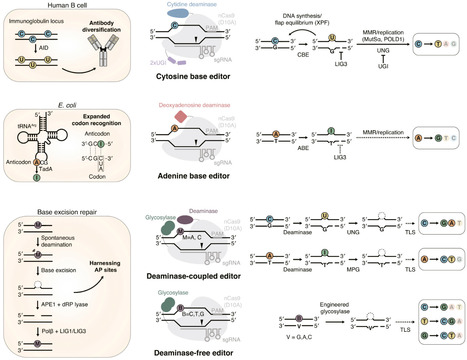
Chemical modifications to DNA bases are known disruptors of genome integrity. However, base editors have repurposed these modifications into programmable drivers of precise single-nucleotide changes. In this Review, we trace the chemical logic of base editor design—from subtractive strategies employing deamination and glycosylase-mediated base excision intermediates, to additive chemistries that install bulky adducts at defined genomic sites. We discuss how each class engages distinct endogenous repair pathways to convert transient lesions into heritable sequence changes. Finally, we describe how machine learning is beginning to decode the complex relationships between editor chemistry and cellular repair context. Collectively, these advances are shaping a framework through which future editing technologies can be designed with improved precision.
|
|
Scooped by
mhryu@live.com
Today, 12:21 AM
|
Codon optimization is widely used to enhance recombinant protein expression without altering protein sequences, but existing approaches often rely on heuristic metrics and overlook complex interactions among codon-related factors. Here, we developed Codonseek, a reinforcement learning-based codon optimization framework integrating a translation efficiency network (TEN)-derived reward function with AlphaZero-inspired Monte Carlo tree search. Trained on paired transcriptomic and proteomic data, TEN predicts sequence-associated translational potential as optimization rewards. In the non-conventional yeast Kluyveromyces marxianus, Codonseek generated synonymous sequences with higher predicted rewards than wild-type (WT), commercially optimized sequences, and sequences generated by two deep-learning baselines, without simply maximizing conventional codon usage metrics. For experimental validation, Codonseek-optimized sequences with higher predicted rewards than the commercial designs were selected. Among these, 66.7% improved expression relative to WT, with increases of up to 87.1%, while outperforming the commercial designs by up to 46.1% and two deep-learning baselines by up to 716.3%. These results support the potential of omics-guided reinforcement learning for codon optimization.
|
|
Scooped by
mhryu@live.com
Today, 12:12 AM
|
Bacteria in nature and disease frequently spend time in non-growing states, yet the genes that allow cells to survive without growing are poorly understood. Using Pseudomonas aeruginosa strain PA14 as a model system in which to study non-growth powered by anaerobic phenazine cycling, we employed randomly barcoded transposon-insertion sequencing (RB-TnSeq) to identify the genes required for this maintenance state using a platform that sustains anaerobic survival via continuous phenazine reoxidation. We found 167 genes whose disruption altered survival, including genes involved in transcription, translation, protein quality control, and cell envelope integrity. Comparing our results to published TnSeq data from other forms of energy-limited growth arrest (conditions where electron acceptor or carbon availability constrains energy conservation below that required for cell growth/division) in PA14 revealed that while a subset of genes are fitness determinants across distinct growth-arrested states, most are condition-specific. Notably, genes involved in flagellar regulation and assembly were broadly detrimental to survival. Leveraging a high-throughput electrochemical system that allows for quantitative and mechanistic dissection of the phenazine cycling-dependent maintenance state, we found that flagellar abundance influences cells’ survival, metabolic rate, and ATP levels. Moreover, removing the flagellar stator proteins MotA and MotC, which are required for flagellar rotation but not assembly, reversed these defects, indicating that the energetic cost of flagella comes from their rotation rather than construction. These results show that in a low-powered maintenance state, limiting energy-dissipating processes, such as proton-motive force loss through flagellar rotation, supports cell survival.
|
|
Scooped by
mhryu@live.com
Today, 12:00 AM
|
Polyphosphate (polyP) is a conserved linear polymer of orthophosphate residues linked by phosphoanhydride bonds. Although polyP has long been studied for its intracellular roles in phosphate storage, energy metabolism, and stress adaptation, growing evidence indicates that extracellular polyP also influences host–pathogen interactions. In a subset of well-characterized bacterial systems, including mycobacteria and Neisseria species, extracellular or surface-associated polyP has been directly linked to impaired phagosome maturation, altered macrophage activation, reduced complement-mediated killing, and reduced neutrophil antimicrobial activity, whereas in other pathogens, polyP supports virulence primarily via intracellular mechanisms. PolyP chain length governs biological activity: long-chain bacterial polyP is largely immunosuppressive, whereas short-chain host polyP promotes procoagulant and inflammatory signaling, although context dictates specific outcomes. Here, we examine models of polyP externalization, detail how extracellular polyP impairs phagosome maturation, reprograms macrophages, and inhibits complement, evaluate interbacterial and probiotic barrier functions, and consider therapeutic opportunities targeting polyP metabolism.
|
|
Scooped by
mhryu@live.com
November 25, 10:47 PM
|
Large language models trained on protein sequences learn general coevolutionary relationships at scale, which contain useful structural and functional information. We show that attention maps, matrices of learned pairwise relationships between residues, include information about allostery. This enables prediction of allosteric relationships with no task-specific training, requiring a single input sequence and specified active-site residues, without structural information. Attention maps outperform established structure-based and sequence coevolution-based models across a benchmark of 109 allosteric proteins. In the beta-2 adrenergic receptor, a G-protein coupled receptor, attention maps correlate more strongly with experimental alanine-scanning measurements of allosteric effects on signaling than these comparators. Language model attention also guides efficient, low-throughput experimental discovery of putative allosteric residues in the protease DPP4 and residues coupled to the known allosteric pathway in ACE2. These results enable and demonstrate allosteric relationship prediction in a zero-shot, single-sequence, structure-free manner. We provide this method in the AlloGator web interface.
|
|
Scooped by
mhryu@live.com
November 25, 10:24 PM
|
The arms race between bacteria and phages involves a wide range of immune and anti-immune systems on both sides. One of the long-known mechanisms of antiphage defense involves DNA intercalators such as daunorubicin and its analogues. Daunorubicin was also shown to inhibit bacterial growth as well as eukaryotic cell division, underlying its use in chemotherapy. Other DNA intercalators and minor groove binding dyes are widely used for nucleic acids staining, but have not been studied for their effects on viral infection. Here, we systematically investigate the effects of known intercalator and DNA-binding agents, including daunorubicin and Hoechst derivatives, on phage infection in E. coli. Using a diverse panel of phages with various replication mechanisms we identify phylogenetic groups sensitive to DNA-binding dyes and determined which stage of the viral life cycle was inhibited. Our data suggest that the active antiviral compounds block early steps of infection without cells killing, arguing against an abortive infection mechanism and lethal membrane permeabilization suggested recently. Together, our results expand the list of small molecules that affect phage infection and reveal DNA binders that inhibit viral DNA entry and/or replication without affecting cell physiology.
|
|
Scooped by
mhryu@live.com
November 25, 10:15 PM
|
The filamentous fungal genus Aspergillus is one of the most prominent platforms in industrial biotechnology. Several members of this genus are widely recognised as efficient cell factories producing a wide range of high-value products, including enzymes, organic acids, and secondary metabolites. Despite their enormous industrial significance, conventional Aspergillus cell factories are often constrained by limited stress tolerance, sensitivity to fermentation inhibitors, metabolic bottlenecks, and bioprocess-associated challenges including mass, heat, and oxygen transfer limitations, which hinder the realization of their full biotechnological potential. Recent advances in genetic engineering, coupled with growing knowledge of fungal genomics, have enabled the development of improved cell factories to meet ever-increasing industrial demands. In light of this, this review provides an overview of the current biotechnological potential of Aspergillus spp. and details recent technological advances that facilitate the development of genetically improved Aspergillus strains. It discusses various transformation methods, promoters, selectable markers, genome-editing technologies, metabolic engineering strategies, and advanced synthetic biology platforms, highlighting their strengths and limitations. In addition, the review highlights major systemic bottlenecks associated with Aspergillus spp. and the emerging opportunities offered by systems biology and artificial intelligence for predictive strain engineering. Overall, this review provides a comprehensive perspective on technological advances, challenges, and emerging opportunities in Aspergillus engineering, establishing an integrated framework for developing next-generation cell factories.
|
|
Scooped by
mhryu@live.com
November 25, 7:47 PM
|
Biological phosphorus (P) mobilization is generally attributed to proton- and ligand-driven dissolution of mineral P, enzymatic hydrolysis of organic P, and, under anoxic conditions, reductive release of phosphate from Fe(III) minerals. Here, we show that extracellular metabolites released by diverse Gram-positive bacteria sustain Fe(III) reduction under oxic conditions, releasing mineral-associated phosphate. The resulting Fe(II) reacts with O2 to generate reactive oxygen species that activate organic P. This redox pathway was observed across diverse aerobic bacteria and agricultural soils and increased plant-available P. These findings establish aerobic microbial Fe redox chemistry as a previously overlooked route for returning otherwise inaccessible P to bioavailable pools, with implications for reactivating legacy P in agricultural soils.
|
|
Scooped by
mhryu@live.com
November 25, 7:19 PM
|
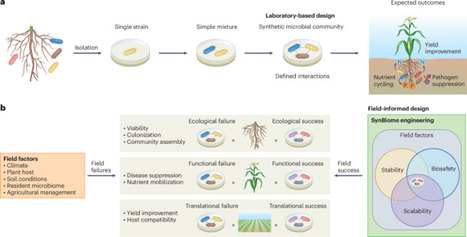
Soil degradation threatens food production and agricultural sustainability, driving interest in microbial strategies beyond conventional inoculants. Synthetic microbial communities (SynComs) enable the rational assembly of beneficial microorganisms, yet their field performance often remains inconsistent because environmental heterogeneity, resident microbiota and agricultural management are insufficiently considered into designs. Here we introduce a synthetic microbiome (SynBiome) that incorporates these ecological conditions into microbial engineering. We discuss stability, biosafety and scalability as key considerations and describe how environmental monitoring, multi-omics technologies, ecological modelling and artificial intelligence can support iterative community design and evaluation. By treating field heterogeneity as design information, the SynBiome perspective provides a conceptual direction towards more context-aware microbiome engineering in agricultural systems. This Perspective introduces a field-informed framework for synthetic microbiome (SynBiome) engineering that integrates ecological context into microbial design. It highlights stability, biosafety and scalability as key considerations for reliable microbial interventions in sustainable agriculture.
|
|
Scooped by
mhryu@live.com
November 25, 7:02 PM
|
Integrons facilitate the adaptation of microbes by capturing beneficial gene cassettes, including antiphage defense systems, but their role in phage adaptation remains unclear. Here, we identify reversed integron cassette organization in phages, with 96% of reverse-oriented cassettes lacking detectable homologs in surveyed bacterial and plasmid integrons. Phage cassettes are enriched in counterdefenses, including viral sponge-like proteins. Despite these differences, representative phage and bacterial integron integrases recombine cassette attachment sites from either source; however, exchange between oppositely organized phage and bacterial integron arrays misorients incoming gene cassettes relative to the recipient integron's promoter, posing an expression barrier. These findings establish integrons as a shared engine of the phage-host arms race, capturing defenses in bacteria and counterdefenses in phages, while cassette orientation buffers exchange between the two adaptive repertoires.
|










1str