Your new post is loading...

|
Scooped by
Robin Landis
April 7, 2014 4:54 AM
|
...Every second person in the world dies from malnutrition. In order to fight the so-called hidden hunger — a chronic lack of vitamins and minerals — biofortification aims to increase nutrition and yields simultaneously. HarvestPlus is part of the CGIAR Consortium research programme on Agriculture for Nutrition and Health (A4NH), which helps realise the potential of agricultural development to deliver gender-equitable health and nutritional benefits to the poor. The HarvestPlus programme is coordinated by the International Centre for Tropical Agriculture and the International Food Policy Research Institute. It has nine target countries: Nigeria, Zambia, Democratic Republic of Congo, Rwanda, Uganda, Ethiopia, Bangladesh, India and Pakistan. Brazil has also begun introducing biofortified crops... ...Rwanda has ventured into a new agricultural era as it boosts its food production and enhances the nutrition level of the crops grown here. In this Central African nation where 44 percent of the country’s 12 million people suffer from malnutrition and micronutrient deficiency, biofortified foods, like beans, are seen as a solution to reducing “hidden hunger” — a chronic lack of vitamins and minerals. One in every three Rwandans is anaemic, and this percentage is higher in women and children. An estimated 38 percent of children under five and 17 percent of women suffer from iron deficiency here. This, according to Lister Tiwirai Katsvairo, the HarvestPlus country manager for the biofortification project, is high compared to other countries in sub-Saharan Africa. Biofortified beans have high nutritional levels and provide up to 45 percent of daily iron needs, which is 14 percent more than commonly-grown bean varieties. They also have an extra advantage as they have proved to produce high yields, are resistant to viruses, and are heat and drought tolerant. Now, one third of Rwanda’s 1.9 million households grow and consume nutritious crops thanks to an initiative promoted by HarvestPlus in collaboration with the Rwandan government...
|
|
Scooped by
Robin Landis
April 4, 2014 10:10 AM
|
The United Nations Food and Agriculture Organization (FAO), the International Fund for Agricultural Development (IFAD) and the World Food Programme (WFP) unveiled today the results of their joint work to develop targets and indicators for a new global development paradigm for sustainable agriculture, food security and nutrition... ...Representatives from the three agencies stressed the need to finish the job of the MDGs that expire in 2015, but also to broaden their scope to address deeper issues of universal relevance like malnutrition, sustainable and inclusive food systems, and their inter-linkages. The three agencies identified a list of five targets: --Access to adequate food all year round for all people. --End malnutrition in all its forms with special attention to stunting. --Make all food production systems more productive, sustainable, resilient and efficient. --Secure access for all small food producers, especially women, to adequate inputs, knowledge, productive resources and services. --More efficient post-production food systems that reduce the global rate of food loss and waste by 50 percent... The UN Rome-based agencies emphasized that progress in these areas would have to come through innovative partnerships - among governments, with the private sector, with development institutions, and with all members of society, from producers to consumers. New governance mechanisms would also be needed to monitor impact, ensure accountability, and give different stakeholders a voice in decision-making. Attention was drawn to the important role in global food security of small-scale food producers, who need to be at the centre of new investments and new partnerships for a hunger-free world... The new targets are in line with the UN Secretary-General’s Zero Hunger Challenge, which envisions a world where, within our lifetime, no-one experiences chronic hunger and malnutrition. The work of the three Rome-based agencies has been consistently inspired by this shared vision...
|
|
Scooped by
Robin Landis
April 4, 2014 9:26 AM
|
The Food and Agriculture Organisation (FAO) has said that Africa remains the world’s most food insecure continent, with relatively low levels of agricultural productivity, low rural incomes, and high rates of malnutrition, despite important economic progress and agricultural successes. At its 28th Regional Conference for Africa in Tunis recently, FAO called on African ministers of agriculture for action in priority areas to accelerate increased investment and broad-based transformation in support of smallholder farmers, including rural youth and women. Africa has recorded continuous economic growth since 1999, accompanied by improved governance and human development indicators... ...The Conference advocated for providing the enabling environment to end hunger in the continent by 2025. It primarily focused on sustainably increasing the potential of agriculture, fisheries, livestock and forestry as a source of employment and income for African youth, women and men who engage in these sectors for food and nutrition security as well as agri-business ventures aimed at increasing family incomes. The status and trends of agriculture, food and nutrition in Africa Trends in per capita food production have been generally positive over recent decades. On average, agricultural production in Africa has increased slightly less than 1 percent per year, compared with about 2 percent in developing countries... ...By 2012, Africa as a continent had made the least progress in reducing poverty. The 2012 United Nations Millennium Development Goals (MDG) Report states that Africa is 41 percent “off” the first MDG poverty target versus 25 percent in South Asia and 6.1 percent in Latin America. - See more at: http://www.vanguardngr.com/2014/03/africa-still-food-insecure-continent-fao/#sthash.vAbckz95.dpuf
|
|
Scooped by
Robin Landis
April 4, 2014 7:46 AM
|
It is a very exciting and important time in food, nutrition and health security. This blog aims to promote an informed dialogue, serve as a resource for those in the field and empower people at all levels to do what they can to make undernutrition and nutrition-related death and disease a thing of the past. Bloggers come from a variety of diverse organizations and backgrounds, including: Opportunity International, ActionAid, Bread for the World, Fulbright, ChildFund International, Church World Service, Food Bank NYC, Harvest Plus, Stop Hunger Now, Heifer International, CIMMYT, WhyHunger, Hunger Task Force, DSM Corporate Communications, Iowa National Guard, NASDA, Save the Children, The Mathile Institute for the Advancement of Human Nutrition, Good Shepherd Food Bank, UN Week NY, World Watch Institute, Planet Aid, InterAction, The Flour Fortification Initiative, Helen Keller International, John Snow, Inc., Feeding America, Global Health Action, FutureGenerations, IIMSAM, FINCA, Peace Corps, The International Food Policy Research Institute (IFPRI), and many more organizations.
|
|
Scooped by
Robin Landis
April 3, 2014 2:45 AM
|
A world which is four degrees hotter will face much bigger threats than half that warming, in crop damage, species extinctions and vanishing natural systems such as Arctic sea ice and coral reefs, a UN report found on Monday. The report by the U.N.’s Intergovernmental Panel on Climate Change (IPCC) was the second in a three-part series documenting evidence, impacts and steps to cut greenhouse gas emissions. The IPCC’s summary report described climate risks by region, at 2 and 4 degrees warming above pre-industrial levels... In Africa, the biggest risk was to crop production, risks described as “very high” with or without adaptation with 4 degrees warming, and “medium” for 2 degrees with adaptation. Adaptations included crop breeding and finance for smallholders to invest in fertilisers or irrigation. - See more at:http://www.rtcc.org/2014/04/01/how-much-worse-is-a-4-degrees-world/#sthash.CH0nfS1y.dpuf
|
|
Scooped by
Robin Landis
April 2, 2014 9:12 AM
|
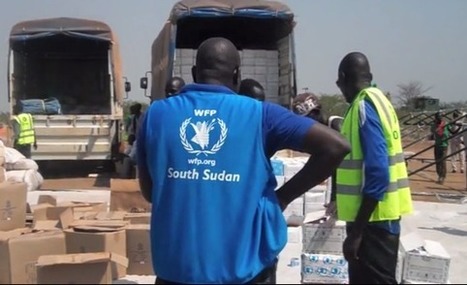
The rainy season in South Sudan prevents aid from moving by road. The UN World Food Programme (WFP) and other aid groups rush to place supplies into position before the rains come. However, the UN reported yesterday, "Lack of funding and pipeline pre-positioning have delayed implementation of some activities, including livelihoods support."... ...The outbreak of fighting between the government and opposition forces last year displaced hundreds of thousands. The UN and other aid groups have been trying to meet emergency needs. WFP, for instance, has been airlifting food to displaced populations in remote areas. Also, WFP is concerned about 220,000 displaced persons who have fled to neighboring countries. The UN food agency needs funding to prevent malnutrition emerging in this population. Valerie Guarnieri, WFP Regional Director for East & Central Africa, says, “We are concerned about reports of alarmingly high rates of malnutrition among children arriving at refugee camps in neighbouring countries, particularly Ethiopia. While we are working with partners to provide specialized nutritious foods for refugee children, the high levels of malnutrition are a sign that the humanitarian situation in inaccessible regions of South Sudan may be rapidly deteriorating.”
|
|
Scooped by
Robin Landis
April 2, 2014 8:28 AM
|
Over 275 high-level stakeholders representing the government, the business community and civil society will meet in Kigali, Rwanda, for a three-day consultation titled ‘Getting Nutritious Foods to People’, which is hosted by the government of the African nation and commences on March 31, 2014.
Nearly one in three people globally suffers from a lack of essential vitamins and minerals (such as vitamin A, zinc and iron) in the diet. This condition (known as hidden hunger) increases the risk of stunting, anaemia, blindness, infectious diseases and even death. Women and children are especially vulnerable...
...Keynote speakers include M S Swaminathan (father of India’s Green Revolution); Chris Elias, president, Global Development Programme, Bill and Melinda Gates Foundation, and Akinwumi Adesina, Nigeria’s minister of agriculture and rural development and Forbes Africa Person of the Year 2013.
Adesina serves on the Global Panel on Agriculture and Food Systems for Nutrition, a new expert group that advises on nutrition-enhancing agricultural and food policies and investments. The panel would convene a special session to explore how bio-fortification could help decision-makers in developing nutrition-sensitive agriculture and food policies...
|
|
Scooped by
Robin Landis
April 2, 2014 6:45 AM
|
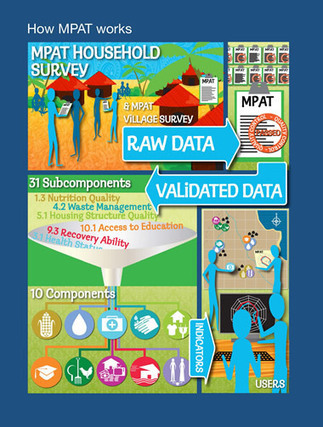
As the United Nations' specialised agency for rural development, the International Fund for Agricultural Development (IFAD) continuously faces the question of how best to "map" rural poverty and measure the impact of our work. To get a clearer picture, IFAD has developed the Multidimensional Poverty Assessment Tool (MPAT). This tool is designed to help development practitioners understand some of the primary dimensions of rural poverty, which otherwise can be difficult to assess and measure. To do so, it uses a collection of 10 composite indices, each of which aggregates data from diverse indicators. In more basic terms, MPAT takes a snapshot of rural poverty – at a specific place and point in time – by collecting people's perceptions and opinions about core issues, such as housing, food security and empowerment. The information is then summarised, using the MPAT indices, to produce a picture of the situation in a given household, village or project. This snapshot can then guide MPAT users in determining where to direct additional support... ...By pointing to areas where support is most needed, and by measuring the impact of initiatives undertaken to improve rural lives and livelihoods, MPAT can enhance development interventions. Its crosscutting methodology creates a sort of “rural poverty dashboard” covering food and nutrition security, domestic water supply, health and health care, sanitation and hygiene, housing, clothing and energy, education, farm assets and non-farm assets, exposure and resilience to shocks, and gender and social equality. MPAT is based on a bottom-up, participatory approach reflecting the voices and perspectives of rural people themselves. The tool uses household and village-level surveys to collect data, averaging and organising the results in a clear, standardised fashion. In the process, it not only measures the various dimensions of rural poverty but also offers insight into its underlying causes....
|
|
Scooped by
Robin Landis
April 2, 2014 5:11 AM
|
The British government has been accused of helping to carve up Africa in the interests of big business after it emerged that £600m of aid money has been allocated to a G8-sponsored scheme recently described as a new form of colonialism. The New Alliance for Food Security and Nutrition, a partnership between donor countries, multinational companies and 10 African countries, is intended to accelerate responsible investment in African agriculture and help 50 million people out of poverty by 2022. But critics argue that the alliance is exacerbating poverty and inequality by prioritising its multinational investors over millions of smallholder farmers on the continent...
|
|
Scooped by
Robin Landis
March 18, 2014 4:39 AM
|
The Integrated Food Security Phase Classification (IPC) is a set of standardized tools that aims at providing a "common currency" for classifying the severity and magnitude of food insecurity.
This evidence-based approach uses international standards which allow comparability of situations across countries and over time. It is based on consensus-building processes to provide decision makers with a rigorous analysis of food insecurity along with objectives for response in both emergency and development contexts. Read more on IPC in East & Central Africa: http://www.ipcinfo.org/ipcinfo-countries/ipcinfo-eastern-middle-africa/en/
|
|
Scooped by
Robin Landis
March 17, 2014 9:39 AM
|
ODI’s Water Policy Programme (WPP), the Global Water Initiative East Africa (GWI) and UEA’s Water Security Research Centre (WSRC) will host a flagship event on 21 March 2014 to mark World Water Day (22nd March). The event will bring together international experts from a range of disciplines and sector perspectives to discuss four key themes: The groundwater perspective: Are recent headlines about Africa’s vast groundwater potential credible? What do we know – and what don’t we know – about the development potential and management needs of groundwater resources in SSA? The agriculture perspective: Does better land and water management, and more irrigation in particular, hold the key to ‘climate-proofing’ agriculture, raising yields and reducing rural poverty? The development and poverty perspective: Groundwater irrigation for smallholder farmers in SSA is accelerating, but what do we know about its ability to deliver inclusive growth and the factors that still block development? Lessons from the Asian perspective: Thanks to a groundwater boom, millions of farmers have improved their livelihoods and food security in South Asia and northern China. But the costs of runaway withdrawals are now hitting hard – on poorer farmers, the environment and other sectors, not least energy. What important lessons can be drawn? The day will conclude with the launch of a new book, Water Security, Principles, Perspectives and Practices, published by Earthscan, with mini-presentations from some of the well-known authors.
|
|
Scooped by
Robin Landis
March 16, 2014 12:25 PM
|
For decades, many observers believed that customary tenure arrangements, were impediments to agricultural development. Land rights are widely agreed to be essential in motivating farmers to make short and long-term fixed investments in their farms – investments that will increase agricultural productivity, raise rural household incomes, and move the needle on the goal of alleviating global poverty. The good news is that a recent systematic review – funded by the U.K. Department for International Development (DfID) – of quantitative literature on the effects of tenure formalisation in developing countries confirmed that formal registration of individual land rights increases investment, productivity, and household consumption. The bad news? Productivity did not rise as much in Africa as in Asia and Latin America. Differences in short-term gains were considerable: 5-10% average gains in Africa, compared to 25-35% gains in Latin America and Asia. The more modest response to tenure recognition in Africa raises new questions on the role of tenure reform and rights registration in boosting agricultural productivity and investment... ...Other research suggests that the greater vulnerability of rights under customary systems might be explained by the fear of arbitrary transfer of rights by state agencies to public use or to outside investors. This has given rise to efforts to extend statutory recognition to customary tenure arrangements, accompanied in some cases by cost-effective programmes for verifying and recording customary rights using technologies that reduce the per-parcel costs of rights registration. Enthusiasm for titling has also been dampened by the poor access that agricultural households in sub-Saharan Africa have to credit. Without access to credit, households receiving title aren't truly able to capitalise on their land assets, in which case benefits may fail to match the costs of titling... ...Future research should examine whether the observable implications of these theories are evident in cases of reform in Africa, Asia, and Latin America, keeping in mind broader welfare considerations. Modest gains in following rights recognition does not in itself mean that there might not be positive effects associated with formal registration of land rights....
|
|
Scooped by
Robin Landis
March 14, 2014 8:53 AM
|
Webinar: E-Payments Deliver 15% Greater Cost Efficiency in Kenya – Is This the Future of Food Aid? Join the Better Than Cash Alliance for a live webinar on Wednesday, March 19, 2014 (9:30-10:30 a.m. EDT) to understand how the World Food Programme (WFP) transitioned its program in Kenya from food aid to e-payments, and how it found this to be 15 percent more cost efficient. Participation in this event is encouraged for development organizations and government representatives looking to increase the efficiency and scale of transfers, while also forming the building blocks for financial inclusion. The webinar is also useful to financial service providers interested in collaborating with governments and development organizations to deliver assistance. Please follow this link to register: https://www1.gotomeeting.com/register/978579552 The Webinar is based on a research made possible by a grant from the Government of the United Kingdom’s Department for International Development (DFID) to the Consultative Group to Assist the Poor (CGAP) in support of the work of the Better Than Cash Alliance.
|
|
|
Scooped by
Robin Landis
April 4, 2014 10:15 AM
|
An innovative new tool for assessing, understanding and addressing rural poverty. The Multidimensional Poverty Assessment Tool (MPAT) provides data that can inform all levels of decisionmaking by providing a clearer understanding of rural poverty at the household and village level. As a result, MPAT can significantly strengthen the planning, design, monitoring and evaluation of a project, and thereby contribute to rural poverty reduction. The Multidimensional Poverty Assessment Tool (MPAT) is the result of a collaborative, international initiative begun in 2008 and led by the International Fund for Agricultural Development (IFAD). The purpose was to develop, test and pilot a new tool for local-level rural poverty assessment. The tool went through extensive field testing in several countries and independent validation and peer-review. MPAT is relatively easy to use, requires few resources to implement, and provides users with a reliable and comprehensive picture of a community’s poverty situation.
|
|
Scooped by
Robin Landis
April 4, 2014 9:37 AM
|
Uganda’s economy is largely agricultural. This means that agriculture being the core sector has, for a long time, significantly contributed to the country’s GDP and employment.
...The 2nd Chronic Poverty Report notes that the poor people have been vulnerable to the adverse effects of climate change because of their fragile resilience and limited ability to adapt, their dependence on natural resources and their limited capacity to adapt, which is heightened by weak national systems that make many people who are currently vulnerable or are in transitory poverty are at risk of staying in chronic poverty.
Uganda, like the other East African Countries, has ratified the United National Framework Convention on Climate Change (UNFCC) and Kyoto Protocol that guided the development of the East African Community (EAC) Climate Change Master Plan...
...The DRR approaches offer options for prevention, mitigation and preparedness to adverse impacts of natural hazards in some of its interventions. For instance, strengthening regional meteorological and hydrological services and improving climate early warning systems to promote efficient management and utilisation of natural resources, including protection of vulnerable ecosystems. Despite this, most of the countries don’t have long term responses to disasters...
...The Government of Uganda and the East African Community are called upon to urgently ensure that their early warning systems and disaster preparedness and management policies are effectively responsive to predict and manage disasters and increased vulnerability of their affected people.
|
|
Scooped by
Robin Landis
April 4, 2014 9:03 AM
|
EAX-Rwanda could leverage the high rate of mobile phone penetration to share market information with farmers and boost trade in produce through the exchange, Nigerian agriculture minister Akinwumi Adesina has said. Adesina who on Wednesday visited EAX-Rwanda, the Rwanda chapter of East African Exchange (EAX), said that sometimes farmers get stuck with big volumes of produce because they lack market pricing information and end up making losses. Rwanda has a mobile penetration rate of over 63 per cent, according to statistics from Rwanda Utilities Regulatory Authority. That means that 63 out of every 100 people use mobile phones. Farmers can use basic features of the phone, like short message solutions, to access relevant information sent to them. We have more mobile phones today than television sets; so how we use the devices to let the farmers know where the markets and opportunities are and also where they can get subsidised inputs from is really vital," he said. He added that enabling farmers to own phones and access good technologies would also prove vital in improving the value-addition chain of their produce. The minister said that continuous access to modern technology enables farmers increase output, sell more and also produce cost-effectively. Paul Kukubo, the chief executive of EAX Rwanda, said that the exchange is looking at working with reputable actors to share market information with the farmers. He said the exchange will use a system similar to Kenya's mFarm, which gives farmers up-to-date market information and links them with buyers. If implemented, this will complement the exchange's current Nasdaq electronic trading platform that can detect and link real-time global prices to ensure price transparency. The EAX also acts as an electronic warehouse receipt system that collateralises produce and enables smallholder farmers to acquire credit from banks.
|
|
Scooped by
Robin Landis
April 3, 2014 2:52 AM
|
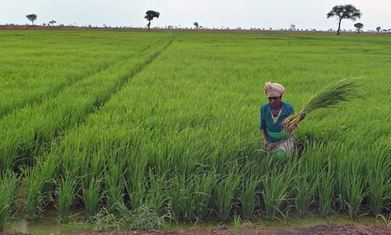
Climate change has already cut into the global food supply and is fuelling wars and natural disasters, but governments are unprepared to protect those most at risk, according to a report from the UN's climate science panel. The report is the first update in seven years from the UN's international panel of experts, which is charged with producing the definitive account of climate change. In that time, climate change has ceased to be a distant threat and made an impact much closer to home, the report's authors say. "It's about people now," said Virginia Burkett, the chief scientist for global change at the US geological survey and one of the report's authors. "It's more relevant to the man on the street. It's more relevant to communities because the impacts are directly affecting people – not just butterflies and sea ice." The scientists of the Intergovernmental Panel on Climate Change found evidence of climate change far beyond thawing Arctic permafrost and crumbling coral reefs – "on all continents and across the oceans". But it was the finding that climate change could threaten global food security that caught the attention of government officials from 115 countries who reviewed the report. "All aspects of food security are potentially affected by climate change," the report said... ..."The main way that most people will experience climate change is through the impact on food: the food they eat, the price they pay for it, and the availability and choice that they have," said Tim Gore, head of food policy and climate change for Oxfam...
|
|
Scooped by
Robin Landis
April 2, 2014 9:24 AM
|
Meet Ertharin Cousin: the woman who feeds the worldShe's friends with the Obamas. She rose from poverty to run the World Food Programme. And she plans to end global hunger in our lifetime...
|
|
Scooped by
Robin Landis
April 2, 2014 8:55 AM
|
Millions of people will go hungry due to climate change cutting food production worldwide by 2 per cent per decade even as the demand for food to supply a growing population is rising by 14 per cent per decade, according to the latest scientific report. In the second instalment of its Fifth Assessment Report released this morning in Yokohama, Japan, the UN’s Intergovernmental Panel on Climate Change (IPCC) also warns that “human security will be progressively threatened” by global warming. The report – which deals with climate risks, vulnerabilities and adaptation – says it will become harder for people to make a living and this will lead to mass migrations from poorer countries of “climate refugees” seeking a better life elsewhere. The report, which contains 30 chapters, was compiled by 310 authors from 73 countries and draws on a growing volume of scientific research on climate change. Every line of its 29-page summary for policymakers had to be agreed by delegates in Yokohama...
‘High-risk impacts’
It spells out the likely impacts of different levels of warming in different parts of the world. Adaptation is a key element of the report, with tables showing that what are now classed as “high-risk impacts” could be reduced to low risk, if appropriate steps are taken.
But even with adaptation, it warns that global agricultural productivity could decline in all regions, with developing countries hit the hardest. A net decline in ocean productivity due to warming and acidification will exacerbate this challenge, it says....even a 2-degree increase in average global surface temperatures would have a negative impact on crop yields...
|
|
Scooped by
Robin Landis
April 2, 2014 6:48 AM
|
A Program for labour saving agricultural technologies for smallholder women farmers The overall goal of the farmer participatory 3D4AgDev Program is to link the potential of User-Led Innovation with Rapid Prototyping (via 3D printing) to enable women smallholder farmers in Africa to design and develop their own labour-saving agricultural tools, tailor-made for their culture, soils and cropping systems. The 3D4AgDev Program has been kickstarted by a Bill and Melinda Gates Foundation (BMGF) Grand Challenges Exploration (GCE) Phase I grant to the Plant & AgriBiosciences Research Centre (PABC) in the National University of Ireland Galway. The 3D4AgDev Program is a research partnership program between the NUI Galway PABC and Concern Worldwide which aims to operate as an open-innovation research platform to harness advances in rapid prototyping so that improved labour-saving technologies can be more effectively developed for and by women smallholder farmers... ...User-led innovation refers to incorporating the opinions, knowledge, and circumstances of end users into the designs of products that those people will be using. Sounds like common sense, but traditional manufacturing often has difficulty applying special customizations since it focuses on mass production to keep cost effective. The plan is to start in Tanzania; women farmers will be involved in the design of the tools they need and prototypes will be printed. A very few tools could be functional in plastic format, like small shovels and germination equipment. Most of farming is a bit more intensive though, so the prototypes will be taken to local blacksmiths to copy, likely with casting...
|
|
Scooped by
Robin Landis
April 2, 2014 5:15 AM
|
Despite the role and impact of women in African agriculture, there's still an unsettling disparity in the support they receive compared to men. But what does the future hold for women farmers... ...While women farmers are essentially feeding the continent, they have remained largely in the background, calling little attention to themselves and receiving little help. But this situation is changing as they spearhead efforts to transform Africa's agricultural landscape... Read the original article: http://www.theafricareport.com/East-Horn-Africa/women-empowering-africas-agriculture-backbone.html
|
|
Scooped by
Robin Landis
April 2, 2014 4:18 AM
|
By Marshall Matz Agriculture is a business, a very big business. Whether you look at net farm income, agriculture exports or the number of people employed in the farm and food value chain, agriculture is big business by any criteria...[and]...the effort to help smallholder farmers is fast becoming the focus of attention in the fight to eliminate food insecurity: --Feed the Future, the U.S. Government's global hunger and food security initiative, supports country-driven approaches to address the root causes of hunger and poverty... --In 2012, the G 8 (now G 7) committed to working with our African and other international partners, to launch a New Alliance for Food Security and Nutrition to accelerate the flow of private capital to African agriculture, take to scale new technologies and other innovations that can increase sustainable agricultural productivity, and reduce the risk borne by vulnerable economies and communities. --The African Union's Comprehensive Africa Agriculture Development Programme (CAADP) program is urging all African governments to invest at least 10 percent of their national budgets in agriculture. --The Bill and Melinda Gates Foundation's agricultural development strategy is “premised on a hypothesis that it is possible for smallholder farmers to double and in some cases even triple their yields in the next 20 years while preserving the land. Increased productivity growth will contribute to overarching goals of hunger and poverty reduction.” --The Alliance for a Green Revolution in Africa is focused on assisting smallholder farmers across Africa. --According to the Office of Food Security at the [US] State Department we need to increase global food production by 70 percent before 2050. Women make up the majority of the agricultural workforce in many areas of the world. Yet today, for every investment we make in producing food, we fail to get the best results because MANY women lack the access they need to land, seeds, water, credit and markets. The 2013 Millennium Development Goals Report says that the target of halving the percentage of people suffering from hunger and food insecurity is within reach. That is correct; with concerted action by national governments, international partners and the private sector focused on smallholder women farmers, the hunger target can be achieved. The bottom line is that assisting smallholder farmers boost production is the key to both reducing food insecurity and at the same time improving economic development and political stability...
|
|
Scooped by
Robin Landis
March 18, 2014 2:22 AM
|
Multinationals such as Walmart and Carrefour could easily deal a blow to smaller traders and markets in Africa. But if they choose to work with local firms, they could be a blessing.
With Africa's middle-classes growing and its urban populations expanding, it is little wonder more and more international retailers are looking to the continent in the hope of finding new markets, new consumers, and new profits. One of the latest - and potentially most significant - new frontiers in this burgeoning trend is food. The race to control the future of food consumption in Africa is well and truly on. In 2011, Walmart led the charge as it acquired the South African-based Massmart. And last year, French hypermarket multinational Carrefour revealed its own intentions for the continent when it inked a joint venture with CFAO, a well-established international goods distributor which specialises in Africa. Furthermore, last month, the London-based equity firm Actis revealed that it had set aside over $500 million for property development in Ghana and Nigeria, much of it specifically for Western-style malls which would almost certainly contain food supermarkets. Meanwhile many other investors - such as AfricInvest, Agora, Cauris Management and Helios - have expressed an interest in financing African food retailers as they try to respond to new competition. In assessing what this wave of interest could mean for Africa, it's worth looking to the experience of the US, as painstakingly detailed by John Kenneth Galbraith. From his point of view, the move to larger retail formats in the US was fundamentally rooted in an effort to 'countervail' or counteract the pricing power of manufacturers... ...African traders who get food to the masses in big cities often have to navigate a treacherous road, both literally and figuratively. Market infrastructure, for example, tends to be exceedingly poor. Rickety stalls, cramped quarters and deficiencies in the provision of cold storage, maintenance, power, sanitation and water services complicate life for food traders. Where and when these poor conditions predominate, food safety is a major concern. Another set of challenges derives from the fact that many food suppliers remain small-scale and tend to be unregistered or informal. As such, they typically lack access to the level of credit necessary to re-invest in their businesses or to correct market failures...
|
|
Scooped by
Robin Landis
March 17, 2014 9:31 AM
|
Uganda has scored highly in Millennium Development Goal (MDG) number one. The goal calls for eradication of extreme poverty and hunger, an expert in the ministry of finance has revealed. “The national poverty head count declined from 56.4% in 1992/93 to 24.5% in 2009/10. This has been a result of more secure and productive forms of employment and has resulted in a steady reduction in hunger and under nutrition,” said Kakande. She further revealed that women have experienced some income poverty reduction but to a less extent compared to the men, saying in 2002/03, women constituted 30% of the wage employment before the figure slightly dropped to 29% in 2005/06. ...there is still a wide income inequality between men and women with the latter earning lesser. In 2009/10, Kakande said on average men in urban earned sh181, 000 (rural sh80, 000) while their female counterparts earned sh130, 250 (rural sh50, 000)... ...there is progress on the other goals especially reduction in child mortality, promotion of gender equality and empowerment of women, and universal primary education. For example...significant progress had been made in improving nutrition, saying the share of underweight children below the age of five years declined from 25.5% in 1995 to 13.8% in 20011...
|
|
Scooped by
Robin Landis
March 14, 2014 9:10 AM
|
IFPRI's 2013 Global Food Policy Report reviews major food policy developments and trends from the past year, documents emerging issues, examines key challenges and opportunities, describes the rising political commitment to food and nutrition security, and sets an agenda for action for 2014 and beyond. In particular, it calls for ending hunger and undernutrition by 2025. What is the problem? Persistent hunger and undernutrition. According to the Food and Agriculture Organization of the United Nations, 842 million people--or one in eight people worldwide--go hungry every day. And more than 2 billion people suffer from "hidden hunger," or a shortage of essential micronutrients, such as iron, vitamin A, and zinc. Why is it important to revisit this problem now? With less than two years to go, the deadline for achieving the Millennium Development Goals is fast approaching. Although the world has made some headway in reducing hunger since the early 1990s, progress in halving hunger is not on track. Much work still must be done. The fight to end hunger and undernutrition must continue beyond 2015 as a key priority. Why should ending hunger and undernutrition by 2025 be a development priority? Discussions of the post-2015 development agenda have focused on the goal of eliminating extreme poverty by 2030. But it's not possible to fight poverty without simultaneously taking steps to reduce hunger and undernutrition. Hunger and undernutrition cause and perpetuate poverty, negatively affect health, and have social and economic costs. Undernutrition limits people's educational achievements and productivity, a result that in turn checks economic growth. On the flip side, eliminating hunger and nutrition can lead to significant economic gains. Studies from Ethiopia, India, and Nigeria show that every US$1 invested in reducing child stunting - an indicator of undernutrition - generates between $12 and $34 in economic returns. We should thus aim to eliminate hunger and undernutrition by 2025... ...More knowledge sharing can provide lessons learned and create a "snowball effect" for positive changes and innovations. enhance and expand partnerships. Linking national governments with civil society, donors, and the private sector is a way of committing resources to food and nutrition security in a holistic framework. It's time to set our sights on a new target: ending hunger and undernutrition by 2025. This goal is achievable, and it will play a key role in reducing poverty worldwide.
|







![Climate change 'already affecting food supply' [UN] | Food & Nutrition Security in East Africa | Scoop.it](https://img.scoop.it/pWoa89xuTq0oujEIXdjTnTl72eJkfbmt4t8yenImKBVvK0kTmF0xjctABnaLJIm9)