BLOG by M. Ann Tutwiler, Director General, Bioversity International
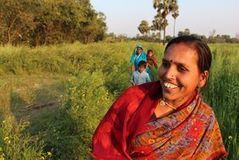
The 2 billion smallholder farmers who live in developing countries – often women – produce the majority of the world’s food, yet most live in extreme poverty.
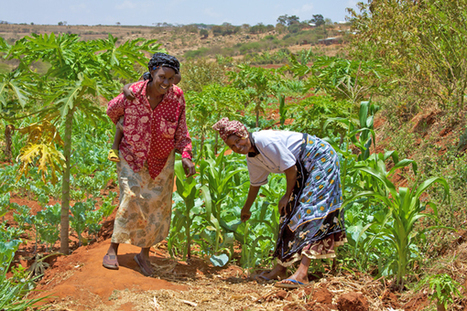
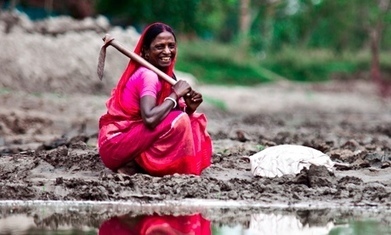
Female farmers often produce less than their male counterparts because of less access to or ownership of land, fewer inputs and less access to extension services. Women also provide nutrition to their children and families, putting agricultural resources on their tables every day.
Recognizing the contribution of women to agriculture is critical to achieve global food security. Many smallholder farmer women are also the custodians of biodiversity, conserving and using their agricultural resources. Paragraph 13 of the Preamble of the Convention on Biological Diversity recognizes “the vital role that women play in the conservation and sustainable use of biological diversity and affirming the need for the full participation of women at all levels of policy making and implementation for biological diversity conservation.”
These are some of the many reasons Bioversity International has been highlighting the role of women in agriculture as part of International Women’s Day celebrations this weekend.
Women make up a substantial part of the rural workforce. They produce 80% of staple food in Africa and up to 60% in some parts of Asia — yet are often the last to benefit from economic development. Women smallholders, who on average account for about 55% of the labour force and carry out about 70% of farm work in Africa, represent just 8% of land ownership.
Imagine how different our world could be...
... if women had the same access to productive resources as men they could increase yields on their farms by 20-30%. This could raise total agricultural output in developing countries by 2.5-4%, which could in turn reduce the number of hungry people in the world by 12-17%.
Bioversity and our CGIAR partners include gender as a cross-cutting theme in all of our work. In particular, Bioversity explores the roles that women and men have in our agricultural and food systems, and in conserving and using diversity in our fields, farms, gardens and forests...
...The International Year of Family Farming puts the spotlight on the complementarity of women's and men's roles in family farming. Both are important; but women’s contributions to agriculture and biodiversity have not been fully explored nor recognized.
In advance of International Women's Day, the International Fund for Agricultural Development (IFAD) launched a report today that highlights the vital role women smallholder farmers play in delivering both economic and social benefits when provided the right tools for adapting to climate change.
The report, The Gender Advantage: Women on the front line of climate change, shows that successful adaptation to climate change means recognizing the role of women smallholder farmers. It describes the lives of millions of women around the world who have been able to better support their families and communities because on gender-sensitive adaptation...
Food security activists have asked African legislators to stop passing laws which end up protecting the interests of multinational seed manufacturers at the expense of ordinary farmers.
...Uganda’s parliament is currently debating the Plant Variety Bill 2010 which many farmers in the country are opposing...
...The National Biotechnology and Biosafety Bill, 2012, also provides for a regulatory framework to facilitate safe development and application of biotechnology. However, the Bill has not been passed into law, because of the controversy associated with GMOs .
...One opportunity worth consideration as a way of easing the transition to more formal markets is through supplying institutional markets. Linking smallholder farmers with institutional markets, such as prisons, hospitals, feeding schemes, or others that purchase food to those in their care is one local market opportunity that has not been thoroughly explored. Institutional markets could offer more accessible, stable and local market opportunities for smallholders and employment for other downstream actors, thus stimulating the local economy. However, it is important that the food meets the quality and quantity demands at low cost in a timely manner. This can be realized through linking public policies of school feeding and agricultural and rural development. Public policies can promote deliberate engagement of smallholder farmers and sourcing of local food (Otsuki 2011).
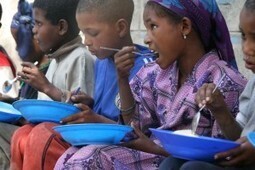
School feeding programs are widely common internationally, and one of the larger institutional markets. About 330 million children receive school meals in almost every country of the world, and countries are investing from 47-75 billion dollars annually in school feeding every year (Bundy et al. 2009; WFP 2013). In addition to improve children’s health, nutrition and school attendance, school nutrition programs can also provide opportunities for local smallholder farmers and promote rural and agricultural development. This is what the home-grown school feeding (HGSF) framework intends to achieve through sourcing locally produced food for schools (Bundy et al. 2009).
Several actors are focusing on HGSF, including Comprehensive Africa Agriculture Development Programme (CAADP), New Partnership for Africa’s Development (NEPAD), the World Food Programme (WFP) and the Millennium Hunger Task Force among others. When introducing the concept NEPAD provided a rough estimate of the potential for smallholder farmers. If 50 million school children receive school meals 200 days a year, it would amount to 5 million tons of food per year, which could involve about 2 million local smallholders producing a variety of food with the potential to improve their food security and livelihood (NEPAD November 2003)...
Rwanda has registered tremendous progress in bringing down the rate of stunting in children under five years of age from 51 per cent in 2005 to 44 per cent currently, the Minister for Health, Dr Agnes Binagwaho, has said.
...The minister noted the role played by the development partners and the consolidation of efforts through the social cluster ministries, saying Rwanda was in position to beat the Africa Union Targets of 10 per cent.
“We have initiatives in place to promote the consumption of a balanced diet among young children, pregnant women and lactating women. “The initiatives have been accelerated with the launch of “1,000 days campaign” by the Prime Minister. The campaign calls upon Rwandans to cherish the first 1,000 days period right from pregnancy through to the first two years of a child’s life"...
...The Global Coordinator of the Scale Uup Nutrition (SUN) Movement, Dr David Nabarro, commended Rwanda’s multi-stakeholder approach employed to scale up nutrition. “Rwanda has reduced the malnutrition rate significantly. This is attributed to the development of a policy framework where the national food and nutrition plan is aligned to the objectives of the economic development and poverty reduction,” Nabarro said...
International School Meals Day 2014 will take place on Thursday 6 March 2014.
“A hungry or emotional child cannot develop physically, mentally or emotionally. Healthy eating habits provide the optimum mental and physical health for children and, once established, last a lifetime.” Dr Yibo Wood, Nutritionalist, USA Government Department of Agriculture
On Friday 8 March 2013, schools in the UK and the USA celebrated the first ever International School Meals Day. This special event celebrated food and promoted healthy living through the education environment.
Resources and Links
These resources are website links or files which could be used to:
--make a resource or lesson
--help you find out more about food, school meals, health and sustainability
Rwanda has achieved remarkable success in reducing child hunger, and nutrition experts believe there may be lessons here for other countries in Africa.
The UN Children's Fund (UNICEF), in a 2013 report on progress in tackling malnutrition, noted that in 2005 more than half of Rwanda's children under five years of age - about 800,000 - were stunted. "Just five years later, stunting prevalence had decreased from an estimated 52 percent to 44 percent," the report said.
The Rwandan approach has been to try and find home-grown solutions...The Rwandan model could be used in other African countries, where foreign donor-driven initiatives tend to focus on treatment and technical solutions...
...Change will only come when nutrition research is led by Africa, and interventions are designed to meet a country's priorities, according to the findings of a two-year European Union-funded SUNRAY (Sustainable nutrition research for Africa in the years to come) project, published recently in PLOS Medicine, a peer-reviewed journal.
...Priority actions that would help create a good environment for funding nutrition research in Africa include better governance of research, ensuring it is aligned with priorities identified in sub-Saharan Africa; helping countries develop technical capacity; and sharing findings with each other...
...To change the face of nutritional research in Africa, the SUNRAY project proposes an African-led "knowledge hub" that will assess and build on existing knowledge and present effective solutions for major nutrition problems in Africa...It will help foster relationships between researchers and policymakers, and also incorporate mechanisms to ensure optimal uptake and use of nutrition research findings for policy development, implementation and programming.
TANZANIA is among the African countries that are set to benefit from a 25 million US dollar agricultural project that is aimed at improving legume production on the continent.
A project launched (dubbed 'Putting Nitrogen Fixation to work for smallholder farmer in Africa' (N2Africa) is aimed at addressing the biggest challenges that afflict productivity of the crops. Other countries which are set to benefit from the project are DR Congo, ETHIOPIA, Ghana, KENYA, Liberia, Malawi, Siera Leone, Nigeria, RWANDA and Zimbabwe.
Launched in 2012, the G8's New Alliance for Food Security and Nutrition aims to transform the nature of agriculture and food production in Africa. Controversially, it gives agribusiness a seat at the table alongside governments and aid donors. As part of the initiative, African governments have said they will make their countries more attractive to private investors. Explore the promises that have been made and where...
...As part of the New Alliance, 10 African governments have signed up to change dozens of laws, policies and regulations to make their countries more attractive to the private sector. Collectively, they have made more than 200 commitments, including the overhaul of seed and tax laws and the setting aside of hundreds of thousands of hectares of land for commercial investors.
Critics say this has happened largely behind closed doors, with little information available to small farmers and other citizens about the changes their governments have agreed upon. The guide below opens the books – explore each government's commitments, the laws being changed, and the progress made so far.
Is biodiverse agriculture an anachronism? Or is it a vital part of a food-secure future? Given the need to feed an estimated 2.4 billion more people by the year 2050, the drive toward large-scale, single-crop farming around the world may seem inexorable.
But there’s an important downside to this trend, argues Timothy Johns, Professor of Human Nutrition, in a paper presented Feb. 15, at the annual meeting of the American Association for the Advancement of Science in Chicago.
Diets for most people around the world are becoming increasingly limited in biological and nutritional diversity. “Large-scale agriculture is characteristically simplified and less diverse than small-holder agriculture...This is true in genetic, ecological and nutritional terms.”
Small farmers, by contrast, in many places continue to grow a range of species and multiple varieties that form the basis of their diet and nutrition. Use of a range of wild species of fruit, vegetables, condiments and medicines, as well as wild animal-sourced foods, increase the likelihood that subsistence farmers with access to natural ecosystems meet their nutrition and health needs.
The problem is that smallholder farmers in developing countries often have low productivity and little likelihood of generating the profits needed to rise above poverty level...In particular, the smallholder farms in sub-Saharan Africa, which account for more than 90 per cent of agricultural production and the primary livelihood of 65 per cent of the population, need to be more productive...
...Recognizing the value of particular elements of agrobiodiversity with exceptional nutritional and health properties can provide opportunities where smallholder farmers have economic advantages...Products of biodiversity within culturally-based diets provide essential micronutrients and lower prevalence of diet-related chronic disease.”...
...Socially guided food-policy decisions should value the environmental, health, social and cultural benefits offered by agrobiodiversity...One example of this approach: Brazil’s National School Feeding Law and program since 2009 requires that at least 30 per cent of food in the program must come from family agriculture. It also has explicit guidelines for the use of healthy food in school menus, including foods that respect the culture and traditions; and it provides incentives for the purchase of diversified foods, preferably from local family agriculture.
“Food-policy makers around the world should seek to develop novel compensation mechanisms that reflect the benefits of small-scale, biodiverse agriculture...This may involve direct subsidies to farmers, but it must also involve investment in extension services, infrastructure, supply-chain research and development, and progressive market regulation.”
A tailored mix of farming technologies could significantly improve global food security by mid-century as the world's population swells to a projected 9 billion and the risk of adverse weather from climate change threatens crops and disrupts trade, according to a [recent] study...
Global corn yields could jump by as much as 67 percent by 2050, while wheat and rice yields may rise around 20 percent if certain innovations are paired, the International Food Policy Research Institute said in a study titled "Food Security in a World of Natural Resource Scarcity."
Widespread adoption of technologies, including biotech seeds, irrigation and no-till farming, could slice world food prices by nearly half and cut food insecurity by as much as 36 percent...
The study weighed the impacts of 11 different technologies on corn, rice and wheat yields, crop prices, trade and world hunger and found that certain combinations worked better than others. The findings could help identify practices that cash-strapped developing nations should target to combat hunger...
The Alliance for a Green Revolution in Africa (AGRA) has held a farmer's initiative forum aimed at improving the lives of farmers in the country through strengthening the agricultural value chain.
The project, carried out in conjunction with the Rwanda Rural Rehabilitation Initiative (RWARI), has so far benefited more than 40,000 smallholder farmers throughout the country. The project will also increase farmers' access to improved seed varieties and ISFM practices linking them to input markets...
AGRA aims to improve the farmers' productivity and the challenge of food security not only in Rwanda but in Africa as a whole as it looks to build capacity in the sector...
The need to invest in the entire value chain was the hallmark of the forum since it has been noted that one component of the value chain cannot on its own help Rwanda Farmers realize a profitable agricultural revolution.
The World Food Programme is working alongside companies such as Unilever and DSM to invest in and promote the important roles that women play in eradicating world hunger.
On International Women's Day we should remind ourselves that as both producers of food from the soil and providers of food to the family, women hold the key to nourishing the next generation. Whether it is our response to a disaster like last year's Typhoon Haiyan, providing food assistance to refugees fleeing Syria, or while helping to build resilience among communities farming the marginal lands of the Sahel region of West Africa, women and girls are front and central in our minds.
Every year, WFP provides special nutritional support to around 3 million vulnerable women, improving their health and the survival rates of their children. Our school meal programmes provide free school meals to around eleven million school-age girls, encouraging them to stay in education, and helping them to focus on their lessons.
WFP is also working with women smallholder farmers as part of "Purchase for Progress," a pilot programme that helps farmers build capacity and connects them more directly to markets. In significant ways, all of this work empowers women – both young and old - and boosts our efforts to end hunger.
WFP is proud of its work supporting women and girls, but we are also acutely aware that we could – and should – be doing so much more. There are around 842 million hungry people in the world and in most years we reach around 10% of this number, particularly the most vulnerable caught up in sudden onset natural or human-made disasters.
Currently, we are sharply focused on how we can reach more people and strive further towards the UN Secretary General's Zero Hunger Challenge. This identifies five areas including improved access to food and improved nutrition that can help us to eliminate hunger.
As we work towards the objectives set out in the Zero Hunger Challenge, we recognise that no single organisation – however committed it is, and however deep its pockets – will be able to help the world reach these goals on its own. Working in partnership with other organisations can help to mobilise more of the resources and engage more of the expertise that are vitally needed if we are going to get closer to zero hunger.
Many of our partners, whether governments or in the private sector, also support a women-focused approach. There is recognition that those who make household purchasing decisions are more likely to be women, and support for women-focused programmes is more likely to resonate with this demographic. Put simply, women consumers in donor countries recognise the value of humanitarian programmes that help the women who are themselves the primary producers and providers in many developing countries.
WFP's partnerships with companies such as Unilever and DSM, the Netherlands based nutrition and science company, focus sharply on programmes that improve access to nutritious food for women and thereby improve the chances that the children these women bear will have a better chance in life.
In Bangladesh, Unilever has invested more than $800,000 this year in programmes to improve the nutritional health of pregnant and breastfeeding mothers as well as supporting a free school meals programme that is reaching more than 47,000 children – many of them young girls. Under its "Improving Nutrition, Improving Lives" partnership, DSM is providing its expertise to help WFP improve the nutritional value of the food it distributes in the form of micronutrient powders and fortified rice.
WFP's partners know that working with women and girls provides a guaranteed return on investment in the future of the next generation. The first 1,000 days from conception until the age of two years provides a critical window of opportunity to lay a strong nutritional foundation for future life. If we can ensure that pregnant and breastfeeding women, as well as young women of a reproductive age, are properly nourished, then we can stop hunger being inherited by their unborn children.
Empowering women by providing them with the skills and tools to help them produce more from the land they farm is also a critical part of our work with partners like the Bill and Melinda Gates Foundation. The Purchase for Progress pilot – which helps farmers to improve yields and connects them more closely to local markets - has helped to train some 200,000 women. In the words of WFP's executive director, Ertharin Cousin: "Giving women the power to make choices over their lives is one of the first steps towards a world with zero hunger."
On this International Women's Day we can reflect on the real impact that partnerships between WFP and the private sector are having, not only the lives of women in developing countries, but also in our broader goals of reaching a world of zero hunger. Working together we can turn that from a dream into reality.
Elisabeth Rasmusson is the World Food Programme assistant executive director for partnership and governance services.
The spread of crop diseases is threatening food security in the two main regions of the Lake Zone. The diseases according to Open Forum on Agricultural Biotechnology in Africa (OFAB), are Cassava Mosaic, Brown Streak, Maize Lethal Nicrosis and Banana Wilt.
The most affected villages are Kisamwene in Butiama District, Randa in Torya and Ligamba in Bunda. Almost 90% of the staple food in Mara and Mwanza Regions were affected by disease leaving thousands of villagers in severe hunger. Villagers are very desperate because they have no food and their annual harvest is inadequate, “they only depend on food aid from the government.”
...Disease management is notoriously difficult, often involving cultural methods that can be impractical for smallholders. “One easy method of prevention involves breaking off the male flower bud using a fork-shaped stick,” the Director General of Costech DR. Hassan Mshinda told East African Business Week.
Cassava Brown Streak virus disease is a damaging disease and is especially troublesome in East Africa. It was first identified in 1936 in Tanzania, and has spread to other coastal areas of East Africa, from Kenya to Mozambique.
Banana Bacterial Wilt is a bacterial disease caused by Xanthomonas campestris pv. musacearum. After being originally identified on a close relative of banana, Ensete ventricosum, in Ethiopia in the 1960s, BXW emanated in Uganda in 2001 affecting all types of banana cultivars.
Maize Lethal Necrosis (CLN) is a serious new disease of maize appeared in the farmers’ fields in eastern Africa in 2011. CLN can devastate maize crops.
According to scientists the disease is difficult to control for two reasons: It is caused by a combination of two viruses that are difficult to differentiate individually based on visual symptoms. Secondly: The insects that transmit the disease-causing viruses may be carried by wind over long distances.
THE East African Community (EAC) Partner States have accorded priority to the realisation of the Millennium Development Goals (MDGs) of reducing by half the number of people suffering from hunger by the year 2015.
While this effort requires a significant increase in the abundance and quality of food produced, food safety issues resulting from aflatoxin contamination present a number of formidable challenges.
Aflatoxins are toxic metabolites produced by fungal species during their growth under favourable conditions of temperature and moisture.
The major aflatoxin producing species are Aspergillus flavus and Aspergillus parasiticus. The main cereals affected are maize, sorghum, rice and wheat and other crops like groundnuts and cassava. Agricultural products contaminated with Aflatoxins pose a major threat to human and animal health.
Aflatoxin causes liver cancer, suppresses the immune system, and retards the growth and development of children. Aflatoxins have been associated with various diseases such as aflatoxicosis, in livestock. Aflatoxin-contaminated feed and food causes a decrease in productivity in humans and animals and is sometimes fatal.
Aflatoxincontaminated agricultural products have a relatively low market value and are sometimes destroyed depending on the levels of contamination....
...Several years ago, there were fears that new standards in developed countries for acceptable levels of aflatoxins in groundnuts could cost African countries over 670m US Dollars in lost exports.
More than 5 billion people in developing countries are constantly exposed to aflatoxins by unknowingly consuming contaminated foods. So reducing aflatoxin contamination of African crops could offer considerable health benefits, particularly to African children.
The United Nations World Food Programme (WFP) welcomed a US$88.3 million contribution from the Government of Japan. The donation will enable WFP to provide urgently-needed food and nutrition assistance to the most vulnerable people in 26 countries in Africa, Asia and the Middle East, in addition to supporting special humanitarian logistics operations in four of those countries...
...Funds will go towards meeting the nutritional needs of the most vulnerable people including those suffering from natural disasters, malnourished children, pregnant and breastfeeding women.
In Africa, Japan's contribution will assist millions hit by insecurity and natural disasters in 18 countries including in Central African Republic and South Sudan where fighting has led to large-scale humanitarian emergencies that have become a major concern for WFP and the international community...
WFP's logistics operation will also benefit from Japan's support in Sudan, South Sudan, Democratic Republic of Congo and Afghanistan, where the agency is also responsible for the United Nations Humanitarian Air Service providing critical air transport and cargo services for the humanitarian community...
The contribution includes support for the following operations in EAST & CENTRAL AFRICA:
South Sudan (US$4.6 million)
Ethiopia (US$4.2 million)
Kenya (US$4.2 million)
Somalia (US$4.2 million)
Democratic Republic of Congo (US$3.4 million)
Uganda (US$2.8 million)
Central African Republic (US$1.7 million)
Tanzania (US$1.4 million)
Rwanda (US$1.1 million)
WFP is the world's largest humanitarian agency fighting hunger worldwide. On average, WFP reaches more than 90 million people with food assistance in 80 countries each year.
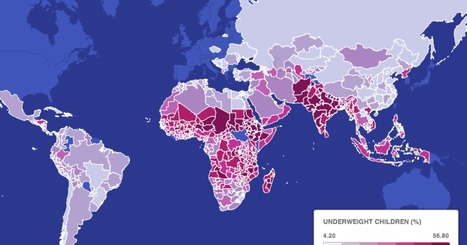
We often hear about global inequality, but it takes a map like this to really see it with our own eyes.
The map, created by journalist Tim De Chant, illustrates where in the world children go hungry, and highlights the areas where children are dangerously underweight.
While every country in the world invariably has children who go hungry, the shocking disparity illustrates what we must acknowledge about child hunger: it's a global inequality issue, and those in developed countries must step up to end it.
COMMENTARY By Khalid Bomba, Chief Executive Officer of the Agricultural Transformation Agency (ata)
Last year, a bipartisan group of 23 members of [the United States] Congress, hosted by the Aspen Institute, travelled to Ethiopia to get a firsthand view of the progress the country was making in modernising agriculture and smallholder farming. This was the largest congressional delegation to visit sub-Saharan Africa in decades - maybe ever. This trip served to brief the congressmen on how a unique Ethiopian government agency, dedicated to agricultural transformation, is emerging as a model for bureaucratic collaboration and helping to feed millions of Ethiopians.
Ethiopia is one of many African countries deeply affected by food insecurity - estimates of the portion of Ethiopia's population without secure access to food exceed three million in some seasons. That means, in a given year, almost one in 10 Ethiopians will struggle to have access to "sufficient, safe and nutritious food" for themselves and for their families.
Yet, in 2013, the World Food Prize - an organisation that highlights individuals and groups who have increased the quality, quantity or availability of food in the world -recognised Ethiopia for demonstrating some of the greatest progress measured in the Economist magazine's Global Food Security Index. As we look ahead at global food security planning for the next century, Ethiopia is an important example of how leaders in government and other sectors can successfully align their food systems planning...
...Ethiopia's great progress is a result of the country's strategy of ambitious policy commitments and supportive programs around agricultural development. Ethiopia has invested in the establishment of agricultural centres to train nearly 60,000 extension workers across the country, significantly increased road density to connect all administration districts with all-weather roads and is planning to increase irrigation coverage and bring electricity up to 75 percent of the population.
To address low smallholder farmer productivity, Ethiopia has also invested in agricultural research and development (particularly improved seed varieties and breeds, and farming practices), timely access to and the use of high-quality inputs (such as fertilisers, seed) and expanded knowledge dissemination networks to smallholder farmers.
We had the eye-opening opportunity to explore this success while visiting Ethiopia's Agricultural Transformation Agency (ATA) this autumn, which works in innovative ways across sectors to increase yields, enhance market linkages and implement safeguards for those most at risk...
Speaking on the final day of the Governing Council meeting of the International Fund for Agricultural Development (IFAD) Paul Polman, Chief Executive Officer (CEO) of Unilever said that businesses are a part of the global food chain, and consequently must be a part of the solution to poverty reduction and malnutrition...At the annual meeting's centre-stage event, Polman said that "We are all in this together, and increasingly businesses understand that."
In recognition of the International Year of Family Farming, the theme of this years' Governing Council was "Investing in smallholder family farmers for the future we want."...
...At a panel discussion, Small farmers=Big business, Polman outlined how best to link up multinationals, small- and medium-sized enterprises and smallholder farmers, in productive and reciprocally beneficial ways. Andrew Rugasira, CEO of Good African Coffee, a Ugandan social enterprise that brings quality coffees, roasted and packed at source to the global market, joined Polman and speakers from various regions.
There was consensus in the panel that partnerships, which include business, smallholders and government are key to gaining greater access to markets for small farmers so that they can increase their incomes.
They also discussed the need to improve farmers' access to credit, investment in women, infrastructure and the need for businesses large and small to build trust with small farmers and understand local contexts.
Panelists unanimously agreed on the critical role IFAD could play in facilitating a mutually beneficial relationship between smallholder farmers and the private sector.
2012 African Union Chairperson Thomas Yayi Boni declared that 2014 will be the Year of Agriculture in Africa. The next 12 months present a once in a decade opportunity to shape an African-led moment for agriculture development. ONE launched a major agriculture campaign for Africa in January 2014 at the African Union Summit held in Addis Ababa Ethiopia.
The campaign, including a policy product documenting success in agriculture over the last decade; a policy manifesto delineating policy objectives for the Year of Agriculture and a gender gap in agriculture report that provides recommendations to agriculture ministers on how to empower women farmers, utilizing the best new evidence of what works.
The campaign will include both intensive insider advocacy and lobbying (particularly at the level of the African Union Commission and CAADP secretariat, as well as agriculture ministers and heads of states in our target countries, as well as public-facing, member-mobilizing and media-intensive actions, including celebrity involvement.
The campaign will also mobilize members and engage directly with policymakers in these target countries through policy dialogues, workshops and targeted policy materials to advance policy reforms, improve public expenditures, and mobilize stronger nation.
DuPont announced "an important step toward introducing pro-vitamin A (beta carotene) into sorghum, a staple food in Africa which is naturally deficient in key nutrients. Not only has the level of pro-vitamin A been improved to levels that result in delivery of 100 percent of the daily vitamin A requirement in children, but the stability of pro-vitamin A during storage also has been dramatically improved. These research breakthroughs will help improve nutrition for the nearly 300 million people in Africa who depend on sorghum, but who do not have access to another staple that provides the essential nutrients that sorghum lacks."
"...While DuPont contributes expertise, as well as monetary, in-kind and capacity building support, organizations such as Africa Harvest play a critical role in this humanitarian effort. Africa Harvest’s leadership in managing research efforts in East and West Africa and advocating for workable biotechnology regulations has helped ensure this collaboration remains on track to deliver benefits to Africa..."
Business and poverty used to be kept apart like naughty children – spending time together would only make the other worse.
Poverty reduction until the late 1990s was the exclusive realm of Aid agencies and NGOs. Business input was allowed via monetary donations only and examples such as the Nestlé baby milk scandal of the 70s were upheld as evidence of what happens when corporations get too close to the world's poor.
Now, however, representatives of big business come out with once unthinkable statements, such as: "We want to pursue commercial ambition but at the same time pursue an ambition that also drives positive change in the economies in which we operate", from Norah Odwesso, Coca-Cola's public affairs director for east and central Africa. Or Indra Nooyi, CEO of Pepsico, whose stated desire is to explore and develop "innovative business models that are economically viable and good for development".
Profit has steadily ceased to be a dirty word since CK Prahalad and Stuart Hart wrote the Fortune at the Bottom of the Pyramid (BOP) in 2002. With it they introduced a concept that the 4 billion people earning less than $1,500 a year represented a $5tn global market – a massive growth opportunity for business which could in turn bring products to alleviate poverty from improved nutrition to energy efficiency and sanitation...
...Plenty of examples abound of organisations moving away from CSR-style handouts towards targeting the BOP market...
...For every glowing report ...concerns still remain about businesses addressing BOP markets. Not all companies will be selling things as useful as solar lamps or nutrition supplements...
Businesses targeting poor markets also face accusations of colonialism. The negative reaction from some quarters to a G8 initiative to tackle poverty through agriculture being a recent example. Putting agri-business at the table alongside government has led to accusations that big business is being favoured at the expense of small-scale farmers.
In the internet age, there are fewer places to hide irresponsible business practices. Motives are questioned and scrutinised at every turn. However, while CSR motives were subject to greenwashing tags, corporations may feel they are on safer – and familiar – territory when it comes to making money.
World leaders in agriculture and development gathered in London last week at the The Economist's 'Feeding the World Summit' to discuss global solutions to tackling Africa's food security crisis.
At the event, which cost between £700 and £1,000 to attend, industry leaders spoke of new innovations and initiatives which would help fight poverty, world hunger and malnutrition, and transform the lives of millions of farmers worldwide...
But there was only one farmer among the speakers, Rose Adongo, with barely a handful more in the audience. A Ugandan beef and honey farmer, Adongo was unimpressed by the technical solutions offered by the corporate speakers.
For her, the main issue was land ownership for farmers - and desperately needed changes in Ugandan law, under which women have no right to land ownership even though 80% of the country's farmers are women, and they produce 60% of the food...
...Among the 27 speakers at the event were Nestlé Head of Agriculture Hans Joehr, Monsanto CEO Hugh Grant, Cargill Vice-Chairman Paul Conway, UN Secretary General for Food Security and Nutrition David Nabarro, and representatives from the World Food Program and World Vision...And despite the involvement of some NGOs, academics, UN officials, the main topic of discussion was private sector investment in agriculture...
To get content containing either thought or leadership enter:
To get content containing both thought and leadership enter:
To get content containing the expression thought leadership enter:
You can enter several keywords and you can refine them whenever you want. Our suggestion engine uses more signals but entering a few keywords here will rapidly give you great content to curate.


 Your new post is loading...