Your new post is loading...

|
Scooped by
Robin Landis
May 30, 2014 4:06 AM
|
The following post by Lindiwe Majele Sibanda, Chief Executive Officer of the Africa-wide Food, Agriculture and Natural Resources Policy Analysis Network (FANRPAN), is an excerpted version of a story that originally appeared on the CGIAR Research Program on Water, Land and Ecosystems (WLE) Agriculture and Ecosystems Blog as part of their month-long series on Resilience. Photo credit: Flickr (Africa Renewal)
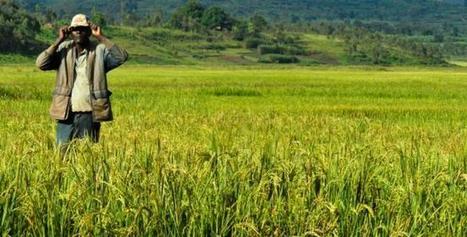
Building resilience on Africa’s small farms starts with people and investing in their capacity to bounce back after a shock. These shocks could be external, such as droughts and floods that wipe out an entire livestock herd or destroy a crop field. Or, they could mean loss of income and physical assets, many times due to unforeseen prolonged illness. If a family member falls ill, their care is often financed by selling off productive assets such as livestock or agricultural tools. Harvest barely meets more than three months of the family food needs for a majority of the farmers.
African smallholder farm families are amongst the world’s poorest because we have not invested enough in helping them bounce back after major shocks. One dry season or one bout with malaria can push families into a poverty trap. When households have depleted their productive assets (finances, livestock, farming implements), they can barely survive. How do we expect such households to improve and sustain their productivity? How can we expect a bounce back for communities that have lost elasticity?
- See more at: http://www.2020resilience.ifpri.info/2014/05/15/african-smallholder-farm-families-have-lost-the-elasticity-to-bounce-back/#sthash.Bv5FRbo7.dpuf
|
|
Scooped by
Robin Landis
May 29, 2014 9:39 AM
|
UGANDA leads the East African Community (EAC) member states in progress against chronic malnutrition and stunting, according to the United Nations Children Fund (UNICEF).
UNICEF Kenya Chief of Nutrition, Grainne Moloney told a media briefing in Nairobi over the weekend that Uganda was the only EAC nation that has achieved an average annual rate of reduction of chronic malnutrition in children under five years at more than two per cent per year since 2000.
"We are therefore asking governments to increase budgetary allocation for nutrition specific projects," Moloney said during the launch of the Scaling Up Nutrition (SUN) Civil Society Alliance.
SUN is a global movement working together to scale up nutrition and as of 2014, there were 50 countries in the SUN movement. All the EAC Member states (Kenya, Uganda, Tanzania, Rwanda and Burundi) are members of the SUN movement.
The SUN movement was founded on the principle that all people have right to food and good nutrition She said that the movement brings together governments, civil societies, the United Nations, donors, businesses and researchers in a collective effort to improve nutrition. She said that globally, 24 countries account for 80 per cent of the world's stunting burden and most EAC nations are classified as high burden countries.
Tanzania has approximately 3.3 million stunted children, while Kenya has 2.8 million and Uganda 2.3 million. The figure for Rwanda and Burundi stands at 809,000 and 684,000 respectively....
|
|
Scooped by
Robin Landis
May 29, 2014 2:48 AM
|
Biotechnology sceptics have a right to question the role of biotechnology in global food security. But they are wrong to ignore the growing evidence of the potential contributions the biotechnology and new challenges such as climate change that require new technological responses. Food security depends on four interrelated factors: quantity of food, which involves increasing agricultural productivity; access to food, which is determined both by income levels and quality of infrastructure; nutrition; and overall stability of the food system, such as resilience to shocks.
Genetically-modified (GM) crops or any other breeding methods on their own cannot solve the challenges related to food quality, access to food, nutrition or stability of food systems. But their role cannot be dismissed for ideological reasons.
GM crops already benefit smallholder farmers in several major ways. For example, they help farmers control pests and disease. This leads to higher production and increased income, which in turn provides them with increased ability to consume more nutritious food...
...The ability of farmers to benefit from GM crops is closely linked to their ability to access new technologies. It has often been argued that the control of the global seed industry by a small number of large multinational corporations is a threat to food security. The problem is not simply the presence of large corporations but the low level of the development of domestic seed firms. Such local firms can help focus on indigenous crops. They can also play key roles as business partners with foreign farms...
|
|
Scooped by
Robin Landis
May 25, 2014 9:33 AM
|
Purdue University researchers will lead a $5 million, five-year effort to help countries in sub-Saharan Africa reduce hunger and poverty fueled by food waste.By improving processing and marketing of key crops, those in developing countries can make better use of food that already is being produced but is simply lost through poor storage or processing technologies and management practices.The Feed the Future Innovation Lab for Food Processing and Post-Harvest Handling was announced by United States Agency for International Development administrator Rajiv Shah on Thursday (May 22) at the Chicago Council's Global Food Security Symposium. It is funded by Feed the Future, the U.S. government's Global Hunger and Food Security Initiative led by USAID...
|
|
Scooped by
Robin Landis
May 23, 2014 1:52 AM
|
...For the past year, humanitarian, food security and health experts from across USAID worked to develop a multi-sectoral approach toward improving nutrition, advancing development and building resilience among vulnerable populations like those in the Sahel.
At a conference today organized by the Chicago Council on Global Affairs, national security director Susan Rice will unveil the thinking that will guide the Agency’s policies and programs for nutrition in both emergency and development contexts and strengthen systems and delivery platforms for nutrition services both within the health sector, and also within the agriculture, water and sanitation, and humanitarian assistance sectors.
USAID’S 2014-2025 Multi-Sectoral Nutrition Strategy is the first of its kind at the Agency and it builds on President Obama’s commitment to create a world where every child has the potential for a healthy and productive life.
In the strategy, USAID is prioritizing the prevention of malnutrition given the irreversible consequences of chronic under-nutrition early in life. The strategy establishes very clear targets for how America’s investment in nutrition will reduce stunting and recommends ways the United States can advance improved nutrition and build resilience for millions of people...
...Research, including the recent Lancet Maternal and Child Nutrition series, is providing strong evidence that improving nutrition is one of the best investments we can make in development, estimating that every $1 spent has as much as a $138 return. That is why coordinated planning and programming of effective nutrition-specific and nutrition-sensitive interventions across multiple sectors (agriculture, health, water and sanitation, education, environment, and economic growth, livelihoods, and social protection) and multiple platforms (public, private, and civil society) is vital....
|
|
Scooped by
Robin Landis
May 20, 2014 2:09 AM
|
Highlights from the opening session of the 2020 Conference ‘Building Resilience for Food and Nutrition Security', organized by the International Food Policy Research Institute (IFPRI).
Speaker videos and summary notes
Rajul Pandya-Lorch, Head of the 2020 Vision Initiative and Chief of Staff, International Food Policy Research Institute (IFPRI), USA
Text Remarks | Video Shenggen Fan, Director General, International Food Policy Research Institute (IFPRI), USA
Text Remarks | Video H.E. Hailemariam Dessalegn, Prime Minister of Ethiopia
Text Remark | Video Kanayo Nwanze, President, International Fund for Agricultural Development (IFAD), Italy
Text Remarks | Video Ertharin Cousin, Executive Director, United Nations World Food Programme (WFP), Italy
Text Remarks | Video Fawzi Al-Sultan, Chair, Board of Trustees, International Food Policy Research Institute (IFPRI), Kuwait
Text Remarks | Video H.E. John Kufuor, Former President, Republic of Ghana, (video message)
Video Ban Ki-moon, Secretary-General, United Nations, USA (video message)
Text Remarks | Video David Nabarro, United Nations Secretary General Special Representative on Food Security and Nutrition, Switzerland, (video message)
Text Remarks | Video Rajiv Shah, Administrator, United States Agency for International Development (USAID), USA (video message)
Text Remarks | Video
|
|
Scooped by
Robin Landis
May 12, 2014 11:40 AM
|
African seed companies participating in an initiative to offer high-yielding crop varieties to small farmers have grown to become the largest seed producers in sub-Saharan Africa...
Nairobi-based AGRA, which runs the seed programme, said in a report that 80 small- to medium-sized African seed companies it works with in 16 countries are on track to produce around 80,600 metric tonnes of professionally certified seeds in 2014, up from just 2,350 tonnes in 2007. AGRA's Program for Africa’s Seed Systems (PASS) was launched seven years ago to revitalise Africa’s commercial seed sector, which was failing to provide African farmers with a steady supply of locally-adapted, better-performing crop varieties, AGRA said. This problem is often cited as one reason why yields per hectare for staple crops such as maize are up to 80 percent lower in Africa than outside the continent, it added...
...AGRA was founded in 2006 through a partnership between the Rockefeller Foundation and the Bill & Melinda Gates Foundation, and is also funded by other governments, agencies and international institutions.
The report on the progress made by the PASS programme was released at the Grow Africa Investment Forum in Abuja, taking place alongside the World Economic Forum on Africa.
Some environmental and development groups based in Africa, however, are wary of AGRA's approach.
In September 2012, 28 organisations - representing small farmers and livestock keepers in Ethiopia, Kenya, Mozambique, South Africa, Tanzania, Uganda, Zambia and Zimbabwe - issued a statement expressing concern that policy reforms proposed by AGRA would result in "the privatisation of land, water, seeds and knowledge systems, and create dependency on credit and subsidies, weakening farmers’ resilience and food sovereignty".
|
|
Scooped by
Robin Landis
May 12, 2014 11:18 AM
|
Can the seemingly intractable problems of global poverty be addressed by the latest wonders of science and technology?
Last month, the US Agency for International Development (USAID) announced the launch of its new Global Development Lab, which will bring together entrepreneurs, corporations, NGOs, universities, research institutions, and USAID personnel “to discover, incubate, and scale breakthrough development innovations in sectors like water, health, food security and nutrition, energy, and climate change,” in the words of Andrew Sisson, its acting executive director.
USAID is attempting to “foster science- and technology-based solutions to help end extreme poverty by 2030”...
...The Lab, which replaces the Office of Innovation and Development Alliances and the Office of Science and Technology, has 32 “Cornerstone Partners”. They include NGOs like CARE and Catholic Relief Services, research institutions like the Massachusetts Institute of Technology and the National Academy of Sciences, and corporations like Cargil, Cisco, DuPont, GlaxoSmithKline, and Microsoft.
|
|
Scooped by
Robin Landis
April 17, 2014 2:21 AM
|
The World Bank has asked African governments to increase financial resources to agriculture if they want to overcome income inequalities and higher food prices.
In its latest Africa Pulse report, the bank said agriculture production is on the decline due to decreasing investment in the sector by African governments...
...Due to the decline in food production in most African countries, inflation has risen due to high food prices, and often limited supplies. The situation has been worsened by prolonged drought seasons leading to drying up crops.
The report suggests that increasing integration with larger regional markets can reduce the magnitude of the price effects from localized shocks while lower trade barriers and better trade infrastructure would allow faster and more efficient response to localized food shortages due to disaster of all types.
On trade as tool to promote agricultural production the report states that the majority countries in the continent should promote trade in agricultural technology. The best way to do this is by importing inputs such as improved crop varieties, fertilizers agricultural machinery and animal vaccines...
...Many farmers in Africa have not been supported by their governments especially when it comes to accessing cheap capital from financial institutions. This has kept many farmers operating on small holder farming scale, because they cannot raise capital to invest in acquiring modern farming equipment's like tractors, fertilizers improved seed varieties on the market that are resistant to droughts and the various pests and diseases.
Most farmers (small scale farmers) in Africa are now being supported by non-government organisations (NGOs) operating in several areas of agriculture. However in 2014 international financial institutions like the World Bank and Japan International cooperation Agency (JICA) have started supporting some African countries with grants...
|
|
Scooped by
Robin Landis
April 16, 2014 10:23 AM
|
In its latest report, WDM [World Development Movement] said the £600 million in UK aid money is going to a scheme to help big businesses increase their profits in Africa. The report slams the scheme as fuelling a ‘corporate scramble for Africa.’ WDM’s report further noted that the UK government’s £600 million in aid to back the G8-sponsored New Alliance for Food Security and Nutrition which targets to lift 50 million people out of poverty by 2022, is largely flawed. “Campaigners say the scheme is set to benefit multinational companies like Monsanto and Unilever at the expense of millions of small-scale farmers and is likely to increase poverty and inequality on the continent,” the report stated. Campaigners believe the New Alliance for Food Security and Nutrition will disempower small-scale farmers....
|
|
Scooped by
Robin Landis
April 10, 2014 8:58 AM
|
By Nancy Lindborg, Assistant Administrator of the Bureau for Democracy, Conflict, and Humanitarian Assistance at the U.S. Agency for International Development
...The people of South Sudan face a spiral of conflict, displacement, and hunger that this fragile, young country can ill afford. More than one million people have been forced to leave their homes and the numbers keep growing. Almost 70,000 people are sheltering in crowded UN compounds around the country that sprung up overnight and were not built to house tens of thousands of civilians. Many of these people can literally see their homes over the compound walls but remain too terrified to return, fearing they will be targeted by government or opposition forces and killed.
More than 800,000 people are displaced and dispersed in hard to reach areas, and a quarter of a million more have fled South Sudan for refuge in neighboring countries. Because of the conflict, markets are disrupted, planting season is in danger of being missed, and massive displacement is a burden for host communities. The ability of more than a million people to cope is being greatly eroded. Without fast and sustained aid, there is looming potential for nearly half the country to teeter into famine over the next year -- and children under five are already falling quickly into severe malnutrition.
Since the outbreak of violence in December, USAID's Disaster Assistance Response Team has been working with UN and NGO partners to direct a full-throttle U.S. response to enable food, water, sanitation, and health assistance to reach the most vulnerable. While in Juba, I announced an additional $83 million in humanitarian assistance to support these urgently needed relief efforts for South Sudanese displaced within South Sudan and for those who have fled to Uganda, Kenya, Ethiopia, and Sudan, bringing U.S. humanitarian assistance to $411 million over the last two years.
With the rainy season already upon us, there is little time to move life-saving assistance to those most in need. Even in the best of times, South Sudan presents a complex logistical challenge. Now, we need to use all possible avenues for reaching people: rivers, roads, air, and moving across borders...
|
|
Scooped by
Robin Landis
April 9, 2014 11:18 AM
|
Over the past week the latest report by the Intergovernmental Panel on Climate Change (IPCC)has caused global headlines for its solemn warning of the possibility of a climate-induced future food crisis. The report warns of food price spikes and supply shortages as the effects of increased temperatures, more unpredictable rainfall, and increased salinity in farmland from rising sea levels continue to take hold. Climate change is lowering cereal yields and reducing fish catches, and along with high and volatile food prices, these impacts are spreading hunger and malnutrition among the world’s poorest people. In parallel, demand for food will rise to serve the world’s growing population. Global diets also are changing to incorporate more high-quality foods, and the developing world’s cities are growing. Africa, for example, will have twice as many people in 2050 as it has today, most of them in cities. Nigeria’s population will soon reach 440 million, surpassing that of the United States. By 2050 we expect to have 10 billion mouths to feed.
Things can only get more dire, it would seem. But does this inevitably mean greater levels of hunger and malnutrition? More food price spikes? Another round of riots as populations panic over shortages and prices of their staple foods?
Not if we act now.
Investment in agricultural innovation is key. And we need to do more of it - soon. Some of the most effective ways to deal with climate change, such as adapting crop varieties and livestock to the new conditions, take a full 20 years to develop...
...And the way we govern will have to change as well. Innovation in policy and institutions are equally important. Prices of food and natural resources need to reflect the costs to the environment and climate. Right now, the exclusion of these costs from food production leads to over-use of natural resources...
...In the short run, a strong social protection system is needed to cover poor people, especially smallholder farmers who are particularly vulnerable to climate change.
Yes, climate change is already affecting food security, and we are all likely to be affected, both in our stomachs and in our pockets. But a nightmare scenario is not inescapable. We will be able to address demands for food in the face of climate change if we take this wake-up call as urgent and serious, and further invest in research for a smarter agriculture to drive development.
|
|
Scooped by
Robin Landis
April 8, 2014 4:02 AM
|
|
|
|
Scooped by
Robin Landis
May 30, 2014 4:04 AM
|
African countries need to help smallholder farmers access technologies that will enable them increase farm yields, achieve resilience and better nutrition to address poverty, food security as well as economic growth, a conference has heard.
Kanayo Nwanze, president of the International Fund for Agricultural Development, says this will only be possible through a paradigm shift that enables smallholder farmers, particularly in rural areas, to produce enough to feed themselves and to sell.
Such technologies are simple conventional ones — including irrigation, improved seed varieties, use of fertilisers and provision of infrastructure such as good rural feeder roads — that have been tested elsewhere, he told Building Resilience For Food and Nutrition Security conference organised by the US-headquartered International Food Research Institute (IFPRI) in Addis Ababa, Ethiopia, this week (15-17 May)...
|
|
Scooped by
Robin Landis
May 29, 2014 2:50 AM
|
Food security in focus: Sub-Saharan Africa 2014 is
an Economist Intelligence Unit (EIU) report
commissioned by DuPont.
|
|
Scooped by
Robin Landis
May 25, 2014 9:49 AM
|
One Acre Fund is a non-profit organisation serving smallholder farmers (typically living on one acre of land) in the East African countries of Kenya, Tanzania, Rwanda and Burundi. However, what makes it unique is that its model operates like a business...
One Acre Fund provides loans in the form of seeds and fertilisers and currently serves roughly 180,000 small-scale farmers. The organisation’s aim is to reduce poverty and improve food security in areas where agricultural potential is severely untapped...[it] addresses all the farmers’ needs along the value chain. This includes the financing and distribution of farm inputs such as quality seed and fertiliser, training on best planting practices, and market education to maximise storage of harvests and market profits...
http://www.howwemadeitinafrica.com/what-one-acre-fund-can-teach-us-about-supporting-african-small-scale-farmers/39618/
|
|
Scooped by
Robin Landis
May 23, 2014 2:02 AM
|
Donors from 41 countries who met in Oslo on Tuesday night pledged about half of the $1.26bn still needed to avert famine in South Sudan. Up to 50,000 children could die from malnutrition, according to UN estimates, with about 80% of under-fives in the most conflict-ridden states of Jonglei, Upper Nile and Unity at heightened risk of disease and death.
Aid agencies have been struggling to access those in need amid funding shortfalls. The sum raised will go towards the overall target of $1.8bn the UN says is needed to help millions facing starvation...
|
|
Scooped by
Robin Landis
May 22, 2014 6:23 AM
|
Aid donors and international institutions including the World Bank and World Economic Forum (WEF) have been accused of promoting an environment that fuels land grabs through policies and initiatives that pave the way for large-scale private investment.
In a report published on Tuesday, the NGO ActionAid says public money and policy incentives such as tax breaks and cut-price loans are facilitating land deals that threaten the lives and livelihoods of small-scale farmers in poor countries.
ActionAid warns that the consequences of such deals, which are too often happening behind closed doors and with little or no consultation with local communities, include "forced evictions, human rights violations, lost livelihoods, divided communities … rising food insecurity and, ultimately, increased poverty".
A spokesman for the World Bank said it was also concerned about the risks of large-scale land deals and stressed that it did not support investments that took advantage of weak institutions in developing countries.
ActionAid's report says weak governance and regulation of land use and agricultural investments have left millions of smallholder farmers and indigenous people in vulnerable situations "lack[ing] recognition over their land rights, even if they have resided in or used the area for generations"...
|
|
Scooped by
Robin Landis
May 20, 2014 2:00 AM
|
The world is home to 500 million smallholder family farms generating up to 80 percent of the food consumed by developing world, according to Dr. Kanayo F. Nwaze, President of the International Fund for Agricultural Development (IFAD). Investing in the resilience of smallholder farmers is therefore "investing in the resilience of food systems and communities and the balanced and sustained development of nations".
Nwaze said this at the International Food Policy and Research Institute (IFPRI) 2020 Conference titled "Building Resilience for Food and Nutrition Security," being held in Addis Ababa, Ethiopia...
According to IFPRI the post-2015 agenda should aim to end hunger by 2025, but this can only succeed "by building resilience to various environmental, political and economic shocks that threaten food security and livelihoods"...
..."Many of the potential shocks we face, such as disease, food price spikes, and natural disasters, know no borders," said IFPRI Director General Shenggen Fan, "our success in coping, and even thriving in the presence of shocks, will depend on renewed efforts to cooperate and collaborate on a resilience agenda."
In an attempt to help families cope with hard times in a sustainable manner, the United Nations World Food Program (WFP) is working to get away from its traditional role as food aid provider to contributing 40 percent of its operations to programs designed to encourage resilience, according to Dr. Ertharin Cousin, Executive Director of EFP. She also expressed her belief that the process of achieving resilience should start from a paradigm shift in thinking. "Resilience requires an in-depth understanding of community livelihoods," she said.
Taking a long term perspective, going beyond asset building and being multi-sectoral as well as making sure that every man and woman can contribute to the maximum of their ability are some of the principles put forward by Dr. Cousin that the world needs to adopt. "Resilience will pay dividends for fragile communities who today face environmental, economic, and nutritional bankruptcy."
She added that for people in communities affected by droughts, floods, and other shocks, a resilience approach allows comprehensive action that both restores the productivity of people's land and significantly improves their well-being. "Empowering resilient families to withstand shocks can reduce—even by half—the likelihood that children will become malnourished."
|
|
Scooped by
Robin Landis
May 12, 2014 11:37 AM
|
The African economic success story is by now a well-reported fact. More than half of the world's 10 fastest-growing economies are in Africa, and the continent's economy is projected to grow more than 5% this year. In sub-Saharan Africa overall, the annual economic growth rate for more than a decade has surpassed that of far wealthier countries that comprise the Organization for Economic Cooperation and Development. Many individual countries have recorded even faster progress, and there have been dramatic improvements across much of the continent on key social and economic indicators - from primary education to maternal and child mortality...
...Agricultural development is another powerful economic lever in Africa, where farmers comprise 65% of the workforce. Helping smallholder farmers in developing countries increase the productivity of their crops enables them to eat a more nutritionally diverse diet, send their children to school and live better lives. Furthermore, when farmers' income increases, it stimulates growth in other sectors of the economy. African countries that have invested significantly in agriculture are realizing impressive returns. Seven countries - Burkina Faso, Ethiopia, Guinea, Malawi, Mali, Niger and Senegal - consistently expended 10% of their budget on agriculture between 2003 and 2010. Ghana, Madagascar and Zambia followed close behind, averaging 9%. Partly because of these investments, all but one of these countries are on track to halve extreme poverty by 2015. Yet, many African countries are spending considerably less on agriculture, missing an important opportunity to break the cycle of poverty and stimulate growth...
...Not surprisingly, public-sector investments in areas with a proven track record of contributing to economic growth attract other sources of investment - from donor governments, the private sector, and newer development actors, such as us at the Bill & Melinda Gates Foundation.
Ethiopia is a case in point. Prompted by the 2007-2008 global food crisis, the country established the Agricultural Transformation Agency, which works with the Ministry of Agriculture and other partners to help smallholder farmers increase their productivity, tap new markets and improve their livelihoods. This initiative has mobilized other donors - including USAID, the World Bank and our foundation - to support Ethiopia's ambitious agenda. Early results are promising. In 2012, more than 500,000 farmers received training in new agricultural practices; these are expected to significantly increase yields and reduce post-harvest losses. Efforts are also underway to link smallholder farmers with new markets and strengthen farmer cooperatives.
With donor support, Ethiopia has also significantly increased its spending on health. As recently as 1990, one in five Ethiopian children died before the age of five - many in the first month of life. The child mortality rate has since dropped by 67%. A key factor in this advance is Ethiopia's mobilization of more than 34,000 health workers, who now reach the vast majority of the country's 90 million-strong population.
|
|
Scooped by
Robin Landis
May 12, 2014 8:15 AM
|
...Twenty-three charities – including World Vision, Oxfam, Save the Children, Care International and the Norwegian Refugee Council – have united to highlight the perilous state of the country and make an urgent appeal for the $822m (£485m) shortfall in humanitarian funding. Somalia has received only 12% of the money it needs this year.
According to a report they have compiled, pastoralists have been slaughtering livestock because of water and food shortages, while the UN-backed Amisom force's offensive against al-Shabaab in southern Somalia has swelled the ranks of the 1.1 million internally displaced people.
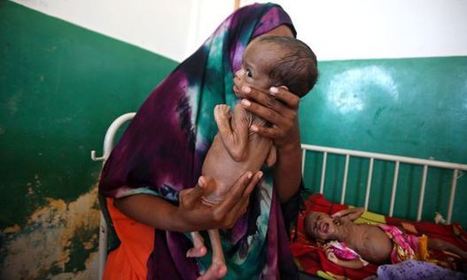
Women in the country have the second-highest risk of maternal death in the world, one in seven children is acutely malnourished, and less than one in four people has access to adequate sanitation facilities. Moreover, polio has returned, with 193 cases recorded in the past year...
...Information gathered by the Famine Early Warning Systems Network (Fewsnet) shows that intensified conflict and erratic rainfall between April and June is likely to affect food security and prices in southern Somalia, creating a food insecurity crisis level in Lower and Middle Shabelle and nearby areas.
"Given very limited humanitarian access in [the region], traditional in-kind aid deliveries are unlikely," says Fewsnet. "Creative response mechanisms should be developed and implemented to address rising needs." More than a quarter of a million people are estimated to have died during the famine and food crisis in Somalia in 2010-12. Half of those who perished were under five, making it the worst famine of the past 25 years.
A 2013 study, commissioned and funded by the Food and Agriculture Organisation's food security and nutrition analysis unit for Somalia and Fewsnet, estimated that 258,000 people died in southern and central parts of Somalia between October 2010 and April 2012, including 133,000 under-fives. Famine was declared in parts of the country in July 2011...
|
|
Scooped by
Robin Landis
April 16, 2014 10:43 AM
|
Nestlé Kenya, through its MILO® brand, has unveiled a web based nutrition calculator to help foster healthy nutrition among kids at a time when health statistics indicate that obesity rate in both private and public schools may be as high as 50 percent amongst kids between ages 6 to 12.
Dubbed MILO® Nutrition Calculator, the tool is designed for parents of kids between ages 6 to 12 and allows them to track and monitor their nutrition intake in every day’s serving.
The web nutrition calculator enables parents to calculate the nutrition component of their kid’s meals, analyse their activeness, set up a balanced diet and schedule their kid’s sports activities by just a click of the mouse, on their web-enabled phones, tablet or ipad.
The application is currently available as a link on the website www.milokenya.com and as a widget on https://www.facebook.com/MILOEastAfrica...
|
|
Scooped by
Robin Landis
April 16, 2014 10:19 AM
|
...Horrendous violence has turned the lives of millions upside down as their livelihoods have been broken, livestock scattered, households looted and markets destroyed. As a result, the youngest citizens of the world’s newest nation are on the verge of a nutrition crisis – 740,000 children under the age of five are at high risk of food insecurity. Many are already resorting to eating so-called “famine foods” – wild foods such as bulbs and grasses...
...The people of South Sudan strived and struggled for many years to control their own destiny; and yet now they suffer again. Peace remains elusive, yet essential for the children of this nascent republic. It is within this context that the UN says almost one million people have been uprooted. The grisly numbers go on and on. Until one statistic makes even the hardest heart pause: 430,000 boys and girls have fled their homes, seeking to escape the violence in South Sudan...
...Now, in a race against time, the United Nation’s Children’s Fund (UNICEF) and the World Food Program (WFP) have set up emergency distribution points in previously inaccessible parts of the country.
The new strategy is a complex one. It’s difficult to deliver aid in times of conflict; all the more so in a country that in peacetime was critically short of infrastructure. A few UNICEF and WFP staff were flown to remote areas across South Sudan, myself included, carrying their own water, food and tents. They contend with insecurity, malaria and guinea worm (a parasite found in the water, which grows up to a metre in the body, before burrowing out of the skin, one year later).
Helicopters and cargo planes lead with air drops, in 50 degree (Celsius) temperatures. The food drop zones require four football fields of land to be cleared with matches and machetes; hundreds of tons of supplies that can’t be dropped from the air have had to be unloaded and distributed with no fuel for vehicles on the ground. But it is happening.
“Children and families in South Sudan are facing unprecedented suffering – with grave signs of worsening malnutrition and disease outbreaks,” said UNICEF’s Representative in South Sudan, Jonathan Veitch. “With the rainy season looming we have to seize every opportunity to rapidly deploy teams and life-saving supplies to the hardest to reach. This is how we will avert a humanitarian catastrophe.”
Twenty-two such missions are planned over the next month, covering swathes of the country and seeking to support as many as a quarter of a million people. WFP drops food, whilst UNICEF distributes water and sanitation kits to families; delivers ready to use therapeutic foods and medicines, sets up temporary classrooms, and registers and supports separated children...
|
|
Scooped by
Robin Landis
April 9, 2014 11:27 AM
|
...poor financial returns and unglamorous prospects of Africa's rural economy are spurring young people to leave the fields and migrate to urban centres.
And concern is growing that not enough is being done to engage Africa's largest workforce – its youth – in food production, as they are key to safeguarding food security on the continent, eliminating hunger and accessing global food markets...
...The share of youth in Africa's labour force is the highest in the world, with approximately 35 percent in sub-Saharan Africa and 40 percent in North Africa, compared to 30 percent in India, 25 percent in China and 20 percent in Europe. World Bank projections indicate that 60 percent of the world's labour force growth will be in Africa between 2010 and 2050.
Economic growth on the continent, and the changing dietary trends of Africa's emerging middle class, are also providing attractive and lucrative value chains for young agricultural producers to participate in...
Increased electrification of rural Africa is also expected to help retain the youth population in the countryside and satisfy an aspiration for a modern lifestyle that features telecommunication and Internet connectivity. Currently, less than 10 percent of sub-Saharan Africa's rural households have access to electricity...
...Low investment is causing low productivity and thwarting Africa's agricultural sector, which employs close to 60 percent of Africa's labour force but accounts for only 25 percent of the continent's GDP....a lack of political willpower from African leaders is delaying agricultural expansion on the continent,
...The potential for the lucrative engagement of Africa's youth in agriculture should be within grasp. Africa boasts over 50 percent of the world's fertile and unused land, while foreign investment in African agriculture is expected to exceed 33 billion euros in 2020, according to World Bank statistics.
However, Africa's youth are yet to feel the pull of any new ‘agricultural renaissance’ on the continent.
|
|
Scooped by
Robin Landis
April 8, 2014 4:16 AM
|
IFPRI 2020 International Conference | May 15–17, 2014 | Addis Ababa, Ethiopia Poor people and communities are being hit by shocks ranging from droughts, floods, and earthquakes to conflict and food price spikes, and these shocks are putting people’s food and nutrition security at risk. This brochure considers a number of issues related to the efforts to improve people’s resilience in ways that enhance their food and nutrition security. It reviews the concept of resilience, looks at shocks we can expect in the future, asks what has worked to improve resilience for food and nutrition security in the past, and identifies key knowledge gaps concerning resilience for food and nutrition security.
The themes addressed in this brochure will be explored in depth at the international conference “Building Resilience for Food and Nutrition Security,” organized by IFPRI and its 2020 Vision Initiative. For more information on the conference and its associated activities and products, go to www.2020resilience.ifpri.info
|








![Investing in resilience of smallholder farming 'essential' [WFP] | Food & Nutrition Security in East Africa | Scoop.it](https://img.scoop.it/VQP7RI0CGmWIe8jW4tMXxjl72eJkfbmt4t8yenImKBVvK0kTmF0xjctABnaLJIm9)