


Ertharin Cousin (Executive Director of the United Nations World Food Programme), Prof. Jeffrey Sachs (Director of the Earth Institute at Columbia University) and Carlos Pérez del Castillo (Chair of the Board of the CGIAR Consortium) discuss the true scale and nature of global hunger, explore issues ranging from poverty to climate change, conflict to politics, economics to education and the realities of hunger in our world and how we can end it."

Food & Nutrition Security in East Africa
4.6K views |
+0 today
Issues Affecting Food Security in East and Central Africa
Curated by
Robin Landis
 Your new post is loading...
 Scoop.it! 
NEW BOOK: "African agricultural markets: Towards priority actions for market development for African farmers" is a new book by the Alliance for a Green Revolution in Africa (AGRA) and International Livestock research Institute (ILRI). It features a range of studies that collectively argue for embracing agriculture-oriented market improvements to not only avoid future food crises but also to establish a firm foundation for rural development and economic growth...
From dairy cooperatives, text messaging and grain storage to improved credit, transport and trade initiatives, the book presents ‘high-payoff, low-cost’ solutions to Africa’s underdeveloped agricultural markets and chronic food insecurity...
While volatility in international commodities markets is being widely cited as a major cause of the food shortages in the Sahel, there is growing evidence that at least some of the food price fluctuation in Africa is caused by domestic factors...Recent research examining food price volatility in Eastern Africa suggests domestic factors are playing a role... researchers found that over the last few years, even when global prices have receded, domestic prices in the region have remained high. For example, while global maize prices declined by 12 percent in the last quarter of 2008, in Kenya, Tanzania, Ethiopia, Zambia and Rwanda, they increased...The study finds food price volatility in these countries is at least partly due to barriers and policies impeding the flow of food among markets in the region and between the region and global markets.
The book outlines a number of ‘high-payoff, low cost’ initiatives that combine ‘innovative thinking’ and ‘new technology’ along with policy reforms to give farmers an incentive to boost production—and the means to make their surplus harvests more widely available and at an affordable cost...For example, a warehouse receipt program operated by the Eastern Africa Grain Council and Kenya’s Maize Development program is offering farmers two things they previously lacked: a place to safely store surplus harvests and easier access to credit. Research has shown that on average, 25 to 50 per cent of crops produced on African farms spoil in the fields and in East Africa alone up to USD90 million worth of milk is lost per year due to spoilage...
On the policy front, the market experts see an urgent need to confront the ‘hodge-podge of tariffs’ and the numerous export restrictions and customs requirements that make it hard for areas of Africa where there are food surpluses to serve those in food deficit. Critically, they recognize that private investors are in many cases playing the lead role in new investments for market development and services. 
Scoop.it!
Final Impact Assessments of the USAID funded PSNP Plus project ‘Linking Poor Rural Households to Microfinance and Markets in Ethiopia’ which ended in December 2011.
The PSNP Plus was designed as a three-year project in support of the Government of Ethiopia’s Productive Safety Net Program (PSNP), which provides food and or cash to chronically food insecure households in exchange for labor on rural infrastructure projects, or direct transfers to households unable to participate in physical labor activities.
The overall goal of the PSNP Plus was to build household resilience and household assets through market linkages and access to microfinance this goal being directly linked to the objective of facilitating the graduation of households from the PSNP.
Scoop.it!

The World Food Programme (WFP) is to roll out a home grown feeding programme in Rwanda to help improve the income of small-scale farmers, a senior official announced yesterday.
“Home-grown school feeding (HGSF) combines quality local agricultural production and traditional school feeding. It is based on the premise that low farm productivity, poor agricultural market development and poor educational and nutritional outcomes are mutually reinforcing and jointly determine key aspects of rural hunger and poverty” -- Abdoulaye Balde, WFP Country Director
"All line ministries like agriculture, education, health, should be involved with agriculture sector taking the lead. Communities are able to produce nutritious foods for schools, the involvement of the health sector in turn is essential to ensure food safety and quality," said Balde.
School meal programmes are widely recognised as a powerful safety net because they have multiple complementary impacts on school children’s education, health and nutrition.
Scoop.it!

"Oil, electricity and agriculture are set to transform East Africa over the next decade. And in the regional jigsaw, politics, economics and security will fit together more tightly. If all goes according to plan, East Africa will be uniquely positioned to supply the economies of the Gulf and South Asia with food and energy. The resources and the labour supply are assured, but the most critical piece is the politics."
"Almost every state in East Africa has announced that it has substantial oil and gas re- serves. To Uganda’s more than 2bn barrels of reserves have been added oil finds in Ethiopia’s south Omo region, oil in Kenya’s Turkana basin and Tanzania’s spectacular gas finds in Lindi and Mtwara."
Scoop.it!

The report, ‘A Dangerous Delay: The cost of late response to early warnings in the 2011 drought in the Horn of Africa’, criticises donors for refusing to provide significant sums of aid until malnutrition rates hit around 40 percent – far beyond the emergency threshold of 15 percent – and the crisis hit the media.
The report identifies three main reasons for the international system’s failure to respond in time: a culture of risk aversion -- fear of the financial and reputational risks of getting it wrong -- fear of being too interventionist and undermining communities’ own capacities to cope -- drought fatigue – a resignation to high levels of malnutrition
Scoop.it!

Cereal prices are moving up in several countries in northeastern Africa, partly on account of global hikes, leaving them vulnerable generally. Around 9.95 million people are still food insecure after drought hit the Horn in 2011, according to the World Bank. There are about 16 million people facing various levels of food insecurity in Djibouti, Ethiopia, Sudan, South Sudan, Kenya, and Uganda, said FEWS NET.
Scoop.it!

SUDAN VISION DAILY | 17 July 2012 ...
"Khartoum - Reports by the UN and some international organizations have warned of a wide-scale starvation in the Horn of Africa. The reports attributed the causes to drought, rocketing food prices; besides the persistent conflicts in the region."
"The government of Sudan has acknowledged the need to remain committed to agricultural development plan to face the food crisis and to achieve the strategic goal of making Sudan "the world food basket".
Scoop.it!

Intensive research is needed to yield resistant food varieties to fight food insecurity and curb the volatility in global foods prices.
"Emphasis is put on strengthening of post-harvest storage through the construction of several strategic grain reserve facilities in various parts of the country [Rwanda] and large scale marshland irrigation."
ASARECA is a non-political organisation of the National Agricultural Research Systems (NARS) working in 10 countries of Burundi, D. R. Congo, Eritrea, Ethiopia, Kenya, Madagascar, Rwanda, Sudan, Tanzania and Uganda. It aims at increasing the efficiency of agricultural research in the region so as to facilitate economic growth, food security and export competitiveness through productive and sustainable agriculture.
Scoop.it!

Rwandan President Paul Kagame addressed the Re|Source 2012 Conference at Oxford University, London on 13 July.
“We must place issues of agriculture and food security high on the international policy agenda, national development plans and investment priorities. We need to take bold steps, mobilise resources and goodwill, and treat food insecurity as a threat to human existence in the same way we have tackled and reduced other issues of our time.” He urged the international community to look at the world’s expanding population as “a potential resource in itself, and not always a liability”.
The conference, attended by Nobel Peace Prize winners, scholars and former Heads of State, sought to address resource scarcity and volatility by ensuring continued access to food, energy and water as demographics rapidly change.
Scoop.it!
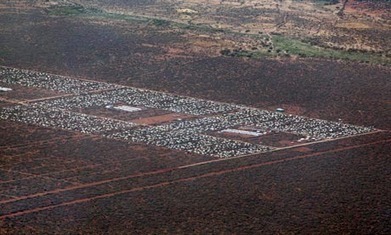
"NGOs are warning that money could run out for Kenya's Dadaab refugee camp as poor rain and conflict bring more hardship a year after famine in east Africa killed tens of thousands of people...On Thursday, eight aid agencies working in Dadaab, including Oxfam, Save the Children and Care, warned that if a funding shortfall of $25m is not covered, vital services could run out in two to three months, affecting at least 200,000 people."
"Poor and very poor households are reportedly turning to distress coping strategies such as distant labour migration and withdrawal of children from school to engage in labour," according to FewsNet. In Somalia, FewsNet said poor harvests were expected in parts of Middle and Lower Juba, Gedo, Bakool, Bay and Hiran due to poor rainfall and pest infestations, with food prices also expected to rise until the next harvest, due in August.
Scoop.it!

This joint OECD-FAO report assesses market trends and prospects for production, consumption, trade, stocks and prices of agricultural commodities, including biofuels. Some key findings include:
--Prices have come off recent peaks, but food price inflation remains a concern in developing countries --Agricultural prices to remain on a higher plateau --Energy price levels and volatility highly condition the outlook --Global agricultural output growth slows down, but remains positive on a per-capita basis --Emerging economies to play a larger role in expanding world trade in agriculture --Processed foods, proteins and fats show higher growth rates in consumption because of changing diets --Meat consumption expands in developing countries --Aquaculture to surpass capture fisheries in food consumption --Developing countries to become most important milk producers
Scoop.it!
This HPG Policy Brief explores the obstacles to and opportunities for humanitarian dialogue with armed non-state actors (ANSAs). It begins with the rationale for such engagement and the applicable legal frameworks. It then provides an overview of the challenges that humanitarian actors face when engaging in dialogue with ANSAs on issues of access, assistance and protection.
AN EXCERPT:
"The UN is no longer necessarily seen as an appropriate body to coordinate or lead engagement with ANSAs. Many humanitarian actors feel that it has become too politicised and can no longer serve as an ‘honest broker’. The debate around UN integrated arrangements, which were introduced in 1997 to improve the coherence of multidimensional missions in conflict and post-conflict situations, is illustrative of this trend. Although integration is now the official policy of the UN, many humanitarian actors, including members of the UN family, oppose it in principle. They are concerned that integration blurs the line between humanitarian and political action, erodes the perception of humanitarian actors as neutral and leads to the subordination of humanitarian concerns to political imperatives."
|
Scoop.it!

"Smallholder farmers are to gain immensely through an agreement signed between the United Nations’ World Food Programme (WFP) and the National Food Reserve Agency (NFRA). The Permanent Secretary Ministry of Agriculture, Food Security and Cooperatives, Mr Mohamed Muya said the agreement will ensure a reliable market of grain produced in the country that will contribute to improving income ..."
Over the last six months, WFP has purchased nearly 100, 000 metric tons of grain from NFRA, most of which is being delivered to humanitarian operations in South Sudan, Kenya and Somalia. WFP Country Director, Mr Richard Ragan said this marks a significant shift in the country’s role as a regional grain trader. “Since the NFRA provides a marketing outlet for farmers, this opens doors for small holder farmers. The MoU reinforces the value chain,” he explained adding that the agreement is good for the overall economy and for the small farmers who make up 75 per cent of the workforce.
It is expected that up to 400, 000 metric tons of maize will be purchased by WFP between July 2011 and July 2014 from NFRA, quadrupling the market potential of small holder farmers in the country.
The Initiative targets these farmers through associations which are often hindered by poor infrastructure, leaving them unable to reach markets. P4P has reached over 30 farmers groups in 10 regions in the country. The Initiative also provides training to farmers including women farmers on leadership and good governance, basic business and warehouse management skills.
Scoop.it!

The Chicago Council on Global Affairs on August 15, 2012 released a new Issue Brief, entitled, “Promoting Agricultural Development to Meet Future Food and Energy Challenges” (PDF). This is the second in a series of briefs, based on the topics discussed in the new Chicago Council dinner series, Open Table: Exploring the Potential of Agriculture to Alleviate Hunger and Poverty. Photo: Peter Casier (CCAFS)
Among other things, the paper emphasizes the need to combine high and low technology solutions -- "High-tech innovations like cell phone applications, geographic information systems (GIS), and other technologies may be useful in helping rural farmers improve their yields and the quality of output. Dairy farmers in Africa, for example, are using mobile phone applications such as M-Kulima to text questions and receive replies about local dairy markets and prices. But it is also important to consider the limitations of technology and recognize that high-tech agricultural solutions are by no means a panacea for improving productivity and meeting food and fuel demands. It is equally important to invest in “low-tech” solutions that utilize traditional farming practices and conservation techniques. For example, in parts of Kenya, Tanzania, and Mali, hundreds of thousands of farmers are using inexpensive, locally made water pumps to grow a greater range of crops over a greater share of the year. These low-tech pumps have helped increase incomes in these regions drastically and have also helped protect crops against the worst effects of drought." Via CGIAR Climate
Scoop.it!
allAfrica.com: "Urban agriculture is an important coping strategy for the urban poor, many of whom would be food insecure. We are targeting some 100,000 urban farmers per year over the next three years" -- Kenya Ministry of Agriculture
"A recent urban food security assessment carried out by the Famine Early Warning Systems Network, the World Food Programme, the Food and Agriculture Organization, and the government of Kenya has revealed that more than a quarter of urban children in the country are stunted - a symptom of chronic malnutrition - while 13 percent of high-density urban households have unacceptably low levels of food consumption."
Scoop.it!
While this note offers reflections on CRS' experiences in Niger the lessons there are possible broader lessons of relevance to other countries and programmes planning to use food vouchers.
The paper draws upon the findings of that study which generally confirm the results of earlier work on local and regional staple food markets. In essence, markets are not perfect, but can accommodate food-voucher programs reasonably well where local food shortages and adequate supplies exist. This, however, must be within a region served by established trade networks (Aker 2007, CRS/SIMA, 2010, WFP 2005).
The paper consists of six sections. Section I looks at voucher programs in the context of the changing character of food aid. Sections II and III describe the livelihood systems of South West Niger and the staple food markets serving the area. Section IV provides an overview of Project ADVANCE. Section V summarizes the findings on impacts from the voucher distribution on the structure, demand and performance of local markets. A final section summarizes the major lessons from the ADVANCE experience.
Scoop.it!

A resource centre in the west of Kenya adapts its information services to the needs of the community, with ICTs playing a major role in gathering and sharing agricultural information. These community centres usually do not have the same ICT equipment as the main centre, although they do have libraries for printed documents and books. In the course of their regular visits, UCRC staff take their laptops to show digital presentations or videos, many of which can also be viewed and copied to cell phones.
Scoop.it!

A new book, "Pastoralism and Development in Africa: Dynamic Change at the Margins" -- edited by Andy Catley, Jeremy Lind and Ian Scoones and published by Routledge -- makes the case that policymakers and donors need to shift their "gaze to the margins, away from the capital cities where the development and policy elite congregate" so they can see the new opportunities in "seemingly backward, deprived and desolate areas".
As the book makes clear, the economic activity is generating wider benefits, creating a swath of ancillary services, including camel brokers, private veterinarians and milk sellers, who are usually women.
Scoop.it!

A recent urban food security assessment carried out by the Famine Early Warning Systems Network, the World Food Programme, the Food and Agriculture Organization, and the government of Kenya has revealed that more than a quarter of urban children in the country are stunted - a symptom of chronic malnutrition - while 13 percent of high-density urban households have unacceptably low levels of food consumption.
Scoop.it!
A study just published shows that food insecurity significantly decreased over time, and nutritional status improved, in adults starting antiretroviral treatment (ART) in Uganda.
These findings lend further support to policymakers and programme developers’ claims that food and nutritional support are most critical at the start of ART, when health status is fragile and getting back to and staying in work at its most challenging. ART may be able to reverse some of the negative trends in food insecurity. Results are consistent with recent work in India showing that, after two years of starting ART, employment rates and income improved considerably; a study in
The authors conclude: “Since food insecurity is associated with worse HIV health outcomes and increased risk of HIV transmission, our data further bolster the rationale for early initiation of ART in resource-poor settings coupled with measures to improve food and nutrition security.”
SOURCE: Weiser SD et al. Changes in food insecurity, nutritional status, and physical health status after antiretroviral initiation in rural Uganda. J Acquir Immune Defic Syndr, advance online edition, doi: 10.1097/QAI.0b013e318261f064, 2012.
Scoop.it!

IRIN: This article looks at the big picture impact of widespread drought on future food prices.
Are we headed for a crisis? “No,” say food security experts, but there is concern that staple grains like maize and wheat could become less affordable for the poor, and sharp fluctuations in prices or volatility could disrupt the efforts of grain-importing poor countries to stay within their budgets.
"High and volatile food prices affect WFP in two ways: it costs us more to purchase food for the hungry, and the number of people needing food assistance increases. We have calculated that a 10 percent increase in the price of the commodities in a typical WFP food basket costs us an additional US$200 million a year to buy the same amount of food." [Jane Howard, WFP]
"WFP has been planning its defences against sudden price hikes since the 2007/08 crisis. It set up a Forward Purchase Facility in 2008 to buy food in advance while market prices are low, which has helped WFP minimize 'the impact on our budget....This year our Executive Board doubled the amount available under the Forward Purchase Facility, approving the allocation of up to $300 million. WFP's Executive Director, Ertharin Cousin, told a board meeting on 4 June, ‘The Forward Purchase Facility has served to greatly enhance WFP's emergency response in places including the Horn of Africa and the Sahel, helping country offices gain, on average, 56 days of supply lead-time and maximizing every dollar used..." [Jane Howard, WFP]
Scoop.it!
HIGHLIGHTS:
--DRC refugees continue to stream into Rwanda and Uganda Revised humanitarian appeal for Ethiopia expected before end-July --Increased food insecurity likely through September in areas of Ethiopia --TFP admissions continue to rise in SNNPR, Ethiopia Meningitis outbreak in SNNPR may be over; malaria increasing --Aid efforts hit by increased insecurity North Eastern Province of Kenya Mixed prospects for food security in Kenya --Humanitarian situation in southern Somalia still critical --Food insecurity “minimal” in most regions of Uganda; north is “stressed” --Cholera outbreak reported
Scoop.it!

July 2012 Horn of Africa Food Security Bulletin released by the European Commission, Joint Research Centre (EU/JRC).
This issue contains the following topics: --Rainfall Analysis --Rainfall and Vegetation Analysis --Somalia - Terms of Trade --South Sudan - General Food Security Condition --Technical Note
Scoop.it!

The paper is based on a discussion held at the 27th ALNAP Meeting. It considers how the nature of urban space and of urban populations influences disasters in cities and outlines how the humanitarian community is adapting to address the challenges posed by urban areas.
A section on Emerging Responses to Urban Disasters includes chapters on: --Rethinking Disaster Risk Reduction --Rethinking Preparedness --Rethinking Response --Rethinking Developmet
A checklist -- part of the Resilent Cities campaign (UNISDR) for urban DRR is included.
|




