Should sensitive archival images be shown—and if so, how? This article examines the ethical, legal, and technical stakes of providing access to colonial-era photographs at scale for researchers, archivists, curators, and wider online publics, including members of source communities, arguing for qualified access supported by human-in-the-loop AI. Drawing on fifteen semi-structured interviews with professionals across GLAM institutions in the UK and continental Europe, we map current practice around sensitivity review, metadata enrichment, and collaboration with source communities. We complement these insights with a small pilot that applies a commercially available computer-vision tool (Google Cloud Vision SafeSearch) to twenty colonial photographs from the Archives Nationales d’Outre mer (France). This pilot shows that SafeSearch under-detects violence, particularly in monochrome, staged, or context-dependent scenes (a classic domain-shift problem). It performs comparatively better at flagging nudity within this small sample – an area that engages clear legal and safeguarding obligations for institutions within UK and EU frameworks (particularly where minors may be depicted). We outline a pragmatic pipeline for archival settings—combining SafeSearch-style triage, OCR/HTR of mounts and captions, authority-linked entities, semantic (vector) search, and constrained multimodal captioning—while acknowledging that these findings are based on a limited pilot, and emphasising that models inherit training biases, struggle with historical formats, and must never replace curatorial judgement. Interviewees converge on governance needs: clear takedown and escalation procedures; explicit labelling of AI-generated metadata; least-privilege technical setups; and early, sustained engagement with source communities. We propose a decision framework that aligns institutional risk (legal compliance, safeguarding, staff wellbeing) with public-interest goals (research access for scholars, students, and other users of digital collections; accountability to affected and source communities; and broader public engagement with histories of empire and violence), and that positions co-governance with source communities as a core condition of responsible access. The result is a practicable route for institutions working in similar legal and professional contexts to make difficult images more discoverable while minimising harm: AI can assist with scale; archivists and communities retain authority over what is surfaced, how it is described, and when warnings or access restrictions are required. By aligning institutional risk with public-interest goals, the framework also reflects institutional responsibilities and pressures, including legal compliance, reputational risk, and staff wellbeing, and therefore addresses not only user access but also the practical and ethical constraints under which GLAM professionals operate.
In a new blog, AbilityNet's Head of Digital Inclusion, Robin Christopherson, draws on his experience of being blind, and explains why the "edge cases" organisations often overlook are key to building AI that customers can trust.
Robin explores how barriers faced by disabled users can reveal wider usability issues and highlights the role of inclusive user testing in creating AI services that are accessible for all.
How do we move from collecting evidence and designing frameworks to meaningful transformation? Lauren Flannery and Helen Leggett look for accountability for equalities work
This research looks at how CQC colleagues understand and experience racism and anti-racism at CQC, how current systems and processes support or limit progress, and what needs to change.
Elif Shafak discusses how art and literature can expose inequalities, break taboos and expand our worldview in an age of populist politics and polarisation
Being visible in higher education doesn’t always mean you are being heard. Soheon Kim and Swati Garg think through the issues Being visible in higher education doesn’t always mean you are being heard. Soheon Kim and Swati Garg think through the issues
This event took place on 14 June 2026. The information below is correct as of the publication date.
Edna Lewis was a chef, teacher and writer who profoundly shaped American culinary identity by preserving and elevating Southern cooking traditions to new heights, yet still rooted in seasonal and local ingredients.
Born in Virginia in 1916, Edna broke barriers as a Black woman in fine dining, influencing generations of chefs to honour authenticity, culture, and storytelling in cuisine. Through her restaurant work and books she documented and celebrated the foodways of rural Black communities, and embodied the values of regional heritage and nose-to-tail, farm-to-table practices long before they became trends.
Fifty years on from the publication of Edna Lewis’s seminal work, The Taste of Country Cooking, chef, author, and broadcaster Andi Oliver and guests explored Edna's legacy and her influence upon modern cookery across the globe.
After a screening of the Emmy Award-winning PBS documentary Finding Edna Lewis, Andi Oliver was joined by food writer Felicity Cloake, journalist and culinary historian Deb Freeman, who hosted and executive produced the documentary, Lewis’s niece Nina Williams-Mbengue, who typed the manuscript for The Taste of Country Cooking at age 12, and chef and facilitator Safiya Robinson. The event explored and celebrated Lewis’s extraordinary impact upon the way we cook and eat today.
This event took place during Big Weekend of the British Library Food Season 2026.
About Food Season Big Weekend:
The Big Weekend is the climax of the British Library Food Season – two days of culinary conversations with leading chefs and cooks, food writers, historians and more.
Thumbnail image credit: Photo of Edna Lewis by Phil Audibert
To join more online and in person events visit our website: https://events.bl.uk/
Felicity Cloake is the award-winning author of the Guardian’s long-running 'How to Make the Perfect' column and nine books, including the Sunday Times bestseller One More Croissant for the Road, and Peach Street to Lobster Lane, a cycle ride across the USA in the run-up to the 2024 election and a love letter to its richly complicated cuisine. Her first novel, The Underdog, was published by Fourth Estate in May 2026.
Deb Freeman is a food journalist and culinary historian who delves into the intersections of race, culture, and food across the American South. Freeman is the executive producer and host of the PBS documentary Finding Edna Lewis. She is also the host and creator of Setting the Table, a podcast exploring Black foodways and culinary history. She has appeared on Chef Carla’s Hall’s show, Finding Flavor, on HBO/Max, as well as The Key Ingredient on PBS. Her written work includes contributions to Condé Nast Traveler, Plate Magazine and Gastro Obscura, and she has provided cultural commentary for BBC Radio.
Andi Oliver is a broadcaster, chef and author. In 2006 she presented The Truth About Food for the BBC and in 2007 she and Neneh Cherry hosted BBC2 cooking series, Neneh and Andi Dish It Up. Since then, Andi has been a regular on our screens, from shows such as Great British Menu and book programmes on Sky Arts to the two-part film The Caribbean with Andi and Miquita (2021). Andi published her cookbook, The Pepperpot Diaries: Stories From My Caribbean Table, in 2023.
Nina Williams-Mbengue is the niece of chef and author Edna Lewis and the daughter of Lewis’s younger sister, Naomi. At age 12 she lived with her mother and Miss Lewis in New York City and typed the manuscript for Lewis’s seminal cookbook, A Taste of Country Cooking. Nina spent nearly 25 years with the National Conference of State Legislatures’ Child Welfare Project as Program Director and Senior Fellow. She now consults on child welfare policy, is a certified Master Gardener in Colorado and serves on the Board of Trustees of the Edna Lewis Foundation.
Safiya Robinson (also known as sisterwoman) is a chef, interdisciplinary facilitator and culinary artist exploring food as a site of memory, culture and care. She designs embodied experiences grounded in her philosophy of Intentional Nourishment: the practice of using food and shared ritual to cultivate dignity, pleasure, and meaningful connection. Inspired by her Black American, Jamaican, and British heritage, her culinary focus centres deeply considered plant forward soul food through a distinctly London lens. She also hosts and produces The Intentional Nourishment Podcast.
The British Library is a charity. Your support helps us open up a world of knowledge and inspiration for everyone. Donate today: https://support.bl.uk/Donate
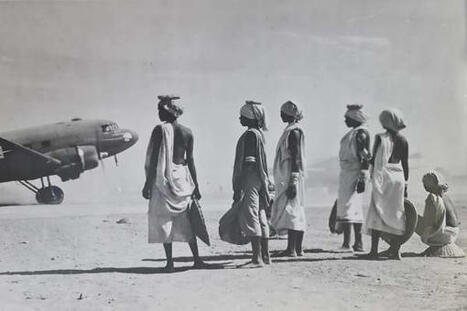
A small set of photographs in our collection shows women from Manipur at work on an airfield in the Imphal Valley in North Eastern India during the Second World War. What was their experience of living on the ‘home front’ at the heart of one of the most brutal battles of the conflict?
Britain’s mixed-race history has long been overlooked: it’s time we explored this major part of our national story, writes Lucas Fothergill, a documentary filmmaker and author of Everyone Everywhere.
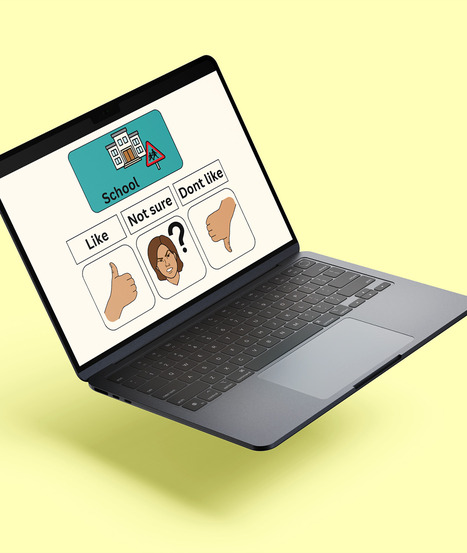
Amazing collaborative project between University of York staff and partners including Mencap and local schools which aims to amplify the voices of people with learning disabilities in research by providing a library of guidance on good practice. Initial resources focus on children and young people and the resources created are grounded in extensive multi layered ethnographic research methods. They include tools for data collection which can be downloaded and adapted for use.
With universities relying on disclosure models and deficit framing to address awarding gaps, Emma Gaunt argues that racism and ableism aren't distortions of the system – they're built into it
‘Unpacked: Young People & Violence’ is a five-part podcast series challenging us to think differently. Presented by Richie Brave and featuring a range of expert voices, this series encourages us to flip the narrative to question who gets forgotten, and how we can really keep young people safe.
In the first episode, Richie Brave sits down with rapper KOJand researcher and lecturerDr Becky Clarke to unpack the racialised a myth that youth violence has a face: Black and male. This myth shapes who gets stopped by police, who gets excluded from school, and who is automatically labelled as dangerous.
To get content containing either thought or leadership enter:
To get content containing both thought and leadership enter:
To get content containing the expression thought leadership enter:
You can enter several keywords and you can refine them whenever you want. Our suggestion engine uses more signals but entering a few keywords here will rapidly give you great content to curate.


 Your new post is loading...