‘Unpacked: Young People & Violence’ is a five-part podcast series challenging us to think differently. Presented by Richie Brave and featuring a range of expert voices, this series encourages us to flip the narrative to question who gets forgotten, and how we can really keep young people safe.
In the first episode, Richie Brave sits down with rapper KOJand researcher and lecturerDr Becky Clarke to unpack the racialised a myth that youth violence has a face: Black and male. This myth shapes who gets stopped by police, who gets excluded from school, and who is automatically labelled as dangerous.
In conversation with Reni Eddo-LodgeJoin us this Black History Month for a thought-provoking conversation between acclaimed author and broadcaster Reni Eddo-Lodge and LSE President Larry Kramer. Thursday 8 October 2026 | 1 hour 3 minutes 11 secondsWatch on YouTubeDownload File | 57.87MBJoin us...
Spanning 20 former British colonies, this global collection of enslavement registers offers millions of descendants across Afro-Caribbean and broader African diasporas a powerful tool to trace their family histories—available to all for free. Fully digitized and made searchable for the first time, the collection brings together nearly 4 million records and over 250,000 historical images, offering a meaningful opportunity to rediscover lives and honor individual stories.
Download the Five X More report exploring Black women’s mental health during pregnancy and after birth, including experiences of support, care and access.
Ethnic minority leadership in the NHS: progression, representation, retention and organisational culture15 September 2026Long readForeword by Dame Donna KinnairAs chair of the NHS Alliance BME Leadership Network, I am privileged to work alongside a strong and committed executive steering group and...
Exclusive: New research identifies thousands who profited from trafficking enslaved Africans and traces some financial links to institutions still operating today
Throughout September, a 19th century Chinese military map will be on display at The National Archives. Marc Vermeulen and Sarah Petter explore the physical elements of this map and what it tells us about our East and Southeast Asian records.
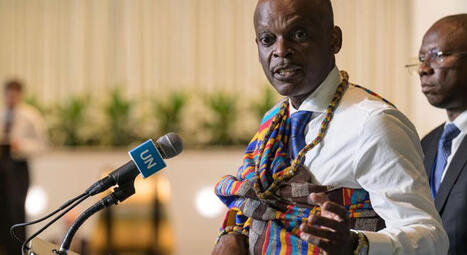
The UN General Assembly has voted overwhelmingly to encourage governments, schools and tech companies worldwide to stop using maps that make Africa look far smaller than it really is.
This August, a journal editorial questioned whether autism has lost its meaning and a television documentary questioned whether ADHD is real. This post provides an overview of the actual research and considers the impact this media has on a group already marginalised by an unequal society.
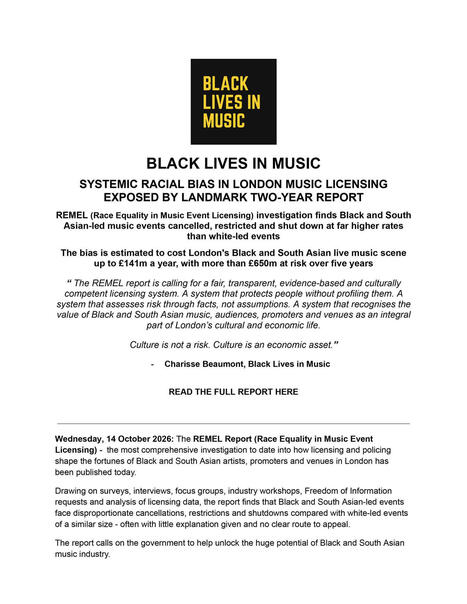
The REMEL Report Race Equality in Music Event LicensingProject REMEL (Race Equality in Music Event Licensing) is a multi-agency initiative addressing racial inequalities in the licensing, regulation and policing of live music events across London.Established in 2023 following a joint letter from the Musicians’ Union and Black Lives in Music…
Knowledge is power: tackling myeloma inequalities in Black communitiesBlack communities in the UK are two to three times more likely to develop myeloma than white populations and are diagnosed at younger ages.
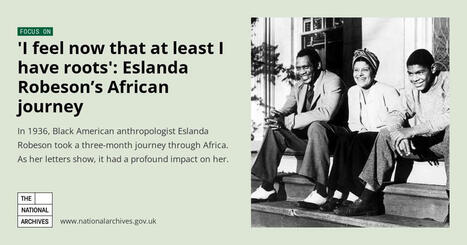
The three members of the Robeson family sitting outside their house. Paul is on the left, Essie in the middle, and Paul Jr to the right. They are all smiling and looking out of shot.
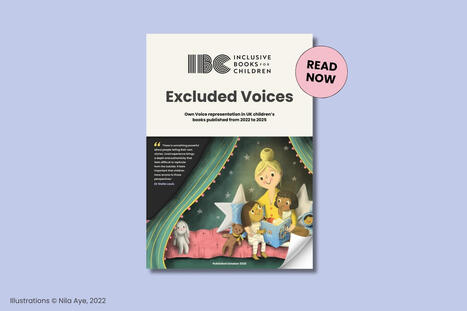
Is UK publishing diverse? Read the Excluded Voices report, our latest research into the number of Own Voice authors and illustrators creating children’s books.
The HE international dashboard brings together information about international students studying in the UK and overseas through UK transnational education arrangements. It provides the tool to understand where students are studying, how patterns have changed over time and how international activity varies across UK higher education providers.
What does the dashboard show?
The dashboard provides insights into two important aspects of UK higher education:
International students studying in the UK, i.e. those students whose country of origin is outside the UK.
Transnational education students, who study wholly outside the UK and are either registered with a UK reporting provider or who are studying for an award from that provider.
What Is Inclusion? Beyond Representation, Towards Belonging & Mattering
What does it really mean to be included?
Is it enough to have diverse people in the room, or to see different faces represented across our organisations, services and communities? Or does genuine inclusion require something more — being seen, heard, respected, valued and able to have a meaningful voice in the decisions that affect our lives?
In this thought-provoking webinar, we explore what inclusion looks and feels like in practice.
Moving beyond policies, statistics and representation, we consider the everyday experiences of people across different identities and protected characteristics, and explore how exclusion can appear in our workplaces, services and communities — sometimes visibly, but often through less obvious behaviours, assumptions, structures and systems.
Most importantly, this conversation isn't simply about identifying what is wrong. It asks:
What can each of us do differently, and what needs to change within our organisations and communities?
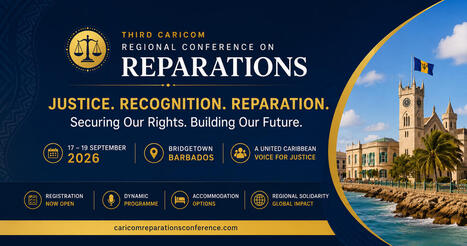
Official website of the Third CARICOM Regional Conference on Reparations in Barbados. View registration, programme, travel information, accommodation, resources and updates.
BBSRC has published its refreshed EDI action plan for 2026 to 2028, setting out bold commitments to build a fairer, more inclusive bioscience community.
General recommendation – No.40 on Reparatory justice for the harms and continuing consequences of colonialism, the trafficking in enslaved Africans across the Atlantic and other routes, and racialized chattel slavery (CERD/C/GC/40, Advance unedited version) https://www.ohchr.org/en/documents/general-comments-and-recommendations/general-recommendation-no40-reparatory-justice-harms This General Recommendation provides authoritative guidance on the legal basis for State responsibility to ensure reparatory justice for harms resulting from both direct and indirect involvement in the trafficking of enslaved Africans and racialized chattel slavery. It clarifies the obligations of States parties under the Convention and sets out a framework for addressing the enduring consequences of these historical injustices.
The Correct the Map campaign challenges the distortion of Africa’s true size on world maps, aiming to empower global understanding and respect for the continent’s significance.
We are delighted to publish our first Research Pamphlet. This ad hoc, open access series will present written interventions into debates between Marxism and Disability Studies, reflections on ongoing and historical struggles for disability liberation, and expanded versions of debates and disagreements within the Network on questions of theory and political strategy. The Pamphlets are an…
To get content containing either thought or leadership enter:
To get content containing both thought and leadership enter:
To get content containing the expression thought leadership enter:
You can enter several keywords and you can refine them whenever you want. Our suggestion engine uses more signals but entering a few keywords here will rapidly give you great content to curate.


 Your new post is loading...