 Your new post is loading...

|
Scooped by
Jeff Domansky
June 3, 2016 3:18 AM
|
Yes, it is a slide deck, but it's also one of the most eagerly anticipated collections of facts in Silicon Valley. Mary Meeker is ready with her 2016 internet trends report, which she is delivering today at this year's Code Conference. At 213 pages, there's a ton of data, but here are our Top 3 takeaways. 1) The internet itself is seeing slowing growth. In the past two decades, the internet economy was affected by macroeconomic trends, but it was external issues like the housing crisis and the financial crisis that were driving the slowdown. Now it is global internet growth itself that is slowing down. 2) Typing text into a search bar is so last year. In five years, at least 50 percent of all searches are going to be either images or speech. 3) The home screen has acted as the de facto portal on mobile devices since the arrival of the iPhone and even before. Messaging apps, with context and time, have a chance to rival the home screen as the go-to place for interaction....
|
|
Scooped by
Jeff Domansky
June 3, 2016 2:45 AM
|
What’s a marketer to do? We heard that influencer marketing was the next big thing. We heard about companies getting amazing results with it. But it seems you can’t go anywhere online recently without seeing headlines like this. Note the social shares on those two articles: 242,000 for the first one and nearly 50,000 for the second one. If influencer marketing is burning down, that’s a lot of people standing by with marshmallows to roast. But don’t panic. These two articles, and many more like them, refer to a specific kind of influencer marketing. Generally speaking: the bad kind. Specifically, the practice of writing massive checks to teenagers with a lot of followers on Instagram or Vine in exchange for product promotion. That particular economy, which converted cash to “influence” or “awareness,” was pretty much doomed from the start. You’re in trouble any time you convert real money to something fundamentally unmeasurable....
|
|
Scooped by
Jeff Domansky
June 3, 2016 2:28 AM
|
As marketers, writers and crafters, we spend hours on bringing our content ideas to life and after all that effort, want our content to be seen. Writing powerful social media copy to grab people’s eyes and win their hearts is a challenge, though. And often, when our content isn’t breaking through the noise we can fix it with a few slight edits and tweaks. Editing content and copy is a key part of the creative process but is often overlooked. In this post, I’d love to share 11 editing tips and tricks to help you take your social media content to the next level....
|
|
Scooped by
Jeff Domansky
June 2, 2016 11:48 AM
|
Mary Meeker’s annual Internet Trends Report for Kleiner Perkins is a comprehensive and provocative collection of data about technology change. It’s also the most cluttered, visually jumbled 213-slide pileup in the history of PowerPoint. Reading this deck is like walking through a construction site in which the Hell’s Angels are putting on three simultaneous Cirque de Soleil shows during a Green Day concert. In a snowstorm. While it’s arguable whether there is a unifying intellectual concept here, one thing is completely clear: there is no unifying design concept (unless you count the wordy, telegraphic headings on each slide). Just as you can learn from Meeker’s trend insights, you can also learn from her design disasters. As you look at these slides, ask yourself two questions: - In a quick glance, what main idea jumps out from the slide? If I study the slide further, does it reveal more information? - In too many cases here, the answer to the first question is “Gee, I dunno,” and the answer to the second is “Ouch, I am getting a headache.”...
|
|
Scooped by
Jeff Domansky
June 1, 2016 5:44 PM
|
The ad was dreamed up by Mike Catherall, creative director at Immersion Creative in Vancouver, who tells AdFreak that he made it a few years ago—and Houlihan finally decided she was OK running it.
"I dug up that campaign from the archives. I said, "What do you think, should we give this a shot?' She always thought it was kind of funny, so we were like, 'Sure, why not?' " Catherall says. "What I love about it is that it is irreverent, fun and totally different than the literally hundreds of realtor ads in Vancouver at the moment that are all so boring and cliché."
The ad took a while to get picked up in social media because Catherall and Houlihan were both a little reluctant to draw any attention to it themselves.
"Honestly, we put zero effort into getting buzz," Catherall says. "We should have posted it on our Instagram accounts, Twitter, Facebook—anything. But we didn't. I think Patricia and I were both a little wary of the ad at first, so we just kind of left it up to the public to decide what to do with it."...
|
|
Scooped by
Jeff Domansky
June 1, 2016 5:26 PM
|
Altspace has also just introduced technology it calls FrontRow that promises to make it possible for thousands of people to watch a performer in VR, yet feel like they’re up close no matter where they’re physically situated.
The company’s first big FrontRow showcase was when comedian Reggie Watts took the virtual stage Thursday night. But when I repeatedly tried to attend the event, I kept getting a black screen instead. Well into Watts’ one-hour performance, I finally got in, as Altspace feverishly worked in real time to fix the bugs.
Nine other avatars were visible inside this "comedy club" environment, not counting the avatar for Watts himself. Alas, the problems persisted—choppy movement, lags, poor sound.
Reggie Watts performs in AltspaceVR. (Photo: AltspaceVR)
AltspaceVR’s CEO Eric Romo concedes that the experience was “mixed.” At peak there were more than 1200 attendees, exceeding company expectations, and about ten times as many people, Romo believes, who have ever gathered before for a single VR event. It was also something of an achievement that attendees could come at it from different VR vehicles.
But then there were all the many people like me who had a heck of a time getting in....
|
|
Scooped by
Jeff Domansky
June 1, 2016 5:01 PM
|
The fashion blogger long ago transcended mere outfit documentarian. Done right, fashion blogs can evolve into full-fledged businesses, with brands clamoring to be featured by the style aficionados.
For some of the biggest influencers in fashion, blogs have served as catalysts to large scale sponsorships, advertising campaigns, design collaborations and book deals. These style enthusiasts have evolved into mainstays and purveyors of style, turning passion projects into brand opportunities.
On WordPress alone, 409 million people read more than 21.5 billion blog pages a month. These aren’t twee daily #ootd posts, either. Here are some of the fashion bloggers that brands can’t get enough of.
Chiara Ferragni, The Blonde Salad: 665,000 monthly page views, per Compete
Since 29-year-old Chiara Ferragni started The Blonde Salad in 2009, she has appeared on the cover of numerous global fashion magazines, wrote a book, dabbled in partnerships with Burberry and Dior, launched a popular shoe line (with styles that retail for upwards of $200) and is in talks for a collaboration with Ladurée....
|
|
Scooped by
Jeff Domansky
June 1, 2016 11:26 AM
|
Retail profits are plummeting. Stores are closing. Malls are emptying. The depressing stories just keep coming. Reading the Macy’s, Nordstrom, and Target earnings announcements is about as uplifting as a tour of an intensive care unit. The Internet is apparently taking down yet another industry. Brick and mortar stores seem to be going the way of the yellow pages. Sure enough, the Census Bureau just released data showing that online retail sales surged 15.2 percent between the first quarter of 2015 and the first quarter of 2016. But before you dump all of your retail stocks, there are more facts you should consider. Looking only at that 15.2 percent “surge” would be misleading. It was an increase was on a small base of 6.9 percent. Even when a tiny number grows by a large percentage terms, it is often still tiny. More than 20 years after the internet was opened to commerce, the Census Bureau tells us that brick and mortar sales accounted for 92.3 percent of retail sales in the first quarter of 2016. Their data show that only 0.8 percent of retail sales shifted from offline to online between the beginning of 2015 and 2016. So, despite all the talk about drone deliveries to your doorstep, all the retail execs expressing angst over consumers going online, and even a Presidential candidate exclaiming that Amazon has a “huge antitrust problem,” the Census data suggest that physical retail is thriving. Of course, the shuttered stores, depressed execs, and tanking stocks suggest otherwise. What’s the real story?...
|
|
Scooped by
Jeff Domansky
May 31, 2016 8:25 PM
|
Lead generation has come a long way. According to one analysis, lead generation dates back as far as 27 BC, assuming, of course, that we accept that the Roman trade market was the original lead generation platform for traders. The way in which leads were developed during Roman times was through word of mouth.
By spreading information via word of mouth, people with a network of connections trade information and recommendations based on experience. This still happens today. You may ask your neighbor who they hired to remodel their kitchen or ask a friend which doctor they suggest you visit, but do you seek references for many other reasons? You probably don’t.
As technology advances, the way in which leads are acquired also changes. Nowadays, when you need to buy something specific you rely on the Internet. It is the ultimate convenience, even easier than asking someone you know, and accessible to you wherever you are — at home, at work or on the go. Now that the way in which we seek information has changed, the way in which we receive information is different, as well. Before understanding how far we’ve come today, and where we’re going, we must understand where lead generation started....
|
|
Scooped by
Jeff Domansky
May 31, 2016 11:15 AM
|
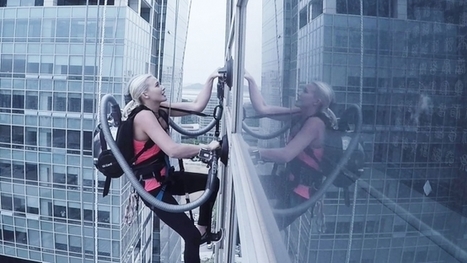
We'd like to preface this story by saying "Don't try this at home," but we already know somebody—probably in Ukraine—is going to seize the opportunity anyway. Having warned you, we hereby assuage our consciences. Companies like GoPro and Samsung have made a mark on YouTube culture by using powerful demonstrations—from smart surfboards to sledding toddlers—to punt their fare. Now, LG's jumping into the fray with something we can't quite recall seeing before. It partnered with 2015 U.S. Extreme Rock Climbing medalist Sierra Blair-Coyle, who, in a video that defies belief, scales a skyscraper Spiderman-style, using suctions powered by two LG Code Zero K94SGN vacuum cleaners mounted on her back....
|
|
Scooped by
Jeff Domansky
May 31, 2016 10:04 AM
|
I was struck by the recent research that 60% of clicks on mobile banner ads are accidental. The main contributing factor was identified as fat finger syndrome. With mobile on track to become the third largest advertising medium, accounting for 12% of all ad spend, that’s an enormous disconnect. Of course it’s not fat fingers that are to blame. It’s the state of mobile design....
|
|
Scooped by
Jeff Domansky
May 30, 2016 11:29 PM
|
Remember when you were a kid and you'd lose track of time doing your favorite thing?
That's what being in love with your work is like.
Of course, people like being employed (and the money that goes with it).
But there are other things that matter just as much, like connection, meaning, purpose, and the rest of the narrative....
|
|
Scooped by
Jeff Domansky
May 30, 2016 10:59 PM
|
At first glance, the weakness in luxury is puzzling because consumer confidence is high and Tiffany's customers still have discretionary income to spend.
But Yarbrough points out that people are increasingly spending on categories other than luxury retail.
"People are still willing to spend on auto, and they're still willing to spend on their homes which are bigger-ticket items," he said.
"They're more interested in cars or homes or experiences," he said, pointing to movies and traveling as examples — not apparel.
An analysis by Jharonne Martis, director of consumer research for Thomson Reuters, confirmed that people were spending their money on hotels and casinos, too, Business Insider's Hayley Peterson reported earlier this month....
|
|
|
Scooped by
Jeff Domansky
June 3, 2016 2:54 AM
|
Snapchat Inc. has 150 million people using the service each day, said people familiar with the matter. That makes the four-year-old messaging app more popular than Twitter Inc. by daily active users. Snapchat has been growing quickly, boosted by its popularity among young people. The app had 110 million daily users in December, said the people, who asked not to be named because they weren’t authorized to speak about the numbers. Twitter, which was founded in 2006, has less than 140 million users interacting with the service daily, according to an average of analysts’ estimates surveyed by Bloomberg. The short-messaging service was once the largest social network after Facebook Inc. but has since been surpassed by Facebook’s other apps, including Instagram, Messenger, and WhatsApp....
|
|
Scooped by
Jeff Domansky
June 3, 2016 2:38 AM
|
You’ve probably heard about Pulse, LinkedIn’s news aggregation platform. Normally, when you publish a blog post, it is automatically sent to the news feed of your connections and followers. Posts featured on Pulse can be seen by all members, which gives you significantly more exposure. You may have wondered how to get your blog post picked up by Pulse. Is it completely random? Or are there tricks of the trade that help writers get featured regularly on Pulse? Pulse is similar to an online magazine. All LinkedIn members see the same content here, divided into 85 channels ranging from the most popular, “Leaders and Management,” to topics like “Software Engineering” and “Productivity.” Outside news articles appear here, along with posts written by LinkedIn Influencers and some regular LinkedIn bloggers – like you. So how can you get your post featured? Let’s peek behind the curtain. Gericke Potgieter has done so much research he wrote an e-book on the topic. My suggestions below reference his work....
|
|
Scooped by
Jeff Domansky
June 3, 2016 1:43 AM
|
The logo is a representation of what a company stands for, it’s the backbone of the brand and it portrays its self as a global presence in the marketplace. A well-designed logo is a crucial part of any company’s marketing strategy and it needs to be done right. So I took the liberty of gathering a few examples of some poorly designed logos that should never have made the cut. Take some notes and tel!
|
|
Scooped by
Jeff Domansky
June 1, 2016 6:39 PM
|
The Top Thirty Global Media Owners report is a unique ranking of the world’s largest media companies by media revenue, as estimated by Zenith. The report was launched in 2007 and was last published by Zenith in 2015. Zenith defines media revenue as all revenue deriving from businesses that support advertising, to determine which companies are most important for the marketing industry.*
There are four media giants among the top 30 global media owners – Facebook, Baidu, Yahoo and Microsoft – and all have risen up the ranking this year. Facebook has moved up from 10th place last year to 5th place this year; Baidu has moved up from 14th to 9th; Yahoo from 18th to 15th; and Microsoft from 21st to 17th. Facebook is the fastest-growing media owner in our top 30, with media revenues up 65% on last year. Baidu is second-fastest (up by 52%) and Alphabet is third (up by 17%).
Between them, the five digital giants generated US$88bn in media revenue, which is 34% of all the revenues generated by our top 30 companies, and represents 65% of the entire global internet advertising market. Their collective dominance of digital advertising means that these five companies have captured most of the gains from its rapid growth. Digital adspend has grown at an average of 18% a year for the past five years, driven by the spread of mobile technology, the rise of social media and online video, and improved advertising technology, such as programmatic buying and local real-time search. Adspend across all other media has grown by just 0.6% a year....
|
|
Scooped by
Jeff Domansky
June 1, 2016 5:32 PM
|
Hashtags are used on social media channels and are important in your business – you may be missing a trick if you’re not using them.
But…
…if you use the wrong ones, you need to get off that path you are driving down.
So let’s figure how how to identify popular hashtags…
First… let’s talk about what hashtags are and why you need them!
|
|
Scooped by
Jeff Domansky
June 1, 2016 5:19 PM
|
So why fix something that not only isn’t broken, but which has been the most significant driver of Starbucks’ top and bottom-line growth, according to their CEO (see one of numerous Howard Schultz quotes here)? Because some clever users figured out a way to optimize their spending to get over rewarded.
Starbucks does sell some items priced at around $1, so a user could have spent as little as $30 over 30 visits to achieve Gold status. After reaching that Gold status, that user would be entitled to any of the most expensive drinks on the menu, like a venti Frappuccino, for free — after only 12 more visits totaling a spend of only $12. So in response, the brilliant change Starbucks made to the loyalty program was to make it spend-based. And they also increased the stars-gathered requirement for a free item to about a bazillion stars.
This is broken on so many levels, but there are already enough rants out there about the new loyalty program. What really bugs me is how they missed a few simple points:...
|
|
Scooped by
Jeff Domansky
June 1, 2016 4:58 PM
|
Fashion is a visual industry that inherently translates well to video. As fashion publications continue to push content on social media and online, video has become a major priority.
The key ingredients to a successful video are hardly a secret: A charismatic host helps, preferably paired with notable celebrity guests and industry icons. Irreverent humor is also particularly effective, according to Jessica Kia, co-founder of the consultancy RJK Project who helped develop the popular Anna Kendrick video series “#missadventure” for Kate Spade’s 2015 holiday campaign.
“When [fashion publications] don’t take themselves so seriously it’s really refreshing and commendable,” Kia said. “It’s what their audience wants to see.”
|
|
Scooped by
Jeff Domansky
June 1, 2016 11:07 AM
|
So why is this? Why do some societies not encourage casual smiling? I got my answer, or at least part of one, when I stumbled across a new paper by Kuba Krys, a psychologist at the Polish Academy of Sciences. In some countries, smiling might not be a sign of warmth or even respect. It’s evidence that you’re a fool—a tricky fool. Krys focused on a cultural phenomenon called “uncertainty avoidance.” Cultures that are low on this scale tend to have social systems—courts, health-care systems, safety nets, and so forth—that are unstable. Therefore, people there view the future as unpredictable and uncontrollable. Smiling is a sign of certainty and confidence, so when people in those countries smile, they might seem odd. Why would you smile when fate is an invisible wolf waiting to shred you? You might, in those “low-UA” countries, even be considered stupid for smiling. Krys also hypothesized that smiling in corrupt countries would be, um, frowned upon. When everyone’s trying to pull one over on each other, you don’t know if someone’s smiling with good intentions, or because they’re trying to trick you....
|
|
Scooped by
Jeff Domansky
May 31, 2016 11:33 AM
|
Samsung makes big smartphones and now has a clever way to advertise just how big they are in Europe. This week, the brand installed a massive 80-by-40 meter digital billboard onto the side of a building that runs alongside the Volokolamsk highway in Sokol, Russia that plays up the size of the Galaxy S7 Edge phone, which has a 5.5-inch screen and weighs roughly 5.54 ounces. To compare, Apple's iPhone 6S has a 4.7-inch screen and clocks in at 5.04 ounces....
|
|
Scooped by
Jeff Domansky
May 31, 2016 10:42 AM
|
American adults are more apt to generally dislike (61%) than like (34%) advertising, according to arecent YouGov study [pdf]. In fact, intense dislike (“dislike a lot”) outweighs liking advertising “a lot” by an almost 6-to-1 margin (28% vs. 5%) among the 1,000 adults surveyed. However, some groups have a more positive view of advertising’s likability than others. The study breaks down its results by demographic group. Some key highlights from those results follow.
|
|
Scooped by
Jeff Domansky
May 30, 2016 11:41 PM
|
It can be difficult to tell how well a theme is optimized for SEO as some of the features are sometimes hidden. Highly optimized SEO is in the details and you can tell by how the code and features are described.
A well-designed theme would have clean code that search engines love. They would be built with SEO best practices which would focus on headings, Google rich snippets for posts and reviews, Google authorship, semantic HTML5 markup, CSS3, be responsive, etc. Some themes even give you some extra tools to help you customize and improve your SEO even further.
With these features in mind I found 15 themes that are SEO friendly and help make your content highly discoverable. A few of these are older themes but they’ve been updated and are great examples of clean code that’s SEO optimized. They’re in no particular order. Let’s take a look.
|
|
Scooped by
Jeff Domansky
May 30, 2016 11:07 PM
|
The US smart home market has yet to take off. Quirky's recent announcement that it was filing chapter 11 bankruptcy — and selling off its smart home business, Wink — highlights this well.
At its current state, we believe the smart home market is stuck in the 'chasm' of the technology adoption curve, in which it is struggling to surpass the early-adopter phase and move to the mass-market phase of adoption.
There are many barriers preventing mass-market smart home adoption: high device prices, limited consumer demand and long device replacement cycles. However, the largest barrier is the technological fragmentation of the smart home ecosystem, in which consumers need multiple networking devices, apps and more to build and run their smart home.
|


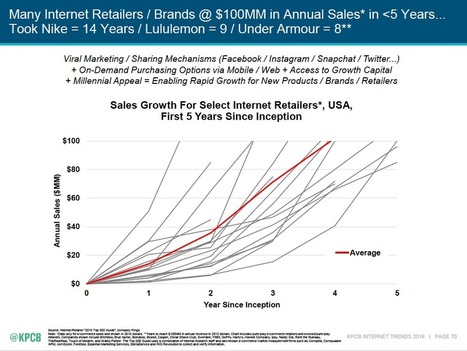
















The internet is slowing down, messaging is taking on the home screen, and voice search is big. There, I just saved you more than 3 hours of your life that you will never get back if you do attempt to read the whole 213 slide presentation. Let me refer you a second time instead to Josh Bernoff's brilliant description of this way overblown presentation:
"Mary Meeker’s annual Internet Trends Report for Kleiner Perkins is a comprehensive and provocative collection of data about technology change. It’s also the most cluttered, visually jumbled 213-slide pileup in the history of PowerPoint. Reading this deck is like walking through a construction site in which the Hell’s Angels are putting on three simultaneous Cirque de Soleil shows during a Green Day concert. In a snowstorm."