Your new post is loading...

|
Rescooped by
Kamoun Lab @ TSL
from Fungal|Oomycete Biology
September 17, 2013 10:27 AM
|
Comparative analyses have revealed that the Fusarium genome is compartmentalized into regions responsible for primary metabolism and reproduction (core genome), and pathogen virulence, host specialization, and possibly other functions (adaptive genome). Genes involved in virulence and host specialization are located on pathogenicity chromosomes within strains pathogenic to tomato (Fusarium oxysporum f. sp. lycopersici) and pea (Fusarium ‘solani’ f. sp.pisi). The experimental transfer of pathogenicity chromosomes from F. oxysporum f. sp. lycopersici into a nonpathogen transformed the latter into a tomato pathogen. Thus, horizontal transfer may explain the polyphyletic origins of host specificity within the genus. Additional genome-scale comparative and functional studies are needed to elucidate the evolution and diversity of pathogenicity mechanisms, which may help inform novel disease management strategies against fusarial pathogens.
Via Bradford Condon, Niklaus Grunwald, Alejandro Rojas
|
|
Scooped by
Kamoun Lab @ TSL
September 11, 2013 1:14 PM
|
Osmotrophic microorganisms, such as fungi and oomycetes, feed by secreting depolymerizing enzymes to process complex food sources in the extracellular environment, and taking up the resulting simple sugars, micronutrients and amino acids. As a consequence of this lifestyle, osmotrophs engage in the acquisition and protection of public goods. In this Opinion article, we propose that horizontal gene transfer (HGT) has played a key part in shaping both the repertoire of proteins required for osmotrophy and the nature of public goods interactions in which eukaryotic microorganisms engage.
|
|
Scooped by
Kamoun Lab @ TSL
August 6, 2013 12:18 PM
|
Rice blast caused by Magnaporthe oryzae is one of the most destructive diseases of rice worldwide. The fungal pathogen is notorious for its ability to overcome host resistance. To better understand its genetic variation in nature, we sequenced the genomes of two field isolates, Y34 and P131. In comparison with the previously sequenced laboratory strain 70-15, both field isolates had a similar genome size but slightly more genes. Sequences from the field isolates were used to improve genome assembly and gene prediction of 70-15. Although the overall genome structure is similar, a number of gene families that are likely involved in plant-fungal interactions are expanded in the field isolates. Genome-wide analysis on asynonymous to synonymous nucleotide substitution rates revealed that many infection-related genes underwent diversifying selection. The field isolates also have hundreds of isolate-specific genes and a number of isolate-specific gene duplication events. Functional characterization of randomly selected isolate-specific genes revealed that they play diverse roles, some of which affect virulence. Furthermore, each genome contains thousands of loci of transposon-like elements, but less than 30% of them are conserved among different isolates, suggesting active transposition events in M. oryzae. A total of approximately 200 genes were disrupted in these three strains by transposable elements. Interestingly, transposon-like elements tend to be associated with isolate-specific or duplicated sequences. Overall, our results indicate that gain or loss of unique genes, DNA duplication, gene family expansion, and frequent translocation of transposon-like elements are important factors in genome variation of the rice blast fungus.
|
|
Scooped by
Kamoun Lab @ TSL
July 25, 2013 5:38 PM
|
The origins of crop diseases are linked to domestication of plants. Most crops were domesticated centuries – even millennia – ago, thus limiting opportunity to understand the concomitant emergence of disease. Kiwifruit (Actinidia spp.) is an exception: domestication began in the 1930s with outbreaks of canker disease caused by P. syringae pv. actinidiae(Psa) first recorded in the 1980s. Based on SNP analyses of two circularized and 34 draft genomes, we show that Psa is comprised of distinct clades exhibiting negligible within-clade diversity, consistent with disease arising by independent samplings from a source population. Three clades correspond to their geographical source of isolation; a fourth, encompassing thePsa-V lineage responsible for the 2008 outbreak, is now globally distributed. Psa has an overall clonal population structure, however, genomes carry a marked signature of within-pathovar recombination. SNP analysis of Psa-V reveals hundreds of polymorphisms; however, most reside within PPHGI-1-like conjugative elements whose evolution is unlinked to the core genome. Removal of SNPs due to recombination yields an uninformative (star-like) phylogeny consistent with diversification of Psa-V from a single clone within the last ten years. Growth assays provide evidence of cultivar specificity, with rapid systemic movement of Psa-V inActinidia chinensis. Genomic comparisons show a dynamic genome with evidence of positive selection on type III effectors and other candidate virulence genes. Each clade has highly varied complements of accessory genes encoding effectors and toxins with evidence of gain and loss via multiple genetic routes. Genes with orthologs in vascular pathogens were found exclusively within Psa-V. Our analyses capture a pathogen in the early stages of emergence from a predicted source population associated with wild Actinidia species. In addition to candidate genes as targets for resistance breeding programs, our findings highlight the importance of the source population as a reservoir of new disease.
|
|
Scooped by
Kamoun Lab @ TSL
July 18, 2013 11:28 AM
|
Responsible for the Irish potato famine of 1845–49, the oomycete pathogen Phytophthora infestanscaused persistent, devastating outbreaks of potato late blight across Europe in the 19th century. Despite continued interest in the history and spread of the pathogen, the genome of the famine-era strain remains entirely unknown. Here we characterize temporal genomic changes in introduced P. infestans. We shotgun sequence five 19th-century European strains from archival herbarium samples—including the oldest known European specimen, collected in 1845 from the first reported source of introduction. We then compare their genomes to those of extant isolates. We report multiple distinct genotypes in historical Europe and a suite of infection-related genes different from modern strains. At virulence-related loci, several now-ubiquitous genotypes were absent from the historical gene pool. At least one of these genotypes encodes a virulent phenotype in modern strains, which helps explain the 20th century’s episodic replacements of European P. infestanslineages.
|
|
Scooped by
Kamoun Lab @ TSL
June 30, 2013 5:12 PM
|
The fungus Fusarium fujikuroi causes “bakanae” disease of rice due to its ability to produce gibberellins (GAs), but it is also known for producing harmful mycotoxins. However, the genetic capacity for the whole arsenal of natural compounds and their role in the fungus' interaction with rice remained unknown. Here, we present a high-quality genome sequence of F. fujikuroithat was assembled into 12 scaffolds corresponding to the 12 chromosomes described for the fungus. We used the genome sequence along with ChIP-seq, transcriptome, proteome, and HPLC-FTMS-based metabolome analyses to identify the potential secondary metabolite biosynthetic gene clusters and to examine their regulation in response to nitrogen availability and plant signals. The results indicate that expression of most but not all gene clusters correlate with proteome and ChIP-seq data. Comparison of the F. fujikuroi genome to those of six other fusaria revealed that only a small number of gene clusters are conserved among these species, thus providing new insights into the divergence of secondary metabolism in the genus Fusarium. Noteworthy, GA biosynthetic genes are present in some related species, but GA biosynthesis is limited to F. fujikuroi, suggesting that this provides a selective advantage during infection of the preferred host plant rice. Among the genome sequences analyzed, one cluster that includes a polyketide synthase gene (PKS19) and another that includes a non-ribosomal peptide synthetase gene (NRPS31) are unique to F. fujikuroi. The metabolites derived from these clusters were identified by HPLC-FTMS-based analyses of engineered F. fujikuroi strains overexpressing cluster genes. In planta expression studies suggest a specific role for the PKS19-derived product during rice infection. Thus, our results indicate that combined comparative genomics and genome-wide experimental analyses identified novel genes and secondary metabolites that contribute to the evolutionary success of F. fujikuroi as a rice pathogen.
From pathogen genomes to host plant processes: the power of plant parasitic oomycetes
Marina Pais, Joe Win, Kentaro Yoshida, Graham J Etherington, Liliana M Cano, Sylvain Raffaele, Mark J Banfield, Alex Jones, Sophien Kamoun, Diane GO Saunders The plant microbiome
Thomas R Turner, Euan K James, Philip S Poole The promise of genomics in the study of plant-pollinator interactions
Elizabeth L Clare, Florian P Schiestl, Andrew R Leitch, Lars Chittka Interactions of beneficial and detrimental root-colonizing filamentous microbes with plant hosts Thomas Rey, Sebastian Schornack Phytophthora capsici-tomato interaction features dramatic shifts in gene expression associated with a hemi-biotrophic lifestyle Julietta Jupe, Remco Stam, Andrew JM Howden, Jenny A Morris, Runxuan Zhang, Pete E Hedley, Edgar Huitema Analyzing the soybean transcriptome during autoregulation of mycorrhization identifies the transcription factors GmNF-YA1a/b as positive regulators of arbuscular mycorrhization
Sara Schaarschmidt, Peter M Gresshoff, Bettina Hause
Via Mary Williams
|
|
Scooped by
Kamoun Lab @ TSL
June 28, 2013 6:08 AM
|
Pseudozyma flocculosa is related to the model plant pathogen Ustilago maydisyet is not a phytopathogen but rather a biocontrol agent of powdery mildews; this relationship makes it unique for the study of the evolution of plant pathogenicity factors. The P. flocculosa genome of ∼23 Mb includes 6877 predicted protein coding genes. Genome features, including hallmarks of pathogenicity, are very similar in P. flocculosa and U. maydis, Sporisorium reilianum, and Ustilago hordei. Furthermore, P. flocculosa, a strict anamorph, revealed conserved and seemingly intact mating-type and meiosis loci typical of Ustilaginales. By contrast, we observed the loss of a specific subset of candidate secreted effector proteins reported to influence virulence in U. maydis as the singular divergence that could explain its nonpathogenic nature. These results suggest that P. flocculosa could have once been a virulent smut fungus that lost the specific effectors necessary for host compatibility. Interestingly, the biocontrol agent appears to have acquired genes encoding secreted proteins not found in the compared Ustilaginales, including necrosis-inducing-Phytophthora-protein- and Lysin-motif- containing proteins believed to have direct relevance to its lifestyle. The genome sequence should contribute to new insights into the subtle genetic differences that can lead to drastic changes in fungal pathogen lifestyles.
|
|
Scooped by
Kamoun Lab @ TSL
June 22, 2013 4:39 AM
|
Speciation of fungal plant pathogens has been associated with host jumps, host domestication, clonal divergence, and hybridization. Although we have substantial insight into the speciation histories of several important plant pathogens, we still know very little about the underlying genetics of reproductive isolation. Studies in Saccharomyces cerevisiae, Neurospora crassa, and nonfungal model systems illustrate that reproductive barriers can evolve by different mechanisms, including genetic incompatibilities between neutral and adaptive substitutions, reinforcement selection, and chromosomal rearrangements. Advances in genome sequencing and sequence analyses provide a new framework to identify those traits that have driven the divergence of populations or caused reproductive isolation between species of fungal plant pathogens. These traits can be recognized based on signatures of strong divergent selection between species or through the association of allelic combination conferring hybrid inferiority. Comparative genome analyses also provide information about the contribution of genome rearrangements to speciation. This is particularly relevant for species of fungal pathogens with extreme levels of genomic rearrangements and within-species genome plasticity.
|
|
Scooped by
Kamoun Lab @ TSL
June 19, 2013 2:50 AM
|
Large-scale DNA sequencing of samples of foliage collected in the 19th century from plants infected with late blight has shown that the potato famines of the 1840s were triggered by a single clonal lineage of Phytophthora infestans, called HERB-1, which persisted for at least 50 years. There can be few diseases of plants that have had a more profound effect on human health, society and politics than potato late blight. Emerging in the mid-1840s, the disease rapidly became pandemic, precipitating the Great Famine, which led to almost a million deaths in Ireland and the emigration of many more, plus considerable loss of life and extreme political upheaval throughout mainland Europe (Zadoks, 2008). The water mould Phytophthora infestans was first identified as the probable cause of late blight by Miles Joseph Berkeley in 1846, almost 20 years before Louis Pasteur formally proposed the germ theory of disease. As such, it has been credited with establishing the field of plant pathology, and is a major milestone in the foundation of epidemiology as a scientific discipline. Now, more than 160 years later, Hernán Burbano of the Max Planck Institute for Developmental Biology and co-workers have combined the power of next-generation sequencing technology with the availability of herbarium samples to peek through a 50-year window of history at the genome of the pathogen that contributed to so much human suffering (Yoshida et al., 2013).
|
|
Scooped by
Kamoun Lab @ TSL
June 13, 2013 5:21 PM
|
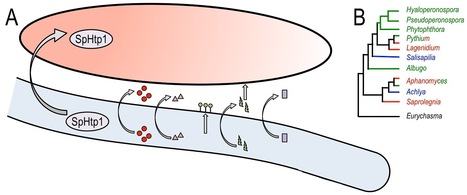
Few microorganisms match the impact that the oomycetes have had on mankind. This distinct lineage of eukaryotes is well-known for its most notorious member, Phytophthora infestans, the agent of the nineteenth century Irish potato famine, and several other devastating pathogens of cultivated and wild plants [1]. Indeed, more than 60% of oomycete species infect plants [2]. Less known is the fact that many oomycetes are parasitic on animals, from freshwater fish and crustaceans to mammals, such as livestock, pets, and humans [3]. Animal parasitic oomycetes have received much less attention than their plant pathogenic kin, and our understanding of their virulence mechanisms is rudimentary. However, research momentum is poised to accelerate with the first report of the genome of an animal parasitic oomycete. In this issue of PLOS Genetics, Jiang et al. [4] describe the 63 Mbp genome sequence of the fish pathogen Saprolegnia parasitica and highlight a distinct repertoire of candidate virulence genes.
|
|
Scooped by
Kamoun Lab @ TSL
May 23, 2013 5:05 AM
|
Sexual recombination drives genetic diversity in eukaryotic genomes and fosters adaptation to novel environmental challenges. Although strictly asexual microorganisms are often considered as evolutionary dead ends, they comprise many devastating plant pathogens. Presently, it remains unknown how such asexual pathogens generate the genetic variation that is required for quick adaptation and evolution in the arms race with their hosts. Here we show that extensive chromosomal rearrangements in the strictly asexual plant pathogenic fungus Verticillium dahliae establish highly dynamic lineage-specific (LS) genomic regions that act as a source for genetic variation to mediate aggressiveness. We show that such LS regions are greatly enriched for in planta-expressed effector genes, encoding secreted proteins that enable host colonization. The LS regions occur at the flanks of chromosomal breakpoints and are enriched for retrotransposons and other repetitive sequence elements. Our results demonstrate that asexual pathogens may evolve by prompting chromosomal rearrangements, enabling rapid development of novel effector genes. Likely, chromosomal reshuffling can act as a general mechanism for adaptation in asexually propagating organisms.
|
|
Rescooped by
Kamoun Lab @ TSL
from Plants and Microbes
May 21, 2013 1:20 AM
|
eLife: The rise and fall of the Phytophthora infestans lineage that triggered the Irish potato famine (2013)
Phytophthora infestans, the cause of potato late blight, is infamous for having triggered the Irish Great Famine in the 1840s. Until the late 1970s, P. infestans diversity outside of its Mexican center of origin was low, and one scenario held that a single strain, US-1, had dominated the global population for 150 years; this was later challenged based on DNA analysis of historical herbarium specimens. We have compared the genomes of 11 herbarium and 15 modern strains. We conclude that the nineteenth century epidemic was caused by a unique genotype, HERB-1, that persisted for over 50 years. HERB-1 is distinct from all examined modern strains, but it is a close relative of US-1, which replaced it outside of Mexico in the twentieth century. We propose that HERB-1 and US-1 emerged from a metapopulation that was established in the early 1800s outside of the species' center of diversity. Preprint @ http://arxiv.org/abs/1305.4206
|
|
|
Scooped by
Kamoun Lab @ TSL
September 17, 2013 5:21 AM
|
Carbohydrate-active enzymes (CAZymes) are involved in the metabolism of glycoconjugates, oligosaccharides, and polysaccharides and, in the case of plant pathogens, in the degradation of the host cell wall and storage compounds. We performed an in silico analysis of CAZymes predicted from the genomes of seven Pythium species (Py. aphanidermatum, Py. arrhenomanes, Py. irregulare, Py. iwayamai, Py. ultimum var. ultimum,Py. ultimum var. sporangiiferum and Py. vexans) using the “CAZymes Analysis Toolkit” and “Database for Automated Carbohydrate-active Enzyme Annotation” and compared them to previously published oomycete genomes. Growth of Pythium spp. was assessed in a minimal medium containing selected carbon sources that are usually present in plants. Thein silico analyses, coupled with our in vitro growth assays, suggest that most of the predicted CAZymes are involved in the metabolism of the oomycete cell wall with starch and sucrose serving as the main carbohydrate sources for growth of these plant pathogens. The genomes of Pythium spp. also encode pectinases and cellulases that facilitate degradation of the plant cell wall and are important in hyphal penetration; however, the species examined in this study lack the requisite genes for the complete saccharification of these carbohydrates for use as a carbon source. Genes encoding for xylan, xyloglucan, (galacto)(gluco)mannan and cutin degradation were absent or infrequent in Pythium spp.. Comparative analyses of predicted CAZymes in oomycetes indicated distinct evolutionary histories. Furthermore, CAZyme gene families among Pythium spp. were not uniformly distributed in the genomes, suggesting independent gene loss events, reflective of the polyphyletic relationships among some of the species.
|
|
Scooped by
Kamoun Lab @ TSL
August 21, 2013 8:36 PM
|
Plants utilize multiple layers of defense mechanisms to fight against the invasion of diverse pathogens. The R gene mediates resistance, in most cases, dependent on the co-existence of its cognate pathogen-derived avirulence (Avr) gene. The rice blast R gene Piz-t corresponds in gene-for-gene fashion to the Magnaporthe oryzae Avr gene AvrPiz-t. In this study, we determined and compared the genomic sequences surrounding the AvrPiz-t gene in both avirulent and virulent isolates, designating as AvrPiz-t-ZB15 and avrPiz-t-70-15 regions, respectively. The sequence of the AvrPiz-t-ZB15 region is 120 966 bp whereas avrPiz-t-70-15 is 146 292 bp in length. The extreme sequence similarity and good synteny in gene order and content along with the absence of two predicted genes in the avrPiz-t-70-15 region were observed in the predicted protein-coding regions in the AvrPiz-t locus. Nevertheless, frequent presence/absence and highly dynamic organization of transposable elements (TEs) were identified, representing the major variation of the AvrPiz-t locus between different isolates. Moreover, TEs constitute 27.3% and 43.2% of the genomic contents of the AvrPiz-t-ZB15 and avrPiz-t-70-15 regions, respectively, indicating that TEs contribute largely to the organization and evolution of AvrPiz-t locus. The findings of this study suggest that M. oryzae could benefit in an evolutionary sense from the presence of active TEs in genes conferring avirulence and provide an ability to rapidly change and thus to overcome host R genes.
|
|
Scooped by
Kamoun Lab @ TSL
August 6, 2013 7:17 AM
|
|
|
Scooped by
Kamoun Lab @ TSL
July 19, 2013 9:11 AM
|
Wheat powdery mildew, Blumeria graminis forma specialis tritici, is a devastating fungal pathogen with a poorly understood evolutionary history. Here we report the draft genome sequence of wheat powdery mildew, the resequencing of three additional isolates from different geographic regions and comparative analyses with the barley powdery mildew genome. Our comparative genomic analyses identified 602 candidate effector genes, with many showing evidence of positive selection. We characterize patterns of genetic diversity and suggest that mildew genomes are mosaics of ancient haplogroups that existed before wheat domestication. The patterns of diversity in modern isolates suggest that there was no pronounced loss of genetic diversity upon formation of the new host bread wheat 10,000 years ago. We conclude that the ready adaptation of B. graminis f.sp. tritici to the new host species was based on a diverse haplotype pool that provided great genetic potential for pathogen variation.
Genome Announcements: Several plant pathogen genomes published in the issue of May/June 2013
Draft Genome Sequence of Botrytis cinerea BcDW1, Inoculum for Noble Rot of Grape Berries Barbara Blanco-Ulate, Greg Allen, Ann L. T. Powell, and Dario CantuGenome Announc. May/June 2013 1:e00252-13; doi:10.1128/genomeA.00252-13http://genomea.asm.org/content/1/3/e00252-13.abstract.html Draft Genome Sequence of the Grapevine Dieback Fungus Eutypa lata UCR-EL1 Barbara Blanco-Ulate, Philippe E. Rolshausen, and Dario CantuGenome Announc. May/June 2013 1:e00228-13; doi:10.1128/genomeA.00228-13http://genomea.asm.org/content/1/3/e00228-13.abstract.html Draft Genome Sequence of Neofusicoccum parvum Isolate UCR-NP2, a Fungal Vascular Pathogen Associated with Grapevine Cankers Barbara Blanco-Ulate, Philippe Rolshausen, and Dario CantuGenome Announc. May/June 2013 1:e00339-13; doi:10.1128/genomeA.00339-13http://genomea.asm.org/content/1/3/e00339-13.abstract.html Draft Genome Sequence of the Ascomycete Phaeoacremonium aleophilum Strain UCR-PA7, a Causal Agent of the Esca Disease Complex in Grapevines Barbara Blanco-Ulate, Philippe Rolshausen, and Dario CantuGenome Announc. May/June 2013 1:e00390-13; doi:10.1128/genomeA.00390-13http://genomea.asm.org/content/1/3/e00390-13.abstract.html Genome Sequencing of Ralstonia solanacearum FQY_4, Isolated from a Bacterial Wilt Nursery Used for Breeding Crop Resistance Yi Cao, Baoyu Tian, Yanxia Liu, Liuti Cai, Hancheng Wang, Ning Lu, Maosheng Wang, Shenghua Shang, Zhengyou Luo, and Junxiong ShiGenome Announc. May/June 2013 1:e00125-13; doi:10.1128/genomeA.00125-13http://genomea.asm.org/content/1/3/e00125-13.abstract.html Draft Genome Sequence of Erwinia toletana, a Bacterium Associated with Olive Knots Caused by Pseudomonas savastanoi pv. Savastanoi Daniel Passos da Silva, Giulia Devescovi, Konrad Paszkiewicz, Chiaraluce Moretti, Roberto Buonaurio, David J. Studholme, and Vittorio VenturiGenome Announc. May/June 2013 1:e00205-13; doi:10.1128/genomeA.00205-13http://genomea.asm.org/content/1/3/e00205-13.abstract.html Genome Sequences of Pseudomonas spp. Isolated from Cereal CropsDonald M. Gardiner, Jiri Stiller, Lorenzo Covarelli, Magdalen Lindeberg, Roger G. Shivas, and John M. MannersGenome Announc. May/June 2013 1:e00209-13; doi:10.1128/genomeA.00209-13http://genomea.asm.org/content/1/3/e00209-13.abstract.html Complete Genome Sequence of Xanthomonas citri subsp. citri Strain Aw12879, a Restricted-Host-Range Citrus Canker-Causing Bacterium Neha Jalan, Dibyendu Kumar, Fahong Yu, Jeffrey B. Jones, James H. Graham, and Nian WangGenome Announc. May/June 2013 1:e00235-13; doi:10.1128/genomeA.00235-13http://genomea.asm.org/content/1/3/e00235-13.abstract.html Genome Sequence of Xanthomonas arboricola pv. Corylina, Isolated from Turkish Filbert in Colorado Jorge Ibarra Caballero, Marcelo M. Zerillo, Jacob Snelling, Christina Boucher, and Ned TisseratGenome Announc. May/June 2013 1:e00246-13; doi:10.1128/genomeA.00246-13http://genomea.asm.org/content/1/3/e00246-13.abstract.html Genome Sequence of the Banana Pathogen Dickeya zeae Strain MS1, Which Causes Bacterial Soft Rot Jing-Xin Zhang, Bi-Run Lin, Hui-Fang Shen, and Xiao-Ming PuGenome Announc. May/June 2013 1:e00317-13; doi:10.1128/genomeA.00317-13http://genomea.asm.org/content/1/3/e00317-13.abstract.html Genome Sequence of the Pectobacterium atrosepticum Strain CFBP6276, Causing Blackleg and Soft Rot Diseases on Potato Plants and Tubers Anthony Kwasiborski, Samuel Mondy, Amélie Beury-Cirou, and Denis FaureGenome Announc. May/June 2013 1:e00374-13; doi:10.1128/genomeA.00374-13http://genomea.asm.org/content/1/3/e00374-13.abstract.html Complete Genome Sequences of Two Sweet Potato Chlorotic Stunt Virus Isolates from China Yanhong Qin, Zhenchen Zhang, Qi Qiao, Desheng Zhang, Yuting Tian, Yongjiang Wang, and Shuang WangGenome Announc. May/June 2013 1:e00218-13; doi:10.1128/genomeA.00218-13http://genomea.asm.org/content/1/3/e00218-13.abstract.html
Via Nicolas Denancé
|
|
Scooped by
Kamoun Lab @ TSL
June 30, 2013 5:07 PM
|
Stripe rust caused by the fungus Puccinia striiformis f.sp. tritici (Pst) is a major constraint to wheat production worldwide. The molecular events that underlie Pst pathogenicity are largely unknown. Like all rusts, Pst creates a specialized cellular structure within host cells called the haustorium to obtain nutrients from wheat, and to secrete pathogenicity factors called effector proteins. We purified Pst haustoria and used next-generation sequencing platforms to assemble the haustorial transcriptome as well as the transcriptome of germinated spores. 12,282 transcripts were assembled from 454-pyrosequencing data and used as reference for digital gene expression analysis to compare the germinated uredinospores and haustoria transcriptomes based on Illumina RNAseq data. More than 400 genes encoding secreted proteins which constitute candidate effectors were identified from the haustorial transcriptome, with two thirds of these up-regulated in this tissue compared to germinated spores. RT-PCR analysis confirmed the expression patterns of 94 effector candidates. The analysis also revealed that spores rely mainly on stored energy reserves for growth and development, while haustoria take up host nutrients for massive energy production for biosynthetic pathways and the ultimate production of spores. Together, these studies substantially increase our knowledge of potential Pst effectors and provide new insights into the pathogenic strategies of this important organism.
|
|
Scooped by
Kamoun Lab @ TSL
June 28, 2013 10:42 AM
|
Recent pathogenomic research on plant parasitic oomycete effector function and plant host responses has resulted in major conceptual advances in plant pathology, which has been possible thanks to the availability of genome sequences.
|
|
Scooped by
Kamoun Lab @ TSL
June 27, 2013 12:16 PM
|
Background - Plant-microbe interactions feature complex signal interplay between pathogens and their hosts. Phytophthora species comprise a destructive group of fungus-like plant pathogens, collectively affecting a wide range of plants important to agriculture and natural ecosystems. Despite the availability of genome sequences of both hosts and microbes, little is known about the signal interplay between them during infection. In particular, accurate descriptions of coordinate relationships between host and microbe transcriptional programs are lacking. Results - Here, we explore the molecular interaction between the hemi-biotrophic broad host range pathogen Phytophthora capsici and tomato. Infection assays and use of a composite microarray allowed us to unveil distinct changes in both P. capsici and tomato transcriptomes, associated with biotrophy and the subsequent switch to necrotrophy. These included two distinct transcriptional changes associated with early infection and the biotrophy to necrotrophy transition that may contribute to infection and completion of the P. capsici lifecycle. Conclusions - Our results suggest dynamic but highly regulated transcriptional programming in both host and pathogen that underpin P. capsici disease and hemi-biotrophy. Dynamic expression changes of both effector-coding genes and host factors involved in immunity, suggests modulation of host immune signaling by both host and pathogen. With new unprecedented detail on transcriptional reprogramming, we can now explore the coordinate relationships that drive host-microbe interactions and the basic processes that underpin pathogen lifestyles. Deliberate alteration of lifestyle-associated transcriptional changes may allow prevention or perhaps disruption of hemi-biotrophic disease cycles and limit damage caused by epidemics.
|
|
Scooped by
Kamoun Lab @ TSL
June 22, 2013 4:25 AM
|
Chromosomal rearrangements are a major driver of eukaryotic genome evolution, affecting speciation, pathogenicity and cancer progression. Changes in chromosome structure are often initiated by mis-repair of double-strand breaks in the DNA. Mis-repair is particularly likely when telomeres are lost or when dispersed repeats misalign during crossing-over. Fungi carry highly polymorphic chromosomal complements showing substantial variation in chromosome length and number. The mechanisms driving chromosome polymorphism in fungi are poorly understood. We aimed to identify mechanisms of chromosomal rearrangements in the fungal wheat pathogen Zymoseptoria tritici. We combined population genomic resequencing and chromosomal segment PCR assays with electrophoretic karyotyping and resequencing of parents and offspring from experimental crosses to show that this pathogen harbors a highly diverse complement of accessory chromosomes that exhibits strong global geographic differentiation in numbers and lengths of chromosomes. Homologous chromosomes carried highly differentiated gene contents due to numerous insertions and deletions. The largest accessory chromosome recently doubled in length through insertions totaling 380 kb. Based on comparative genomics, we identified the precise breakpoint locations of these insertions. Nondisjunction during meiosis led to chromosome losses in progeny of three different crosses. We showed that a new accessory chromosome emerged in two viable offspring through a fusion between sister chromatids. Such chromosome fusion is likely to initiate a breakage-fusion-bridge (BFB) cycle that can rapidly degenerate chromosomal structure. We suggest that the accessory chromosomes of Z. tritici originated mainly from ancient core chromosomes through a degeneration process that included BFB cycles, nondisjunction and mutational decay of duplicated sequences. The rapidly evolving accessory chromosome complement may serve as a cradle for adaptive evolution in this and other fungal pathogens.
|
|
Scooped by
Kamoun Lab @ TSL
June 13, 2013 5:27 PM
|
Oomycetes in the class Saprolegniomycetidae of the Eukaryotic kingdom Stramenopila have evolved as severe pathogens of amphibians, crustaceans, fish and insects, resulting in major losses in aquaculture and damage to aquatic ecosystems. We have sequenced the 63 Mb genome of the fresh water fish pathogen, Saprolegnia parasitica. Approximately 1/3 of the assembled genome exhibits loss of heterozygosity, indicating an efficient mechanism for revealing new variation. Comparison of S. parasitica with plant pathogenic oomycetes suggests that during evolution the host cellular environment has driven distinct patterns of gene expansion and loss in the genomes of plant and animal pathogens. S. parasiticapossesses one of the largest repertoires of proteases (270) among eukaryotes that are deployed in waves at different points during infection as determined from RNA-Seq data. In contrast, despite being capable of living saprotrophically, parasitism has led to loss of inorganic nitrogen and sulfur assimilation pathways, strikingly similar to losses in obligate plant pathogenic oomycetes and fungi. The large gene families that are hallmarks of plant pathogenic oomycetes such as Phytophthora appear to be lacking in S. parasitica, including those encoding RXLR effectors, Crinkler's, and Necrosis Inducing-Like Proteins (NLP). S. parasitica also has a very large kinome of 543 kinases, 10% of which is induced upon infection. Moreover, S. parasitica encodes several genes typical of animals or animal-pathogens and lacking from other oomycetes, including disintegrins and galactose-binding lectins, whose expression and evolutionary origins implicate horizontal gene transfer in the evolution of animal pathogenesis in S. parasitica.
|
|
Scooped by
Kamoun Lab @ TSL
June 13, 2013 3:52 AM
|
Barley powdery mildew, Blumeria graminis f. sp. hordei (Bgh), is an obligate biotrophic ascomycete fungal pathogen that can grow and reproduce only on living cells of wild or domesticated barley (Hordeum sp.). Domestication and deployment of resistant barley cultivars by humans selected for amplification of Bghisolates with different virulence combinations. We sequenced the genomes of two European Bgh isolates, A6 and K1, for comparative analysis with the reference genome of isolate DH14. This revealed a mosaic genome structure consisting of large isolate-specific DNA blocks with either high or low SNP densities. Some of the highly polymorphic blocks likely accumulated SNPs for over 10,000 years, well before the domestication of barley. These isolate-specific blocks of alternating monomorphic and polymorphic regions imply an exceptionally large standing genetic variation in the Bgh population and might be generated and maintained by rare outbreeding and frequent clonal reproduction. RNA-sequencing experiments with isolates A6 and K1 during four early stages of compatible and incompatible interactions on leaves of partially immunocompromised Arabidopsis mutants revealed a conserved Bgh transcriptional program during pathogenesis compared with the natural host barley despite ∼200 million years of reproductive isolation of these hosts. Transcripts encoding candidate-secreted effector proteins are massively induced in successive waves. A specific decrease in candidate-secreted effector protein transcript abundance in the incompatible interaction follows extensive transcriptional reprogramming of the host transcriptome and coincides with the onset of localized host cell death, suggesting a host-inducible defense mechanism that targets fungal effector secretion or production.
|
|
Scooped by
Kamoun Lab @ TSL
May 23, 2013 4:55 AM
|
Phytophthora lateralis is a fungus-like (oomycete) pathogen of trees in the family Cupressaceae, including Chamaecyparis lawsoniana(Lawson cypress or Port Orford cedar). Known in North America since the 1920s, presumably having been accidentally introduced from its assumed East Asian centre of origin, until recently, this pathogen has not been identified causing disease in Europe except for a few isolated outbreaks. However, since 2010 there have been several reports of infection of C. lawsoniana by P. lateralis in the United Kingdom, including Northern Ireland. We sequenced the genomes of four isolates of P. lateralis from two sites in Northern Ireland in 2011. Comparison with the closely related tree and shrub pathogen P. ramorum (cause of ramorum disease of larch and other species in the UK) shows that P. lateralis shares 91.47% nucleotide sequence identity over the core conserved compartments of the genome. The genomes of the four Northern Ireland isolates are almost identical but we identified several single-nucleotide polymorphisms (SNPs) that distinguish between isolates, thereby presenting potential molecular markers of use for tracking routes of spread and in epidemiological studies. Our data reveal very low rates of heterozygosity (compared with P. ramorum), consistent with inbreeding within this P. lateralis population.
|