Your new post is loading...

|
Scooped by
Jean-Michel Ané
July 28, 2021 5:34 PM
|
An important question in biology is how organisms can associate with different microbes that pose no threat (commensals), pose a severe threat (pathogens) and those that are beneficial (symbionts). The root nodule symbiosis serves as important model system to address such questions in the context of plant-microbe interactions. It is now generally accepted that rhizobia have the abilities to actively suppress host immune responses during the infection process, analogous to the way in which plant pathogens can evade immune recognition. However, much remains to be elucidated with regard to the mechanisms by which the host recognizes the rhizobia as pathogens and how, subsequently, these pathways are suppressed to allow establishment of the nitrogen fixing symbiosis. In this study, we found that SymRK (Symbiosis Receptor-like Kinase) is required for rhizobial suppression of plant innate immunity in Lotus japonicus. SymRK associates with LjBAK1 (BRASSINOSTEROID INSENSITIVE 1-Associated receptor Kinase 1), a well characterized, positive regulator of plant innate immunity, and directly inhibits LjBAK1 kinase activity. Rhizobial inoculation enhances the association between SymRK and LjBAK1 in planta. LjBAK1 is required to regulate plant innate immunity and plays a negative role in mediating rhizobial infection in L. japonicus. The data indicate that the protein complex of SymRK-LjBAK1 serves as an intersection point between rhizobial symbiotic signaling pathways and innate immunity pathways, which provides an evidence that rhizobia might actively suppress the host’s ability to mount a defense response in the legume-rhizobium symbiosis.
|
|
Scooped by
Jean-Michel Ané
July 28, 2021 5:21 PM
|
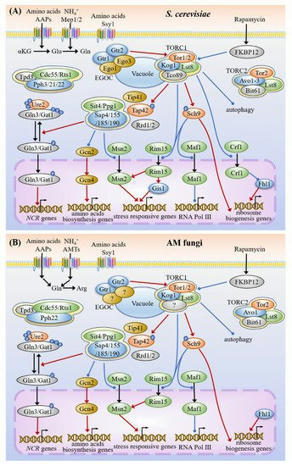
Arbuscular mycorrhizal (AM) fungi form a mutualistic symbiosis with a majority of terrestrial vascular plants. To achieve an efficient nutrient trade with their hosts, AM fungi sense external and internal nutrients, and integrate different hierarchic regulations to optimize nutrient acquisition and homeostasis during mycorrhization. However, the underlying molecular networks in AM fungi orchestrating the nutrient sensing and signaling remain elusive. Based on homology search, we here found that at least 72 gene components involved in four nutrient sensing and signaling pathways, including cAMP-dependent protein kinase A (cAMP-PKA), sucrose non-fermenting 1 (SNF1) protein kinase, target of rapamycin kinase (TOR) and phosphate (PHO) signaling cascades, are well conserved in AM fungi. Based on the knowledge known in model yeast and filamentous fungi, we outlined the possible gene networks functioning in AM fungi. These pathways may regulate the expression of downstream genes involved in nutrient transport, lipid metabolism, trehalase activity, stress resistance and autophagy. The RNA-seq analysis and qRT-PCR results of some core genes further indicate that these pathways may play important roles in spore germination, appressorium formation, arbuscule longevity and sporulation of AM fungi. We hope to inspire further studies on the roles of these candidate genes involved in these nutrient sensing and signaling pathways in AM fungi and AM symbiosis.
|
|
Scooped by
Jean-Michel Ané
July 28, 2021 5:15 PM
|
Native C4 grasses have become the preferred species for native perennial pastures and bioenergy production due to their high productivity under low soil nitrogen (N) status. One reason for their low N requirement is that C4 grasses may benefit from soil diazotrophs and promote biological N fixation. Our objective was to evaluate the impact of N fertilization rates (0, 67, and 202 kg N ha–1) and grass species (switchgrass [Panicum virgatum] and big bluestem [Andropogon gerardii]) on the abundance, activity, diversity, and community composition of soil diazotrophs over three agricultural seasons (grass green-up, initial harvest, and second harvest) in a field experiment in East Tennessee, United States. Nitrogen fertilization rate had a stronger influence on diazotroph population size and activity (determined by nifH gene and transcript abundances) and community composition (determined by nifH gene amplicon sequencing) than agricultural season or grass species. Excessive fertilization (202 kg N ha–1) resulted in fewer nifH transcripts compared to moderate fertilization (67 kg N ha–1) and decreased both richness and evenness of diazotrophic community, reflecting an inhibitory effect of high N application rates on soil diazotrophic community. Overall, cluster I and cluster III diazotrophs were dominant in this native C4 grass system. Diazotroph population size and activity were directly related to soil water content (SWC) based on structural equation modeling. Soil pH, SWC, and C and N availability were related to the variability of diazotrophic community composition. Our results revealed relationships between soil diazotrophic community and associated soil properties, adding to our understanding of the response of soil diazotrophs to N fertilization and grass species in native C4 grass systems.
|
|
Scooped by
Jean-Michel Ané
July 28, 2021 5:06 PM
|
Microbial symbioses can mitigate drought stress in crops but harnessing these beneficial interactions will require an in-depth understanding of root microbiome responses to drought cycles. Here, by detailed temporal characterization of root-associated microbiomes of rice plants during drought stress and recovery, we find that endosphere communities remained compositionally altered after rewatering, with prolonged droughts leading to decreased resilience. Several endospheric Actinobacteria were significantly enriched during drought and for weeks after rewatering. Notably, the most abundant endosphere taxon during this period was a Streptomyces, and a corresponding isolate promoted root growth. Additionally, drought stress disrupted the temporal dynamics of late-colonizing microorganisms, permanently altering the normal successional trends of root microbiota. These findings reveal that severe drought results in enduring impacts on rice root microbiomes, including enrichment of taxonomic groups that could shape the recovery response of the host, and have implications relevant to drought protection strategies using root microbiota.
|
|
Scooped by
Jean-Michel Ané
July 28, 2021 4:45 PM
|
Agriculture has an enormous environmental footprint. One of the best ways to mitigate climate change is to create balanced food systems based on sustainable agriculture. To reduce the chemical dependence scientists are engineering crop plants for N 2 fixation and they are focused on the biological process BNF (Biological Nitrogen Fixation) for the needs of N2 for crop plant soils. N2 fixed by the BNF process reduces the production cost, Green House gas (GHG) emissions, pollution of surface and ground water. Several management practices are there which influence BNF process in agricultural system. They are N- fertilization species genotype and cultivar and seeding ratios. Better management practices can help to improve N2 fixation. This review highlights the agro-economic importance of BNF and shows it as a cost effective, non- polluting way to improve the soil fertility and crop production.
|
|
Scooped by
Jean-Michel Ané
July 28, 2021 12:57 PM
|
Nitrogen is one of the most inaccessible plant nutrients, but certain species have overcome this limitation by establishing symbiotic interactions with nitrogen-fixing bacteria in the root nodule. This root nodule symbiosis (RNS) is restricted to species within a single clade of angiosperms, suggesting a critical evolutionary event at the base of this clade, which has not yet been determined. While genes implicated in the RNS are present in most plant species (nodulating or not), gene sequence conservation alone does not imply functional conservation - developmental or phenotypic differences can arise from variation in the regulation of transcription. To identify putative regulatory sequences implicated in the evolution of RNS, we aligned the genomes of 25 species capable of nodulation. We detected 3,091 conserved noncoding sequences (CNS) in the nitrogen-fixing clade that are absent from outgroup species. Functional analysis revealed that chromatin accessibility of 452 CNS significantly correlates with the differential regulation of genes responding to lipo-chitooligosaccharides in Medicago truncatula. These included 38 CNS in proximity to 19 known genes involved in RNS. Five such regions are upstream of MtCRE1, Cytokinin Response Element 1, required to activate a suite of downstream transcription factors necessary for nodulation in M. truncatula. Genetic complementation of a Mtcre1 mutant showed a significant association between nodulation and the presence of these CNS, when they are driving the expression of a functional copy of MtCRE1. Conserved noncoding sequences, therefore, may be required for the regulation of genes controlling the root nodule symbiosis in M. truncatula.
|
|
Scooped by
Jean-Michel Ané
July 28, 2021 9:45 AM
|
Associations between leguminous plants and symbiotic nitrogen-fixing rhizobia are a classic example of mutualism between a eukaryotic host and a specific group of prokaryotic microbes. Although this symbiosis is in part species specific, different rhizobial strains may colonize the same nodule. Some rhizobial strains are commonly known as better competitors than others, but detailed analyses that aim to predict rhizobial competitive abilities based on genomes are still scarce. Here, we performed a bacterial genome-wide association (GWAS) analysis to define the genomic determinants related to the competitive capabilities in the model rhizobial species Sinorhizobium meliloti. For this, 13 tester strains were green fluorescent protein (GFP) tagged and assayed versus 3 red fluorescent protein (RFP)-tagged reference competitor strains (Rm1021, AK83, and BL225C) in a Medicago sativa nodule occupancy test. Competition data and strain genomic sequences were employed to build a model for GWAS based on k-mers. Among the k-mers with the highest scores, 51 k-mers mapped on the genomes of four strains showing the highest competition phenotypes (>60% single strain nodule occupancy; GR4, KH35c, KH46, and SM11) versus BL225C. These k-mers were mainly located on the symbiosis-related megaplasmid pSymA, specifically on genes coding for transporters, proteins involved in the biosynthesis of cofactors, and proteins related to metabolism (e.g., fatty acids). The same analysis was performed considering the sum of single and mixed nodules obtained in the competition assays versus BL225C, retrieving k-mers mapped on the genes previously found and on vir genes. Therefore, the competition abilities seem to be linked to multiple genetic determinants and comprise several cellular components.
|
|
Scooped by
Jean-Michel Ané
July 28, 2021 9:34 AM
|
An international team of researchers from the Max Planck Institute for Plant Breeding Research and the University of Aarhus in Denmark have discovered that bacteria from the plant microbiota are adapted to their host species. In a newly published study, they show how root-associated bacteria have a competitive advantage when colonizing their native host, which allows them to invade an already established microbiota.
|
|
Scooped by
Jean-Michel Ané
July 26, 2021 5:09 PM
|
Roots of different plant species are colonized by bacterial communities, that are distinct even when hosts share the same habitat. It remains unclear to what extent the host actively selects these communities and whether commensals are adapted to a specific plant species. To address this question, we assembled a sequence-indexed bacterial culture collection from roots and nodules of Lotus japonicus that contains representatives of most species previously identified using metagenomics. We analysed taxonomically paired synthetic communities from L. japonicus and Arabidopsis thaliana in a multi-species gnotobiotic system and detected signatures of host preference among commensal bacteria in a community context, but not in mono-associations. Sequential inoculation experiments revealed priority effects during root microbiota assembly, where established communities are resilient to invasion by latecomers, and that host preference of commensal bacteria confers a competitive advantage in their cognate host. Our findings show that host preference in commensal bacteria from diverse taxonomic groups is associated with their invasiveness into standing root-associated communities.
|
|
Scooped by
Jean-Michel Ané
July 24, 2021 5:06 PM
|
New genetic engineering techniques have advanced the field of plant molecular biology, and Agrobacterium-mediated transformation has enabled the discovery of numerous molecular and genetic functions. It has been widely used in many plants, including the economically important crop, soybean. Large-scale genetic analyses are needed to comprehend the molecular mechanisms that underlie the agronomic traits of soybean, and the generation of stable transgenic plants involves a lengthy and laborious process. Agrobacterium rhizogenes-mediated hairy root transformation is a quick and efficient method for investigations of root-specific processes and interactions. Generation of composite plants with transgenic roots and wild-type shoots allows for the study of the genetic mechanisms involved in root biology, such as the Bradyrhizobium-soybean interaction. Here, we provide an updated protocol for generating hairy soybean roots in as little as 18 days in a cost- and space-effective manner and demonstrate possible uses of composite plants with soybean nodulation assays and gene expression analysis as examples. © 2021 Wiley Periodicals LLC.
|
|
Scooped by
Jean-Michel Ané
July 24, 2021 12:58 PM
|
Many woody and herbaceous plants in temperate forests cannot establish and survive in the absence of mycorrhizal associations. Most temperate forests are dominated by ectomycorrhizal woody plant species, which implies that the carrying capacity of the habitat for arbuscular mycorrhizal fungi (AMF) is relatively low and AMF could in some cases experience a limitation of propagules. Here we address how the AMF community composition varied in a small temperate forest site in Germany in relation to time, space, two plant host species, and also with regard to the degree to which plots were covered with AMF-associating woody species. The AMF communities in our study were non-random. We observed that space had a greater impact on fungal community composition than either time, mycorrhizal state of the close-by woody species, or the identity of the host plant. The identity of the host plant was the only parameter that modified AMF richness in the roots. The set of parameters which we addressed has rarely been studied together, and the resulting ranking could ease prioritizing some of them to be included in future surveys. AMF are crucial for the establishment of understory plants in temperate forests, making it desirable to further explore how they vary in time and space.
|
|
Scooped by
Jean-Michel Ané
July 24, 2021 12:41 PM
|
Some soil bacteria, called rhizobia, can interact symbiotically with legumes, in which they form nodules on the plant roots, where they can reduce atmospheric dinitrogen to ammonia, a form of nitrogen that can be used by growing plants. Rhizobium-plant combinations can differ in how successful this symbiosis is: for example, Sinorhizobium meliloti Rm1021 forms a relatively ineffective symbiosis with Medicago truncatula Jemalong A17, but Sinorhizobium medicae WSM419 is able to support more vigorous plant growth. Using proteomic data from free-living and symbiotic S. medicae WSM419, we previously identified a subset of proteins that were not closely related to any S. meliloti Rm1021 proteins and speculated that adding one or more of these proteins to S. meliloti Rm1021 would increase its effectiveness on M. truncatula A17. Three genes, Smed_3503, Smed_5985, and Smed_6456, were cloned into S. meliloti Rm1021 downstream of the E. coli lacZ promoter. Strains with these genes increased nodulation and improved plant growth, individually and in combination with one another. Smed_3503, renamed iseA (increased symbiotic effectiveness), had the largest impact, increasing M. truncatula biomass by 61%. iseA homologs were present in all currently sequenced S. medicae strains but were infrequent in other Sinorhizobium isolates. Rhizobium leguminosarum bv. viciae 3841 containing iseA led to more nodules on pea and lentil. Split-root experiments with M. truncatula A17 indicated that S. meliloti Rm1021 carrying the S. medicae iseA is less sensitive to plant-induced resistance to rhizobial infection, suggesting an interaction with the plant’s regulation of nodule formation.
|
|
Scooped by
Jean-Michel Ané
July 23, 2021 11:36 AM
|
The Tectona grandis L.f. (teak) is an important forest species with high economy value in Asia, Africa, and Latin America. In Latin America, Brazil is one of the countries with the most cultivated areas. The cultivation of teak turns out to be challenging because of its high nutritional demand and the need for seedling production by clonal propagation that includes about 90 days in the nursery phase. The optimization of seedling production is necessary for better results in the nursery and to enhance growth in the field. In this way, the well-known advantage of using microorganisms that promote plant development appears as a potential biotechnological approach to be explored and for the implantation of new areas of wood production. In this study, the inoculation of Bacillus subtilis as plant growth-promoting rhizobacteria (PGPR) was evaluated, and Rhizophagus clarus, an arbuscular mycorrhizal fungus (AMF), and the co-inoculation of these microorganisms in the teak seedling production phase can improve the development of commercial plantations under field conditions. Experiments were carried out under greenhouse and field conditions to evaluate four treatments based on the substrate inoculation of the seedlings. Treatments consisted of a non-inoculated control, PGPR inoculation, AMF inoculation, and PGPR + AMF inoculation. The results of the biometric evaluation of seedlings in the greenhouse showed that there was a significant difference in AMF inoculation and PGPR + AMF inoculation in terms of the specific root length and root density treatments, there was also a positive correlation between these two treatments and the absorption of some nutrients, such as P, N, K, Mg, Cu, Mn, and Zn. This response led to an increase between 4.75 and 11.04% in the field growth rate.
|
|
|
Scooped by
Jean-Michel Ané
July 28, 2021 5:27 PM
|
Background and Aims
Nitrogen fixation in legumes requires tight control of carbon and nitrogen balance. Thus, legumes control nodule numbers via an autoregulation mechanism. ‘Autoregulation of nodulation’ mutants super-nodulate and are thought to be carbon-limited due to the high carbon-sink strength of excessive nodules. This study aimed to examine the effect of increasing carbon supply on the performance of super-nodulation mutants.
Methods
We compared the responses of Medicago truncatula super-nodulation mutants (sunn-4 and rdn1-1) and wild type to five CO2 levels (300-850 μmol mol -1). Nodule formation and N2 fixation were assessed in soil-grown plants at 18 and 42 days after sowing.
Key results
Shoot and root biomass, nodule number and biomass, nitrogenase activity and fixed-N per plant of all genotypes increased with increasing CO2 concentration and reached the maximum around 700 μmol mol -1. While the sunn-4 mutant showed strong growth-retardation compared to wild-type plants, elevated CO2 increased shoot biomass and total N content of rdn1-1 mutant up to two-fold. This was accompanied by a four-fold increase in nitrogen fixation capacity in the rdn1-1 mutant.
Conclusions
These results suggest that the super-nodulation phenotype per se did not limit growth. The additional nitrogen fixation capacity of the rdn1-1 mutant may enhance the benefit of elevated CO2 on plant growth and N2 fixation.
|
|
Scooped by
Jean-Michel Ané
July 28, 2021 5:16 PM
|
Cicer canariense is a highly promiscuous wild chickpea nodulated by Mesorhizobium strains in La Palma Island located at Canary archipelago. Four of these strains, CCANP34, CCANP35T, CCANP38 and CCANP95 belong to a group phylogenetically close to Mesorhizobium caraganae with 100% similarity values in the 16S rRNA gene. However, the genomes of the strains CCANP35T and M. caraganae LMG 24397T obtained in this work showed ANIb and dDDH values of 90.02% and 44.1%, respectively. These values are lower than those currently accepted for different bacterial species showing that the Canarian strains do not belong to the species M. caraganae. The Canarian strains also differ from M. caraganae in the amounts of several fatty acids and in several phenotypic traits. Based on the obtained results the Canarian strains belong to a novel species for which we propose the name Mesorhizobium neociceri sp. nov. and whose type strain is CCANP35T. The results of the phylogenetic analyses of nodC and nifH symbiotic genes showed that the Canarian strains represent a novel symbiovar within genus Mesorhizobium phylogenetically divergent to that encompassing M. caraganae. We propose the names canariense and caraganae for the symbiovars encompassing the strains of M. neociceri and M. caraganae, respectively.
|
|
Scooped by
Jean-Michel Ané
July 28, 2021 5:09 PM
|
Early-diverging fungi (EDF) are distinct from Dikarya and other eukaryotes, exhibiting high N6-methyldeoxyadenine (6mA) contents, rather than 5-methylcytosine (5mC). As plants transitioned to land the EDF sub-phylum, arbuscular mycorrhizal fungi (AMF; Glomeromycotina) evolved a symbiotic lifestyle with 80% of plant species worldwide. Here we show that these fungi exhibit 5mC and 6mA methylation characteristics that jointly set them apart from other fungi. The model AMF, R. irregularis, evolved very high levels of 5mC and greatly reduced levels of 6mA. However, unlike the Dikarya, 6mA in AMF occurs at symmetrical ApT motifs in genes and is associated with their transcription. 6mA is heterogeneously distributed among nuclei in these coenocytic fungi suggesting functional differences among nuclei. While far fewer genes are regulated by 6mA in the AMF genome than in EDF, most strikingly, 6mA methylation has been specifically retained in genes implicated in components of phosphate regulation; the quintessential hallmark defining this globally important symbiosis.
|
|
Scooped by
Jean-Michel Ané
July 28, 2021 4:46 PM
|
The aim of the study was to determine the possibility of increasing the pea yields by improving the symbiotic nitrogen fixation through the use of a preparation containing bacterial Nod factors (NFs). Two pea cultivars were included in the experiment: Wiato (with traditional foliage) and Model (afila type). Before sowing, the seeds were soaked in distilled water (control) and in a preparation of Nod factors at a concentration of 10−12 M dm−3 H2O. As a result, of the Nod factor preparation use, an acceleration of the date and uniformity of pea plant emergence was observed. The treatment had also a positive effect on the number and weight of root nodules, which resulted in a significant increase in the yield of vegetative and generative plant organs. A positive effect of seed soaking with NFs preparation was also observed in the dynamics of pea weight increase, chlorophyll content in leaves and the values of gas exchange parameters. Model cultivar of pea had generally higher values of the analysed traits than Wiato, but the response of both cultivars to Nod factors was similar. This means that application of the preparation containing NFs, may improve the growth, development, and yield of both types of pea.
|
|
Scooped by
Jean-Michel Ané
July 28, 2021 1:01 PM
|
Beneficial Bacteria and Soil Hidden Helpers Below Ground The world’s soils are increasingly disappearing. But their living elements – beneficial bacteria – are capable of saving this valuable resource and helping crops thrive.
|
|
Scooped by
Jean-Michel Ané
July 28, 2021 9:48 AM
|
Here, we report the draft genome sequences of two nitrogen-fixing symbionts, Bradyrhizobium sp. strain sGM-13 and Bradyrhizobium sp. strain sBnM-33, isolated from root nodules of peanut grown on soil samples collected from two regions in South Tunisia. The draft genome sizes of these two strains are 8.31 × 10⁶ bp and 8.97 × 10⁶ bp, respectively.
|
|
Scooped by
Jean-Michel Ané
July 28, 2021 9:43 AM
|
Legumes of the Medicago genus have a symbiotic relationship with the bacterium Sinorhizobium meliloti and develop root nodules housing large numbers of intracellular symbionts. Members of the nodule-specific cysteine-rich peptide (NCR) family induce the endosymbionts into a terminal differentiated state. Individual cationic NCRs are antimicrobial peptides that have the capacity to kill the symbiont, but the nodule cell environment prevents killing. Moreover, the bacterial broad-specificity peptide uptake transporter BacA and exopolysaccharides contribute to protect the endosymbionts against the toxic activity of NCRs. Here, we show that other S. meliloti functions participate in the protection of the endosymbionts; these include an additional broad-specificity peptide uptake transporter encoded by the yejABEF genes and lipopolysaccharide modifications mediated by lpsB and lpxXL, as well as rpoH1, encoding a stress sigma factor. Strains with mutations in these genes show a strain-specific increased sensitivity profile against a panel of NCRs and form nodules in which bacteroid differentiation is affected. The lpsB mutant nodule bacteria do not differentiate, the lpxXL and rpoH1 mutants form some seemingly fully differentiated bacteroids, although most of the nodule bacteria are undifferentiated, while the yejABEF mutants form hypertrophied but nitrogen-fixing bacteroids. The nodule bacteria of all the mutants have a strongly enhanced membrane permeability, which is dependent on the transport of NCRs to the endosymbionts. Our results suggest that S. meliloti relies on a suite of functions, including peptide transporters, the bacterial envelope structures, and stress response regulators, to resist the aggressive assault of NCR peptides in the nodule cells.
|
|
Scooped by
Jean-Michel Ané
July 26, 2021 5:20 PM
|
•Plants are subjected to mechanical perturbations in their environment including those applied by microbes.
•Plants perceive and respond to mechanical stimuli from beneficial and pathogenic microbes.
•A combination of mechanical and chemical signals may be essential for appropriate responses of plants to beneficial and pathogenic microbes.
•The plant mechanical and defense response systems are closely inter-related.
|
|
Scooped by
Jean-Michel Ané
July 24, 2021 5:34 PM
|
Arbuscular mycorrhizal fungi (AMF) form mutualisms with most plant species. The model AMF Rhizophagus irregularis is common in many ecosystems and naturally forms homokaryons and dikaryons. Quantitative variation in allele frequencies in clonally dikaryon offspring suggests they disproportionately inherit two distinct nuclear genotypes from their parent. This is interesting, because such progeny strongly and differentially affect plant growth. Neither the frequency and magnitude of this occurrence nor its effect on gene transcription are known.
Using reduced representation genome sequencing, transcriptomics, and quantitative analysis tools, we show that progeny of homokaryons and dikaryons are qualitatively genetically identical to the parent. However, dikaryon progeny differ quantitatively due to unequal inheritance of nuclear genotypes. Allele frequencies of actively transcribed biallelic genes resembled the frequencies of the two nuclear genotypes.
More biallelic genes showed transcription of both alleles than monoallelic transcription, but biallelic transcription was less likely with greater allelic divergence. Monoallelic transcription levels of biallelic genes were reduced compared with biallelic gene transcription, a finding consistent with genomic conflict.
Given that genetic variation in R. irregularis is associated with plant growth, our results establish quantitative genetic variation as a future consideration when selecting AMF lines to improve plant production.
|
|
Scooped by
Jean-Michel Ané
July 24, 2021 12:59 PM
|
Legumes are important components for both smallholder and commercial agriculture in Zimbabwe in relation to food and income security and improvement of soil fertility through a symbiotic association with rhizobia. The efficiency of biological nitrogen fixation is largely unknown in most situations in Zimbabwe. While rhizobia inoculant is available for many legumes, only soybean is consistently inoculated. Native soybean rhizobia have not been genetically characterized or taxonomically identified.
The inoculation response of cowpea, groundnut, lablab, sunn hemp, pigeon pea and soybean was investigated under Zimbabwean field conditions, together with effects on a subsequent maize crop. Separately, soybean microsymbionts were obtained from soils with known inoculation histories from nine smallholder and three commercial farms to isolate naturalized inoculant strains and native rhizobia. Isolates were genetically characterized using partial recA gene sequences. Phylogenetic analysis of representative isolates was undertaken using recA, glnII, and 16S rDNA sequences. Symbiotic genes nifH and nodC were analysed. Isolates were screened for nitrogen fixation efficiency and the two best fixers per species were tested for compatibility with three soybean varieties under glasshouse conditions. The best isolate of each species was tested across different field sites in Zimbabwe.
Inoculation generally increased grain yield, shoot biomass and nitrogen accumulation. Maize biomass was higher when succeeding inoculated legumes than when succeeding uninoculated legumes. Partial recA gene sequencing grouped the isolates into four species: Bradyrhizobium diazoefficiens (13%), B. japonicum (21%), B. elkanii (61%) and B. ottawaense (5%). B. ottawaense had the widest host range across 13 legumes, followed by B. elkanii, B. diazoefficiens and B. japonicum. Phylogenetic analyses were consistent with vertical transmission of core genes and horizontal transfer of symbiotic genes. Based on symbiotic performance and edaphic competence, strains B. japonicum NAZ554 and NAZ710 and B. diazoefficiens NAZ629 were identified as potential elite inoculant strains for soybean in Zimbabwe.
|
|
Scooped by
Jean-Michel Ané
July 24, 2021 12:45 PM
|
•Human airway epithelial cells display the receptor LYSMD3 on their surface
•LYSMD3 contains a LysM (chitin-binding) domain and is able to bind chitin and fungi
•Chitin and fungi fuel cytokine release by binding LYSMD3 on airway epithelial cells
•LYSMD3 also binds β-glucan and therefore may also sense β-glucan
|
|
Scooped by
Jean-Michel Ané
July 23, 2021 11:36 AM
|
CRISPR/Cas ability to target several loci simultaneously (multiplexing) is a game-changer in plant breeding. Multiplexing not only accelerates trait pyramiding but also can unveil traits hidden by functional redundancy. Furthermore, multiplexing enhances dCas-based programmable gene expression and enables cascade-like gene regulation. However, the design and assembly of multiplex constructs comprising tandemly arrayed guide RNAs (gRNAs) requires scarless cloning and is still troublesome due to the presence of repetitive sequences, thus hampering a more widespread use. Here we present a comprehensive extension of the software-assisted cloning platform GoldenBraid (GB), in which, on top of its multigene cloning software, we integrate new tools for the Type IIS-based easy and rapid assembly of up to six tandemly-arrayed gRNAs with both Cas9 and Cas12a, using the gRNA-tRNA-spaced and the crRNA unspaced approaches, respectively. As stress tests for the new tools, we assembled and used for Agrobacterium-mediated stable transformation a 17 Cas9-gRNAs construct targeting a subset of the Squamosa-Promoter Binding Protein-Like (SPL) gene family in Nicotiana tabacum. The 14 selected genes are targets of miR156, thus potentially playing an important role in juvenile-to-adult and vegetative-to-reproductive phase transitions. With the 17 gRNAs construct we generated a collection of Cas9-free SPL edited T1 plants harboring up to 9 biallelic mutations and showing leaf juvenility and more branching. The functionality of GB-assembled dCas9 and dCas12a-based CRISPR/Cas activators and repressors using single and multiplexing gRNAs was validated using a Luciferase reporter with the Solanum lycopersicum Mtb promoter or the Agrobacterium tumefaciens nopaline synthase promoter in transient expression in Nicotiana benthamiana. With the incorporation of the new web-based tools and the accompanying collection of DNA parts, the GB4.0 genome edition turns an all-in-one open platform for plant genome engineering.
|


 Scoop.it!