Your new post is loading...

|
Scooped by
Jean-Michel Ané
July 23, 2021 11:36 AM
|
Salinity is a major abiotic stress that negatively impacts plant health and soil microbiota. ACC (1-aminocyclopropane carboxylic acid) deaminase producing microorganisms act as natural stress busters that protect plants from different kinds of stresses. The study focused on the isolation of potent, indigenous, multi-trait ACC deaminase producers. The shortlisted ACC deaminase producers were checked for their ability to promote growth of Cajanus cajan, and mitigate stress under laboratory conditions followed by validation of their potency in naturally saline field conditions. Physiological stress markers were assessed to evaluate the impact of salinity in plants treated with ACC deaminase producer, compared to controls. Further, the contribution of ACC deaminase in stress mitigation was demonstrated by using a chemical inhibitor for ethylene biosynthesis. This study presents a polyphasic approach, transitioning from the rhizospheric soil to the laboratory to validation in the field, and puts forth a promising eco-friendly alternative for sustainable agriculture.
|
|
Scooped by
Jean-Michel Ané
July 22, 2021 9:55 AM
|
Soil fungi establish mutualistic interactions with the roots of most vascular land plants. Arbuscular mycorrhizal (AM) fungi are among the most extensively characterised mycobionts to date.
The software AMFinder allows for automatic computer vision-based identification and quantification of AM fungal colonisation and intraradical hyphal structures on ink-stained root images using convolutional neural networks.
|
|
Scooped by
Jean-Michel Ané
July 22, 2021 9:41 AM
|
Carbonic anhydrase (CA) plays a vital role in photosynthetic tissues of higher plants, whereas its non-photosynthetic role in the symbiotic root nodule was rarely characterized. In this study, 13 CA genes were identified in the model legume Lotus japonicus by comparison with Arabidopsis CA genes. Using qPCR and promoter-reporter fusion methods, three previously identified nodule-enhanced CA genes (LjαCA2, LjαCA6, and LjβCA1) have been further characterized, which exhibit different spatiotemporal expression patterns during nodule development. LjαCA2 was expressed in the central infection zone of the mature nodule, including both infected and uninfected cells. LjαCA6 was restricted to the vascular bundle of the root and nodule. As for LjβCA1, it was expressed in most cell types of nodule primordia but only in peripheral cortical cells and uninfected cells of the mature nodule. Using CRISPR/Cas9 technology, the knockout of LjβCA1 or both LjαCA2 and its homolog, LjαCA1, did not result in abnormal symbiotic phenotype compared with the wild-type plants, suggesting that LjβCA1 or LjαCA1/2 are not essential for the nitrogen fixation under normal symbiotic conditions. Nevertheless, the nodule-enhanced expression patterns and the diverse distributions in different types of cells imply their potential functions during root nodule symbiosis, such as CO2 fixation, N assimilation, and pH regulation, which await further investigations.
|
|
Scooped by
Jean-Michel Ané
July 21, 2021 9:28 PM
|
By Barb Baylor Anderson Deficient soybean nodulation can cause dramatic yield loss due to nitrogen deficiency.In South Carolina, researchers believe development of diagnostic tools from image analysis, coupled with the rapid advancement and availability of aerial imagery, could become an important...
|
|
Scooped by
Jean-Michel Ané
July 21, 2021 1:42 PM
|
Arbuscular mycorrhizal fungi (AMF) regulate soil nutrient cycling, directly supplying a host plant with N. AMF can also affect the outcome of interspecific interactions, but a mechanistic understanding of how soil N availability affects AMF-mediated interspecific relationships is currently lacking. We selected one dominant (Bothriochloa ischaemum; C4 grass) and one subordinate (Lespedeza davurica; legume) species in a natural grassland climax community to investigate the mechanism by which AMF influence interspecific interaction (mixed- and monoculture) under three levels of N addition (0, low, and high N addition). Under the non-N addition treatment, AMF preferentially supplied N to the roots of B. ischaemum at the expense of N uptake by L. davurica, resulting in inhibited AMF benefits for L. davurica shoot growth. Under the low N addition treatment, interspecific interaction via AMF promoted L. davurica growth. Compared to the non-N addition treatment, N addition largely mitigated the effects, both positive (for B. ischaemum) and negative (for L. davurica), of AMF-mediated interspecific interaction on plant N uptake via AMF. When soil N availability severely limited plant growth, preferential N supply to the C4 grass by AMF was important for maintaining the abundance of the dominant species. When the N limitation for plant growth was alleviated by N addition, the interaction between AMF and soil microorganisms improved nutrient availability for the legume by stimulating activity of the enzyme responsible for soil organic matter mineralisation, which is important for maintaining the abundance of the subordinate species. These data could influence strategies for maintaining biodiversity.
|
|
Scooped by
Jean-Michel Ané
July 21, 2021 1:01 PM
|
Symbiosis between organisms influences their evolution via adaptive changes in genome architectures. Immunity of soybean carrying the Rj2 allele is triggered by NopP (type III secretion system [T3SS]-dependent effector), encoded by symbiosis island A (SymA) in B. diazoefficiens USDA122. This immunity was overcome by many mutants with large SymA deletions that encompassed T3SS (rhc) and N2 fixation (nif) genes and were bounded by insertion sequence (IS) copies in direct orientation, indicating homologous recombination between ISs. Similar deletion events were observed in B. diazoefficiens USDA110 and B. japonicum J5. When we cultured a USDA122 strain with a marker gene sacB inserted into the rhc gene cluster, most sucrose-resistant mutants had deletions in nif/rhc gene clusters, similar to the mutants above. Some deletion mutants were unique to the sacB system and showed lower competitive nodulation capability, indicating that IS-mediated deletions occurred during free-living growth and the host plants selected the mutants. Among 63 natural bradyrhizobial isolates, 2 possessed long duplications (261–357 kb) harboring nif/rhc gene clusters between IS copies in direct orientation via homologous recombination. Therefore, the structures of symbiosis islands are in a state of flux via IS-mediated duplications and deletions during rhizobial saprophytic growth, and host plants select mutualistic variants from the resultant pools of rhizobial populations. Our results demonstrate that homologous recombination between direct IS copies provides a natural mechanism generating deletions and duplications on symbiosis islands.
|
|
Scooped by
Jean-Michel Ané
July 21, 2021 12:59 PM
|
Ectomycorrhiza is the symbiotic interacting between fungal hyphae and plant roots. The fungus provides the plant with nutrients mobilized from soil and the plant delivers carbohydrates from photosynthesis in exchange. Former studies showed an up-regulation of genes coding for the transcription factor dehydration responsive element binding factor 1 (DREB1) and for one facilitator of the gene family sugar will be eventually exported transporter (SWEET1) in the model organism poplar. While SWEET1 was shown to be involved as glucose transporter in diverse associations like pathogenic interactions, rhizobia nodules and arbuscular mycorrhiza, no link between DREB1 and such biotic interactions is reported. The Arabidopsis DREB1 homolog was shown to be involved in the regulation process of abscisic acid signaling and glucose related pathways. Aim of the thesis was the in vivo analysis of promoter fragments of the mentioned genes.
For analysis promoter reporter constructs should be expressed in transgenic composite poplar. To distinguish between transgenic and non-transgenic roots, firstly a second, visual marker under control of a constitutive promoter should be integrated into the plant transformation vector. This step was necessary, since no classical selection procedure can be performed during composite plant generation leading to transgenic and non-transgenic roots emerging from the transformed shoot. A nuclear targeted Td-Tomato under control of the nopaline synthase (NOS) promoter turned out to give clear signals in poplar roots and was chosen as visual selection marker.
Furthermore different binary vectors were tested for their transformation efficiency in composite poplar. The pCAMBIA-based vector pCXUN showed compared to pBi121 and the p-Green-based vector pPLV significantly increased transformation efficiency. To monitor expression of the promoter of interest, nuclear targeted super yellow fluorescence protein (sYFP) and double green fluorescence protein (dGFP) were analyzed. DGFP showed higher signal intensity in poplar roots and distinct localization to the nucleus in comparison to sYFP and was therefore used as marker gene in the final binary vector.
Furthermore a transient expression system for poplar leaves was established, to analyze the activity of ectomycorrhiza induced promoters for their root specificity. Different techniques were tested and the infiltration of the fragile poplar leaves turned out to be most successful. The transient expression in poplar turned out to be not as robust as the infiltration of model organism N. benthamiana, but it enables a fast, transient expression in poplar.
The newly composed vector pCXUN04NOS was used to analyze promoter fragments of DREB1 (3.2 kb) and SWEET1 (3.4 kb) for ectomycorrhiza dependent expression localization in composite poplar and expression in leaf tissue. To compare expression in mycorrhized and non-mycorrhized roots, composite plants were mycorrhized using the ectomycorrhiza fungi Pisolithus microcarpus and Amanita muscaria. The generated results stand in contrasted to previous expression data, since no ectomycorrhiza induced expression could be detected. Furthermore both fragments showed expression in leaf tissue of N. benthamiana and P. tremula x alba. These results indicate that the investigated promoter fragments did not contain all cis-elements important for ectomycorrhiza specific expression.
|
|
Scooped by
Jean-Michel Ané
July 21, 2021 12:49 PM
|
In response to abiotic stresses, plants mount comprehensive stress-specific responses which mediate signal transduction cascades, transcription of relevant responsive genes and the accumulation of numerous different stress-specific transcripts and metabolites, as well as coordinated stress-specific biochemical and physiological readjustments. These natural mechanisms employed by plants are however not always sufficient to ensure plant survival under abiotic stress conditions. Biostimulants such as plant growth-promoting rhizobacteria (PGPR) formulation are emerging as novel strategies for improving crop quality, yield and resilience against adverse environmental conditions. However, to successfully formulate these microbial-based biostimulants and design efficient application programs, the understanding of molecular and physiological mechanisms that govern biostimulant-plant interactions is imperatively required. Systems biology approaches, such as metabolomics, can unravel insights on the complex network of plant-PGPR interactions allowing for the identification of molecular targets responsible for improved growth and crop quality. Thus, this review highlights the current models on plant defence responses to abiotic stresses, from perception to the activation of cellular and molecular events. It further highlights the current knowledge on the application of microbial biostimulants and the use of epigenetics and metabolomics approaches to elucidate mechanisms of action of microbial biostimulants. View Full-Text
|
|
Scooped by
Jean-Michel Ané
July 21, 2021 12:48 PM
|
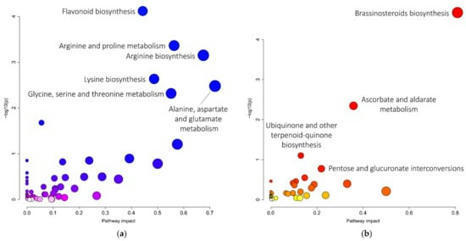
Paraburkholderia phymatum STM815 is a nitrogen-fixing endosymbiont that nodulate the agriculturally important Phaseolus vulgaris and several other host plants. We previously showed that the nodules induced by a STM815 mutant of the gene encoding the master regulator of nitrogen fixation NifA showed no nitrogenase activity (Fix−) and increased in number compared to P. vulgaris plants infected with the wild-type strain. To further investigate the role of NifA during symbiosis, nodules from P. phymatum wild-type and nifA mutants were collected and analyzed by metabolomics and dual RNA-Sequencing, allowing us to investigate both host and symbiont transcriptome. Using this approach, several metabolites’ changes could be assigned to bacterial or plant responses. While the amount of the C4-dicarboxylic acid succinate and of several amino acids was lower in Fix− nodules, the level of indole-acetamide (IAM) and brassinosteroids increased. Transcriptome analysis identified P. phymatum genes involved in transport of C4-dicarboxylic acids, carbon metabolism, auxin metabolism and stress response to be differentially expressed in absence of NifA. Furthermore, P. vulgaris genes involved in autoregulation of nodulation (AON) are repressed in nodules in absence of NifA potentially explaining the hypernodulation phenotype of the nifA mutant. These results and additional validation experiments suggest that P. phymatum STM815 NifA is not only important to control expression of nitrogenase and related enzymes but is also involved in regulating its own auxin production and stress response. Finally, our data indicate that P. vulgaris does sanction the nifA nodules by depleting the local carbon allocation rather than by mounting a strong systemic immune response to the Fix− rhizobia. View Full-Text
|
|
Scooped by
Jean-Michel Ané
July 21, 2021 12:43 PM
|
Arbuscular mycorrhizal (AM) fungi are key soil symbiotic microorganisms, intensively studied for their roles in improving plant fitness and their ubiquity in terrestrial ecosystems. Research on AM fungi is difficult because their obligate biotrophic nature makes it impossible to culture them in the absence of a host. Over the last three decades, Ri T-DNA transformed roots have been the gold standard to study AM fungi under in vitro conditions. However, only two host plant species (Daucus carota and Cichorium intybus) have been routinely used to in vitro propagate less than 5% of the known AM fungal species. There is much evidence that host identity can significantly affect AM symbioses, therefore, we investigated any potential host-specific effects of two novel Ri T-DNA transformed root species, Medicago truncatula and Nicotiana benthamiana, by associating them with seven AM fungal species selected based on their contrasting behaviors when grown with Ri T-DNA transformed D. carota roots. To evaluate the performance of new Ri T-DNA transformed roots to host and propagate AM fungal species, a factorial set-up was used to generate nine unique pairs of hosts (M. truncatula, N. benthamiana, D. carota) and AM fungi (Rhizophagus irregularis, R. clarus, Glomus sp.). Using statistical modeling, all pairs of hosts and AM fungi were compared by their symbiosis development (SD) and sporulation patterns in the hyphal compartments (HCs) of two-compartment Petri dishes. Our results show that 1) most of the variation between host and AM fungus pairs relating to SD or HC sporulation was explained by an interaction between host and AM fungal identity, i.e., host identity alone was not sufficient to explain AM fungal behaviour, 2) AM symbioses involving different combinations of symbiont identities trigger heterogenous fungal behaviours. This work provides a robust framework to develop and evaluate new Ri T-DNA roots for the in vitro propagation of AM fungi, an important asset for germplasm collections and biodiversity preservation.
|
|
Scooped by
Jean-Michel Ané
July 19, 2021 3:10 PM
|
Trees that communicate, care for one another and foster cooperative communities have captured the popular imagination, most notably in Suzanne Simard’s much-praised book Finding the Mother Tree, soon to be a movie, and in other works like James Cameron’s Avatar, Peter Wohlleben’s The Hidden Life of Trees and Richard Powers’ Pulitzer Prize–winning novel The Overstory.
But many scientists like myself believe these depictions misrepresent ecosystems and harm the cause of conservation.
Do trees really talk? Sure. Plants emit hormones and defense signals. Other plants detect these signals and alter their physiology accordingly. But not all the talk is kind; plants also produce allelochemicals, which poison their neighbors.
|
|
Scooped by
Jean-Michel Ané
July 18, 2021 10:45 PM
|
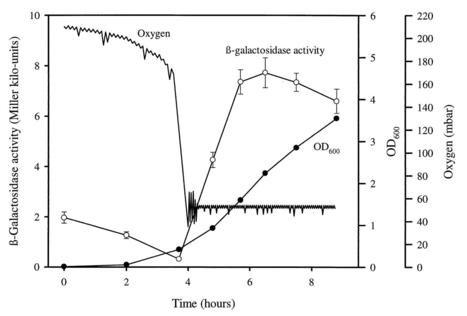
The root-colonizing bacterium Pseudomonas fluorescensCHA0 was used to construct an oxygen-responsive biosensor. An anaerobically inducible promoter of Pseudomonas aeruginosa, which depends on the FNR (fumarate and nitrate reductase regulation)-like transcriptional regulator ANR (anaerobic regulation of arginine deiminase and nitrate reductase pathways), was fused to the structural lacZ gene of Escherichia coli. By inserting the reporter fusion into the chromosomalattTn7 site of P. fluorescens CHA0 by using a mini-Tn7 transposon, the reporter strain, CHA900, was obtained. Grown in glutamate-yeast extract medium in an oxystat at defined oxygen levels, the biosensor CHA900 responded to a decrease in oxygen concentration from 210 × 102 Pa to 2 × 10² Pa of O2 by a nearly 100-fold increase in β-galactosidase activity. Half-maximal induction of the reporter occurred at about 5 × 10² Pa. This dose response closely resembles that found for E. colipromoters which are activated by the FNR protein. In a carbon-free buffer or in bulk soil, the biosensor CHA900 still responded to a decrease in oxygen concentration, although here induction was about 10 times lower and the low oxygen response was gradually lost within 3 days. Introduced into a barley-soil microcosm, the biosensor could report decreasing oxygen concentrations in the rhizosphere for a 6-day period. When the water content in the microcosm was raised from 60% to 85% of field capacity, expression of the reporter gene was elevated about twofold above a basal level after 2 days of incubation, suggesting that a water content of 85% caused mild anoxia. Increased compaction of the soil was shown to have a faster and more dramatic effect on the expression of the oxygen reporter than soil water content alone, indicating that factors other than the water-filled pore space influenced the oxygen status of the soil. These experiments illustrate the utility of the biosensor for detecting low oxygen concentrations in the rhizosphere and other soil habitats.
|
|
Scooped by
Jean-Michel Ané
July 18, 2021 10:31 PM
|
•Organic and conventional farming systems displayed similar AMF diversity levels.
•The organic and conventional farming systems harboured distinct AMF communities.
•The AMF diversity and community composition were resistant to the experimental drought.
•No interactive effect between farming systems and experimental drought on AMF was detected.
|
|
|
Scooped by
Jean-Michel Ané
July 23, 2021 9:49 AM
|
Abstract- The rhizobium-legume symbiosis that occurs within root nodules provides a crucial way for legumes to acquire nitrogen under nitrogen limited conditions. Legumes tightly regulate nodule number to balance the cost of supporting rhizobial proliferation inside nodules with the benefits of nitrogen fixation. C-TERMINALLY ENCODED PEPTIDEs (CEPs) are 15 amino acid peptides are root-to-shoot signals that are made under low N conditions. CEPs, which play roles in the inhibition of lateral root number under nitrogen limited conditions, nitrogen demand signalling, as well as the allocation of carbon and nitrogen to strong sinks, also positively control root nodule number in Medicago. My thesis investigated the interaction of CEP7 with its putative receptor, COMPACT ROOT ARCHITECTURE2 (CRA2). Quantitative qRT-PCR, genetic, and physiological assays show that the induction of CEP7 depends on rhizobia and intact Sym pathway rather than low nitrogen, and CEP7 positively regulates rhizobial infection and nodulation. Using mass spectrometry, I identify the mature in vivo structure of the predominant peptide product of CEP7 and showed that it promotes nodule number without affecting lateral root number. I termed this peptide SymCEP7, since it is the only peptide discovered so far that affects nodule number without affecting lateral root number. I demonstrated that SymCEP7’s hydroxylation pattern is crucial for its symbiosis specific biological activity. Confocal imaging showed that FITC-labelled CEP7 binds to shoot vascular tissue in wild type but not in the cra2 mutant, which support CRA2 being the receptor for CEP7. Grafting and split root studies show that CEP7 increases nodule number systemically through CRA2 in shoots. Physiological and confocal approaches show that SymCEP7 applied to shoots is more potent and acts more rapidly to control nodule number than CEP7 applied to roots. I also demonstrate that CEP7 is phylogenetically and functionally conserved in other legume species. These findings identify a unique and specific role for CEP7-CRA2 in the regulation of symbiotic nodule number, which may be conserved across legume species.
|
|
Scooped by
Jean-Michel Ané
July 22, 2021 9:46 AM
|
Background
Global warming can alter plant productivity, and community composition which has consequences for soil-plant associated microorganisms. Arbuscular mycorrhizal fungi (AMF) are distributed widely and form symbiotic relationships with more than 80% of vascular plants and play a key role in nutrient cycling processes at the ecosystem scale.
Methods
A simulated warming experiment at multiple elevations (3,000, 3,500, 3,800, and 4,170 m) was conducted utilizing an in-situ open-top chamber (OTC) for exploring the effect of global warming on AMF community structure in the Qinghai-Tibet Plateau (QTP). This region has been identified as one of the most sensitive areas to climatic changes. Soil DNA was extracted and sequenced using next the Mi-Seq platform for diversity profiling.
Results
AMF richness was higher under the simulated warming chamber, however this only occurred in the elevation of 3,500 m. Warming did not alter other AMF alpha diversity indices (e.g. Shannon, Ace, and Simpson evenness index). Glomus and Acaulospora were the dominate AMF genera as assessed through their relative abundance and occurrence in control and warming treatments at the different elevations.
Conclusion
Warming changed significantly AMF community. The effects of warming on AMF community structure varied depend on elevations. Moreover, the occurrences of AMF in different genera were also presented the different responses to warming in four elevations.
|
|
Scooped by
Jean-Michel Ané
July 21, 2021 9:31 PM
|
The nitrogen-fixing microbe Azotobacter vinelandii has the ability to produce three genetically distinct, but mechanistically similar, components that catalyze nitrogen fixation. For two of these components, the Mo-dependent and V-dependent components, their corresponding metal-containing active site cofactors, designated FeMo-cofactor and FeV-cofactor, respectively, are preformed on separate molecular scaffolds designated NifEN and VnfEN, respectively. From prior studies, and the present work, it is now established that neither of these scaffolds can replace the other with respect to their in vivo cofactor assembly functions. Namely, a strain inactivated for NifEN cannot produce active Mo-dependent nitrogenase nor can a strain inactivated for VnfEN produce an active V-dependent nitrogenase. It is therefore proposed that metal specificities for FeMo-cofactor and FeV-cofactor formation are supplied by their respective assembly scaffolds. In the case of the third, Fe-only component, its associated active site cofactor, designated FeFe-cofactor, requires neither the NifEN nor VnfEN assembly scaffold for its formation. Furthermore, there are no other genes present in A. vinelandii that encode proteins having primary structure similarity to either NifEN or VnfEN. It is therefore concluded that FeFe-cofactor assembly is completed within its cognate catalytic protein partner without the aid of an intermediate assembly site.
|
|
Scooped by
Jean-Michel Ané
July 21, 2021 1:45 PM
|
The plant hormone cytokinin (CK) is an important developmental regulator, promoting morphogenesis and delaying differentiation and senescence. From developmental processes, to growth, to stress tolerance, CKs are central in plant life. CKs are also known to mediate plant immunity and disease resistance, and several classes of microbes can also produce CKs, affecting the interaction with their plant hosts. While host species and genotype can be a driving force in shaping the plant microbiome, how plant developmental hormones such as CK can shape the microbiome is largely uninvestigated. Here, we examined the relationship between CK and the phyllosphere microbiome, finding that CK acts as a selective force in microbiome assembly, increasing richness, and promoting the presence of Firmicutes. CK-mediated immunity was found to partially depend on the microbial community, and bacilli isolated from previously described CK-rich plant genotypes, which overexpress a CK biosynthesis gene or have increased CK sensitivity, induced plant immunity, and promoted disease resistance. Using a biomimetic system, we investigated the relationship between the leaf microstructure, which is differentially patterned upon changes in CK content or signaling, and the growth of different phyllosphere microbes. We found that leaf structures derived from CK-rich plant genotypes support bacilli in the biomimetic system. CK was able to promote the growth, swarming, and biofilm formation of immunity inducing bacillus isolates in vitro. Overall, our results indicate that host genotype and hormonal profiles can act as a strong selective force in microbiome assembly, underlying differential immunity profiles, and pathogen resistance as a result.
|
|
Scooped by
Jean-Michel Ané
July 21, 2021 1:42 PM
|
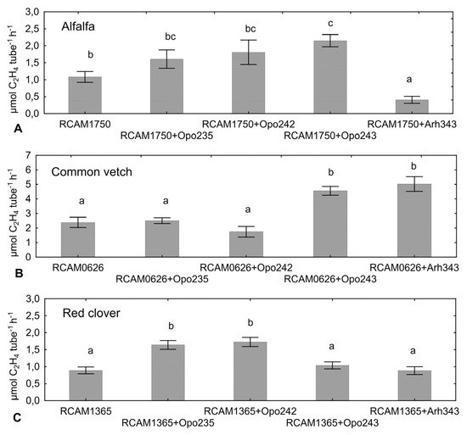
The phenomenon of rhizobial synergy was investigated to increase the efficiency of nitrogen-fixing symbiosis of alfalfa (Medicago varia Martyn), common vetch (Vicia sativa L.) or red clover (Trifolium pratense L.). These plants were co-inoculated with the respective commercial strains Sinorhizobium meliloti RCAM1750, Rhizobium leguminosarum RCAM0626 or R. leguminosarum RCAM1365 and with the strains Mesorhizobium japonicum Opo-235, M. japonicum Opo-242, Bradyrhizobium sp. Opo-243 or M. kowhaii Ach-343 isolated from the relict legumes Oxytropis popoviana Peschkova and Astragalus chorinensis Bunge. The isolates mentioned above had additional symbiotic genes (fix, nif, nod, noe and nol) as well as the genes promoting plant growth and symbiosis formation (acdRS, genes associated with the biosynthesis of gibberellins and auxins, genes of T3SS, T4SS and T6SS secretion systems) compared to the commercial strains. Nodulation assays showed that in some variants of co-inoculation the symbiotic parameters of plants such as nodule number, plant biomass or acetylene reduction activity were increased. We assume that the study of microbial synergy using rhizobia of relict legumes will make it possible to carry out targeted selection of co-microsymbionts to increase the efficiency of agricultural legume–rhizobia systems.
|
|
Scooped by
Jean-Michel Ané
July 21, 2021 1:00 PM
|
Farmers, so-called the father of land, have a tremendous responsibility to feed the world. The demand for agricultural yield is constantly surging, and the resources that provide this agricultural yield is limited. This imbalance has forced farmers to treat their crops with chemicals to improve yield. These chemical substances are broadly classified as chemical fertilizers and chemical pesticides. A century ago, these chemicals were thought to be a boon for farmers, and the golden age of chemistry was parallel being witnessed in agriculture. The constant use of these chemicals in soil over several years has ultimately exposed its dark side, as its detrimental impact is well spread from diminishing farmer-friendly nematodes like earth warms to a culprit in causing cancer in vertebrates. Therefore, an alternative to these chemicals is inevitable to be provided in the agriculture system for sustainable development. The answer to this hurdle is obtained in the form of the microbiome of soil that interacts with plants and helps it by symbiotic associations. Some members of microbes found in this microbiome are to be identified that has a positive impact on plant growth and is apotheosized to be used as a biological alternative to chemical fertilizers. Such microbes are broadly classified as Plant-Growth-Promoting Rhizobacteria (PGPR) and Plant-Growth-Promoting Fungi (PGPF) microbiome. The association of such Phyto-friendly microbes is well characterized by researchers globally and is depicted in this review.
|
|
Scooped by
Jean-Michel Ané
July 21, 2021 12:54 PM
|
Symbiotic nitrogen fixation is a complex and regulated process that takes place in root nodules of legumes and allows legumes to grow in soils that lack nitrogen. Nitrogen is mostly acquired from the soil as nitrate and its level in the soil affects nodulation and nitrogen fixation. The mechanism(s) by which legumes modulate nitrate uptake to regulate nodule symbiosis remain unclear. In Medicago truncatula, the MtNPF1.7 transporter has been shown to control nodulation, symbiosis, and root architecture. MtNPF1.7 belongs to the nitrate/peptide transporter family and is a symporter with nitrate transport driven by proton(s). In this study we combined in silico structural predictions with in planta complementation of the severely defective mtnip-1 mutant plants to understand the role of a series of distinct amino acids in the transporter’s function. Our results support hypotheses about the functional importance of the ExxE(R/K) motif including an essential role for the first glutamic acid of the motif in proton(s) and possibly substrate transport. Results reveal that Motif A, a motif conserved among major facilitator transport (MFS) proteins, is essential for function. We hypothesize that it participates in intradomain packing of transmembrane helices and stabilizing one conformation during transport. Our results also question the existence of a putative TMH4-TMH10 salt bridge. These results are discussed in the context of potential nutrient transport functions for MtNPF1.7. Our findings add to the knowledge of the mechanism of alternative conformational changes as well as symport transport in NPFs and enhance our knowledge of the mechanisms for nitrate signaling.
|
|
Scooped by
Jean-Michel Ané
July 21, 2021 12:48 PM
|
Arbuscular mycorrhizal fungi are fundamental in field stress management and agricultural yield. In general, the rhizosphere microbiome holds enormous potential to increase crop yields and mitigate both diseases and abiotic stress factors through rhizobacteria and mycorrhizae. Modern inoculum-based biotechnology will be increasingly incorporated into common practice. Our perspective is that new inoculum consortia applications will be developed every year. In addition to increasing the productivity of agricultural systems, these innovations are important for sustainability, to reduce agriculture's polluting environmental impact.
|
|
Scooped by
Jean-Michel Ané
July 21, 2021 12:46 PM
|
Plant interspecific interactions can be influenced by common mycorrhizal networks (CMNs), which mediate nutrient trade (rarely focused on K and such fungal benefits), but the involved mechanisms remain unclear. To test whether and how CMNs mediate nutrient trade to benefit individuals during interspecific interactions, the growth advantage and K distribution in tomato/potato-onion system were studied using root exclusion compartments and 41K labeling in multi-compartment systems. Intercropping increased plant dry weight, percentage root length colonized by hyphae and arbuscules and K content of tomato, but decreased those of potato-onion. Damaging the CMNs decreased the effects of such positive interspecific interactions on growth and nutrition of tomato and re-established CMNs connection could partially recover the positive effects. A strong asymmetric transfer of K between plants occurred as potato-onion transferred more labeled 41K to tomato than that transferred from tomato to potato-onion.
|
|
Scooped by
Jean-Michel Ané
July 21, 2021 12:41 PM
|
Arbuscular mycorrhizal fungi (AMF) species are essential for sustainable agriculture of legume crops; however, the AMF response in legume crops, especially from the perspective of physiological and molecular mechanisms under salinity conditions, is largely unknown. In this study, peanut (Arachis hypogaea L.) seeds were inoculated with AMF to investigate its salinity stress alleviation effects using the pot-grown and 2-year field experiments. Seeds from two peanut cultivars (HY22 and HY25) were inoculated with AMF Rhizophagus irregularis SA and Funneliformis mosseae BEG95 (1:1), and the physiological and transcriptional responses were compared between the AMF-inoculated and non-inoculated peanut plants. Under the salinity stress, compared with the control samples, the AMF-inoculated plants showed higher net photosynthetic rate, leaf relative water content (RWC), plant height, osmolyte accumulation, but lower leaf relative electrolyte conductivity (REC). Also, the malondialdehyde (MDA) concentration was reduced while the antioxidant enzymes such as superoxide dismutase (SOD), guaiacol peroxidase (G-POD), catalase (CAT), and ascorbate peroxidase (APX) were activated. Furthermore, transcriptome data revealed that AMF potentially alleviates salt stress by regulating redox processes, cell wall assembly, cell growth, and other similar processes. In the 2-year field experiment, AMF-inoculated peanut seeds of HY22 and HY25 were cultivated in both non-saline and saline soils. Under salinity conditions, AMF inoculation induced the total protein concentration by 11.11 and 2.32% in kernels and further increased the peanut pod yield by 21.83 and 21.89% in HY22 and HY25, respectively. In non-saline soil too, AMF increased the peanut pod yield by 11.47 and 23.98% in HY22 and HY25, respectively. Taken together, these results strongly demonstrate that the combination of AMF Rhizophagus irregularis SA and Funneliformis mosseae BEG95 (1:1) can alleviate salinity stress in peanuts by improving plant growth, photosystem, and antioxidant system. Additionally, it increases the peanut pod yield under both normal and salinity conditions.
|
|
Scooped by
Jean-Michel Ané
July 18, 2021 10:46 PM
|
The subterranean microbiota of plants are of great importance for plant growth and health, as root-associated microbes can perform crucial ecological functions. As the microbial environment of roots is extremely diverse, identifying keystone microorganisms in plant roots, rhizosphere and bulk soil is a necessary step towards understanding the network of influence within the microbial community associated with roots and enhancing its beneficial elements. To target these hot spots of microbial interaction, we used inter-kingdom network analysis on the canola growth phase of a long-term cropping system diversification experiment conducted at four locations in the Canadian prairies. Our aims were: to verify whether bacterial and fungal communities of canola roots, rhizosphere and bulk soil are related and influenced by diversification of the crop rotation system; to determine whether there are common or specific core fungi and bacteria in the roots, rhizosphere, and bulk soil under canola grown in different environments and with different levels of cropping system diversification; and to identify hub taxa at the inter-kingdom level that could play an important ecological role in the microbiota of canola. Our results showed that fungi were influenced by crop diversification but not by bacteria. We found no core microbiota in canola roots but identified three core fungi in the rhizosphere, one core mycobiota in the bulk soil and one core bacteria shared by the rhizosphere and bulk soil. We identified two bacterial and one fungal hub taxa in the inter-kingdom networks of the canola rhizosphere, and one bacterial and two fungal hub taxa in the bulk soil. Among these inter-kingdom hub taxa, Bradyrhizobium sp. and Mortierella sp. are particularly influential on the microbial community and the plant. To our knowledge, this is the first inter-kingdom network analysis utilized to identify hot spots of interaction in canola microbial communities.
|
|
Scooped by
Jean-Michel Ané
July 18, 2021 10:38 PM
|
1. Crop diversity management is widely used to increase agricultural productivity and sustainability. Recent studies have demonstrated that maize root exudates can drive interspecific facilitation to enhance N2 fixation of bean in intercropping systems. However, the mechanisms of N2 fixation enhancement stimulated by root exudates in the intercropping systems remain unclear.
2. Four experiments were designed to provide a progressively deeper understanding of how root exudates stimulate microbial-mediated N2 fixation. First, the effects of faba bean/maize intercropping on yields and soil microbial communities were determined in a field experiment. Second, root-derived interspecific facilitation was evaluated using a root partitioning approach. Third, the key microbial taxa in the faba bean rhizosphere were traced using 13C-labeled maize root exudates. Fourth, the codriven mechanism of maize root exudates and microorganisms in the faba bean rhizosphere were explored.
3. Faba bean/maize intercropping with maize residue return increased the yields of faba bean (26%), maize (27%), and broccoli (9.1%) compared to that under monocropping. Nodulin-like 4 (NODL4), chalcone-flavanone isomerase (CFI), and early nodulin-like (ENODL2) gene expression in faba bean roots intercropped with maize increased by 1.5-2.3-fold compared to that observed under monoculture. More than half of the N2 fixation of faba bean increase under intercropping was due to interactions with microorganisms. Nine key bacterial genera in the faba bean rhizosphere were identified by 13C-DNA based stable isotope probing analysis. Among them Agromyces, Arthrobacter, Bacillus, Lysobacter, and Paenibacillus directly fix N2, while Gemmatimonas, Heliobacillus, Natronocella, and Sorangium increase the N2 fixation capacity of Azotobacter by providing additional carbon sources. These key bacteria triggered by maize root exudates played an important role in the rhizosphere facilitation of intercropping.
4. Synthesis and applications. We demonstrated a novel root-root facilitation of N2 fixation and increased crop yields codriven by root exudates and rhizosphere bacteria under faba bean/maize intercropping, and nine key bacteria associated with this process were identified by 13C-DNA based stable isotope probing. We recommend the adoption and optimization of intercropping systems with residue return to reduce the shortcomings of continuous cropping and to increase the sustainability of crop production.
|