 Your new post is loading...

|
Scooped by
Jean-Michel Ané
September 29, 2021 9:34 PM
|
Arbuscular mycorrhizal fungi (AMF) form symbiotic associations with 80% of surveyed land plant species and are well-recognized for accessing and transferring nutrients to plants1. Yet AMF also perform other essential functions, notably improving plant-water relations2. Some research attributes the role of AMF in plant-water relations solely to enhancing plant nutrition and osmoregulation for plants partnered with AMF3,4,5, while indirect evidence suggests AMF may transport water to plants1,6,7. Here, we used isotopically-labeled water and a fluorescent dye to directly track and quantify water transport by AMF to plants in a greenhouse experiment. We specifically assessed whether AMF can access water in soil unavailable to plants and transport it across an air gap to host plants. Plants grown with AMF that had access to a physically separated 18O-labeled water source transpired twice as much, and this transpired water contained three times as much label compared to plants with AMF with no access to the separated labeled water source. We estimated that water transported by AMF could explain 46.2% of the water transpired. In addition, a fluorescent dye indicated that water was transported via an extracytoplasmic hyphal pathway.
|
|
Scooped by
Jean-Michel Ané
September 28, 2021 5:07 PM
|
Plant colonization of islands may be limited by the availability of symbionts, particularly arbuscular mycorrhizal (AM) fungi, which have limited dispersal ability compared to ectomycorrhizal and ericoid (EEM) as well as orchid mycorrhizal (ORC) fungi. We tested for such differential island colonization within contemporary angiosperm floras worldwide. We found evidence that AM plants experience a stronger mycorrhizal filter than other mycorrhizal or non-mycorrhizal (NM) plant species, with decreased proportions of native AM plant species on islands relative to mainlands. This effect intensified with island isolation, particularly for non-endemic plant species. The proportion of endemic AM plant species increased with island isolation, consistent with diversification filling niches left open by the mycorrhizal filter. We further found evidence of humans overcoming the initial mycorrhizal filter. Naturalized floras showed higher proportions of AM plant species than native floras, a pattern that increased with increasing isolation and land-use intensity. This work provides evidence that mycorrhizal fungal symbionts shape plant colonization of islands and subsequent diversification.
|
|
Scooped by
Jean-Michel Ané
September 28, 2021 5:04 PM
|
Plants evolved an amazing capacity to cope with sudden changes in environmental conditions. In the case of changes in nutrient availability, the optimal response is achieved through a cross-talk between the perception of an external signal with the endogenous nutritional status and plant demands. Symbiotic Nitrogen Fixation (SNF) is a paradigmatic example of this signaling network controlling formation, development, and functioning of N2-fixing nodules.
|
|
Scooped by
Jean-Michel Ané
September 26, 2021 11:13 PM
|
Plant cell walls are rigid, yet they are also very dynamic and actively communicate with neighboring cells and the environment. Plant cell walls reorganize to regulate cell expansion during differentiation and polarized growth. The cell wall constitutes a first layer of protection for plants and plays an important role in responding to abiotic and biotic external cues. When microbes interact with a plant, the cell wall can filter these invasions by either allowing a symbiosis or by protecting against pathogens (Thompson, 2005).
|
|
Scooped by
Jean-Michel Ané
September 26, 2021 11:10 PM
|
Nitrogen (N) as well as Phosphorus (P) are key nutrients determining crop productivity. Legumes have developed strategies to overcome nutrient limitation by e.g., forming a symbiotic relationship with N-fixing rhizobia and the release of P-mobilizing exudates and are thus able to grow without supply of N or P fertilizers. The legume-rhizobial symbiosis starts with root release of isoflavonoids, that act as signaling molecules perceived by compatible bacteria. Subsequently, bacteria release nod factors, which induce signaling cascades allowing the formation of functional N-fixing nodules.
We report here the identification and functional characterization of a plasma membrane-localized MATE-type transporter (LaMATE2) involved in the release of genistein from white lupin roots.
The LaMATE2 expression in the root is upregulated under N deficiency as well as low phosphate availability, two nutritional deficiencies that induce the release of this isoflavonoid. LaMATE2 silencing reduced genistein efflux and even more the formation of symbiotic nodules, supporting the crucial role of LaMATE2 in isoflavonoid release and nodulation. Furthermore, silencing of LaMATE2 limited the P-solubilization activity of lupin root exudates. Transport assays in yeast vesicles demonstrated that LaMATE2 acts as a proton-driven isoflavonoid transporter.
|
|
Scooped by
Jean-Michel Ané
September 26, 2021 11:01 PM
|
The phylogeny of nitrogenase has only been analyzed using the structural proteins NifHDK. As nifHDKENB has been established as the minimum number of genes necessary for in silico prediction of diazotrophy, we present an updated phylogeny of diazotrophs using both structural (NifHDK) and cofactor assembly proteins (NifENB). Annotated Nif sequences were obtained from InterPro from 963 culture-derived genomes. Nif sequences were aligned individually and concatenated to form one NifHDKENB sequence. Phylogenies obtained using PhyML, FastTree, RapidNJ, and ASTRAL from individuals and concatenated protein sequences were compared and analyzed. All six genes were found across the Actinobacteria, Aquificae, Bacteroidetes, Chlorobi, Chloroflexi, Cyanobacteria, Deferribacteres, Firmicutes, Fusobacteria, Nitrospira, Proteobacteria, PVC group, and Spirochaetes, as well as the Euryarchaeota. The phylogenies of individual Nif proteins were very similar to the overall NifHDKENB phylogeny, indicating the assembly proteins have evolved together. Our higher resolution database upheld the three cluster phylogeny, but revealed undocumented horizontal gene transfers across phyla. Only 48% of the 325 genera containing all six nif genes are currently supported by biochemical evidence of diazotrophy. In addition, this work provides reference for any inter-phyla comparison of Nif sequences and a quality database of Nif proteins that can be used for identifying new Nif sequences.
|
|
Scooped by
Jean-Michel Ané
September 26, 2021 10:48 PM
|
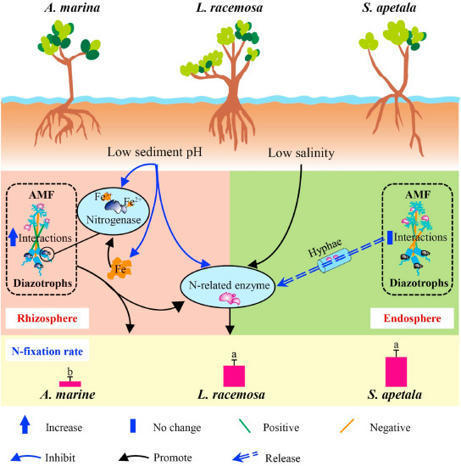
●Mangrove species determined the structure of AMF community.
●AMF showed a strong positive co-occurrence network with the diazotrophs.
●The AMF keystone taxa was the most important predictor of BNF in the rhizosphere.
●N-related enzymes were the main factor driven the BNF process in mangrove ecosystem.
|
|
Scooped by
Jean-Michel Ané
September 26, 2021 10:43 PM
|
Plants spend a high proportion of their photosynthetically fixed carbon (C) belowground to support mycorrhizal associations in return for nutrients, but this C expenditure may decrease with increased soil nutrient availability. In this study, we assessed how the effects of nitrogen (N) fertiliser on specific root respiration (SRR) varied among mycorrhizal type (Myco type). We conducted a multi-level meta-analysis across 1,600 observations from 32 publications. SRR increased in ectomycorrhizal (ECM) plants with more than 100 kg N ha−1 applied, did not change in arbuscular mycorrhizal (AM) and non-mycorrhizal (NM) plants, but increased in plants with a dual mycorrhizal association in response to N fertilisation. Our results suggest that high N availability (>100 kg N ha−1) could disadvantage the growth of ECM plants because of increased C costs associated with maintaining higher root N concentrations, while the insensitivity in SRR by AM plants to N fertilisation may be because AM fungi are more important for phosphorus (P) uptake.
|
|
Scooped by
Jean-Michel Ané
September 26, 2021 10:34 PM
|
Plant–fungal associations strongly influence forest carbon and nitrogen cycling. The prevailing framework for understanding these relationships is through the relative abundance of arbuscular (AM) versus ectomycorrhizal (EcM) trees. Ericoid mycorrhizal (ErM) shrubs are also common in forests and interactions between co-occurring ErM shrubs and AM and EcM trees could shift soil biogeochemical responses. Here we test hypotheses that the effects of ErM shrubs on soil carbon and nitrogen either extend or are redundant with those of EcM trees.
Using regional vegetation inventory data (>3,500 plot observations) we evaluated the frequency, richness and relative abundance of ErM plants in temperate forests in the eastern United States and examined their relationship with EcM plant cover. We then used surface soil (7 cm) data from 414 plots within a single forest to analyse relationships between ErM plant cover, relative EcM tree basal area and soil carbon and nitrogen concentrations while accounting for other biogeochemical controls, such as soil moisture.
At both scales, we found a positive relationship between ErM and EcM plants, and the majority of ErM plants were in the shrub layer. Within the forest site, ErM plants strongly modulated tree mycorrhizal dominance effects. We found negative relationships between EcM relative basal area and soil carbon and nitrogen concentrations, but these relationships were weak to negligible in the absence of ErM plants. Both EcM relative basal area and ErM plant cover were positively associated with the soil carbon-to-nitrogen ratio. However, this relationship was driven by relatively lower nitrogen for EcM trees and higher carbon for ErM plants. As such, the functional effects of ErM plants on soil biogeochemistry neither extended nor were redundant with those of EcM trees.
Synthesis. We found that ErM shrubs strongly influenced the relationship between tree mycorrhizal associations and soil biogeochemistry, and the effects of ErM shrubs and EcM trees on carbon and nitrogen were functionally distinct. Our findings suggest that ErM shrubs could confound interpretation of AM versus EcM tree effects in ecosystems where they co-occur but also bolster growing calls to consider mycorrhizal functional types as variables that strongly influence forest biogeochemistry.
|
|
Scooped by
Jean-Michel Ané
September 26, 2021 10:17 PM
|
•Synergies (non-additive effects) driven by multiple mutualists effects (MMEs).
•Non-additive effects due to differences in the reward provided.
•Productivity due to functional complementarity in arbuscular mycorrhizal fungal access to plant carbon (carbon sink strength).
•Experimental measures and simulations of plant growth over time.
•Implications for restoration ecology and agricultural management.
|
|
Scooped by
Jean-Michel Ané
September 26, 2021 10:08 PM
|
We characterized the bacterial community in shoot and rhizosphere of healthy adult soybean plants grown in two differentially managed soils. Then, these communities were transplanted to seeds to assess their effect on seedling development. The bacterial communities of inoculated soybean seedlings were assessed through 16S rRNA amplicon sequencing and seedlings’ growth was measured. The diversity in the bacterial consortium inoculum prepared from the rhizosphere was higher than those from the shoot. However, the application of bacterial consortium in seedling had no influence on diversity. The resulting bacterial community of seedlings inoculated with bacterial consortium presented an enrichment of specific plant growth-promoting groups, such as Gammaproteobacteria (Enterobacter, Pseudomonas, and Xanthomonas). The predicted potential functions showed an increased abundance of functions related to plant protection and nutrition. The application of bacterial consortium from the shoot of soybean plants grown in the soil with a previous history of soybean cultivation increased the seedling radicle length, hypocotyl length, and total dry weight by 44%, 30%, and 29%, respectively. Our study showed that selecting a consortium of indigenous microbes as inoculants is a potential approach to enhance the use and impacts of plant beneficial microorganisms on plant growth and possibly productivity.
|
|
Scooped by
Jean-Michel Ané
September 26, 2021 9:59 PM
|
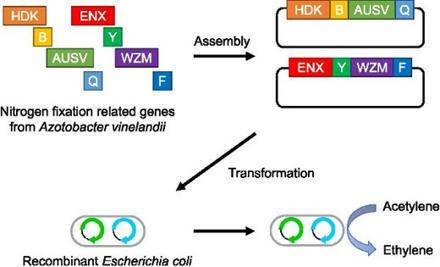
Biological nitrogen fixation by nitrogenase has attracted attention as an alternative method to chemical nitrogen fixation, which requires large amounts of fossil fuels. Azotobacter vinelandii, which produces an oxygen-sensitive nitrogenase, can fix nitrogen even under aerobic conditions; therefore, the heterologous expression of nif-related genes from A. vinelandii is a promising strategy for developing a biological nitrogen fixation method. We assembled 17 nif-related genes, which are scattered throughout the genome of A. vinelandii, into synthetic gene clusters by overlap-extension-PCR and seamless cloning and expressed them in Escherichia coli. The transcription and translation of the 17 nif-related genes were evaluated by RT-qPCR and LC-MS/MS, respectively. The constructed E. coli showed nitrogenase activity under anaerobic and microaerobic conditions. This strain would be a useful model for examining the effect of other genes from A. vinelandii on nitrogen fixation by expressing them in addition to the minimal set of nif-related genes.
|
|
Scooped by
Jean-Michel Ané
September 26, 2021 9:40 PM
|
Mycorrhizal symbiosis is generally considered effective in ameliorating plant tolerance to abiotic stress by altering gene expression, and evaluation of genes involved in ion homeostasis and nutrient uptake. This study aimed to use arbuscular mycorrhizal fungus (AMF) to alleviate salinity stress and analyse relevant gene expression in pistachio plants under No/NaCl stress in greenhouse conditions. Arbuscular mycorrhizal symbiosis was used to study the physiological responses, ion distribution and relevant gene expression in pistachio plants under salinity stress. After four months of symbiosis, mycorrhizal root colonization showed a significant reduction in all tested parameters under salt stress treatment compared to non-saline treatment. Salinity affected the morphological traits, and decreased the nutrient content including N, P, Mg and Fe as well as K/Na and Ca/Na ratios, relative water content (RWC), membrane stability index (MSI), and increased the concentration of K, Ca and Na nutrient, glycine betaine, ROS and MDA. Inoculation of seedlings with AMF mitigated the negative effects of salinity on plant growth as indicated by increasing the root colonization, morphological traits, glycine betaine, RWC and MSI. Specifically, under salinity stress, shoot and root dry weight, P and Fe nutrient content, K/Na and Ca/Na ratio of AMF plants were increased by 53.2, 48.6, 71.6, 60.2, 87.5, and 80.1% respectively, in contrast to those of the NMF plants. The contents of Na, O2•− and MDA in AMF plants were significantly decreased by 66.8, 36.8, and 23.1%, respectively at 250 mM NaCl. Moreover, salinity markedly increased SOS1, CCX2 and SKOR genes expression and the inoculation with AMF modulated these genes expression; however, NRT2.4, PHO1 and PIP2.4 gene expressions were increased by salinity and AMF. It could be concluded that inoculation of AMF with Rhizophagus irregularis conferred a larger endurance towards soil salinity in pistachio plants and stimulate the nutrient uptake and ionic homeostasis maintenance, superior RWC and osmoprotection, toxic ion partitioning, maintaining membrane integrity and the ion-relevant genes expression.
|
|
|
Scooped by
Jean-Michel Ané
September 28, 2021 5:13 PM
|
The development of an environmentally friendly agricultural system as opposed to conventional methods using chemical fertilizers and pesticides for improved crop productivity is a promising aspect of modern agricultural biotechnology. Current research has focused on using free-living microbes that can colonize the plant endosphere as a means of enhancing crop productivity. In the plant rhizosphere, the complex root matrix facilitates microbe-microbe, microbe-plant, and soil-microbe interactions in establishing microbial communities, which precede endophytic colonization of the plant by some of these microbes. Endophytic microbes play an important role in plant growth promotion, as they employ direct or indirect mechanisms to facilitate plant growth by producing phytohormones and various secondary metabolites. The roles of endophytic microbes in sustaining plant growth under biotic and abiotic stresses through these mechanisms can provide insights into their envisaged putative functions in establishing host plant interactions for maximum use in the agricultural sector as an ecofriendly alternative tool to improve crop yield. In addition, a better understanding of endophytic bacteria functions in agriculture, medicine, biotechnology, and industry may enable scientists to unlock several opportunities by exploring valuable endophytic bioproducts in the recent application as bioinoculants, biostimulants, and environmental safety in pollution control and phytoremediation. Furthermore, the genomic insights into endosphere biology can provide detail structural diversity and functional profiling of endophytic microbiome for possible recommendations in future agriculture as a source of the organic amendment. Hence, this review emphasis on the root-colonizing endophytic bacteria and their importance in modern agricultural biotechnology.
|
|
Scooped by
Jean-Michel Ané
September 28, 2021 5:05 PM
|
Arbuscular mycorrhizal fungi (AMF) are plant symbionts that promote plant growth and provide important plant and ecosystem functions. These abilities have great economical potential which has resulted in an increasing number of commercially available AMF inoculants. Here, we present the results of a global study in which we evaluate the effectiveness of 28 commercial AMF inoculants to colonize host plants under greenhouse and field conditions. This evaluation includes three independent studies across three continents (Australia, Europe, and North America). The Australian and European studies tested 25 different commercial AMF inoculants in non-sterilized and sterilized soils under greenhouse conditions and compared them against laboratory cultures of the AMF Rhizophagus irregularis. This is supplemented by the North American study which evaluated the effects of three commercial inoculants under field conditions. In the greenhouse trials using non-sterilized soil, we observed that the addition of commercial inoculants did not lead to enhanced mycorrhizal colonization and inoculation increased plant biomass in only one out of 25 treatments. In sterilized soil, 84% of the mycorrhizal inoculants did not lead to mycorrhizal root colonization, demonstrating that these products did not contain viable propagules. In contrast, the laboratory cultures of the AM fungus Rhizophagus irregularis resulted in substantial root colonization (48% and 79%) in the Australian and European bioassay. Moreover, only five out of 25 treatments enhanced plant biomass when added to sterilized soil. Metagenomic analysis of field roots in the North American field trial revealed changes in the mycorrhizal community after inoculation. For one inoculant, this was accompanied by increased biomass production. This global evaluation of commercial inoculants raises concerns over unreliable products which do not contain viable propagules and do not result in mycorrhizal root colonization. Under field conditions, effects on plant growth are dependent on changes within the mycorrhizal community. The results of this study highlight the need for standardized quality control of AMF inoculants and further research on their establishment and effects under field conditions.
|
|
Scooped by
Jean-Michel Ané
September 28, 2021 5:03 PM
|
The dragon’s head (Lallemantia iberica L.) and lady's mantle (L. royleana L.) are potential sources of plant oil, mucilage, and omega-3 fatty acid. An effective plant-arbuscular mycorrhizal fungi (AMF) symbiosis can improve plant growth and development, especially under drought stress. This study aimed to evaluate the effects of AMF inoculation on the growth, yield, fatty acid compositions, and physiological processes of L. iberica and L. royleana under various irrigation intervals (i.e., irrigation after 30 % (I30), 60 % (I60), and 90 % (I90) of soil available water depletion). The results showed improved growth parameters, seed yield, chlorophyll concentration, stomatal movement, antioxidant enzyme activities, and radical scavenging activity in AMF-inoculated plants in both species compared to control plants (without AMF inoculation). Moreover, the seed of AMF-inoculated plants had higher phosphor uptake, mucilage, and oil content. Interestingly, AMF application modified the profile of seed fatty acids such as eicosenoic, arachidic, linolenic, and linoleic acids. Although water deficit drastically affected control plants, AMF-inoculated plants under I60 treatment showed relatively more incredible performance in both species. On the other hand, inoculated plants showed higher antioxidant activity and less reactive oxygen species accumulation than control plants. The results suggested that irrigation after 60 % of soil available water depletion coupled with AMF inoculation can lead to optimized production of L. iberica and L. royleana in semi-arid environments.
|
|
Scooped by
Jean-Michel Ané
September 26, 2021 11:11 PM
|
Nodules form on plant roots through the symbiotic relationship between soybean (Glycine max L. Merr.) roots and bacteria (Bradyrhizobium japonicum) and are an important structure where atmospheric nitrogen (N2) is fixed into bioavailable ammonia (NH3) for plant growth and development. Nodule quantification on soybean roots is a laborious and tedious task; therefore, assessment is frequently done on a numerical scale that allows for rapid phenotyping, but is less informative and suffers from subjectivity. We report the Soybean Nodule Acquisition Pipeline (SNAP) for nodule quantification that combines RetinaNet and UNet deep learning architectures for object (i.e., nodule) detection and segmentation. SNAP was built using data from 691 unique roots from diverse soybean genotypes, vegetative growth stages, and field locations and has a good model fit (). SNAP reduces the human labor and inconsistencies of counting nodules, while acquiring quantifiable traits related to nodule growth, location, and distribution on roots. The ability of SNAP to phenotype nodules on soybean roots at a higher throughput enables researchers to assess the genetic and environmental factors, and their interactions on nodulation from an early development stage. The application of SNAP in research and breeding pipelines may lead to more nitrogen use efficiency for soybean and other legume species cultivars, as well as enhanced insight into the plant-Bradyrhizobium relationship.
|
|
Scooped by
Jean-Michel Ané
September 26, 2021 11:06 PM
|
Arbuscular mycorrhizal fungi (AMF) are important symbionts of many plant species, facilitating the acquisition of soil nutrients by roots. We hypothesized that AMF root colonization is strongly influenced by the composition of the soil microbiome. Here, we evaluated mycorrhizal colonization of two plants, the grass Urochloa brizantha (Brachiaria) and the legume Crotalaria juncea (Crotalaria). These were cultivated in the same soil but hosting eight distinct microbiomes: natural soil (i); soil exposed to heat treatments for 1 h at 50 ºC (ii), 80 ºC (iii), or 100 ºC (iv); sterilized soil by autoclaving (AS) followed by re-inoculation of dilutions of the natural soil community at 10−1 (v), 10−3 (vi), and 10−6 (vii); and AS without re-inoculation (viii). Microbial diversity (bacteria and fungi) was assessed through 16S rDNA and ITS1 metabarcoding, respectively, and the soil acid phosphatase activity (APASE) was measured. Sequencing results showed the formation of distinct microbial communities according to the soil manipulations, which also correlated with the decline of APASE. Subsequently, seedlings of Brachiaria and Crotalaria were grown in those soils inoculated separately with three AMF (Acaulospora colombiana, Rhizophagus clarus, and Dentiscutata heterogama) which were compared to an AMF-free control treatment. Brachiaria showed higher colonization in natural soil when compared to the microbial community manipulations, regardless of the AMF species inoculated. In contrast, two mycorrhiza species were able to colonize Crotalaria under modified microbial communities at similar rates to natural soil. Furthermore, Brachiaria showed a possible inverse relationship between APASE and mycorrhization, but this trend was absent for Crotalaria. We conclude that mycorrhizal root colonization and soil acid phosphatase activity were associated with the structure of the soil microbiome, depending on the plant species evaluated.
|
|
Scooped by
Jean-Michel Ané
September 26, 2021 10:56 PM
|
Arbuscular mycorrhizal fungi (AMF) regulate soil nutrient cycling, directly supplying a host plant with nitrogen (N). AMF can also affect the outcome of interspecific interactions, but a mechanistic understanding of how soil N availability affects AMF-mediated interspecific relationships is currently lacking. We selected one dominant (Bothriochloa ischaemum; C4 grass) and one subordinate (Lespedeza davurica; legume) species in a natural grassland climax community to investigate the mechanism by which AMF influence interspecific interaction (mixed and monoculture) under three levels of N addition (0, low, and high N addition). Under the non-N addition treatment, AMF preferentially supplied N to the roots of B. ischaemum at the expense of N uptake by L. davurica, resulting in inhibited AMF benefits for L. davurica shoot growth. Under the low N addition treatment, interspecific interaction via AMF promoted L. davurica growth. Compared to the non-N addition treatment, N addition largely mitigated the effects, both positive (for B. ischaemum) and negative (for L. davurica), of AMF-mediated interspecific interaction on plant N uptake via AMF. When soil N availability severely limited plant growth, preferential N supply to the C4 grass by AMF was important for maintaining the abundance of the dominant species. When the N limitation for plant growth was alleviated by N addition, the interaction between AMF and soil microorganisms improved nutrient availability for the legume by stimulating activity of the enzyme responsible for soil organic matter mineralization, which is important for maintaining the abundance of the subordinate species. These data could influence strategies for maintaining biodiversity.
|
|
Scooped by
Jean-Michel Ané
September 26, 2021 10:46 PM
|
Plant small secreted proteins (SSPs) are sequences of 50 – 250 amino acids in size which are transported out of cells to fulfill multiple functions related to plant growth and development and response to various stresses. With the development of more accurate and affordable genome sequencing technology, an increasing number of SSPs have been predicted using diverse computational tools based on machine learning. Although experimentally validated plant SSPs are still limited, some studies have reported that plant SSPs can be induced and involved in mutualistic relationships between plants and microbes. In Chapter I, known SSPs and their functions in various plant species are reviewed. Additionally, current computational tools and experimental methods that have been widely applied to identify plant SSPs are summarized. A new, robust, and integrated pipeline to discover plant SSPs is proposed. Furthermore, strategies for elucidating the biological functions of SSPs in plants are discussed in Chapter I. Chapter II presents predicted SSPs from 60 plant species and elucidates the evolutionary convergence of changes in SSP sequences. Furthermore, the expression of SSPs induced by arbuscular mycorrhizal fungi (AMF) which correspond to the convergent abilityfor different plants to form mutualistic association with AMF are explored. Overall, this study provides insightful ideas to understand functions of plant SSPs that occur during symbiosis between plants and fungi.
|
|
Scooped by
Jean-Michel Ané
September 26, 2021 10:37 PM
|
Legume plants form symbiotic relationships with rhizobia to convert N2 into ammonia, and the nodulation status can affect plant development including photosynthesis. However, the relationship between nitrogen fixation and photosynthesis during carbon and nitrogen metabolism remains unclear. This study was undertaken to unravel regulation of nodulation and photosynthesis using a spontaneous nonnodulated soybean mutant by grafting. The results of inheritance and gene mapping showed that the nonnodulated mutant was controlled by a recessive gene overlapped with the reported rj1 locus, and might be a new rj1 allele with 1 bp deletion in the fourth exon in comparison to the sequence of normal nodulation plants. According to grafting results, soybean nodulation is obviously determined by the roots, not the seedlings. Moreover, nitrogen content along with related metabolic enzyme activity, and photosynthetic capacity were enhanced by nonnodulated scions grafted with nodulated roots. Contrary results were obtained for nodulated scions grafted with nonnodulated roots. A total of 853 differentially expressed genes (DEGs) in the leaves and 1874 in the roots were identified by transcriptome analyses of the grafting treatments. We identified 285 differential gene ontology (GO) terms and 57 differential pathway terms identified in the leaves, while 856 differential GO terms and 207 differential pathway terms in the roots. Twenty DEGs interacting at translation level were selected, and the results of transcriptome analyses were verified by q-PCR. These findings indicated that the nodulation-related Nod allelic gene increases the nitrogen content of nonnodulated plants, which affects the enzymes involved in nitrogen metabolism, leading to changes in hormone levels and further regulation of photosynthesis and carbon metabolism.
|
|
Scooped by
Jean-Michel Ané
September 26, 2021 10:19 PM
|
Increased plant phosphorus uptake and growth as a result of inoculation with arbuscular mycorrhizal (AM) fungi is observed less often under field conditions than in pot experiments. Interaction between introduced and indigenous AM fungi is one of the reasons for ineffectiveness of inoculation in the field. We aimed to distinguish the effect of introduced and indigenous AM fungi on phosphorus uptake and growth of Allium fistulosum in a field experiment. Superphosphate was applied in the ratio of 0 or 317 P kg ha−1 to the plots fumigated with or without dazomet that is a common soil fumigant. Seedlings of A. fistulosum that had been inoculated with or without Rhizophagus spp. strain R-10 were transplanted into the plots. AM fungal colonization, OTU read abundance of indigenous and introduced AM fungi, shoot P concentration, and shoot growth were measured at 31, 60, 90, and 131 days after transplanting (DAT). We could partially separate the effects of introduced AM fungi from indigenous AM fungi by fumigation with dazomet. Though neither inoculation nor P level affected shoot fresh weight and shoot P content in the non-fumigated main plot at 131 DAT, significantly higher shoot fresh weight was obtained by the inoculation with no P fertilizer in the fumigated main plot at this final sampling stage. These results indicate that the colonization of roots by introduced AM fungi is affected by the abundance of indigenous AM fungi and this interaction determines growth response of host plants under field conditions.
|
|
Scooped by
Jean-Michel Ané
September 26, 2021 10:09 PM
|
Sulfur (S) exists in organically bound complexes (∼95%), predominantly as sulfonates, and are not directly plant available. Specific soil bacteria can mobilise sulfonates but very little is known about these bacteria in the hyphosphere. Since mycorrhizal fungi support growth of the majority of land plants, hyphosphere desulfonating bacteria may be of substantial benefit to the plant host. This study analysed the effect of AM inoculation with Rhizophagus irregularis (former G. intraradices, Glomus) and a mix of six AM species (Mixed) on PGP, microbial communities and sulfonate mobilising bacteria with L. perenne, Agrostis stolonifera and Plantago lanceolata as plant hosts in bi-compartmental microcosms and A. stolonifera in PGP pot experiments. AM inoculation significantly increased plant growth, percentage root colonisation and the quantity of cultivable desulfonating bacteria in the hyphosphere over pre-inoculated soil for all plants. Community analysis via PCR-DGGE revealed significantly different bacterial and fungal communities post inoculation. Analysis of the sulfonate mobilising asfA gene revealed a significantly altered community and novel bacterial isolates with this important functional ability post-inoculation. The results demonstrate that AM inoculation increased plant biomass yield, AM root colonisation and altered bacterial and fungal community dynamics in the hyphosphere. AM inoculated microcosms had an increased abundance of desulfonating bacteria that may be beneficial for plant-S supply.
|
|
Scooped by
Jean-Michel Ané
September 26, 2021 10:03 PM
|
Certain soil microorganisms can improve plant growth, and practices that encourage their proliferation around the roots can boost production and reduce reliance on agrochemicals. The beneficial effects of the microbial inoculants currently used in agriculture are inconsistent or short-lived because their persistence in soil and on roots is often poor. A complementary approach could use root exudates to recruit beneficial microbes directly from the soil and encourage inoculant proliferation. However, it is unclear whether the release of common organic metabolites can alter the root microbiome in a consistent manner and if so, how those changes vary throughout the whole root system. In this study, we altered the expression of transporters from the ALUMINUM-ACTIVATED MALATE TRANSPORTER and the MULTIDRUG AND TOXIC COMPOUND EXTRUSION families in rice (Oryza sativa L.) and wheat (Triticum aestivum L.) and tested how the subsequent release of their substrates (simple organic anions, including malate, citrate, and γ-amino butyric acid) from root apices affected the root microbiomes. We demonstrate that these exudate compounds, separately and in combination, significantly altered microbiome composition throughout the root system. However, the root type (seminal or nodal), position along the roots (apex or base), and soil type had a greater influence on microbiome structure than the exudates. These results reveal that the root microbiomes of important cereal species can be manipulated by altering the composition of root exudates, and support ongoing attempts to improve plant production by manipulating the root microbiome.
|
|
Scooped by
Jean-Michel Ané
September 26, 2021 9:45 PM
|
In ectomycorrhiza, root penetration and colonization of the intercellular space by symbiotic hyphae is thought to rely on the mechanical force that results from hyphal tip growth, enhanced by the activity of secreted cell-wall-degrading enzymes. Here, we characterize the biochemical properties of the symbiosis-induced polygalacturonase LbGH28A from the ectomycorrhizal fungus Laccaria bicolor. The transcriptional regulation of LbGH28A was measured by qPCR. The biological relevance of LbGH28A was confirmed by generating RNAi-silenced LbGH28A mutants. We localized the LbGH28A protein by immunofluorescence confocal and immunogold cytochemical microscopy in poplar ectomycorrhizal roots. qPCR confirmed the induced expression of LbGH28A during ectomycorrhiza formation. L. bicolor RNAi mutants have a lower ability to establish ectomycorrhiza confirming the key role of this enzyme in symbiosis. The purified recombinant LbGH28A has its highest activity towards pectin and polygalacturonic acid. In situ localization of LbGH28A indicates that this endopolygalacturonase is located in both fungal and plant cell walls at the symbiotic hyphal front. The present findings suggest that the symbiosis-induced pectinase LbGH28A is involved in the Hartig net formation and is an important determinant for successful symbiotic colonization.
|











Awesome preprint. AM fungi could explain 46.2% of the water transpired... holy cow!!