Your new post is loading...

|
Scooped by
Jean-Michel Ané
December 19, 2021 10:16 PM
|
The rhizosphere has been called ‘one of the most complex ecosystems on earth’ because it is a hotspot for interactions among millions of microbial cells, many of which are also participating in a dynamic interplay with host plant tissues, signaling pathways, and metabolites. Historically, breeders have employed a plant-centric perspective when trying to harness the potential of microbiome-derived benefits to improve productivity and resilience of economically important plants. This is potentially problematic because: (i) the evolution of the microbes themselves are often ignored, and (ii) it assumes that the fitness of interacting plants and microbes are strictly aligned. In contrast, a microbe-centric perspective recognizes that putatively beneficial microbes are still under selection to increase their own fitness, even if there are costs to the host. This can lead to the evolution of sophisticated, potentially subtle, ways for microbes to manipulate the phenotype of their hosts, as well as other microbes in the rhizosphere. We illustrate this idea with a review of cases where rhizosphere microbes have been demonstrated to directly manipulate host root growth, architecture and exudation, host nutrient uptake systems, and host immunity and defense. We also discuss indirect effects, whereby fitness outcomes for the plant are a consequence of ecological interactions between rhizosphere microbes. If these consequences are positive for the plant, they can potentially be misconstrued as traits that have evolved to promote host growth, even if they are a result of selection for unrelated functions. The ubiquity of both direct microbial manipulation of hosts, and context-dependent variable indirect effects lead us to argue that an evolutionary perspective on rhizosphere microbial ecology will become increasingly important as we continue to engineer microbial communities for crop production.
|
|
Scooped by
Jean-Michel Ané
December 19, 2021 9:30 PM
|
•AnfH is the ADP-bound reductase component of the iron-only nitrogenase.
•We report the first reported structure of the Fe-only nitrogenase system.
•AnfH is a dimer with a bridging [4Fe:4S] cluster and binds one nucleotide per monomer.
•AnfH can donate electron to V‑nitrogenase, but not to Mo‑nitrogenase.
•The Fe proteins of Mo- and V‑nitrogenase are incompatible with Fe‑nitrogenase.
|
|
Scooped by
Jean-Michel Ané
December 19, 2021 9:18 PM
|
•AMF–associated bacteria (AAB) exist both as surface colonizers and as endobacteria of arbuscular mycorrhizal fungi (AMF).
•231 culturable AABs were identified from studied 6 AMF species encompassing 33 different co-cultures.
•AAB diversity from spores of in vitro transformed AMF root co-cultures was greater than in situ, pot AMF cultures.
•Functionally active, culturable AABs with multiple plant growth promoting traits were identified through this study.
|
|
Scooped by
Jean-Michel Ané
December 19, 2021 9:14 PM
|
Garden pea (Pisum sativum L.) is a globally important legume crop. Like other legumes, it forms beneficial symbiotic interactions with the soil bacteria rhizobia, gaining the ability to fix atmospheric nitrogen. In pea nodules, the meristem is long-lasting and results in the formation of several histological zones that implicate a notable differentiation of infected host cells. However, the fine transcriptional changes that accompany differentiation are still unknown. In this study, using laser microdissection followed by RNA-seq analysis, we performed transcriptomic profiling in the early infection zone, late infection zone, and nitrogen fixation zone of 11-day-old nodules of pea wild-type line SGE. As a result, a list of functional groups of differentially expressed genes (DEGs) in different nodule histological zones and a list of genes with the most prominent expression changes during nodule development were obtained. Their analyses demonstrated that the highest amount of DEGs was associated with the nitrogen fixation zone. Among well-known genes controlling nodule development, we revealed genes that can be novel players throughout nodule formation. The characterized genes in pea were compared with those previously described in other legumes and their possible functions in nodule development are discussed.
|
|
Scooped by
Jean-Michel Ané
December 19, 2021 6:21 PM
|
Arbuscular mycorrhizal (AM) play an important role in improving plant growth and development. The interaction between phytohormones and AM symbiosis is gradually revealed. Here we examined the effect of Brassinosteroids (BR) on AM symbiosis and discussed the synergistic promotion of plant growth by BR and AM symbiosis. The xylophyta Eucalyptus grandis Hill (E. grandis) was inoculated with AM fungi Rhizoglomus irregularis R197198 (R. irregularis) and treated with different concentrations (0, 1, 10, and 100 nM) of 24-epibrassinolide (24-epiBL) for 6 weeks. With the increase of 24-epiBL concentration, E. grandis growth was firstly promoted and then inhibited, but inoculation with AM fungi alleviated this inhibition. 24-epiBL and R. irregularis colonization significantly improved E. grandis growth and antioxidant system response, and the synergistic effect was the best. Compared with the control group, 24-epiBL treatment significantly increased the mycorrhizal colonization and arbuscular abundance of AM fungi R. irregular in E. grandis roots. The expression of AM symbiosis maker genes was significantly increased by 24-epiBL treatment. Both 24-epiBL treatment and AM colonization upregulated gibberellins (GA) synthesis genes, but no inhibition caused by GA levels was found. 24-epiBL is a kind of synthetic highly active BR. Based on the results of 24-epiBL treatment, we hypothesized that BR actively regulates AM symbiosis regulates AM symbiosis without affecting GA-INSENSITIVE DWARF1 (GID1)-DELLA expression. The synergistic treatment of BR and AM symbiosis can significantly promote the growth and development of plants.
|
|
Scooped by
Jean-Michel Ané
December 19, 2021 5:58 PM
|
The COVID-19 pandemic prompted a transition to remote delivery of courses that lack immersive hands-on research experiences for undergraduate science students, resulting in a scientific research skills gap. In this report, we present an option for an inclusive and authentic, hands-on research experience that all students can perform off-campus. Biology students in a semester-long (13 weeks) sophomore plant physiology course participated in an at-home laboratory designed to study the impacts of nitrogen addition on growth rates and root nodulation by wild nitrogen-fixing Rhizobia in Pisum sativum (Pea) plants. This undergraduate research experience, piloted in the fall semester of 2020 in a class with 90 students, was created to help participants learn and practice scientific research skills during the COVID-19 pandemic. Specifically, the learning outcomes associated with this at-home research experience were: (1) generate a testable hypothesis, (2) design an experiment to test the hypothesis, (3) explain the importance of biological replication, (4) perform meaningful statistical analyses using R, and (5) compose a research paper to effectively communicate findings to a general biology audience. Students were provided with an at-home laboratory kit containing the required materials and reagents, which were chosen to be accessible and affordable in case students were unable to access our laboratory kit. Students were guided through all aspects of research, including hypothesis generation, data collection, and data analysis, with video tutorials and live virtual sessions. This at-home laboratory provided students an opportunity to practice hands-on research with the flexibility to collect and analyze their own data in a remote setting during the COVID-19 pandemic. This, or similar laboratories, could also be used as part of distance learning biology courses.
|
|
Scooped by
Jean-Michel Ané
December 19, 2021 5:52 PM
|
Strigolactones (SLs) are plant hormones that control diverse aspects of the shoot and root growth and are exuded into the soil as recruitment signals for arbuscular mycorrhizal (AM) fungi. SL signaling in plants is transduced via the α/β-hydrolase receptor Dwarf14 (D14). The D14 family consists of D14, Dwarf14-like (D14L), and Dwarf14-like 2 (D14L2) clades in rice. The D14L receptor is known to condition pre-symbiotic perception of AM fungi. In this study, it was found that the Dwarf14-like2a (D14L2a) gene expression was significantly induced by AM fungal colonization. The transcript of D14L2a appeared not only in mature arbuscule-containing cells but also in epidermal/cortical cells at an early colonization stage and near the elongating intercellular hyphae. D14L2a transcript was detected normally in mycorrhizal roots of str1-2 mutant that form stunted arbuscules, suggesting that the gene expression is independent of arbuscule development. Moreover, the recombinant D14L2a protein exhibited hydrolase activity of synthetic SL, rac-GR24. Based on these results, we discussed the role of D14L2 in the establishment of AM symbiosis.
|
|
Scooped by
Jean-Michel Ané
December 19, 2021 5:40 PM
|
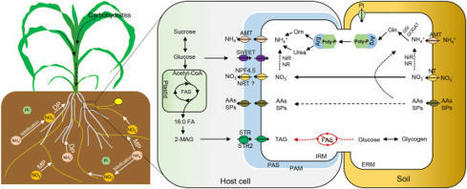
Nitrogen (N) is the most abundant mineral nutrient required by plants, and crop productivity depends heavily on N fertilization in many soils. Production and application of N fertilizers consume huge amounts of energy and substantially increase the costs of agricultural production. Excess N compounds released from agricultural systems are also detrimental to the environment. Thus, increasing plant N uptake efficiency is essential for the development of sustainable agriculture. Arbuscular mycorrhizal (AM) fungi are beneficial symbionts of most terrestrial plants that facilitate plant nutrient uptake and increase host resistance to diverse environmental stresses. AM association is an endosymbiotic process that relies on the differentiation of both host plant roots and AM fungi to create novel contact interfaces within the cells of plant roots. AM plants have two pathways for nutrient uptake: either direct uptake via the root hairs and root epidermis, or indirectly through AM fungal hyphae into root cortical cells. Over the last few years, great progress has been made in deciphering the molecular mechanisms underlying the AM-mediated modulation of nutrient uptake processes, and a growing number of fungal and plant genes responsible for the uptake of nutrients from soil or transfer across the fungi–root interface have been identified. Here, we mainly summarize the recent advances in N uptake, assimilation, and translocation in AM symbiosis, and also discuss how N interplays with C and P in modulating AM development, as well as the synergies between AM fungi and soil microbial communities in N uptake.
|
|
Scooped by
Jean-Michel Ané
December 19, 2021 5:34 PM
|
Arbuscular mycorrhizal (AM) fungi and terrestrial plants form one of the most important and ubiquitous symbioses on the planet. Although the central role of AM fungi in rhizosphere processes is well established, the extent of their influence on the development of the whole soil microbial community is less well characterized. We assessed the temporal dynamics of the bacterial and eukaryotic soil microbial communities in mesocosms where AM fungi were inoculated on a grass (Holcus lanatus L.) and a clover (Trifolium pratense L.). This allowed us to evaluate whether 1) inoculation with AM fungi changes the overall structure of soil communities and 2) if these changes are partially mediated by the altered plant phenotype, as indicated by increases in growth and photosynthetic activity. We observed changes in the community composition of both microbial groups, largely associated with relative decreases in Proteobacteria, Nematoda and some protistan groups (Ciliophora and Lobosa) and relative increases in Gastrotricha and Firmicutes. Plant productivity doubled with mycorrhizal inoculation, while other plant performance measures increased by 10–50%. We conclude that the interaction between AM fungi and plants shapes the surrounding soil microbial communities, probably because enhanced growth of host plants changes the amount, timing, and form of carbon inputs into soil.
|
|
Scooped by
Jean-Michel Ané
December 12, 2021 10:05 PM
|
•Soil pH determined the effectiveness of rhizobial inoculation.
•Low soil P availability suppressed soybean nodulation and N fixation.
•Inoculation enhanced the secretion of carboxylates and P uptake in calcareous soil.
•Beneficial effects of rhizobial inoculation were pronounced in calcareous soil.
|
|
Scooped by
Jean-Michel Ané
December 12, 2021 9:21 PM
|
An Azorhizobium caulinodans phaC mutant (OPS0865) unable to make poly-3-hydroxybutyrate (PHB), grows poorly on many carbon sources and cannot fix nitrogen in laboratory culture. However, when inoculated onto its host plant, Sesbania rostrata, the phaC mutant consistently fixed nitrogen. Upon reisolation from S. rostrata root nodules, a suppressor strain (OPS0921) was isolated that has significantly improved growth on a variety of carbon sources and also fixes nitrogen in laboratory culture. The suppressor retains the original mutation and is unable to synthesize PHB. Genome sequencing revealed a suppressor transition mutation, G to A (position 357,354), 13 bases upstream of the ATG start codon of phaR in its putative ribosome binding site (RBS). PhaR is the global regulator of PHB synthesis but also has other roles in regulation within the cell. In comparison with the wild type, translation from the phaR native RBS is increased approximately sixfold in the phaC mutant background, suggesting that the level of PhaR is controlled by PHB. Translation from the phaR mutated RBS (RBS*) of the suppressor mutant strain (OPS0921) is locked at a low basal rate and unaffected by the phaC mutation, suggesting that RBS* renders the level of PhaR insensitive to regulation by PHB. In the original phaC mutant (OPS0865), the lack of nitrogen fixation and poor growth on many carbon sources is likely to be due to increased levels of PhaR causing dysregulation of its complex regulon, because PHB formation, per se, is not required for effective nitrogen fixation in A. caulinodans.
|
|
Scooped by
Jean-Michel Ané
December 10, 2021 12:49 PM
|
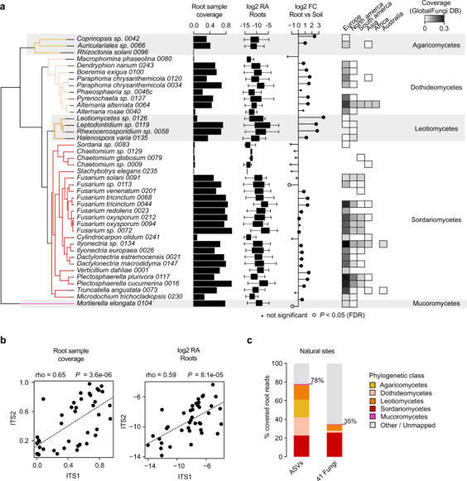
The roots of Arabidopsis thaliana host diverse fungal communities that affect plant health and disease states. Here, we sequence the genomes of 41 fungal isolates representative of the A. thaliana root mycobiota for comparative analysis with other 79 plant-associated fungi. Our analyses indicate that root mycobiota members evolved from ancestors with diverse lifestyles and retain large repertoires of plant cell wall-degrading enzymes (PCWDEs) and effector-like small secreted proteins. We identify a set of 84 gene families associated with endophytism, including genes encoding PCWDEs acting on xylan (family GH10) and cellulose (family AA9). Transcripts encoding these enzymes are also part of a conserved transcriptional program activated by phylogenetically-distant mycobiota members upon host contact. Recolonization experiments with individual fungi indicate that strains with detrimental effects in mono-association with the host colonize roots more aggressively than those with beneficial activities, and dominate in natural root samples. Furthermore, we show that the pectin-degrading enzyme family PL1_7 links aggressiveness of endophytic colonization to plant health.
|
|
Scooped by
Jean-Michel Ané
December 8, 2021 5:42 PM
|
Exopolysaccharides (EPS) play critical roles in rhizobium-plant interactions. However, the EPS biosynthesis pathway in Bradyrhizobium diazoefficiens USDA110 remains elusive. Here we used transposon (Tn) mutagenesis with the aim to identify genetic elements required for EPS biosynthesis in B. diazoefficiens USDA110. Phenotypic screening of Tn5 insertion mutants grown on agar plates led to the identification of a mutant with a transposon insertion site in the blr2358 gene. This gene is predicted to encode a phosphor-glycosyltransferase that transfers a phosphosugar onto a polyprenol phosphate substrate. The disruption of the blr2358 gene resulted in defective EPS synthesis. Accordingly, the blr2358 mutant showed a reduced capacity to induce nodules and stimulate the growth of soybean plants. Glycosyltransferase genes related to blr2358 were found to be well conserved and widely distributed among strains of the Bradyrhizobium genus. In conclusion, our study resulted in identification of a gene involved in EPS biosynthesis and highlights the importance of EPS in the symbiotic interaction between USDA110 and soybeans.
|
|
|
Scooped by
Jean-Michel Ané
December 19, 2021 10:13 PM
|
Legumes (soybeans, peas, lentils, etc.) play important roles in agriculture on Earth because of their food value and their ability to form a mutualistic beneficial association with rhizobia bacteria. In this association, the host plant benefits from atmospheric nitrogen fixation by rhizobia. The presence of nitrogen in the Mars atmosphere offers the possibility to take advantage of this important plant-microbe association. While some studies have shown that Mars soil simulants can support plant growth, none have investigated if these soils can support the legume-rhizobia symbiosis. In this study, we investigated the establishment of the legume-rhizobia symbiosis on different Mars soil simulants (different grades of the Mojave Mars Simulant (MMS)-1: Coarse, Fine, Unsorted, Superfine, and the MMS-2 simulant). We used the model legume, Medicago truncatula, and its symbiotic partners, Sinorhizobium meliloti and Sinorhizobium medicae, in these experiments. Our results show that root nodules could develop on M. truncatula roots when grown on these Mars soil simulants and were comparable to those formed on plants that were grown on sand. We also detected nifH (a reporter gene for nitrogen fixation) expression inside these nodules. Our results indicate that the different Mars soil simulants used in this study can support legume-rhizobia symbiosis. While the average number of lateral roots and nodule numbers were comparable on plants grown on the different soil simulants, total plant mass was higher in plants grown on MMS-2 soil than on MMS-1 soil and its variants. Our results imply that the chemical composition of the simulants is more critical than their grain size for plant mass. Based on these results, we recommend that the MMS-2 Superfine soil simulant is a better fit than the MMS-1 soil and it’s variants for future studies. Our findings can serve as an excellent resource for future studies investigating beneficial plant-microbe associations for sustainable agriculture on Mars.
|
|
Scooped by
Jean-Michel Ané
December 19, 2021 9:21 PM
|
Purpose
The ecological importance of arbuscular mycorrhizal fungi (AMF) in plant acquisition of inorganic and organic sources of nitrogen (N) is not clear. To improve understanding of the plant N nutrition ecology, we tested the effect of intraspecific competition and AMF in plant N source use in growth and N acquisition.
Methods
Solidago virgaurea was grown in microcosms in a fully factorial experiment under greenhouse conditions. The factors tested were intraspecific competition between seedlings and adult plants (yes, no), N source (NH4, glycine) and AMF (inoculated with Glomus hoi, not inoculated).
Results
When grown separately, non-mycorrhizal seedling growth was highest when grown with ammonium, but non-mycorrhizal adults grew best with glycine as the sole N source. Mycorrhizal symbiosis with Glomus hoi evened out this initial niche partitioning in terms of differences in N source use and all mycorrhizal plants grew best with ammonium. Competition shaped plant benefit from mycorrhizal symbiosis depending on the N source. Competition reduced mycorrhizal growth benefit in glycine-grown seedlings, but not in adults. Plant performance did not show uniform relationship with δ15N, but δ15N was affected by life stage, competition and mycorrhiza.
Conclusions
Plant competition and AMF shape plant N source use. Plant and AMF benefit of the symbiosis depend on the N source.
|
|
Scooped by
Jean-Michel Ané
December 19, 2021 9:15 PM
|
Chinese liquorice (Glycyrrhiza uralensis Fisch. ex DC.) is widely used in the food industry and as a medicine. Like other legumes, G. uralensis forms symbiotic nodules. However, the structural organization of G. uralensis nodules is poorly understood. In this study, we analyzed the histological and ultrastructural organization and dynamics of the tubulin cytoskeleton in various cells from different histological zones of indeterminate nodules formed by two strains of Mesorhizobium sp. The unusual walls of infection threads and formation of multiple symbiosomes with several swollen bacteroids were observed. A large amount of poly-β-hydroxybutyrate accumulated in the bacteroids, while the vacuoles of meristematic and uninfected cells contained drop-shaped osmiophilic inclusions. Immunolocalization of the tubulin cytoskeleton and quantitative analysis of cytoskeletal elements revealed patterns of cortical microtubules in meristematic, infected and uninfected cells, and of endoplasmic microtubules associated with infection structures, typical of indeterminate nodules. The intermediate pattern of endoplasmic microtubules in infected cells was correlated with disordered arrangement of symbiosomes. Thus, analysis of the structural organization of G. uralensis nodules revealed some ancestral features more characteristic of determinate nodules, demonstrating the evolutionary closeness of G. uralensis nodulation to more ancient members of the legume family. View Full-Text
|
|
Scooped by
Jean-Michel Ané
December 19, 2021 9:10 PM
|
Fitness and productivity of most terrestrial plants depend on early associations with arbuscular mycorrhizal fungi and mutualistic bacteria. Plants select most of the microbial communities cohabiting their roots and mycorrhizosphere, attracting also all types of microbial predators. Naked amoebae are among the most voracious predators inflicting significant changes in soils bacterial and fungal populations. We evaluated how roots of Zea mays with or without Rhizophagus intraradices mycorrhizosphere (AMF) influence trophic groups of amoebae, along vertical (3, 6, and 9-cm) and horizontal soil distribution (roots and free-root compartments) grown in microcosms after, 20 days. Amoebae community in Non-AMF showed a high species richness in the root zone at 3 to 6-cm depth, and at the two free-root compartment away from plants. Conversely, AMF and mycelium zones modified the amoeba community at 6 to 9-cm depth, recording higher diversity of trophic groups than unplanted soil compartments. The highest bacterivorous diversity was found at the closer compartment to AMF roots, but fungivorous amoebae was not recorded. Amoebae feeding preferences were similar in both AMF and Non-AMF microcosms in where bacterivorous amoebae were dominant, while protozoa-eating amoebae were more frequent at the mycelium compartments. Rare amoebae species were found in AMF microcosms in comparison to those recorded from Non-AMF and unplanted microcosms.
|
|
Scooped by
Jean-Michel Ané
December 19, 2021 6:15 PM
|
Agricultural practices can directly affect soil environmental conditions and consequently soil ecosystems and fertility. Soils under different agricultural practices like tillage and grazing were studied and compared to other soils affected by wildfire and different ages of abandonment. Atmospheric CO2, soil C-CO2 loss, soil temperature, soil moisture, bulk density, soil organic carbon (SOC), total nitrogen (TN), total phosphorus (TP), Redfield ratios of C:N:P, easily exactable and total glomalin-related soil protein (GRSPEE and GRSPT), and morphology, quantity, and stability of soil aggregates (WSA) were seasonally analyzed. Statistical significance checked using the two-factor ANOVA. Intense tillage and wildfire occurrence revealed a deficiency in soil nutrients and fertility more than grazing practices. Steady soil fertility conditions occurred in soils preserved by fire and ancient abandonment. The GRSP seasonal means varied significantly among all soils because of land-use effects. GRSPT, SOC, TN, and TP increased from winter to spring and reached the highest values in summer then decreased again in autumn. GRSP was positively correlated (P < 0.01) with atmospheric CO2, SOC, TN, and TP with high peaks in summer indicating the dependent GRSP production on plant nutrients acquisition as well as soil carbon pools. Moreover, the correlation between GRSP and emitted C-CO2 may indicate the contribution of GRSP fractions to the labile as well as the stable SOC fractions. The GRSPEE showed rapidly transformed into stable forms in more fertile and better-structured soils than in less fertile soils with vulnerable soil structures. In conclusion, the stoichiometric balance of soil nutrients, aggregate stability, and stabilized GRSP pools improved relatively across the seasonal rhythms from winter to summer. Moreover, environmental soil conditions developed to preserve organic carbon in soils with long abandonment than in mid abandonment, while the worst conditions were in the vulnerable soils intensively mismanaged and devastated by fire.
|
|
Scooped by
Jean-Michel Ané
December 19, 2021 5:54 PM
|
There is considerable interest in promoting biological nitrogen fixation as a mechanism to reduce the inputs of nitrogenous fertilizers in agriculture, a problem of agronomic, economic, and environmental importance. For the potential impact of biological nitrogen fixation in agriculture to be realized, there are considerable fundamental knowledge gaps that need to be addressed. Biological nitrogen fixation or the reduction of N2 to NH3 is catalyzed by nitrogenase which requires a large amount of energy in the form of ATP and low potential electrons. Nitrogen-fixing organisms that respire aerobically have an advantage in meeting the energy demands of biological nitrogen fixation but face challenges of protecting nitrogenase from inactivation in the presence of oxygen. Here, we have constructed a genome-scale metabolic model of the aerobic metabolism of nitrogen-fixing bacteria Azotobacter vinelandii, which uses a complex electron transport system, termed respiratory protection, to consume oxygen at a high rate keeping intracellular conditions microaerobic. Our model accurately determines growth rate under high oxygen and high substrate concentration conditions, demonstrating the large flux of energy directed to respiratory protection. While respiratory protection mechanisms compensate the energy balance in high oxygen conditions, it does not account for all substrate intake, leading to increased maintenance rates. We have also shown how A. vinelandii can adapt under different oxygen concentrations and metal availability by rearranging flux through the electron transport system. Accurately determining the energy balance in a genome-scale metabolic model is required for future engineering approaches.
|
|
Scooped by
Jean-Michel Ané
December 19, 2021 5:43 PM
|
Some strains of Bradyrhizobium benefit the biological N2 fixation (BNF) and growth of common beans (Phaseolus vulgaris L.) when co-inoculated with Rhizobium tropici under greenhouse conditions. Here, we evaluated the benefit of Bradyrhizobium diazoefficiens strain CPAC 7 co-inoculated with Rhizobium tropici strain CIAT 899 on common bean in the field. Three Bradyrhizobium strains were co-inoculated with R. tropici CIAT 899 in one experiment in the greenhouse and two in the field. The greenhouse experiment combined each of three Bradyrhizobium strains (29w, USDA 110, and CPAC 7) in co-inoculation with CIAT 899 in Leonard jars. Then, two of these strains, 29w and CPAC 7, were co-inoculated with Rhizobium on-seeds (1.2 × 10⁶ CFU seed−1) or both on-seed and in-furrow (1.08 × 10⁸ CFU m−1) in a field experiment. Finally, a second field experiment evaluated strain CPAC 7 at doses ranging from 1.5 × 10⁵ to 1.2 × 10⁶ CFU seed−1. Co-inoculation with strain CPAC 7 improved shoot biomass accumulation in Leonard jars. In the field, co-inoculation of CPAC 7 with CIAT 899 on-seed enhanced grain yield by 20% compared with inoculation of CIAT 899 only (p < 0.10). The percentage of N derived from the air (%Ndfa) was between 50 and 60%, with only a tendency towards co-inoculation benefit. Given that the %Ndfa of the inoculated plants was not statistically different between treatments, the increased grain yield was not entirely due to BNF but also due to an increase of soil N uptake. In the second field trial, larger doses of inoculum increased nodulation and root biomass, but significant differences in grain yield were not observed. Our results show that the Rhizobium-Bradyrhizobium co-inoculation can enhance growth and grain yield of common beans and indicate that a plant growth-promoting mechanism besides BNF may be involved in the beneficial co-inoculation effect. However, further adjustments are needed to ensure a better response under field conditions.
|
|
Scooped by
Jean-Michel Ané
December 19, 2021 5:38 PM
|
The legume species Astragalus sinicus (Chinese milk vetch [CMV]) has been widely cultivated for centuries in southern China as one of the most important green manures/cover crops for improving rice productivity and preventing soil degeneration. In this study, we generated the first chromosome-scale reference genome of CMV by combining PacBio and Illumina sequencing with high-throughput chromatin conformation capture (Hi-C) technology. The CMV genome was 595.52 Mb in length, with a contig N50 size of 1.50 Mb. Long terminal repeats (LTRs) had been amplified and contributed to genome size expansion in CMV. CMV has undergone two whole-genome duplication (WGD) events, and the genes retained after the WGD shared by Papilionoideae species shaped the rhizobial symbiosis and the hormonal regulation of nodulation. The chalcone synthase (CHS) gene family was expanded and was expressed primarily in the roots of CMV. Intriguingly, we found that resistance genes were more highly expressed in roots than in nodules of legume species, suggesting that their expression may be increased to bolster plant immunity in roots to cope with pathogen infection in legumes. Our work sheds light on the genetic basis of nodulation and symbiosis in CMV and provides a benchmark for accelerating genetic research and molecular breeding in the future.
|
|
Scooped by
Jean-Michel Ané
December 19, 2021 5:33 PM
|
GmUOX1 and GmXDH1 are essential for successful nodule development and N fixation in soybean roots.
Purine catabolism impacts the plant defense response related to nodule maintenance in soybean.
CRISPR/Cas9 system with hairy root transformation offers method for studying root-associated gene traits.
|
|
Scooped by
Jean-Michel Ané
December 12, 2021 10:03 PM
|
Symbiotic nodulation is initiated in the roots of legumes in response to low nitrogen and rhizobial signal molecules and is dynamically regulated by a complex regulatory network that coordinates rhizobial infection and nodule organogenesis.
It has been shown that the miR156-SPL module mediates nodulation in legumes; however, conclusive evidence of how this module exerts its function during nodulation remains elusive.
Here, we report that the miR156b-GmSPL9d module regulates symbiotic nodulation by targeting multiple key regulatory genes in the nodulation signalling pathway of soybean. miR156 family members are differentially expressed during nodulation, and miR156b negatively regulates nodulation by mainly targeting soybean SQUAMOSA promoter-binding protein-like 9d (GmSPL9d), a positive regulator of soybean nodulation. GmSPL9d directly binds to the miR172c promoter and activates its expression, suggesting a conserved role of GmSPL9d. Furthermore, GmSPL9d was coexpressed with the soybean nodulation marker genes nodule inception a (GmNINa) and GmENOD40-1 during nodule formation and development. Intriguingly, GmSPL9d can bind to the promoters of GmNINa and GmENOD40-1 and regulate their expression.
Our data demonstrate that the miR156b-GmSPL9d module acts as an upstream master regulator of soybean nodulation, which coordinates multiple marker genes involved in soybean nodulation.
|
|
Scooped by
Jean-Michel Ané
December 12, 2021 10:53 AM
|
The plant hormone gibberellin (GA) is required at different stages of legume nodule development, with its spatiotemporal distribution tightly regulated. Transcriptomic and bioinformatic analyses established that several key GA biosynthesis and catabolism enzyme encoding genes are critical to soybean (Glycine max) nodule formation.
We examined the expression of several GA oxidase genes and used a FRET-based GA biosensor to determine the bioactive GA content of roots inoculated with DsRed-labelled Bradyrhizobium diazoefficiens. We manipulated the level of GA by genetically disrupting the expression of GA oxidase genes. Moreover, exogenous treatment of soybean roots with GA3 induced the expression of key nodulation genes, and altered infection thread and nodule phenotypes.
GmGA20ox1a, GmGA3ox1a, and GmGA2ox1a are upregulated in soybean roots inoculated with compatible B. diazoefficiens. GmGA20ox1a expression is predominately localised to the transient meristem of soybean nodules and coincides with the spatiotemporal distribution of bioactive GA occurring throughout nodule organogenesis. GmGA2ox1a exhibits nodule vasculature-specific expression pattern, whereas GmGA3ox1a can be detected throughout the nodule and root. Disruptions in the level of GA resulted in aberrant rhizobia infection and reduced nodule numbers.
Collectively, our results establish a central role for GAs in root hair infection by symbiotic rhizobia and in nodule organogenesis.
|
|
Scooped by
Jean-Michel Ané
December 8, 2021 5:43 PM
|
The GRAS (derived from GAI, RGA and SCR) gene family consists of plant-specific genes, works as a transcriptional regulator and plays a key part in the regulation of plant growth and development. The past decade has witnessed significant progress in understanding and advances on GRAS transcription factors in various plants. A notable concern is to what extent the mechanisms found in plants, particularly crops, are shared by other species, and what other characteristics are dependent on GRAS transcription factor (TFS)-mediated gene expression. GRAS are involved in many processes that are intimately linked to plant growth regulation. However, GRAS also perform additional roles against environmental stresses, allowing plants to function more efficiently. GRAS increase plant growth and development by improving several physiological processes, such as phytohormone, biosynthetic and signalling pathways. Furthermore, the GRAS gene family plays an important role in response to abiotic stresses, e.g. photooxidative stress. Moreover, evidence shows the involvement of GRAS in arbuscule development during plant–mycorrhiza associations. In this review, the diverse roles of GRAS in plant systems are highlighted that could be useful in enhancing crop productivity through genetic modification, especially of crops. This is the first review to report the role and function of the GRAS gene family in plant systems. Furthermore, a large number of studies are reviewed, and several limitations and research gaps identified that must be addressed in future studies.
|


 Scoop.it!