Your new post is loading...

|
Scooped by
Jean-Michel Ané
February 6, 2022 11:13 AM
|
Metallothioneins (MTs) constitute a heterogeneous family of ubiquitous metal ion-binding proteins. In plants, MTs participate in the regulation of cell growth and proliferation, protection against heavy metal stress, oxidative stress responses, and responses to pathogen attack. Despite their wide variety of functions, the role of MTs in symbiotic associations, specifically nodule-fabacean symbiosis, is poorly understood. Here, we analyzed the role of the PvMT1A gene in Phaseolus vulgaris-Rhizobium tropici symbiosis using bioinformatics and reverse genetics approaches. Using in silico analysis, we identified six genes encoding MTs in P. vulgaris, which were clustered into three of the four classes described in plants. PvMT1A transcript levels were significantly higher in roots inoculated with R. tropici at 7 and 30 days post inoculation (dpi) than in non-inoculated roots. Functional analysis showed that downregulating PvMT1A by RNA interference (RNAi) reduced the number of infection events at 7 and 10 dpi and the number of nodules at 14 and 21 dpi. In addition, nodule development was negatively affected in PvMT1A:RNAi transgenic roots, and these nodules displayed a reduced nitrogen fixation rate at 21 dpi. These results strongly suggest that PvMT1A plays an important role in the infection process and nodule development in P. vulgaris during rhizobial symbiosis.
|
|
Scooped by
Jean-Michel Ané
February 6, 2022 11:08 AM
|
Aim
Cereal/legume intercropping often increases yield, partly because of increased nitrogen (N) and phosphorus (P) acquisition. The aim of this paper was to investigate the role of arbuscular mycorrhizal (AM) fungal common mycorrhizal networks (CMNs) in overyielding by the millet (Setaria italica L.) and chickpea (Cicer arietinum L.) mixture and to find out if the effect of a CMN depends on which of the two species was first colonized by AM fungi (AMF).
Methods
Microcosms with two compartments were used, separated by a 30-μm nylon mesh. Both compartments contained either chickpea or millet, in monoculture or mixed. One or none of the two compartments was inoculated with the AMF species Funneliformis mosseae. The plant in the inoculated compartment was referred to as the donor, and the plant in the neighboring, non-inoculated compartment as the receiver.
Results
Inoculation in one compartment resulted in mycorrhiza formation in the other compartment, providing evidence for the formation of CMNs. Inoculation of chickpea in the mixture increased N and P acquisition and biomass of both chickpea (donor) and millet (receiver) leading to overyielding of the mixture, whereas inoculation of millet increased biomass of chickpea (receiver) only, but did not increase N or P acquisition by any of the two species, and there was no overyielding. Chickpea as donor had higher numbers of phosphate-solubilizing bacteria in its rhizosphere compared to chickpea as receiver. The shoot N:P ratio of chickpea as donor was lower than as receiver.
Conclusion
Our study demonstrated asymmetry in nutrient gains by a mixture of a cereal and a legume, dependent on which plant species was the donor or receiver. This suggests that initiating mycorrhizal networks by legumes in intercropping could be an important factor contributing to the magnitude of the intercropping effect.
|
|
Scooped by
Jean-Michel Ané
January 21, 2022 4:51 PM
|
The mevalonate pathway plays a critical role in multiple cellular processes in both animals and plants. In plants, the products of this pathway impact growth and development, as well as the response to environmental stress. A forward genetic screen of Arabidopsis thaliana using Ca2+-imaging identified mevalonate kinase (MVK) as a critical component of plant purinergic signaling. MVK interacts directly with the plant extracellular ATP (eATP) receptor P2K1 and is phosphorylated by P2K1 in response to eATP. Mutation of P2K1-mediated phosphorylation sites in MVK eliminates the ATP-induced cytoplasmic calcium response, MVK enzymatic activity, and suppresses pathogen defense. The data demonstrate that the plasma membrane associated P2K1 directly impacts plant cellular metabolism by phosphorylation of MVK, a key enzyme in the mevalonate pathway. The results underline the importance of purinergic signaling in plants and the ability of eATP to influence the activity of a key metabolite pathway with global effects on plant metabolism.
|
|
Scooped by
Jean-Michel Ané
January 20, 2022 10:19 PM
|
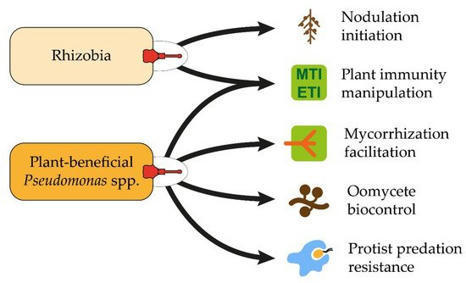
Type III secretion systems (T3SSs) are bacterial membrane-embedded nanomachines translocating effector proteins into the cytoplasm of eukaryotic cells. They have been intensively studied for their important roles in animal and plant bacterial diseases. Over the past two decades, genome sequencing has unveiled their ubiquitous distribution in many taxa of Gram-negative bacteria, including plant-beneficial ones. Here, we discuss the distribution and functions of the T3SS in two agronomically important bacterial groups: the symbiotic nodule-forming nitrogen-fixing rhizobia and the free-living plant-beneficial Pseudomonas spp. In legume-rhizobia symbiosis, T3SSs and their cognate effectors play important roles, including the modulation of the plant immune response and the initiation of the nodulation process in some cases. In plant-beneficial Pseudomonas spp., the roles of T3SSs are not fully understood, but pertain to plant immunity suppression, biocontrol against eukaryotic plant pathogens, mycorrhization facilitation, and possibly resistance against protist predation. The diversity of T3SSs in plant-beneficial bacteria points to their important roles in multifarious interkingdom interactions in the rhizosphere. We argue that the gap in research on T3SSs in plant-beneficial bacteria must be bridged to better understand bacteria/eukaryotes rhizosphere interactions and to support the development of efficient plant-growth promoting microbial inoculants.
|
|
Scooped by
Jean-Michel Ané
January 19, 2022 10:35 PM
|
In the nitrogen-fixing clade, only 10 out of 28 plant families retain the nitrogen fixation trait. It is thought that the nitrogen fixation has been lost repeatedly since it evolved. Exploring the potential abiotic and biotic factors that trigger the loss of nitrogen-fixing traits is critical to understanding the evolution and ecology of plants. I designed three studies to examine how nitrogen-fixing plants respond to N deposition, different levels of CO2, herbivore damage, and less-effective symbionts. For the first study I grew three nitrogen fixers (Alnus incana ssp. rugosa, Alnus viridis ssp. crispa, and Alnus rubra) and their close non-nitrogen fixing relatives (Betula pumila, Betula papyrifera, Betula glandulosa) at ancient (1600 ppm) or present (400 ppm) CO2 over a range of soil N levels, equivalent to 0, 10, 50, and 200 kg N ha-1 year-1. I found nitrogen-fixing plants were less competitive as soil N increased compared with non-N fixers, but at ancient CO2 levels nitrogen-fixing plants are at an advantage at higher soil N levels. The seconded study explored the interaction between Alnus incana ssp. rugosa and Orgyia leucostigma under ambient (400 ppm), future (800 ppm), and ancient (1600 ppm) CO2. Herbivores preferred to feed on nodulated plant leaves grown at 400 ppm and 1600 ppm when given a choice, compared with non-nodulated leaves. At 800 ppm CO2 nodulated plants accumulated more total phenolic compounds in response to herbivore damage than plants in the non-Frankia and non-herbivore treatments. The third study examined if Alnus spp. can select against less-effective symbiont via partner choice or sanctioning. In a co-inoculation experiment, host plants could not prevent the less effective sp+ Frankia from entering roots when inoculated with a mixture of effective (sp-) and less effective (sp+) Frankia. When plant roots were inoculated with sp+ Frankia and exposed to Argon to induce Frankia cheating, specific nodule mass was not reduced. However, Argon-treated half roots had less specific nodule activity and specific nodule mass when inoculated with sp- Frankia. My studies suggest that increasing N deposition, dropping CO2, and the less/ineffective symbionts might trigger the loss of the nitrogen fixing trait.
|
|
Scooped by
Jean-Michel Ané
January 19, 2022 10:20 PM
|
Biological nitrogen fixation through a symbiosis between the legume and free-living Bradyrhizobium is a crucial step to fulfill the nitrogenous demand of the host plant. Bradyrhizobium establishes successful symbiosis with the legumes by virtue of having a set of genes that code for nod-factors (NFs). The NFs are very much species-specific and thus, the symbionts have their own choice of host. Recently it has been reported that even in absence of NF Bradyrhizobia can establish successful nodulation in their cognate hosts. But nod-independent (NI) nodulation is only limited in some species of Bradyrhizobium. This review emphasized on types of Bradyrhizobium species, types of nodule formation, regulation of nodulation, comparative mechanism of both nod-dependent (ND) and independent nitrogen fixation in legume plants, relationship with type 3 secretion systems (T3SS) and NI nitrogen fixation by Bradyrhizobium, the role of NF receptor homolog and NF in symbiosis. Thus, this review predicts the shift of one group of symbionts to another unique type, where pathogen-associated machinery like T3SS plays a role in symbiosis.
|
|
Scooped by
Jean-Michel Ané
January 19, 2022 9:58 PM
|
Nitrogen fixation in soybean takes place in root nodules that arise from de novo cell divisions in the root cortex. Although several early nodulin genes have been identified, the mechanism behind the stimulation of cortical cell division during nodulation has not been fully resolved. Here we provide evidence that two paralogs of soybean SHORT-ROOT (GmSHR) play vital roles in soybean nodulation. Expression of GmSHR4 and GmSHR5 (GmSHR4/5) is induced in cortical cells at the beginning of nodulation, when the first cell divisions occur. The expression level of GmSHR4/5 is positively associated with cortical cell division and nodulation. Knockdown of GmSHR5 inhibits cell division in outer cortical layers during nodulation. Knockdown of both paralogs disrupts the cell division throughout the cortex, resulting in poorly organized nodule primordia with delayed vascular tissue formation. GmSHR4/5 function by enhancing cytokinin signaling and activating early nodulin genes. Interestingly, D-type cyclins act downstream of GmSHR4/5, and GmSHR4/5 form a feedforward loop regulating D-type cyclins. Overexpression of D-type cyclins in soybean roots also enhanced nodulation. Collectively, we conclude that the GmSHR4/5-mediated pathway represents a vital module that triggers cytokinin signaling and activates D-type cyclins during nodulation in soybean.
|
|
Scooped by
Jean-Michel Ané
January 17, 2022 9:01 PM
|
Once abandoned, urban and post-industrial lands can undergo a re-greening, the natural regeneration and succession that leads to surprisingly healthy plant communities, but this process is dependent upon microbial activity and the health of the parent soil. This study aimed to evaluate the effects of arbuscular mycorrhizal fungi (AMF) in facilitating plant production in post-industrial soils. In so doing, we helped to resolve the mechanism through which AMF ameliorate environmental stress in terrestrial plants. An experiment was established in which rye grass (Lolium perenne) was grown in two heavy metal-contaminated soils from an urban brownfield in New Jersey, USA, and one non-contaminated control soil. One set of the treatments received an AMF inoculum (four species in a commercial mix: Glomus intraradices, G. mosseae, G. etunicatum and G. aggregatum) and the other did not. Upon harvest, dried plant biomass, root/shoot ratio, AMF colonization, and extracellular soil phosphatase activity, a proxy for soil microbial functioning, were all measured. Plant biomass increased across all treatments inoculated with AMF, with a significantly higher average shoot and root mass compared to non-inoculated treatments. AMF colonization of the roots in contaminated soil was significantly higher than colonization in control soil, and the root/shoot ratio of plants in contaminated soils was also higher when colonized by AMF. Mycorrhizal infection may help plants to overcome the production limits of post-industrial soils as is seen here with increased infection and growth. The application of this mechanistic understanding to remediation and restoration strategies will improve soil health and plant production in urban environments.
|
|
Scooped by
Jean-Michel Ané
January 17, 2022 8:53 PM
|
Pinitol (3-O-methyl-D-chiro-inositol) is shown to be transported passively across the plant-derived symbiosome membrane in Lotus japonicus by the energy-independent polyol transporter LjPLT11. Accumulation of pinitol is crucial to maintenance of osmotic balance in nodules. RNAi lines reduced in LjPLT11 have disrupted symbiosome membranes, reduced N2 fixation by rhizobial bacteroids and reduced plant growth. There is also an increase in production of reactive oxygen species (ROS) in LjPLT11 RNAi lines, consistent with osmotic imbalance causing increased stress in nodules.
|
|
Scooped by
Jean-Michel Ané
January 17, 2022 5:36 PM
|
Most trees form symbioses with ectomycorrhizal fungi (EMF) which influence access to growth-limiting soil resources. Mesocosm experiments repeatedly show that EMF species differentially affect plant development, yet whether these effects ripple up to influence the growth of entire forests remains unknown. Here we tested the effects of EMF composition and functional genes relative to variation in well-known drivers of tree growth by combining paired molecular EMF surveys with high-resolution forest inventory data across 15 European countries. We show that EMF composition was linked to a three-fold difference in tree growth rate even when controlling for the primary abiotic drivers of tree growth. Fast tree growth was associated with EMF communities harboring high inorganic but low organic nitrogen acquisition gene proportions and EMF which form contact versus medium-distance fringe exploration types. These findings suggest that EMF composition is a strong bio-indicator of underlying drivers of tree growth and/or that variation of forest EMF communities causes differences in tree growth. While it may be too early to assign causality or directionality, our study is one of the first to link fine-scale variation within a key component of the forest microbiome to ecosystem functioning at a continental scale.
|
|
Scooped by
Jean-Michel Ané
January 17, 2022 5:25 PM
|
The shifts in adaptive strategies revealed by ecological succession and the mechanisms that facilitate these shifts are fundamental to ecology. These adaptive strategies could be particularly important in communities of arbuscular mycorrhizal fungi (AMF) mutualistic with sorghum where strong AMF succession replaces initially ruderal species with competitive ones and where the strongest plant response to drought is to manage these AMF. Although most studies of agriculturally important fungi focus on parasites, the mutualistic symbionts, AMF, constitute a research system of human-associated fungi whose relative simplicity and synchrony are conducive to experimental ecology. First, we hypothesize that, when irrigation is stopped to mimic drought, competitive AMF species should be replaced by AMF species tolerant to drought stress. We then, for the first time, correlate AMF abundance and host plant transcription to test two novel hypotheses about the mechanisms behind the shift from ruderal to competitive AMF. Surprisingly, despite imposing drought stress, we found no stress tolerant AMF, likely due to our agricultural system having been irrigated for nearly six decades. Remarkably, we found strong and differential correlation between the successional shift from ruderal to competitive AMF and sorghum genes whose products (i) produce and release strigolactone signals, (ii) perceive mycorrhizal-lipochitinoligosaccharide (Myc-LCO) signals, (iii) provide plant lipid and sugar to AMF and, (iv) import minerals and water provided by AMF. These novel insights frame new hypotheses about AMF adaptive evolution and suggest a rationale for selecting AMF to reduce inputs and maximize yields in commercial agriculture.
|
|
Scooped by
Jean-Michel Ané
January 17, 2022 5:18 PM
|
When plants are starved of phosphate, many rely on an ancient symbiosis with arbuscular mycorrhizal fungi to secure a critical supply. A new study demonstrates a molecular basis for the regulation of symbiosis by phosphate starvation.
|
|
Scooped by
Jean-Michel Ané
January 17, 2022 4:11 PM
|
Symbioses between angiosperms and rhizobia or arbuscular mycorrhizal fungi are controlled through a conserved signaling pathway. Microbe-derived, chitin-based elicitors activate plant cell-surface receptors and trigger nuclear calcium oscillations, which are decoded by a calcium/calmodulin-dependent protein kinase (CCaMK) and its target transcription factor Interacting Protein of DMI3 (IPD3). Genes encoding CCaMK and IPD3 have been lost in multiple non-mycorrhizal plant lineages yet retained among non-mycorrhizal mosses. Here, we demonstrated that the moss Physcomitrium is equipped with a bona fide CCaMK that can functionally complement a Medicago loss-of-function mutant. Conservation of regulatory phosphosites allowed us to generate predicted hyperactive forms of Physcomitrium CCaMK and IPD3. Overexpression of synthetically activated CCaMK or IPD3 in Physcomitrium led to abscisic acid (ABA) accumulation and ectopic development of brood cells, which are asexual propagules that facilitate escape from local abiotic stresses. We therefore propose a functional role for Physcomitrium CCaMK-IPD3 in stress-associated developmental reprogramming.
|
|
|
Scooped by
Jean-Michel Ané
February 6, 2022 11:11 AM
|
Very cool correlations• Arbuscular mycorrhizal fungal (AMF) symbiosis, the most ancient and widespread association with plants, exhibits phenotypes that range from mutualism to parasitism. However, we still lack an understanding of the cellular-level mechanisms that differentiate and regulate these phenotypes.
• We assessed the modulation in growth parameters and root metabolome of two sorghum accessions inoculated with two AMF species (Rhizophagus irregularis, Gigaspora gigantea), alone and in a mixture under P limiting conditions. Rhizophagus irregularis exhibited a mutualistic phenotype with increased P uptake and plant growth.
• This positive outcome was associated with a faciliatory metabolic response including higher abundance of organic acids and specialized metabolites critical to maintaining a functional symbiosis. However, G. gigantea exhibited a parasitic phenotype that led to plant growth depression and resulted in inhibitory plant metabolic responses including the higher abundance of p-hydroxyphenylacetaldoxime with antifungal properties.
• These findings suggest that the differential outcome of plant-AMF symbiosis could be regulated by or reflected in changes in the root metabolome that arises from the interaction of the plant species with the specific AMF species. A mutualistic symbiotic association prevailed when the host plants were exposed to a mixture of AMF. Our results provide a metabolome-level landscape of plant-AMF symbiosis and highlight the importance of the identity of both AMF and crop genotypes in facilitating a mutualistic AMF symbiosis.
|
|
Scooped by
Jean-Michel Ané
January 31, 2022 6:26 PM
|
Symbiotic N2-fixing microorganisms have a crucial role in the assimilation of nitrogen by eukaryotes in nitrogen-limited environments1,2,3. Particularly among land plants, N2-fixing symbionts occur in a variety of distantly related plant lineages and often involve an intimate association between host and symbiont2,4. Descriptions of such intimate symbioses are lacking for seagrasses, which evolved around 100 million years ago from terrestrial flowering plants that migrated back to the sea5. Here we describe an N2-fixing symbiont, ‘Candidatus Celerinatantimonas neptuna’, that lives inside seagrass root tissue, where it provides ammonia and amino acids to its host in exchange for sugars. As such, this symbiosis is reminiscent of terrestrial N2-fixing plant symbioses. The symbiosis between Ca. C. neptuna and its host Posidonia oceanica enables highly productive seagrass meadows to thrive in the nitrogen-limited Mediterranean Sea. Relatives of Ca. C. neptuna occur worldwide in coastal ecosystems, in which they may form similar symbioses with other seagrasses and saltmarsh plants. Just like N2-fixing microorganisms might have aided the colonization of nitrogen-poor soils by early land plants6, the ancestors of Ca. C. neptuna and its relatives probably enabled flowering plants to invade nitrogen-poor marine habitats, where they formed extremely efficient blue carbon ecosystems7.
|
|
Scooped by
Jean-Michel Ané
January 20, 2022 10:44 PM
|
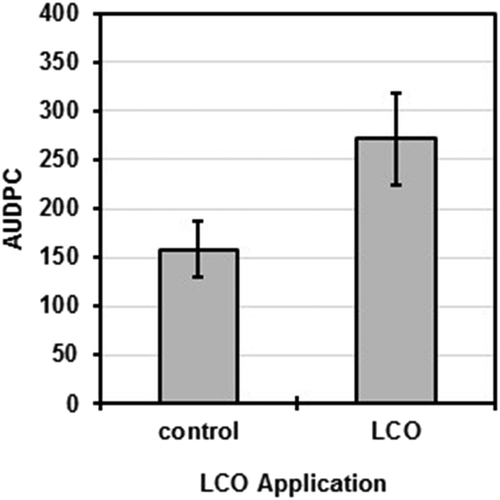
Lipo-chitooligosaccharides (LCOs) are signal molecules produced by plant root endosymbionts and have been identified, formulated, and marketed as growth-promoting adjuvants for soybean (Glycine max [L.] Merr.). Experiments were conducted under controlled environmental conditions to characterize the effects of foliar LCO applications on early symptom development of sudden death syndrome (SDS), caused by Fusarium virguliforme, and Sclerotinia stem rot (SSR), caused by Sclerotinia sclerotiorum. Treatment factors for the SDS experiment included two soybean cultivars (Sloan and CH2105R2), two inoculation levels (noninoculated control and inoculated), and two LCO applications (control and foliar LCO application), whereas two experimental soybean lines (91-38 and 91-44) and two LCO applications (water control and foliar LCO application) were used in the SSR experiment. The LCO application did not significantly influence SDS root symptom severity or early-season growth characteristics. However, on the susceptible line (P = 0.01) and with LCO application (P = 0.03), significantly larger SSR lesions developed compared with the nontreated control and resistant line. These results suggest foliar-applied LCOs have a limited effect on early root symptom development caused by F. virguliforme but increase stem symptom development caused by S. sclerotiorum.
|
|
Scooped by
Jean-Michel Ané
January 20, 2022 10:15 PM
|
In my opinion, the term "nodulin-like" (NL) genes in this paper is to say the least extremely confusing and, most of all, it's not a single "gene family". Nodulin-like (NL) genes are involved in transporting of various substances and may play key roles during the establishment of symbiosis in legumes plants. However, basic biological information of NL genes in the wheat genome is still largely unknown. Here, we identified and characterized NL genes in wheat via integrating genomic information, collinearity analysis, co-expression network analysis (WGCNA) and transcriptome analysis. In addition, we analyzed the polymorphisms and the roles of NL genes during arbuscular mycorrhizal (AM) symbiosis using a large wheat panel consists of 259 wheat genotypes. We identified 181 NL genes in the wheat genome, which were classified into SWEET, Early Nodulin-Like (ENODL), Major Facilitator Superfamily-Nodulin (MFS), Vacuolar Iron Transporter (VIT) and Early nodulin 93 (ENOD93) subfamily. The expansion of NL genes was mainly driven by segmental duplication. The bHLH genes are potential unrecognized transcription factors regulating NL genes. Moreover, two NL genes were more sensitive than other NL genes to AM colonization. The polymorphisms of NL genes are mainly due to random drift, and the natural mutation of NL genes led to significant differences in the mycorrhizal dependence of wheat in phosphorus uptake. The results concluded that NL genes potentially play important roles during AM symbiosis with wheat.
|
|
Scooped by
Jean-Michel Ané
January 19, 2022 10:24 PM
|
Root nodule symbiosis evolved ca. 100 Mya between a nitrogen-fixing bacterium and the common ancestor to the Fabales, Fagales, Rosales, and Cucurbitales plant orders. Over time the majority of the lineages derived from this ancestor lost their symbiotic capability. While extant symbiotic members found in the Fabales order (legumes) all engage in symbiosis with rhizobia, extant symbiotic members of the latter three plant orders are referred to as actinorhizal plants. These engage in symbiosis with Frankia.
Frankia is a genus of soil actinobacteria, which can be split into four phylogenetically distinct clades. The earliest divergent symbiotic clade, Frankia cluster-2, encompasses strains that have a broad host range and could not be cultured in vitro thus far with two exceptions. Based on Frankia enriched meta-genomes from whole nodules collected at different locations across the globe, it is clear there is very little diversity of Frankia cluster-2 in continental Eurasia, spanning from France to Japan. These strains are also closely related to strains found in North America. However, very little is known about strains occurring in the islands in the Pacific Ocean and the southern hemisphere.
In short, this thesis aimed to investigate the biodiversity of the earliest divergent symbiotic Frankia clade and to understand how Frankia spread across the globe (Study 1 and Study 2). From nodules collected in study 1, a novel Streptomyces species was identified and declared (Study 3). The thesis also aimed to study genetic changes within Frankia cluster-2 which might be associated with their endosymbiotic lifestyle and low saprotrophic potential (Study 4 and Study 5).
|
|
Scooped by
Jean-Michel Ané
January 19, 2022 10:19 PM
|
▪Plants simultaneously interact with a range of biotrophic symbionts, ranging from mutualists such as arbuscular mycorrhizal fungi (AMF), to parasites such as the potato cyst nematode (PCN). The exchange of mycorrhizal-acquired nutrients for plant-fixed carbon is well-studied, however the impact of competing symbionts remains under-explored.
▪In this study, we examined mycorrhizal nutrient and host resource allocation in potato with and without AMF and PCN using radioisotope tracing, whilst determining the consequences of such allocation.
▪The presence of PCN disrupted carbon for nutrient exchange between plants and AMF, with plant-C overwhelmingly obtained by the nematodes. Despite this, AMF maintained transfer of nutrients on PCN-infected potato, ultimately losing out in their carbon for nutrient exchange with the host. Whilst PCN exploited the greater nutrient reserves to drive population growth on AMF-potato, the fungus imparted tolerance to allow the host to bear the parasitic burden.
▪Our findings provide important insights into the below-ground dynamics of plant-AMF symbioses, where simultaneous nutritional and non-nutritional benefits conferred by AMF to hosts and their parasites are seldom considered in plant community dynamics. Our findings suggest this may be a critical oversight, particularly in the consideration of carbon and nutrient flows in plant and soil communities.
|
|
Scooped by
Jean-Michel Ané
January 17, 2022 9:14 PM
|
Diversity in arbuscular mycorrhizal fungi (AMF) contributes to biodiversity and resilience in natural environments and healthy agricultural systems. Functional complementarity exists among species of AMF in symbiosis with their plant hosts, but the molecular basis of this is not known. We hypothesise this is in part due to the difficulties that current sequence assembly methodologies have assembling sequences for intrinsically disordered proteins (IDPs) due to their low sequence complexity. IDPs are potential candidates for functional complementarity because they often exist as extended (non-globular) proteins providing additional amino acids for molecular interactions. Rhizophagus irregularis arabinogalactan-protein-like proteins (AGLs) are small secreted IDPs with no known orthologues in AMF or other fungi. We developed a targeted bioinformatics approach to identify highly variable AGLs/IDPs in RNA-sequence datasets. The approach includes a modified multiple k-mer assembly approach (Oases) to identify candidate sequences, followed by targeted sequence capture and assembly (mirabait-mira). All AMF species analysed, including the ancestral family Paraglomeraceae, have small families of proteins rich in disorder promoting amino acids such as proline and glycine, or glycine and asparagine. Glycine- and asparagine-rich proteins also were found in Geosiphon pyriformis (an obligate symbiont of a cyanobacterium), from the same subphylum (Glomeromycotina) as AMF. The sequence diversity of AGLs likely translates to functional diversity, based on predicted physical properties of tandem repeats (elastic, amyloid, or interchangeable) and their broad pI ranges. We envisage that AGLs/IDPs could contribute to functional complementarity in AMF through processes such as self-recognition, retention of nutrients, soil stability, and water movement.
|
|
Scooped by
Jean-Michel Ané
January 17, 2022 8:53 PM
|
Bacteriocins are narrow spectrum antibiotics of bacterial origin that can affect competition in resource-limited environments such as the rhizosphere. Therefore, bacteriocins may be good candidates for manipulation in order to generate more competitive inocula for soybean. In this study, B. japonicum FN1 along with other Bradyrhizobia in our culture collection were screened for bacteriocin-like activity. A total of five distinct inhibitory activities could be observed. FN1 genes putatively involved in bacteriocin production were computationally identified. These genes were mutagenized and the subsequent strains were screened for loss of inhibitory activity. Mutant strain BRJ-48, with an insert in bjfn1_01204, displayed a loss of the ability to inhibit an indicator strain. This loss could be complemented by the introduction of a plasmid expressing bjfn1_01204 in trans. The strain carrying the mutation did not affect competition in broth cultures, but was shown to be less competitive for nodule occupancy. Annotation suggests that bjfn1_01204 encodes a carboxymuconolactone decarboxylase, however the direct contribution of how this enzyme contributes to inhibiting the tester strain remains unknown.
|
|
Scooped by
Jean-Michel Ané
January 17, 2022 8:51 PM
|
Dalbergoids are typified by crack-entry symbiosis which is evidenced to be Nod Factor (NF)- independent in several Aeschynomene legumes. Natural symbionts of the dalbergoid legume Arachis hypogaea are always NF-producing, prompting us to check whether symbiosis in this legume could also be NF-independent. For this, we followed the symbiosis with two NF containing bradyrhizobial strains- SEMIA6144, a natural symbiont of Arachis and ORS285, a versatile nodulator of Aeschynomene legumes, along with their corresponding nodulation (nod) mutants. Additionally, we investigated NF-deficient bradyrhizobia like BTAi1, a natural symbiont of Aeschynomene indica and the WBOS strains that were natural endophytes of Oryza sativa, collected from an Arachis-Oryza intercropped field. While SEMIA6144ΔnodC was non-nodulating, both ORS285 and ORS285ΔnodB could induce functional nodulation, although with lower efficiency than SEMIA6144. On the other hand, all the NF-deficient strains- BTAi1, WBOS2 and WBOS4 showed comparable nodulation with ORS285 indicating Arachis to harbour a NF-independent mechanism of symbiosis. Intriguingly, symbiosis in Arachis, irrespective of whether it was NF-dependent or independent, was always associated with the curling or branching of the rosette root hairs at the lateral root bases. Thus, despite being predominantly described as NF-dependent legume, Arachis does retain a vestigial, less-efficient form of NF-independent symbiosis.
|
|
Scooped by
Jean-Michel Ané
January 17, 2022 5:30 PM
|
Whether too small, slow or concealed, the majority of species on Earth go unseen by humans. One such rather unobservable group of organisms are the arbuscular mycorrhizal (AM) fungi, who form beneficial symbioses with plants. AM symbiosis is ubiquitous and vitally important globally in ecosystem functioning, but partly as a consequence of its invisibility, it receives disproportionally little attention and appreciation. Yet AM fungi, and other unseen organisms, need not remain overlooked: from decades of scientific research there exists a goldmine of visual data, which if shared effectively we believe can alleviate the issues of low awareness. Here, we use examples from our experience of public engagement with AM symbiosis as well as evidence from the literature to outline the diverse ways in which invisible organisms can be visualised for a broad audience. We highlight outcomes and knock-on consequences of this visualisation, ranging from improved human mental health to environmental protection, making the case for researchers to share their images more widely for the benefit of plants (and fungi and other overlooked organisms), people and planet.
|
|
Scooped by
Jean-Michel Ané
January 17, 2022 5:21 PM
|
Whether a microbe is free-living or associated with a host from across the tree of life, its existence depends on a limited number of elements and electron donors and acceptors. Yet divergent approaches have been used by investigators from different fields. The “environment first” research tradition emphasizes thermodynamics and biogeochemical principles, including the quantification of redox environments and elemental stoichiometry to identify transformations and thus an underlying microbe. The increasingly common “microbe first” research approach benefits from culturing and/or DNA sequencing methods to first identify a microbe and encoded metabolic functions. Here, the microbe itself serves as an indicator for environmental conditions and transformations. We illustrate the application of both approaches to the study of microbiomes and emphasize how both can reveal the selection of microbial metabolisms across diverse environments, anticipate alterations to microbiomes in host health, and understand the implications of a changing climate for microbial function.
|
|
Scooped by
Jean-Michel Ané
January 17, 2022 5:16 PM
|
Nutrient availability is a determining factor for crop yield and quality. While fertilization is a major approach for improving plant nutrition, its efficacy can be limited and the production and application of fertilizers frequently bring problems to the environment. A large number of soil microbes are capable of enhancing plant nutrient acquisition and thereby offer environmentally benign solutions to meet the requirements of plant nutrition. Herein we provide summations of how beneficial microbes enhance plant acquisition of macronutrients and micronutrients. We also review recent studies on nutrition-dependent plant-microbe interactions, which highlight the plant’s initiative in establishing or deterring the plant-microbe association. By dissecting complex signaling interactions between microbes within the root microbiome, a greater understanding of microbe-enhanced plant nutrition under specific biotic and abiotic stresses will be possible.
|


 Scoop.it!