Your new post is loading...

|
Scooped by
Jean-Michel Ané
March 13, 2022 1:06 PM
|
Flavonoids, isoflavonoids, and phytohormones are small metabolites of plants, which are involved in the regulation of plant development and/or defense against pathogens. Quantitation of these metabolites in plants is important to basic research on crop protection and in the food and herbal industry. Hence, a robust, reliable, and sensitive method is required for the analysis of these compounds in plant samples. In the present study, a high-performance liquid chromatographic-tandem mass spectrometric (HPLC–ESI-MS/MS) method was developed and validated for the determination of isoflavonoids including genistein, daidzein, formononetin, biochanin A, 2′-hydroxyformononetin, 2′-methoxyformononetin, medicarpin, flavonoids; liquiritigenin, naringenin, and phytohormones; salicylic acid and jasmonic acid in Medicago truncatula. The analytes were separated by means of C-18, reversed-phase chromatography, and detected using QTRAP mass spectrometer. The on-column limit of detection of all the analytes was as low as 0.03 pg, whereas the limit of quantification of all the compounds was observed up to 0.1 pg levels. Further the method was also validated in terms of selectivity, linearity (r2 > 0.99), recovery (90.6–110.3%), accuracy (RE% ≤ 3%) and precision (RSD% ≤ 3%). As a proof of concept, the developed method was successfully used for the quantitation of these metabolites from leaf extract of M. truncatula.
|
|
Scooped by
Jean-Michel Ané
March 5, 2022 9:43 PM
|
Arbuscular mycorrhizal fungi help their host plant in the acquisition of nutrients, and this association is itself impacted by soil nutrient levels. High phosphorus levels inhibit the symbiosis, whereas high nitrogen levels enhance it. The genetic mechanisms regulating the symbiosis in response to soil nutrients are poorly understood. Here, we characterised the symbiotic phenotypes in four Medicago truncatula Tnt1-insertion mutants affected in arbuscular mycorrhizal colonisation. We located their Tnt1 insertions and identified alleles for two genes known to be involved in mycorrhization, RAM1 and KIN3. We compared the effects of the kin3-2 and ram1-4 mutations on gene expression, revealing that the two genes alter the expression of overlapping but not identical gene sets, suggesting that RAM1 acts upstream of KIN3. Additionally, KIN3 appears to be involved in the suppression of plant defences in response to the fungal symbiont. KIN3 is located on the endoplasmic reticulum of arbuscule-containing cortical cells, and kin3-2 mutants plants hosted significantly fewer arbuscules than the wild type. KIN3 plays an essential role in the symbiotic response to soil nitrogen levels, as, contrary to wild-type plants, the kin3-2 mutant did not exhibit increased root colonisation under high nitrogen.
|
|
Scooped by
Jean-Michel Ané
March 1, 2022 5:10 PM
|
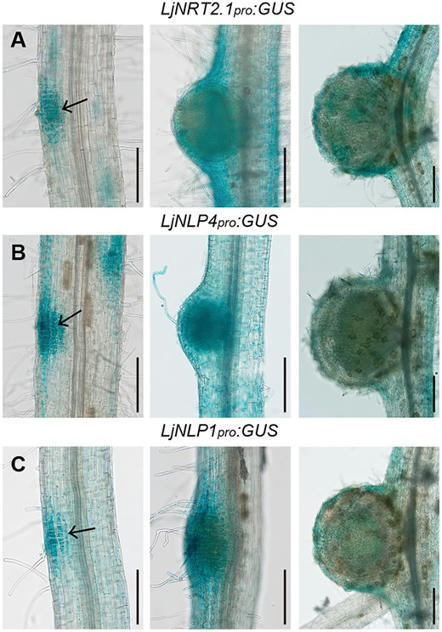
Legumes have adaptive mechanisms that regulate nodulation in response to the amount of nitrogen in the soil. In Lotus japonicus, two NODULE INCEPTION (NIN)-LIKE PROTEIN (NLP) transcription factors, LjNLP4 and LjNLP1, play pivotal roles in the negative regulation of nodulation by controlling the expression of symbiotic genes in high nitrate conditions. Despite an improved understanding of the molecular basis for regulating nodulation, how nitrate plays a role in the signaling pathway to negatively regulate this process is largely unknown. Here, we show that nitrate transport via NITRATE TRANSPORTER 2.1 (LjNRT2.1) is a key step in the NLP signaling pathway to control nodulation. A mutation in the LjNRT2.1 gene attenuates the nitrate-induced control of nodulation. LjNLP1 is necessary and sufficient to induce LjNRT2.1 expression, thereby regulating nitrate uptake/transport. Our data suggest that LjNRT2.1-mediated nitrate uptake/transport is required for LjNLP4 nuclear localization and induction/repression of symbiotic genes. We further show that LjNIN, a positive regulator of nodulation, counteracts the LjNLP1-dependent induction of LjNRT2.1 expression, which is linked to a reduction in nitrate uptake. These findings suggest a plant strategy in which nitrogen acquisition switches from obtaining nitrogen from the soil to symbiotic nitrogen fixation.
|
|
Scooped by
Jean-Michel Ané
February 10, 2022 2:06 PM
|
Arbuscular mycorrhizal (AM) symbiosis relies on the formation of arbuscules for efficient nutrient exchange between plants and AM fungi. In this study, we identified a novel kinase gene in rice named OsADK1 (Arbuscule Development Kinase 1) that is required for arbuscule development.
By obtaining OsADK1pro::GUS transgenic rice plants and also generating Osadk1 mutants via CRISPR/Cas9 technique, OsADK1 was revealed to be specifically induced in the arbusculated cortical cells and mutations in OsADK1 resulted in an extremely low colonisation rate (c. 3%) of rice roots by AM fungus Rhizophagus irregularis.
In the mutant roots, the very few observed arbuscules nearly all arrested at an early ‘trunk-forming’ phase without forming any branches. Increasing the inoculum strength of AM fungus or cocultivation with a wild-type nurse plant did not result in the rescue of the arbuscule phenotype. Transcriptome sequencing of both nursed and un-nursed Osadk1 mutants then revealed that the mutation of OsADK1 could greatly affect the AM symbiotic programme, including many key transcription factors such as RAM1 and WRI5.
OsADK1 therefore represents a new rice kinase that is required for arbuscule branching. Its identification opens a new window to explore the elaborate signal transduction pathway that determines arbuscule development during plant–fungus symbiosis.
|
|
Scooped by
Jean-Michel Ané
February 8, 2022 11:09 AM
|
Sea buckthorn (Hippophae rhamnoides), a horticulturally multipurpose species in the family Elaeagnaceae, can build associations with Frankia actinomycetes to enable symbiotic nitrogen-fixing. Currently, no high-quality reference genome is available for an actinorhizal plant, which greatly hinders the study of actinorhizal symbiotic nodulation.
Here, by combining short-read, long-read, and Hi-C sequencing technologies, we generated a chromosome-level reference genome of H. rhamnoides (scaffold N50: 65 Mb, genome size: 730 Mb) and predicted 30,812 protein-coding genes on 12 pseudochromosomes.
H. rhamnoides was found to share a high proportion of symbiotic nodulation genes with Medicago truncatula, implying a shared molecular mechanism between actinorhizal and rhizobial symbioses.
Phylogenetic analysis clustered the three paralogous NODULE INCEPTION (NIN) genes of H. rhamnoides with those of other nodulating species, forming the NIN group that was most likely evolved from the ancestral NLP group. The genome of H. rhamnoides will help us to decipher the underlying genetic programming of actinorhizal symbiosis, and our high-quality genome and transcriptomic resources will make H. rhamnoides a new excellent model plant for actinorhizal symbiosis research.
|
|
Scooped by
Jean-Michel Ané
February 8, 2022 10:48 AM
|
Since the discovery of mycorrhizas, dogmas have been developed regarding their function, ecology, and distribution. We explore if these dogmas are valid, and if there are research biases toward regions inhabited by most researchers and away from regions inhabited by most plant species. We found, first, that the mycorrhizal status is known in less than 1% of plant species, with few having proven mycorrhizal benefits for growth and development. Second, the mycorrhizal status of a plant species varies within families, even genera. Third, mycorrhizas are important for phosphorus acquisition only within a narrow phosphorus range. Fourth, mycorrhizal plants are not uniform in their response to environment; taxonomy, phylogeny and continental history strongly drive mycorrhizal diversity. For example, the center of diversification of Ericaceae and Orchidaceae is in the neotropics, rather than, as recently claimed, in cold and high-latitude climates. Understanding the importance of mycorrhizas at the family-wide and biome-wide level is therefore conflicted by a research bias toward research-intensive regions outside the phylogenetic hotspots of diversification. The current precepts on mycorrhizas provide important starting points for hypotheses to robustly test when and where mycorrhizas play a role in determining ecological trajectory. The time has come to move forward and revisit past assumptions and update the dogmas, rather than assume functional significance in terms of nutritional benefits from studies on extraneous regions and species. We conclude that non-nutritional benefits deserve far greater attention.
|
|
Scooped by
Jean-Michel Ané
February 7, 2022 10:23 PM
|
Aims
Root colonization by arbuscular mycorrhizal fungi (AMF) enhances plant growth and the symbiosis can play a major role in enhancing drought tolerance of host plants. Our aim was to determine whether AMF can mitigate negative effects of drought stress on productivity in annual legume species used in seed mixtures for permanent pastures in agroecosystems in the Iberian Peninsula.
Methods
Five species – Trifolium subterraneum, Trifolium incarnatum, Trifolium resupinatum, Trifolium vesiculosum and Ornithopus sativus – were grown in pots, non-inoculated or inoculated with AMF, at different watering regimes (no-stress, moderate drought stress, severe drought stress). We measured colonization levels, mycorrhizal dependency, biomass, and plant and substrate phosphorus (P) status.
Results
In all species, AMF led to a significantly higher biomass and tissue P, and water deficit significantly decreased biomass, with the responses to mycorrhization and watering being species-specific. In all Trifolium spp. watering did not affect mycorrhizal growth dependency (MGD), but mycorrhizal P-dependency (MPD) was significantly higher with drought. However, in Ornithopus, MGD was lower with severe drought, while MPD in this species was not affected by watering.
Conclusions
Biomass accumulation in the studied species benefitted from AMF symbiosis, although mycorrhizae did not mitigate drought effects on growth. Drought stress severity determined the carbon allocation to the different fungal structures. Under moderate drought stress carbon allocation to fungal structures increased, outweighing plant growth benefits by P or water gain of the symbiosis, while severe drought stress led to carbon limitation for both plant and fungi.
|
|
Scooped by
Jean-Michel Ané
February 7, 2022 10:11 PM
|
For the establishment of the Arbuscular Mycorrhiza (AM) symbiosis it is essential that epidermis and cortical cells from plant roots suffer a strong reorganization to allow the penetration of intracellular fungal hyphae. In the same manner, the new formation of a periarbuscular membrane and a symbiotic interface with specific compositions are required for a functional symbiosis. It is believed that the cytoskeleton of the plant host plays an essential role in these processes, particularly the microtubule (MT) cytoskeleton, as huge modifications have been observed in the MT array of root cells accompanying the establishment of the AM symbiosis. Recent research has established a link between microtubule rearrangements and arbuscule functioning. However, further research is required to elucidate the specific functions of MT cytoskeleton along the different stages of the arbuscule life cycle and to unravel the signals triggering these changes.
|
|
Scooped by
Jean-Michel Ané
February 7, 2022 10:02 PM
|
Vicia sativa L. (common vetch, n = 6) is an annual, herbaceous, climbing legume, originating in the Fertile Crescent of the Middle East and now widespread in the Mediterranean basin, West, Central and Eastern Asia, North and South America. V. sativa is of economic importance as a forage legume in countries such as Australia, China, and the USA, and contributes valuable nitrogen to agricultural rotation cropping systems. To accelerate precision genome breeding and genomics-based selection of this legume, we present a chromosome-level reference genome sequence for V. sativa, constructed using a combination of long-read Oxford Nanopore sequencing, short-read Illumina sequencing, and high-throughput chromosome conformation data (CHiCAGO and Hi-C) analysis. The chromosome-level assembly of six pseudo-chromosomes has a total genome length of 1.65 Gbp, with a median contig length of 684 Kbp. BUSCO analysis of the assembly demonstrated very high completeness of 98% of the dicotyledonous orthologs. RNA-seq analysis and gene modelling enabled the annotation of 53,218 protein-coding genes. This V. sativa assembly will provide insights into vetch genome evolution and be a valuable resource for genomic breeding, genetic diversity and for understanding adaption to diverse arid environments.
|
|
Scooped by
Jean-Michel Ané
February 7, 2022 4:56 PM
|
Symbiotic nitrogen fixation is based on the symbiotic relationship between rhizobia and plants and a sustainable green way to maintain fertility in modern agriculture. However, the lack of a thorough understanding on the mechanisms seriously hinders the application of this biological way to enhance agricultural production. In the present study, we discovered an interesting mutation of NoiD in Rhizobium leguminosarum biovar viciae 3841 (R.l. viciae 3841). This DedA membrane protein, affected the phenotypic development on both rhizobia and host (Pisum sativum). Compared with R.l. viciae 3841, the noiD mutant strain (△noiD) was present as independent small colonies, and the proportion of Rhizobium cells that were of shorter size increased. Inoculating △noiD to Pisum sativum resulted in premature senility and nodulation defects at 28 dpi with a 28.86% reduction of root nitrogen fixation efficiency compared to wild-type group. Furthermore, we showed that these are mainly attributed to an increase in temperature, pH, and ionic osmolarity sensitivity of the rhizobia with the noiD mutation. These results indicate that NoiD participates in the homeostasis mechanism of R.l. viciae 3841, and can directly influence nodulation and nitrogen fixation efficiency in Pisum sativum.
|
|
Scooped by
Jean-Michel Ané
February 7, 2022 4:48 PM
|
Arbuscular mycorrhizal fungi (AMF) community and the Glomalin-related soil protein (GRSP) they produce plays important roles in maintaining soil ecosystem functions, promoting ecological restoration, and are important for monitoring changes in soil health from land use change. This research addressed the subtle modifications of AMF and GRSP in different land use types and their association with soil properties. Our objectives were: 1) to assess land use effects on AMF spore density, diversity, and composition besides glomalin fractions (EEG, easily extracted GRSP; TG, total GRSP), and 2) to quantify the relationships between glomalin, AMF community metrics, soil organic carbon (SOC), and key soil quality parameters. Soils were collected in the dry and rainy seasons of 2018 under five land uses, including: three types of agroforestry systems (AS1, AS2 and AS3), an unmanaged pasture and a secondary forest in the state of Rio de Janeiro, Brazil. Linear mixed-effects model and multivariate analyses showed that land uses had influenced the AMF community, meanly at the family level. On the other hand, seasonality has not proved to be an essential factor that modulates the changes of the AMF community and glomalin production. The management practices had influenced AMF sporulation and the number of total species in agroforestry systems. Glomalin is a potential contributor for SOC, mainly in agroforestry systems and pasture plots. Moreover, we found a correlation between the AMF community and key soil parameters. For example, most of the AMF families and spore density were positively correlated with the stability of soil aggregates and SOC. Our findings shed light on that land-use change can shift the AMF community, glomalin and their relationship to key soil quality parameters. Moreover, the adoption of agroforestry systems indicates maintenance of biodiversity and other soil quality parameters with future implications for their use to recover degraded areas.
|
|
Scooped by
Jean-Michel Ané
February 7, 2022 4:45 PM
|
Most terrestrial plants establish symbiotic associations with mycorrhizal fungi for accessing essential plant nutrients. Mycorrhizal fungi have been frequently reported to interconnect plants via a common mycelial network (CMN), in which nutrients and signaling compounds can be exchanged between the connected plants. Several studies have been performed to demonstrate the potential effects of the CMN mediating resource transfer and its importance for plant fitness. Due to several contrasting results, different theories have been developed to predict benefits or disadvantages for host plants involved in the network and how it might affect plant communities. However, the importance of the mycelium connections for resources translocation compared to other indirect pathways, such as leakage of fungi hyphae and subsequent uptake by neighboring plant roots, is hard to distinguish and quantify. If resources can be translocated via mycelial connections in significant amounts that could affect plant fitness, it would represent an important tactic for plants co-existence and it could shape community composition and dynamics. Here, we report and critically discuss the most recent findings on studies aiming to evaluate and quantify resources translocation between plants sharing a CMN and predict the pattern that drives the movement of such resources into the CMN. We aim to point gaps and define open questions to guide upcoming studies in the area for a prospect better understanding of possible plant-to-plant interactions via CMN and its effect in shaping plants communities. We also propose new experiment set-ups and technologies that could be used to improve previous experiments. For example, the use of mutant lines plants with manipulation of genes involved in the symbiotic associations, coupled with labeling techniques to track resources translocation between connected plants, could provide a more accurate idea about resource allocation and plant physiological responses that are truly accountable to CMN.
|
|
Scooped by
Jean-Michel Ané
February 6, 2022 11:17 AM
|
|
|
|
Scooped by
Jean-Michel Ané
March 13, 2022 12:22 PM
|
Most land plants benefit from endosymbiotic interactions with mycorrhizal fungi, including legumes and some nonlegumes that also interact with endosymbiotic nitrogen (N)-fixing bacteria to form nodules. In addition to these helpful interactions, plants are continuously exposed to would-be pathogenic microbes: discriminating between friends and foes is a major determinant of plant survival. Recent breakthroughs have revealed how some key signals from pathogens and symbionts are distinguished. Once this checkpoint has been passed and a compatible symbiont is recognized, the plant coordinates the sequential development of two types of specialized structures in the host. The first serves to mediate infection, and the second, which appears later, serves as sophisticated intracellular nutrient exchange interfaces. The overlap in both the signaling pathways and downstream infection components of these symbioses reflects their evolutionary relatedness and the common requirements of these two interactions. However, the different outputs of the symbioses, phosphate uptake versus N fixation, require fundamentally different components and physical environments and necessitated the recruitment of different master regulators, NODULE INCEPTION-LIKE PROTEINS, and PHOSPHATE STARVATION RESPONSES, for nodulation and mycorrhization, respectively.
|
|
Scooped by
Jean-Michel Ané
March 4, 2022 5:43 PM
|
Plant interactions with arbuscular mycorrhizal fungi, beneficial soil bacteria, and nutrient homeostasis are optimized by an interconnected network of peptide signals.
Symbiosis-regulating signaling peptides are members of large protein families, often with a variety of functions in plant physiology and development.
The mechanism of peptide-signaling specificity in the context of plant–microbe interactions, nutrient homeostasis, and cross-kingdom peptide mimicry involves antagonism and coordination between individual peptide signals.
Although many of the symbiosis-associated peptide signaling pathways converge at common downstream signaling hubs and intersect with phytohormone signaling, the signaling outcomes are, at least partially, unique.
|
|
Scooped by
Jean-Michel Ané
February 21, 2022 1:29 PM
|
Most land plants benefit from endosymbiotic interactions with mycorrhizal fungi, including legumes and some non-legumes that also interact with endosymbiotic nitrogen-fixing bacteria to form nodules. In addition to these helpful interactions, plants are continuously exposed to would-be pathogenic microbes: discriminating between friends and foes is a major determinant of plant survival. Recent breakthroughs have revealed how some key signals from pathogens and symbionts are distinguished. Once this checkpoint has been passed and a compatible symbiont is recognized, the plant coordinates the sequential development of two types of specialized structures in the host. The first serve to mediate infection, and the second, which appear later, serve as sophisticated intracellular nutrient exchange interfaces. The overlap in both the signaling pathways and downstream infection components of these symbioses reflects their evolutionary relatedness and the common requirements of these two interactions. However, the different outputs of the symbioses, phosphate uptake vs. nitrogen fixation, require fundamentally different components and physical environments and necessitated the recruitment of different master regulators, NLPs and PHRs, for nodulation and mycorrhization, respectively.
|
|
Scooped by
Jean-Michel Ané
February 8, 2022 11:28 AM
|
Prof. Dr. Caroline Gutjahr Professorship for Plant Genetics at the TUM School of Life Sciences, Prof. Dr. Caroline Gutjahr looks at Lotus japonicus seedlings that grow on a petri dish. It stands in front of a climate chamber, in the plant breeding room; The seedlings were subjected to a hairy root transformation with Agrobacterium rhizogenes. This gives transgenic roots for the investigation of molecular processes during the arbusculative mycorrhizal symbiosis. If the plants have grown even more, they are converted into pots and inoculated (stained) with the symbiotic mushroom.
|
|
Scooped by
Jean-Michel Ané
February 8, 2022 11:07 AM
|
Coordinated sharing of nutritional resources is a central feature of symbiotic interactions, and, despite the importance of this topic, many questions remain concerning the identification, activity, and regulation of transporter proteins involved. Recent progress in obtaining genome and transcriptome sequences for symbiotic organisms provides a wealth of information on plant, fungal, and bacterial transporters that can be applied to these questions. In this update, we focus on legume–rhizobia and mycorrhizal symbioses and how transporters at the symbiotic interfaces can be regulated at the protein level. We point out areas where more research is needed and ways that an understanding of transporter mechanism and energetics can focus hypotheses. Protein phosphorylation is a predominant mechanism of posttranslational regulation of transporters in general and at the symbiotic interface specifically. Other mechanisms of transporter regulation, such as protein–protein interaction, including transporter multimerization, polar localization, and regulation by pH and membrane potential are also important at the symbiotic interface. Most of the transporters that function in the symbiotic interface are members of transporter families; we bring in relevant information on posttranslational regulation within transporter families to help generate hypotheses for transporter regulation at the symbiotic interface.
|
|
Scooped by
Jean-Michel Ané
February 8, 2022 10:16 AM
|
Upon sensing nitrate, NODULE INCEPTION (NIN)-like protein (NLP) transcription factors alter gene expression to promote nitrate uptake and utilization. Of the nine NLPs in Arabidopsis, the physiological roles of only three NLPs (NLP6–NLP8) have been characterized to date. To evaluate the unique and redundant roles of Arabidopsis NLPs, we assessed the phenotypes of single and higher order nlp mutants. Unlike other nlp single mutants, nlp2 and nlp7 single mutants showed a reduction in shoot fresh weight when grown in the presence of nitrate as the sole nitrogen source, indicating that NLP2, like NLP7, plays a major role in vegetative growth. Interestingly, the growth defect of nlp7 recovered upon the supply of ammonium or glutamine, whereas that of nlp2 did not. Furthermore, complementation assays using chimeric constructs revealed that the coding sequence, but not the promoter region, of NLP genes was responsible for the differences between nlp2 and nlp7 single mutant phenotypes, suggesting differences in protein function. Importantly, nitrate utilization was almost completely abolished in the nlp septuple mutant (nlp2 nlp4 nlp5 nlp6 nlp7 nlp8 nlp9), suggesting that NLPs other than NLP2 and NLP7 also assist in the regulation of nitrate-inducible gene expression and nitrate-dependent promotion of vegetative growth in Arabidopsis.
|
|
Scooped by
Jean-Michel Ané
February 7, 2022 10:18 PM
|
Background
Rainfed agriculture plays key role in ensuring food security and maintain ecological balance. Especially in developing areas, most grain food are produced rainfed agricultural ecosystem. Therefore, the increase of crop yields in rainfed agricultural ecosystem becomes vital as well as ensuring global food security.
Methods
The potential roles of arbuscular mycorrhizal fungi (AMF) in improving crop yields under rainfed condition were explored based on 546 pairs of observations published from 1950 to 2021.
Results
AMF inoculation increased 23.0% crop yields based on 13 popular crops under rainfed condition. Not only was crop biomass of shoot and root increased 24.2% and 29.6% by AMF inocula, respectively but also seed number and pod/fruit number per plant were enhanced markedly. Further, the effect of AMF on crop yields depended on different crop groups. AMF improved more yield of N-fixing crops than non-N-fixing crops. The effect of AMF changed between grain and non-grain crops with the effect size of 0.216 and 0.352, respectively. AMF inoculation enhances stress resistance and photosynthesis of host crop in rainfed agriculture.
Conclusion
AMF increased crop yields by enhancing shoot biomass due to the improvement of plant nutrition, photosynthesis, and stress resistance in rainfed field. Our findings provide a new view for understanding the sustainable productivity in rainfed agroecosystem, which enriched the theory of AMF functional diversity. This study provided a theoretical and technical way for sustainable production under rainfed agriculture.
|
|
Scooped by
Jean-Michel Ané
February 7, 2022 10:06 PM
|
The rhizosphere is a challenging ecosystem to study from a systems biology perspective due to its diverse chemical, physical, and biological characteristics. In the past decade, microfluidic platforms (e.g. plant-on-a-chip) have created an alternative way to study whole rhizosphere organisms, like plants and microorganisms, under reduced-complexity conditions. However, in reducing the complexity of the environment, it is possible to inadvertently alter organism phenotype, which biases laboratory data compared to in situ experiments. To build back some of the complexity of the rhizosphere in a fully-defined, parameterized approach we have developed a rhizosphere-on-a-chip platform that mimics the physical structure of soil. We demonstrate, through computational simulation, how this synthetic soil structure can influence the emergence of molecular “hotspots” and “hotmoments” that arise naturally from the plant's exudation of labile carbon compounds. We establish the amenability of the rhizosphere-on-a-chip for long-term culture of Brachypodium distachyon, and experimentally validate the presence of exudate hotspots within the rhizosphere-on-a-chip pore spaces using liquid microjunction surface sampling probe mass spectrometry.
|
|
Scooped by
Jean-Michel Ané
February 7, 2022 9:59 PM
|
Methanocaldococcus sp. strain FS406-22, a hyperthermophilic methanogen, fixes nitrogen with a minimal set of known nif genes. Only four structural nif genes, nifH, nifD, nifK, and nifE, are present in a cluster, and a nifB homolog is present elsewhere in the genome. nifN, essential for the final synthesis of the iron-molybdenum cofactor of nitrogenase in well-characterized diazotrophs, is absent from FS406-22. In addition, FS406-22 encodes four novel hypothetical proteins, and a ferredoxin, in the nif cluster. Here, we develop a set of genetic tools for FS406-22 and test the functionality of genes in the nif cluster by making markerless in-frame deletion mutations. Deletion of the gene for one hypothetical protein, designated Hp4, delayed the initiation of diazotrophic growth and decreased the growth rate, an effect we confirmed by genetic complementation. NifE also appeared to play a role in diazotrophic growth, and the encoding of Hp4 and NifE in a single operon suggested they may work together in some way in the synthesis of the nitrogenase cofactor. No role could be discerned for any of the other hypothetical proteins, nor for the ferredoxin, despite the presence of these genes in a variety of related organisms. Possible pathways and evolutionary scenarios for the synthesis of the nitrogenase cofactor in an organism that lacks nifN are discussed.
|
|
Scooped by
Jean-Michel Ané
February 7, 2022 4:55 PM
|
The necessity to gain deep insights regarding the overall metabolic efficiency of soybean functional acclimation to tackle phosphate (Pi) starvation has led us to discuss the current knowledge on the carbon (C) metabolic changes in soybean nodules under such Pi stress conditions in this review. Soybean possesses numerous coping strategies to conserve Pi utilization, while decreasing the C cost to promote nodule function during Pi stress. This could be achieved through the modulation of carbohydrate importation, mobilization of storage reserves, modification of respiratory pathways and exportation of nitrogenous (N) products. Under such circumstances, soybean regulates the C partitioning among the various nutrient-acquiring structures and the C flux through different metabolic pathways (primary and secondary). However, substantial genetic variation leading to nodule acclimation to Pi stress is notable and dependent on the crop genotypes and/or rhizobial strains that are in symbiosis. Several Pi deficiency-induced responses (e.g., mycorrhizal association, exudative burst and secondary metabolism) can act to increase the Pi levels in nodules, which are, unavoidably, often associated with a heavy burden to the overall C budget of the host. Alternative non-adenylate respiratory pathways (e.g., glycolytic bypass) and ureide export (i.e., less amide transport) are metabolically less expensive, and thus more favorable during Pi stress.
|
|
Scooped by
Jean-Michel Ané
February 7, 2022 4:46 PM
|
•Mycorrhizal colonization improves plant performance of maize in presence of Cd stress.
•Common mycorrhizal networks (CMNs) transfer Cd from maize to soybean plants.
•Cd transport genes were induced in soybean when CMN-connected to Cd-treated maize.
|
|
Scooped by
Jean-Michel Ané
February 6, 2022 11:19 AM
|
Histone methylation and acetylation are key processes in the epigenetic regulation of plant growth, development, and responses to environmental stimuli. The genes encoding for the enzymes that are responsible for these chromatin post-translational modifications, referred to as histone modification genes (HMGs), have been poorly investigated in Leguminosae species, despite their importance for establishment and activity of nitrogen-fixing nodules. In silico analysis of Medicago truncatula HMGs identified 81 histone methyltransferases, 46 histone demethylases, 64 histone acetyltransferases, and 15 histone deacetylases. MtHMGs were analyzed for their structure and domain composition, and some combinations that were not yet reported in other plant species were identified. Genes have been retrieved from M. truncatula A17 and R108 genotypes as well as M. sativa CADL and Zhongmu No.1; the gene number and distribution were compared with Arabidopsis thaliana. Furthermore, by analyzing the expression data that were obtained at various developmental stages and in different zones of nitrogen-fixing nodules, we identified MtHMG loci that could be involved in nodule development and function. This work sets a reference for HMG genomic organization in legumes which will be useful for functional investigation that is aimed at elucidating HMGs involvement in nodule development and symbiotic nitrogen fixation.
|