 Your new post is loading...

|
Scooped by
Jean-Michel Ané
February 10, 2023 11:37 AM
|
Arbuscular mycorrhizal (AM) fungi establish mutualistic symbiosis with a wide range of terrestrial plants, including rice. However, the mechanisms underlying the initiation of AM symbiosis have yet to be elucidated, particularly in nonleguminous plants. We previously demonstrated that OsCERK1, a lysin motif (LysM) receptor-like kinase essential for chitin-triggered immunity, also plays a key role in AM symbiosis in rice. However, the mechanisms underlying the regulation of switching between immunity and symbiosis by OsCERK1 have yet to be fully elucidated.
SYMRK/DMI2 is a leucine-rich repeat receptor-like kinase associated with both root nodule symbiosis and AM symbiosis in legumes. The homologue of SYMRK in rice, OsSYMRK, has a shorter form than in legumes because OsSYMRK lacks a malectin-like domain (MLD). The MLD reportedly contributes to symbiosis in Lotus japonicus; however, the contribution of OsSYMRK to AM symbiosis in rice remains unclear.
Phylogenetic analyses indicated that the MLD of SYMRK/DMI2 is widely conserved even in mosses and ferns but absent in commelinids, including rice. To understand the function of OsSYMRK, we produced an Ossymrk knockout mutant using CRISPR/Cas9 technology. AM colonization was mostly abolished in Ossymrk with a more severe phenotype than Oscerk1. Ca2+ spiking against chitin tetramer was also diminished in Ossymrk. In contrast, comparable defense responses against chitin heptamer to wild type were observed in Ossymrk. Bimolecular fluorescence complementation studies demonstrating an interaction between OsSYMRK and OsCERK1 indicate OsSYMRK may play an important role in switching from immunity to symbiosis through the interaction with OsCERK1 in rice.
|
|
Scooped by
Jean-Michel Ané
February 10, 2023 10:54 AM
|
Wheat (Triticum aestivum) is one of the most important crops in the world. This investigation was attempted to evaluate the transcriptional responses of aquaporins (AQPs) to the mycorrhizal inoculation and/or water deficit conditions in wheat to clarify how the arbuscular mycorrhizal symbiosis can contribute to the modulation of water homeostasis. The wheat seedlings were subjected to the water deficiency, and mycorrhizal inoculation using arbuscular fungus Funneliformis mosseae and Illumina RNA-Seq analyses confirmed that aquaporins expressed differentially in response to both the irrigation levels and mycorrhizal colonization. Results of this study showed that only 13% of the studied AQPs were responsive to water deficit with a tiny fraction (3%) being up-regulated. Mycorrhizal inoculation had a greater impact on the expression of AQPs with ca. 26% being responsive, ca. 4% of which were up-regulated. The samples with arbuscular mycorrhizal inoculation yielded more root and stem biomass. Water deficit and mycorrhizal inoculation caused different AQPs to be up-regulated. The effect of mycorrhizal inoculation on the expression of AQPs was intensified by applying water deficiency with 32% of studied AQPs being responsive, 6% of which up-regulated. We also found that the overexpression of three genes TaNIP1-10, TaNIP3-3, and TaNIP3-4 was chiefly triggered by mycorrhizal inoculation. Our results show that water deficit has a lower impact on the expression of aquaporins compared to what the arbuscular mycorrhizal inoculation has; water deficit and arbuscular mycorrhizal inoculation mainly cause the down-regulation of the aquaporins, and water deficit and the arbuscular inoculation have synergetic effects. These findings could improve our knowledge of how arbuscular mycorrhizal symbiosis can contribute to the modulation of water homeostasis.
|
|
Scooped by
Jean-Michel Ané
January 20, 2023 10:32 AM
|
Phyllosphere exudates create specialized microhabitats that shape microbial community diversity. We explored the microbiome associated with two sorghum phyllosphere exudates, the epicuticular wax and aerial root mucilage. We assessed the microbiome associated with the wax from sorghum plants over two growth stages, and the root mucilage additionally from nitrogen-fertilized and non-fertilized plants. In parallel, we isolated and characterized hundreds of bacteria from wax and mucilage, and integrated data from cultivation-independent and cultivation-dependent approaches to gain insights into exudate diversity and bacterial phenotypes. We found that Sphingomonadaceae and Rhizobiaceae families were the major taxa in the wax regardless of water availability and plant developmental stage to plants. The cultivation-independent mucilage-associated bacterial microbiome contained Erwiniaceae, Flavobacteriaceae, Rhizobiaceae, Pseudomonadaceae, Sphingomonadaceae, and its structure was strongly influenced by sorghum development but only modestly influenced by fertilization. In contrast, the fungal community structure of mucilage was strongly affected by the year of sampling but not by fertilization or plant developmental stage, suggesting a decoupling of fungal-bacterial dynamics in the mucilage. Our bacterial isolate collection from wax and mucilage had several isolates that matched 100% to detected amplicon sequence variants, and were enriched on media that selected for phenotypes including phosphate solubilization, putative diazotrophy, resistance to desiccation, capability to grow on methanol as a carbon source, and ability to grow in the presence of linalool and β-caryophyllene (terpenes in sorghum wax). This work expands our understanding of the microbiome of phyllosphere exudates and supports our long-term goal to translate microbiome research to support sorghum cultivation.
|
|
Scooped by
Jean-Michel Ané
January 9, 2023 6:15 PM
|
The use of arbuscular mycorrhizal (AM) fungi has great potential, being used as biostimulants, biofertilizers and bioprotection agents in agricultural and natural ecosystems. However, the application of AM fungal inoculants is still challenging due to the variability of results when applied in production systems. This variability is partly due to differences in symbiosis establishment. Reducing such variability and promoting symbiosis establishment is essential to improve the efficiency of the inoculants. In addition to strigolactones, flavonoids have been proposed to participate in the pre-symbiotic plant-AM fungus communication in the rhizosphere, although their role is still unclear. Here, we studied the specific function of flavonoids as signaling molecules in AM symbiosis. For that, both in vitro and in planta approaches were used to test the stimulatory effect of an array of different subclasses of flavonoids on Rhizophagus irregularis spore germination and symbiosis establishment, using physiological doses of the compounds. We show that the flavone chrysin and the flavonols quercetin and rutin were able to promote spore germination and root colonization at low doses, confirming their role as pre-symbiotic signaling molecules in AM symbiosis. The results pave the way to use these flavonoids in the formulation of AM fungal-based products to promote the symbiosis. This can improve the efficiency of commercial inoculants, and therefore, help to implement their use in sustainable agriculture.
|
|
Scooped by
Jean-Michel Ané
December 28, 2022 12:17 PM
|
Drought stress is a serious issue that affects agricultural productivity all around the world. Several researchers have reported using plant growth-promoting endophytic bacteria to enhance the drought resistance of crops. However, how endophytic bacteria and endophytic fungi are effectively stimulating plant growth under drought stress is still largely unknown. In this article, a global meta-analysis was undertaken to compare the plant growth-promoting effects of bacterial and fungal endophytes and to identify the processes by which both types of endophytes stimulate plant growth under drought stress. Moreover, this meta-analysis enlightens how plant growth promotion varies across crop types (C3 vs. C4 and monocot vs. dicot), experiment types (in vitro vs. pots vs. field), and the inoculation methods (seed vs. seedling). Specifically, this research included 75 peer-reviewed publications, 170 experiments, 20 distinct bacterial genera, and eight fungal classes. On average, both endophytic bacterial and fungal inoculation increased plant dry and fresh biomass under drought stress. The effect of endophytic bacterial inoculation on plant dry biomass, shoot dry biomass, root length, photosynthetic rate, leaf area, and gibberellins productions were at least two times greater than that of fungal inoculation. In addition, under drought stress, bacterial inoculation increased the proline content of C4 plants. Overall, the findings of this meta-analysis indicate that both endophytic bacterial and fungal inoculation of plants is beneficial under drought conditions, but the extent of benefit is higher with endophytic bacteria inoculation but it varies across crop type, experiment type, and inoculation method.
|
|
Scooped by
Jean-Michel Ané
December 12, 2022 6:01 PM
|
Plants have evolved the ability to distinguish between symbiotic and pathogenic microbial signals. However, potentially cooperative plant–microbe interactions often abort due to incompatible signaling. The Nodulation Specificity 1 (NS1) locus in the legume Medicago truncatula blocks tissue invasion and root nodule induction by many strains of the nitrogen-fixing symbiont Sinorhizobium meliloti. Controlling this strain-specific nodulation blockade are two genes at the NS1 locus, designated NS1a and NS1b, which encode malectin-like leucine-rich repeat receptor kinases. Expression of NS1a and NS1b is induced upon inoculation by both compatible and incompatible Sinorhizobium strains and is dependent on host perception of bacterial nodulation (Nod) factors. Both presence/absence and sequence polymorphisms of the paired receptors contribute to the evolution and functional diversification of the NS1 locus. A bacterial gene, designated rns1, is required for activation of NS1-mediated nodulation restriction. rns1 encodes a type I-secreted protein and is present in approximately 50% of the nearly 250 sequenced S. meliloti strains but not found in over 60 sequenced strains from the closely related species Sinorhizobium medicae. S. meliloti strains lacking functional rns1 are able to evade NS1-mediated nodulation blockade.
|
|
Scooped by
Jean-Michel Ané
December 11, 2022 7:07 PM
|
Medicago truncatula is a model legume that has been extensively investigated in diverse subdisciplines of plant science. Medicago littoralis can interbreed with M. truncatula and M. italica; these three closely related species form a clade, i.e. TLI clade. Genetic studies have indicated that M. truncatula accessions are heterogeneous but their taxonomic identities have not been verified. To elucidate the phylogenetic position of diverse M. truncatula accessions within the genus, we assembled 54 plastid genomes (plastomes) using publicly available next-generation sequencing data and conducted phylogenetic analyses using maximum likelihood. Five accessions showed high levels of plastid DNA polymorphism. Three of these highly polymorphic accessions contained sequences from both M. truncatula and M. littoralis. Phylogenetic analyses of sequences placed some accessions closer to distantly related species suggesting misidentification of source material. Most accessions were placed within the TLI clade and maximally supported the interrelationships of three subclades. Two Medicago accessions were placed within a M. italica subclade of the TLI clade. Plastomes with a 45-kb (rpl20-ycf1) inversion were placed within the M. littoralis subclade. Our results suggest that the M. truncatula accession genome pool represents more than one species due to possible mistaken identities and gene flow among closely related species.
|
|
Scooped by
Jean-Michel Ané
December 6, 2022 10:12 AM
|
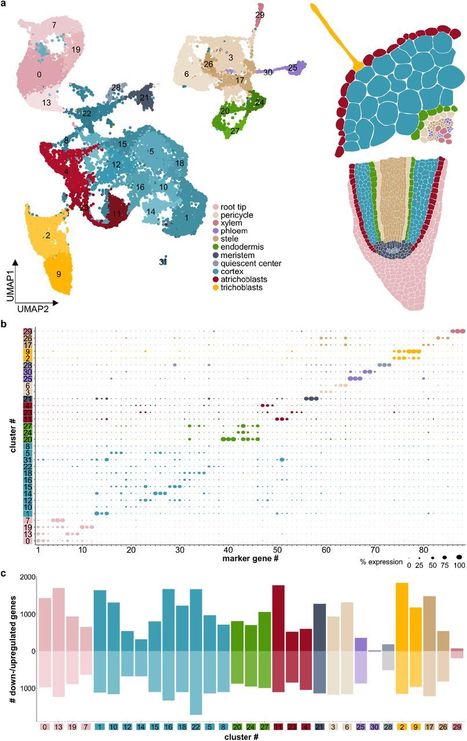
Medicago truncatula is a model legume species that has been studied for decades to understand the symbiotic relationship between legumes and soil bacteria collectively named rhizobia. This symbiosis called nodulation is initiated in roots with the infection of root hair cells by the bacteria, as well as the initiation of nodule primordia from root cortical, endodermal, and pericycle cells, leading to the development of a new root organ, the nodule, where bacteria fix and assimilate the atmospheric dinitrogen for the benefit of the plant. Here, we report the isolation and use of the nuclei from mock and rhizobia-inoculated roots for the single nuclei RNA-seq (sNucRNA-seq) profiling to gain a deeper understanding of early responses to rhizobial infection in Medicago roots. A gene expression map of the Medicago root was generated, comprising 25 clusters, which were annotated as specific cell types using 119 Medicago marker genes and orthologs to Arabidopsis cell-type marker genes. A focus on root hair, cortex, endodermis, and pericycle cell types, showing the strongest differential regulation in response to a short-term (48 h) rhizobium inoculation, revealed not only known genes and functional pathways, validating the sNucRNA-seq approach, but also numerous novel genes and pathways, allowing a comprehensive analysis of early root symbiotic responses at a cell type-specific level.
|
|
Scooped by
Jean-Michel Ané
December 5, 2022 4:27 PM
|
Nitrogen is the most crucial element in the production of nutritious feeds and foods. The production of reactive nitrogen by means of fossil fuel has thus far been able to guarantee the protein supply for the world population. Yet, the production and massive use of fertilizer nitrogen constitute a major threat in terms of environmental health and sustainability. It is crucial to promote consumer acceptance and awareness towards proteins produced by highly effective microorganisms, and their potential to replace proteins obtained with poor nitrogen efficiencies from plants and animals. The fact that reactive fertilizer nitrogen, produced by the Haber Bosch process, consumes a significant amount of fossil fuel worldwide is of concern. Moreover, recently, the prices of fossil fuels have increased the cost of reactive nitrogen by a factor of 3 to 5 times, while international policies are fostering the transition towards a more sustainable agro-ecology by reducing mineral fertilizers inputs and increasing organic farming. The combination of these pressures and challenges opens opportunities to use the reactive nitrogen nutrient more carefully. Time has come to effectively recover used nitrogen from secondary resources and to upgrade it to a legal status of fertilizer. Organic nitrogen is a slow-release fertilizer, it has a factor of 2.5 or higher economic value per unit nitrogen as fertilizer and thus adequate technologies to produce it, for instance by implementing photobiological processes, are promising. Finally, it appears wise to start the integration in our overall feed and food supply chains of the exceptional potential of biological nitrogen fixation. Nitrogen produced by the nitrogenase enzyme, either in the soil or in novel biotechnology reactor systems, deserves to have a ‘renaissance’ in the context of planetary governance in general and the increasing number of people who desire to be fed in a sustainable way in particular.
|
|
Scooped by
Jean-Michel Ané
December 4, 2022 3:13 PM
|
Background
Phytoremediation is a potentially cost-effective way to remediate highly contaminated mine tailing sites. However, nutrient limitations, especially the deficiency of nitrogen (N), can hinder the growth of plants and impair the phytoremediation of mine tailings. Nevertheless, pioneer plants can successfully colonize mine tailings and exhibit potential for tailing phytoremediation. Diazotrophs, especially diazotrophic endophytes, can promote the growth of their host plants. This was tested in a mine-tailing habitat by a combination of field sampling, DNA-stable isotope probing (SIP) analysis, and pot experiments.
Results
Bacteria belonging to the genera Herbaspirillum, Rhizobium, Devosia, Pseudomonas, Microbacterium, and Delftia are crucial endophytes for Chinese silvergrass (Miscanthus sinensis) grown in the tailing, the model pioneer plant selected in this study. Further, DNA-SIP using 15N2 identified Pseudomonas, Rhizobium, and Exiguobacterium as putative diazotrophic endophytes of M. sinensis. Metagenomic-binning suggested that these bacteria contained essential genes for nitrogen fixation and plant growth promotion. Finally, two diazotrophic endophytes Rhizobium sp. G-14 and Pseudomonas sp. Y-5 were isolated from M. sinensis. Inoculation of another pioneer plant in mine tailings, Bidens pilosa, with diazotrophic endophytes resulted in successful plant colonization, significantly increased nitrogen fixation activity, and promotion of plant growth.
Conclusions
This study indicated that diazotrophic endophytes have the potential to promote the growth of pioneer plant B. pilosa in mine tailings.
|
|
Scooped by
Jean-Michel Ané
December 4, 2022 1:02 PM
|
Plants adapt to their changing environments by sensing and responding to physical, biological, and chemical stimuli. Due to their sessile lifestyles, plants experience a vast array of external stimuli and selectively perceive and respond to specific signals. By repurposing the logic circuitry and biological and molecular components used by plants in nature, genetically encoded plant-based biosensors (GEPBs) have been developed by directing signal recognition mechanisms into carefully assembled outcomes that are easily detected. GEPBs allow for in vivo monitoring of biological processes in plants to facilitate basic studies of plant growth and development. GEPBs are also useful for environmental monitoring, plant abiotic and biotic stress management, and accelerating design-build-test-learn cycles of plant bioengineering. With the advent of synthetic biology, biological and molecular components derived from alternate natural organisms (e.g., microbes) and/or de novo parts have been used to build GEPBs. In this review, we summarize the framework for engineering different types of GEPBs. We then highlight representative validated biological components for building plant-based biosensors, along with various applications of plant-based biosensors in basic and applied plant science research. Finally, we discuss challenges and strategies for the identification and design of biological components for plant-based biosensors.
|
|
Scooped by
Jean-Michel Ané
December 4, 2022 12:54 PM
|
Mycorrhizae are essential for the acquisition of phosphorus (P) and are critical in the acquisition of nutrients that are not readily available to plants. Soil P can be classified into organic and inorganic P. Plant nutrient uptake occurs in two ways: the acquisition by root epidermis and root hairs, which is the direct root absorption method; and mycorrhizal association. Arbuscular mycorrhizal fungi are rhizosphere microorganism that are widely distributed in nature and have important ecological functions. Arbuscular mycorrhizal fungi form a symbiosis with vascular plant roots. Arbuscular mycorrhizal fungi provides plants with essential nutrients including P and nitrogen, and at the same time obtains the required carbon from the plant root system. This chapter presents the mechanisms of arbuscular mycorrhizal fungi for the acquisition of P and promoting plant growth.
|
|
Scooped by
Jean-Michel Ané
December 3, 2022 10:12 PM
|
Sorghum is a major staple crop in sub-Saharan Africa with yields severely impacted by biotic and abiotic factors. Here, we analysed the taxonomic diversity and biogeographical distribution of bacterial taxa of 48 agricultural fields along a transect of approximately 2000 km across the Ethiopian sorghum belt, the centre of origin of sorghum. The ultimate goal is to identify—yet-unexplored—beneficial plant–microbe associations. Based on bulk soil bacterial communities and DArT-SNP analyses of 59 sorghum accessions, we selected three microbiologically distinct field soils and 12 sorghum genotypes, including commercial varieties, wild relatives, and farmer-preferred landraces. The results showed a core rhizosphere microbiome of 2125 amplicon sequence variants (ASVs), belonging to eight bacterial families consistently found across the three soil types and the 12 sorghum genotypes. Integration of the rhizosphere bacterial community analysis with DArT-SNP sorghum genotyping revealed the association of differentially abundant ASVs with sorghum genotypic traits, including the distinct recruitment of Pseudomonadaceae by the stay-green, drought-tolerant, and wild sorghum genotypes. Collectively, these results provide new insights into the core and accessory bacterial taxa in the sorghum rhizosphere in the centre of origin, setting a baseline for targeted isolation and functional characterization of putative beneficial rhizobacteria.
|
|
|
Scooped by
Jean-Michel Ané
February 10, 2023 11:33 AM
|
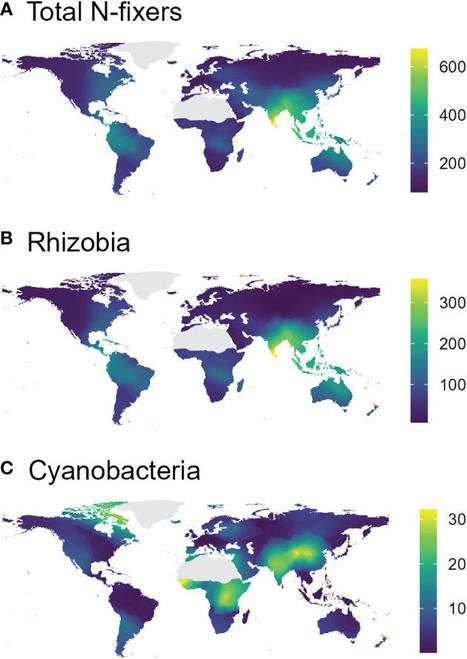
Our knowledge of microbial biogeography has advanced in recent years, yet we lack knowledge of the global diversity of some important functional groups. Here, we used environmental DNA from 327 globally collected soil samples to investigate the biodiversity patterns of nitrogen-fixing bacteria by focusing on the nifH gene but also amplifying the general prokaryotic 16S SSU region. Globally, N-fixing prokaryotic communities are driven mainly by climatic conditions, with most groups being positively correlated with stable hot or seasonally humid climates. Among soil parameters, pH, but also soil N content were most often shown to correlate with the diversity of N-fixer groups. However, specific groups of N-fixing prokaryotes show contrasting responses to the same variables, notably in Cyanobacteria that were negatively correlated with stable hot climates, and showed a U-shaped correlation with soil pH, contrary to other N-fixers. Also, the non-N-fixing prokaryotic community composition was differentially correlated with the diversity and abundance of N-fixer groups, showing the often-neglected impact of biotic interactions among bacteria.
|
|
Scooped by
Jean-Michel Ané
January 20, 2023 1:37 PM
|
Transport systems are crucial in many plant processes, including plant–microbe interactions. Nodule formation and function in legumes involve the expression and regulation of multiple transport proteins, and many are still uncharacterized, particularly for nitrogen transport. Amino acids originating from the nitrogen-fixing process are an essential form of nitrogen for legumes. This work evaluates the role of MtN21 (henceforth MtUMAMIT14), a putative transport system from the MtN21/EamA-like/UMAMIT family, in nodule formation and nitrogen fixation in Medicago truncatula. To dissect this transporter’s role, we assessed the expression of MtUMAMIT14 using GUS staining, localized the corresponding protein in M. truncatula root and tobacco leaf cells, and investigated two independent MtUMAMIT14 mutant lines. Our results indicate that MtUMAMIT14 is localized in endosomal structures and is expressed in both the infection zone and interzone of nodules. Comparison of mutant and wild-type M. truncatula indicates MtUMAMIT14, the expression of which is dependent on the presence of NIN, DNF1, and DNF2, plays a role in nodule formation and nitrogen-fixation. While the function of the transporter is still unclear, our results connect root nodule nitrogen fixation in legumes with the UMAMIT family.
|
|
Scooped by
Jean-Michel Ané
January 20, 2023 10:27 AM
|
Understanding the composition and activation of multicomponent receptor complexes is a challenge in biology. To address this, we developed a synthetic approach based on nanobodies to drive assembly and activation of cell surface receptors and apply the concept by manipulating receptors that govern plant symbiosis with nitrogen-fixing bacteria. We show that the Lotus japonicus Nod factor receptors NFR1 and NFR5 constitute the core receptor complex initiating the cortical root nodule organogenesis program as well as the epidermal program controlling infection. We find that organogenesis signaling is mediated by the intracellular kinase domains whereas infection requires functional ectodomains. Finally, we identify evolutionarily distant barley receptors that activate root nodule organogenesis, which could enable engineering of biological nitrogen-fixation into cereals.
|
|
Scooped by
Jean-Michel Ané
January 3, 2023 5:16 PM
|
Legume-rhizobium signaling during establishment of symbiotic nitrogen fixation restricts rhizobium colonization to specific cells. A limited number of root hair cells allow infection threads to form, and only a fraction of the epidermal infection threads progress to cortical layers to establish functional nodules. Here we use single-cell analysis to define the epidermal and cortical cell populations that respond to and facilitate rhizobium infection. We then identify high-confidence nodulation gene candidates based on their specific expression in these populations, pinpointing genes stably associated with infection across genotypes and time points. We show that one of these, which we name SYMRKL1, encodes a protein with an ectodomain predicted to be nearly identical to that of SYMRK and is required for normal infection thread formation. Our work disentangles cellular processes and transcriptional modules that were previously confounded due to lack of cellular resolution, providing a more detailed understanding of symbiotic interactions.
|
|
Scooped by
Jean-Michel Ané
December 14, 2022 4:22 PM
|
Virtually, all vascular plants harbor bacterial and fungal endosymbionts, which colonize predominantly but not exclusively, roots. Most common among fungal partners are arbuscular mycorrhizal fungi (AMF; Glomeromycotina) that live within plant roots and provide soil nutrients to the plant while receiving from the plant organic carbon sources. Ericaceae are an exception as they do not host AMF but rather the taxonomically ill-defined “ericoid mycorrhizal fungi,” including select ascomycete and basidiomycete species. Because the diversity of endosymbionts in Ericaceae is poorly investigated, we set out to explore the microbiome of Vaccinium macrocarpon Aiton (cranberry).
Here, we report the isolation and ribotyping of ~180 distinct bacterial and fungal endophytes collected from roots, stems, and leaves of cranberry plants cultivated in Quebec, Canada. Plant growth promotion was assessed after inoculating plant cuttings with these microbes, whereas pathogen suppression was tested on agar plates by growth confrontation.
We show that the cranberry microbiome varies substantially between tissues, cultivars, and across fields of the same farm. Among the isolates, 16 bacterial and 8 fungal strains exhibit biofertilization or biocontrol properties with potential application in sustainable cranberry farming.
We propose to move towards a more rigorous, molecular-based definition of ericoid mycorrhiza, accounting for their broad evolutionary and morphological diversity.
|
|
Scooped by
Jean-Michel Ané
December 11, 2022 7:10 PM
|
Legume-rhizobium symbiosis in root nodules fixes nitrogen to satisfy the plant’s nitrogen demands. The nodules’ demand for energy is thought to determine nitrogen fixation rates. How this energy state is sensed to modulate nitrogen fixation is unknown. Here, we identified two soybean (Glycine max) cystathionine β-synthase domain–containing proteins, nodule AMP sensor 1 (GmNAS1) and NAS1-associated protein 1 (GmNAP1). In the high–nodule energy state, GmNAS1 and GmNAP1 form homodimers that interact with the nuclear factor-Y C (NF-YC) subunit (GmNFYC10a) on mitochondria and reduce its nuclear accumulation. Less nuclear GmNFYC10a leads to lower expression of glycolytic genes involved in pyruvate production, which modulates phosphoenolpyruvate allocation to favor nitrogen fixation. Insight into these pathways may help in the design of leguminous crops that have improved carbon use, nitrogen fixation, and growth.
|
|
Scooped by
Jean-Michel Ané
December 11, 2022 6:56 PM
|
To probe signal propagation and genetic actuation in microbial consortia, we have coopted the components of both redox and quorum sensing (QS) signaling into a communication network for guiding composition by “programming” cell lysis. Here, we use an electrode to generate hydrogen peroxide as a redox cue that determines consortia composition. The oxidative stress regulon of Escherichia coli, OxyR, is employed to receive and transform this signal into a QS signal that coordinates the lysis of a subpopulation of cells. We examine a suite of information transfer modalities including “monoculture” and “transmitter-receiver” models, as well as a series of genetic circuits that introduce time-delays for altering information relay, thereby expanding design space. A simple mathematical model aids in developing communication schemes that accommodate the transient nature of redox signals and the “collective” attributes of QS signals. We suggest this platform methodology will be useful in understanding and controlling synthetic microbial consortia for a variety of applications, including biomanufacturing and biocontainment.
|
|
Scooped by
Jean-Michel Ané
December 6, 2022 10:04 AM
|
The root nodule is a complex symbiotic nitrogen fixation factory, in which cells are highly heterogeneous. However, the differentiation trajectories and interconnection of nodule cells remain largely unknown. In this study, we set up a modified protocol for nodule protoplast preparation and performed a single-cell RNA sequencing profiling of the indeterminate Medicago truncatula nodule. We designated 13 cell clusters with specific expression patterns in 14-day post inoculation nodules and constructed a spatial and functional cellular map based on experimental data and bioinformatic analyses. Pseudotime analysis further revealed that two groups of apical meristematic cells develop into symbiotic and un-symbiotic fate cells along their particular trajectories. Biofunction analysis of each cell cluster revealed their particularity and interrelation, especially that the un-infected cells in nitrogen fixation zone are also involved in nitrogen assimilation by undertaking the asparagine synthesis. Collectively, our data offer an important resource for investigating the mechanism of nodule organogenesis and symbiotic nitrogen fixation.
|
|
Scooped by
Jean-Michel Ané
December 4, 2022 3:19 PM
|
Many grasses are simultaneously symbiotic with Epichloë fungal endophytes and arbuscular mycorrhizal fungi (AMF). Epichloë endophytes are a group of filamentous fungi that colonize and grow within aerial plant tissues, such as leaves and stems. Infection and hyphal growth of Epichloë endophytes confer fitness advantages to the host plants. In addition to producing fungal alkaloids and altering host metabolic/genetic profiles, it is proven that symbiosis of plants with root/foliar endophytes affects the plant–soil relationship. We propose that the Epichloë presence/infection results in variations of soil and root AMF through allelopathic effects. We performed a meta-analysis that integrated the allelopathic effects of Epichloë endophytes on grass–AMF development. In the pre-symbiotic phase of grass–AMF symbiosis, root exudation from Epichloë-infected plants positively affected AMF growth, whereas the shoot exudates of Epichloë-infected plants inhibited AMF growth. In the symbiotic phase of grass–AMF symbiosis, the Epichloë infection was found to reduce root mycorrhizal colonization in plants. No pattern in the response of soil AMF to Epichloë presence was found. This study should improve our understanding of the impact of Epichloë endophytes on belowground microbial symbionts within the same host plant. Grass–Epichloë–AMF symbiosis may become an important model for studying above–belowground interactions.
|
|
Scooped by
Jean-Michel Ané
December 4, 2022 1:10 PM
|
Medicago (Medicago truncatula) establishes a symbiosis with the rhizobia Sinorhizobium sp, resulting in the formation of nodules where the bacteria fix atmospheric nitrogen. The loss of immunity repression or early senescence activation compromises symbiont survival and leads to the formation of nonfunctional nodules (fix−). Despite many studies exploring an overlap between immunity and senescence responses outside the nodule context, the relationship between these processes in the nodule remains poorly understood. To investigate this phenomenon, we selected and characterized three Medicago mutants developing fix− nodules and showing senescence responses. Analysis of specific defense (PATHOGENESIS-RELATED PROTEIN) or senescence (CYSTEINE PROTEASE) marker expression demonstrated that senescence and immunity seem to be antagonistic in fix− nodules. The growth of senescence mutants on non-sterile (sand/perlite) substrate instead of sterile in vitro conditions decreased nodule senescence and enhanced defense, indicating that environment can affect the immunity/senescence balance. The application of wounding stress on wild-type (WT) fix+ nodules led to the death of intracellular rhizobia and associated with co-stimulation of defense and senescence markers, indicating that in fix+ nodules the relationship between the two processes switches from opposite to synergistic to control symbiont survival during response to the stress. Our data show that the immune response in stressed WT nodules is linked to the repression of DEFECTIVE IN NITROGEN FIXATION 2 (DNF2), Symbiotic CYSTEINE-RICH RECEPTOR-LIKE KINASE (SymCRK), and REGULATOR OF SYMBIOSOME DIFFERENTIATION (RSD), key genes involved in symbiotic immunity suppression. This study provides insight to understand the links between senescence and immunity in Medicago nodules.
|
|
Scooped by
Jean-Michel Ané
December 4, 2022 12:59 PM
|
Soil available phosphorus (P) is one of the main factors limiting plant growth and yield. This study aimed to determine the role of arbuscular mycorrhizal fungi (AMF) in P-use efficiency in two maize genotypes with contrasting root systems in response to low P stress. Maize genotypes small-rooted Shengrui 999 and large-rooted Zhongke 11 were grown in rhizoboxes that were inoculated with or without AMF (Funneliformis mosseae) under low P (no added P) or optimal P (200 mg kg−1) for 53 days. Low P stress significantly inhibited shoot and root growth, photosynthesis, tissue P content, and root P concentration in both genotypes. Shengrui 999 was more tolerant to P stress with less reduction of these traits compared to Zhongke 11. Shengrui 999 had a higher AMF infection rate than Zhongke 11 at both P levels. Under P deficit, inoculation with AMF significantly promoted plant growth and P uptake in both genotypes with more profound effects seen in Zhongke 11, whilst Shengrui 999 was more dependent on AMF under optimal P. Low P stress inhibited the growth and physiological attributes of both genotypes. The small-rooted Shengrui 999 was more tolerant to low P than Zhongke 11. Inoculation with AMF alleviates low P stress in both genotypes with a more profound effect on Zhongke 11 at low P and on Shengrui 999 at high P conditions.
|
|
Scooped by
Jean-Michel Ané
December 4, 2022 12:26 PM
|
Plants’ mineral nutrition in acidic soils can be facilitated by phosphate solubilizing fungi inhabiting the root systems of these plants. We attempt to find dark septate endophyte (DSE) isolates in the roots of wild-heather plants, which are capable of improving plants’ phosphorus nutrition levels. Bright-field and confocal laser scanning microscopy were used for the visualization of endophytes. A model system of co-cultivation with Vaccinium macrocarpon Ait. was used to study a fungal isolate’s ability to supply plants with phosphorus. Fungal phytase activity and phosphorus content in plants were estimated spectrophotometrically. In V. vitis-idaea L. roots, we obtained a Phialocephala fortinii Wang, Wilcox DSE2 isolate with acid phytase activity (maximum 6.91 ± 0.17 U on 21st day of cultivation on potato-dextrose broth medium) and the ability to accumulate polyphosphates in hyphae cells. The ability of the isolate to increase both phosphorus accumulation and biomass in V. macrocarpon is also shown. The data obtained for the same isolate, as puzzle pieces put together, indicate the possible mediation of P. fortinii DSE2 isolate in the process of phosphorus intake from inorganic soil reserves to plants.
|


 Scoop.it!











Not surprising but still nice piece of work