Your new post is loading...

|
Scooped by
Jean-Michel Ané
May 11, 2023 12:46 PM
|
Symbiotic nitrogen fixation boosts legume growth and production in nitrogen-poor soils. It has long been assumed that fixed nitrogen increases reproductive success, but until now, the regulatory mechanism was unknown. Here, we report a symbiotic flowering pathway that couples symbiotic and nutrient signals to the flowering induction pathway in legumes. We show that the symbiotic microRNA–microRNA172c (miR172c) and fixed nitrogen systemically and synergistically convey symbiotic and nutritional cues from roots to leaves to promote soybean (Glycine max) flowering. The combinations of symbiotic miR172c and local miR172c elicited by fixed nitrogen and development in leaves activate florigen-encoding FLOWERING LOCUS T (FT) homologs (GmFT2a/5a) by repressing TARGET OF EAT1-like 4a (GmTOE4a). Thus, FTs trigger reproductive development, which allows legumes to survive and reproduce under low-nitrogen conditions.
|
|
Scooped by
Jean-Michel Ané
May 8, 2023 5:51 PM
|
In rice, the Ca2+/calmodulin-dependent protein kinase OsDMI3 is an important positive regulator of abscisic acid (ABA) signaling. In ABA signaling, H2O2 is required for ABA-induced activation of OsDMI3, which in turn increase H2O2 production. However, how OsDMI3 regulates H2O2 production in ABA signaling remains unknown. Here we show that OsRbohB is the main NADPH oxidase involved in ABA-induced H2O2 production and ABA-mediated physiological responses. OsDMI3 directly interacts with and phosphorylates OsRbohB at Ser-191, which is OsDMI3-mediated site-specific phosphorylation in ABA signaling. Further analyses revealed that OsDMI3-mediated OsRbohB Ser-191 phosphorylation positively regulates the activity of NADPH oxidase and the production of H2O2 in ABA signaling, thereby enhancing the sensitivity of seed germination and root growth to ABA and plant tolerance to water stress and oxidative stress. Moreover, we discovered that the OsDMI3-mediated OsRbohB phosphorylation and H2O2 production is dependent on the sucrose non-fermenting 1-related protein kinases SAPK8/9/10, which phosphorylate OsRbohB at Ser-140 in ABA signaling. Taken together, these results not only reveal an important regulatory mechanism that directly activates Rboh for ABA-induced H2O2 production but also uncover the importance of this regulatory mechanism in ABA signaling.
|
|
Scooped by
Jean-Michel Ané
May 7, 2023 5:36 PM
|
Mycorrhizal helper bacteria (MHB) can promote mycorrhizal fungal colonization and form mycorrhizal symbiosis structures. To investigate the effect of interactions between mycorrhizal beneficial microorganisms on the growth of blueberry, 45 strains of bacteria isolated from the rhizosphere soil of Vaccinium uliginosum were screened for potential MHB strains using the dry-plate confrontation assay and the bacterial extracellular metabolite promotion method. The results showed that the growth rate of mycelium of Oidiodendron maius 143, an ericoid mycorrhizal fungal strain, was increased by 33.33 and 77.77% for bacterial strains L6 and LM3, respectively, compared with the control in the dry-plate confrontation assay. In addition, the extracellular metabolites of L6 and LM3 significantly promoted the growth of O. maius 143 mycelium with an average growth rate of 40.9 and 57.1%, respectively, the cell wall-degrading enzyme activities and genes of O. maius 143 was significantly increased. Therefore, L6 and LM3 were preliminarily identified as potential MHB strains. In addition, the co-inoculated treatments significantly increased blueberry growth; increased the nitrate reductase, glutamate dehydrogenase, glutamine synthetase, and glutamate synthase activities in the leaves; and promoted nutrient uptake in blueberry. Based on the physiological, and 16S rDNA gene molecular analyses, we initially identified strain L6 as Paenarthrobacter nicotinovorans and LM3 as Bacillus circulans. Metabolomic analysis revealed that mycelial exudates contain large amounts of sugars, organic acids and amino acids, which can be used as substrates to stimulate the growth of MHB. In conclusion, L6 and LM3 and O. maius 143 promote each other’s growth, while co-inoculation of L6 and LM3 with O. maius 143 can promote the growth of blueberry seedlings, providing a theoretical basis for further studies on the mechanism of ericoid mycorrhizal fungi-MHB-blueberry interactions. It laid the technical foundation for the exploitation of biocontrol strain resources and the development of biological fertilizer.
|
|
Scooped by
Jean-Michel Ané
May 7, 2023 5:34 PM
|
Owing to the essential requirement of phosphorus (P) for growth and development, plants tightly control inorganic phosphate (Pi) homeostasis. SPX-PHR regulatory circuit not only control phosphate homeostasis responses but also root mycorrhization by arbuscular mycorrhiza (AM) fungi. Besides sensing Pi deficiency, SPX (SYG1/Pho81/XPR1) proteins also control the transcription of P starvation inducible (PSI) genes by blocking the activity of PHR1 (PHOSPHATE STARVATION RESPONSE1) homologs in plants under Pi-sufficient conditions. However, the roles of SPX members in Pi homeostasis and AM fungi colonization remain to be fully recognized in tomato. In this study, we identified 17 SPX-domain containing members in the tomato genome. Transcript profiling revealed the high Pi-specific nature of their activation. Four SlSPX members have also induced in AM colonized roots. Interestingly, we found that SlSPX1 and SlSPX2 are induced by P starvation and AM colonization. Further, SlSPX1 and SlSPX2 exhibited varying degrees of interaction with the PHR homologs in this study. Virus-induced gene silencing-based (VIGS) transcript inhibition of these genes alone or together promoted the accumulation of higher total soluble Pi in tomato seedlings and improved their growth. It also enhanced AM fungi colonization in the roots of SlSPX1 and SlSPX2 silenced seedlings. Overall, the present study provides evidence in support of SlSPX members being good candidates for improving AM fungi colonization potential in tomato.
|
|
Scooped by
Jean-Michel Ané
May 7, 2023 5:31 PM
|
Symbiotic nitrogen fixation between legumes and rhizobia makes a great contribution to the terrestrial ecosystem. The successful symbiosis between the partners mainly depends on the nod and nif genes in rhizobia, while the specific symbiosis is mainly determined by the structure of Nod factors and the corresponding secretion systems (type III secretion system; T3SS), etc. These symbiosis genes are usually located on symbiotic plasmids or a chromosomal symbiotic island, both could be transferred interspecies. In our previous studies, Sesbania cannabina-nodulating rhizobia across the world were classified into 16 species of four genera and all the strains, especially those of Rhizobium spp., harboured extraordinarily highly conserved symbiosis genes, suggesting that horizontal transfer of symbiosis genes might have happened among them. In order to learn the genomic basis of diversification of rhizobia under the selection of host specificity, we performed this study to compare the complete genome sequences of four Rhizobium strains associated with S. cannabina, YTUBH007, YTUZZ027, YTUHZ044 and YTUHZ045. Their complete genomes were sequenced and assembled at the replicon level. Each strain represents a different species according to the average nucleotide identity (ANI) values calculated using the whole-genome sequences; furthermore, except for YTUBH007, which was classified as Rhizobium binae, the remaining three strains were identified as new candidate species. A single symbiotic plasmid sized 345–402 kb containing complete nod, nif, fix, T3SS and conjugal transfer genes was detected in each strain. The high ANI and amino acid identity (AAI) values, as well as the close phylogenetic relationships among the entire symbiotic plasmid sequences, indicate that they have the same origin and the entire plasmid has been transferred among different Rhizobium species. These results indicate that S. cannabina stringently selects a certain symbiosis gene background of the rhizobia for nodulation, which might have forced the symbiosis genes to transfer from some introduced rhizobia to the related native or local-condition-adapted bacteria. The existence of almost complete conjugal transfer related elements, but not the gene virD, indicated that the self-transfer of the symbiotic plasmid in these rhizobial strains may be realized via a virD-independent pathway or through another unidentified gene. This study provides insight for the better understanding of high-frequency symbiotic plasmid transfer, host-specific nodulation and the host shift for rhizobia.
|
|
Scooped by
Jean-Michel Ané
May 7, 2023 2:22 PM
|
Phosphate (Pi) is indispensable for life on this planet. However, for sessile land plants it is poorly accessible. Therefore, plants have developed a variety of strategies for enhanced acquisition and recycling of Pi. The mechanisms to cope with Pi limitation as well as direct uptake of Pi from the substrate via the root epidermis are regulated by a conserved Pi starvation response (PSR) system based on a family of key transcription factors (TFs) and their inhibitors. Furthermore, plants obtain Pi indirectly through symbiosis with mycorrhiza fungi, which employ their extensive hyphal network to drastically increase the soil volume that can be explored by plants for Pi. Besides mycorrhizal symbiosis, there is also a variety of other interactions with epiphytic, endophytic, and rhizospheric microbes that can indirectly or directly influence plant Pi uptake. It was recently discovered that the PSR pathway is involved in the regulation of genes that promote formation and maintenance of AM symbiosis. Furthermore, the PSR system influences plant immunity and can also be a target of microbial manipulation. It is known for decades that the nutritional status of plants influences the outcome of plant–microbe interactions. The first molecular explanations for these observations are now emerging.
|
|
Scooped by
Jean-Michel Ané
May 2, 2023 11:50 AM
|
Terrestrial plants can affect the growth and health of adjacent plants via interspecific interaction. Here, we studied the mechanism by which plant root exudates affect the recruitment of the rhizosphere microbiome in adjacent plants—with implications for plant protection—using a tomato (Solanum lycopersicum)–potatoonion (Allium cepa var. agrogatum) intercropping system. First, we showed that the intercropping system results in a disease-suppressive rhizosphere microbiome that protects tomato plants against Verticillium wilt disease caused by the soilborne pathogen Verticillium dahliae. Second, 16S rRNA gene sequencing revealed that intercropping with potatoonion altered the composition of the tomato rhizosphere microbiome by promoting the colonization of specific Bacillus sp. This taxon was isolated and shown to inhibit V. dahliae growth and induce systemic resistance in tomato plants. Third, a belowground segregation experiment found that root exudates mediated the interspecific interaction between potatoonion and tomato. Moreover, experiments using split-root tomato plants found that root exudates from potatoonion, especially taxifolin—a flavonoid compound—stimulate tomato plants to recruit plant-beneficial bacteria, such as Bacillus sp. Lastly, ultra-high-pressure liquid chromatography–mass spectrometry analysis found that taxifolin alters tomato root exudate chemistry; thus, this compound acts indirectly in modulating root colonization by Bacillus sp. Our results revealed that this intercropping system can improve tomato plant fitness by changing rhizosphere microbiome recruitment via the use of signaling chemicals released by root exudates of potatoonion. This study revealed a novel mechanism by which interspecific plant interaction modulates the establishment of a disease-suppressive microbiome, thus opening up new avenues of research for precision plant microbiome manipulations.
|
|
Scooped by
Jean-Michel Ané
April 28, 2023 3:53 PM
|
Omics are the most promising approaches to investigate microbes for which no genetic tools exist such as the nitrogen-fixing symbiotic Frankia. A proteogenomic analysis of symbiotic Frankia alni was done by comparing those proteins more and less abundant in Alnus glutinosa nodules relative to N-replete pure cultures with propionate as the carbon source and ammonium as the nitrogen-source. There were 250 proteins that were significantly overabundant in nodules at a fold change (FC) ≥ 2 threshold, and 1429 with the same characteristics in in vitro nitrogen-replete pure culture. Nitrogenase, SuF (Fe–Su biogenesis) and hopanoid lipids synthesis determinants were the most overabundant proteins in symbiosis. Nitrogenase was found to constitute 3% of all Frankia proteins in nodules. Sod (superoxide dismutase) was overabundant, indicating a continued oxidative stress, while Kats (catalase) were not. Several transporters were overabundant including one for dicarboxylates and one for branched amino acids. The present results confirm the centrality of nitrogenase in the actinorhizal symbiosis.
|
|
Scooped by
Jean-Michel Ané
April 28, 2023 3:49 PM
|
Glomalin, a type of glycoprotein produced by arbuscular mycorrhizal fungi in the phylum Glomeromycota, contributes to the mitigation of soil degradation. Moreover, AM fungi and glomalin are highly correlated with other soil physico-chemical parameters and are sensitive to changes in the environment; also, they have been recommended for monitoring the recovery of degraded soil or stages of soil degradation. AM fungi are commonly known as bio-fertilisers. Moreover, it is widely believed that the inoculation of AM fungi provides tolerance to host plants against various stressful situations like heat, salinity, drought, metals and extreme temperatures. AM fungi, being natural root symbionts, provide essential plant inorganic nutrients to host plants, thereby improving growth and yield under unstressed and stressed regimes. The role of AM fungi as a bio-fertiliser can potentially strengthen plants’ adaptability to changing environment. They also improve plant resilience to plant diseases and root system development, allowing for better nutrient absorption from the soil. As a result, they can be utilised as both a biofertilizer and a biocontrol agent. Present manuscript represents the potential of AM fungi as biostimulants can probably strengthen plants’ ability to change the agriculture system for green technology.
|
|
Scooped by
Jean-Michel Ané
April 28, 2023 3:46 PM
|
Mosses are non-vascular plants usually found in moist and shaded areas, with great ecological importance in several ecosystems. This is especially true in northern latitudes, where mosses are responsible for up to 100% of primary production in some ecosystems. Mosses establish symbiotic associations with unique bacteria that play key roles in the carbon and nitrogen cycles. For instance, in boreal environments, more than 35% of the nitrogen fixed by diazotrophic symbionts in peatlands is transferred to mosses, directly affecting carbon fixation by the hosts, while moss-associated methanotrophic bacteria contribute 10–30% of moss carbon. Further, half of ecosystem N input may derive from moss–cyanobacteria associations in pristine ecosystems. Moss–bacteria interactions have consequences on a global scale since northern environments sequester 20% of all the carbon generated by forests in the world and stock at least 32% of global terrestrial carbon. Different moss hosts influence bacteria in distinct ways, which suggests that threats to mosses also threaten unique microbial communities with important ecological and biogeochemical consequences. Since their origin ~500 Ma, mosses have interacted with bacteria, making these associations ideal models for understanding the evolution of plant–microbe associations and their contribution to biogeochemical cycles.
|
|
Scooped by
Jean-Michel Ané
April 28, 2023 2:58 PM
|
Azospirillum is one of the most important plant growths promoting rhizobacteria used in agriculture worldwide. However, few reports are available describing the effects of this bacterial genus on the inoculated plant microbiome. In order to determine whether A. argentinense inoculation modifies the bacterial microbiota associated with the maize rhizosphere, we performed a high-throughput 16S rRNA gene sequence analysis under experimental controlled conditions. Rhizosphere metagenomic DNA was obtained from plants inoculated and non-inoculated with A. argentinense Az39, and bulk soil was used as a reference treatment. Biodiversity, microbial community composition, co-occurrence network and predicted function analyses (FAPROTAX) were performed. Azospirillum was the most abundant genus occurring in the rhizosphere of inoculated plants. Regarding the alpha diversity, a significant reduction in the bacteria evenness was observed in the inoculated rhizosphere. The beta diversity analysis showed a differential structure of the communities of each treatment. According to the LEfSe index, the three most abundant genera associated with Az39 inoculation were Burkholderia, Massilia and Sphingobium. An increase in the relative abundance of some members of the Hyphomicrobiales (ex Rhizobiales) order was observed in inoculated plants. Co-occurrence networks showed a positive interaction between Azospirillum and Pseudomonas and a negative correlation with Hyphomicrobium. The FAPROTAX analysis associated Azospirillum inoculation with some functions related to chemoheterotrophy, phototrophy and the nitrogen cycle. Our results allowed us to conclude that Azospirillum is able to colonize the maize rhizosphere after inoculation and that this colonization process induces an increase in the relative abundance of beneficial bacterial genera, also commonly used as biofertilizers in agriculture.
|
|
Scooped by
Jean-Michel Ané
April 28, 2023 2:35 PM
|
Individual root cell types perceive and respond to biotic factors in unique and distinct manners dependent on their developmental stage.
Plants discriminate soil-borne pathogens from commensal microorganisms via spatially restricted immune responses and cell-type-specific transcriptome reprogramming.
The integrity of root endodermal diffusion barriers influences root interactions with soil-borne microbes and vice versa.
Root cortex cellular architecture impacts root interactions with fungi.
The endodermis is a likely barrier for a broad range of pathogens across kingdoms.
|
|
Scooped by
Jean-Michel Ané
April 24, 2023 8:15 PM
|
Our HT-SIP pipeline for fractionation, cleanup, and nucleic acid quantification of density gradients requires one-sixth of the hands-on labor compared to manual SIP and allows 16 samples to be processed simultaneously. Automated density fractionation increased the reproducibility of SIP gradients compared to manual fractionation, and we show adding a non-ionic detergent to the gradient buffer improved SIP DNA recovery. We applied HT-SIP to 13C-AMF hyphosphere DNA from a 13CO2 plant labeling study and created metagenome-assembled genomes (MAGs) using high-resolution SIP metagenomics (14 metagenomes per gradient). SIP confirmed the AMF Rhizophagus intraradices and associated MAGs were highly enriched (10–33 atom% 13C), even though the soils’ overall enrichment was low (1.8 atom% 13C). We assembled 212 13C-hyphosphere MAGs; the hyphosphere taxa that assimilated the most AMF-derived 13C were from the phyla Myxococcota, Fibrobacterota, Verrucomicrobiota, and the ammonia-oxidizing archaeon genus Nitrososphaera.
|
|
|
Scooped by
Jean-Michel Ané
May 8, 2023 5:52 PM
|
Plants are associated with complex microbiomes, and many of the microorganisms that reside on plant surfaces (epiphytes) or within plant tissues (endophytes) are beneficial for the host plant and improve plant growth or stress resistance by a variety of plant growth-promoting capabilities. The plant microbiome could serve as a tool box to design synthetic microbiomes to enhance plant growth and crop resiliency under stress or to integrate benefits of plant microbiomes as important traits into plant breeding programs. For legumes, the most important members of the plant microbiome are nitrogen (N)-fixing rhizobia and arbuscular mycorrhizal (AM) fungi. Legumes harbor rhizobia in specialized root nodules, in which the bacteria fix gaseous N from the atmosphere and transfer plant available forms of N to host. AM fungi play a key role for the uptake of nutrients such as phosphate and nitrogen and improve the resistance of plants against abiotic (e.g. drought, salinity, and heavy metals) and biotic (herbivores and pathogens) stresses. Both partners compete with these benefits for photosynthetically fixed carbon from the host. In this review, we will summarize our current understanding of these interactions and will also focus on cooperative or competitive interactions between these two root symbionts in tripartite interactions.
|
|
Scooped by
Jean-Michel Ané
May 8, 2023 5:44 PM
|
Orchids parasitically depend on external nutrients from mycorrhizal fungi for seed germination. Previous findings suggest that orchids utilize a genetic system of mutualistic arbuscular mycorrhizal (AM) symbiosis to establish parasitic symbiosis. In AM symbiosis, recent studies have revealed that the plant hormone gibberellin (GA) negatively affects fungal colonization and development. Although previous studies imply that GA is important for orchid mycorrhizal symbiosis, the molecular mechanism of seed germination in which mycorrhizal symbiosis co-occurs remains unclear because, in AM plants, GA regulates seed germination and symbiosis positively and negatively, respectively. To elucidate this conflict, we investigated the effect of GA on Bletilla striata seed germination and mycorrhizal symbiosis using asymbiotic and symbiotic germination methods. Additionally, we compared the transcriptome profiles between asymbiotically and symbiotically germinated seeds. Exogenous GA negatively affected seed germination and fungal colonization, and endogenous bioactive GA was actively converted to the inactive form during seed germination. Transcriptome analysis showed that B. striata shared many of the induced genes between asymbiotically and symbiotically germinated seeds, including GA metabolism- and signaling-related genes and AM-specific marker homologs. Our study suggests that orchids have evolved in a manner that they do not use bioactive GA as a positive regulator of seed germination and instead, auto-activate the mycorrhizal symbiosis pathway through GA inactivation to accept the fungal partner immediately during seed germination.
|
|
Scooped by
Jean-Michel Ané
May 7, 2023 5:34 PM
|
The plant roots are invariably colonized by an extent of tiny microorganisms including arbuscular mycorrhizal fungi (AMF) which support plant health in multiple ways. The symbiotic relationship with host plants is achieved through various signaling mechanisms and metabolic pathways which guide their mutual survival. Besides their plant growth-promoting activities, they communicate with other soil microbes to improve plant fitness during unfavorable circumstances. Rhizobium and mycorrhization helper bacteria (MHB) interaction with AM fungi provides us with new insight for enhanced protection of plants against abiotic factors. In addition to that, the alteration of host nutrition, modifications in root physiology and morphology, increase plant defense. Thus, remodeling of the rhizospheric microbial community by AM fungi activates their multifaceted mechanisms in host plants against phytopathogens insect pests, nematodes, and phanerogamic parasites. It modifies the host physiology which ultimately benefits plants. The current knowledge about AM fungi with their potentiality in crop production and protection is discussed in detail.
|
|
Scooped by
Jean-Michel Ané
May 7, 2023 5:31 PM
|
Background
Arbuscular mycorrhizal (AM) symbiosis has been referred to as the mother of all plant root symbioses as it predated the evolution of plant roots. The AM research is a multidisciplinary field at the intersection of soil science, mycology, and botany. However, in recent decades the nature and properties of soils, in which the AM symbiosis develops and functions, have received less attention than desired.
Scope
In this review we discuss a number of recent developments in AM research. We particularly cover the role of AM symbiosis in acquisition of phosphorus, nitrogen, heavy metals and metalloids, as well as water by plants from soil; mycorrhizal effects on plant nutritional stoichiometry and on the carbon cycle; the hyphosphere microbiome; so-called facultative mycorrhizal plants; explanations for lack of mycorrhizal benefit; common mycorrhizal networks; and arbuscular and ectomycorrhizal ecosystems.
Conclusion
We reflect on what has previously been described as mycorrhizal ‘dogmas’. We conclude that these are in fact generalisations on the AM symbiosis that are well supported by multiple studies, while admitting that there potentially is a geographical bias in mycorrhizal research that developed in temperate and boreal regions, and that research in other ecosystems might uncover a greater diversity of viable mycorrhizal and non-mycorrhizal strategies than currently acknowledged. We also note an increasing tendency to overinterpret data, which may lead to stagnation of some research fields due to lack of experiments designed to test the mechanistic basis of processes rather than cumulating descriptive studies and correlative evidences.
|
|
Scooped by
Jean-Michel Ané
May 7, 2023 2:36 PM
|
Inspired by broader efforts to make the conclusions of scientific research more robust, we have compiled a list of some of the most common statistical mistakes that appear in the scientific literature. The mistakes have their origins in ineffective experimental designs, inappropriate analyses and/or flawed reasoning. We provide advice on how authors, reviewers and readers can identify and resolve these mistakes and, we hope, avoid them in the future.
|
|
Scooped by
Jean-Michel Ané
May 2, 2023 12:47 PM
|
How plants communicate has long been a question up for debate.
In fact, it was initially very controversial: Books like “The Secret Life of Plants” (1973) seemingly undermined the credibility of some of the first studies in the field by suggesting that plants thrive if you, say, sing or play classical music.
While many of those statements were later debunked, researchers remain adamant that there is some sort of communication going on between plants — and between plants and animals.
|
|
Scooped by
Jean-Michel Ané
April 28, 2023 4:01 PM
|
•Root contact promoted, and N addition inhibited, N transfer from soybean to maize.
•DNA-SIP technique was used to separated AMF species with N-transfer function.
•Root contact and N reduced addition increased AMF diversity in roots.
•Increased AMF diversity strongly promotes colonization of AMF in roots.
|
|
Scooped by
Jean-Michel Ané
April 28, 2023 3:52 PM
|
Bradyrhizobium sp. DOA9 has a broad host range and a highly divergent nodulation (nod) gene on the megaplasmid (pDOA9). Duplicated copies of the general regulator nodD (nodD1 and nodD2) and nodA (nodA1 and nodA2) genes were found on pDOA9. The nodA gene is encoding an acyltransferase that controls the transfer of an acyl chain to the chitooligosaccharides (COs) structure and contribute to the determination of host specify. In general, compatible recognition between transcriptional regulators NodD and plant flavonoid inducer able to activate the function of other nodulation (nod) genes which responsible to produce lipo-chitooligosaccharides (LCOs), calls Nod-Factor, a major determinants of host range, infection, and nodulation. In this study, the function of the duplicated nodD (nodD1 and nodD2) and nodA (nodA1 and nodA2) genes were disrupted to determine their role on the symbiotic nodulation. The results showed that the mutation of nodD1 or nodD2 did not affected to the symbiotic nodulation, indicating the functional redundancy of the regulatory nodD1 and nodD2 genes in strain DOA9. Whereas nodA2 and nodB genes plays as a central role in the Nod-Factor biosynthesis and the symbiotic nodulation in all plant tests. Moreover, Nod-Factor produced from DOA9 under genistein induction shared a high similarity with the major Nod-Factor of Rhizobium sp. NGR234. Interestingly, mutation of nodA1 (ΔnodA1) did not affect to the nodulation but lead to induce the production of Nod-Factor belonged to the wild type, with the absence of Nod-Factor bearing the C18:1 acyl group. All these results suggest that the host range of the strain DOA9 might acquire from the functional redundancy of regulatory nodD genes and the Nod-Factor structure.
|
|
Scooped by
Jean-Michel Ané
April 28, 2023 3:49 PM
|
•Biological N fixation (BNF) is the single largest global input of reactive nitrogen.
•Critical review of current knowledge of BNF in cereal-based cropping systems.
•Global and regional estimates of the nutrient supply contribution of BNF.
•Discussion of the challenges associated with introducing in planta BNF into cereals.
•Overview of opportunities to enhance use of BNF in ecological intensification.
|
|
Scooped by
Jean-Michel Ané
April 28, 2023 2:59 PM
|
Mechanisms to sense and respond to calcium have evolved in all organisms. Calmodulin is a universal calcium sensor across eukaryotes that directly binds calcium and associates with many downstream signal transducers including protein kinases. All eukaryotes encode calcium-dependent and/or calmodulin-dependent kinases, however there are distinct protein families across kingdoms. Here, we compare the activation mechanisms of calmodulin-dependent protein kinases (CaMKs), calcium- and calmodulin-dependent protein kinases (CCaMKs) and calcium-dependent protein kinases (CDPKs), noting striking similarities regarding phosphorylation in a regulatory segment known as the autoinhibitory junction. We thus propose that conserved regulation by phosphorylation underlies the activation of calcium-responsive proteins from different kingdoms.
|
|
Scooped by
Jean-Michel Ané
April 28, 2023 2:37 PM
|
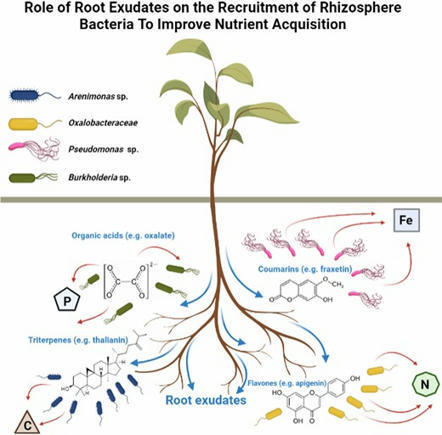
While horticulture tools and methods have been extensively developed to improve the management of crops, systems to harness the rhizosphere microbiome to benefit plant crops are still in development. Plants and microbes have been coevolving for several millennia, conferring fitness advantages that expand the plant’s own genetic potential. These beneficial associations allow the plants to cope with abiotic stresses such as nutrient deficiency across a wide range of soils and growing conditions. Plants achieve these benefits by selectively recruiting microbes using root exudates, positively impacting their nutrition, health and overall productivity. Advanced knowledge of the interplay between root exudates and microbiome alteration in response to plant nutrient status, and the underlying mechanisms there of, will allow the development of technologies to increase crop yield. This review summarizes current knowledge and perspectives on plant–microbial interactions for resource acquisition and discusses promising advances for manipulating rhizosphere microbiomes and root exudation.
|
|
Scooped by
Jean-Michel Ané
April 24, 2023 8:19 PM
|
Classical engineering design aims to solve the problem at hand, perhaps not considering potential deleterious consequences to the broader environmental system. Sustainable engineering design has incorporated the environment into the designed solution, but it passively attempts to “not harm” the environment. The recently coined techno-ecological synergy (TES) concept attempts to balance ecological demands (i.e., conventional impacts) with ecological services, either by minimizing ecological impacts or by developing new ecosystems. Beyond these apparently passive approaches, environmentally aligned engineered solutions that engage the environmental inner workings into the solution paradigm are necessitated. Here, we introduce this paradigm-shifting concept, i.e., symbiotic engineering, which can actively engage existing environmental synergies (e.g., interdependence between species) into the engineering solution domain. The perspective discusses natural symbiosis, outlines the principles of symbiotic engineering, and applies this novel construct to propose example solutions to enduring environmental challenges. Hence, this perspective will serve as a milestone in the pursuit of symbiotic engineering to design solutions for large-scale environmental engineering challenges.
|