 Your new post is loading...

|
Scooped by
Jean-Michel Ané
June 6, 2023 5:23 PM
|
There has been little study of the type IV secretion system (T4SS) of bradyrhizobia and its role in legume symbiosis. Therefore, broad host range Bradyrhizobium sp. SUTN9-2 was selected for study. The chromosome of Bradyrhizobium sp. SUTN9-2 contains two copies of the T4SS gene, homologous with the tra/trb operons. A phylogenetic tree of the T4SS gene traG was constructed, which exemplified its horizontal transfer among Bradyrhizobium and Mesorhizobium genera. They also showed similar gene arrangements for the tra/trb operons. However, the virD2 gene was not observed in Mesorhizobium, except M. oppotunistum WSM2075. Interestingly, the orientation of copG, traG, and virD2 cluster was unique to the Bradyrhizobium genus. The phylogenetic tree of copG, traG, and virD2 demonstrated that copies 1 and 2 of these genes were grouped in different clades. In addition, the derived mutant and complementation strains of T4SS were investigated in representative legumes Genistoids, Dalbergioids, and Millettiods. When T4SS copy 1 (T4SS1) was deleted, the nodule number and nitrogenase activity decreased. This supports a positive effect of T4SS1 on symbiosis. In addition, delayed nodulation was observed 7 dpi, which was restored by the complementation of T4SS1. Therefore, T4SS plays an important role in the symbiotic interaction between Bradyrhizobium sp. SUTN9-2 and its leguminous hosts.
|
|
Scooped by
Jean-Michel Ané
June 6, 2023 5:06 PM
|
Compared to the well-studied model legumes, where symbiosis is established via root hair entry, the peanut is infected by Bradyrhizobium through the crack entry, which is less common and not fully understood. Crack entry is, however, considered a primitive symbiotic infection pathway, which could be potentially utilized for engineering non-legume species with nitrogen fixation ability. We utilized a fluorescence-labeled Bradyrhizobium strain to help in understanding the crack entry process at the cellular level. A modified plasmid pRJPaph-bjGFP, harboring the codon-optimized GFP gene and tetracycline resistance gene, was created and conjugated into Bradyrhizobium strain Lb8, an isolate from peanut nodules, through tri-parental mating. Microscopic observation and peanut inoculation assays confirmed the successful GFP tagging of Lb8, which is capable of generating root nodules. A marking system for peanut root potential infection sites and an optimized sample preparation protocol for cryostat sectioning was developed. The feasibility of using the GFP-tagged Lb8 for observing crack entry was examined. GFP signal was detected at the nodule primordial stage and the following nodule developmental stages with robust GFP signals observed in infected cells in the mature nodules. Spherical bacteroids in the root tissue were visualized at the nodules’ inner cortex under higher magnification, reflecting the trace along the rhizobial infection path. The GFP labeled Lb8 can serve as an essential tool for plant-microbe studies between the cultivated peanut and Bradyrhizobium, which could facilitate further study of the crack entry process during the legume-rhizobia symbiosis.
|
|
Scooped by
Jean-Michel Ané
June 6, 2023 4:58 PM
|
Plant growth promoting bacteria can confer resistance to various types of stress and increase agricultural yields. The mechanisms they employ are diverse. One of the most important genes associated with the increase in plant biomass and stress resistance is acdS, which encodes a 1-aminocyclopropane-1-carboxylate- or ACC-deaminase. The non-proteinogenic amino acid ACC is the precursor and means of long-distance transport of ethylene, a plant hormone associated with growth arrest. Expression of acdS reduces stress induced ethylene levels and the enzyme is abundant in rhizosphere colonizers. Whether ACC hydrolysis plays a role in the phyllosphere, both as assembly cue and in growth promotion, remains unclear. Here we show that Paraburkholderia dioscoreae Msb3, a yam phyllosphere symbiont, colonizes the tomato phyllosphere and promotes plant growth by action of its ACC deaminase. We found that acdS is required for improved plant growth but not for efficient leaf colonization. Strain Msb3 readily proliferates on the leaf surface of tomato, only occasionally spreading to the leaf endosphere through stomata. The strain can also colonize the soil or medium around the roots but only spreads into the root if the plant is wounded. Our results indicate that the degradation of ACC is not just an important trait of plant growth promoting rhizobacteria but also one of leaf dwelling phyllosphere bacteria. Manipulation of the leaf microbiota by means of spray inoculation may be more easily achieved than that of the soil. Therefore, the application of ACC deaminase containing bacteria to the phyllosphere may be a promising strategy to increasing plant stress resistance, pathogen control, and harvest yields.
|
|
Scooped by
Jean-Michel Ané
June 6, 2023 9:51 AM
|
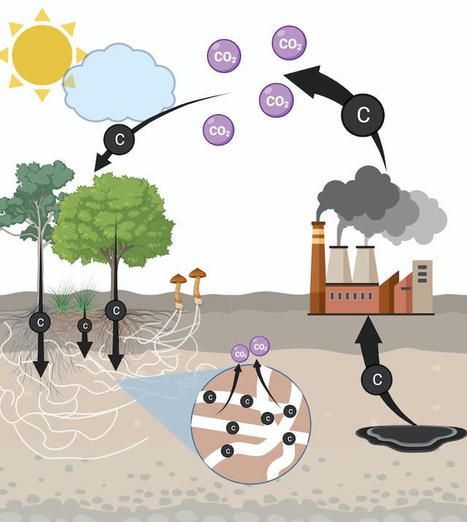
For more than 400 million years, mycorrhizal fungi and plants have formed partnerships that are crucial to the emergence and functioning of global ecosystems. The importance of these symbiotic fungi for plant nutrition is well established. However, the role of mycorrhizal fungi in transporting carbon into soil systems on a global scale remains under-explored. This is surprising given that ∼75% of terrestrial carbon is stored belowground and mycorrhizal fungi are stationed at a key entry point of carbon into soil food webs. Here, we analyze nearly 200 datasets to provide the first global quantitative estimates of carbon allocation from plants to the mycelium of mycorrhizal fungi. We estimate that global plant communities allocate 3.93 Gt CO2e per year to arbuscular mycorrhizal fungi, 9.07 Gt CO2e per year to ectomycorrhizal fungi, and 0.12 Gt CO2e per year to ericoid mycorrhizal fungi. Based on this estimate, 13.12 Gt of CO2e fixed by terrestrial plants is, at least temporarily, allocated to the underground mycelium of mycorrhizal fungi per year, equating to ∼36% of current annual CO2 emissions from fossil fuels. We explore the mechanisms by which mycorrhizal fungi affect soil carbon pools and identify approaches to increase our understanding of global carbon fluxes via plant–fungal pathways. Our estimates, although based on the best available evidence, are imperfect and should be interpreted with caution. Nonetheless, our estimations are conservative, and we argue that this work confirms the significant contribution made by mycorrhizal associations to global carbon dynamics. Our findings should motivate their inclusion both within global climate and carbon cycling models, and within conservation policy and practice.
|
|
Scooped by
Jean-Michel Ané
June 5, 2023 10:40 AM
|
Elucidating the similarity and diversity of pathogen effectors is critical to understand their evolution across fungal phytopathogens. However, rapid divergence that diminishes sequence similarities between putatively homologous effectors has largely concealed the roots of effector evolution. Here we modelled the structures of 26,653 secreted proteins from 14 agriculturally important fungal phytopathogens, six non-pathogenic fungi and one oomycete with AlphaFold 2. With 18,000 successfully predicted folds, we performed structure-guided comparative analyses on two aspects of effector evolution: uniquely expanded sequence-unrelated structurally similar (SUSS) effector families and common folds present across the fungal species. Extreme expansion of lineage-specific SUSS effector families was found only in several obligate biotrophs, Blumeria graminis and Puccinia graminis. The highly expanded effector families were the source of conserved sequence motifs, such as the Y/F/WxC motif. We identified new classes of SUSS effector families that include known virulence factors, such as AvrSr35, AvrSr50 and Tin2. Structural comparisons revealed that the expanded structural folds further diversify through domain duplications and fusion with disordered stretches. Putatively sub- and neo-functionalized SUSS effectors could reconverge on regulation, expanding the functional pools of effectors in the pathogen infection cycle. We also found evidence that many effector families could have originated from ancestral folds conserved across fungi. Collectively, our study highlights diverse effector evolution mechanisms and supports divergent evolution as a major force in driving SUSS effector evolution from ancestral proteins.
|
|
Scooped by
Jean-Michel Ané
May 25, 2023 5:00 PM
|
Climate change is pushing species outside of their evolved tolerances. Plant populations must acclimate, adapt, or migrate to avoid extinction. However, because plants associate with diverse microbial communities that shape their phenotypes, shifts in microbial associations may provide an alternative source of climate tolerance. Here, we show that tree seedlings inoculated with microbial communities sourced from drier, warmer, or colder sites displayed higher survival when faced with drought, heat, or cold stress, respectively. Microbially mediated drought tolerance was associated with increased diversity of arbuscular mycorrhizal fungi, whereas cold tolerance was associated with lower fungal richness, likely reflecting a reduced burden of nonadapted fungal taxa. Understanding microbially mediated climate tolerance may enhance our ability to predict and manage the adaptability of forest ecosystems to changing climates.
|
|
Scooped by
Jean-Michel Ané
May 23, 2023 9:55 AM
|
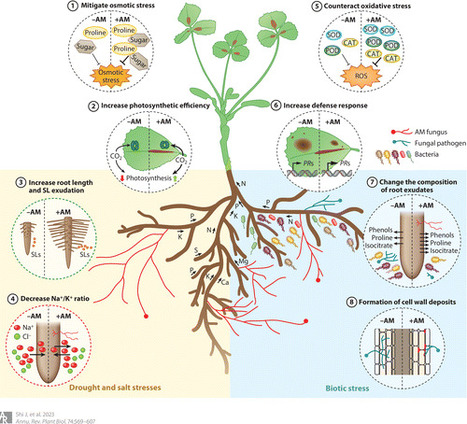
Plant roots associate with diverse microbes (including bacteria, fungi, archaea, protists, and viruses) collectively called the root-associated microbiome. Among them, mycorrhizal fungi colonize host roots and improve their access to nutrients, usually phosphorus and nitrogen. In exchange, plants deliver photosynthetic carbon to the colonizing fungi. This nutrient exchange affects key soil processes, the carbon cycle, and plant health and therefore has a strong influence on the plant and microbe ecosystems. The framework of nutrient exchange and regulation between host plant and arbuscular mycorrhizal fungi has recently been established. The local and systemic regulation of mycorrhizal symbiosis by plant nutrient status and the autoregulation of mycorrhizae are strategies by which plants maintain a stabilizing free-market symbiosis. A better understanding of the synergistic effects between mycorrhizal fungi and mycorrhizosphere microorganisms is an essential precondition for their use as biofertilizers and bioprotectors for sustainable agriculture and forestry management.
|
|
Scooped by
Jean-Michel Ané
May 21, 2023 3:20 PM
|
Sinorhizobium meliloti is a model alpha-proteobacterium for investigating microbe-host interactions, in particular nitrogen-fixing rhizobium-legume symbioses. Successful infection requires complex coordination between compatible host and endosymbiont, including bacterial production of succinoglycan, also known as exopolysaccharide-I (EPS-I). In S. meliloti EPS-I production is controlled by the conserved ExoS-ChvI two-component system. Periplasmic ExoR associates with the ExoS histidine kinase and negatively regulates ChvI-dependent expression of exo genes, necessary for EPS-I synthesis. We show that two extracytoplasmic proteins, LppA (a lipoprotein) and JspA (a metalloprotease), jointly influence EPS-I synthesis by modulating the ExoR-ExoS-ChvI pathway and expression of genes in the ChvI regulon. Deletions of jspA and lppA led to lower EPS-I production and competitive disadvantage during host colonization, for both S. meliloti with Medicago sativa and S. medicae with M. truncatula. Overexpression of jspA reduced steady-state levels of ExoR, suggesting that the JspA protease participates in ExoR degradation. This reduction in ExoR levels is dependent on LppA and can be replicated with ExoR, JspA, and LppA expressed exogenously in Caulobacter crescentus and Escherichia coli. Akin to signaling pathways that sense extracytoplasmic stress in other bacteria, JspA and LppA may monitor periplasmic conditions during interaction with the plant host to adjust accordingly expression of genes that contribute to efficient symbiosis. The molecular mechanisms underlying host colonization in our model system may have parallels in related alpha-proteobacteria.
|
|
Scooped by
Jean-Michel Ané
May 21, 2023 3:11 PM
|
The microbiota populating the plant–soil continuum defines an untapped resource for sustainable crop production. The host plant is a driver for the taxonomic composition and function of these microbial communities. In this review, we illustrate how the host genetic determinants of the microbiota have been shaped by plant domestication and crop diversification. We discuss how the heritable component of microbiota recruitment may represent, at least partially, a selection for microbial functions underpinning the growth, development, and health of their host plants and how the magnitude of this heritability is influenced by the environment. We illustrate how host–microbiota interactions can be treated as an external quantitative trait and review recent studies associating crop genetics with microbiota-based quantitative traits. We also explore the results of reductionist approaches, including synthetic microbial communities, to establish causal relationships between microbiota and plant phenotypes. Lastly, we propose strategies to integrate microbiota manipulation into crop selection programs. Although a detailed understanding of when and how heritability for microbiota composition can be deployed for breeding purposes is still lacking, we argue that advances in crop genomics are likely to accelerate wider applications of plant–microbiota interactions in agriculture.
|
|
Scooped by
Jean-Michel Ané
May 17, 2023 4:55 PM
|
Nodulation in legumes is regulated to maintain carbon–nitrogen homeostasis. A systemic negative feedback pathway, Autoregulation of Nodulation (AON) controls nodule number by suppressing further nodulation as early as 48–72 h post inoculation. In order to identify new genes involved in AON, a screen for suppressors of sunn-1, a Medicago truncatula AON mutant with a hypernodulation phenotype, was performed and identified a gene not previously associated with signaling in the legume-rhizobia symbiosis. We discovered that sunn-1 plants carrying the mutation suppressor of sunn-1 (sos1) displayed wild-type nodule numbers. At 3 days post inoculation (dpi), sos1 sunn-1 plants make many nodulation foci and infection threads but lack the emerging nodules observed in wild-type and sunn-1 mutants. At 10 dpi, in contrast to sunn-1, no significance in nodule number was observed between wildtype and the sos1 sunn-1plants. Using grafting, we showed that sos1 suppression of the sunn-1 nodule phenotype is dependent on the genotype of the root. The lesion a C to T transition resulting in an R to H a change mapped to Mediator 16A (MED16A) and expression of this gene in composite hairy roots led to recovery of hypernodulation in sos1 sunn-1plants. Induction of expression of the MtNIN transcription factor involved in regulating nodulation is reduced in sos1 sunn-1compared to sunn-1. Furthermore, sos1 plants display fewer nodules than wild-type but higher arbuscular density when colonized by an arbuscular mycorrhizal fungus, and shorter roots in the absence of rhizobia. Collectively, our findings show that effects of mutation of Mediator 16A are not specific for symbiosis but involve multiple root response pathways, making the sos1 mutant an important tool for dissection of regulons controlling rhizobial and mycorrhizal responses, root growth and possibly other response pathways.
|
|
Scooped by
Jean-Michel Ané
May 14, 2023 10:03 PM
|
In soil, arbuscular mycorrhizal fungi (AMF) meet the roots of both host and presumed nonhost plants, but the interactional mechanisms of AMF with and functional relevance for nonhost plants is little known. Here we show AMF can colonize an individually grown nonhost plant, Arabidopsis thaliana, and suppress the growth of Arabidopsis and two nonhost Brassica crops. This inhibitory effect increased with increasing AMF inoculum density, and was independent of AMF species or nutrient availability. 13C isotope labeling and physiological analyses revealed no significant carbon‒phosphorus exchange between Arabidopsis and AMF, indicating a lack of nutritional function in this interaction. AMF colonization activated the danger-associated peptide Pep-PEPR signaling pathway, and caused clear defense responses in Arabidopsis. The impairment of Pep-PEPR signaling in nonhost plants greatly compromised AMF-triggered defensive responses and photosynthesis suppression, leading to higher colonization rates and reduced growth suppression upon AMF inoculation. Pretreatment with Pep peptide decreased AMF colonization, and largely substituted for AMF-induced growth suppression in nonhosts, confirming that the Pep-PEPR pathway is a key participant in resistance to AMF colonization and in mediating growth suppression of nonhost plants. This work greatly increases our knowledge about the functional relevance of AMF and their mechanisms of interactions with nonhost plants.
|
|
Scooped by
Jean-Michel Ané
May 14, 2023 9:28 PM
|
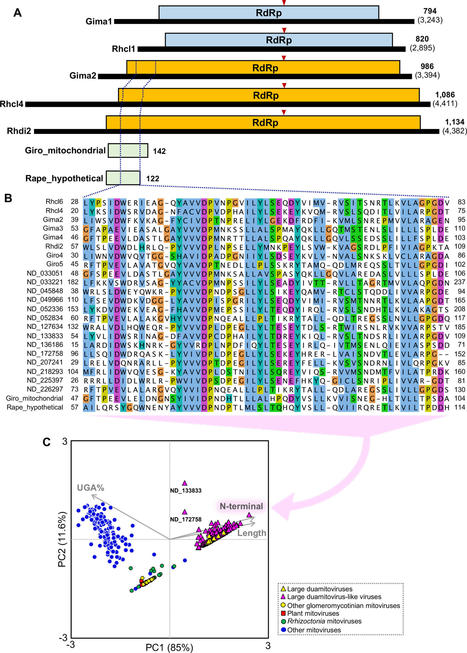
Mitoviruses in the family Mitoviridae are the mitochondria-replicating “naked RNA viruses” with genomes encoding only the replicase RNA-dependent RNA polymerase (RdRp) and prevalent across fungi, plants, and invertebrates. Arbuscular mycorrhizal fungi in the subphylum Glomeromycotina are obligate plant symbionts that deliver water and nutrients to the host. We discovered distinct mitoviruses in glomeromycotinian fungi, namely “large duamitovirus,” encoding unusually large RdRp with a unique N-terminal motif that is endogenized in some host genomes. More than 400 viral sequences similar to the large duamitoviruses are present in metatranscriptome databases. They are globally distributed in soil ecosystems, consistent with the cosmopolitan distribution of glomeromycotinian fungi, and formed the most basal clade of the Mitoviridae in phylogenetic analysis. Given that glomeromycotinian fungi are the only confirmed hosts of these viruses, we propose the hypothesis that large duamitoviruses are the most ancestral lineage of the Mitoviridae that have been maintained exclusively in glomeromycotinian fungi.
|
|
Scooped by
Jean-Michel Ané
May 14, 2023 9:24 PM
|
Legumes’ nutrition relies on two sources of nitrogen (N): mineral N from soil, and biological N fixation (BNF). The aim of this study was to verify the effect of bacterial inoculation, as well as to compare it with the effect of different mineral N fertilization on the main nodulation characteristics, yield components and seed yield of two soybean (Glycine max (L.) Merr.) cultivars in the conditions of south-eastern Poland. A randomized block design was used with four replications and combining the application rates of mineral N (0, 30 and 60 kg·ha−1), and seed inoculation with Bradyrhizobium japonicum (HiStick® Soy and Nitragina) were applied for two soybean cultivars (Aldana, Annushka). It has been shown that inoculation of B. japonicum increases the nodulation on plant roots, yield components and seed yield, but no significant effect of the bacterial preparation used on the seed yield was observed. The application of 30 kg N·ha−1 did not result in a significant reduction in the number and weight of nodules, including on the main root and lateral roots, compared to seeds inoculated and not fertilized with N, as observed under a dose of 60 kg N·ha−1, but resulted in an increase in the number of pods and the number and weight of seeds per plant. For both soybean cultivars, the best combination was nitrogen fertilization at 30 kg N·ha−1 and seed inoculation with B. japonicum, regardless of the bacterial preparation used.
|
|
|
Scooped by
Jean-Michel Ané
June 6, 2023 5:08 PM
|
Rhizobium sp. IRBG74 is a nitrogen fixing symbiont of Sesbania cannabina and a growth promoting endophyte of rice thus making it a good model to compare rhizobial interactions with legumes and cereals. In this report, we show that Rhizobium sp. IRBG74 forms biofilms on the roots of S. cannabina and rice. A mutant defective in biofilm formation was identified by screening a transposon mutant library. The transposon insertion was in thiQ, part of the thiBPQ operon that encodes the components of a thiamine/thiamine pyrophosphate ABC transporter. Complementation with thiBPQ partially restored biofilm formation. Addition of thiamine in growth media led to repression of thiC expression in the wild type strain but not in the thiQ mutant. These results suggest that thiBPQ is involved in thiamine/TPP transport in Rhizobium sp. IRBG74. Using a GUS reporter, we show that the expression of thiC is significantly higher in biofilm as compared to cells in planktonic growth. Based on these results we propose that Rhizobium sp. IRBG74 is thiamine limited and requires thiamine transport for efficient biofilm formation and plant colonization. Thiamine synthesis in aerobic bacteria such as Rhizobium requires O2 and thus could be inhibited in the microaerobic/anaerobic conditions in biofilms.
|
|
Scooped by
Jean-Michel Ané
June 6, 2023 4:58 PM
|
The importance of biological nitrogen fixation (BNF) in securing food production for the growing world population with minimal environmental cost has been increasingly acknowledged. Leaf surfaces are one of the biggest microbial habitats on Earth, harboring diverse free-living N2-fixers. These microbes inhabit the epiphytic and endophytic phyllosphere and contribute significantly to plant N supply and growth. Here, we summarize the contribution of phyllosphere-BNF to global N cycling, evaluate the diversity of leaf-associated N2-fixers across plant hosts and ecosystems, illustrate the ecological adaptation of N2-fixers to the phyllosphere, and identify the environmental factors driving BNF. Finally, we discuss potential BNF engineering strategies to improve the nitrogen uptake in plant leaves and thus sustainable food production.
|
|
Scooped by
Jean-Michel Ané
June 6, 2023 4:55 PM
|
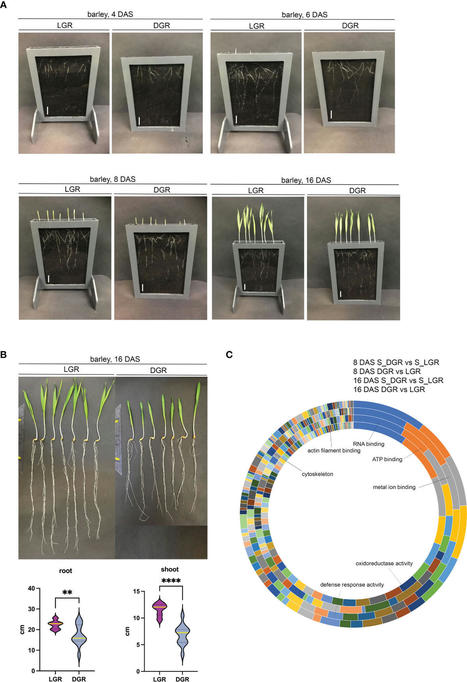
Roots are the hidden parts of plants, anchoring their above-ground counterparts in the soil. They are responsible for water and nutrient uptake and for interacting with biotic and abiotic factors in the soil. The root system architecture (RSA) and its plasticity are crucial for resource acquisition and consequently correlate with plant performance while being highly dependent on the surrounding environment, such as soil properties and therefore environmental conditions. Thus, especially for crop plants and regarding agricultural challenges, it is essential to perform molecular and phenotypic analyses of the root system under conditions as near as possible to nature (#asnearaspossibletonature). To prevent root illumination during experimental procedures, which would heavily affect root development, Dark-Root (D-Root) devices (DRDs) have been developed. In this article, we describe the construction and different applications of a sustainable, affordable, flexible, and easy to assemble open-hardware bench-top LEGO® DRD, the DRD-BIBLOX (Brick Black Box). The DRD-BIBLOX consists of one or more 3D-printed rhizoboxes, which can be filled with soil while still providing root visibility. The rhizoboxes sit in a scaffold of secondhand LEGO® bricks, which allows root development in the dark and non-invasive root tracking with an infrared (IR) camera and an IR light-emitting diode (LED) cluster. Proteomic analyses confirmed significant effects of root illumination on barley root and shoot proteomes. Additionally, we confirmed the significant effect of root illumination on barley root and shoot phenotypes. Our data therefore reinforces the importance of the application of field conditions in the lab and the value of our novel device, the DRD-BIBLOX. We further provide a DRD-BIBLOX application spectrum, spanning from investigating a variety of plant species and soil conditions and simulating different environmental conditions and stresses, to proteomic and phenotypic analyses, including early root tracking in the dark.
|
|
Scooped by
Jean-Michel Ané
June 6, 2023 9:47 AM
|
Beneath our feet, remarkable networks of fungal filaments stretch out in all directions. These mycorrhizal fungi live in partnership with plants, offering nutrients, water and protection from pests in exchange for carbon-rich sugars.
Now, new research shows this single group of fungi may quietly be playing a bigger role in storing carbon than we thought.
How much bigger? These microscopic filaments take up the equivalent of more than a third (36%) of the world’s annual carbon emissions from fossil fuels – every year.
As we search for ways to slow or stop the climate crisis, we often look to familiar solutions: cutting fossil fuel use, switching to renewables and restoring forests. This research shows we need to look down too, into our soils.
|
|
Scooped by
Jean-Michel Ané
May 27, 2023 12:16 PM
|
Microorganisms colonizing the plant rhizosphere and phyllosphere play crucial roles in plant growth and health. Recent studies provide new insights into long-distance communication from plant roots to shoots in association with their commensal microbiome. In brief, these recent advances suggest that specific plant-associated microbial taxa can contribute to systemic plant responses associated with the enhancement of plant health and performance in face of a variety of biotic and abiotic stresses. However, most of the mechanisms associated with microbiome-mediated signal transduction in plants remain poorly understood. In this review, we provide an overview of long-distance signaling mechanisms within plants mediated by the commensal plant-associated microbiomes. We advocate the view of plants and microbes as a holobiont and explore key molecules and mechanisms associated with plant–microbe interactions and changes in plant physiology activated by signal transduction.
|
|
Scooped by
Jean-Michel Ané
May 24, 2023 9:04 AM
|
While plant microbiome assembly involves a series of both plant-microbe and microbe-microbe interactions, the latter is less often directly tested. Here, we investigate a role for Streptomyces strains to influence assembly of other bacteria into root microbiomes through the use of two synthetic communities (SynComs): a 21-member community including four Streptomyces strains and a 17-member community lacking those Streptomyces strains. Following inoculation with these SynComs on wildtype Arabidopsis thaliana Col-0, differential abundance modeling on root endosphere 16S rRNA gene amplicon sequencing data revealed altered abundance of four diverse SynCom members: Arthrobacter sp. 131, Agrobacterium sp. 33, Burkholderia sp. CL11, and Ralstonia sp. CL21. Modeling results were tested by seedling co-inoculation experiments with the four Streptomyces strains and differentially abundant members, which confirmed the predicted decreased abundance for Arthrobacter sp. 131, Agrobacterium sp. 33, and Ralstonia sp. CL21 when Streptomyces strains were present. We further characterized how the phytohormone salicylic acid (SA) mediates Streptomyces strains’ influence over Agrobacterium sp. 33 and Burkholderia sp. CL11 seedling colonization. While decreased colonization of Ralstonia sp. CL21 and Arthrobacter sp. 131 when Streptomyces are present were not influenced by SA, direct antibiosis of Arthrobacter sp. 131 by the Streptomyces was observed. These results highlight a role for Streptomyces mediated microbial interactions during plant root microbiome assembly as well as distinct mechanisms that mediate them. Understanding the role of microbial interactions during microbiome assembly will inform the production of beneficial microbial treatments for use in agricultural fields.
|
|
Scooped by
Jean-Michel Ané
May 21, 2023 3:23 PM
|
Receptors that distinguish the multitude of microbes surrounding plants in the environment enable dynamic responses to the biotic and abiotic conditions encountered. In this study, we identify and characterise a glycan receptor kinase, EPR3a, closely related to the exopolysaccharide receptor EPR3. Epr3a is up-regulated in roots colonised by arbuscular mycorrhizal (AM) fungi and is able to bind glucans with a branching pattern characteristic of surface-exposed fungal glucans. Expression studies with cellular resolution show localised activation of the Epr3a promoter in cortical root cells containing arbuscules. Fungal infection and intracellular arbuscule formation are reduced in epr3a mutants. In vitro, the EPR3a ectodomain binds cell wall glucans in affinity gel electrophoresis assays. In microscale thermophoresis (MST) assays, rhizobial exopolysaccharide binding is detected with affinities comparable to those observed for EPR3, and both EPR3a and EPR3 bind a well-defined β-1,3/β-1,6 decasaccharide derived from exopolysaccharides of endophytic and pathogenic fungi. Both EPR3a and EPR3 function in the intracellular accommodation of microbes. However, contrasting expression patterns and divergent ligand affinities result in distinct functions in AM colonisation and rhizobial infection in Lotus japonicus. The presence of Epr3a and Epr3 genes in both eudicot and monocot plant genomes suggest a conserved function of these receptor kinases in glycan perception.
|
|
Scooped by
Jean-Michel Ané
May 21, 2023 3:17 PM
|
Aspergillus fumigatus is a notorious pathogenic fungus responsible for various harmful, sometimes lethal, diseases known as aspergilloses. Understanding the gene regulatory networks that specify the expression programs underlying this fungus’ diverse phenotypes can shed mechanistic insight into its growth, development, and determinants of pathogenicity. We used eighteen RNA-seq datasets (seventeen publicly available and one previously unpublished) of Aspergillus fumigatus to construct a comprehensive gene regulatory network resource. Our resource, named GRAsp (Gene Regulation of Aspergillus fumigatus), was able to recapitulate known regulatory pathways such as response to hypoxia, iron and zinc homeostasis, and secondary metabolite synthesis. Further, GRAsp was experimentally validated in two cases: one in which GRAsp accurately identified an uncharacterized transcription factor negatively regulating the production of the virulence factor gliotoxin and another where GRAsp revealed the bZip protein, AtfA, as required for fungal responses to microbial signals known as lipo-chitooligosaccharides. Our work showcases the strength of using network-based approaches to generate new hypotheses about regulatory relationships in Aspergillus fumigatus. We also unveil an online, user-friendly version of GRAsp available to the Aspergillus research community.
|
|
Scooped by
Jean-Michel Ané
May 17, 2023 4:56 PM
|
Nitrogen (N) is an essential macronutrient for plant growth and productivity. Leguminous plants establish symbiotic relationships with nitrogen-fixing rhizobial bacteria to use atmospheric dinitrogen gas to meet high N demand under low-N conditions. Nodule formation and N fixation are energy-consuming processes and are inhibited by nitrate present in the environment. Previous studies in model leguminous plants characterized NIN-LIKE PROTEIN (NLP) proteins that mediate nitrate control of root nodule symbiosis, but the mechanism by which nitrate regulates soybean root nodules via NLP remains unclear. In the soybean genome we found four homologs of AtNLP7, named GmNLP7a–GmNLP7d. We showed that the expression of GmNLP7s is responsive to nitrate but not to rhizobial infection and localized GmNLP7a to the nucleus. Downregulation of GmNLP7s increased nodule number, and overexpression of GmNLP7a (GmNLP7aOE) reduced nodule number regardless of nitrate availability, suggesting a negative role for GmNLP7s in nodulation. Nitrogenase activity in the GmNLP7aOE line was comparable to that of the wild type, indicating that GmNLP7a does not affect mature nodule activity. Overexpression of GmNLP7a downregulated the expression of GmNIN1a and GmENOD40-1. GmNLP7a interacted with GmNIN1a via the PB1 domain. Our results reveal a new regulator of GmNLP7 in nodulation and a molecular mechanism by which nitrate affects nodule number in soybean.
|
|
Scooped by
Jean-Michel Ané
May 14, 2023 10:03 PM
|
Sucrose nonfermenting 2 (Snf2) family proteins are the core component of chromatin remodeling complexes that can alter chromatin structure and nucleosome position by utilizing the energy of ATP, playing a vital role in transcription regulation, DNA replication, and DNA damage repair. Snf2 family proteins have been characterized in various species including plants, and they have been found to regulate development and stress responses in Arabidopsis. Soybean (Glycine max) is an important food and economic crop worldwide, unlike other non-leguminous crops, soybeans can form a symbiotic relationship with rhizobia for biological nitrogen fixation. However, little is known about Snf2 family proteins in soybean. In this study, we identified 66 Snf2 family genes in soybean that could be classified into six groups like Arabidopsis, unevenly distributed on 20 soybean chromosomes. Phylogenetic analysis with Arabidopsis revealed that these 66 Snf2 family genes could be divided into 18 subfamilies. Collinear analysis showed that segmental duplication was the main mechanism for expansion of Snf2 genes rather than tandem repeats. Further evolutionary analysis indicated that the duplicated gene pairs had undergone purifying selection. All Snf2 proteins contained seven domains, and each Snf2 protein had at least one SNF2_N domain and one Helicase_C domain. Promoter analysis revealed that most Snf2 genes had cis-elements associated with jasmonic acid, abscisic acid, and nodule specificity in their promoter regions. Microarray data and real-time quantitative PCR (qPCR) analysis revealed that the expression profiles of most Snf2 family genes were detected in both root and nodule tissues, and some of them were found to be significantly downregulated after rhizobial infection. In this study, we conducted a comprehensive analysis of the soybean Snf2 family genes and demonstrated their responsiveness to Rhizobia infection. This provides insight into the potential roles of Snf2 family genes in soybean symbiotic nodulation.
|
|
Scooped by
Jean-Michel Ané
May 14, 2023 10:02 PM
|
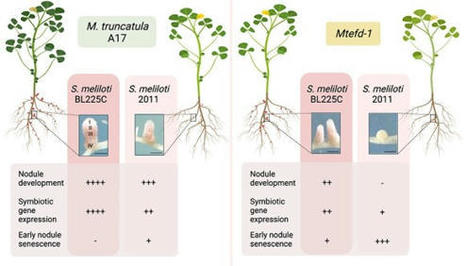
Legume plants are essential components of sustainable agriculture, thanks to their ability to establish nitrogen (N)-fixing symbiosis with soil bacteria of the genus Rhizobium. These positive interactions lead to a developmental reprogramming of plant and bacterial cells, culminating in the formation of an N-fixing organ in roots termed the nodule. This symbiotic interaction requires a finely tuned molecular communication between both symbionts occurring via multiple mechanisms. The model legume Medicago truncatula forms indeterminate, elongated nodules with a persistent apical meristem and a gradient of bacterial infection and N fixation zones. Zone I corresponds to the meristematic nodule zone, where no infection occurs; zone II is associated with the nodule infection region; zone III is the region where rhizobium bacteria are differentiated into bacteroids and actively fix N and eventually, senescence-related processes will occur in zone IV (Vasse et al. 1990, Fig. 1). In this type of nodules, infecting bacteria undergo terminal differentiation through the activity of various plant peptides, of which the NODULE-SPECIFIC CYSTEINE-RICH (NCR) peptide family (Van de Velde et al. 2010, Wang et al. 2010) is the best characterized.
|
|
Scooped by
Jean-Michel Ané
May 14, 2023 9:26 PM
|
The common bean (Phaseolus vulgaris L.) can supply part of its N demand through biological nitrogen fixation (BNF) in symbiosis with rhizobia. However, the responses to inoculation and BNF's contribution to plant nutrition vary with the plant genotype. Here, we examined the proteome of two common bean genotypes (Ouro Negro and BRS Radiante) to determine shifts in leaf metabolism with two N sources: mineral N and inoculation with Rhizobium tropici CIAT899 (= SEMIA 4077 = BR 322). Data are available via ProteomeXchange with the identifier PXD034817. Through UPLC-MS/MS analysis, we identified 917 proteins, 338 of which are differentially expressed. Here we focus on the 64 and 22 proteins differentially expressed in BRS Radiante and Ouro Negro, respectively, when comparing the proteome profiles of inoculated and N-fertilized plants. Different pathways in P. vulgaris were affected positively and negatively in BRS Radiante during symbiosis: glutathione metabolism, cysteine and methionine metabolism, phenylpropanoid biosynthesis, sulfur metabolism, peroxisome pentose and glucuronate interconversions, amino sugar and nucleotide sugar metabolism, carbon metabolism, and phagosome were the identified pathways. However, only three pathways were affected in Ouro Negro: peroxisome, endocytosis, and sulfur metabolism. Ouro Negro shows a less affected metabolism, which may lead to a more successful symbiosis. Proteins related to defense response were also induced in BRS Radiante, implying that their activation in this genotype may be partially responsible for its less efficient symbiosis. It is important to consider the difference in the life cycles of the two cultivars, as Ouro Negro had more time to adapt to the symbiosis than BRS Radiante. These results provide a basis for future studies to identify and explore biochemical mechanisms of nitrogen fixation in common beans beyond the roots.
|











Awesome work on T4SS in symbiosis