Your new post is loading...

|
Scooped by
Jean-Michel Ané
April 24, 2023 8:12 PM
|
The enzyme nitrogenase performs the process of biological nitrogen fixation (BNF), converting atmospheric dinitrogen gas into the biologically accessible ammonia, which is rapidly protonated at physiological pH to yield ammonium. The reduction of dinitrogen requires both ATP and electrons. Azotobacter vinelandii is an aerobic nitrogen-fixing microbe that is a model organism for the study of BNF. Previous reports have described strains of A. vinelandii that are partially deregulated for BNF, resulting in the release of large quantities of ammonium into the growth medium. Determining the source of the electrons required to drive BNF is complicated by the existence of several protein complexes in A. vinelandii that have been linked to BNF in other species. In this work, we used the high-ammonium-accumulating strains of A. vinelandii to probe the source of electrons to nitrogenase by disrupting the Rnf1 and Fix complexes. The results of this work demonstrate the potential of these strains to be used as a tool to investigate the contributions of other enzymes or complexes in the process of BNF. These results provide strong evidence that the Rnf1 complex of A. vinelandii is the primary source of electrons delivered to the nitrogenase enzyme in this partially deregulated strain. The Fix complex under native regulation was unable to provide sufficient electrons to accumulate extracellular ammonium in the absence of the Rnf1 complex. Increased ammonium accumulation could be attained in a strain lacking the Rnf1 complex if the genes of the Fix protein complex were relocated behind the strong promoter of the S-layer protein but still failed to achieve the levels found with just the Rnf1 complex by itself.
|
|
Scooped by
Jean-Michel Ané
April 24, 2023 8:08 PM
|
Medicago truncatula is a chosen model for legumes towards deciphering fundamental legume biology, especially symbiotic nitrogen fixation. Current genomic resources for M. truncatula include a completed whole genome sequence information for R108 and Jemalong A17 accessions along with the sparse draft genome sequences for other 226 M. truncatula accessions. These genomic resources are complemented by the availability of mutant resources such as retrotransposon (Tnt1) insertion mutants in R108 and fast neutron bombardment (FNB) mutants in A17. In addition, several M. truncatula databases such as small secreted peptides (SSPs) database, transporter protein database, gene expression atlas, proteomic atlas, and metabolite atlas are available to the research community. This review describes these resources and provide information regarding how to access these resources.
|
|
Scooped by
Jean-Michel Ané
April 24, 2023 8:01 PM
|
Plants sustain intimate relationships with diverse microbes. It is well-recognized that these plant-associated microbiota shape individual performance and fitness of host plants, but much remains to be explored regarding how they exert their function and maintain their homeostasis.
Results
Here, using pink lady (Heterotis rotundifolia) as a study plant, we investigated the phenomenon of microbiota-mediated nitrogen fixation and elucidated how this process is steadily maintained in the root mucilage microhabitat. Metabolite and microbiota profiling showed that the aerial root mucilage is enriched in carbohydrates and diazotrophic bacteria. Nitrogen isotope-labeling experiments, 15N natural abundance, and gene expression analysis indicated that the aerial root-mucilage microbiota could fix atmospheric nitrogen to support plant growth. While the aerial root mucilage is a hotspot of nutrients, we did not observe high abundance of other environmental and pathogenic microbes inside. We further identified a fungus isolate in mucilage that has shown broad-spectrum antimicrobial activities, but solely allows the growth of diazotrophic bacteria. This “friendly” fungus may be the key driver to maintain nitrogen fixation function in the mucilage microhabitat.
Conclusion
The discovery of new biological function and mucilage-habitat friendly fungi provides insights into microbial homeostasis maintenance of microenvironmental function and rhizosphere ecology.
|
|
Scooped by
Jean-Michel Ané
April 22, 2023 3:49 PM
|
Most land plants associate with arbuscular mycorrhizal (AM) fungi to secure mineral nutrient acquisition, especially that of phosphorus. A phosphate starvation response (PHR)-centered network regulates AM symbiosis.
Here, we identified 520 direct target genes for the rice transcription factor OsPHR1/2/3 during AM symbiosis using transcriptome deep sequencing and DNA affinity purification sequencing. These genes were involved in strigolactone biosynthesis, transcriptional reprogramming, and bidirectional nutrient exchange.
Moreover, we identified the receptor-like kinase, Arbuscule Development Kinase 1 (OsADK1), as a new target of OsPHR1/2/3. Electrophoretic mobility shift assays and transactivation assays showed that OsPHR2 can bind directly to the P1BS elements within the OsADK1 promoter to activate its transcription. OsADK1 appeared to be required for mycorrhizal colonization and arbuscule development. In addition, hydroponic experiments suggested that OsADK1 may be involved in plant Pi starvation responses.
Our findings validate a role for OsPHR1/2/3 as master regulators of mycorrhizal-related genes involved in various stages of symbiosis, and uncover a new RLK involved in AM symbiosis and plant Pi starvation responses.
|
|
Scooped by
Jean-Michel Ané
April 21, 2023 10:07 AM
|
Many plants associate with arbuscular mycorrhizal fungi for nutrient acquisition, while legumes also associate with nitrogen-fixing rhizobial bacteria. Both associations rely on symbiosis signaling and here we show that cereals can perceive lipochitooligosaccharides (LCOs) for activation of symbiosis signaling, surprisingly including Nod factors produced by nitrogen-fixing bacteria. However, legumes show stringent perception of specifically decorated LCOs, that is absent in cereals. LCO perception in plants is activated by nutrient starvation, through transcriptional regulation of Nodulation Signaling Pathway (NSP)1 and NSP2. These transcription factors induce expression of an LCO receptor and act through the control of strigolactone biosynthesis and the karrikin-like receptor DWARF14-LIKE. We conclude that LCO production and perception is coordinately regulated by nutrient starvation to promote engagement with mycorrhizal fungi. Our work has implications for the use of both mycorrhizal and rhizobial associations for sustainable productivity in cereals.
|
|
Scooped by
Jean-Michel Ané
April 21, 2023 9:48 AM
|
The continual demand for specialized molecular cloning techniques that suit a broad range of applications has driven the development of many different cloning strategies. One method that has gained significant traction is Golden Gate assembly, which achieves hierarchical assembly of DNA parts by utilizing Type IIS restriction enzymes to produce user-specified sticky ends on cut DNA fragments. This technique has been modularized and standardized, and includes different subfamilies of methods, the most widely adopted of which are the MoClo and Golden Braid standards. Moreover, specialized toolboxes tailored to specific applications or organisms are also available. Still, the quantity and range of assembly methods can constitute a barrier to adoption for new users, and even experienced scientists might find it difficult to discern which tools are best suited toward their goals. In this review, we provide a beginner-friendly guide to Golden Gate assembly, compare the different available standards, and detail the specific features and quirks of commonly used toolboxes. We also provide an update on the state-of-the-art in Golden Gate technology, discussing recent advances and challenges to inform existing users and promote standard practices.
|
|
Scooped by
Jean-Michel Ané
April 20, 2023 11:54 AM
|
Lipo-chitooligosaccharides (LCOs) are historically known for their role as microbial-derived signaling molecules that shape plant symbiosis with beneficial rhizobia or mycorrhizal fungi. Recent studies showing that LCOs are widespread across the fungal kingdom have raised questions about the ecological function of these compounds in organisms that do not form symbiotic relationships with plants. To elucidate the ecological function of these compounds, we investigate the metabolomic response of the ubiquitous human pathogen Aspergillus fumigatus to LCOs. Our metabolomics data revealed that exogenous application of various types of LCOs to A. fumigatus resulted in significant shifts in the fungal metabolic profile, with marked changes in the production of specialized metabolites known to mediate ecological interactions. Using network analyses, we identify specific types of LCOs with the most significant effect on the abundance of known metabolites. Extracts of several LCO-induced metabolic profiles significantly impact the growth rates of diverse bacterial species. These findings suggest that LCOs may play an important role in the competitive dynamics of non-plant-symbiotic fungi and bacteria. This study identifies specific metabolomic profiles induced by these ubiquitously produced chemicals and creates a foundation for future studies into the potential roles of LCOs as modulators of interkingdom competition.
|
|
Scooped by
Jean-Michel Ané
April 20, 2023 11:48 AM
|
Biological nitrogen fixation (BNF) in soybean [Glycine max (L.) Merr.] is an important process to supply nitrogen (N) for the crop. However, the N fixation capacity of soybean varies widely among soils and climatic conditions. The N fixation potential is purportedly minimum in soils that do not have any prior history of soybean cultivation, and the application of inoculum is reported as necessary to facilitate this process. Rhizobium inocula can be applied at planting to promote BNF; however, their efficacy remains highly variable. A field experiment was conducted at irrigated and dryland sites in 2017 and 2018, where soybean was not cultivated in the preceding 10+ years. Bradyrhizobium inoculum was applied in liquid, dry, and a combination of liquid and dry formulations. The results showed that inoculum addition, in any formulation or combination, did not significantly increase soybean yield compared with the untreated control at any site. This study showed that inoculum application did not consistently increase yield in fields without soybean in the previous crop rotation for years. Future research is needed to identify soils, varieties, management practices, and environmental conditions for soybean inoculation which can increase yield and net farm profits.
|
|
Scooped by
Jean-Michel Ané
April 20, 2023 9:00 AM
|
Background: Biological nitrogen fixation converting atmospheric dinitrogen to ammonia is an important way to provide nitrogen for plants. Pseudomonas stutzeri DSM4166 is a diazotrophic Gram-negative bacterium isolated from the rhizosphere of cereal Sorghum nutans. Endogenous constitutive promoters are important for engineering of the nitrogen fixation pathway, however, they have not been systematically characterized in DSM4166.
Results: Twenty-four candidate promoters were identified from DSM4166 by RNA-seq analysis. These 24 promoters were cloned and characterized using the firefly luciferase gene. The strengths of fourteen promoters varied from 100 to 959% of the strength of the gentamicin resistance gene promoter. The strongest P12445 promoter was used to overexpress the biological nitrogen fixation pathway-specific positive regulator gene nifA. The transcription level of nitrogen fixation genes in DSM4166 were significantly increased and the nitrogenase activity was enhanced by 23 folds. When the nifHDK nitrogenase genes and nifA were both overexpressed by endogenous strong constitutive promoters, the nitrogen fixation efficiency of DSM4166 was increased by 51 folds.
Conclusions: The endogenous strong constitutive promoters identified in this study will facilitate development of DSM4166 as a microbial cell factory for nitrogen fixation and production of other useful compounds.
|
|
Scooped by
Jean-Michel Ané
April 19, 2023 2:32 PM
|
Brassicaceae family includes an important group of plants of great scientific interest, e.g., the model plant Arabidopsis thaliana, and of economic interest, such as crops of the genus Brassica (Brassica oleracea, Brassica napus, Brassica rapa, etc.). This group of plants is characterized by the synthesis and accumulation in their tissues of secondary metabolites called glucosinolates (GSLs), sulfur-containing compounds mainly involved in plant defense against pathogens and pests. Brassicaceae plants are among the 30% of plant species that cannot establish optimal associations with mycorrhizal hosts (together with other plant families such as Proteaceae, Chenopodiaceae, and Caryophyllaceae), and GSLs could be involved in this evolutionary process of non-interaction. However, this group of plants can establish beneficial interactions with endophytic fungi, which requires a reduction of defensive responses by the host plant and/or an evasion, tolerance, or suppression of plant defenses by the fungus. Although much remains to be known about the mechanisms involved in the Brassicaceae-endophyte fungal interaction, several cases have been described, in which the fungi need to interfere with the GSL synthesis and hydrolysis in the host plant, or even directly degrade GSLs before they are hydrolyzed to antifungal isothiocyanates. Once the Brassicaceae-endophyte fungus symbiosis is formed, the host plant can obtain important benefits from an agricultural point of view, such as plant growth promotion and increase in yield and quality, increased tolerance to abiotic stresses, and direct and indirect control of plant pests and diseases. This review compiles the studies on the interaction between endophytic fungi and Brassicaceae plants, discussing the mechanisms involved in the success of the symbiosis, together with the benefits obtained by these plants. Due to their unique characteristics, the family Brassicaceae can be seen as a fruitful source of novel beneficial endophytes with applications to crops, as well as to generate new models of study that allow us to better understand the interactions of these amazing fungi with plants.
|
|
Scooped by
Jean-Michel Ané
April 18, 2023 10:13 PM
|
The beneficial symbiosis between plants and arbuscular mycorrhizal (AM) fungi leads to a deep reprogramming of plant metabolism, involving the regulation of several molecular mechanisms, many of which are poorly characterized. In this regard, proteomics is a powerful tool to explore changes related to plant–microbe interactions. This study provides a comprehensive proteomic meta-analysis conducted on AM-modulated proteins at local (roots) and systemic (shoots/leaves) level. The analysis was implemented by an in-depth study of root membrane-associated proteins and by a comparison with a transcriptome meta-analysis. A total of 4262 differentially abundant proteins were retrieved and, to identify the most relevant AM-regulated processes, a range of bioinformatic studies were conducted, including functional enrichment and protein-protein interaction network analysis. In addition to several protein transporters which are present in higher amounts in AM plants, and which are expected due to the well-known enhancement of AM-induced mineral uptake, our analysis revealed some novel traits. We detected a massive systemic reprogramming of translation with a central role played by the ribosomal translational apparatus. On one hand, these new protein-synthesis efforts well support the root cellular re-organization required by the fungal penetration, and on the other they have a systemic impact on primary metabolism.
|
|
Scooped by
Jean-Michel Ané
April 18, 2023 10:08 PM
|
Nitrogen–fixing bacteria execute biological nitrogen fixation through nitrogenase, converting inert dinitrogen (N2) in the atmosphere into bioavailable nitrogen. Elaborating the molecular mechanisms of orderly and efficient biological nitrogen fixation and applying them to agricultural production can alleviate the “nitrogen problem”. Azotobacter vinelandii is a well–established model bacterium for studying nitrogen fixation, utilizing nitrogenase encoded by the nif gene cluster to fix nitrogen. In Azotobacter vinelandii, the NifA–NifL system fine–tunes the nif gene cluster transcription by sensing the redox signals and energy status, then modulating nitrogen fixation. In this manuscript, we investigate the transcriptional regulation mechanism of the nif gene in autogenous nitrogen–fixing bacteria. We discuss how autogenous nitrogen fixation can better be integrated into agriculture, providing preliminary comprehensive data for the study of autogenous nitrogen–fixing regulation.
|
|
Scooped by
Jean-Michel Ané
April 16, 2023 3:23 PM
|
Nitrogen is abundant in the atmosphere but is generally the most limiting nutrient for plants. The inability of many crop plants, such as cereals, to directly utilize freely available atmospheric nitrogen gas means that their growth and production often rely heavily on the application of chemical fertilizers, which leads to greenhouse gas emissions and the eutrophication of water. By contrast, legumes gain access to nitrogen through symbiotic association with rhizobia. These bacteria convert nitrogen gas into biologically available ammonia in nodules through a process termed symbiotic biological nitrogen fixation, which plays a decisive role in ecosystem functioning. Engineering cereal crops that can fix nitrogen like legumes or associate with nitrogen-fixing microbiomes could help to avoid the problems caused by the overuse of synthetic nitrogen fertilizer. With the development of synthetic biology, various efforts have been undertaken with the aim of creating so-called “N-self-fertilizing” crops capable of performing autonomous nitrogen fixation to avoid the need for chemical fertilizers. In this review, we briefly summarize the history and current status of engineering N-self-fertilizing crops. We also propose several potential biotechnological approaches for incorporating biological nitrogen fixation capacity into non-legume plants.
|
|
|
Scooped by
Jean-Michel Ané
April 24, 2023 8:11 PM
|
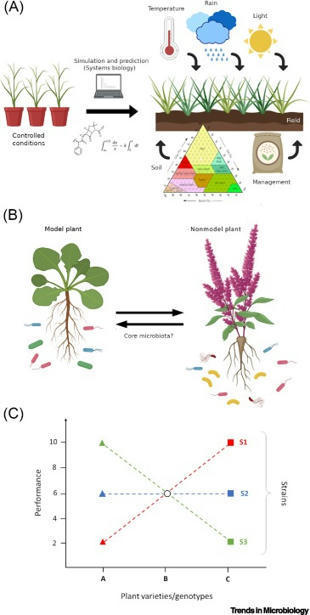
Plant-associated microbiota are becoming central in the development of ways to improve plant productivity and health. However, most research has focussed mainly on a few model plant species. It is essential to translate discoveries to the many nonmodel crops, allowing the design and application of effective synthetic microbiota.
|
|
Scooped by
Jean-Michel Ané
April 24, 2023 8:04 PM
|
Aims
Domestication has improved plant traits to facilitate human use, but can have unintended consequences for traits that are not the target of selection. Disruption in the mycorrhizal mutualism has already been observed in domesticated plants, but little is known about whether the legume-rhizobia mutualism can be similarly disrupted, despite the ecological importance of symbiotic nitrogen fixation. We aim to identify differences in the outcome of this mutualism between wild and domesticated legumes, in terms of reaction norms across varying nitrogen levels.
Methods
In a series of greenhouse experiments, we characterise rhizobial symbiosis traits in chickpeas, lentils, peas, peanuts, and soybeans across six levels of nitrogen fertilisation to characterise whether and how symbiosis traits differ across continuous variation in soil conditions for wild and domesticated lineages.
Results
Our reaction norm characterisations reveal that at lower levels of nitrogen fertilisation, wild soybeans receive a greater benefit from rhizobia than do domesticated soybeans. Additionally, domesticated chickpeas abandon symbiosis at a lower level of nitrogen fertilizer than do wild chickpeas. However, other crops we tested express symbiosis trait reaction norms that are indistinguishable from those of their wild relatives.
Conclusions
Differences are evident between the mutualism reaction norms of domesticated and wild chickpea and soybean, but not lentil, pea, or peanut. This indicates that mutualism disruption is a possible, but not necessary, consequence of domestication.
|
|
Scooped by
Jean-Michel Ané
April 22, 2023 3:54 PM
|
Intensive research on nitrogen-fixing symbiosis in two model legumes has uncovered the molecular mechanisms, whereby rhizobial Nod factors activate a plant symbiotic signaling pathway that controls infection and nodule organogenesis. In contrast, the so-called Nod-independent symbiosis found between Aeschynomene evenia and photosynthetic bradyrhizobia, which does not involve Nod factor recognition nor infection thread formation, is less well known. To gain knowledge on how Nod-independent symbiosis is established, we conducted a phenotypic and molecular characterization of A. evenia lines carrying mutations in different nodulation genes. Besides investigating the effect of the mutations on rhizobial symbiosis, we examined their consequences on mycorrhizal symbiosis and in nonsymbiotic conditions. Analyzing allelic mutant series for AePOLLUX, Ca2+/calmodulin dependent kinase, AeCYCLOPS, nodulation signaling pathway 2 (AeNSP2), and nodule inception demonstrated that these genes intervene at several stages of intercellular infection and during bacterial accommodation. We provide evidence that AeNSP2 has an additional nitrogen-dependent regulatory function in the formation of axillary root hairs at lateral root bases, which are rhizobia-colonized infection sites. Our investigation of the recently discovered symbiotic actor cysteine-rich receptor-like kinase specified that it is not involved in mycorrhization; however, it is essential for both symbiotic signaling and early infection during nodulation. These findings provide important insights on the modus operandi of Nod-independent symbiosis and contribute to the general understanding of how rhizobial–legume symbioses are established by complementing the information acquired in model legumes.
|
|
Scooped by
Jean-Michel Ané
April 22, 2023 3:47 PM
|
Frankia spp. are nitrogen-fixing actinobacteria that establish root-nodule symbiosis with actinorhizal plants comprising more than 200 species in eight dicotyledonous families. From a cell population of Frankia alni strain ACN14a that had been subcultured for over 30 years, we identified two types of variants (types A and S) with a different colony appearance. Type A variants exhibited ambiguous, and type S variants exhibited sharp colony edges. The two types differed in molecular weight and monosaccharide composition of cell surface polysaccharides, which could be responsible for the differences in colony appearance. When inoculated to a host plant Alnus glutinosa, both types induced nodulation but plants infected with type S isolates showed much lower nitrogen fixation activity than those infected with type A isolates. Indeed, type S isolates developed fewer vesicles inside infected plant cells. These results suggest that surface polysaccharides of Frankia play important roles in symbiotic interactions with actinorhizal plants.
|
|
Scooped by
Jean-Michel Ané
April 21, 2023 9:49 AM
|
Salt stress is one of the major abiotic stresses that severely affect plant growth and yield, and also affect the livelihood of people all around the world. Arbuscular mycorrhizal fungi (AMF) colonize majority of terrestrial plants, including halophytes, xerophytes and glycophytes, and facilitate their functioning by various physiological, biochemical and molecular processes. In the past two decades, significant progress has been made to understand the role of AMF in mitigating salt stress and improving plant growth and productivity under saline conditions. Several studies focusing on the biochemical and physiological mechanisms that mycorrhizal plants employ to combat salt stress have been carried out. This review reinforces such studies and gives further insights into the molecular aspects of tolerance to salt stress in the plants colonized by AMF. It emphasises on the role of AMF in sensing and signalling salt stress, expression of aquaporin-encoding genes, Na+/H+ antiporters and transporters involved in Na+ exclusion, CNGCs and late embryogenesis abundant proteins in relation to salt stress tolerance. Further, this paper also reviews the accrual of compatible osmolytes, phytohormones and nitric oxide for understanding the benefits of this symbiosis under saline environment, and provides a benchmark information to understand the contribution of mycorrhizal symbiosis at molecular level and will attract attention of researchers to develop and highlight the future research programs in this field.
|
|
Scooped by
Jean-Michel Ané
April 21, 2023 9:46 AM
|
Both plant- and rhizobia-derived small RNAs play an essential role in regulating the root nodule symbiosis in legumes. Small RNAs, in association with Argonaute proteins, tune the expression of genes participating in nodule development and rhizobial infection. However, the role of Argonaute proteins in this symbiosis has been overlooked. In this study, we provide transcriptional evidence showing that Argonaute5 (AGO5) is a determinant genetic component in the root nodule symbiosis in Phaseolus vulgaris. A spatio-temporal transcriptional analysis revealed that the promoter of PvAGO5 is active in lateral root primordia, root hairs from rhizobia-inoculated roots, nodule primordia, and mature nodules. Transcriptional analysis by RNA sequencing revealed that gene silencing of PvAGO5 affected the expression of genes involved in the biosynthesis of the cell wall and phytohormones participating in the rhizobial infection process and nodule development. PvAGO5 immunoprecipitation coupled to small RNA sequencing revealed the small RNAs bound to PvAGO5 during the root nodule symbiosis. Identification of small RNAs associated to PvAGO5 revealed miRNAs previously known to participate in this symbiotic process, further supporting a role for AGO5 in this process. Overall, the data presented shed light on the roles that PvAGO5 plays during the root nodule symbiosis in P. vulgaris.
|
|
Scooped by
Jean-Michel Ané
April 20, 2023 11:49 AM
|
Protein acetylation can quickly modify the physiology of bacteria to respond to changes in environmental or nutritional conditions, but little information on these modifications is available in rhizobia. In this study, we report the lysine acetylome of Azorhizobium caulinodans strain ORS571, a model rhizobium isolated from stem nodules of the tropical legume Sesbania rostrata that is capable of fixing nitrogen in the free-living state and during symbiosis. Antibody enrichment and liquid chromatography-tandem mass spectrometry (LC-MS/MS) analysis were used to characterize the acetylome. There are 2,302 acetylation sites from 982 proteins, accounting for 20.8% of the total proteins. Analysis of the acetylated motifs showed the preferences for the amino acid residues around acetylated lysines. The response regulator CheY1, previously characterized to be involved in chemotaxis in strain ORS571, was identified as an acetylated protein, and a mutation of the acetylated site of CheY1 significantly impaired the strain’s motility. In addition, a Zn+-dependent deacetylase (AZC_0414) was characterized, and the construction of a deletion mutant strain showed that it played a role in chemotaxis. Our study provides the first global analysis of lysine acetylation in ORS571, suggesting that acetylation plays a role in various physiological processes. In addition, we demonstrate its involvement in the chemotaxis process. The acetylome of ORS571 provides insights to investigate the regulation mechanism of rhizobial physiology.
|
|
Scooped by
Jean-Michel Ané
April 20, 2023 9:08 AM
|
Both mutualism and polyploidy are thought to influence invasion success in plants, but few studies have tested their joint effects. Mutualism can limit range expansion when plants cannot find a compatible partner in a novel habitat, or facilitate range expansion when mutualism increases a plant's niche breadth. Polyploids are also expected to have greater niche breadth because of greater self-compatibility and phenotypic plasticity, increasing invasion success.
For 847 legume species, we compiled data from published sources to estimate ploidy, symbiotic status with rhizobia, specificity on rhizobia, and the number of introduced ranges.
We found that diploid species have had limited spread around the globe regardless of whether they are symbiotic or how many rhizobia partners they can host. Polyploids, by contrast, have been successfully introduced to many new ranges, but interactions with rhizobia constrain their range expansion. In a hidden state model of trait evolution, we also found evidence of a high rate of re-diploidization in symbiotic legume lineages, suggesting that symbiosis and ploidy may interact at macroevolutionary scales.
Overall, our results suggest that symbiosis with rhizobia limits range expansion when legumes are polyploid but not diploid.
|
|
Scooped by
Jean-Michel Ané
April 19, 2023 2:49 PM
|
Over 110 million tons of nitrogen fertilizer every year is used for crop production. Scientists have dreamed of enabling rhizobial nitrogen fixation in non-leguminous crops to mitigate the increasing demand for nitrogen fertilizer. However, despite decades of research, rhizobial nitrogen fixation in non-host plants has not been demonstrated. Here, we reported that an N-fixing rhizobium and a clubroot pathogen Plasmodiophora brassicae exhibited a synergistic effect on fixing nitrogen in cruciferous plants. Rhizobia were found to invade P. brassicae-infected rapeseed (Brassica napus) roots in the field. The colonization of rhizobium on rapeseed roots was confirmed by co-inoculating Mesorhizobium huakuii with P. brassicae under controlled laboratory conditions. M. huakuii infection could alleviate clubroot symptoms and promote the growth of diseased rapeseeds. M. huakuii could fix nitrogen in P. brassicae-infected plants based on the results of 15N isotope dilution tests. The expression of homologs of legume genes required for symbiosis and early-nodulin genes was significantly upregulated in Arabidopsis during early infection by P. brassicae. More importantly, M. huakuii could even fix nitrogen in P. brassicae-resistant rapeseed cultivar and promote plant growth when co-inoculated with P. brassicae. Our findings provide a new avenue to understand the interaction of rhizobia with non-host plants, stimulate the exploration of fixing nitrogen in non-leguminous plants by nitrogen-fixing rhizobia, and develop a strategy for both disease control and nitrogen fixation on non-host crops.
|
|
Scooped by
Jean-Michel Ané
April 19, 2023 2:30 PM
|
Ectomycorrhiza (ECM) is a symbiotic relation between plant and fungi that is essential for nutrient uptake of many stand forming trees. There are two conflicting views about the evolution of ECM in fungi suggesting (1) relatively few transitions to ECM followed by reversals to non-ECM, or (2) many independent origins of ECM and no reversals. In this study, we compare these, and other, hypotheses and test the impact of different models on inference. We assembled a dataset of five marker gene sequences (nuc58, nucLSU, nucSSU, rpb1, and rpb2) and 2,174 fungal taxa covering the three subphyla: Agaricomycotina, Mucoromycotina and Pezizomycotina. The fit of different models, including models with variable rates in clades or through time, to the pattern of ECM fungal taxa was tested in a Bayesian framework, and using AIC and simulations. We find that models implementing variable rates are a better fit than models without rate shift, and that the conclusion about the relative rate between ECM and non-ECM depend largely on whether rate shifts are allowed or not. We conclude that standard constant-rate ancestral state reconstruction models are not adequate for the analysis of the evolution of ECM fungi, and may give contradictory results to more extensive analyses.
|
|
Scooped by
Jean-Michel Ané
April 18, 2023 10:11 PM
|
The arbuscular mycorrhizal symbiosis (AMS) is formed between arbuscular mycorrhizal fungi (AMF) and the root of approximately 80% land plants, and this mutualistic interaction significantly contributes to plants’ nutrient acquisition. However, the effect of AMS on magnesium (Mg) nutrition has received less attention. In the present study, we co-cultured tomato plants (Solanum lycopersicum) with Rhizophagus irregularis supplied with different concentrations of Mg. The results indicated that Mg application can promote plant growth and mycorrhizal colonization. We noticed a positive effect of AMF inoculation on Mg acquisition under medium-Mg and high-Mg conditions in tomato plants. In parallel, the phylogenetic and expression analyses of seven putative magnesium transporter (MGT) genes were also carried out. RT-qPCR revealed that the transcript levels of SlMGT1-1, SlMGT2-1, and SlMGT5-2 were significantly altered in response to AMS. Together, these results indicated that AMS plays a significant role in tomato Mg acquisition, and provided valuable information to further investigations on the relationships between AMS and plant Mg uptake.
|
|
Scooped by
Jean-Michel Ané
April 18, 2023 10:07 PM
|
Arbuscular mycorrhizal fungi (AMF) are an ancient group of obligate symbionts, colonizing the roots of over 72% of land plants, increasing the uptake of nutrients from the soil, and providing many fitness benefits to their host plants. The multinucleate and coenocytic nature of AMF have interested researchers for decades, leading to many theories of the evolution, and genetic organization of these organisms. Recent findings propose that AMF carry two types of strains, identified based on putative MAT-loci, as either homokaryotic, carrying multiple and genetically similar nuclei, or dikaryotic with co-existing nuclei deriving from two parental strains. In other fungi, hyphal fusions, or anastomosis, between compatible strains results in nuclear transfer, creating heterokaryotic spore progeny. It has been hypothesized that dikaryotic AMF strains arose from the anastomosis between compatible homokaryons harbouring different nucleotypes. The goal of this research is to determine whether anastomosis events, known to occur in other fungi, like homokaryon-homokaryon, homokaryon-dikaryon (Buller phenomenon), and/or dikaryon-dikaryon nuclear exchanges also occur in AMF. To achieve this, the anastomosis frequencies between 15 crosses of homokaryotic and dikaryotic strains of the model AMF species Rhizophagus irregularis were examined using microscopy and droplet digital PCR (ddPCR) to determine if nuclear transfer between strains is possible. Overall, these experiments build on the existing evidence of compatible interactions between strains of R. irregularis.
|