Your new post is loading...

|
Scooped by
Jean-Michel Ané
July 11, 2023 10:34 PM
|
Phosphate is one of the essential mineral nutrients. Phosphate transporter genes (PHTs) play an important role in Pi acquisition and homeostasis in tomato plants. However, basic biological information on PHT genes and their responses of symbiosis with arbuscular mycorrhizal in the genome remains largely unknown. We analyzed the physiological changes and PHT gene expression in tomatoes (Micro-Tom) inoculated with arbuscular mycorrhizal (AM) fungi (Funneliformis mosseae) under different phosphate conditions (P1: 0 µM, P2: 25 µM, and P3: 200 µM Pi). Twenty-three PHT genes were identified in the tomato genomics database. Protein sequence alignment further divided the 23 PHT genes into three groups, with similar classifications of exons and introns. Good colonization of plants was observed under low phosphate conditions (25 µM Pi), and Pi stress and AM fungi significantly affected P and N accumulation and root morphological plasticity. Moreover, gene expression data showed that genes in the SlPHT1 (SlPT3, SlPT4, and SlPT5) gene family were upregulated by Funneliformis mosseae under all conditions, which indicated that these gene levels were significantly increased with AM fungi inoculation. None of the analyzed SlPHT genes in the SlPH2, SlPHT3, SlPHT4, and SlPHO gene families were changed at any Pi concentration. Our results indicate that inoculation with AM fungi mainly altered the expression of the PHT1 gene family. These results will lay a foundation for better understanding the molecular mechanisms of inorganic phosphate transport under AM fungi inoculation.
|
|
Scooped by
Jean-Michel Ané
July 11, 2023 10:30 PM
|
Establishment of symbiosis between plants and arbuscular mycorrhizal (AM) fungi depends on fungal chitooligosaccharides (COs) and lipo-chitooligosaccharides (LCOs). The latter are also produced by nitrogen-fixing rhizobia to induce nodules on leguminous roots. However, host enzymes regulating structure and levels of these signals remain largely unknown.
Here, we analyzed the expression of a β-N-acetylhexosaminidase gene of Medicago truncatula (MtHEXO2) and biochemically characterized the enzyme. Mutant analysis was performed to study the role of MtHEXO2 during symbiosis.
We found that expression of MtHEXO2 is associated with AM symbiosis and nodulation. MtHEXO2 expression in the rhizodermis was upregulated in response to applied chitotetraose, chitoheptaose, and LCOs. M. truncatula mutants deficient in symbiotic signaling did not show induction of MtHEXO2. Subcellular localization analysis indicated that MtHEXO2 is an extracellular protein. Biochemical analysis showed that recombinant MtHEXO2 does not cleave LCOs but can degrade COs into N-acetylglucosamine (GlcNAc). Hexo2 mutants exhibited reduced colonization by AM fungi; however, nodulation was not affected in hexo2 mutants.
In conclusion, we identified an enzyme, which inactivates COs and promotes the AM symbiosis. We hypothesize that GlcNAc produced by MtHEXO2 may function as a secondary symbiotic signal.
|
|
Scooped by
Jean-Michel Ané
July 6, 2023 11:52 AM
|
Microbiome science has greatly contributed to our understanding of microbial life and its essential roles for the environment and human health. However, the nature of microbial interactions and how microbial communities respond to perturbations remains poorly understood, resulting in an often descriptive and correlation-based approach to microbiome research. Achieving causal and predictive microbiome science would require direct functional measurements in complex communities to better understand the metabolic role of each member and its interactions with others. In this study we present a new approach that integrates transcription and translation measurements to predict competition and substrate preferences within microbial communities, consequently enabling the selective manipulation of the microbiome. By performing metatranscriptomic (metaRNA-Seq) and metatranslatomic (metaRibo-Seq) analysis in complex samples, we classified microbes into functional groups (i.e. guilds) and demonstrated that members of the same guild are competitors. Furthermore, we predicted preferred substrates based on importer proteins, which specifically benefited selected microbes in the community (i.e. their niche) and simultaneously impaired their competitors. We demonstrated the scalability of microbial guild and niche determination to natural samples and its ability to successfully manipulate microorganisms in complex microbiomes. Thus, the approach enhances the design of pre- and probiotic interventions to selectively alter members within microbial communities, advances our understanding of microbial interactions, and paves the way for establishing causality in microbiome science.
|
|
Scooped by
Jean-Michel Ané
June 30, 2023 5:16 PM
|
Symbiotic nitrogen fixation carried out by the interaction between legumes and rhizobia is the main source of nitrogen in natural ecosystems and in sustainable agriculture. For the symbiosis to be viable, nutrient exchange between the partners is essential. Transition metals are among the nutrients delivered to the nitrogen-fixing bacteria within the legume root nodule cells. These elements are used as cofactors for many of the enzymes controlling nodule development and function, including nitrogenase, the only known enzyme able to convert N2 into NH3. In this review, we discuss the current knowledge on how iron, zinc, copper, and molybdenum reach the nodules, how they are delivered to nodule cells, and how they are transferred to nitrogen-fixing bacteria within.
|
|
Scooped by
Jean-Michel Ané
June 30, 2023 5:08 PM
|
Plants regulate various biological activities in cells by producing reactive oxygen species (ROS) as signal molecules. Plant NADPH oxidases, respiratory burst oxidase homologues (Rbohs), are the main source of ROS and participate in a variety of plant physiological processes. However, there are few studies regarding the function of Rbohs in rhizobium–legume symbiotic nodulation. A Rbohs subfamily gene GmRbohK was cloned and the gene expression and its subcellular localization were studied. The GmRbohK gene was highly expressed in soybean roots and nodules and greatly induced by rhizobia. GmRbohK was located at the cell membrane of Arabidopsis protoplasts. Moreover, RNA interference (RNAi) of GmRbohK resulted in a decrease in the number of nodules and nitrogenase activity. Meanwhile, the expression levels of nodulation marker genes decreased in association with the decrease in GmRbohK expression level. RNAi of GmRbohK inhibited the production of ROS and blocked infection events at the initial stage of nodule formation. Further analysis of nodule tissue sections revealed that RNAi of GmRbohK significantly reduced the number of bacteroids in the nodule infection area. In conclusion, GmRbohK is heavily involved in the regulation of soybean nodule formation.
|
|
Scooped by
Jean-Michel Ané
June 30, 2023 5:00 PM
|
Plants perceive N-acetyl-d-glucosamine-containing oligosaccharides that play a role in the interaction with bacteria and fungi, both pathogenic and symbiotic, through cell-surface receptors that belong to the Receptor-Like Kinase (RLK) or Receptor-Like Protein (RLP) families. Structurally characterised proteins from these families have been shown to contain a tight bundle of three LysM domains in their extracellular domain. However, the identification of LysM domains of RLK/Ps using sequence based methods has led to some ambiguity, as some proteins have been annotated with one or only two LysM domains. This missing annotation was likely produced by the failure of the LysM hidden Markov model (HMM) from the PFAM database to correctly identify some LysM domains in proteins of plant origin. In this work, we provide improved HMMs for LysM domain detection in plants, that were built from the structural alignment of manually curated LysM domain structures from PDB and AlphaFold. Furthermore, we evaluated different sets of ligand-specific HMMs that were able to correctly classify a limited set of fully characterised RLK/Ps by their ligand specificity. In contrast, the phylogenetic analysis of the extracellular region of RLK/Ps, or of their individual LysM domains, was unable to discriminate these proteins by their ligand specificity. The HMMs reported here will allow a more sensitive detection of plant proteins containing LysM domains and help improve their characterisation.
|
|
Scooped by
Jean-Michel Ané
June 30, 2023 4:52 PM
|
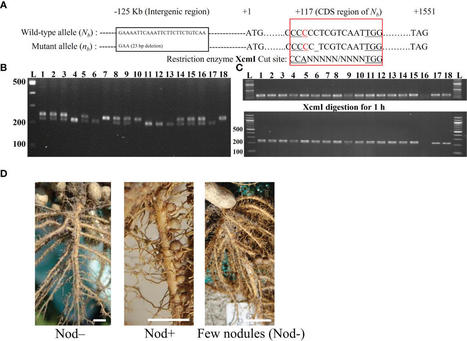
Legumes are well-known for establishing a symbiotic relationship with rhizobia in root nodules to fix nitrogen from the atmosphere. The nodulation signaling pathway 2 (NSP2) gene plays a critical role in the symbiotic signaling pathway. In cultivated peanut, an allotetraploid (2n = 4x = 40, AABB) legume crop, natural polymorphisms in a pair of NSP2 homoeologs (Na and Nb) located on chromosomes A08 and B07, respectively, can cause loss of nodulation. Interestingly, some heterozygous (NBnb) progeny produced nodules, while some others do not, suggesting non-Mendelian inheritance in the segregating population at the Nb locus. In this study, we investigated the non-Mendelian inheritance at the NB locus. Selfing populations were developed to validate the genotypical and phenotypical segregating ratios. Allelic expression was detected in roots, ovaries, and pollens of heterozygous plants. Bisulfite PCR and sequencing of the Nb gene in gametic tissue were performed to detect the DNA methylation variations of this gene in different gametic tissues. The results showed that only one allele at the Nb locus expressed in peanut roots during symbiosis. In the heterozygous (Nbnb) plants, if dominant allele expressed, the plants produced nodules, if recessive allele expressed, then no nodules were produced. qRT-PCR experiments revealed that the expression of Nb gene in the ovary was extremely low, about seven times lower than that in pollen, regardless of genotypes or phenotypes of the plants at this locus. The results indicated that Nb gene expression in peanut depends on the parent of origin and is imprinted in female gametes. However, no significant differences of DNA methylation level were detected between these two gametic tissues by bisulfite PCR and sequencing. The results suggested that the remarkable low expression of Nb in female gametes may not be caused by DNA methylation. This study provided a unique genetic basis of a key gene involved in peanut symbiosis, which could facilitate understanding the regulation of gene expression in symbiosis in polyploid legumes.
|
|
Scooped by
Jean-Michel Ané
June 16, 2023 10:28 PM
|
Symbiotic interactions such as the nitrogen-fixing root nodule symbiosis (RNS) have structured ecosystems during the evolution of life. Here we aimed at reconstructing ancestral and intermediate steps that shaped RNS observed in extant flowering plants. We compared the symbiotic transcriptomic responses of nine host plants, including the mimosoid legume Mimosa pudica for which we assembled a chromosome-level genome. We reconstructed the ancestral RNS transcriptome composed of most known symbiotic genes together with hundreds of novel candidates. Cross-referencing with transcriptomic data in response to experimentally evolved bacterial strains with gradual symbiotic proficiencies, we found the response to bacterial signals, nodule infection, nodule organogenesis and nitrogen fixation to be ancestral. By contrast, the release of symbiosomes was associated with recently evolved genes encoding small proteins in each lineage. We demonstrate that the symbiotic response was mostly in place in the most recent common ancestor of the RNS-forming species more than 90 million years ago.
|
|
Scooped by
Jean-Michel Ané
June 15, 2023 4:56 PM
|
Many plants associate with arbuscular mycorrhizal (AM) fungi for nutrient acquisition, while most legumes also associate with nitrogen-fixing rhizobial bacteria for nitrogen acquisition. The association of plants with AM fungi and rhizobia depends on the perception of lipo-chitooligosaccharides (LCOs) produced by these micro-symbionts. Recent studies reveal that cereals can perceive LCOs better in soil deprived of phosphate and nitrogen to activate symbiosis signaling and form efficient AM symbiosis. Nevertheless, the phosphate deficiency in the soil hinders the symbiotic association of legumes with rhizobia, ultimately reducing nitrogen fixation. Here, we discuss a mechanistic overview of the factors regulating root nodule symbiosis under phosphate-deficient conditions and further emphasize the possible ways to overcome this hurdle. Ignoring the low-phosphate problem can compromise not only the functionality of the nitrogen cycle by nitrogen fixation through legumes but can also put food security at risk globally. This review aims to bring the scientific community’s attention toward the detrimental response of legumes toward phosphate-deficient soil for the formation of root nodule symbiosis and hence reduced nitrogen fixation. In this review, we have highlighted the recent studies that have advanced our understanding of these critical areas and discussed some future directions. Further, this review highlights the importance of communicating science with farmers and the agriculture community to fully harness the potential of the symbiotic association of plants in nutrient-deficient soil for sustainable agriculture.
|
|
Scooped by
Jean-Michel Ané
June 15, 2023 4:44 PM
|
In acid soils, Rhizobium favelukesii strains, known as Oregon-like strains, are a potential risk for alfalfa production given their parasitic behaviour. In this study, we isolated five parasitic strains (ORY1 to ORY5) from alfalfa nodules grown in Uruguayan acid soils, with a 99.7% and a 100% 16S rRNA gene sequence identity to R. favelukesii type strain of LUP83. The BOX profiles of the five isolates showed two different patterns, suggesting some diversity among these acid-tolerant isolates. The genome sequence analysis of R. favelukesii strains ORY1, LPU83, and Or191 showed that they have around 87.5% of common coding genes, including the symbiotic genes. Moreover, the phylogenetic analysis of ORY1 symbiotic genes nifH, nifD, nifK, nodA, nodB, and nodD were related to the symbiotic genes of E. meliloti. We teste ORY1 competitiveness by inoculating seeds with 99:1 and 1:99 ratios of ORY1::gusA/E. meliloti U143. In both treatments, ORY1::gusA occupied more than 50% of nodules, evidencing its high competitiveness. However, the aerial biomass in these treatments was remarkably different, suggesting that the nodules induced by the efficient strain are essential to provide enough N for optimal plant growth. These findings support the needing of inoculating in areas where inefficient strains are likely to be present. Finally, we found three genes that encode amino acid sequences for domains of M16 peptidases (with homology to bacterial hrrP and sapA genes), two of them were contiguous and located in an accessory plasmid, whereas the other one was a chromosomal gene. These genes are likely to be involved in the parasitic behaviour of ORY1 strain.
|
|
Scooped by
Jean-Michel Ané
June 15, 2023 4:39 PM
|
The actinorhizal plants include 8 families of plants belonging to the orders of Fagales, Cucurbitales and Rosales gathering nearly 220 species. Among these families, the genus Alnus includes 30 species including the European species Alnus glutinosa (Black Alder) able to colonize nitrogen-poor biotopes thanks to its ability to establish symbioses with filamentous nitrogen-fixing actinobacteria of the genus Frankia. The recognition between the two partners initiates a symbiotic program at the root level leading to the formation of a new organ, the nodule, dedicated to trophic exchanges between the two partners. Within this nodule, the actinobacterium fixes atmospheric nitrogen through cells differentiated into vesicles and thus provides nitrogenous compounds to the plant which in exchange transfers carbon compounds derived from its photosynthetic activity. The recognition, entry and maintenance of the bacterium in the nodule require a fine coordination on the part of the two partners which governs through the establishment of a molecular dialogue. The molecular mechanisms involved are still poorly understood, as genetic engineering modifications of the Frankia bacterium have yet to be developed. Nevertheless, physiological and transcriptomic studies on pre-nodules and nodules have allowed to elucidate several mechanisms such as a symbiotic signalling pathway. Indeed, it is also described in legumes in association with rhizobia and in plants in association with mycorrhizal fungi. These transcriptomic data from A. glutinosa, obtained with microarrays targeting 13000 transcribed genes of the plant (EST: Expressed sequence tag), allowed to identify that among genes overexpressed at the early stages of symbiosis, 80% encode secreted peptides. Among these peptides, some are qualified as antimicrobial peptides (AMPs) which are described in the literature as playing a role in the innate immunity towards plant to pathogenic microorganisms. However, AMPs have also been described as playing a crucial role during symbiosis. Indeed, it has already been shown that AMPs of the defensin family, produced by A. glutinosa control the symbiont in the nodule. Among these secreted defensins, AgDef5, targets the symbiont at the level of the nitrogen-fixing vesicles in the infected plant cells of the nodule and would improve trophic exchanges between the two partners. In these transcriptomic data, genes encoding a second family of AMPs, the non-specific lipid transfer proteins (nsLTPs), are also overexpressed. These peptides have 4 disulfide bridges that lead to the formation of a hydrophobic cavity allowing lipids transfer. The biological role of nsLTPs is still poorly described although they are involved in several biological processes such as stress resistance, reproduction, pollen tube formation, seed germination, cuticle formation, plant defense against pathogen attacks, or symbiosis between legumes and rhizobia. One of these genes, agltp24, is the most overexpressed at the early stage following colonization by the symbiotic bacteria but also in the nodule, which suggests an important role of this AMP in the establishment and maintenance of the symbiosis. The aim of this thesis work was to study the role the nsLTP, AgLTP24 in the symbiosis between A. glutinosa and the bacterium Frankia alni ACN14a. The first part aimed to localize AgLTP24 in plant tissues at different stages of the symbiosis and to determine its physiological effects on the bacterial symbiont Frankia to identify possible biological functions. The second part of this work focused on the molecular response of the symbiont to AgLTP24. More broadly, since the role of nsLTPs in nitrogen-fixing symbioses is still poorly described, the identification of these peptides in nodulating and non-nodulating plants was conducted to determine their distribution and evolutionary history in nitrogen-fixing symbioses.
|
|
Scooped by
Jean-Michel Ané
June 15, 2023 11:30 AM
|
How many cells are there in a human being?” It sounds like a question from a nerdy pub quiz. It is also a profound philosophical inquiry. One answer is around 37trn. This is the number, in a typical adult weighing 70kg, that trace their descent from the fertilised egg which brought that human into existence.
Look at it another way, though, and you arrive at a figure roughly twice as large. That adds in the archaean, bacterial, fungal and protist cells which occupy the mouth, gut, skin, lungs and almost every other surface, nook and cranny of the human body. These cells contribute only about 0.3% to a person’s body weight. But being, on the whole, much smaller than “proper” human cells, they are almost equally numerous.
|
|
Scooped by
Jean-Michel Ané
June 6, 2023 5:26 PM
|
Nodule number regulation in legumes is controlled by a feedback loop that integrates nutrient and rhizobia symbiont status signals to regulate nodule development. Signals from the roots are perceived by shoot receptors, including a CLV1-like receptor-like kinase known as SUNN in Medicago truncatula. In the absence of functional SUNN, the autoregulation feedback loop is disrupted, resulting in hypernodulation. To elucidate early autoregulation mechanisms disrupted in SUNN mutants, we searched for genes with altered expression in the loss-of-function sunn-4 mutant and included the rdn1-2 autoregulation mutant for comparison. We identified constitutively altered expression of small groups of genes in sunn-4 roots and in sunn-4 shoots. All genes with verified roles in nodulation that were induced in wild-type roots during the establishment of nodules were also induced in sunn-4, including autoregulation genes TML2 and TML1. Only an isoflavone-7-O-methyltransferase gene was induced in response to rhizobia in wild-type roots but not induced in sunn-4. In shoot tissues of wild-type, eight rhizobia-responsive genes were identified, including a MYB family transcription factor gene that remained at a baseline level in sunn-4; three genes were induced by rhizobia in shoots of sunn-4 but not wild-type. We cataloged the temporal induction profiles of many small secreted peptide (MtSSP) genes in nodulating root tissues, encompassing members of twenty-four peptide families, including the CLE and IRON MAN families. The discovery that expression of TML2 in roots, a key factor in inhibiting nodulation in response to autoregulation signals, is also triggered in sunn-4 in the section of roots analyzed, suggests that the mechanism of TML regulation of nodulation in M. truncatula may be more complex than published models.
|
|
|
Scooped by
Jean-Michel Ané
July 11, 2023 10:33 PM
|
Cupriavidus sp. UYMMa02A is a beta-rhizobia strain of the Cupriavidus genus, isolated from nodules of Mimosa magentea in Uruguay. This strain can form effective nodules with several Mimosa species, including its original host. Genome analyses indicate that Cupriavidus sp. UYMMa02A has a highly conserved 35 kb symbiotic island containing nod, nif, and fix operons, suggesting conserved mechanisms for the symbiotic interaction with plant hosts. However, while Cupriavidus sp. UYMMa02A produces functional nodules and promotes Mimosa pudica growth under nitrogen-limiting conditions, nod genes are not induced by luteolin or exposure to Mimosa spp. root exudate. To explore alternative mechanisms implicated in the Cupriavidus-Mimosa interaction, we assessed the proteomic profiles of Cupriavidus sp. UYMMa02A grown in the presence of pure flavonoids and co-culture with M. pudica plants. This approach allowed us to identify 24 differentially expressed proteins potentially involved in bacterial-plant interaction. In light of the obtained results, a possible model for nod-alternative symbiotic interaction is proposed.
|
|
Scooped by
Jean-Michel Ané
July 10, 2023 12:37 PM
|
As an endosymbiont of the ecologically and medically relevant fungus Rhizopus microsporus, the toxin-producing bacterium Mycetohabitans rhizoxinica faces myriad challenges, such as evading the host’s defense mechanisms. However, the bacterial effector(s) that facilitate the remarkable ability of M. rhizoxinica to freely migrate within fungal hyphae have thus far remained unknown. Here, we show that a transcription activator-like (TAL) effector released by endobacteria is an essential symbiosis factor. By combining microfluidics with fluorescence microscopy, we observed enrichment of TAL-deficient M. rhizoxinica in side hyphae. High-resolution live imaging showed the formation of septa at the base of infected hyphae, leading to the entrapment of endobacteria. Using a LIVE/DEAD stain, we demonstrate that the intracellular survival of trapped TAL-deficient bacteria is significantly reduced compared with wild-type M. rhizoxinica, indicative of a protective host response in the absence of TAL proteins. Subversion of host defense in TAL-competent endobacteria represents an unprecedented function of TAL effectors. Our data illustrate an unusual survival strategy of endosymbionts in the host and provide deeper insights into the dynamic interactions between bacteria and eukaryotes.
|
|
Scooped by
Jean-Michel Ané
July 3, 2023 9:47 AM
|
Bacteria colonize plant roots and engage in reciprocal interactions with their hosts. However, the contribution of individual taxa or groups of bacteria to plant nutrition and fitness is not well characterized due to a lack of in situ evidence of bacterial activity.
To address this knowledge gap, we developed an analytical approach that combines the identification and localization of individual bacteria on root surfaces via gold-based in situ hybridization with correlative NanoSIMS imaging of incorporated stable isotopes, indicative of metabolic activity.
We incubated Kosakonia strain DS-1-associated, gnotobiotically grown rice plants with 15N–N2 gas to detect in situ N2 fixation activity. Bacterial cells along the rhizoplane showed heterogeneous patterns of 15N enrichment, ranging from the natural isotope abundance levels up to 12.07 at% 15N (average and median of 3.36 and 2.85 at% 15N, respectively, n = 697 cells).
The presented correlative optical and chemical imaging analysis is applicable to a broad range of studies investigating plant–microbe interactions. For example, it enables verification of the in situ metabolic activity of host-associated commercialized strains or plant growth-promoting bacteria, thereby disentangling their role in plant nutrition. Such data facilitate the design of plant–microbe combinations for improvement of crop management.
|
|
Scooped by
Jean-Michel Ané
June 30, 2023 5:12 PM
|
Carnivorous pitcher plants are uniquely adapted to nitrogen limitation, using pitfall traps to acquire nutrients from insect prey. Pitcher plants in the genus Sarracenia may also use nitrogen fixed by bacteria inhabiting the aquatic microcosms of their pitchers. Here, we investigated whether species of a convergently evolved pitcher plant genus, Nepenthes, might also use bacterial nitrogen fixation as an alternative strategy for nitrogen capture. First, we constructed predicted metagenomes of pitcher organisms from three species of Singaporean Nepenthes using 16S rRNA sequence data and correlated predicted nifH abundances with metadata. Second, we used gene-specific primers to amplify and quantify the presence or absence of nifH directly from 102 environmental samples and identified potential diazotrophs with significant differential abundance in samples that also had positive nifH PCR tests. Third, we analyzed nifH in eight shotgun metagenomes from four additional Bornean Nepenthes species. Finally, we conducted an acetylene reduction assay using greenhouse-grown Nepenthes pitcher fluids to confirm nitrogen fixation is indeed possible within the pitcher habitat. Results show active acetylene reduction can occur in Nepenthes pitcher fluid. Variation in nifH from wild samples correlates with Nepenthes host species identity and pitcher fluid acidity. Nitrogen-fixing bacteria are associated with more neutral fluid pH, while endogenous Nepenthes digestive enzymes are most active at low fluid pH. We hypothesize Nepenthes species experience a trade-off in nitrogen acquisition; when fluids are acidic, nitrogen is primarily acquired via plant enzymatic degradation of insects, but when fluids are neutral, Nepenthes plants take up more nitrogen via bacterial nitrogen fixation.
|
|
Scooped by
Jean-Michel Ané
June 30, 2023 5:00 PM
|
Frankia strain Ag45/Mut15T was isolated from a root nodule of Alnus glutinosa growing in a swamp at lake Grossensee, Germany. The strain forms root nodules on A. glutinosa, in which it produces hyphae and clusters of N2-fixing vesicles. N2-fixing vesicles are also produced in nitrogen-free growth medium, in addition to hyphae and sporangia. The whole-cell hydrolysates of strain Ag45/Mut15T contained meso-diaminopimelic acid in the peptidoglycan and ribose, xylose, mannose, glucose, galactose and a trace of rhamnose as cell-wall sugars. The major polar lipids were phosphatidylglycerol, phosphatidylinositol, diphosphatidylglycerol and glyco-phospholipid. The predominant (>20 %) menaquinones were MK-9(H6) and MK-9(H4). The major fatty acid profile (>10 %) consisted of iso-C16:0, C17 : 1 ω8c and C17 : 0. Pairwise 16S rRNA gene distances showed that strain Ag45/Mut15T was most closely related to Frankia torreyi CpI1T and Candidatus Frankia nodulisporulans with 16S rRNA gene similarity values of 0.001335 substitutions per site. An multilocus sequence analysis phylogeny based on atpD, dnaA, ftsZ, pgk and rpoB amino acid sequences positioned the strain within cluster 1 of Alnus- and Myrica-nodulating species, close to Candidatus F. nodulisporulans AgTrST and F. canadensis ARgP5T. The digital DNA–DNA hybridization (dDDH) and average nucleotide identity (ANI) values between the studied strain Ag45/Mut15T and all validly named Frankia species were below the defined threshold for prokaryotic species demarcation. Candidatus F. nodulisporulans AgTrST, which cannot be cultivated in vitro, was found to be the closest phylogenetic neighbour to strain strain Ag45/Mut15T with dDDH and ANI values of 61.8 and 97 %, respectively. Strain Ag45/Mut15T was not able to sporulate in nodule tissues like strain AgTrST.
|
|
Scooped by
Jean-Michel Ané
June 30, 2023 4:56 PM
|
The establishment of the rhizobium-legume symbiosis is generally based on plant perception of Nod factors (NFs) synthesized by the bacteria. However, some Bradyrhizobium strains can nodulate certain legume species, such as Aeschynomene spp. or Glycine max, independently of NFs, and via two different processes that are distinguished by the necessity or not of a type III secretion system (T3SS). ErnA is the first known type III effector (T3E) triggering nodulation in Aeschynomene indica. In this study, a collection of 196 sequenced Bradyrhizobium strains was tested on A. indica. Only strains belonging to the photosynthetic supergroup can develop a NF-T3SS-independent symbiosis, while the ability to use a T3SS-dependent process is found in multiple supergroups. Of these, 14 strains lacking ernA were tested by mutagenesis to identify new T3Es triggering nodulation. We discovered a novel T3E, Sup3, a putative SUMO-protease without similarity to ErnA. Its mutation in Bradyrhizobium strains NAS96.2 and WSM1744 abolishes nodulation and its introduction in an ernA mutant of strain ORS3257 restores nodulation. Moreover, ectopic expression of sup3 in A. indica roots led to the formation of spontaneous nodules. We also report three other new T3Es, Ubi1, Ubi2 and Ubi3, which each contribute to the nodulation capacity of strain LMTR13. These T3Es have no homology to known proteins but share with ErnA three motifs necessary for ErnA activity. Together, our results highlight an unsuspected distribution and diversity of T3Es within the Bradyrhizobium genus that may contribute to their symbiotic efficiency by participating in triggering legume nodulation.
|
|
Scooped by
Jean-Michel Ané
June 16, 2023 10:30 PM
|
It has long been a mystery as to why nitrogen-fixing root-nodulating symbioses (RNS), and some stem-nodulating symbioses, are confined to a small group of orders (Fabales, Fagales, Cucurbitales and Rosales, collectively known as ‘FaFaCuRo’) in the dicots, also known as the rosid clade or the nitrogen-fixing nodulating (NFN) clade1. Equally mysterious is the intermingling of nodulating and non-nodulating genera without any obvious pattern to indicate why some groups are almost entirely nodulated (for example, the legume subfamily Papilionoideae in the Fabales) whereas others have very few nodulating genera (for example, in the legume subfamily Caesalpinioideae and most of the ‘actinorhizal’ families in the Fagales, Cucurbitales and Rosales) or even none at all (for example, the legume subfamilies Cercidoideae, Detarioideae and Dialioideae)1,2,3. In this issue of Nature Plants, to illuminate the origin and evolution of RNS, Libourel et al.4 harnessed a comparative and phylotranscriptomic strategy. Their results supported a single origin of RNS and deciphered the evolutionary process that shaped the phylogenetic pattern of RNS.
|
|
Scooped by
Jean-Michel Ané
June 15, 2023 4:59 PM
|
The combination of mutation-based genetics and functional genomics allowed a detailed dissection of the nodulation-induction and Autoregulation of Nodulation (AON) pathways of soybean. Applicable to all legumes, nodulation was induced by Rhizobium/Bradyrhizobium produced lipopolysaccharides (Nod factors), perceived by Nod factor receptors (NFR1/NFR5 dimers), leading to cortical and pericycle cell divisions. These induce the production of CLE (Clavata3-like) peptides, that travel in the xylem to the shoot, where they are perceived by a receptor complex including a LRR receptor kinase, encoded by GmNARK, LjHAR1, MtSUNN and closely related receptors in other legumes like Phaseolus vulgaris (common bean), Pisum sativum (pea) and Glycine soja. This activated receptor complex negatively regulates by phosphorylation the constitutive synthesis of miR2111 in the shoot, that normally is translocated via the phloem to the entire plant body, initiating suppression of root-expressed receptor kinase ‘Too Much Love (TML)’, which in turn suppresses the nodule initiation cascade. Nodulation thus is permitted during a developmental window between the induction and progress of the nodulation/cell division/infection cascade during the first few days after inoculation and the functional ’readiness’ of the AON cascade, delayed by root-shoot-root loop. Loss-of-function mutations in GmNARK and TML result in excessive nodulation (supernodulation/hypernodulation/supernummary nodulation) as well as localised tolerance to externally applied nitrate. Recent analyses indicate interaction with gibberellin signalling, plant immunity as well as lateral root formation. Further details of the parallel functions of key points in this regulatory loop remain to be elucidated.
|
|
Scooped by
Jean-Michel Ané
June 15, 2023 4:53 PM
|
Symbiotic nitrogen fixation (SNF) provides much of the N utilized by leguminous plants throughout growth and development. Legumes may simultaneously establish symbiosis with different taxa of microbial symbionts. Yet, the mechanisms used to steer associations toward symbionts that are most propitious across variations in soil types remain mysterious. Here, we demonstrate that GmRj2/Rfg1 is responsible for regulating symbiosis with multiple taxa of soybean symbionts. In our experiments, the GmRj2/Rfg1SC haplotype favored association with Bradyrhizobia, which is mostly distributed in acid soils, whereas the GmRj2/Rfg1HH haplotype and knockout mutants of GmRj2/Rfg1SC associated equally with Bradyrhizobia and Sinorhizobium. Association between GmRj2/Rfg1 and NopP, furthermore, appeared to be involved in symbiont selection. Furthermore, geographic distribution analysis of 1,821 soybean accessions showed that GmRj2/Rfg1SC haplotypes were enriched in acidic soils where Bradyrhizobia were the dominant symbionts, whereas GmRj2/Rfg1HH haplotypes were most prevalent in alkaline soils dominated by Sinorhizobium, and neutral soils harbored no apparent predilections toward either haplotype. Taken together, our results suggest that GmRj2/Rfg1 regulates symbiosis with different symbionts and is a strong determinant of soybean adaptability across soil regions. As a consequence, the manipulation of the GmRj2/Rfg1 genotype or application of suitable symbionts according to the haplotype at the GmRj2/Rfg1 locus might be suitable strategies to explore for increasing soybean yield through the management of SNF.
|
|
Scooped by
Jean-Michel Ané
June 15, 2023 4:42 PM
|
Plants have evolved to live on earth using basic chemicals, such as, CO2, water, and minerals in air and soil. This knowledge helped human beings develop industrial agriculture to build and maintain civilizations, to domesticate animals, and to meet the food demands of growing population. However, crop production engineering using chemical fertilizers/pesticides, overexploitation of soil resources disregarding subtle balances in the ecosystem, and climate change have created a crisis (Timmis and Ramos, 2021). Our realization that soil is a highly interconnected ecosystem with interspecies chemical exchange through, for instance, symbiosis, has opened avenues for developing sustainable agricultural practices protecting the environment (Zipfel and Oldroyd, 2017). Moreover, the quality of the agricultural products depends heavily on the biotic and abiotic environmental factors plants experience in the environment. The environmental factors that affect crops need to be assessed scientifically and documented, rather than relying on sensory perception to assess nutritional quality of the products. Further, fundamental investigations should also be conducted to better understand the symbiosis between microbes and plants from a molecular perspective. Studies in the recent past have revealed several molecular aspects of soil microbes’ entry into legume plants’ root system, subsequent nodulation of root, and effective nitrogen fixation. Discovery of nod factor (e.g., oligosaccharide derivative produced by R. meliloti (Truchet et al., 1991)) revealed the molecular mechanism of microbe entrapment in root hairs (Sahlman and Fahraeus, 1963). Subsequent studies revealed the role of symbiosis entry receptors (e.g., LYK3), and hence the corresponding genes, in the effective infection process. Similarly, phosphate levels in the environment and Ca2+ spiking are essential for causing appropriate changes in the root hair phenotype and for infection to proceed beyond the microbe entrapment in root hairs (Gilroy and Jones, 2000; Parry, 2018; Bono et al., 2020; de Bruijn, 2020a; de Bruijn, 2020b). Next generation smart analytical tools are also being developed for automated diagnosis of plants by measuring specific molecular species (e.g., volatile organic compounds (VOC), plant metabolites, etc.) (Lew et al., 2020). Accessible and affordable robots, controlled by scientific data-driven artificial intelligence modules, are being developed for specific applications in agriculture.
|
|
Scooped by
Jean-Michel Ané
June 15, 2023 4:28 PM
|
Plants impact the development of their rhizosphere microbial communities. It is yet unclear to what extent the root cap and specific root zones contribute to microbial community assembly.
To test the roles of root caps and root hairs in the establishment of microbiomes along maize roots (Zea mays), we compared the composition of prokaryote (archaea and bacteria) and protist (Cercozoa and Endomyxa) microbiomes of intact or decapped primary roots of maize inbred line B73 with its isogenic root hairless (rth3) mutant. In addition, we tracked gene expression along the root axis to identify molecular control points for an active microbiome assembly by roots.
Absence of root caps had stronger effects on microbiome composition than the absence of root hairs and affected microbial community composition also at older root zones and at higher trophic levels (protists). Specific bacterial and cercozoan taxa correlated with root genes involved in immune response.
Our results indicate a central role of root caps in microbiome assembly with ripple-on effects affecting higher trophic levels and microbiome composition on older root zones.
|
|
Scooped by
Jean-Michel Ané
June 6, 2023 5:26 PM
|
Three PHO2-like genes encoding putative ubiquitin-conjugating E2 enzymes of Medicago truncatula were characterized for potential roles in phosphorous (P) homeostasis and symbiotic nitrogen fixation (SNF). All three genes, MtPHO2A, B and C, contain miR399-binding sites characteristic of PHO2 genes in other plant species. Distinct spatiotemporal expression patterns and responsiveness of gene expression to P- and N-deprivation in roots and shoots indicated potential roles, especially for MtPHO2B, in P and N homeostasis. Phenotypic analysis of pho2 mutants revealed that MtPHO2B is integral to Pi homeostasis, affecting Pi allocation during plant growth under nutrient-replete conditions, while MtPHO2C had a limited role in controlling Pi homeostasis. Genetic analysis also revealed a connection between Pi allocation, plant growth and SNF performance. Under N-limited, SNF conditions, Pi allocation to different organs was dependent on MtPHO2B and, to a lesser extent, MtPHO2C and MtPHO2A. MtPHO2A also affected Pi homeostasis associated with nodule formation. Thus, MtPHO2 genes play roles in systemic and localized, i.e., nodule, P homeostasis affecting SNF.
|