Your new post is loading...

|
Scooped by
Jean-Michel Ané
October 31, 2014 9:39 PM
|
Plants that provide food and housing to animals in return for defense against enemies are classic examples of mutualistic partnerships in nature. Here, we show that the evolution of such plant–animal mutualisms also can lead to a trajectory of accelerated accumulation of plant species in the lineages that participate in these cooperative interactions. We found that the evolution of plant organs (extrafloral nectaries) that facilitate mutualisms with animal defenders was repeatedly followed by increased rates of diversification across distantly related plant lineages. These results suggest that by enabling ecological interactions with animals, the convergent evolution of relatively simple glands changed the course of plant evolution toward greater protection from pests and accelerated the generation of biodiversity.
|
|
Scooped by
Jean-Michel Ané
October 31, 2014 2:16 PM
|
Low-input agricultural systems aim at reducing the use of synthetic fertilizers and pesticides in order to improve sustainable production and ecosystem health. Despite the integral role of the soil microbiome in agricultural production, we still have a limited understanding of the complex response of microbial diversity to organic and conventional farming. Here we report on the structural response of the soil microbiome to more than two decades of different agricultural management in a long-term field experiment using a high-throughput pyrosequencing approach of bacterial and fungal ribosomal markers. Organic farming increased richness, decreased evenness, reduced dispersion and shifted the structure of the soil microbiota when compared with conventionally managed soils under exclusively mineral fertilization. This effect was largely attributed to the use and quality of organic fertilizers, as differences became smaller when conventionally managed soils under an integrated fertilization scheme were examined. The impact of the plant protection regime, characterized by moderate and targeted application of pesticides, was of subordinate importance. Systems not receiving manure harboured a dispersed and functionally versatile community characterized by presumably oligotrophic organisms adapted to nutrient-limited environments. Systems receiving organic fertilizer were characterized by specific microbial guilds known to be involved in degradation of complex organic compounds such as manure and compost. The throughput and resolution of the sequencing approach permitted to detect specific structural shifts at the level of individual microbial taxa that harbours a novel potential for managing the soil environment by means of promoting beneficial and suppressing detrimental organisms.
|
|
Scooped by
Jean-Michel Ané
October 29, 2014 2:46 PM
|
PRAF proteins are present in all plants, but their functions remain unclear. We investigated the role of one member of the PRAF family, MtZR1, on the development of roots and nitrogen-fixing nodules in Medicago truncatula. We found that MtZR1 was expressed in all M. truncatula organs. Spatiotemporal analysis showed that MtZR1 expression in M. truncatula roots was mostly limited to the root meristem and the vascular bundles of mature nodules. MtZR1 expression in root nodules was down-regulated in response to various abiotic stresses known to affect nitrogen fixation efficiency. The down-regulation of MtZR1 expression by RNA interference in transgenic roots decreased root growth and impaired nodule development and function. MtZR1 overexpression resulted in longer roots and significant changes to nodule development. Our data thus indicate that MtZR1 is involved in the development of roots and nodules. To our knowledge, this work provides the first in vivo experimental evidence of a biological role for a typical PRAF protein in plants.
|
|
Rescooped by
Jean-Michel Ané
from Organic Farming
October 29, 2014 12:53 PM
|
Nitrogen fixation is a pattern of nutrient cycling which has successfully been used in perennial agriculture for millennia. This article focuses on legumes, which are nitrogen fixers of particular importance in agriculture. Specifically, tree legumes (nitrogen fixing trees, hereafter called NFTs) are especially valuable in subtropical and tropical agroforestry. They can be integrated into an agroforestery system to restore nutrient cycling and fertility self-reliance.
Via Giri Kumar
|
|
Scooped by
Jean-Michel Ané
October 29, 2014 9:05 AM
|
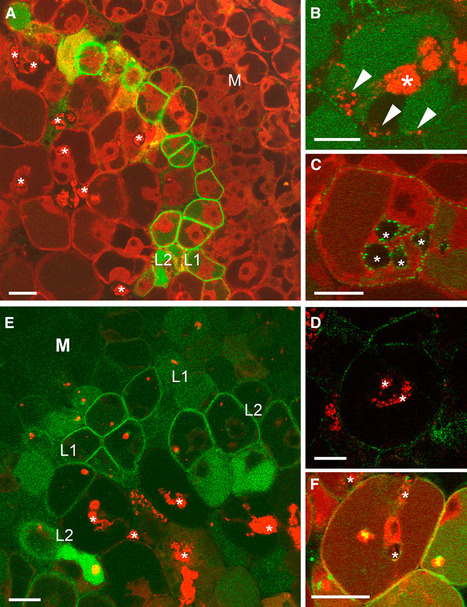
Rhizobial Nod factors are the key signaling molecules in the legume-rhizobium nodule symbiosis. In this study, the role of the Nod factor receptors NOD FACTOR PERCEPTION (NFP) and LYSIN MOTIF RECEPTOR-LIKE KINASE3 (LYK3) in establishing the symbiotic interface in root nodules was investigated. It was found that inside Medicago truncatula nodules, NFP and LYK3 localize at the cell periphery in a narrow zone of about two cell layers at the nodule apex. This restricted accumulation is narrower than the region of promoter activity/mRNA accumulation and might serve to prevent the induction of defense-like responses and/or to restrict the rhizobium release to precise cell layers. The distal cell layer where the receptors accumulate at the cell periphery is part of the meristem, and the proximal layer is part of the infection zone. In these layers, the receptors can most likely perceive the bacterial Nod factors to regulate the formation of symbiotic interface. Furthermore, our Förster resonance energy transfer-fluorescence lifetime imaging microscopy analysis indicates that NFP and LYK3 form heteromeric complexes at the cell periphery in M. truncatula nodules.
|
|
Scooped by
Jean-Michel Ané
October 28, 2014 5:03 PM
|
The origin and persistence of mutualism is difficult to explain because of the widespread occurrence of exploitative, ‘cheating’ partners. As a policing strategy stabilising intraspecific cooperation, host sanctions against non-N2 fixing, cheating symbionts have been proposed to stabilise mutualism in legume-rhizobium symbiosis. Mechanism of penalisations would include decreased nodular rhizobial viability and/or early nodule senescence. We tested these potential mechanisms of penalisations in split-root experiments using two soybean varieties and two rhizobial strains, a cooperative, normal N2-fixing strain and an isogenic non-fixing derivative. We found no differences in the number of viable rhizobia recovered from nodules and no differential expression of a nodular senescence molecular marker. Thus, our results do not support the hypothesis of plant sanctions acting against cheating rhizobia in our experimental conditions.
|
|
Scooped by
Jean-Michel Ané
October 28, 2014 4:59 PM
|
Understanding how mutualistic interactions are stabilized in the presence of cheaters is a major question in evolutionary biology. The legume–rhizobia mutualism has become a model system for studying how plants control cheating partners. However, the generality and evolutionary origins of these control mechanisms are intensely debated. In this Opinion article, we argue that a novel system – the Parasponia–rhizobia mutualism – will significantly advance research in mutualism stability. Parasponia is the only non-legume lineage to have evolved a rhizobial symbiosis, which provides an evolutionary replicate to test how rhizobial exploitation is controlled. Evidence also suggests that this symbiosis is young. This allows studies at an earlier evolutionary stage in mutualisms, so the origin of control mechanisms can be better understood.
|
|
Scooped by
Jean-Michel Ané
October 28, 2014 4:51 PM
|
Soil microorganisms found in the root zone impact plant growth and development, but the potential to harness these benefits is hampered by the sheer abundance and diversity of the players influencing desirable plant traits. Here, we report a high level of reproducibility of soil microbiomes in altering plant flowering time and soil functions when partnered within and between plant hosts. We used a multi-generation experimental system using Arabidopsis thaliana Col to select for soil microbiomes inducing earlier or later flowering times of their hosts. We then inoculated the selected microbiomes from the tenth generation of plantings into the soils of three additional A. thaliana genotypes (Ler, Be, RLD) and a related crucifer (Brassica rapa). With the exception of Ler, all other plant hosts showed a shift in flowering time corresponding with the inoculation of early- or late-flowering microbiomes. Analysis of the soil microbial community using 16 S rRNA gene sequencing showed distinct microbiota profiles assembling by flowering time treatment. Plant hosts grown with the late-flowering-associated microbiomes showed consequent increases in inflorescence biomass for three A. thaliana genotypes and an increase in total biomass for B. rapa. The increase in biomass was correlated with two- to five-fold enhancement of microbial extracellular enzyme activities associated with nitrogen mineralization in soils. The reproducibility of the flowering phenotype across plant hosts suggests that microbiomes can be selected to modify plant traits and coordinate changes in soil resource pools.
|
|
Scooped by
Jean-Michel Ané
October 28, 2014 4:48 PM
|
The ongoing expansion of shrub cover in response to climate change represents a unique opportunity to explore the link between soil microbial communities and vegetation changes. This link is particularly important in peatlands where shrub expansion is expected to feed back negatively on the carbon sink capacity of these ecosystems.
Microbial community structure and function were measured seasonally in four peatlands located along an altitude gradient representing a natural gradient of climate and associated vascular plant abundance.
We show that increased soil temperature and reduced water content are associated with greater vascular plant biomass, in particular that of ericoids, and that this, in turn, is correlated with greater microbial biomass. More specifically, microbial community structure is characterized by an increasing dominance of fungi over bacteria with improved soil oxygenation. We also found that the carbon and nitrogen stoichiometry of microbial biomass differs in relation to soil microbial community structure and that this is ultimately associated with a different investment in extracellular enzymatic activity.
Our findings highlight the fact that the determination of the structural identity of microbial communities can help to explain the biogeochemical dynamics of organic matter and provide a better understanding of ecosystem response to environmental changes.
|
|
Scooped by
Jean-Michel Ané
October 28, 2014 2:52 PM
|
Arbuscular mycorrhiza (AM), ectomycorrhiza (ECM) and nitrogen (N) fixation through rhizobia symbioses (RS) play a critical role for plant nutrient use efficiency in natural ecosystems, usually characterized by nutrient limitation, especially regarding nitrogen and phosphate. Substantial evidence has accumulated about how the rational use of microsymbionts’ properties should significantly contribute to decreasing fertilizer and pesticide use in agriculture and forestry. Understanding the mechanisms underlying high N use efficiency by mycorrhizal/rhizobial plants and carbon allocation in a context of mutualistic biotrophic interactions is critical for managing both croplands and forests while taking care of the ecosystem services rendered by microbial symbionts. Availability, uptake and exchange of nutrients in biotrophic interactions drive plant growth and modulate biomass allocation, and these parameters are central to plant yield, a major outcome in the context of high biomass production. To unravel the symbiotic N “transportome” blueprint from various host plant combinations, it is critical to facilitate the first steps favoring the manipulation of crops toward greater nitrogen use efficiency and mycorrhizal or rhizobial ability. The present review addresses current knowledge on inorganic N transport in mycorrhizal/rhizobial symbiosis.
|
|
Scooped by
Jean-Michel Ané
October 28, 2014 2:49 PM
|
Plant growth promoting fungi include strains of Trichoderma species that are used in biocontrol, and arbuscular mycorrhizal (AM) fungi, that enhance plant nutrition and stress resistance. The concurrent interaction of plants with these two groups of fungi affects crop performance, but has only been occasionally studied so far. Using in vivo imaging of GFP-tagged lines, we investigated the cellular interactions occurring between Trichoderma atroviride PKI1, Medicago truncatula and two Gigaspora species under in vitro culture conditions. T. atroviride did not activate symbiotic-like responses in the plant cells, such as nuclear calcium spiking or cytoplasmic aggregations at hyphal contact sites. Furthermore, T. atroviride parasitized G. gigantea and G. margarita hyphae through localized wall breaking and degradation - although this was not associated with significant chitin lysis nor the upregulation of two major chitinase genes. T. atroviride colonized broad areas of the root epidermis, in association with localized cell death. The infection of both symbionts was also observed when T. atroviride was applied to a pre-established AM symbiosis. We conclude that – although this triple interaction is known to improve plant growth in agricultural environments – in vitro culture brings to light a strong mycoparasitic potential for a biocontrol strain of Trichoderma.
Plant roots are known to harbor large and diverse communities of bacteria. It has been suggested that plant identity can structure these root-associated communities, but few studies have specifically assessed how the composition of root microbiota varies within and between plant species growing under natural conditions. We sampled endophytic and epiphytic bacteria in root tissues from a population of a wild, clonal plant (Orange hawkweed – Pilosella aurantiaca) as well as two neighboring plant species (Oxeye daisy – Leucanthemum vulgare and Alsike clover – Trifolium hybridum) to determine if plant species hosted unique root microbiota. Our results show that plants of different species host distinct bacterial communities in their roots. In terms of community composition, Betaproteobacteria (especially the family Oxalobacteraceae) were found to dominate in the root microbiota of L. vulgare and T. hybridum samples, whereas the root microbiota of P. aurantiaca had a more heterogeneous distribution of bacterial abundances where gamma Proteobacteria and Acidobacteria occupied a larger portion of the community. Whether all plant species host their own distinct root microbiota and plants more closely related to each other share more similar bacterial communities still remains to be explored.
Via Francis Martin
|
|
Scooped by
Jean-Michel Ané
October 26, 2014 1:03 PM
|
Medicago falcata L. is a perennial legume species native to semiarid grasslands in northern China, and distinguished by its superior tolerance to abiotic stresses such as drought and cold. But there have been few studies to investigate the physiological mechanism underlying salt tolerance in M. falcata. In the present study, we compared the response of non-nodulated M. falcata with legume model plant Medicago truncatula Garetn at physiological and molecular level by submitting them to a salt stock. M. falcata exhibited higher survival rate and less chlorosis than M. truncatula seedlings upon exposure to salt stress, suggesting that M. falcata is more tolerant to salt stress than M. truncatula. The ability to maintain a high K+ and low Na+ contents by plants is an important trait for tolerance to salt stress. M. falcata accumulated less amount of Na+ in their shoots than M. truncatula when exposed to NaCl, leading to a higher K+/(K+ + Na+) ratio in M. falcata than in M. truncatula under saline conditions. There was a similar difference in Na+ concentration and K+/(K+ + Na+) ratio in roots and xylem sap between the two species under saline conditions. Results from grafting experiments revealed that seedlings grafted with M. falcata either as scions or rootstocks can significantly reduce Na+ accumulation and increase K+/(K+ + Na+) ratio in both shoots and roots under saline conditions. Expression levels of SOS1 that encodes a Na+–H+ antiporter responsible for Na+ extrusion from cells in M. falcata were much higher than in M. truncatula under both control and saline conditions. Abundance of SOS1 transcripts in seedlings grafted with M. falcata as either rootstocks or scions was significantly higher than in seedlings self-grafted with M. truncatula. These results strongly suggested that SOS1-dependent Na+ extrusion is an important mechanism to maintain a relatively low Na+ concentration and high K+/(K+ + Na+) ratio in non-nodulated M. falcata under saline conditions, thus conferring tolerance to salt stress.
|
|
|
Scooped by
Jean-Michel Ané
October 31, 2014 4:07 PM
|
The rhizobial community indigenous to the Okavango region has not yet been characterized. The isolation of indigenous rhizobia can provide a basis for the formulation of a rhizobial inoculant. Moreover, their identification and characterization contribute to the general understanding of species distribution and ecology. Isolates were obtained from nodules of local varieties of the pulses cowpea, Bambara groundnut, peanut, hyacinth bean, and common bean. Ninety-one of them were identified by BOX repetitive element PCR (BOX-PCR) and sequence analyses of the 16S-23S rRNA internally transcribed spacer (ITS) and the recA, glnII, rpoB, and nifH genes. A striking geographical distribution was observed. Bradyrhizobium pachyrhizi dominated at sampling sites in Angola which were characterized by acid soils and a semihumid climate. Isolates from the semiarid sampling sites in Namibia were more diverse, with most of them being related to Bradyrhizobium yuanmingense and Bradyrhizobium daqingense. Host plant specificity was observed only for hyacinth bean, which was nodulated by rhizobia presumably representing yet-undescribed species. Furthermore, the isolates were characterized with respect to their adaptation to high temperatures, drought, and local host plants. The adaptation experiments revealed that the Namibian isolates shared an exceptionally high temperature tolerance, but none of the isolates showed considerable adaptation to drought. Moreover, the isolates' performance on different local hosts showed variable results, with most Namibian isolates inducing better nodulation on peanut and hyacinth bean than the Angolan strains. The local predominance of distinct genotypes implies that indigenous strains may exhibit a better performance in inoculant formulations.
|
|
Scooped by
Jean-Michel Ané
October 30, 2014 8:47 AM
|
Abstract Unresolved questions about evolution of the large and diverse legume family include the timing of polyploidy (whole-genome duplication; WGDs) relative to the origin of the major lineages within the Fabaceae and to the origin of symbiotic nitrogen fixation. Previous work has established that a WGD affects most lineages in the Papilionoideae and occurred some time after the divergence of the papilionoid and mimosoid clades, but the exact timing has been unknown. The history of WGD has also not been established for legume lineages outside the Papilionoideae. We investigated the presence and timing of WGDs in the legumes by querying thousands of phylogenetic trees constructed from transcriptome and genome data from 20 diverse legumes and 17 outgroup species. The timing of duplications in the gene trees indicates that the papilionoid WGD occurred in the common ancestor of all papilionoids. The earliest diverging lineages of the Papilionoideae include both nodulating taxa such as the genistoids (e.g. lupin), dalbergioids (e.g. peanut), phaseoloids (e.g. beans), and galegoids (= Hologalegina, e.g. clovers), and clades with non-nodulating taxa including Xanthocercis and Cladrastis (evaluated in this study). We also found evidence for several independent WGDs near the base of other major legume lineages, including the Mimosoid-Cassiinae-Caesalpinieae (MCC), Detarieae, and Cercideae clades. Nodulation is found in the MCC and papilionoid clades, both of which experienced ancestral WGDs. However, there are numerous non-nodulating lineages in both clades, making it unclear whether the phylogenetic distribution of nodulation is due to independent gains or a single origin followed by multiple losses.
|
|
Scooped by
Jean-Michel Ané
October 29, 2014 2:39 PM
|
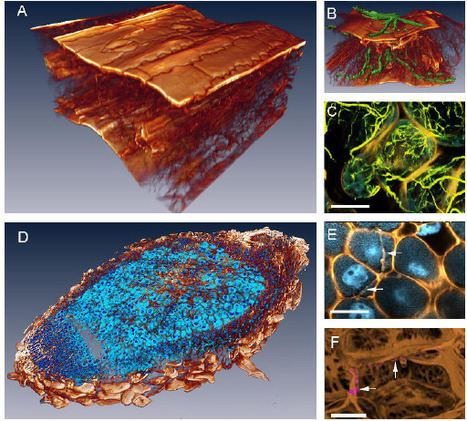
We report a nondestructive clearing technique that enhances transmission of light through specimens from diverse plant species, opening new opportunities for microscope-enabled plant research. After clearing, plant organs and thick tissue sections are amenable to deep imaging. The clearing method is compatible with immunocytochemistry techniques and can be used in concert with common fluorescent probes, including widely adopted protein tags, such as GFP, whose fluorescence is preserved during the clearing process.
|
|
Scooped by
Jean-Michel Ané
October 29, 2014 12:40 PM
|
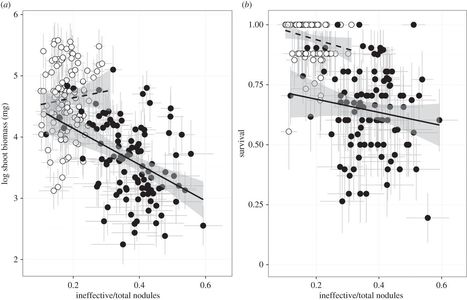
Many models of mutualisms show that mutualisms are unstable if hosts lack mechanisms enabling preferential associations with mutualistic symbiotic partners over exploitative partners. Despite the theoretical importance of mutualism-stabilizing mechanisms, we have little empirical evidence to infer their evolutionary dynamics in response to exploitation by non-beneficial partners. Using a model mutualism—the interaction between legumes and nitrogen-fixing soil symbionts—we tested for quantitative genetic variation in plant responses to mutualistic and exploitative symbiotic rhizobia in controlled greenhouse conditions. We found significant broad-sense heritability in a legume host's preferential association with mutualistic over exploitative symbionts and selection to reduce frequency of associations with exploitative partners. We failed to detect evidence that selection will favour the loss of mutualism-stabilizing mechanisms in the absence of exploitation, as we found no evidence for a fitness cost to the host trait or indirect selection on genetically correlated traits. Our results show that genetic variation in the ability to preferentially reduce associations with an exploitative partner exists within mutualisms and is under selection, indicating that micro-evolutionary responses in mutualism-stabilizing traits in the face of rapidly evolving mutualistic and exploitative symbiotic bacteria can occur in natural host populations.
|
|
Scooped by
Jean-Michel Ané
October 28, 2014 5:08 PM
|
Alternative splicing enhances transcriptome diversity in all eukaryotes and plays a role in plant tissue identity and stress adaptation. To catalog new maize (Zea mays) transcripts and identify genomic loci that regulate alternative splicing, we analyzed over 90 RNA-seq libraries from maize inbred lines B73 and Mo17, as well as Syn10 doubled haploid lines (progenies from B73 × Mo17). Transcript discovery was augmented with publicly available data from 14 maize tissues, expanding the maize transcriptome by more than 30,000 and increasing the percentage of intron-containing genes that undergo alternative splicing to 40%. These newly identified transcripts greatly increase the diversity of the maize proteome, sometimes coding for entirely different proteins compared with their most similar annotated isoform. In addition to increasing proteome diversity, many genes encoding novel transcripts gained an additional layer of regulation by microRNAs, often in a tissue-specific manner. We also demonstrate that the majority of genotype-specific alternative splicing can be genetically mapped, with cis-acting quantitative trait loci (QTLs) predominating. A large number of trans-acting QTLs were also apparent, with nearly half located in regions not shown to contain genes associated with splicing. Taken together, these results highlight the currently underappreciated role that alternative splicing plays in tissue identity and genotypic variation in maize.
|
|
Scooped by
Jean-Michel Ané
October 28, 2014 5:02 PM
|
Despite the importance of mutualism as a key ecological process, its persistence in nature is difficult to explain since the existence of exploitative, “cheating” partners that could erode the interaction is common. By analogy with the proposed policing strategy stabilizing intraspecific cooperation, host sanctions against non-N2 fixing, cheating symbionts have been proposed as a force stabilizing mutualism in legume–Rhizobium symbiosis. Following this proposal, penalizations would include decreased nodular rhizobial viability and/or early nodule senescence in nodules occupied by cheating rhizobia. In this work, we analyse the stability of Rhizobium–legume symbiosis when non-fixing, cheating strains are present, using an experimental and modelling approach. We used split-root experiments with soybean plants inoculated with two rhizobial strains, a cooperative, normal N2 fixing strain and an isogenic non-fixing, “perfect” cheating mutant derivative that lacks nitrogenase activity but has the same nodulation abilities inoculated to split-root plants. We found no experimental evidence of functioning plant host sanctions to cheater rhizobia based on nodular rhizobia viability and nodule senescence and maturity molecular markers. Based on these experiments, we developed a population dynamic model with and without the inclusion of plant host sanctions. We show that plant populations persist in spite of the presence of cheating rhizobia without the need of incorporating any sanction against the cheater populations in the model, under the realistic assumption that plants can at least get some amount of fixed N2 from the effectively mutualistic rhizobia occupying some nodules. Inclusion of plant sanctions leads to the unrealistic effect of ultimate extinction of cheater strains in soil. Our simulation results are in agreement with increasing experimental evidence and theoretical work showing that mutualisms can persist in presence of cheating partners.
|
|
Scooped by
Jean-Michel Ané
October 28, 2014 4:58 PM
|
While multiple experiments have demonstrated that trees exposed to elevated CO2 can stimulate microbes to release nutrients from soil organic matter, the importance of root- versus mycorrhizal-induced changes in soil processes are presently unknown.
We analyzed the contribution of roots and mycorrhizal activities to carbon (C) and nitrogen (N) turnover in a loblolly pine (Pinus taeda) forest exposed to elevated CO2 by measuring extracellular enzyme activities at soil microsites accessed via root windows. Specifically, we quantified enzyme activity from soil adjacent to root tips (rhizosphere), soil adjacent to hyphal tips (hyphosphere), and bulk soil.
During the peak growing season, CO2 enrichment induced a greater increase of N-releasing enzymes in the rhizosphere (215% increase) than in the hyphosphere (36% increase), but a greater increase of recalcitrant C-degrading enzymes in the hyphosphere (118%) than in the rhizosphere (19%). Nitrogen fertilization influenced the magnitude of CO2 effects on enzyme activities in the rhizosphere only. At the ecosystem scale, the rhizosphere accounted for c. 50% and 40% of the total activity of N- and C-releasing enzymes, respectively.
Collectively, our results suggest that root exudates may contribute more to accelerated N cycling under elevated CO2 at this site, while mycorrhizal fungi may contribute more to soil C degradation.
|
|
Scooped by
Jean-Michel Ané
October 28, 2014 4:49 PM
|
Native soil carbon (C) can be lost in response to fresh C inputs, a phenomenon observed for decades yet still not understood. Using dual-stable isotope probing, we show that changes in the diversity and composition of two functional bacterial groups occur with this ‘priming’ effect. A single-substrate pulse suppressed native soil C loss and reduced bacterial diversity, whereas repeated substrate pulses stimulated native soil C loss and increased diversity. Increased diversity after repeated C amendments contrasts with resource competition theory, and may be explained by increased predation as evidenced by a decrease in bacterial 16S rRNA gene copies. Our results suggest that biodiversity and composition of the soil microbial community change in concert with its functioning, with consequences for native soil C stability.
|
|
Scooped by
Jean-Michel Ané
October 28, 2014 4:30 PM
|
The effect of exogenous calcium (Ca2+) and rhizobial infections (Rhizobium leguminosarum bv viceae) on the dynamics of the level of nitric oxide (NO) was studied in cross cuts of roots of two-day-old etiolated pea seedlings (Pisum sativum L.) using a DAF-2DA fluorescent probe. Fluctuations of the NO level, indicating the presence of a rhythm in the generation of NO in roots, were observed during the incubation of seedlings in water, a CaCl2 solution, and with rhizobial infections. Exogenous factors (Ca2+ and two rhizobial stamms) change the time dynamics of the NO level in comparison with the control (water).
|
|
Scooped by
Jean-Michel Ané
October 28, 2014 2:50 PM
|
Legumes form a large group of plants that constitute the third largest family of angiosperms, including near 20,000 species and 750 genera. Most of them have the ability to establish symbioses with diazotrophic bacteria, collectively known as rhizobia, which induce root nodules where biological nitrogen fixation takes place, conferring legumes a relevant ecological advantage. This group of bacteria that for many years was thought to be formed by a scarce number of genera and species within alpha proteobacteria, shows nowadays an important genetic diversity including species phylogenetically divergent both in core and symbiotic genes sequences. Together with rhizobia, other endophytic bacteria are present in legume nodules coexisting with rhizobial strains and their ecological role remains unknown in most cases, but they likely have an effect in plant health, plant growth or even in the rhizobia-legume symbiosis. In this review we present an overview of the associations of bacteria with legumes, the current available knowledge on the phylogenetic diversity of both rhizobia and endophytic bacteria inhabiting root nodules, and the symbiotic features used to define symbiovars in rhizobia.
The coordinated transcriptomic responses of both mutualistic ectomycorrhizal (ECM) fungi and their hosts during the establishment of symbiosis are not well understood. This study characterizes the transcriptomic alterations of the ECM fungus Laccaria bicolor during different colonization stages on two hosts (Populus trichocarpa and Pseudotsuga menziesii) and compares this to the transcriptomic variations of P. trichocarpa across the same time-points. A large number of L. bicolor genes (>8,000) were significantly regulated at the transcriptional level in at least one stage of colonization. From our data we identify 1,249 genes that we hypothesize is the “core” gene regulon necessary for the mutualistic interaction between L. biolor and its host plants. We further identify a group of 1,210 genes that are regulated in a host-specific manner. This variable regulon encodes a number of genes coding for proteases and xenobiotic efflux transporters that we hypothesize act to counter chemical based defenses simultaneously activated at the transcriptomic level in P. trichocarpa. The transcriptional response of the host plant P. trichocarpa consisted of differential waves of gene regulation related to signaling perception and transduction, defense response and the induction of nutrient transfer in P. trichocarpa tissues. This study, therefore, gives fresh insight into the shifting transcriptomic landscape in both the colonizing fungus and their hosts and the different strategies employed by both partners in orchestrating a mutualistic interaction.
Via Francis Martin
|
|
Scooped by
Jean-Michel Ané
October 26, 2014 1:05 PM
|
Plants often form mutually beneficial “symbiotic” relationships with small soil-borne fungi called mycorrhizae. The mycorrhizae live on the plant’s roots and are able to extract ammonium from organic matter to enrich to host plant. It is this breakdown of organic matter that provides most of the nitrogen for woodland plants.
|


 Scoop.it!