Rhizobium leguminosarum Rlv3841 contains at least three sulfate transporters, i.e., SulABCD, SulP1 and SulP2, and a single molybdate transporter, ModABC. SulABCD is a high-affinity transporter whose mutation prevented growth on a limiting sulfate concentration, while SulP1 and SulP2 appear to be low-affinity sulfate transporters. ModABC is the sole high-affinity molybdate transport system and is essential for growth with NO3− as a nitrogen source on limiting levels of molybdate (<0.25 μM). However, at 2.5 μM molybdate, a quadruple mutant with all four transporters inactivated, had the longest lag phase on NO3−, suggesting these systems all make some contribution to molybdate transport. Growth of Rlv3841 on limiting levels of sulfate increased sulB, sulP1, modB, and sulP2 expression 313.3-, 114.7-, 6.2-, and 4.0-fold, respectively, while molybdate starvation increased only modB expression (three- to 7.5-fold). When grown in high-sulfate but not low-sulfate medium, pea plants inoculated with LMB695 (modB) reduced acetylene at only 14% of the wild-type rate, and this was not further reduced in the quadruple mutant. Overall, while modB is crucial to nitrogen fixation at limiting molybdate levels in the presence of sulfate, there is an unidentified molybdate transporter also capable of sulfate transport.
Drought stress hampers plant energy and biomass production; however it is still unknown how internal C:N balance and rhizobial symbiosis impact on plant response to water limitation. Here, the effect of differential optimal nitrogen nutrition and root nodule symbiosis on drought stress and rehydration responses of Medicago truncatula was assessed.
Two groups of plants were nodulated with Sinorhizobium medicae or Sinorhizobiummeliloti — differing in the performance of N-fixation; the third group grew in a rhizobia-free medium and received mineral nitrogen fertilizer. In addition to growth analyses, physiological and molecular responses of the two systems were studied using ionomic, metabolomic and proteomic techniques.
We found a significant delay in drought-induced leaf senescence in nodulated relative to non-nodulated plants, independent of rhizobial strain and uncoupled from initial leaf N content. The major mechanisms involved are increased concentrations of potassium and shifts in the carbon partitioning between starch and sugars under well-watered conditions, as well as the enhanced allocation of reserves to osmolytes during drought. Consequently, nodulated plants recovered more effectively from drought, relative to non-nodulated M. truncatula. Proteomic data suggest that phytohormone interactions and enhanced translational regulation play a role in increased leaf maintenance in nodulated plants during drought.
Many grass species are symbiotic with systemic, vertically-transmitted, asymptomatic Epichloë endophytic fungi. These fungi often produce alkaloids that defend the host against herbivores. We studied how environmental variables affect alkaloids in endophyte-infected tall fescue (Schedonorus phoenix) from three Northern European wild origins and the widely planted US cultivar ‘Kentucky-31’ (KY31). The plants were grown in identical common garden experiments in Finland and Kentucky for two growing seasons. Plants were left as controls (C) or given water (W), nutrient (N) or water and nutrient (WN) treatments. For 8–10 replications of each plant origin and treatment combination in both experiments, we analyzed ergot alkaloids, lysergic acid, and lolines. In Finland, tall fescue plants produced 50 % more ergot alkaloids compared to plants of the same origin and treatments in Kentucky. Origin of the plants affected the ergot alkaloid concentration at both study sites: the wild origin plants produced 2–4 times more ergot alkaloids than KY31, but the ergot alkaloid concentration of KY31 plants was the same at both locations. Overall lysergic acid content was 60 % higher in plants grown in Kentucky than in those grown in Finland. Nutrient treatments (N, WN) significantly increased ergot alkaloid concentrations in plants from Finland but not in plants from Kentucky. These results suggest that the success of KY31 in US is not due to selection for high ergot alkaloid production but rather other traits associated with the endophyte. In addition, the environmental effects causing variation in alkaloid production of grass-endophyte combinations should be taken into account when using endophyte-infected grasses agriculturally.
Background and Aims An increase in a form of arbuscular mycorrhizal (AM) fungi, termed fine endophyte or fine root endophyte (Glomus tenue (Greenall) I.R. Hall), is often observed under extreme environmental conditions. We investigated the influence of host plant species, waterlogging and landscape zone (soil type) on colonisation by fine root endophyte. Methods Colonisation by AM fungi and fine root endophyte was measured in Lolium rigidum Gaudin (ryegrass) and Lotus subbiflorus Lag. (lotus) sampled from the upper, middle and lower/riparian zones of a sloping pasture. Ryegrass and lotus were then grown in a glasshouse in soil from these three zones: waterlogging was initiated for half the pots from day 43 and colonisation determined 35 days later. Results In the field, AM fungal colonisation was lowest in the lower zone for ryegrass only. In the glasshouse, waterlogging greatly decreased AM fungal colonisation, with the exception of lotus in lower zone soil where colonisation by fine root endophyte was prolific. Waterlogging impacts on plant growth were small. Conclusions Fine root endophyte better withstands the stressful conditions induced by waterlogging than other forms of AM fungi, but this response differs with host plant. Further study of the environmental niche of fine root endophyte is necessary to understand its function under extreme conditions.
This is a very exciting new finding that shows a new receptor-like protein functioning in the establishment of arbuscular mycorrhizal symbiosis. The authors demonstrate that the iho mutant, which shows a complete absence of mycorrhizal fungal colonisation, has a deletion in the karrikin receptor, and complementation studies demonstrate that the deletion of this gene is causative of the mutant phenotypes. Karrikin is a compound found in smoke and is used by some species of plants to promote seed germination after fires. A role for this receptor in the establishment of the arbuscular mycorrhizal association is completely novel and highlights a new modality of signalling in this symbiotic association. From the work so far undertaken it seems unlikely that this receptor is responding to karrikin during the mycorrhizal interaction and it will be very interesting to see from future work exactly what the signalling molecule(s) is that this receptor is responding to during the promotion of this fungal association.
Premier Tech Horticulture specialist Susan Parent presents the exclusive PRO-MIX HP BIOFUNGICIDE + MYCORRHIZAE. With its high perlite content, it provides a ...
During soybean planting season, University of Nebraska-Lincoln’s CropWatch reports we often think of planting date, seeding rate, and seed treatments. In regard to seed treatments, one of the choices being made right now is “Should I inoculate my soybeans?” The risk vs. reward of inoculating soybeans has been discussed for decades. The risk is not lower yields, just whether the inoculant is going to return a profit, even though it is relatively cheap.
So do high yielding soybeans need to be fertilized with N? The answer appears to be that they might, but the yield response may only be marginally profitable. When soybean prices outpace the price of N, profitability is more likely, but such a window is usually not long-lasting. Therefore, N fertilization of soybeans still carries a financial risk even under high yielding environments. Local trials can help determine whether or not the practice makes sense in individual situations.
KALO, Inc., a leading supplier of specialty chemicals for the agricultural and professional turf markets, has announced the introduction of its new Legacy soybean inoculant.
“We’re very excited about the addition of Legacy to our seed care product line,” stated Brett Henson, KALO’s Market Segment Manager, Seed Care Products. “Legacy is a unique two-part soybean inoculant system containing a super-concentrated liquid inoculant and an EPA registered chitosan-based biostimulant. When combined, the two-part mixture provides several key benefits, including increased early-season vigor, higher stand counts, nematode suppression, and an average yield increase of 4.8 bushels per acre over seeds that have not been inoculated.”
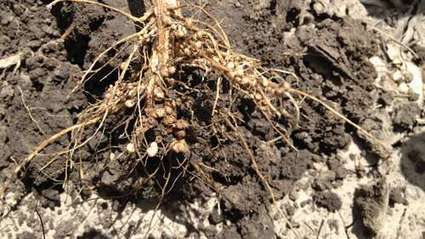
Many miracles occur in nature, more in fact than we will ever know about. However one that we depend upon for a great quantity of our food supply is that of nitrogen fixation in legumes which are more commonly known as the pea and bean family of plants.
The member of this plant family that is most common in our area is the soybean although other crops like peas and beans that are grown for direct consumption also take advantage of this method of drawing nitrogen from the air.
The invasive plant called kudzu that grows wild along the highways all over the South also utilizes nitrogen fixation for its nitrogen supply.
We have explored the importance of the phyllosphere microbiome in plant resistance in the cuticle mutants bdg (BODYGUARD) or lacs2.3 (LONG CHAIN FATTY ACID SYNTHASE 2) that are strongly resistant to the fungal pathogen Botrytis cinerea. The study includes infection of plants under sterile conditions, 16S ribosomal DNA sequencing of the phyllosphere microbiome, and isolation and high coverage sequencing of bacteria from the phyllosphere. When inoculated under sterile conditions bdg became as susceptible as wild-type (WT) plants whereas lacs2.3 mutants retained the resistance. Adding washes of its phyllosphere microbiome could restore the resistance of bdg mutants, whereas the resistance of lacs2.3 results from endogenous mechanisms. The phyllosphere microbiome showed distinct populations in WT plants compared to cuticle mutants. One species identified as Pseudomonas sp isolated from the microbiome of bdg provided resistance to B. cinerea on Arabidopsis thaliana as well as on apple fruits. No direct activity was observed against B. cinerea and the action of the bacterium required the plant. Thus, microbes present on the plant surface contribute to the resistance to B. cinerea. These results open new perspectives on the function of the leaf microbiome in the protection of plants.
The importance of the uptake of nitrogen in organic form by plants and mycorrhizal fungi has been demonstrated in various ecosystems including temperate forests. However, in previous experiments, isotopically labeled amino acids were often added to soils in concentrations that may be higher than those normally available to roots and mycorrhizal hyphae in situ, and these high concentrations could contribute to exaggerated uptake.
Methods
We used an experimental approach in which we added 13C-labeled and 15N-labeled whole cells to root-ingrowth cores, allowing proteolytic enzymes to release labeled organic nitrogen at a natural rate, as roots and their associated mycorrhizal fungi grew into the cores. We employed this method in four forest types representing a gradient of soil pH, nitrogen mineralization rate, and mycorrhizal type.
Results
Intact uptake of organic nitrogen was detected in mycorrhizal roots, and accounted for at least of 1–14 % of labeled nitrogen uptake. Forest types did not differ significantly in the importance of organic uptake.
Conclusions
The estimates of organic N uptake made here using 13C-labeled and 15N-labeled whole cells are less than those reported in other temperate forest studies using isotopically labelled amino acids, and likely represent a minimum estimate of organic N-use. The two approaches each have different assumptions, and when used in tandem should complement one another and provide upper and lower bounds of organic N use by plants.
Here the nitrogen fixation is provided by a shade-tolerant nitrogen-fixing ground cover. For example, many tropical orchards feature perennial peanut (Arachis pintoi), also known as forage peanut or pintoi peanut. Pros: allows all the rest of the system to be edible plants. Cons: no opportunity to grow crops in the lowest level.
In this study, bacteria (8 species and 5 genera) belonging to the classes Betaproteobacteria, Gammaproteobacteria, and Sphingobacteria were isolated from root nodules of the multipurpose legume Clitoria ternatea L. and identified on the basis of partial 16S rRNA sequencing. The root nodule bacteria were subjected to phenotypic clustering and diversity studies using biochemical kits, including Hi-Media Carbokit™, Enterobacteriaceae™ identification kit, ERIC–PCR, and 16S ARDRA. All the strains showed growth on Ashby’s N-free media over 7 generations, indicative of presumptive nitrogen fixation and further confirmed by amplification of the nifH gene. None of the strains showed the capability to renodulate the host plant, neither alone nor in combination with standard rhizobial strains, which was further confirmed by the absence of nodC bands in PCR assay. The results clearly indicate the common existence of nonrhizobial microflora inside the root nodules of legumes, which were thought to be colonized only by rhizobia and were responsible for N2 fixation in leguminous crops. However, with the recent discovery of nodule endophytes from a variety of legumes, as also observed here, it can be assumed that symbiotic rhizobia are not all alone and that these invasive endophytes belonging to various bacterial genera are more than just opportunistic colonizers of specialized nodule niche.
A survey to obtain potential antagonists of pome fruit tree diseases yielded two yellow epiphytic bacterial isolates morphologically similar to Pantoea agglomerans, but showing no biocontrol activity. Whole-Cell MALDI-TOF mass spectrometry and analysis of 16S rRNA and gyrB gene sequences suggested the possibility of a new species with a phylogenetic position in either Pantoea or Erwinia. Multilocus sequence analysis (MLSA) placed the two strains in the genus Erwinia and supported their classification as a novel species. The strains showed general phenotypic characteristics typical of this genus and results of DNA-DNA hybridizations confirmed that they represent a single novel species. Both strains showed a DNA G+C content, as determined by HPLC, of 54.5 mol% and could be discriminated from phylogenetically related species of the genus Erwinia by their ability to utilize potassium gluconate, potassium 2-ketogluconate, D-maltose, D-melibiose and D-raffinose. Whole-genome sequencing of strain EM595T revealed the presence of a chromosomal carotenoid biosynthesis gene cluster similar to those found in Cronobacter and Pantoea spp. that explains the pigmentation of the strain, which is atypical for the genus Erwinia. Additional strains belonging to the same species were recovered from different plant hosts in three different continents, revealing the cosmopolitan nature of this epiphyte. The name Erwinia gerundensis sp. nov. is proposed, with EM595T (= LMG 28990T; = CCOS 903T) as the designated type strain.
With 2016 designated as the International Year of the Pulses, it is important that we advance protein crop husbandry and remove the factors responsible for yield variability in crops such as beans.
When seeking the ideal balance between air porosity, drainage capacity and water retention, PRO-MIX® HPCC MYCORRHIZAE™ is the solution growers select. With u...
A mycorrhiza (Greek: μυκός, mykós, "fungus" and ριζα, riza, "roots", pl. mycorrhizae or mycorrhizas) is a symbiotic association composed of a fungus and roots of a vascular plant. In a mycorrhizal association, the fungus colonizes the host plant's roots, either intracellularly as in arbuscular mycorrhizal fungi (AMF or AM), or extracellularly as in ectomycorrhizal fungi.
Scientists have wondered for years how legumes such as soybeans, whose roots host nitrogen-fixing bacteria that produce essential plant nutrients out of thin air, are able to recognize these bacteria as both friendly and distinct from their own cells, and how the host plant's specialized proteins find the bacteria and use the nutritional windfall.
Arbuscular mycorrhizal (AM) symbiosis is the most widespread association between plants and fungi. To provide novel insights into the molecular mechanisms of AM symbiosis, we screened and investigated genes of the AM fungus Rhizophagus irregularis that contribute to the infection of host plants. R. irregularis genes involved in the infection were explored by RNA-sequencing (RNA-seq) analysis. One of the identified genes was then characterized by a reverse genetic approach using host-induced gene silencing (HIGS), which causes RNA interference in the fungus via the host plant. The RNA-seq analysis revealed that 19 genes are up-regulated by both treatment with strigolactone (SL; a plant symbiotic signal) and symbiosis. Eleven of the 19 genes were predicted to encode secreted proteins and of these, SL-induced putative secreted protein 1 (SIS1) showed the largest induction under both conditions. In hairy roots of Medicago truncatula, SIS1 expression is knocked down by HIGS, resulting in significant suppression of colonization and formation of stunted arbuscules. These results suggest that SIS1 is a putative secreted protein that is induced in a wide spatiotemporal range including both the pre-symbiotic and symbiotic stages, and that SIS1 positively regulates colonization of host plants by R. irregularis.
SARRIÓN, Spain — On Saturday nights, prospective buyers gather on the outskirts of this small village, in the darkness of a parking lot next to a semi-abandoned railway station. Using flashlights, they inspect the offerings local farmers have piled in the trunks of their vehicles, then haggle over price.
It might seem an unusually clandestine way to sell produce. Then again, this market is for one of the world’s most prized foodstuffs, the black truffle.
But perhaps more surprising is that a truffle trade would be thriving here, in the arid and thinly populated hills of east-central Spain.
The black truffle, with its pungent aroma, is, after all, a mainstay of French gastronomy. Spaniards barely eat them. Scientifically known as the Tuber melanosporum, it is even commonly known as the Périgord truffle, after the French region that long led in its production.
More than a century ago, farmers in southern France took up the harvesting of black truffles after an epidemic of aphidlike phylloxera destroyed vineyards, forcing a search for alternatives.
At a recent workshop, soil scientist Jill Clapperton outlined some visible indicators of soil health, and offered a few things producers could do to improve their soil.
"Nowhere in the United States can the public get a true conception of the role of microorganisms in nature and in our daily lives." These words, penned in the late 1940s by the German-American dairy microbiologist Otto Rahn in an appeal for a "museum of microbiology" would remain true for several decades to come – at least if one thinks of a permanent institution devoted to presenting "microorganisms in nature and civilization", as Rahn had it (Figure 1). Since August 2014, the lacuna outlined by Rahn has been filled by Micropia, the "first museum of microbes", or, perhaps more fittingly, the first "microbe zoo". However, Americans will still have to cross the Atlantic to go see the microbes (at least for a few months more, it seems – see STC's recent post on microbes in museums by Scott Chimileski).
To get content containing either thought or leadership enter:
To get content containing both thought and leadership enter:
To get content containing the expression thought leadership enter:
You can enter several keywords and you can refine them whenever you want. Our suggestion engine uses more signals but entering a few keywords here will rapidly give you great content to curate.


 Your new post is loading...


 Scoop.it!