Your new post is loading...

|
Scooped by
Jean-Michel Ané
January 27, 2016 11:49 AM
|
Summary: The White House Office of Science and Technology Policy is issuing a national call to action for new commitments to microbiome research from all sectors.
|
|
Scooped by
Jean-Michel Ané
January 27, 2016 12:22 AM
|
Endophytes reside in different parts of the poppy plant and perform the tissue-specific functions. Most leaf endophytes modulate photosynthetic efficiency, plant growth, and productivity while capsule endophytes modulate alkaloid biosynthesis.
Endophytes promote plant growth, provide protection from environmental stresses and are the source of important secondary metabolites. Here, we established that the endophytes of opium poppy Papaver somniferum L. may play a role in the modulation of plant productivity and benzylisoquinoline alkaloid (BIA) biosynthesis. A total of 22 endophytes isolated from leaves, roots, capsules and seeds of the poppy plants were identified. Isolated endophytes were used to inoculate the endophytes free poppy seeds and screened for their ability to improve plant productivity and BIA production. It was evident that the endophytes from leaf were involved in improving photosynthetic efficiency, and thus crop growth and yield and the endophytes from capsule were involved in enhancing BIA biosynthesis. Capsule endophytes of alkaloid-rich P. somniferum cv. Sampada enhanced BIA production even in alkaloid-less cv. Sujata. Expression study of the genes involved in BIA biosynthesis conferred the differential regulation of their expression in the presence of capsule endophytes. The capsule endophyte SM1B (Acinetobacter) upregulated the expression of the key genes for the BIA biosynthesis except thebaine 6-O-demethylase (T6ODM) and codeine O-demethylase (CODM). On the other hand, another capsule endophyte SM3B (Marmoricola sp.) could upregulate both T6ODM and CODM. Colonization of poppy plant by endophytes isolated from leaves, roots and capsules found to be higher in their respective plant parts confirmed their tissue-specific role. Overall, the results demonstrate the specific role of endophytes in the modulation of host plant productivity and BIA production.
|
|
Scooped by
Jean-Michel Ané
January 26, 2016 11:59 PM
|
Truffles are ectomycorrhizal fungi harvested mainly in human managed agroforestry ecosystems. Truffle production in truffle orchards faces two important bottlenecks or challenges: the initiation of the sexual reproduction and the growth of the ascocarps during several months. The black Périgord truffle, Tuber melanosporum, is a heterothallic species and the mating type genes (MAT1-1 and M1T1-2) have been characterized. In this context, the unraveling of the T. melanosporum mating type strains distribution in truffle orchards is a critical starting point to provide new insights into its sexual reproduction. The aim of this chapter is to present the protocol used to characterize the T. melanosporum mating type present in a truffle orchard from ascocarps, hazel mycorrhizal root tips, and/or soil samples, by polymerase chain reactions using specific primers for those genes, but it can be adapted for other fungal species.
|
|
Scooped by
Jean-Michel Ané
January 26, 2016 11:55 PM
|
Nicotinamide adenine dinucleotide synthetase enzyme (NadE) catalyzes the amination of nicotinic acid adenine dinucleotide (NaAD) to form NAD+. This reaction represents the last step in the majority of the NAD+ biosynthetic routes described to date. NadE enzymes typically use either glutamine or ammonium as amine nitrogen donor, and the reaction is energetically driven by ATP hydrolysis. Given the key role of NAD+ in bacterial metabolism, NadE has attracted considerable interest as a potential target for the development of novel antibiotics. The plant-associative nitrogen-fixing bacteria Herbaspirillum seropedicae encodes two putative NadE, namely nadE1 and nadE2. The nadE1 gene is linked to glnB encoding the signal transduction protein GlnB. Here we report the purification and in vitro characterization of H. seropedicae NadE1. Gel filtration chromatography analysis suggests that NadE1 is an octamer. The NadE1 activity was assayed in vitro, and the Michaelis–Menten constants for substrates NaAD, ATP, glutamine and ammonium were determined. Enzyme kinetic and in vitro substrate competition assays indicate that H. seropedicae NadE1 uses glutamine as a preferential nitrogen donor.
|
|
Scooped by
Jean-Michel Ané
January 26, 2016 11:33 PM
|
In this commentary, I advocate for more detailed incorporation of arbuscular mycorrhizal (AM) fungi in Earth system models, to improve our projections of global climate change. Current Earth system models display relatively low predictability of soil C stocks, which limit our ability to estimate future climate conditions. A more explicit incorporation of microbial mechanisms can increase the accuracy of ecosystem-scale models that inform the larger-scale Earth system models. Of the numerous microbial groups that can influence soil C dynamics, AM fungi are particularly tractable for integration in models. Arbuscular mycorrhizal fungi are globally abundant and perform critical roles in C cycling, such as augmentation of net primary productivity and soil C storage. Moreover, AM communities exhibit relatively low diversity within ecosystems, compared to other microbial groups. In addition, global datasets of AM ecology are available for use in model development. Thus, AM communities can be readily simulated in next-generation trait-based models that link microbial diversity to ecosystem function. Altogether, we are well-poised to incorporate the dynamics of individual AM taxa in ecosystem models, which can then be coupled to Earth system models. Hopefully, these efforts would advance our ability to predict and plan for future climate change.
|
|
Scooped by
Jean-Michel Ané
January 26, 2016 11:32 PM
|
Beneficial plant–microbe associations play critical roles in plant health. Bacterial chemotaxis provides a competitive advantage to motile flagellated bacteria in colonization of plant root surfaces, which is a prerequisite for the establishment of beneficial associations. Chemotaxis signaling enables motile soil bacteria to sense and respond to gradients of chemical compounds released by plant roots. This process allows bacteria to actively swim towards plant roots and is thus critical for competitive root surface colonization. The complete genome sequences of several plant-associated bacterial species indicate the presence of multiple chemotaxis systems and a large number of chemoreceptors. Further, most soil bacteria are motile and capable of chemotaxis, and chemotaxis-encoding genes are enriched in the bacteria found in the rhizosphere compared to the bulk soil. This review compares the architecture and diversity of chemotaxis signaling systems in model beneficial plant-associated bacteria and discusses their relevance to the rhizosphere lifestyle. While it is unclear how controlling chemotaxis via multiple parallel chemotaxis systems provides a competitive advantage to certain bacterial species, the presence of a larger number of chemoreceptors is likely to contribute to the ability of motile bacteria to survive in the soil and to compete for root surface colonization.
|
|
Scooped by
Jean-Michel Ané
January 26, 2016 11:29 PM
|
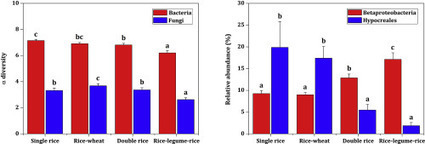
Rice ecosystems are distributed broadly from temperate to tropical regions, but little is known about the underlying mechanisms shaping microbial communities and their network structure in paddy soils at the continental scale. Soil samples were collected from paddy fields across East Asia representing four types of crop rotations: single rice, rice–wheat rotation, double rice, and rice–legume–rice rotation. Here, we describe the roles that crop rotations, environmental heterogeneity and geographical distance play in determining the spatial distribution of microbial communities in paddy soils across East Asia. Our survey revealed remarkable differences in the diversity and composition of microbial operational taxonomic units (OTUs) among four crop rotations. The shared cosmopolitan OTUs Rhizobiales bacterium (genus Bradyrhizobium) and Hypocreales fungus played key-species roles in the ecological networks. A steeper slope of distance–decay for the fungal samples compared with the bacterial samples implies a faster turnover in fungal OTU composition across geographical zones. Bacterial communities were affected by soil environmental heterogeneity to an extent that overwhelmed the effect of geographical distance, whereas fungal communities were better predicted by geographical distance. The diversity and composition of bacterial and fungal communities corresponded strongly to soil pH but less strongly to total nitrogen. Remarkably, crop rotations played a key role in determining the changes in microbial diversity, community composition and networks. Taken together, these results provide a baseline ecological framework with which to pursue future research on soil microbial function in paddy soils.
|
|
Scooped by
Jean-Michel Ané
January 26, 2016 11:29 PM
|
The use of stable-isotope probing (SIP) allows tracing specific labeled substrates into fungi leading to a better understanding of their role in biogeochemical cycles and their relationship with their environment. Stable-isotope probing combined with ribosomal RNA molecule, conserved in the three kingdoms of life, and messenger RNA analysis permits the linkage of diversity and function. Here, we describe two methods designed to investigate the interactions between plant and its associated mycorrhizal compartment by tracing carbon flux from the host plant to its symbionts.
|
|
Scooped by
Jean-Michel Ané
January 26, 2016 11:28 PM
|
Seed treatments with essential oils (from savory and thyme) and biocontrol agents (Pseudomonas spp. and Fusarium oxysporum) have been evaluated in vivo after dry hot air treatments against Fusarium oxysporum f. sp. basilici on basil seeds. The savory and thyme essential oils showed a significant pathogen control activity because of their innate antifungal activity and because of the seed application method, but the dry hot pre-treatment did not show any obvious effect on the performance of the essential oil treatments. The dry heat treatment improved the Pseudomonas seed dressing effect against F.oxysporum f. sp. basilici, and showed important reductions in plant infection and the disease index on the treated seed plants, without any negative effect on seed germination. However, the pathogen control provided by the heat treatments combined with the application of the biocontrol agents never reached the same performance as the chemical treatments considered as the reference. Thus, short dry heat treatments on basil seeds have been shown to be a valid but complementary seed disinfection method against Fusarium wilt.
|
|
Scooped by
Jean-Michel Ané
January 26, 2016 11:23 PM
|
High-affinity hydrogen (H2)-oxidizing bacteria possessing group 5 [NiFe]-hydrogenase genes are important contributors to atmospheric H2 uptake in soil environments. Although previous studies reported the occurrence of a significant H2 uptake activity in vegetation, there has been no report on the identification and diversity of the responsible microorganisms. Here, we show the existence of plant-associated bacteria with the ability to consume atmospheric H2 that may be a potential energy source required for their persistence in plants. Detection of the gene hhyL – encoding the large subunit of group 5 [NiFe]-hydrogenase – in plant tissues showed that plant-associated high-affinity H2-oxidizing bacteria are widely distributed in herbaceous plants. Among a collection of 145 endophytic isolates, seven Streptomyces strains were shown to possess hhyL gene and exhibit high- or intermediate-affinity H2 uptake activity. Inoculation of Arabidopsis thaliana (thale cress) and Oryza sativa (rice) seedlings with selected isolates resulted in an internalization of the bacteria in plant tissues. H2 uptake activity per bacterial cells was comparable between plant and soil, demonstrating that both environments are favourable for the H2 uptake activity of streptomycetes. This study first demonstrated the occurrence of plant-associated high-affinity H2-oxidizing bacteria and proposed their potential contribution as atmospheric H2 sink.
|
|
Scooped by
Jean-Michel Ané
January 26, 2016 11:21 PM
|
This paper presents some data on the interactions of the bacteria and the host plants, considering the symbionts and pathogens of plants of agricultural importance, focusing on rice fields. This article addresses issues related to these endophytic bacteria, such as: (i) endophytes and their interactions with the cultivated plants; (ii) promoting rhizobacteria plant growth [plant growth-promoting rhizobacteria (PGPR)] and its application in biological control; (iii) endophytic bacteria PGPR against the biological control of plant pathogens; (iv) application of endophytic recombinant in agricultural biotechnology. This paper ends show the point of view and perspectives of the authors about bacteria that live associated with the plants grown in agroecosystems.
|
|
Scooped by
Jean-Michel Ané
January 26, 2016 5:16 PM
|
Nitrogen-fixing root nodules on actinorhizal plants have varying internal architectures, implying diversity in how Frankia sp. integrates into plant physiologies. To understand this integration we compared the metabolomes of Alnus glutinosa and Casuarina cunninghamiana root nodules with roots from uninfected plants. High throughput gas chromatography–mass spectrometry (GC-MS) was done on extracts of nodules and roots from uninfected seedlings. Over 118 metabolites in C. cunninghamiana roots and nodules and over 163 in A. glutinosa roots and nodules were identified; between one-third to one-half of the metabolites significantly increased or decreased between roots and nodules. Amino acid patterns varied between the plants with only glutamate and alanine, which may be conducive to the induction of nitrogenase, and citrulline, elevated in nodules of both. Sugar levels were similar between species excepting a striking increase of maltose and cellobiose in C. cunninghamiana nodules indicating starch mobilization and cell wall modification. Stress related compounds increased in both systems. Phenylacetic acid was elevated in A. glutinosa nodules. High ethanolamine content was found in C. cunninghamiana nodules suggesting lipid degradation. We conclude that C. cunninghamiana responds more robustly to the presence of the endophyte than A. glutinosa with metabolite patterns consistent with different strategies used for compartmentalizing the symbiont from uninfected tissues.
Understanding the ecology of coniferous forests is very important because these environments represent globally largest carbon sinks. Metatranscriptomics, microbial community and enzyme analyses were combined to describe the detailed role of microbial taxa in the functioning of the Picea abies-dominated coniferous forest soil in two contrasting seasons. These seasons were the summer, representing the peak of plant photosynthetic activity, and late winter, after an extended period with no photosynthate input. The results show that microbial communities were characterized by a high activity of fungi especially in litter where their contribution to microbial transcription was over 50%. Differences in abundance between summer and winter were recorded for 26–33% of bacterial genera and < 15% of fungal genera, but the transcript profiles of fungi, archaea and most bacterial phyla were significantly different among seasons. Further, the seasonal differences were larger in soil than in litter. Most importantly, fungal contribution to total microbial transcription in soil decreased from 33% in summer to 16% in winter. In particular, the activity of the abundant ectomycorrhizal fungi was reduced in winter, which indicates that plant photosynthetic production was likely one of the major drivers of changes in the functioning of microbial communities in this coniferous forest.
Via Francis Martin
|
|
|
Rescooped by
Jean-Michel Ané
from Host Microbe Interactions
January 27, 2016 12:28 AM
|
Highly diverse microbial assemblages colonize plant roots. It is still poorly understood whether different members of this root microbiome act synergistically by supplying different services (for example, different limiting nutrients) to plants and plant communities. In order to test this, we manipulated the presence of two widespread plant root symbionts, arbuscular mycorrhizal fungi and nitrogen-fixing rhizobia bacteria in model grassland communities established in axenic microcosms. Here, we demonstrate that both symbionts complement each other resulting in increased plant diversity, enhanced seedling recruitment and improved nutrient acquisition compared with a single symbiont situation. Legume seedlings obtained up to 15-fold higher productivity if they formed an association with both symbionts, opposed to productivity they reached with only one symbiont. Our results reveal the importance of functional diversity of symbionts and demonstrate that different members of the root microbiome can complement each other in acquiring different limiting nutrients and in driving important ecosystem functions.
Via Ryohei Thomas Nakano
|
|
Scooped by
Jean-Michel Ané
January 27, 2016 12:22 AM
|
In order to understand whether inoculation with Bradyrhizobium japonicum can enhance soybean’s ability to cope with salt stress, Glycine max Lee68 cultivar (the salt-tolerant) and Glycine soja N23227 accession (the relatively salt-sensitive) were used as the experimental materials in this study. The morphological and anatomical characteristics (including whole plant, organic, cellular and subcellular levels), physiological parameters (containing contents of chlorophyll and carotenoid, value of Fv/Fm (maximum photochemical efficiency of PSII), relative electrolytic leakage and isoflavone contents) and transcriptional pattern of a few isoflavone synthesis-related key enzyme genes (such as PAL1, CHS8, CHI and IFS2) were investigated. The results showed that, inoculation with B. japonicum on soybean seedlings under 100 mM NaCl stress could obviously increase leaf area, contents of chlorophyll and carotenoid, value of Fv/Fm and the numbers of osmiophilic globule, starch grain and well-arranged stroma thylakoids and grana thylakoids in chloroplasts of salt-stressed soybean seedlings, decrease the relative electrolytic leakage in roots and leaves, and thus demonstrated the ameliorative effects on salt injury to soybean seedlings with different salt tolerance. In comparison, the protective function of B. japonicum inoculation on salt-stressed Lee68 seedlings is mainly related to the effects on leaves, while that on N23227 is mainly on roots, which might be attribute to the transcription promotion of isoflavone biosynthesis-related key enzyme genes, such as CHI and IFS2, and more rise of isoflavone content in roots. Thus, inoculation with B. japonicum for alleviating salt stress on various soybean species with diverse salt tolerance can reflect the genotype differences or organ specificity, and may give us a meaningful pathway for salt tolerance improvement of G. max by inoculation with B. japonicum and gene engineering on isoflavone synthesis.
|
|
Scooped by
Jean-Michel Ané
January 26, 2016 11:59 PM
|
Effects of fire on biogeochemical cycling in terrestrial ecosystem are widely acknowledged, while few studies have focused on the bacterial community under the disturbance of long-term frequent prescribed fire. In this study, three treatments (burning every two years (B2), burning every four years (B4) and no burning (B0)) were applied for 38 years in an Australian wet sclerophyll forest. Results showed that bacterial alpha diversity (i.e. bacterial OTU) in the top soil (0–10 cm) was significantly higher in the B2 treatment compared with the B0 and B4 treatments. Non-metric multidimensional analysis (NMDS) of bacterial community showed clear separation of the soil bacterial community structure among different fire frequency regimes and between the depths. Different frequency fire did not have a substantial effect on bacterial composition at phylum level or bacterial 16S rRNA gene abundance. Soil pH and C:N ratio were the major drivers for bacterial community structure in the most frequent fire treatment (B2), while other factors (EC, DOC, DON, MBC, NH4+, TC and TN) were significant in the less frequent burning and no burning treatments (B4 and B0). This study suggested that burning had a dramatic impact on bacterial diversity but not abundance with more frequent fire.
|
|
Scooped by
Jean-Michel Ané
January 26, 2016 11:54 PM
|
This study is to explore effects of nitrogen application and straw incorporation on abundance of relevant microbes and CH4 and N2O fluxes in a midseason aerated rice paddy field. Fluxes of CH4 and N2O were recorded, and abundance of relevant soil microbial functional genes was determined during rice-growing season in a 6-year-long fertilization experiment field in China. Results indicate that application of urea significantly changed the functional microbial composition, while the influence of straw incorporation was not significant. Application of urea significantly decreased the gene abundances of archaeal amoA and mcrA, but it significantly increased the gene abundances of bacterial amoA. CH4 emission was significantly increased by fresh straw incorporation. Incorporation of burnt straw tended to increase CH4 emission, while the urea application had no obvious effect on CH4 emission. N2O emission was significantly increased by urea application, while fresh or burnt straw incorporation tended to decrease N2O emission. The functional microbial composition did not change significantly over time, although the abundances of pmoA, archaeal amoA, nirS, and nosZ genes changed significantly. The change of CH4 emission showed an inverse trend with the one of the N2O emissions over time. To some extent, the abundance of some functional genes in this study can explain CH4 and N2O emissions. However, the correlation between CH4 and N2O emissions and the abundance of related functional genes was not significant. Environmental factors, such as soil Eh, may be more related to CH4 and N2O emissions.
|
|
Scooped by
Jean-Michel Ané
January 26, 2016 11:33 PM
|
In order to explore salt tolerant PGPR, 121 isolates were recovered from Tsunami affected area of Andaman and Nicobar Islands, India out of which 23 grown at 10% NaCl. Out of total isolates grown at 10% NaCl concentration, 14 solubilized phosphate, 13 showed siderophore production, 5 showed IAA production and 16 produced one or more extra cellular enzymes. Isolates SJ10 and CR5 showed highest enzyme production, PGP properties and 5 isolates showed antagonistic activity against Sclerotium rolfsii. Screening of potential isolates for nitrogen fixing gene (nifH) showed only three isolates (MM3, MM6 and MRC11) possessed nifH gene. Salt tolerant Bacillus PGPR could be used as a bio-inoculants to enhance the crop growth under Tsunami affected soils.
|
|
Scooped by
Jean-Michel Ané
January 26, 2016 11:32 PM
|
Arbuscular mycorrhizal fungi (AMF) are obligate symbionts of most land plants. They have great ecological and economic importance as they can improve plant nutrition, plant water supply, soil structure, and plant resistance to pathogens. We describe two approaches for the DNA-based characterization and identification of AMF, which both can be used for single fungal spores, soil, or roots samples and resolve closely related AMF species: (a) Sanger sequencing of a 1.5 kb extended rDNA-barcode from clone libraries, e.g., to characterize AMF isolates, and (b) high throughput 454 GS-FLX+ pyrosequencing of a 0.8 kb rDNA fragment, e.g., for in-field monitoring.
|
|
Scooped by
Jean-Michel Ané
January 26, 2016 11:29 PM
|
Arbuscular mycorrhizal (AM) fungi can influence plant nutrient uptake and, therefore, may alter interspecific plant competition. However, the role of AM fungi in subtropical tree competition is poorly understood. In this study, we investigated the effects of AM fungus identity (four species) and diversity (a mixture of the same four species) on the competitive relationships between seedlings of a pioneer tree Rhus chinensis and a late-pioneer tree Celtis sinensis, and between R. chinensis and a mid-successional tree Cinnamomum camphora. In seedlings, AM fungi significantly promoted a competitive advantage of R. chinensis over both Ce. sinensis and Ci. camphora. Furthermore, the extent to which AM fungi affected interspecific plant competition outcomes was dependent on AM fungus identity, and the effect of AM fungus diversity on interspecific competition outcomes may derive from the most beneficial AM fungal species.
|
|
Scooped by
Jean-Michel Ané
January 26, 2016 11:28 PM
|
In this commentary, I advocate for more detailed incorporation of arbuscular mycorrhizal (AM) fungi in Earth system models, to improve our projections of global climate change. Current Earth system models display relatively low predictability of soil C stocks, which limit our ability to estimate future climate conditions. A more explicit incorporation of microbial mechanisms can increase the accuracy of ecosystem-scale models that inform the larger-scale Earth system models. Of the numerous microbial groups that can influence soil C dynamics, AM fungi are particularly tractable for integration in models. Arbuscular mycorrhizal fungi are globally abundant and perform critical roles in C cycling, such as augmentation of net primary productivity and soil C storage. Moreover, AM communities exhibit relatively low diversity within ecosystems, compared to other microbial groups. In addition, global datasets of AM ecology are available for use in model development. Thus, AM communities can be readily simulated in next-generation trait-based models that link microbial diversity to ecosystem function. Altogether, we are well-poised to incorporate the dynamics of individual AM taxa in ecosystem models, which can then be coupled to Earth system models. Hopefully, these efforts would advance our ability to predict and plan for future climate change.
|
|
Scooped by
Jean-Michel Ané
January 26, 2016 11:27 PM
|
Endophytic fungi, being closely associated with their host plants, are an important part of the ecosystem and food web. In modern agriculture, pesticides are widely used. The impact of pesticides on the endophytic fungal community of crops remains poorly understood. In this paper, Chinese cabbage Brassica chinensis, a popular leafy vegetable consumed worldwide, was selected for evaluating the potential effects of a pesticide, deltamethrin, on the endophytic fungal community. By culture method, 195 endophytic fungal strains classified into 39 taxa and 186 strains classified into 30 taxa, respectively, were isolated from the pesticide-treated and untreated B. chinensis samples. Sirodesmium spp. were the predominant endophytic fungi from both samples. The colonisation rates of endophytic fungi of the treated and the untreated samples were not significantly different, as determined by one-way analysis of variance (p > .05). The Shannon diversity indexes (H′) were close, being 2.216 and 2.152, respectively. However, the endophyte compositions of the treated and the untreated samples were significantly different (p < .01) by the canonical correspondence analysis. The similarity coefficient of the endophyte assembles was only 29.0%. Our results indicate that the application of deltamethrin lead to the change of the endophytic fungal assemble in B. chinensis.
|
|
Scooped by
Jean-Michel Ané
January 26, 2016 11:22 PM
|
Potential biological control agents for two major rice diseases, sheath blight and bacterial panicle blight, were isolated from rice plants in this study. Rice-associated bacteria (RABs) isolated from rice plants grown in the field were tested for their antagonistic activities against the rice pathogens, Rhizoctonia solani and Burkholderia glumae, which cause sheath blight and bacterial panicle blight, respectively. Twenty-nine RABs were initially screened based on their antagonistic activities against both R. solani and B. glumae. In follow-up retests, 26 RABs of the 29 RABs were confirmed to have antimicrobial activities, but the rest three RABs did not reproduce any observable antagonistic activity against R. solani or B. glumae. According to16S rDNA sequence identity, 12 of the 26 antagonistic RABs were closest to Bacillus amyloliquefaciens, while seven RABs were to B. methylotrophicus and B, subtilis, respectively. The 16S rDNA sequences of the three non-antagonistic RABs were closest to Lysinibacillus sphaericus (RAB1 and RAB12) and Lysinibacillus macroides (RAB5). The five selected RABs showing highest antimicrobial activities (RAB6, RAB9, RAB16, RAB17S, and RAB18) were closest to B. amyloliquefaciens in DNA sequence of 16S rDNA and gyrB, but to B. subtilis in that of recA. These RABs were observed to inhibit the sclerotial germination of R. solani on potato dextrose agar and the lesion development on detached rice leaves by artificial inoculation of R. solani. These antagonistic RABs also significantly suppressed the disease development of sheath blight and bacterial panicle blight in a field condition, suggesting that they can be potential biological control agents for these rice diseases. However, these antagonistic RABs showed diminished disease suppression activities in the repeated field trial conducted in the following year probably due to their reduced antagonistic activities to the pathogens during the long-term storage in -70C, suggesting that development of proper storage methods to maintain antagonistic activity is as crucial as identification of new biological control agents.
|
|
Scooped by
Jean-Michel Ané
January 26, 2016 5:18 PM
|
Recent work has shown that the rhizospheric and phyllospheric microbiomes of plants are composed of highly diverse microbial species. Though the information pertaining to the diversity of the aboveground and belowground microbes associated with plants is known, an understanding of the mechanisms by which these diverse microbes function is still in its infancy. Plants are sessile organisms, that depend upon chemical signals to interact with the microbiota. Of late, the studies related to the impact of microbes on plants have gained much traction in the research literature, supporting diverse functional roles of microbes on plant health. However, how these microbes interact as a community to confer beneficial traits to plants is still poorly understood. Recent advances in the use of “biologicals” as bio-fertilizers and biocontrol agents for sustainable agricultural practices is promising, and a fundamental understanding of how microbes in community work on plants could help this approach be more successful. This review attempts to highlight the importance of different signaling events that mediate a beneficial plant microbe interaction. Fundamental research is needed to understand how plants react to different benign microbes and how these microbes are interacting with each other. This review highlights the importance of chemical signaling, and biochemical and genetic events which determine the efficacy of benign microbes to promote the development of beneficial traits in plants.
|
|
Scooped by
Jean-Michel Ané
January 26, 2016 5:16 PM
|
Herbaspirillum seropedicae is a diazotrophic and endophytic bacterium that associates with economically important grasses promoting plant growth and increasing productivity. To identify genes related to bacterial ability to colonize plants, wheat seedlings growing hydroponically in Hoagland’s medium were inoculated with H. seropedicae and incubated for 3 days. Total mRNA from the bacteria present in the root surface and in the plant medium were purified, depleted from rRNA and used for RNA-seq profiling. RT-qPCR analyses were conducted to confirm regulation of selected genes. Comparison of RNA profile of root attached and planktonic bacteria revealed extensive metabolic adaptations to the epiphytic life style. These adaptations include expression of specific adhesins and cell wall re-modeling to attach to the root. Additionally, the metabolism was adapted to the microxic environment and nitrogen-fixation genes were expressed. Polyhydroxybutyrate (PHB) synthesis was activated, and PHB granules were stored as observed by microscopy. Genes related to plant growth promotion, such as auxin production were expressed. Many ABC transporter genes were regulated in the bacteria attached to the roots. The results provide new insights into the adaptation of H. seropedicae to the interaction with the plant.
|


 Scoop.it!