We investigated the transcript accumulation patterns of all three subunits of heterotrimeric G-proteins (Gα1 and 2, Gβ, and Gγ) in pea under stimulation of two soil-inhabiting rhizosphere microbes Pseudomonas fluorescens OKC and Trichoderma asperellum T42. The microbes were either applied individually or co-inoculated and the transcript accumulation patterns were also investigated after challenging the same plants with a fungal biotrophic pathogen Erysiphe pisi. We observed that mostly the transcripts of Gα 1 and 2 subunits were accumulated when the plants were treated with the microbes (OKC and T42) either individually or co-inoculated. However, transcript accumulations of Gα subunits were highest in the T42 treatment particularly under the challenge of the biotroph. Transcript accumulations of the other two subunits Gβ and Gγ were either basal or even lower than the basal level. There was an indication for involvement of JA-mediated pathway in the same situations as activation of LOX1 and COI1 were relatively enhanced in the microbe co-inoculated treatments. Non-increment of SA content as well as transcripts of SA-dependent PR1 suggested non-activation of the SA-mediated signal transduction in the interaction of pea with E. pisi under the stimuli of OKC and T42. Gα1 and 2 transcript accumulations were further correlated with peroxidases activities, H2O2 generation and accumulation in ABA in pea leaves under OKC and T42 stimulations and all these activities were positively correlated with stomata closure at early stage of the biotroph challenge. The microbe-induced physiological responses in pea leaves finally led to reduced E. pisi development particularly in OKC and T42 co-inoculated plants. We conclude that OKC and T42 pretreatment stimulate transcript accumulations of the Gα1 and Gα2 subunits of the heterotrimeric G protein, peroxidases activities and phenol accumulation in pea during infection by E. pisi. The signal transduction was possibly mediated through JA in pea under the stimulus of the microbes and the cumulative effect of the co-inoculated microbes had a suppressive effect on E. pisi conidial development on pea leaves.
Soil salinization is a growing threat to global agriculture and carbon (C) sequestration, but to date it remains unclear how microbial processes will respond. We studied the acute response to salt exposure of a range of anabolic and catabolic microbial processes, including bacterial (leucine incorporation) and fungal (acetate incorporation into ergosterol) growth rates, respiration and gross N mineralization and nitrification rates. To distinguish effects of specific ions from those of overall ionic strength, we compared the addition of four salts frequently associated with soil salinization (NaCl, KCl, Na2SO4, K2SO4) to a non-saline soil. To compare the tolerance of different microbial processes to salt, and to interrelate the toxicity of different salts, concentration-response relationships were established. Growth-based measurements revealed that fungi were more resistant to salt exposure than bacteria. Effects by salt on C and N mineralization were indistinguishable and, in contrast with previous studies, nitrification was not found to be more sensitive to salt exposure than other microbial processes. Ion specific toxicity of certain salts could only be observed for respiration, which was less inhibited by salts containing SO42- than Cl- salts, in contrast with the microbial growth assessments. This suggested that the inhibition of microbial growth was solely explained by total ionic strength, while ionic specific toxicity should also be considered for effects on microbial decomposition. This difference resulted in an apparent reduction of microbial growth efficiency in response to exposure to SO42- salts but not to Cl- salts; no evidence was found to distinguish K+ and Na+ salts.
This page lists all of the current validly-published binomial names for the rhizobia, which currently consists of 98 species in 13 genera.
Rhizobia are nitrogen-fixing bacteria that form root nodules on legume plants. Most of these bacterial species are in the Rhizobiacae family in the alpha-proteobacteria and are in either the Rhizobium, Mesorhizobium, Ensifer, or Bradyrhizobium genera. However recent research has shown that there are many other rhizobial species in addition to these. In some cases these new species have arisen through lateral gene transfer of symbiotic genes. The list below is not 'official' by any means, and it is merely my compilation and interpretation of the literature. An alternative list is maintained by the "ICSP Subcommittee on the taxonomy of Rhizobium and Agrobacterium".
In this study, we developed a spatially explicit model for nutrient uptake by root hairs based on X-ray computed tomography images of the rhizosphere soil structure. This work extends our previous work to larger domains and hence is valid for longer times. Unlike the model used previously, which considered only a small region of soil about the root, we considered an effectively infinite volume of bulk soil about the rhizosphere. We asked the question: At what distance away from root surfaces do the specific structural features of root-hair and soil aggregate morphology not matter because average properties start dominating the nutrient transport? The resulting model was used to capture bulk and rhizosphere soil properties by considering representative volumes of soil far from the root and adjacent to the root, respectively. By increasing the size of the volumes that we considered, the diffusive impedance of the bulk soil and root uptake were seen to converge. We did this for two different values of water content. We found that the size of region for which the nutrient uptake properties converged to a fixed value was dependent on the water saturation. In the fully saturated case, the region of soil we needed to consider was only of radius 1.1mm for poorly soil-mobile species such as phosphate. However, in the case of a partially saturated medium (relative saturation 0.3), we found that a radius of 1.4mm was necessary. This suggests that, in addition to the geometrical properties of the rhizosphere, there is an additional effect of soil moisture properties, which extends further from the root and may relate to other chemical changes in the rhizosphere. The latter were not explicitly included in our model.
The efficiency of two mycorrhizal bio-inoculants on the mineral uptake during the growth stages of a Mediterranean forage legume sulla (Hedysarum coronarium L.) was studied in the field on a highly calcareous soil. The first inoculum (Mm) was made up of a mixture of native arbuscular mycorrhizal fungi (AMF) isolated from calcareous soils: Septoglomus constrictum, Funneliformis geosporum, Glomus fuegianum, Rhizophagus irregularis and Glomus sp. The second was a commercial inoculum (Mi) containing one AMF species: R. irregularis. Both mycorrhizal inoculants increased total and arbuscular colonization of sulla roots. Inoculation with Mm showed a positive effect on sulla shoot dry weight (SDW) when compared to Mi and non-inoculated plants (control). Mineral contents (P, Mg, Mn, Fe) were higher in the shoots of sulla plants cultivated on mycorrhiza-inoculated plots compared to non-inoculated ones. This enhancement was observed during the flowering stage for P, Mg and Mn and during the rosette stage for Fe. An increase in P content of 50 % in plants inoculated with Mm compared to non-inoculated ones may be explained by the induction of root alkaline and acid phosphatase activities. Higher efficiency of native AMF species adapted to calcareous soils opens the way towards the development of mycorrhiza bio-fertilizers targeted to improve sustainable fertilization management in such soils.
BACKGROUND The application of beneficial microorganisms at transplanting can promote rapid transplant establishment (starter effect) for achieving early and high yields. The aim of this study was to evaluate the biostimulant effects of Glomus intraradices BEG72 (G) and Trichoderma atroviride MUCL 45632 (T) alone or in combination on plant growth parameters, yield, chlorophyll index (SPAD), chlorophyll fluorescence and mineral composition of several vegetable crops.
RESULTS The T. atroviride strain was capable of producing siderophores and auxin-like compounds under a wide range of substrate pH conditions (5.5–8.0). The highest shoot, root dry weight, SPAD and chlorophyll fluorescence in lettuce, tomato and zucchini was observed in the G + T combination, followed by a single inoculation of G or T, whereas the lowest values were recorded in the uninoculated plants. Under greenhouse conditions, the shoot dry weight was significantly increased by 167%, 56%, 115%, 68% and 58% in lettuce, melon, pepper, tomato and zucchini, respectively, when supplied with both beneficial microorganisms in comparison with the control. This increase in root and shoot weight was associated with an increased level of nutrient uptake (e.g. P, Mg, Fe, Zn and B). Under open field conditions, the lettuce shoot and root dry weight increased by 61% and 57%, respectively, with biostimulant microorganism application in field conditions. For zucchini, early and total yields were significantly increased by 59% and 15%, respectively, when plants were inoculated with both microorganisms.
CONCLUSION The application of the biostimulant tablet containing both G and T can promote transplant establishment and vegetable crop productivity in a sustainable way.
Co-inoculation of Glomus intraradices and Trichoderma atroviride acts as a biostimulant to promote growth, yield and nutrient uptake of vegetable crops
This study used a [13C]DNA stable isotope probing (SIP) technique to elucidate a direct pathway for the translocation of 13C-labeled photoassimilate from maize plants to extraradical mycelium-associated phosphate-solubilizing bacteria (PSB) that mediate the mineralization and turnover of soil organic phosphorus (P) in the hyphosphere. Inoculation with PSB alone did not provide any benefit to maize plants but utilized the added phytate-P to their own advantage, while inoculation with Rhizophagus irregularis alone significantly promoted shoot biomass and P content compared with the control. However, compared with both sole inoculation treatments, combined inoculation with PSB and R. irregularis in the hyphosphere enhanced organic P mineralization and increased microbial biomass P in the soil. There was no extra benefit to plant P uptake but the hyphal growth of R. irregularis was reduced, suggesting that PSB benefited from the arbuscular mycorrhizal (AM) fungal mycelium and competed for soil P with the fungus. The combination of T-RFLP (terminal restriction fragment length polymorphism) analysis with a clone library revealed that one of the bacteria that actively assimilated carbon derived from pulse-labeled maize plants was Pseudomonas alcaligenes (Pseudomonadaceae) that was initially inoculated into the hyphosphere soil. These results provide the first in situ demonstration of the pathway underlying the carbon flux from plants to the AM mycelium-associated PSB, and the PSB assimilated the photosynthates exuded by the fungus and promoted mineralization and turnover of organic P in the soil.
Signaling studies in the rhizosphere have focused on close interactions between plants and symbiotic microorganisms. However, this focus is likely to expand to other microorganisms because the rhizomicrobiome is important for plant health and is able to influence the structure of the microbial community. We discuss here the shaping of the rhizomicrobiome and define which aspects can be considered signaling. We divide signaling in the rhizosphere into three categories: (i) between microbes, (ii) from plants to microorganisms, and (iii) from microorganisms to plants. Signals act on diverse organisms including the plant. Mycorrhizal and rhizobial interkingdom signaling has revealed its pivotal role in establishing associations, and the recent discovery of signaling with non-symbiotic microorganisms indicates the important role of communication in shaping the rhizomicrobiome.
Plant scientists have made great progress in understanding molecular mechanisms controlling root responses to nutrients of arabidopsis (Arabidopsis thaliana) plants under controlled conditions. Simultaneously, ecologists and agronomists have demonstrated that root–root interactions involve more than competition for nutrients. Here, we highlight the importance of both root exudates and soil microbes for root–root interactions, ubiquitous in natural and agricultural ecosystems. We argue that it is time to bring together the recent insights from both scientific disciplines to fully understand root functioning in the real world.
Quorum sensing (QS) is a cell–cell communication system found in many bacterial species, commonly controlling secreted co-operative traits, including extracellular digestive enzymes. We show that the canonical QS regulatory architecture allows bacteria to sense the genotypic composition of high-density populations, and limit co-operative investments to social environments enriched for co-operators. Using high-density populations of the opportunistic pathogen Pseudomonas aeruginosa we map per-capita signal and co-operative enzyme investment in the wild type as a function of the frequency of non-responder cheats. We demonstrate mathematically and experimentally that the observed response rule of ‘co-operate when surrounded by co-operators’ allows bacteria to match their investment in co-operation to the composition of the group, therefore allowing the maintenance of co-operation at lower levels of population structuring (that is, lower relatedness). Similar behavioural responses have been described in vertebrates under the banner of ‘generalised reciprocity'. Our results suggest that mechanisms of reciprocity are not confined to taxa with advanced cognition, and can be implemented at the cellular level via positive feedback circuits.
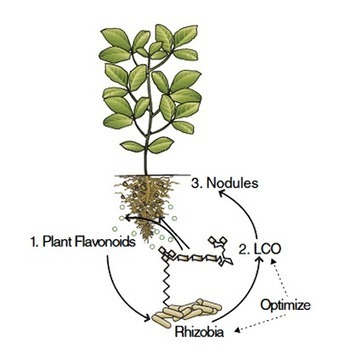
Optimize, a retailer-applied inoculant for soybeans supports your crop’s potential by enhancing nutritional availability.
What makes Optimize unique? You get the benefits of a specially selected Bradyrhizobium japonicum inoculant along with LCO (lipochitooligosaccharide) technology.
Nitrogen (N2) fixation is a major source of available N in ecosystems that receive low amounts of atmospheric N deposition. In boreal forest and subarctic tundra, the feather moss Hylocomium splendens is colonized by N2 fixing cyanobacteria that could contribute fundamentally to increase the N pool in these ecosystems. However, N2 fixation in mosses is inhibited by N input. Although this has been shown previously, the ability of N2 fixation to grow less sensitive towards repeated, increased N inputs remains unknown. Here, we tested if N2 fixation in H. splendens can recover from increased N input depending on the N load (0, 5, 20, 80, 320 kg N ha-1 yr-1) after a period of N deprivation, and if sensitivity towards increased N input can decrease after repeated N additions. Nitrogen fixation in the moss was inhibited by the highest N addition, but was promoted by adding 5 kg N ha-1 yr-1, and increased in all treatments during a short period of N deprivation. The sensitivity of N2 fixation towards repeated N additions seem to decrease in the 20 and 80 kg N additions, but increased in the highest N addition (320 kg N ha-1 yr-1). Recovery of N in leachate samples increased with increasing N loads, suggesting low retention capabilities of mosses if N input is above 5 kg N ha-1 yr-1. Our results demonstrate that the sensitivity towards repeated N additions is likely to decrease if N input does not exceed a certain threshold.
Plant growth-promoting bacteria (PGPB) colonize plants and enhance their growth by different mechanisms. Some of these microorganisms may represent a potential threat to human, animal or plant health; however, their use might be approved in parts of Europe if they have been recommended as plant growth enhancers. The current regulatory framework has resulted in a fragmented, contradictory system, and there is an urgent need to establish harmonized protocols for the predictability, efficiency, consistency and especially the safety of PGPB for human and animal health and for the environment. In response to current efforts to update biosafety policies and provide alternative methods to replace the use of vertebrate animals, we propose a panel of tests and an evaluation system to reliably determine the biosafety of bacterial strains used as PGPB. Based on the results of different tests, we propose a scoring system to evaluate the safety of candidates for PGPB within the limitations of the assays used.
Background Potting media are commonly used by growers in different parts of the world for potted plants, raising seedlings and for improving soil characteristics. This study was conducted to characterize bacterial communities occurring in 13 commercial potting media products originating from seven countries.
Findings Bacteria were isolated using serial dilution. Identification to the species level was based on phylogenetic analysis of the 16S rRNA gene. The analysis showed the association of 13 bacterial species with the different potting media samples, namely Arthrobacter livingstonensis, Kocuria flava, Leifsonia lichenia, Bacillus vallismortis, Bacillus pumilus, Staphylococcus warneri, Burkholderia phenazinium, Burkholderia sp., Ralstonia pickettii, Rhodanobacter spathiphylli, Rhodanobacter sp., Pseudomonas thivervalensis and Chryseobacterium gallinarum. Bacterial densities in the samples ranged from 8 × 10 7 to 1.2 × 10 9 colony forming units per gram of substrate.
Conclusions The study shows the isolation of some potential plant and human bacterial pathogens. However, most of the isolated species were either biocontrol species or saprophytes. The study questions the ways by which these bacterial species were introduced into potting media. To the best of our knowledge, this appears to be the first report of most of the isolated bacteria from potting media, except B. pumilus.
Our understanding of the major beneficial plant-microbe interactions - the rhizobium-legume symbiosis (RLS) and arbuscular mycorrhizas (AM) - has changed over the last decade in the light of breakthrough discoveries on the role of hormones, the exchange of symbiotic signals, or the lifetime of intraradical structures (Gutjahr and Parniske, 2013; Oldroyd, 2013; Schmitz and Harrison, 2014). AM fungi were once believed to open their way across the root apoplast thanks to cell wall degrading enzymes: genomic sequencing (Tisserant et al., 2013; Lin et al., 2014) suggests this is not the case and cellular evidence (Genre et al. 2005; 2008; Rich et al., 2014) has shown that host cell responses are critical for fungal colonization. Similarly, rhizobium entry in root hairs has been ascribed to the action of bacterial enzymes (Gage, 2004; Robledo et al., 2008); nevertheless, evidence is accumulating in favor of a plant-driven meltdown of the wall surrounding the 'infection chamber', which then expands into the growing infection thread as one semi-solid compartment, where bacteria proliferate and slide (Fournier et al. 2008; 2015). The demonstration that host plants have major control over such interactions has supported the results of genetic studies, where single plant gene mutations were shown to block both bacterial and fungal penetration of the root (Kistner et al., 2005). Such studies on legume mutants gave rise to the hypothesis that AM and RLS share one signal transduction pathway (Oldroyd, 2013). This common symbiotic pathway, or CSP, is proposed to act downstream of both fungal and rhizobial signal perception and upstream of the activation of the appropriate response to either symbiont (Fig.1).
Background and Aims Additional carbohydrate supply resulting from enhanced photosynthesis under predicted future elevated CO2 is likely to increase symbiotic nitrogen (N) fixation in legumes. This study examined the interactive effects of atmospheric CO2 and nitrate (NO3–) concentration on the growth, nodulation and N fixation of field pea (Pisum sativum) in a semi-arid cropping system.
Methods Field pea was grown for 15 weeks in a Vertosol containing 5, 25, 50 or 90 mg NO3–-N kg–1 under either ambient CO2 (aCO2; 390 ppm) or elevated CO2 (eCO2; 550 ppm) using free-air CO2 enrichment (SoilFACE).
Key Results Under aCO2, field pea biomass was significantly lower at 5 mg NO3–-N kg–1 than at 90 mg NO3–-N kg–1 soil. However, increasing the soil N level significantly reduced nodulation of lateral roots but not the primary root, and nodules were significantly smaller, with 85 % less nodule mass in the 90 NO3–-N kg–1 than in the 5 mg NO3–-N kg–1 treatment, highlighting the inhibitory effects of NO3–. Field pea grown under eCO2 had greater biomass (approx. 30 %) than those grown under aCO2, and was not affected by N level. Overall, the inhibitory effects of NO3– on nodulation and nodule mass appeared to be reduced under eCO2 compared with aCO2, although the effects of CO2 on root growth were not significant.
Conclusions Elevated CO2 alleviated the inhibitory effect of soil NO3– on nodulation and N2 fixation and is likely to lead to greater total N content of field pea growing under future elevated CO2 environments.
Here are the most recently released fungal genomes at JGI through the 1KFG project and others. A lot of Basidiomycetes and a few species from the Zygolife project are these rolled out.
Research on different endophyte taxa and the related scientific disciplines have largely developed separately, and comprehensive community-level studies on bacterial and fungal interactions and their importance are lacking. Here, we discuss the transmission modes of bacteria and fungi and the nature of their interactions in the endosphere at both the molecular and physiological level. Mixed-community biofilms in the endosphere may have a role in protecting endophytes against encountered stresses, such as from plant defense systems. However, transmission from static (in biofilms) to free-living (planktonic) forms may be crucial for the exploration of new habitable spaces in plants. Important features previously recognized as plant–microbe interactions or antagonism in endophyte genomes and metagenomes are proposed to have essential roles in the modulation of endophyte communities.
David Clement explains how fungi grow on and feed tree roots under the ground and sprout above ground as mushrooms to reproduce during wet fall seasons. Univ...
The rhizosphere is densely populated with a variety of organisms. Interactions between roots and rhizosphere community members are mostly achieved via chemical communication. Root exudates contain an array of primary and secondary plant metabolites that can attract, deter, or kill belowground insect herbivores, nematodes, and microbes, and inhibit competing plants. Metabolomics of root exudates can potentially help us to better understand this chemical dialogue. The main limitations are the proper sampling of the exudate, the sensitivity of the metabolomics platforms, and the multivariate data analysis to identify causal relations. Novel technologies may help to generate a spatially explicit metabolome of the root and its exudates at a scale that is relevant for the rhizosphere community.
Background Arbuscular mycorrhizal fungi (AMF) are members of the phylum Glomeromycota, an early divergent fungal lineage that forms symbiotic associations with the large majority of land plants. These organisms are asexual obligate biotrophs, meaning that they cannot complete their life cycle in the absence of a suitable host. These fungi can exchange genetic information through hyphal fusions (i.e. anastomosis) with genetically compatible isolates belonging to the same species. The occurrence of transient mitochondrial length-heteroplasmy through anastomosis between geographically distant Rhizophagus irregularis isolates was previously demonstrated in single spores resulting from crossing experiments. However, (1) the persistence of this phenomenon in monosporal culture lines from crossed parental isolates, (2) its correlation with nuclear exchanges and (3) the potential mechanisms responsible for mitochondrial inheritance are still unknown. Using the AMF model organism R. irregularis, we tested whether the presence of a heteroplasmic state in progeny spores was linked to the occurrence of nuclear exchanges and whether the previously observed heteroplasmic state persisted in monosporal in vitro crossed-culture lines. We also investigated the presence of a putative mitochondrial segregation apparatus in Glomeromycota by identifying proteins similar to those found in other fungal groups.
Results We observed the occurrence of biparental inheritance both for mitochondrial and nuclear markers tested in single spores obtained from crossed-isolates. However, only one parental mitochondrial DNA and nuclear genotype were recovered in each monosporal crossed-cultures, with an overrepresentation of certain mitochondrial haplotypes. These results strongly support the presence of a nuclear-independent mitochondrial segregation mechanism in R. irregularis. Furthermore, a nearly complete set of genes was identified with putative orthology to those found in other fungi and known to be associated with the mitochondrial segregation in Saccharomyces cerevisiae and filamentous fungi.
Conclusions Our findings suggest that mitochondrial segregation might take place either during spore formation or colony development and that it might be independent of the nuclear segregation machinery. We present the basic building blocks for a better understanding of the mitochondrial inheritance process and segregation in these important symbiotic fungi. The comprehension of these processes is of great importance since it has been shown that different segregated lines of the same isolate can have variable effects on the host plant.
Genetic information is traditionally thought to be transferred from parents to offspring. However, there is evidence indicating that gene transfer can also occur from microbes to higher species, such as plants, invertebrates, and vertebrates. This horizontal transfer can be carried out by small RNAs (sRNAs). sRNAs have been recently reported to move across kingdoms as mobile signals, spreading silencing information toward targeted genes. sRNAs, especially microRNAs (miRNAs) and small interfering RNAs (siRNAs), are non-coding molecules that control gene expression at the transcriptional or post-transcriptional level. Some sRNAs act in a cross-kingdom manner between animals and their parasites, but little is known about such sRNAs associated with plants. In this report, we provide a brief introduction to miRNAs that are transferred from plants to mammals/viruses and siRNAs that are transferred from microbes to plants. Both miRNAs and siRNAs can exert corresponding functions in the target organisms. Additionally, we provide information concerning a host-induced gene silencing system as a potential application that utilizes the transgenic trafficking of RNA molecules to silence the genes of interacting organisms. Moreover, we lay out the controversial views regarding cross-kingdom miRNAs and call for better methodology and experimental design to confirm this unique function of miRNAs.
Plant growth promoting rhizobacteria (PGPR) confer plant tolerance to abiotic stresses like salinity and high boron (B) due to limited uptake of toxic ions as well as increased production of antioxidants. The current study was aimed to investigate whether particular PGPR strain is responsible either for the decreased uptake of B together with salt toxic ions or to promote rice growth through an efficient antioxidative system under combined stresses of salinity and high B. Rice seedlings were maintained in pots according to completely randomized design (CRD) and stressed with high B (0.92 mmol L−1 or 10 ppm) and NaCl (150 mmol L−1 or ECw of 14.7 dS m−1) for 8 weeks. Half of the pots received Bacillus pumilus-inoculated rice seedlings, whereas the other half received un-inoculated ones. Subsequently, plants were harvested and analyzed for mineral composition and antioxidation activity either using atomic absorption spectrometer (AAS) or spectrophotometer. In the absence of PGPR, NaCl salinity significantly enhanced the leaf B and salt toxic ions concentrations, thereby resulting in the shoot growth reduction when compared with the control. Similarly, combined treatment increased the leaf and xylem sap B as compared to NaCl alone, however, remained insignificant for salt toxic ions. Contrary, NaCl + high B decreased the leaf B concentrations as compared to high B alone. Application of PGPR enhanced the plant growth under individual stresses due to enhanced activity of certain of antioxidative enzymes. In combined treatment, B. pumilus showed a positive potential for limiting the Na+ accumulation in rice leaves, but not for leaf B. Moreover, limited uptake of Na+ resulted in the decreased plant antioxidation activity irrespective of increasing leaf B concentrations which in turn enhanced the rice tolerance.
To get content containing either thought or leadership enter:
To get content containing both thought and leadership enter:
To get content containing the expression thought leadership enter:
You can enter several keywords and you can refine them whenever you want. Our suggestion engine uses more signals but entering a few keywords here will rapidly give you great content to curate.


 Your new post is loading...