Your new post is loading...

|
Scooped by
Jean-Michel Ané
May 21, 2016 10:49 PM
|
In the present work we analysed the taxonomic status of several Rhizobium strains isolated from Trifolium alexandrinum L. nodules in Egypt. The 16S rRNA genes of these strains were identical to those of Rhizobium bangladeshense BLR175T and Rhizobium binae BLR195T. However, the analyses of recA and atpD genes split the strains into two clusters. Cluster II strains are identified as R. bangladeshense with >98% similarity values in both genes. The cluster I strains are phylogenetically related to Rhizobium etli CFN42T and R. bangladeshense BLR175T, but with less than 94% similarity values in recA and atpD genes. DNA-DNA hybridization analysis showed 42% and 48% average relatedness between the strain 1010T from cluster I with respect to R. bangladeshense BLR175T and R. etli CFN42T, respectively. Phenotypic characteristics of cluster I strains also differed from those of their closest related Rhizobium species. Analysis of the nodC gene showed that the strains belong to two groups within the symbiovar trifolii which was identified in Egypt linked to the species R. bangladeshense. Based on the genotypic and phenotypic characteristics, the group I strains belong to a new species for which the name Rhizobium aegyptiacum sp. nov. (sv. trifolii) is proposed, with strain 1010T being designated as the type strain (= USDA 7124T = LMG 29296T = CECT 9098T).
|
|
Scooped by
Jean-Michel Ané
May 21, 2016 10:39 PM
|
Effective translation of research findings from laboratory to agricultural fields is essential for the success of biocontrol or growth promotion trials employing beneficial microorganisms. The rhizosphere is to be viewed holistically as a dynamic ecological niche comprising of diverse microorganisms including competitors and noxious antagonists to the bio-inoculant. This study was undertaken to assess the effects due to the soil application of an endophytic bacterium with multiple pathogen antagonistic potential on native bacterial community and its sustenance in agricultural soil. Pseudomonas aeruginosa was employed as a model system considering its frequent isolation as an endophyte, wide antagonistic effects reported against different phytopathogens and soil pests, and that the species is a known human pathogen which makes its usage in agriculture precarious. Employing the strain ‘GNS.13.2a’ from banana, its survival in field soil and the effects upon soil inoculation were investigated by monitoring total culturable bacterial fraction as the representative indicator of soil microbial community. Serial dilution plating of uninoculated control versus P. aeruginosa inoculated soil from banana rhizosphere indicated a significant reduction in native bacterial cfu soon after inoculation compared with control soil as assessed on cetrimide- nalidixic acid selective medium against nutrient agar. Sampling on day-4 showed a significant reduction in P. aeruginosa cfu in inoculated soil and a continuous dip thereafter registering >99% reduction within 1 week while the native bacterial population resurged with cfu restoration on par with control. This was validated in contained trials with banana plants. Conversely, P. aeruginosa showed static cfu or proliferation in axenic-soil. Lateral introduction of soil microbiome in P. aeruginosa established soil under axenic conditions or its co-incubation with soil microbiota in suspension indicated significant adverse effects by native microbial community. Direct agar-plate challenge assays with individual environmental bacterial isolates displayed varying interactive or antagonistic effects. In effect, the application of P. aeruginosa in rhizospheric soil did not serve any net benefit in terms of sustained survival. Conversely, it caused a disturbance to the native soil bacterial community. The findings highlight the need for monitoring the bio-inoculant(s) in field-soil and assessing the interactive effects with native microbial community before commercial recommendation.
|
|
Scooped by
Jean-Michel Ané
May 15, 2016 11:16 PM
|
Lettuce drop, caused by the soil borne pathogen Sclerotinia sclerotiorum, is one of the most common and serious diseases of lettuce worldwide. Increased concerns about the side effects of chemical pesticides have resulted in greater interest in developing biocontrol strategies against S. sclerotiorum. However, relatively little is known about the mechanisms of Streptomyces spp. as biological control agents against S. sclerotiorum on lettuce. Two Streptomyces isolates, S. exfoliatus FT05W and S. cyaneus ZEA17I, inhibit mycelial growth of Sclerotinia sclerotiorum by more than 75% in vitro. We evaluated their biocontrol activity against S. sclerotiorum in vivo, and compared them to Streptomyces lydicus WYEC 108, isolated from Actinovate®. When Streptomyces spp. (106 CFU/mL) were applied to S. sclerotiorum inoculated substrate in a growth chamber one week prior lettuce sowing, they significantly reduced the risk of lettuce drop disease, compared to the inoculated control. Interestingly, under field conditions, S. exfoliatus FT05W and S. cyaneus ZEA17I protected lettuce from drop by 40% and 10% respectively, whereas S. lydicus WYEC 108 did not show any protection. We further labeled S. exfoliatus FT05W and S. cyaneus ZEA17I with the enhanced GFP (EGFP) marker to investigate their rhizosphere competence and ability to colonize lettuce roots using confocal laser scanning microscopy (CLSM). The abundant colonization of young lettuce seedlings by both strains demonstrated Streptomyces’ capability to interact with the host from early stages of seed germination and root development. Moreover, the two strains were detected also on two-week-old roots, indicating their potential of long-term interactions with lettuce. Additionally, scanning electron microscopy (SEM) observations showed EGFP-S. exfoliatus FT05W endophytic colonization of lettuce root cortex tissues. Finally, we determined its viability and persistence in the rhizosphere and endorhiza up to three weeks by quantifying its concentration in these compartments. Based on these results we conclude that S. exfoliatus FT05W has high potential to be exploited in agriculture for managing soil borne diseases barely controlled by available plant protection products.
|
|
Scooped by
Jean-Michel Ané
May 15, 2016 11:07 PM
|
Symbiosis receptor kinase (SYMRK) is indispensable for activation of root nodule symbiosis (RNS) at both epidermal and cortical levels and is functionally conserved in legumes. Previously, we reported SYMRK to be phosphorylated on “gatekeeper” Tyr both in vitro as well as in planta. Since gatekeeper phosphorylation was not necessary for activity, the significance remained elusive. Herein, we show that substituting gatekeeper with nonphosphorylatable residues like Phe or Ala significantly affected autophosphorylation on selected targets on activation segment/αEF and β3-αC loop of SYMRK. In addition, the same gatekeeper mutants failed to restore proper symbiotic features in a symrk null mutant where rhizobial invasion of the epidermis and nodule organogenesis was unaffected but rhizobia remain restricted to the epidermis in infection threads migrating parallel to the longitudinal axis of the root, resulting in extensive infection patches at the nodule apex. Thus, gatekeeper phosphorylation is critical for synchronizing epidermal/cortical responses in RNS.
|
|
Scooped by
Jean-Michel Ané
May 15, 2016 11:05 PM
|
Aims
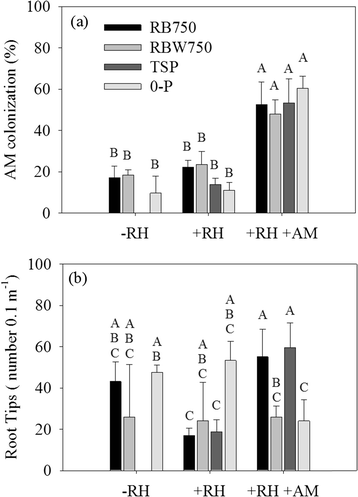
The objectives of this study were to evaluate (1) the fertilizer potential of bone char, (2) the effects of wood biochar on plant-available phosphorus (P), and (3) the role of root-mycorrhizae-biochar interactions in plant P acquisition from a P-fixing soil.
Methods
Incubation and pot experiments were conducted with a P-fixing soil and maize with or without root hairs and arbuscular mycorrhizae (AM) inoculation. Olsen-, resin-P and plant P accumulation were used to estimate P availability from bone char, co-pyrolyzed bone char-wood biochar, and separate bone char and wood biochar additions produced at 60, 350 and 750 °C, and Triple Superphosphate (TSP).
Results
Maize inoculated with AM showed similar P accumulation when fertilized with either 750 °C bone char or TSP. Pyrolyzing bone did not increase extractable P in soil in comparison to unpyrolyzed bone, apart from a 67 % increase in resin-extractable P after additions of bone char pyrolyzed at 350 °C. Despite greater Olsen-P extractability, co-pyrolysis of bone with wood reduced maize P uptake. Wood biochars reduced resin-P from bone char by 14–26 %, whereas oven-dried wood increased resin-P by 23 %.
Conclusions
Bone char is an effective P fertilizer, especially if root-AM interactions are simultaneously considered. Biochar influences plant access to soil P and requires careful management to improve P availability.
|
|
Scooped by
Jean-Michel Ané
May 15, 2016 4:47 PM
|
The extrusion technology of blends formed by compounds with different physicochemical properties often results in new materials that present properties distinctive from its original individual constituents. Here, we report the use of melt extrusion of blends made from low-cost materials to produce a biodegradable foam suitable for use as an inoculant carrier of plant growth-promoting bacteria (PGPB). Six formulations were prepared with variable proportions of the raw materials; the resulting physicochemical and structural properties are described, as well as formulation performance in the maintenance of bacterial viability during 120 days of storage. Differences in blend composition influenced foam density, porosity, expansion index, and water absorption. Additionally, differences in the capability of sustaining bacterial viability for long periods of time were more related to the foam composition than to the resulting physicochemical characteristics. Microscopic analyses showed that the inoculant bacteria had firmly attached to the extruded material by forming biofilms. Inoculation assays using maize plants demonstrated that the bacteria attached to the extruded foams could survive in the soil for up to 10 days before maize sowing, without diminishing its ability to promote plant growth. The results presented demonstrate the viability of the new matrix as a biotechnological material for bacterial delivery not only in agriculture but also in other biotechnological applications, according to the selected bacterial strains.
|
|
Scooped by
Jean-Michel Ané
May 15, 2016 4:32 PM
|
Two hundred and sixty-one bacterial isolates associated with banana tree roots in organic systems were isolated from 19 farms located in four different provinces of the Dominican Republic. The isolates were analysed by means of ARDRA plus RAPD, and as a consequence 114 of them were selected for identification by means of complete 16S rRNA sequencing and phylogenetic reconstruction. The 114 isolates belonged to 20 different genera, with Bacillus, Pseudomonas, Enterobacter and Stenotrophomonas the prevailing genera. Of these, 65 isolates showed more than 99.5% similarity with a type strain, and they were assigned to 34 different species from 16 genera; 29 isolates could constitute new species and the remaining 20 isolates belonged to groups containing more than one species with identical 16S rRNA genes, and therefore they could not be assigned to any species. This result showed a higher number of bacterial taxa associated with banana tree roots than previously described. Additionally, we found seven bacterial species with significant in vitro plant growth promoting (PGP) activity, which had not been previously described as PGP bacteria in any crop. Field trials with isolates pre-selected based on their in vitro PGP activity showed that one strain of the species Pseudomonas plecoglossicida improved fruit yield and controlled the incidence of the disease black sigatoka caused by Mycosphaerella fijiensis. This activity was tentatively attributed to induced systemic resistance mechanisms. Bacterial diversity was analysed among the 261 isolates based on the Shannon index of diversity (H), calculated from the ARDRA profiles. Interestingly, the majority of the bacterial diversity was found within farms (86% of the total), being higher than the bacterial diversity between farms (14%). Moreover, the differences in the average H Index between provinces were very low. Consequently the biodiversity of the bacterial communities was little influenced by the soil characteristics. These results could work in favour of the efficient adaptation of the bacterial strains selected for use as plant probiotics in a range of soils in the region analysed.
|
|
Scooped by
Jean-Michel Ané
May 15, 2016 4:16 PM
|
The Fynbos biome in South Africa is globally recognised as a plant biodiversity hotspot. However, very little is known about the bacterial communities associated with Fynbos plants, despite interactions between primary producers and bacteria impact the physiology of both partners and shape ecosystem diversity. This study reports on the structure, phylogenetic composition and potential roles of the endophytic bacterial communities located in the stems of three fynbos plants (Erepsia anceps, Phaenocoma prolifera and Leucadendron laureolum). Using Illumina MiSeq 16S rRNA sequencing we found that different subpopulations of Deinococcus-Thermus, Alphaproteobacteria, Acidobacteria and Firmicutes dominated the endophytic bacterial communities. Alphaproteobacteria and Actinobacteria were prevalent in P. prolifera, whereas Deinococcus-Thermus dominated in L. laureolum, revealing species-specific host-bacteria associations. Although a high degree of variability in the endophytic bacterial communities within hosts was observed. We also detected a core microbiome across the stems of the three plant species, which accounted for 72% of the sequences. Altogether, it seems that both deterministic and stochastic processes shaped microbial communities. Endophytic bacterial communities harboured putative plant growth-promoting bacteria, thus having the potential to influence host health and growth.
After severe wildfires, pine recovery depends on ectomycorrhizal (ECM) fungal spores surviving and serving as partners for regenerating forest trees. We took advantage of a large, severe natural forest fire that burned our long-term study plots to test the response of ECM fungi to fire. We sampled the ECM spore bank using pine seedling bioassays and high-throughput sequencing before and after the California Rim Fire. We found that ECM spore bank fungi survived the fire and dominated the colonization of in situ and bioassay seedlings, but there were specific fire adapted fungi such as Rhizopogon olivaceotinctus that increased in abundance after the fire. The frequency of ECM fungal species colonizing pre-fire bioassay seedlings, post-fire bioassay seedlings and in situ seedlings were strongly positively correlated. However, fire reduced the ECM spore bank richness by eliminating some of the rare species, and the density of the spore bank was reduced as evidenced by a larger number of soil samples that yielded uncolonized seedlings. Our results show that although there is a reduction in ECM inoculum, the ECM spore bank community largely remains intact, even after a high-intensity fire. We used advanced techniques for data quality control with Illumina and found consistent results among varying methods. Furthermore, simple greenhouse bioassays can be used to determine which fungi will colonize after fires. Similar to plant seed banks, a specific suite of ruderal, spore bank fungi take advantage of open niche space after fires.
Via Francis Martin
|
|
Scooped by
Jean-Michel Ané
May 14, 2016 11:52 PM
|
Biofertilizers can help improve soil quality, promote crop growth, and sustain soil health. The photosynthetic bacterium Rhodopseudomonas palustris strain PS3 (hereafter, PS3), which was isolated from Taiwanese paddy soil, can not only exert beneficial effects on plant growth but also enhance the efficiency of nutrient uptake from applied fertilizer. To produce this elite microbial isolate for practical use, product development and formulation are needed to permit the maintenance of the high quality of the inoculant during storage. The aim of this study was to select a suitable formulation that improves the survival and maintains the beneficial effects of the PS3 inoculant. Six additives (alginate, polyethylene glycol [PEG], polyvinylpyrrolidone-40 [PVP], glycerol, glucose, and horticultural oil) were used in liquid-based formulations, and their capacities for maintaining PS3 cell viability during storage in low, medium, and high temperature ranges were evaluated. Horticultural oil (0.5 %) was chosen as a potential additive because it could maintain a relatively high population and conferred greater microbial vitality under various storage conditions. Furthermore, the growth-promoting effects exerted on Chinese cabbage by the formulated inoculants were significantly greater than those of the unformulated treatments. The fresh and dry weights of the shoots were significantly increased, by 10–27 and 22–40 %, respectively. Horticultural oil is considered a safe, low-cost, and easy-to-process material, and this formulation would facilitate the practical use of strain PS3 in agriculture.
|
|
Scooped by
Jean-Michel Ané
May 14, 2016 11:48 PM
|
Background and aims
Arbuscular mycorrhizal fungi (AMF) appear differentially represented among propagule forms [intraradical mycelium (IRM) in colonized roots, spores and extraradical mycelium (ERM)]. However, spring to autumn changes in the AMF communities harboured in the different propagule forms has not been studied, being this the aim of the present study.
Methods
A terminal restriction fragment length polymorphism approach was used to monitor, in spring and autumn, the AMF community composition present in the three propagule types associated to five shrub species in a semi-arid Mediterranean environment.
Results
The AMF community composition in roots was significantly different between spring and autumn; however, no significant differences were detected in soil propagules (spores and ERM). Different trends were identified according to the preferential biomass allocation patterns of AMF phylotypes, suggesting different life strategies: those allocating mainly into IRM (belonging to the Glomeraceae), ERM (Diversisporaceae and Gigasporaceae) or spores (Pacisporaceae and Paraglomeraceae).
Conclusions
Differences of AMF taxa in the biomass allocation patterns among propagules are maintained throughout the year. Progress in the knowledge of functional features of AMF communities and their responses to seasonal variations are important for the AMF application in Mediterranean ecosystems.
|
|
Scooped by
Jean-Michel Ané
May 14, 2016 11:44 PM
|
The biological function of the plant-microbiome system is the result of contributions from the host plant and microbiome members. The Populus root microbiome is a diverse community that has high abundance of β- and γ-Proteobacteria, both classes which include multiple plant-growth promoting representatives. To understand the contribution of individual microbiome members in a community, we studied the function of a simplified community consisting of Pseudomonas and Burkholderia bacterial strains isolated from Populus hosts and inoculated on axenic Populus cutting in controlled laboratory conditions. Both strains increased lateral root formation and root hair production in Arabidopsis plate assays and are predicted to encode for different functions related to growth and plant growth promotion in Populus hosts. Inoculation individually, with either bacterial isolate, increased root growth relative to uninoculated controls, and while root area was increased in mixed inoculation, the interaction term was insignificant indicating additive effects of root phenotype. Complementary data including photosynthetic efficiency, whole-transcriptome gene expression and GC-MS metabolite expression data in individual and mixed inoculated treatments indicate that the effects of these bacterial strains are unique and additive. These results suggest that the function of a microbiome community may be predicted from the additive functions of the individual members.
|
|
Scooped by
Jean-Michel Ané
May 14, 2016 11:38 PM
|
Attaining high-resolution spatial information is a recurrent challenge in biological research, particularly in the case of small-molecule distribution. Mass spectrometry imaging (MSI) is an innovative molecular histology technique that could provide such information. It allows in situ and label-free measurement of both the abundance and distribution of a variety of molecules at the tissue or single cell level. The application of MSI in plant research has received considerable attention; thus, in this review, we describe the current state of MSI in plants. In particular, we present an overview of MSI approaches, highlight the recent technical and methodological developments, and discuss a range of applications contributing to the field of plant science.
|
|
|
Scooped by
Jean-Michel Ané
May 21, 2016 10:44 PM
|
There is increasing interest in the use of beneficial microorganisms as alternatives to chemical pesticides and synthetic fertilisers in agricultural production. Application of beneficial microorganisms to seeds is an efficient mechanism for placement of microbial inocula into soil where they will be well positioned to colonise seedling roots and protect against soil-borne diseases and pests. However, despite the long history of inoculation of legume seeds with Rhizobia spp. and clear laboratory demonstration of the ability of a wide range of other beneficial microorganisms to improve crop performance, there are still very few commercially available microbial seed inoculants. Seed inoculation techniques used for research purposes are often not feasible at a commercial scale and there are significant technical challenges in maintaining viable microbial inocula on seed throughout commercial seed treatment processes and storage. Further research is needed before the benefits of a wide range of environmentally sensitive potential seed inoculants can be captured for use in agriculture, ecosystem restoration and bioremediation. There is no single solution to the challenge of improving the ability of seed inoculants to establish and function consistently in the field. Development of novel formulations that maintain the viability of both inoculant and seed during storage will result from multidisciplinary research in microbial and seed physiology and adjuvant chemistry.
|
|
Scooped by
Jean-Michel Ané
May 20, 2016 10:30 AM
|
Root endophytism and mycorrhizal associations are complex derived traits in fungi that shape plant physiology. Sebacinales (Agaricomycetes, Basidiomycota) display highly diverse interactions with plants. Although early-diverging Sebacinales lineages are root endophytes and/or have saprotrophic abilities, several more derived clades harbour obligate biotrophs forming mycorrhizal associations. Sebacinales thus display transitions from saprotrophy to endophytism and to mycorrhizal nutrition within one fungal order. This review discusses the genomic traits possibly associated with these transitions. We also show how molecular ecology revealed the hyperdiversity of Sebacinales and their evolutionary diversification into two sister families: Sebacinaceae encompasses mainly ectomycorrhizal and early-diverging saprotrophic species; the second family includes endophytes and lineages that repeatedly evolved ericoid, orchid and ectomycorrhizal abilities. We propose the name Serendipitaceae for this family and, within it, we transfer to the genus Serendipita the endophytic cultivable species Piriformospora indica and P. williamsii. Such cultivable Serendipitaceae species provide excellent models for root endophytism, especially because of available genomes, genetic tractability, and broad host plant range including important crop plants and the model plant Arabidopsis thaliana. We review insights gained with endophytic Serendipitaceae species into the molecular mechanisms of endophytism and of beneficial effects on host plants, including enhanced resistance to abiotic and pathogen stress.
|
|
Scooped by
Jean-Michel Ané
May 15, 2016 11:15 PM
|
Silver (Ag) engineered nanomaterials (ENMs) are being released into waste streams and are being discharged, largely as Ag2S aged-ENMs (a-ENMs), into agroecosystems receiving biosolids amendments. Recent research has demonstrated that biosolids containing an environmentally relevant mixture of ZnO, TiO2, and Ag ENMs and their transformation products, including Ag2S a-ENMs, disrupted the symbiosis between nitrogen-fixing bacteria and legumes. However, this study was unable to unequivocally determine which ENM or combination of ENMs and a-ENMs was responsible for the observed inhibition. Here, we examined further the effects of polyvinylpyrollidone (PVP) coated pristine Ag ENMs (PVP-Ag), Ag2S a-ENMs, and soluble Ag (as AgSO4) at 1, 10, and 100 mg Ag kg−1 on the symbiosis between the legume Medicago truncatula and the nitrogen-fixing bacterium, Sinorhizobium melliloti in biosolids-amended soil. Nodulation frequency, nodule function, glutathione reductase production, and biomass were not significantly affected by any of the Ag treatments, even at 100 mg kg−1, a concentration analogous to a worst-case scenario resulting from long-term, repeated biosolids amendments. Our results provide additional evidence that the disruption of the symbiosis between nitrogen-fixing bacteria and legumes in response to a mixture of ENMs in biosolids-amended soil reported previously may not be attributable to Ag ENMs or their transformation end-products. We anticipate these findings will provide clarity to regulators and industry regarding potential unintended consequences to terrestrial ecosystems resulting from of the use of Ag ENMs in consumer products.
|
|
Scooped by
Jean-Michel Ané
May 15, 2016 11:07 PM
|
LYR3, LYK3, and NFP are lysin motif-containing receptor-like kinases (LysM-RLKs) from Medicago truncatula, involved in perception of symbiotic lipo-chitooligosaccharide (LCO) signals. Here we show that LYR3, a high-affinity LCO-binding protein, physically interacts with LYK3, a key player regulating symbiotic interactions. In vitro, LYR3 is phosphorylated by the active kinase domain of LYK3. Fluorescence lifetime imaging/Förster resonance energy transfer (FLIM/FRET) experiments in tobacco protoplasts show that the interaction between LYR3 and LYK3 at the plasma membrane is disrupted or inhibited by addition of LCOs. Moreover, LYR3 attenuates the cell death response, provoked by co-expression of NFP and LYK3 in tobacco leaves.
|
|
Scooped by
Jean-Michel Ané
May 15, 2016 4:53 PM
|
Arbuscular mycorrhizal (AM) fungi can enhance plant Cr tolerance through immobilizing Cr in mycorrhizal roots. However, the detailed processes and mechanisms are unclear. The present study focused on cellular distribution and speciation of Cr in both extraradical mycelium (ERM) and mycorrhizal roots exposed to Cr(VI) by using field emission scanning electron microscopy equipped with energy dispersive X-ray spectrometer (FE-SEM-EDS), scanning transmission soft X-ray microscopy (STXM) and X-ray absorption fine structure (XAFS) spectroscopy techniques. We found that amounts of particles (possibly extracellular polymeric substances, EPS) were produced on the AM fungal surface upon Cr(VI) stress, which contributed greatly to Cr(VI) reduction and immobilization. With EDS of the surface of AM fungi exposed to various Cr(VI) levels, a positive correlation between Cr and P was revealed, suggesting that phosphate groups might act as counter ions of Cr(III), which was also confirmed by the XAFS analysis. Besides, STXM and XAFS analyses showed that Cr(VI) was reduced to Cr(III) in AM fungal structures (arbuscules, intraradical mycelium, etc) and cell walls in mycorrhizal roots, and complexed possibly with carboxyl groups or histidine analogues. The present work provided evidence of Cr immobilization on fungal surface and in fungal structures in mycorrhizal roots at a cellular level, and thus unraveled the underlying mechanisms by which AM symbiosis immobilize Cr.
|
|
Scooped by
Jean-Michel Ané
May 15, 2016 4:34 PM
|
In Thailand, Eucalyptus plantations rapidly expand across the country. Leaf and shoot blight caused by Cryptosporiopsis eucalypti, Cylindrocladium sp. and Teratosphaeria destructans is a serious disease in Eucalyptus plantations. In this study, a total of 477 actinomycete strains were successfully isolated from roots and rhizosphere soil of Eucalyptus. Four hundred and thirty nine isolates were classified as streptomycetes and 38 isolates were non-streptomycetes. Among these isolates, 272 (57.0%), 118 (24.7%) and 241 (50.5%) isolates were antagonistic to Cryptosporiopsis eucalypti, Cylindrocladium sp. and Teratosphaeria destructans, respectively. All isolates were tested for their abilities to produce siderophores, indole acetic acid (IAA) and solubilise phosphate. Most isolates (464, 97.3%) produced siderophores. The majority of isolates (345, 72.3%) solubilised phosphate. In addition, almost half of these isolates (237, 49.7%) produced indole acetic acid. Strain EUSKR2S82 which showed the strongest inhibitory effect against all tested fungi with plant growth promoting ability was selected to test with Eucalyptus. This strain could colonize plant roots and increase Eucalyptus roots length. In a detached leaves bioassay, the disease severity of EUSKR2S82-inoculated Eucalyptus leaves was only 30% compared to 95% in the control treatment. The 16S rRNA gene sequence analysis revealed that the strain EUSKR2S82 was related to Streptomyces ramulosus NRRL-B 2714T (99.44% similarity). Identification of non-streptomycete isolates using 16S rRNA gene sequences classified them into 9 genera: Actinoallomurus, Actinomadura, Amycolatopsis, Cryptosporangium, Microbispora, Micromonospora, Nocardia, Nonomuraea and Pseudonocardia. It is evident that Eucalyptus tree harbored several genera of actinomycetes. The selected isolate, EUSKR2S82 showed potential as a candidate for biocontrol agent of leaf and shoot blight of Eucalyptus and to promote growth.
|
|
Scooped by
Jean-Michel Ané
May 15, 2016 4:17 PM
|
An endophytic diazotroph, Paenibacillus polymyxa P2b-2R, has been shown to colonize internal tissues of lodgepole pine (Pinus contorta var. latifolia Engelm. ex S. Watson) and stimulate seedling growth possibly through nitrogen (N) fixation in an N-limited environment. We evaluated the effects of different soil N concentrations on lodgepole pine seedling growth after inoculation with P2b-2R in a year-long greenhouse study. Seedlings were subjected to monthly application of a nutrient solution containing one of four soil N concentrations as Ca(NO3)2 (5% 15N label): 0.0029, 0.029, 0.29, and 2.9 μmol·L–1, referred to as very low, low, medium, and high soil N treatments, respectively. Foliar 15N atom percent excess and foliar N content values of P2b-2R inoculated seedlings were not significantly different from controls at any N treatment. Similarly, rhizospheric and endophytic population of P2b-2R did not vary significantly across N treatments. Inoculation with P2b-2R resulted in seedling growth inhibition during early stages of the experiment; however, by month 12, inoculated seedlings from the very low soil N treatment had accumulated 56.3% and 46.4% more root and shoot biomass than controls, respectively. These results suggest that pine biomass stimulation by P2b-2R may depend on soil N concentrations and that such growth stimulation may occur without providing significant amounts of fixed N.
|
|
Scooped by
Jean-Michel Ané
May 15, 2016 4:15 PM
|
Some microorganisms are adapted to an endophytic mode, living symbiotically with plants through vertical transmission in seeds. The role of plant growth-promoting endophytes has been well studied, but those of seed-associated endophytic bacteria are less understood. The current study aimed to isolate and identify bacterial endophytes associated with rice (Oryza sativa L. ‘Jin so mi’) seeds, their potential to produce gibberellins (GAs), and role in improving host-plant physiology. The isolated bacterial endophyte RWL-1 was identified as Bacillus amyloliquefaciens by using 16S rRNA sequencing and phylogenetic analysis. The pure culture of B. amyloliquefaciens RWL-1, supplied with deuterated internal standards, was subjected to gas chromatography and mass spectrometric selected ion monitoring (GC-MS/SIM) for quantification of GAs. Results showed the presence of GAs in various quantities (ng/mL) viz., GA20 (17.88 ± 4.04), GA36 (5.75 ± 2.36), GA24 (5.64 ± 2.46), GA4 (1.02 ± 0.16), GA53 (0.772 ± 0.20), GA9 (0.12 ± 0.09), GA19 (0.093 ± 0.13), GA5 (0.08 ± 0.04), GA12 (0.014 ± 0.34), and GA8 (0.013 ± 0.01). Since endogenous seed GAs are essential for prolonged seed growth and subsequent plant development, we used exogenous GA3 as a positive control and water as a negative control for comparative analysis of the application of B. amyloliquefaciens RWL-1 to rice plants. The growth parameters of rice plants treated with endophytic bacterial cell application was significantly increased compared to the plants treated with exogenous GA3 and water. This was also revealed by the significant up-regulation of endogenous GA1 (17.54 ± 2.40 ng), GA4 (310 ± 5.41 ng), GA7 (192.60 ± 3.32 ng), and GA9 (19.04 ± 2.49 ng) as compared to results of the positive and negative control treatments. Rice plants inoculated with B. amyloliquefaciens RWL-1 exhibited significantly higher endogenous salicylic acid (1615.06 ± 10.81 μg), whereas endogenous abscisic acid (23.31 ± 2.76 ng) and jasmonic acid (25.51 ± 4.20 ng) were observed to be significantly lower in these inoculated plants than in those treated with exogenous GA3 and water. Results of the present study suggest that B. amyloliquefaciens RWL-1 has the ability to produce GAs and that its inoculation in seedlings can be beneficial to rice plants. Broader field trials should be conducted to determine its use as an alternative biofertilizer.
Microorganisms have shaped our planet and its inhabitants for over 3.5 billion years. Humankind has had a profound influence on the biosphere, manifested as global climate and land use changes, and extensive urbanization in response to a growing population. The challenges we face to supply food, energy, and clean water while maintaining and improving the health of our population and ecosystems are significant. Given the extensive influence of microorganisms across our biosphere, we propose that a coordinated, cross-disciplinary effort is required to understand, predict, and harness microbiome function. From the parallelization of gene function testing to precision manipulation of genes, communities, and model ecosystems and development of novel analytical and simulation approaches, we outline strategies to move microbiome research into an era of causality. These efforts will improve prediction of ecosystem response and enable the development of new, responsible, microbiome-based solutions to significant challenges of our time.
Via Francis Martin
|
|
Scooped by
Jean-Michel Ané
May 14, 2016 11:50 PM
|
The objective of this study was to elucidate the endophytic microbiota in rice sprouts, roots, and stems, and their transmission in the plant development. Prior to DNA extraction, roots and stems were treated with 36% formaldehyde and 0.1 M NaOH solutions to remove epiphytic bacterial whole 16S rRNA genes. Bacterial and fungal taxa in the sprout, root, and stem samples were analyzed using Illumina-based sequencing of the V3–V4 hyper variable regions of bacterial 16S rRNA genes and the ITS2 regions of fungal rRNA genes, respectively. Results showed that more diverse bacterial OTUs were detected in roots than in stems, while more diverse fungal OTUs were detected in stems than in roots. Compared with the endophytic microbiota in sprouts, the bacterial OTUs increased in roots but decreased in stems, whereas the fungal OTUs in both stems and roots decreased. Sprout-borne bacterial genera Sphingomonas and Pseudomonus, and fungal genera Fusarium, Pestalotiopsis, and Penicillium were detected in stems and roots. The coexistence of these indigenous bacterial and fungal taxa in sprouts, roots, and stems indicated their transmission during the development from sprouts to mature plants. The results from this study should be useful to better understand the plant-microbe interactions and to select suitable microbial taxa for rice production.
|
|
Scooped by
Jean-Michel Ané
May 14, 2016 11:45 PM
|
Early establishment of endophytes can play a role in pathogen suppression and improve seedling development. One route for establishment of endophytes in seedlings is transmission of bacteria from the parent plant to the seedling via the seed. In wheat seeds, it is not clear whether this transmission route exists, and the identities and location of bacteria within wheat seeds are unknown. We identified bacteria in the wheat (Triticum aestivum) cv. Hereward seed environment using embryo excision to determine the location of the bacterial load. Axenic wheat seedlings obtained with this method were subsequently used to screen a putative endophyte bacterial isolate library for endophytic competency. This absence of bacteria recovered from seeds indicated low bacterial abundance and/or the presence of inhibitors. Diversity of readily culturable bacteria in seeds was low with 8 genera identified, dominated by Erwinia and Paenibacillus. We propose that anatomical restrictions in wheat limit embryo associated vertical transmission, and that bacterial load is carried in the seed coat, crease tissue and endosperm. This finding facilitates the creation of axenic wheat plants to test competency of putative endophytes and also provides a platform for endophyte competition, plant growth, and gene expression studies without an indigenous bacterial background.
|
|
Scooped by
Jean-Michel Ané
May 14, 2016 11:38 PM
|
Due to rather limited sequence similarity, targeted identification of plant nuclear envelope and nuclear pore complex proteins has mainly followed two routes: (1) advanced computational identification followed by experimental verification and (2) immunoaffinity purification of complexes followed by mass spectrometry. Following candidate identification, fluorescence recovery after photobleaching (FRAP) and fluorescence resonance energy transfer (FRET) provide powerful tools to verify protein–protein interactions in situ at the NE. Here, we describe these methods for the example of Arabidopsis thaliana nuclear pore and nuclear envelope protein identification.
|


 Scoop.it!