Your new post is loading...

|
Scooped by
Jean-Michel Ané
June 7, 2016 5:12 PM
|
Leguminous plants produce grains that are used to feed both animals and humans, and they also play a role in the maintenance of soil fertility. However, under stressful conditions, like other plants, leguminous plants produce high levels of ethylene, a phytohormone known to inhibit both plant development and nodulation. Bacteria that produce 1-aminocyclopropane-1-carboxylate (ACC) deaminase, which converts ACC (the precursor of ethylene in all higher plants) to ammonia and α-ketobutyrate, can decrease inhibitory plant ethylene levels. Bacterial ACC deaminase plays an important role in plant growth promotion in a variety of stress conditions. This chapter discusses the role of ACC deaminase-containing plant growth-promoting bacteria, including rhizobia and actinomycetes, to improve the growth of legumes in environmentally stressful conditions.
|
|
Scooped by
Jean-Michel Ané
June 7, 2016 5:10 PM
|
One of the mechanisms mediating the legume–rhizobium symbiosis is the molecular recognition at the plasma membrane of signaling molecules called Nod factors . In the model legume Medicago truncatula , two Nod factor receptor kinases have been described: NFP and LYK3 . These plasma membrane-localized proteins are present at very low amounts in root tissues, and even using antibodies specific against them, detection remains challenging. In the current work, we tested several methods for the extraction, enrichment, and immunodetection of LYK3 in root extracts using M. truncatula lines expressing a tagged version of LYK3, LYK3-HAST. Upon differential centrifugation, a significant fraction of LYK3 was found to precipitate at speed at which plasma membrane markers remain soluble. The sedimentation pattern of LYK3 was similar to that of markers for the endoplasmic reticulum (ER) and vacuole, suggesting that LYK3 may be also present in larger endomembrane structures. Affinity columns were shown to be effective for the enrichment of the protein, leading to an increase in the signal detected. Interestingly, LYK3 (or at least the tagged N-terminal fraction of the protein) was reproducibly identified at a range of molecular sizes, which are likely to correspond to the monomer, dimer, and a truncated form. This observation opens up the possibility of the existence of post-translational regulation mechanisms (e.g., cleavage) with likely implications in signaling.
|
|
Scooped by
Jean-Michel Ané
May 26, 2016 10:13 AM
|
Background
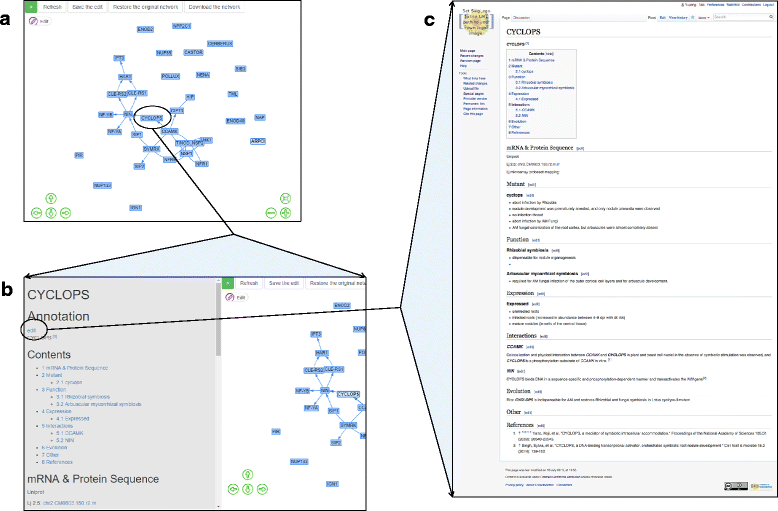
The Legumes (Fabaceae) are an economically and ecologically important group of plant species with the conspicuous capacity for symbiotic nitrogen fixation in root nodules, specialized plant organs containing symbiotic microbes. With the aim of understanding the underlying molecular mechanisms leading to nodulation, many efforts are underway to identify nodulation-related genes and determine how these genes interact with each other. In order to accurately and efficiently reconstruct nodulation gene network, a crowdsourcing platform, CrowdNodNet, was created.
Results
The platform implements the jQuery and vis.js JavaScript libraries, so that users are able to interactively visualize and edit the gene network, and easily access the information about the network, e.g. gene lists, gene interactions and gene functional annotations. In addition, all the gene information is written on MediaWiki pages, enabling users to edit and contribute to the network curation.
Conclusions
Utilizing the continuously updated, collaboratively written, and community-reviewed Wikipedia model, the platform could, in a short time, become a comprehensive knowledge base of nodulation-related pathways. The platform could also be used for other biological processes, and thus has great potential for integrating and advancing our understanding of the functional genomics and systems biology of any process for any species. The platform is available at http://crowd.bioops.info/, and the source code can be openly accessed at https://github.com/bioops/crowdnodnet under MIT License.
|
|
Scooped by
Jean-Michel Ané
May 22, 2016 12:16 AM
|
Rhizosphere and endophytic bacteria are well known producers of siderophores, organic compounds that chelate ferric iron (Fe3+), and therefore play an important role in plant growth promotion in metalliferous areas, thereby improving bioremediation processes. However, in addition to their primary function in iron mobilization, siderophores also have the capacity to chelate other heavy metals, such as Al3+, Zn2+, Cu2+, Pb2+ and Cd2+, that can affect homeostasis and the heavy metal tolerance of microorganisms.
The main goal of our study was to select the most efficient siderophore-producing bacterial strains isolated from the roots (endophytes) and rhizosphere of Betula pendula L. and Alnus glutinosa L. growing at two heavy metal contaminated sites in southern Poland. Siderophore biosynthesis of these strains in the presence of increasing concentrations of Cd2+ (0, 0.5, 1, 2 and 3 mM) under iron-deficiency conditions was analysed using spectrophotometric chemical tests for hydroxamates, catecholates and phenolates, as well as the separation of bacterial siderophores by HPLC and characterization of their structure by UHPLC-QTOF/MS.
We proved that (i) siderophore-producing bacterial strains seems to be more abundant in the rhizosphere (47%) than in root endophytes (18%); (ii) the strains most effective at siderophore synthesis belonged to the genus Streptomyces and were able to secrete three types of siderophores under Cd2+ stress: hydroxamates, catecholates and phenolates; (iii) in general, the addition of Cd2+ enhanced siderophore synthesis, particularly ferrioxamine B synthesis, which may indicate that siderophores play a significant role in tolerance to Cd2+ in Streptomyces sp.
|
|
Scooped by
Jean-Michel Ané
May 22, 2016 12:14 AM
|
Three algae strains—Chlamydomonas reinhardtii hemHc-lbac (transgenic), cc124 and cc503—were co-cultured with Bradyrhizobium japonicum to improve H2 production. The maximum H2 productions of the three different co-cultures were 3.5-fold, 17-fold and 4.4-fold of the pure algal cultures. Meanwhile, the biomass of each of the algae strains was increased by B. japonicum. Furthermore, the respiratory rates of the co-cultures were 1.4-fold, 1.2-fold and 2.6-fold higher than the controls, respectively; the in vitro maximum hydrogenase activities of the co-cultures were 1.1-fold higher, equal to 2.4-fold higher than those of the controls, respectively, and the in vivo maximum hydrogenase activities of the co-cultures were 1.5-fold, 3.8-fold and 2.1-fold higher than the controls, respectively. The maximum starch content of the co-cultures were 8.3-fold, 8.4-fold and 4.4-fold higher than the content of the controls, respectively. Therefore, B. japonicum improved the H2 production of the co-cultures by increasing the biomass, respiratory rates, hydrogen activity and starch content of the co-cultures relative to those of pure algae cultures.
|
|
Scooped by
Jean-Michel Ané
May 22, 2016 12:09 AM
|
This study poses a methodology in order to simultaneously quantify ACC deaminase and IAA levels in the same culture medium. Ten bacterial strains isolated from plant rhizosphere naturally settled in mining residues were chosen. These bacterial strains were characterized as PGPB, and all of them showed at least three characteristics (indole-3 acetic acid and siderophore production, ACC deaminase enzyme activity, and inorganic phosphate solubilization). Taxonomic identification showed that the strains belong to Enterobacter, Serratia, Klebsiella, and Escherichia genera. Similarly, both the ACC deaminase enzyme activity and the IAA synthesis in the presence of Cu, As, Pb, Ni, Cd, and Mn were measured. The results showed that both the ACC deaminase enzyme activity and the IAA synthesis were higher with the Pb, As, and Cu treatments than with the Escherichia N16, Enterobacter K131, Enterobacter N9, and Serratia K120 control treatments. On the other hand, Ni, Cd, and Mn negatively affected both the ACC deaminase enzyme activity and the IAA production on every bacterium except on the Klebsiella Mc173 strain. Serratia K120 bacterium got a positive correlation between ACC deaminase and IAA in the presence of every heavy metal, and it also promoted Helianthus annuus plant growth, showing a potential use in phytoremediation systems.
|
|
Scooped by
Jean-Michel Ané
May 22, 2016 12:03 AM
|
In eukaryotes, histone acetyltransferases regulate the acetylation of histones and transcription factors, affecting chromatin structural organization, transcriptional regulation, and gene activation. To assess the role of HAC1, a gene encoding for a histone acetyltransferase in Medicago truncatula, stable transgenic lines with modified HAC1 expression in the model plants M. truncatula, Lotus japonicus, and Arabidopsis thaliana were generated by Agrobacterium-mediated transformation and used for functional analyses. Histochemical, transcriptional, flow cytometric, and morphological analyses demonstrated the involvement of HAC1 in plant growth and development, responses to internal stimuli, and cell cycle progression. Expression patterns of a reporter gene encoding beta-glucuronidase (GUS) fused to the HAC1 promoter sequence were associated with young tissues comprised of actively dividing cells in different plant organs. The green fluorescent protein (GFP) signal, driven by the HAC1 promoter, was detected in the nuclei and cytoplasm of root cells. Transgenic lines with HAC1 overexpression and knockdown showed a wide range of phenotypic deviations and developmental abnormalities, which provided lines of evidence for the role of HAC1 in plant development. Synchronization of A. thaliana root tips in a line with HAC1 knockdown showed the involvement of this gene in the acetylation of two core histones during S phase of the plant cell cycle.
|
|
Scooped by
Jean-Michel Ané
May 21, 2016 11:59 PM
|
Agriculture is a complex network of interactions of plants with microorganisms. There is a growing demand for ecologically compatible environment friendly technique in agriculture that might be able to provide adequate supply of nutrients for the increasing human populations through improvement of the quality and quantity of agricultural products. Under the changing climatic scenario of global fluxes of the key biogenic greenhouse gases (CO2, methane and nitrous oxide), and some other environmental problems, the application of beneficial microorganisms in agriculture would serve as an important alternative gateway to some of the traditional agricultural techniques. Microorganisms of agricultural importance represent key ecological strategy for integrated management practices like nutrient management, disease and pest management in order to reduce the use of chemicals in agriculture as well to improve cultivar performance. The present review is intended to focus on the emergence of agriculturally important microorganisms (AIMs) to develop an ideal agricultural system through efficient utilization of nutrients and recycling of energy and thereby to preserve the natural ecosystem resources under climate change. The progress to date in using the beneficial microflora in a variety of applications related to agriculture along with key mechanism of action is also discussed in this review.
|
|
Scooped by
Jean-Michel Ané
May 21, 2016 11:56 PM
|
The object of the present research was to establish correlations between the status of root colonization of arbuscular mycorrhizal fungi (AMF) and different types of land use. In order to achieve this aim, rhizosphere soil samples from grassland crops were taken during June and July of 2013 in order to use for determining several soil characteristics. The 27 different taxa and 60 soil samples were collected from the rhizosphere level in the study areas. The existence of AMF was confirmed in 100 % of these plants with different rations of colonization (approximately 12–89 %). Bromus racemosus L. (pasture) was the most dense taxon with the percentage of AMF colonization of 88.9 %, and Trifolium pratense L. (forest) was the least dense taxon with the percentage of AMF colonization of 12.2 % (average 52.0 %). As a result of the statistical analysis, a positive relationship was found between the botanical composition of legumes and AMF colonization (r = 0.35; p = 0.006). However, a negative relationship was determined between botanical composition of other plant families and AMF colonization (r = −0.39; p = 0.002). In addition, a positive relationship was defined between soil pH (H2O) and the root colonization of AMF (r = 0.35; p = 0.005). The pasture had the highest mean value of AMF root colonization. However, the pasture and gap in the forest were in the same group, according to the results of the S-N-K test.
|
|
Scooped by
Jean-Michel Ané
May 21, 2016 11:47 PM
|
The main challenge for plants growing in nutrient poor, contaminated soil is biomass reduction, nutrient deficiency and presence of heavy metals. Our aim is to overcome these challenges using different microbial combinations in mining-impacted soil and focus on their physiological and biochemical impacts on a model plant system, which has multiple applications. In the current study, sorghum BTx623 seedlings grown in mining-impacted soil in greenhouse were subjected to plant growth promoting bacteria (PGPB or B) alone, PGPB with arbuscular mycorrhizal fungi (My), My alone and control group with no treatment. Root biomass and uptake of most of the elements showed significant increase in all treatment groups in comparison with control. Mycorrhiza group showed the best effect followed by My + B and B groups for uptake of majority of the elements by roots. On the contrary, biomass of both shoot and root was more influenced by B treatment than My + B and My treatments. Metabolomics identified compounds whose levels changed in roots of treatment groups significantly in comparison to control. Upregulation of stearic acid, sorbitol, sebacic acid and ferulic acid correlated positively with biomass and uptake of almost all elements. Two biochemical pathways, fatty acid biosynthesis and galactose metabolism, were regulated in all treatment groups. Three common pathways were upregulated only in My and My + B groups. Our results suggest that PGPB enhanced metabolic activities which resulted in increase in element uptake and sorghum root biomass whether accompanied with mycorrhiza or used solely.
|
|
Scooped by
Jean-Michel Ané
May 21, 2016 11:24 PM
|
Soybean is the major legume crop worldwide. Soybean is often used as a research model—for example, in studies of the legume-rhizobia symbiosis, root-nematode interaction, and abiotic stress, as well as in agricultural research. Agrobacterium-mediated hairy root transformation is a widely applied method to generate transgenic soybean roots for studying root-specific functions.
In the following protocol, we describe an improved A. rhizogenes–mediated soybean transformation resulting in formation of transgenic hairy roots within 3 weeks after seed germination.
|
|
Scooped by
Jean-Michel Ané
May 21, 2016 11:06 PM
|
diCenzo and coworkers have reverse engineered a rhizobium into a non-nitrogen fixer, creating a genomic platform for gain-of-function genetics studies, which should aid to identify the minimal nitrogen fixing symbiotic genome.
|
|
Scooped by
Jean-Michel Ané
May 21, 2016 10:51 PM
|
The production of volatile organic compounds (VOCs) by microbes is an important characteristic for their selection as biocontrol agents against plant pathogens. In this study, we identified the VOCs produced by the biocontrol strain Bacillus amyloliquefaciens T-5 and evaluated their impact on the growth and virulence traits of tomato bacterial wilt pathogen Ralstonia solanacearum. The results showed that the VOCs of strain T-5 significantly inhibited the growth of R. solanacearum in agar medium and in soil. In addition, VOCs significantly inhibited the motility traits, root colonization, biofilm formation, and production of antioxidant enzymes and exopolysaccharides by R. solanacearum. However, no effect of VOCs on the production of hydrolytic enzymes by R. solanacearum was observed. The strain T-5 produced VOCs, including benzenes, ketones, aldehydes, alkanes, acids, and one furan and naphthalene compound; among those, 13 VOCs showed 1–10 % antibacterial activity against R. solanacearum in their produced amounts by T-5; however, the consortium of all VOCs produced on agar medium, in sterilized soil, and in natural soil showed 75, 62, and 85 % growth inhibition of R. solanacearum, respectively. The real-time PCR analysis further confirmed the results when the expression of different virulence- and metabolism-related genes in R. solanacearum cells was decreased after exposure to the VOCs of strain T-5. The results of this study clearly revealed the significance of VOCs in the control of plant pathogens. This information would help to better comprehend the microbial interactions mediated by VOCs in nature and to develop safer strategies to control plant disease.
|
|
|
Scooped by
Jean-Michel Ané
June 7, 2016 5:11 PM
|
Mining activities can cause drastic disturbances in soil properties, which adversely affect the nutrient cycling and soil environment. As a result, many efforts have been made to explore suitable reclamation strategies that can be applied to accelerate ecology restoration. In this study, we reconstructed mine soils with fly ash, gangue, sludge, planted ryegrass, and inoculated arbuscular mycorrhizal fungi (AMF) in Pangzhuang mine of Xuzhou during 2009 to 2015. The soil aggregation process, enzyme activities (i.e., invertase, urease and acid phosphatase activities), soil organic carbon (SOC) as well as other soil nutrients such as nitrogen, phosphorus, and potassium contents of the reconstructed mine soils were monitored during 6-year reclamation. The integrated application of sludge and AMF led to a promising reclamation performance of mining areas, in which soil aggregate stability, enzyme activities, SOC, and ryegrass biomass were effectively enhanced. The micro-aggregates ( 0.25 mm) during the reclamation, indicating that macro-aggregates were gradually formed from micro-aggregates during the pedogenesis of reconstructed mine soils. The correlation analysis shows that SOC contents in aggregate fraction of 0.25∼0.5 mm were correlated with aggregate distribution and enzyme activities. Enzyme activities, however, were not significantly correlated with aggregate distribution. The outcomes from the present study could enrich our understanding on soil property changes in pedogenesis process of reconstructed mine soils, and meanwhile, the employment of sludge combined with AMF is suggested to be an effective alternative for the mine soil reclamation.
|
|
Scooped by
Jean-Michel Ané
May 26, 2016 3:39 PM
|
Nuclear-associated Ca2+ oscillations mediate plant responses to beneficial microbial partners—namely, nitrogen-fixing rhizobial bacteria that colonize roots of legumes and arbuscular mycorrhizal fungi that colonize roots of the majority of plant species. A potassium-permeable channel is known to be required for symbiotic Ca2+ oscillations, but the calcium channels themselves have been unknown until now. We show that three cyclic nucleotide–gated channels in Medicago truncatula are required for nuclear Ca2+ oscillations and subsequent symbiotic responses. These cyclic nucleotide–gated channels are located at the nuclear envelope and are permeable to Ca2+. We demonstrate that the cyclic nucleotide–gated channels form a complex with the postassium-permeable channel, which modulates nuclear Ca2+ release. These channels, like their counterparts in animal cells, might regulate multiple nuclear Ca2+ responses to developmental and environmental conditions.
|
|
Scooped by
Jean-Michel Ané
May 24, 2016 10:12 AM
|
Microorganisms are the most diverse and abundant life forms on Earth. Yet, in many environments, only 0.1–1% of them have been cultivated greatly hindering our understanding of the microbial world. However, today cultivation is no longer a requirement for gaining access to information from the uncultivated majority. New genomic information from metagenomics and single cell genomics has provided insights into microbial metabolic cooperation and dependence, generating new avenues for cultivation efforts. Here we summarize recent advances from uncultivated phyla and discuss how this knowledge has influenced our understanding of the topology of the tree of life and metabolic diversity.
|
|
Scooped by
Jean-Michel Ané
May 22, 2016 12:15 AM
|
Herbicides 2,4-dichlorophenoxyacetic acid (2,4-D)- and 2,4,5-trichlorophenoxyacetic acid (2,4,5-T)-degrading Bradyrhizobium strains possess tfdAα and/or cadABC as degrading genes. It has been reported that root-nodulating bacteria belonging to Bradyrhizobium elkanii also have tfdAα and cadA like genes but lack the ability to degrade these herbicides and that the cadA genes in 2,4-D-degrading and non-degrading Bradyrhizobium are phylogenetically different. In this study, we identified cadRABCK in the genome of a type strain of soybean root-nodulating B. elkanii USDA94 and demonstrated that the strain could degrade the herbicides when cadABCK was forcibly expressed. cadABCK-cloned Escherichia coli also showed the degrading ability. Because co-spiked phenoxyacetic acid (PAA) could induce the degradation of 2,4-D in B. elkanii USDA94, the lack of degrading ability in this strain was supposed to be due to the low inducing potential of the herbicides for the degrading gene cluster. On the other hand, tfdAα from B. elkanii USDA94 showed little potential to degrade the herbicides, but it did for 4-chlorophenoxyacetic acid and PAA. The 2,4-D-degrading ability of the cad cluster and the inducing ability of PAA were confirmed by preparing cadA deletion mutant. This is the first study to demonstrate that the cad cluster in the typical root-nodulating bacterium indeed have the potential to degrade the herbicides, suggesting that degrading genes for anthropogenic compounds could be found in ordinary non-degrading bacteria.
|
|
Scooped by
Jean-Michel Ané
May 22, 2016 12:11 AM
|
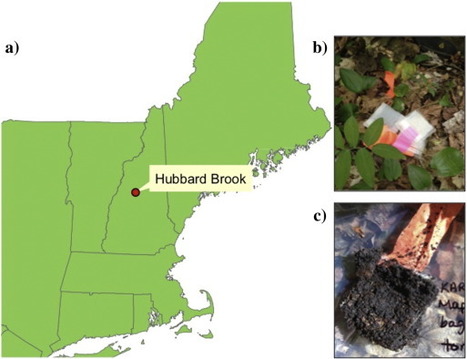
Symbiotic mycorrhizal fungi are thought to play a role in weathering by targeting minerals that contain required plant nutrients, such as phosphorus (P), magnesium (Mg) and calcium (Ca). Field experiments coupled with geochemical analyses can provide insights into nutrient cycling in forest landscapes dominated by arbuscular-mycorrhizal (AM) and ectomycorrhizal (EcM) fungi. In-growth bags containing different rock types of varying nutrient content (granite, tonalite) were fabricated to create an in-situ geologic gradient for 100-day deployment in two forest stands dominated by different mycorrhizal symbioses in Hubbard Brook Experimental Forest in New Hampshire, USA. Mineral dissolution within the substrate bags under different biologic conditions was assessed via analysis of major elemental nutrients (Ca, Mg, and P) and isotope ratios of lead (Pb) and strontium (Sr) on leachates representing both the easily exchangeable and future available weatherable mineral stores. We hypothesized that the two types of mycorrhizal fungi would differ in their weathering ability and would show significant variations in tracers of mineral weathering from the same rock type in the two stand but only Ca concentrations in the exchangeable solution of the tonalite and the future weatherable stores solutions of both tonalite and granite varied significantly between the two fungal types. The other measured nutrient concentrations (Mg, P) and Pb and Sr isotopic compositions of the exchangeable and weathering solutions were not significantly different within lithology. Taken together, the results suggest that weathering fluxes in AM- and EcM- dominated forest stands may be more comparable than previously argued.
|
|
Scooped by
Jean-Michel Ané
May 22, 2016 12:08 AM
|
Köberl et al. (2015) studied the gammaproteobacterial microbiome of banana in response to geographical and agricultural factors, and discovered high numbers of Pseudomonadales, Enterobacteriales, Xanthomonadales, and Legionellales, and an exceptionally high richness of gammaproteobacteria as endophytes in banana. Endophytes, microbes living inside plant tissue without eliciting symptoms (Petrini, 1986), are shown increasingly important for the adaptation and fitness of the host. Members of this microbiome subgroup can protect the host from environmental stresses, induce plant resistance, and promote plant growth (Rosenblueth and Martinez-Romero, 2006; Hardoim et al., 2015). Köberl et al. found the banana gammaproteobacterial microbiome highly stable especially in the endophytic niche. Using profile-clustering network analyses, they however saw differences in the communities between treatments. The greatest differences were observed in the rhizospheric communities between the geographical sites, Nicaragua and Costa Rica. Moderate, but important changes were observed within the epiphytic and endophytic microbiomes between the agroforestry systems, i.e., banana grown with and without green manure, which is used for nitrogen fertilization by legumes growing next to the crop plant. Specifically interesting were the stability of banana microbiome and the changes caused by the neighboring plants in each agroforestry system, which I discuss here.
|
|
Scooped by
Jean-Michel Ané
May 21, 2016 11:59 PM
|
We have developed teabags packed with dehydrated plant powders, without any supplements, for preparation of plant infusions necessary to develop media for culturing rhizobacteria. These bacteria are efficiently cultivated on such plant teabag culture media, with better progressive in situ recoverability compared to standard chemically-synthetic culture media. Combining various plant-based culture media and incubation conditions enabled us to resolve unique DGGE bands that were not resolved by tested standard culture media. Based on Polymerase Chain Reaction-Denaturing Gradient Gel Electrophoresis (PCR-DGGE) of 16S rDNA fingerprints and sequencing, the plant teabag culture media supported higher diversity and significant increases in the richness of endo-rhizobacteria, namely Gammaproteobacteria (Enterobacteriaceae) and predominantly Alphaproteobacteria (Rhizobiaceae). This culminated in greater retrieval of the rhizobacteria taxa associated with the plant roots. We conclude that the plant teabag culture medium by itself, without any nutritional supplements, is sufficient and efficient for recovering and mirroring the complex and diverse communities of rhizobacteria. Our message to fellow microbial ecologists is: simply dehydrate your plant canopy, teabag it, and soak it to prepare your culture media, with no need for any additional supplementary nutrients.
|
|
Scooped by
Jean-Michel Ané
May 21, 2016 11:57 PM
|
Genista saharae is an indigenous shrub legume that spontaneously grows in the northeastern Algerian Sahara. It is known for efficient dune fixation and soil preservation against desertification, due to its drought tolerance and its contribution to sustainable nitrogen resources implemented by biological N2-fixation. In this study, the root nodule bacteria of G. saharae were investigated using phenotypic and phylogenetic characterization. A total of 57 rhizobial strains were isolated from nodules from several sites in the hyper-arid region of Metlili and Taibet (east Septentrional Sahara). They all nodulate G. saharae species but they differed in their symbiotic efficiency and effectiveness. The genetic diversity was assessed by sequencing three housekeeping genes (atpD, recA and 16S rRNA). The majority of isolates (81 %) belonged to the genus Ensifer (previously Sinorhizobium), represented mainly by the species Ensifer meliloti. The next most abundant genera were Neorhizobium (17 %) with 3 different species: N. alkalisoli, N. galegae and N. huautlense and Mesorhizobium (1.75 %) represented by the species M. camelthorni. Most of the isolated strains tolerated up to 4 % (w/v) NaCl and grew at 45 °C. This study is the first report on the characterization of G. saharae microsymbionts in the Algerian Sahara.
|
|
Scooped by
Jean-Michel Ané
May 21, 2016 11:55 PM
|
The remarkable complexity of soil and its importance to a wide range of ecosystem services presents major challenges to the modeling of soil processes. Although major progress in soil models has occurred in the last decades, models of soil processes remain disjointed between disciplines or ecosystem services, with considerable uncertainty remaining in the quality of predictions and several challenges that remain yet to be addressed. First, there is a need to improve exchange of knowledge and experience among the different disciplines in soil science and to reach out to other Earth science communities. Second, the community needs to develop a new generation of soil models based on a systemic approach comprising relevant physical, chemical, and biological processes to address critical knowledge gaps in our understanding of soil processes and their interactions. Overcoming these challenges will facilitate exchanges between soil modeling and climate, plant, and social science modeling communities. It will allow us to contribute to preserve and improve our assessment of ecosystem services and advance our understanding of climate-change feedback mechanisms, among others, thereby facilitating and strengthening communication among scientific disciplines and society. We review the role of modeling soil processes in quantifying key soil processes that shape ecosystem services, with a focus on provisioning and regulating services. We then identify key challenges in modeling soil processes, including the systematic incorporation of heterogeneity and uncertainty, the integration of data and models, and strategies for effective integration of knowledge on physical, chemical, and biological soil processes. We discuss how the soil modeling community could best interface with modern modeling activities in other disciplines, such as climate, ecology, and plant research, and how to weave novel observation and measurement techniques into soil models. We propose the establishment of an international soil modeling consortium to coherently advance soil modeling activities and foster communication with other Earth science disciplines. Such a consortium should promote soil modeling platforms and data repository for model development, calibration and intercomparison essential for addressing contemporary challenges.
|
|
Scooped by
Jean-Michel Ané
May 21, 2016 11:43 PM
|
Over the past decade, functional traits that influence plant performance and thus, population, community, and ecosystem biology have garnered increasing attention. Generally lacking, however, has been consideration of how ubiquitous arbuscular mycorrhizas influence plant allometric and stoichiometric functional traits. We assessed how plant dependence on and responsiveness to mycorrhizas influence plant functional traits of a warm-season, C4 grass, Andropogon gerardii Vitman, and the contrasting, cool-season, C3 grass, Elymus canadensis L. We grew both host species with and without inoculation with mycorrhizal fungi, across a broad gradient of soil phosphorus availabilities. Both host species were facultatively mycotrophic, able to grow without mycorrhizas at high soil phosphorus availability. A. gerardii was most dependent upon mycorrhizas and E. canadensis was weakly dependent, but highly responsive to mycorrhizas. The high dependence of A. gerardii on mycorrhizas resulted in higher tissue P and N concentrations of inoculated than noninoculated plants. When not inoculated, E. canadensis was able to take up both P and N in similar amounts to inoculated plants because of its weak dependence on mycorrhizas for nutrient uptake and its pronounced ability to change root-to-shoot ratios. Unlike other highly dependent species, A. gerardii had a high root-to-shoot ratio and was able to suppress colonization by mycorrhizal fungi at high soil fertilities. E. canadensis, however, was unable to suppress colonization and had a lower root-to shoot ratio than A. gerardii. The mycorrhiza-related functional traits of both host species likely influence their performance in nature: both species attained the maximum responsiveness from mycorrhizas at soil phosphorus availabilities similar to those of tallgrass prairies. Dependence upon mycorrhizas affects performance in the absence of mycorrhizas. Responsiveness to mycorrhizal fungi is also a function of the environment and can be influenced by both mycorrhizal fungus species and soil fertility.
|
|
Scooped by
Jean-Michel Ané
May 21, 2016 11:18 PM
|
The 3-hydroxy-3-methylglutaryl-CoA reductase (HMGR) is the first rate-limiting enzyme of the mevalonate (MVA) pathway during isoprenoid biosynthesis. In this study, the expression pattern of the MdHMGR2 gene in Malus domestica suggested that MdHMGR2 was expressed in a tissue-specific manner and was significantly induced by ethephon (ETH), indoleacetic acid (IAA), methyl jasmonate (MeJA), and salicylic acid (SA). The MdHMGR2 promoter was isolated, sequenced, and analyzed through bioinformatics tools and results suggested the presence of various putative cis-acting elements responsive to different hormones. A β-glucuronidinase (GUS) activity driven by the full length MdHMGR2 promoter and its 5′deletion fragments was detected in transgenic Arabidopsis thaliana. Strong GUS activity was observed in seedlings, roots, newly growing true leaves, anthers, and stigmas in transgenic Arabidopsis containing the full MdHMGR2 promoter. Results indicated that the region from -1050 to -827 was crucial for promoter activity. In addition, the MdHMGR2 promoter was induced in response to ETH, IAA, MeJA, and SA. The analysis suggested that the ethylene-responsive element (ERE) in the region from -1050 to -1005 was required for ethylene inducibility.
|
|
Scooped by
Jean-Michel Ané
May 21, 2016 11:04 PM
|
The lack of an appropriate genomic platform has precluded the use of gain-of-function approaches to study the rhizobium–legume symbiosis, preventing the establishment of the genes necessary and sufficient for symbiotic nitrogen fixation (SNF) and potentially hindering synthetic biology approaches aimed at engineering this process. Here, we describe the development of an appropriate system by reverse engineering Sinorhizobium meliloti. Using a novel in vivo cloning procedure, the engA-tRNA-rmlC (ETR) region, essential for cell viability and symbiosis, was transferred from Sinorhizobium fredii to the ancestral location on the S. meliloti chromosome, rendering the ETR region on pSymB redundant. A derivative of this strain lacking both the large symbiotic replicons (pSymA and pSymB) was constructed. Transfer of pSymA and pSymB back into this strain restored symbiotic capabilities with alfalfa. To delineate the location of the single-copy genes essential for SNF on these replicons, we screened a S. meliloti deletion library, representing > 95% of the 2900 genes of the symbiotic replicons, for their phenotypes with alfalfa. Only four loci, accounting for < 12% of pSymA and pSymB, were essential for SNF. These regions will serve as our preliminary target of the minimal set of horizontally acquired genes necessary and sufficient for SNF.
|