Your new post is loading...

|
Scooped by
Jean-Michel Ané
May 14, 2016 11:35 PM
|
Hairy vetch (Vicia villosa Roth) is a leguminous crop widely used as green manure and a cover crop in Japan. It exhibits strong weed-suppressing activity, high resistance to insect pests, and the ability to fix nitrogen through symbiotic interactions with soil bacteria known as rhizobia. Few studies have investigated the rhizobia that form nodules on hairy vetch in Japan, and the biological resources available for selecting high nitrogen-fixing rhizobia are limited. In the present study, we isolated 110 hairy vetch rhizobia from 13 different areas in Japan. Based on their 16S rRNA gene sequences, 73% of the isolates were identified as Rhizobium leguminosarum. A comparative analysis of nodC and 16S rRNA gene phylogenies revealed that several isolates possessed congruent nodC sequences despite having divergent 16S rRNA gene sequences, suggesting that the horizontal transfer of nod genes occurred during the evolution of rhizobia. Inoculation tests showed that isolates closely related to R. leguminosarum had better plant growth-promoting effects than other strains, thereby providing a promising agricultural resource for inoculating crops.
|
|
Scooped by
Jean-Michel Ané
May 14, 2016 11:31 PM
|
The symbiosis between plants and arbuscular mycorrhizal fungi has been described as a biological market based on evidence that plants supply more carbohydrates to fungal partners that provide more soil nutrients, and vice versa1,2,3,4. A recent paper by Walder and van der Heijden challenges this view5. However, their challenge is based on misunderstandings of biological market theory, and evolutionary theory more generally.
|
|
Scooped by
Jean-Michel Ané
May 14, 2016 10:28 PM
|
Bacterial endosymbionts are critical to the existence of many eukaryotes. Among them, vertically transmitted endobacteria are uniquely typified by reduced genomes and molecular evolution rate acceleration relative to free-living taxa. These patterns are attributable to genetic drift-dominated degenerative processes associated with reproductive dependence on the host. The degenerative evolution scenario is well supported in endobacteria with strict vertical transmission, such as essential mutualists of insects. In contrast, heritable endosymbionts that are nonessential to their hosts and engage occasionally in horizontal transmission are expected to display deviations from the degenerative evolution model. To explore evolution patterns in such nonessential endobacteria, we focused on Candidatus Glomeribacter gigasporarum ancient heritable mutualists of fungi. Using a collection of genomes, we estimated in Glomeribacter mutation rate at 2.03×10⁻⁹ substitutions per site per year and effective population size at 1.44×10⁸. Both fall within the range of values observed in free-living bacteria. To assess the ability of Glomeribacter to purge slightly deleterious mutations, we examined genome-wide dN/dS values and distribution patterns. We found that these dN/dS profiles cluster Glomeribacter with free-living bacteria as well as with other nonessential endosymbionts, while distinguishing it from essential heritable mutualists of insects. Finally, our evolutionary simulations revealed that the molecular evolution rate acceleration in Glomeribacter is caused by limited recombination in a largely clonal population rather than by increased fixation of slightly deleterious mutations. Based on these patterns, we propose that genome evolution in Glomeribacter is nondegenerative and exemplifies a departure from the model of degenerative evolution in heritable endosymbionts.
|
|
Scooped by
Jean-Michel Ané
May 14, 2016 7:44 PM
|
Arbuscular mycorrhizas (AM) are adapted to soils with higher pH, less organic matter and more available nitrogen than ectomycorrhizas (EM). We hypothesise that also climatic factors have a direct role in the relative success of the two types. We tested their colonisation rates after soil freezing. Soil was taken from forest and meadow sites to comprise propagules of both types of mycorrhizal fungi. The soil was sieved (6 mm) and mixed. Soil batches were exposed to +5 °C (control), −12, −25, −48 or −130 °C, time at target temperature was 6 h. Silver birch (Betula pendula), grey alder (Alnus incana) and white clover (Trifolium repens) were sown to these soils and grown in favourable conditions for 11 weeks. EM colonisation in birch and alder was similar in all treatments. Arbuscule formation in alder and clover was not affected, but vesicles, AM fungal hyphae and spores in roots were reduced with decreasing temperature. Soil soluble phosphorus (P) was increased by freezing as were also the foliar concentrations in birch. By contrast, clover had less foliar P in the lowest temperature treatments which may be due to less efficient functioning of AM. To conclude, the development and function of AM were impaired to some extent by very low temperatures, while EM were not affected. The low-temperature tolerance of EM may be another explanation to their predominance in cold climates.
|
|
Scooped by
Jean-Michel Ané
May 14, 2016 5:58 PM
|
Rhizoctonia solani is a necrotrophic fungi causing sheath blight in rice leading to substantial loss in yield. Excessive and persistent use of preventive chemicals raises human health and environment safety concerns. As an alternative, use of biocontrol agents is highly recommended. In the present study, an abiotic stress tolerant, plant growth promoting rhizobacteria Bacillus amyloliquefaciens (SN13) is demonstrated to act as a biocontrol agent and enhance immune response against R. solani in rice by modulating various physiological, metabolic, and molecular functions. A sustained tolerance by SN13 primed plant over a longer period of time, post R. solani infection may be attributed to several unconventional aspects of the plants’ physiological status. The prolonged stress tolerance observed in presence of SN13 is characterized by (a) involvement of bacterial mycolytic enzymes, (b) sustained maintenance of elicitors to keep the immune system induced involving non-metabolizable sugars such as turanose besides the known elicitors, (c) a delicate balance of ROS and ROS scavengers through production of proline, mannitol, and arabitol and rare sugars like fructopyranose, β–D–glucopyranose and myoinositol and expression of ferric reductases and hypoxia induced proteins, (d) production of metabolites like quinazoline and expression of terpene synthase, and (e) hormonal cross talk. As the novel aspect of biological control this study highlights the role of rare sugars, maintenance of hypoxic conditions, and sucrose and starch metabolism in B. amyloliquefaciens (SN13) mediated sustained biotic stress tolerance in rice.
|
|
Scooped by
Jean-Michel Ané
May 14, 2016 3:51 PM
|
Aims
The plant-beneficial bacterium Pseudomonas fluorescens F113 harbours an acdS gene, which enables deamination of 1-aminocyclopropane-1-carboxylate. The impact of abiotic and biotic factors on the expression of this gene was assessed, as well as the plant-beneficial properties of F113 under different soil moistures.
Methods
An acdS-egfp biosensor was constructed in F113, validated in vitro and used to analyse, by microscopy, its expression on roots of Zea mays comparatively to Beta vulgaris. An acdS mutant was constructed and compared with the wild-type to characterize plant-beneficial effects of F113 on maize lines EP1 and FV2, under well-watered and water deficit conditions.
Results
Different patterns of root colonization and acdS expression were observed according to plant genotype. acdS rhizoplane expression was higher on Beta vulgaris, and on maize line FV2 and hybrid PR37Y15 than on maize line EP1 and teosinte. Strain F113 but not its acdS mutant promoted root growth of EP1 under well-watered conditions and germination of FV2 under water deficit conditions.
Conclusions
Maize lines differed in their ability to induce acdS expression and to respond to P. fluorescens F113. The maize line leading to higher acdS expression, FV2, was the one benefiting from inoculation under water deficit.
|
|
Scooped by
Jean-Michel Ané
May 14, 2016 3:41 PM
|
Legumes play a vital role in ensuring global nutritional food security and improving soil quality through nitrogen fixation. Accelerated higher genetic gains is required to meet the demand of ever increasing global population. In recent years, speedy developments have been witnessed in legume genomics due to advancements in next-generation sequencing (NGS) and high-throughput genotyping technologies. Reference genome sequences for many legume crops have been reported in the last 5 years. The availability of the draft genome sequences and re-sequencing of elite genotypes for several important legume crops have made it possible to identify structural variations at large scale. Availability of large-scale genomic resources and low-cost and high-throughput genotyping technologies are enhancing the efficiency and resolution of genetic mapping and marker-trait association studies. Most importantly, deployment of molecular breeding approaches has resulted in development of improved lines in some legume crops such as chickpea and groundnut. In order to support genomics-driven crop improvement at a fast pace, the deployment of breeder-friendly genomics and decision support tools seems appear to be critical in breeding programs in developing countries. This review provides an overview of emerging genomics and informatics tools/approaches that will be the key driving force for accelerating genomics-assisted breeding and ultimately ensuring nutritional and food security in developing countries.
|
|
Scooped by
Jean-Michel Ané
May 14, 2016 3:34 PM
|
Accurate estimation of divergence times of soil bacteria that form nitrogen-fixing associations with most leguminous plants is challenging because of a limited fossil record and complexities associated with molecular clocks and phylogenetic diversity of root nodule bacteria, collectively called rhizobia. To overcome the lack of fossil record in bacteria, divergence times of host legumes were used to calibrate molecular clocks and perform phylogenetic analyses in rhizobia. The 16S rRNA gene and intergenic spacer region remain among the favored molecular markers to reconstruct the timescale of rhizobia. We evaluate the performance of the random local clock model and the classical uncorrelated lognormal relaxed clock model, in combination with four tree models (coalescent constant size, birth–death, birth–death incomplete sampling, and Yule processes) on rhizobial divergence time estimates. Bayes factor tests based on the marginal likelihoods estimated from the stepping-stone sampling analyses strongly favored the random local clock model in combination with Yule process. Our results on the divergence time estimation from 16S rRNA gene and intergenic spacer region sequences are compatible with age estimates based on the conserved core genes but significantly older than those obtained from symbiotic genes, such as nodIJ genes. This difference may be due to the accelerated evolutionary rates of symbiotic genes compared to those of other genomic regions not directly implicated in nodulation processes.
|
|
Scooped by
Jean-Michel Ané
May 14, 2016 3:10 PM
|
The genome of the hemibiotrophic anthracnose fungus, Colletotrichum higginsianum, encodes a large repertoire of candidate-secreted effectors containing LysM domains, but the role of such proteins in the pathogenicity of any Colletotrichum species is unknown.
Here, we characterized the function of two effectors, ChELP1 and ChELP2, which are transcriptionally activated during the initial intracellular biotrophic phase of infection.
Using immunocytochemistry, we found that ChELP2 is concentrated on the surface of bulbous biotrophic hyphae at the interface with living host cells but is absent from filamentous necrotrophic hyphae. We show that recombinant ChELP1 and ChELP2 bind chitin and chitin oligomers in vitro with high affinity and specificity and that both proteins suppress the chitin-triggered activation of two immune-related plant mitogen-activated protein kinases in the host Arabidopsis. Using RNAi-mediated gene silencing, we found that ChELP1 and ChELP2 are essential for fungal virulence and appressorium-mediated penetration of both Arabidopsis epidermal cells and cellophane membranes in vitro.
The findings suggest a dual role for these LysM proteins as effectors for suppressing chitin-triggered immunity and as proteins required for appressorium function.
|
|
Scooped by
Jean-Michel Ané
May 14, 2016 2:58 PM
|
Peat mosses of the genus Sphagnum play a major role in global carbon storage and dominate many northern peatland ecosystems, which are currently being subjected to some of the most rapid climate changes on Earth. A rapidly expanding database indicates that a diverse community of microorganisms is intimately associated with Sphagnum, inhabiting the tissues and surface of the plant. Here we summarize the current state of knowledge regarding the Sphagnum microbiome and provide a perspective for future research directions. Although the majority of the microbiome remains uncultivated and its metabolic capabilities uncharacterized, prokaryotes and fungi have the potential to act as mutualists, symbionts, or antagonists of Sphagnum. For example, methanotrophic and nitrogen-fixing bacteria may benefit the plant host by providing up to 20–30% of Sphagnum carbon and nitrogen, respectively. Next-generation sequencing approaches have enabled the detailed characterization of microbiome community composition in peat mosses. However, as with other ecologically or economically important plants, our knowledge of Sphagnum–microbiome associations is in its infancy. In order to attain a predictive understanding of the role of the microbiome in Sphagnum productivity and ecosystem function, the mechanisms of plant–microbiome interactions and the metabolic potential of constituent microbial populations must be revealed.
|
|
Scooped by
Jean-Michel Ané
May 12, 2016 12:37 PM
|
A frequent bottleneck in interpreting phylogenomic output is the need to screen often thousands of trees for features of interest, particularly robust clades of specific taxa, as evidence of monophyletic relationship and/or reticulated evolution. Here we present PhySortR, a fast, flexible R package for classifying phylogenetic trees. Unlike existing utilities, PhySortR allows for identification of both exclusive and non-exclusive clades uniting the target taxa based on tip labels (i.e., leaves) on a tree, with customisable options to assess clades within the context of the whole tree. Using simulated and empirical datasets, we demonstrate the potential and scalability of PhySortR in analysis of thousands of phylogenetic trees without a priori assumption of tree-rooting, and in yielding readily interpretable trees that unambiguously satisfy the query. PhySortR is a command-line tool that is freely available and easily automatable.
|
|
Scooped by
Jean-Michel Ané
May 11, 2016 3:52 PM
|
We report a high-quality chromosome-scale assembly and analysis of the carrot (Daucus carota) genome, the first sequenced genome to include a comparative evolutionary analysis among members of the euasterid II clade. We characterized two new polyploidization events, both occurring after the divergence of carrot from members of the Asterales order, clarifying the evolutionary scenario before and after radiation of the two main asterid clades. Large- and small-scale lineage-specific duplications have contributed to the expansion of gene families, including those with roles in flowering time, defense response, flavor, and pigment accumulation. We identified a candidate gene, DCAR_032551, that conditions carotenoid accumulation (Y) in carrot taproot and is coexpressed with several isoprenoid biosynthetic genes. The primary mechanism regulating carotenoid accumulation in carrot taproot is not at the biosynthetic level. We hypothesize that DCAR_032551 regulates upstream photosystem development and functional processes, including photomorphogenesis and root de-etiolation.
|
|
Scooped by
Jean-Michel Ané
May 11, 2016 1:49 PM
|
Plants form belowground associations with mycorrhizal fungi in one of the most common symbioses on Earth. However, few large-scale generalizations exist for the structure and function of mycorrhizal symbioses, as the nature of this relationship varies from mutualistic to parasitic and is largely context-dependent. We announce the public release of MycoDB, a database of 4,010 studies (from 438 unique publications) to aid in multi-factor meta-analyses elucidating the ecological and evolutionary context in which mycorrhizal fungi alter plant productivity. Over 10 years with nearly 80 collaborators, we compiled data on the response of plant biomass to mycorrhizal fungal inoculation, including meta-analysis metrics and 24 additional explanatory variables that describe the biotic and abiotic context of each study. We also include phylogenetic trees for all plants and fungi in the database. To our knowledge, MycoDB is the largest ecological meta-analysis database. We aim to share these data to highlight significant gaps in mycorrhizal research and encourage synthesis to explore the ecological and evolutionary generalities that govern mycorrhizal functioning in ecosystems.
|
|
|
Scooped by
Jean-Michel Ané
May 14, 2016 11:33 PM
|
The exchange of carbon for soil nutrients is thought to be the cornerstone of the arbuscular mycorrhizal (AM) symbiosis1,2. In our recent Review, we proposed that environmental conditions, functional diversity, competition for surplus resources, reciprocity and sink strength3 explain the outcome of resource exchange in the AM symbiosis. We also questioned the use of biological market theory as a universal framework to explain resource exchange in the AM symbiosis. In biological markets, interactions are viewed from an economic perspective, and the most beneficial partners are favoured in direct relation to the amount of resources received4,5,6,7.
Now, Kiers et al.8 claim that we have misunderstood biological market theory and evolutionary theory more generally, and provide six arguments challenging our view (see Supplementary Information for our point-by-point response to each argument). We do not disagree that reciprocally rewarded resource exchange exists under some conditions and with some symbiotic partners. However, as a universal model for resource exchange, this theory is too simplistic; numerous studies have shown that resources can be delivered to symbiotic partners without reciprocal rewards9,10,11,12,13 and even in the absence of any experienced benefit14,15. It seems that the proportionality of resource exchange is highly dependent on environmental conditions and the identity of the interacting symbionts11,16,17,18. Factors such as functional diversity and sink strength have a big impact on resource exchange (and its direction), and this is largely ignored in market-type exchange models.
Kiers et al.8 now provide a broader definition of the biological market theory for the AM symbiosis, expecting that individuals “have a preference, on average, for interacting with more beneficial partners”. This wider definition still does not explain why resource exchange among partners depends so strongly on environmental conditions and the identity of the interacting symbionts19,20,21, and also contrasts with a recent publication by the same authors indicating that biological markets expect “immediate rewards”7 (see Supplementary Information for further details). We think that a broader definition of market-type resource exchange (for example, based on the whole lifespan of a species, as suggested in ref. 22) would be more widely applicable. However, such a theory would not be suitable to explain immediate regulation of resource exchange and the market concept can no longer be applied to it. Moreover, the variability included in such a broad biological market theory may be so unspecific as to have no value in understanding how AM symbiosis actually operates.
|
|
Scooped by
Jean-Michel Ané
May 14, 2016 11:27 PM
|
Polyhydroxybutyrate (PHB) is a carbon and energy reserve polymer in various prokaryotic species. We determined that, when grown with mannitol as the sole carbon source, Bradyrhizobium diazoefficiens produces a homopolymer composed only of 3-hydroxybutyrate units (PHB). Conditions of oxygen limitation (such as microoxia, oxic stationary phase and bacteroids inside legume nodules) were permissive for the synthesis of PHB, which was observed as cytoplasmic granules. To study the regulation of PHB synthesis, we generated mutants in the regulator gene phaR and the phasin genes phaP1 and phaP4. Under permissive conditions, mutation of phaR impaired PHB accumulation, and a phaP1/phaP4 double mutant produced more PHB than the wildtype, which was accumulated in a single, large cytoplasmic granule. Moreover, PhaR negatively regulated the expression of phaP1 and phaP4 as well as of phaA1, phaA2 (3-ketoacyl-CoA thiolase), phaC1, phaC2 (PHB synthases), and fixK2 (CRP/FNR-type transcription regulator of genes for microoxic lifestyle). In addition to the depressed PHB cycling, phaR mutants accumulated more extracellular polysaccharide and promoted higher plant shoot dry weight and competitiveness for nodulation than the wildtype, by contrast to phaC1 mutant strains, defective in PHB synthesis. These results suggest that phaR not only regulates PHB granules formation by controlling the expression of phasins and biosynthetic enzymes, but also acts as global regulator of excess carbon allocation and symbiosis by controlling fixK2.
|
|
Scooped by
Jean-Michel Ané
May 14, 2016 8:10 PM
|
Agricultural intensification can involve the simplification of agroecosystems to crop monocultures while the practices of crop rotation, intercropping and companion planting maintain some crop diversity over time and space. It is generally postulated that reduced diversity can have an impact on ecosystem function. Here we determine whether decreased aboveground crop diversity affects belowground microbial biodiversity by conducting a meta-analysis of studies comparing monocultures and crop rotations. We based taxonomic richness and diversity indices on both molecular and biochemical fingerprinting methods. Soils under a higher diversity of crops in rotation produced higher microbial richness (+15.11%, n = 26) and diversity (+3.36%, n = 43) scores. This effect was significantly influenced by the proxy and methodology used where pyrosequencing produced higher richness scores compared to fingerprinting methods. Longer study trials produced larger increases in microbial richness, although the opposite was true for microbial diversity. The addition of legumes to rotation had no consistent effects on microbial diversity or richness. Whether the overall rotation-effect on microbial diversity promotes ecosystem functioning in terms of nutrient cycling and resilience to stress remains unclear. Future studies that incorporate next-generation sequencing techniques will help to elucidate complex microbial community structures and specific functional niches in agroecosystems.
|
|
Scooped by
Jean-Michel Ané
May 14, 2016 6:02 PM
|
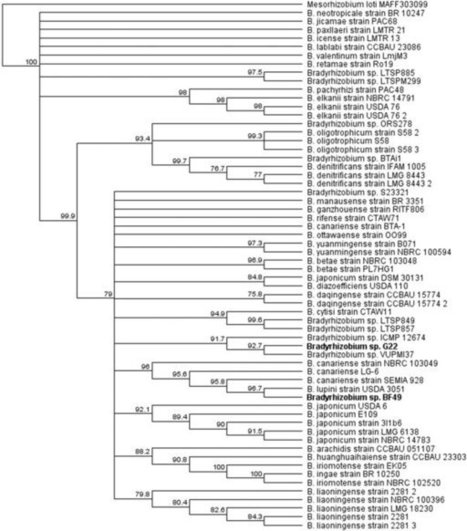
The slow-growing genus Bradyrhizobium is biologically important in soils, with different representatives found to perform a range of biochemical functions including photosynthesis, induction of root nodules and symbiotic nitrogen fixation and denitrification. Consequently, the role of the genus in soil ecology and biogeochemical transformations is of agricultural and environmental significance. Some isolates of Bradyrhizobium have been shown to be non-symbiotic and do not possess the ability to form nodules. Here we present the genome and gene annotations of two such free-living Bradyrhizobium isolates, named G22 and BF49, from soils with differing long-term management regimes (grassland and bare fallow respectively) in addition to carbon metabolism analysis. These Bradyrhizobium isolates are the first to be isolated and sequenced from European soil and are the first free-living Bradyrhizobium isolates, lacking both nodulation and nitrogen fixation genes, to have their genomes sequenced and assembled from cultured samples. The G22 and BF49 genomes are distinctly different with respect to size and number of genes; the grassland isolate also contains a plasmid. There are also a number of functional differences between these isolates and other published genomes, suggesting that this ubiquitous genus is extremely heterogeneous and has roles within the community not including symbiotic nitrogen fixation.
|
|
Scooped by
Jean-Michel Ané
May 14, 2016 3:54 PM
|
Although mycorrhizas are expected to play a key role in community assembly during ecological succession, little is known about the dynamics of the symbiotic partners in natural systems. For instance, it is unclear how efficiently plants and arbuscular mycorrhizal (AM) fungi disperse into early successional ecosystems, and which, if either, symbiotic partner drives successional dynamics. This study describes the dynamics of plant and AM fungal communities, assesses correlation in the composition of plant and AM fungal communities, and compares dispersal limitation of plants and AM fungi during succession. We studied gravel pits 20 and 50 years post abandonment and undisturbed grasslands in Western Estonia. The composition of plant and AM fungal communities was strongly correlated, and the strength of the correlation remained unchanged as succession progressed, indicating a stable dependence among mycorrhizal plants and AM fungi. A relatively high proportion of the AM fungal taxon pool was present in early successional sites, in comparison with the respective fraction of plants. These results suggest that AM fungi arrived faster than plants and may thus drive vegetation dynamics along secondary vegetation succession.
|
|
Scooped by
Jean-Michel Ané
May 14, 2016 3:46 PM
|
For some truffle species of the Tuber genus, the symbiotic phase is often associated with the presence of an area of scant vegetation, commonly known as the brûlé, around the host tree. Previous metagenomics studies have identified the microorganisms present inside and outside the brûlé of a Tuber melanosporum truffle-ground, but the molecular mechanisms that operate in this ecological niche remain to be clarified. To elucidate the metabolic pathways present in the brûlé, we conducted a metaproteomics analysis on the soil of a characterized truffle-ground and cross-referenced the resulting proteins with a database we constructed, incorporating the metagenomics data for the organisms previously identified in this soil. The soil inside the brûlé contained a larger number of proteins and, surprisingly, more proteins from plants, compared with the soil outside the brûlé. In addition, Fisher’s Exact Tests detected more biological processes inside the brûlé; these processes were related to responses to multiple types of stress. Thus, although the brûlé has a reduced diversity of plant and microbial species, the organisms in the brûlé show strong metabolic activity. Also, the combination of metagenomics and metaproteomics provides a powerful tool to reveal soil functioning.
|
|
Scooped by
Jean-Michel Ané
May 14, 2016 3:35 PM
|
Non-native Phragmites australis decreases biodiversity and produces dense stands in North America. We surveyed the endophyte communities in the stems, leaves and roots of collections of P. australis obtained from two sites with a low and high salt concentration to determine differences in endophyte composition and assess differences in functional roles of microbes in plants from both sites. We found differences in the abundance, richness and diversity of endophytes between the low saline collections (18 species distributed in phyla Ascomycota, Basidiomycota and Stramenopiles (Oomycota); from orders Dothideales, Pleosporales, Hypocreales, Eurotiales, Cantharellales and Pythiales; Shannon H = 2.639; Fisher alpha = 7.335) and high saline collections (15 species from phylum Ascomycota; belonging to orders Pleosporales, Hypocreales, Diaporthales, Xylariales and Dothideales; Shannon H = 2.289; Fisher alpha = 4.181). Peyronellaea glomerata, Phoma macrostoma and Alternaria tenuissima were species obtained from both sites. The high salt endophyte community showed higher resistance to zinc, mercury and salt stress compared to fungal species from the low salt site. These endophytes also showed a greater propensity for growth promotion of rice seedlings (a model species) under salt stress. The results of this study are consistent with the ‘habitat-adapted symbiosis hypothesis’ that holds that endophytic microbes may help plants adapt to extreme habitats. The capacity of P. australis to establish symbiotic relationships with diverse endophytic microbes that enhance its tolerance to abiotic stresses could be a factor that contributes to its invasiveness in saline environments. Targeting the symbiotic associates of P. australis could lead to more sustainable control of non-native P. australis.
|
|
Scooped by
Jean-Michel Ané
May 14, 2016 3:28 PM
|
Charophyte green algae are a paraphyletic group of freshwater and terrestrial green algae, comprising the classes of Chlorokybophyceae, Coleochaetphyceae, Klebsormidiophyceae, Zygnematophyceae, Mesostigmatophyceae and Charophyceae. Zygnematophyceae (Conjugating green algae) are considered to be closest algal relatives to land plants (Embryophyta). Therefore, they are ideal model organisms for studying stress tolerance mechanisms connected with transition to land, one of the most important events in plant evolution and the Earth’s history. In Zygnematophyceae, but also in Coleochaetophyceae, Chlorokybophyceae and Klebsormidiophyceae terrestrial members are found which are frequently exposed to naturally occurring abiotic stress scenarios like desiccation, freezing and high photosynthetic active (PAR) as well as ultraviolet (UV) irradiation. Here, we summarize current knowledge about various stress tolerance mechanisms including insight provided by pioneer transcriptomic and proteomic studies.
While formation of dormant spores is a typical strategy of freshwater classes, true terrestrial groups are stress tolerant in vegetative state. Aggregation of cells, flexible cell walls, mucilage production and accumulation of osmotically active compounds are the most common desiccation tolerance strategies. In addition, high photophysiological plasticity and accumulation of UV-screening compounds are important protective mechanisms in conditions with high irradiation. Now a shift from classical chemical analysis to next-generation genome sequencing, gene reconstruction and annotation, genome-scale molecular analysis using omics technologies followed by computer-assisted analysis will give new insights in a systems biology approach. For example, changes in transcriptome and role of phytohormone signaling in Klebsormidium during desiccation were recently described. Application of these modern approaches will deeply enhance our understanding of stress reactions in an unbiased non-targeted view in an evolutionary context.
Over 20% of Earth/'s terrestrial surface is underlain by permafrost with vast stores of carbon that, once thawed, may represent the largest future transfer of carbon from the biosphere to the atmosphere. This process is largely dependent on microbial responses, but we know little about microbial activity in intact, let alone in thawing, permafrost. Molecular approaches have recently revealed the identities and functional gene composition of microorganisms in some permafrost soils and a rapid shift in functional gene composition during short-term thaw experiments. However, the fate of permafrost carbon depends on climatic, hydrological and microbial responses to thaw at decadal scales. Here we use the combination of several molecular /`omics/' approaches to determine the phylogenetic composition of the microbial communities, including several draft genomes of novel species, their functional potential and activity in soils representing different states of thaw: intact permafrost, seasonally thawed active layer and thermokarst bog. The multi-omics strategy reveals a good correlation of process rates to omics data for dominant processes, such as methanogenesis in the bog, as well as novel survival strategies for potentially active microbes in permafrost.
Via Francis Martin
Today, the White House is announcing the launch of the National Microbiome Initiative (NMI)—an ambitious plan to better understand the microbes that live in humans, other animals, crops, soils, oceans, and more. These miniscule organisms are attracting mammoth budgets: federal agencies are committing $121 million to the NMI over the next two years, while more than 100 universities, non-profits, and companies are chipping in another $400 million.
Essentially, America has decided to point half a billion microscopes at the planet, and look through them.
Note the “planet” bit. There’s a tendency of read “microbiome” and automatically see “human” before it. But that’s a narcissistic view.
Via Francis Martin
|
|
Scooped by
Jean-Michel Ané
May 12, 2016 11:48 AM
|
Amino acid transporters (AATs) play important roles in transporting amino acid across cellular membranes and are essential for plant growth and development. To date, the AAT gene family in soybean (Glycine max L.) has not been characterized. In this study, we identified 189 AAT genes from the entire soybean genomic sequence, and classified them into 12 distinct subfamilies based upon their sequence composition and phylogenetic positions. To further investigate the functions of these genes, we analyzed the chromosome distributions, gene structures, duplication patterns, phylogenetic tree, tissue expression patterns of the 189 AAT genes in soybean. We found that a large number of AAT genes in soybean were expanded via gene duplication, 46 and 36 GmAAT genes were WGD/segmental and tandemly duplicated, respectively. Further comprehensive analyses of the expression profiles of GmAAT genes in various stages of vegetative and reproductive development showed that soybean AAT genes exhibited preferential or distinct expression patterns among different tissues. Overall, our study provides a framework for further analysis of the biological functions of AAT genes in either soybean or other crops.
|
|
Scooped by
Jean-Michel Ané
May 11, 2016 2:24 PM
|
Link to Piled Higher and Deeper
|


 Scoop.it!