In this study we report the functional characterization of heterotrimeric G-proteins from a non-vascular plant, the moss Physcomitrella patens. In plants, G-proteins have been characterized from only a few angiosperms to date, where their involvement has been shown during regulation of multiple signaling and developmental pathways affecting overall plant fitness. In addition to its unparalleled evolutionary position in the plant lineages, the P. patens genome also codes for a unique assortment of G-protein components, which includes two copies of Gβ and Gγ genes, but no canonical Gα. Instead, a single gene encoding an extra-large Gα (XLG) protein exists in the P. patens genome. Here we demonstrate that in P. patens the canonical Gα is biochemically and functionally replaced by an XLG protein, which works in the same genetic pathway as one of the Gβ proteins to control its development. Furthermore, the specific G-protein subunits in P. patens are essential for its life cycle completion. Deletion of the genomic locus of PpXLG or PpGβ2 results in smaller, slower growing gametophores. Normal reproductive structures develop on these gametophores, but they are unable to form any sporophyte, the only diploid stage in the moss life cycle. Finally, the mutant phenotypes of ΔPpXLG and ΔPpGβ2 can be complemented by the homologous genes from Arabidopsis, AtXLG2 and AtAGB1, respectively, suggesting an overall conservation of their function throughout the plant evolution.
Cropping systems based on carefully designed species mixtures reveal many potential advantages in terms of enhancing crop productivity, reducing pest and diseases, and enhancing ecological services. Associating cereals and legume production either through intercropping or rotations might be a relevant strategy of producing both type of culture, while benefiting from combined nitrogen fixed by the legume through its symbiotic association with nitrogen-fixing bacteria, and from a better use of P and water through mycorrhizal associations. These practices also participate to the diversification of agricultural productions, enabling to secure the regularity of income returns across the seasonal and climatic uncertainties. In this context, we designed a field experiment aiming to estimate the 2 years impact of these practices on wheat yield and on soil microbial activities as estimated through Substrate Induced Respiration method and mycorrhizal soil infectivity (MSI) measurement. It is expected that understanding soil microbial functionalities in response to these agricultural practices might allows to target the best type of combination, in regard to crop productivity. We found that the tested cropping systems largely impacted soil microbial functionalities and MSI. Intercropping gave better results in terms of crop productivity than the rotation practice after two cropping seasons. Benefits resulting from intercrop should be highly linked with changes recorded on soil microbial functionalities.
Powerful genome editing technologies are needed for efficient gene function analysis. The CRISPR-Cas9 system has been adapted as an efficient gene knock-out-technology in a variety of species. However, in a number of situations knocking out or modifying a single gene is not sufficient, this is particularly true for genes belonging to a common family or for genes showing redundant functions. Like many plants the model organism Physcomitrella patens has experienced multiple events of polyploidization during evolution that resulted in a number of families of duplicated genes. Here, we report a robust CRISPR-Cas9 system, based on the co-delivery of a CAS9 expressing cassette, multiple sgRNA vectors and a cassette for transient transformation selection for gene knock-out in multiple gene families. We demonstrate that CRISPR-Cas9 mediated targeting of five different genes allows the selection of a quintuple mutant and all possible sub-combinations of mutants in one experiment with no mutations detected in potential off target sequences. Furthermore, we confirmed the observation that the presence of repeats in the vicinity of the cutting region favors deletion due to alternative End Joining pathway for which induced frameshift mutations can be potentially predicted. Because the number of multiple gene families in Physcomitrella is substantial, this tool opens new perspectives to study the role of expanded gene families in the colonization of land by plants.
Eukaryotes contain three types of lipid kinases that belong to the phosphatidylinositol 3-kinase (PI3K) family. In plants and Saccharomyces, only PI3K class III family members have been identified. These enzymes regulate the innate immune response, intracellular trafficking, autophagy, and senescence. Here, we report that RNAi-mediated down-regulation of common bean (Phaseolus vulgaris) PI3K severely impaired symbiosis in composite P. vulgaris plants with endosymbionts such as Rhizobium tropici and Rhizophagus irregularis. Downregulation of Pv-PI3K was associated with a marked decrease in root hair growth and curling. Additionally, infection thread growth, root-nodule number, and symbiosome formation in root nodule cells were severely affected. Interestingly, root colonization by AM fungi and the formation of arbuscules were also abolished in PI3K loss-of-function plants. Furthermore, the transcript accumulation of genes encoding proteins known to interact with PI3K to form protein complexes involved in autophagy was drastically reduced in these transgenic roots. RNAi-mediated downregulation of one of these genes, Beclin1 / Atg6, resulted in a similar phenotype as observed for transgenic roots in which Pv-PI3K had been downregulated. Our findings show that an autophagy-related process is crucial for the mutualistic interactions of P. vulgaris with beneficial microorganisms.
While transformation of the major monocot crops is currently possible, the process typically remains confined to one or two genotypes per species, often with poor agronomics, and efficiencies that place these methods beyond the reach of most academic laboratories. Here, we report a transformation approach involving overexpression of the maize (Zea mays) Baby boom (Bbm) and maize Wuschel2 (Wus2) genes, which produced high transformation frequencies in numerous previously non-transformable maize inbred lines. For example, the Pioneer inbred PHH5G is recalcitrant to biolistic and Agrobacterium transformation. However, when Bbm and Wus2 were expressed, transgenic calli were recovered from over 40% of the starting explants, with most producing healthy, fertile plants. Another limitation for many monocots is the intensive labor and greenhouse space required to supply immature embryos for transformation. This problem could be alleviated by using alternative target tissues that could be supplied consistently with automated preparation. As a major step toward this objective, we transformed Bbm and Wus2 directly into either embryo slices from mature seed or leaf segments from seedlings in a variety of Pioneer inbred lines, routinely recovering healthy, fertile T0 plants. Finally, we demonstrated that the maize Bbm and Wus2 genes stimulate transformation in sorghum (Sorghum bicolor) immature embryos, sugarcane (Saccharum officinarum) callus, and indica rice (Oryza sativa var. indica) callus.
Understanding the genetic bases of complex traits has been a main challenge in biology for decades. Comparative phylogenomics offers an opportunity to identify candidate genes associated with these complex traits. This approach initially developed in prokaryotes consists in looking at shared coevolution between genes and traits. It thus requires a precise reconstruction of the trait evolution, a large genomic sampling in the clades of interest and an accurate definition of orthogroups. Recently, with the growing body of sequenced plant genomes, comparative genomics has been successfully applied to plants to study the widespread arbuscular mycorrhizal symbiosis. Here I will use these findings to illustrate the main principles of comparative phylogenomic approaches and propose directions to improve our understanding of symbiotic associations.
While all species interact with multiple mutualists, the fitness consequences and molecular mechanisms underlying these interactions remain largely unknown. We combined factorial ecological experiments with genome-wide expression analyses to examine the phenotypic and transcriptomic responses of model legume Medicago truncatula to rhizobia and mycorrhizal fungi. We found synergistic effects of these mutualists on plant performance and examined unique features of plant gene expression responses to multiple mutualists. There were genome-wide signatures of mutualists and multiple mutualists on expression, with partners often affecting unique sets of genes. Mycorrhizal fungi had stronger effects on plant expression than rhizobia, with 70% of differentially expressed genes affected by fungi. Fungal and bacterial mutualists had joint effects on 10% of differentially expressed genes, including unexpected, non-additive effects on some genes with important functions such as nutrient metabolism. For a subset of genes, interacting with multiple mutualists even led to reversals in the direction of expression (shifts from up to down regulation) compared to interacting with single mutualists. Rhizobia also affected the expression of several mycorrhizal genes, including those involved in nutrient transfer to host plants, indicating that partner species can also impact each other's molecular phenotypes. Collectively, these data illustrate the diverse molecular mechanisms and transcriptional responses associated with the synergistic benefits of multiple mutualists.
Autoregulation of nodulation (AON), a systemic signaling pathway in legumes, limits the number of nodules formed by the legume in its symbiosis with rhizobia. Recent research suggests a model for the systemic regulation in Medicago truncatula in which root signaling peptides are translocated to the shoot where they bind to a shoot receptor complex containing the leucine-rich repeat receptor-like kinase SUNN, triggering signal transduction which terminates nodule formation in roots. Here we show that a tagged SUNN protein capable of rescuing the sunn-4 phenotype is localized to the plasma membrane and is associated with the plasmodesmata. Using bimolecular fluorescence complementation analysis we show that, like its sequence ortholog Arabidopsis CLV1, SUNN interacts with homologous CLV1-interacting proteins MtCLAVATA2 and MtCORYNE. All three proteins were also able to form homomers and MtCRN and MtCLV2 also interact with each other. A crn Tnt1 insertion mutant of M. truncatula displayed a shoot controlled increased nodulation phenotype, similar to the clv2 mutants of pea and Lotus japonicus. Together these data suggest that legume AON signaling could occur through a multi-protein complex and that both MtCRN and MtCLV2 may play roles in AON together with SUNN.
Development of tools to identify species, genotypes, or novel strains of invasive organisms is critical for monitoring emergence and implementing rapid response measures. Molecular markers, although critical to identifying species or genotypes, require bioinformatic tools for analysis. However, user-friendly analytical tools for fast identification are not readily available. To address this need, we created a web-based set of applications called Microbe-ID that allow for customizing a toolbox for rapid species identification and strain genotyping using any genetic markers of choice. Two components of Microbe-ID, named Sequence-ID and Genotype-ID, implement species and genotype identification, respectively. Sequence-ID allows identification of species by using BLAST to query sequences for any locus of interest against a custom reference sequence database. Genotype-ID allows placement of an unknown multilocus marker in either a minimum spanning network or dendrogram with bootstrap support from a user-created reference database. Microbe-ID can be used for identification of any organism based on nucleotide sequences or any molecular marker type and several examples are provided. We created a public website for demonstration purposes called Microbe-ID (microbe-id.org) and provided a working implementation for the genus Phytophthora (phytophthora-id.org). In Phytophthora-ID, the Sequence-ID application allows identification based on ITS or cox spacer sequences. Genotype-ID groups individuals into clonal lineages based on simple sequence repeat (SSR) markers for the two invasive plant pathogen species P. infestans and P. ramorum. All code is open source and available on github and CRAN. Instructions for installation and use are provided at https://github.com/grunwaldlab/Microbe-ID.
Earth’s air is only breathable today because of moss-like plants that colonised the land 470 million years ago.
The moss enriched the atmosphere with oxygen and triggered a cycle that maintained its levels, paving the way to complex life.
Oxygen in its current form first appeared on Earth 2.4 billion years ago in what has become known as the Great Oxidation Event.
But it was not until around 400 million years ago that oxygen in the atmosphere approached present day levels. Scientists have long debated what caused this shift, without which humans could not have evolved.
Legumes form symbiotic associations with either nitrogen-fixing bacteria or arbuscular mycorrhizal fungi. Formation of these two symbioses is regulated by a common set of signalling components that act downstream of recognition of rhizobia or mycorrhizae by host plants. Central to these pathways is the calcium and calmodulin-dependent protein kinase (CCaMK)–IPD3 complex which initiates nodule organogenesis following calcium oscillations in the host nucleus. However, downstream signalling events are not fully understood. Here we show that Medicago truncatula DELLA proteins, which are the central regulators of gibberellic acid signalling, positively regulate rhizobial symbiosis. Rhizobia colonization is impaired in della mutants and we provide evidence that DELLAs can promote CCaMK–IPD3 complex formation and increase the phosphorylation state of IPD3. DELLAs can also interact with NSP2–NSP1 and enhance the expression of Nod-factor-inducible genes in protoplasts. We show that DELLA is able to bridge a protein complex containing IPD3 and NSP2. Our results suggest a transcriptional framework for regulation of root nodule symbiosis.
Over the last three decades, the presence and functional roles of arbuscular mycorrhizal (AM) fungi in wetland habitats have received increasing attention. This review summarized the mycorrhizal status in wetlands and the effect of flooding on AM fungal colonization. Plants of 99 families living in 31 different habitats have been found to be associated with AM fungi, even including submerged aquatic plants and several plant species that were thought to be nonmycorrhizal (Cyperaceae, Chenopodiaceae, and Plumbaginaceae). The functions of AM fungi in wetland ecological systems could be concluded as their influences on the composition, succession, and diversity of the wetland plant community, and the growth and nutrition of wetland plants. Affecting the composition, succession, and diversity of the wetland plant community, AM fungi have positive, negative, or neutral effects on the performance of different wetland species under different conditions. The factors that affect the application effect of AM fungi in constructed wetland (CW) include flooding, phosphorus, plant species, aerenchyma, salinity, CW types, operation modes of CW, and wastewater quality. The generalist AM fungi strains can be established spontaneously, rapidly, and extensively in wastewater bioremediation technical installations; therefore, AM fungi can be considered ideal inhabitants of technical installations for the plant-based bioremediation of groundwater contaminated by organic pollutants or other contaminants. In the future, roles of AM fungi and factors that affect the purifying capacity of AM-CW system must be understood to optimize CW ecosystem.
Plant Translational BiologyA handful of biologists is working to endow major crops with the ability to "fix" nitrogen from the air into a biochemically usable form, a talent that is currently limited to certain microbes—and is essential to life. Fixed nitrogen is a key ingredient in important biomolecules, including amino acids, the building blocks of proteins. And, for now, farmers have to laboriously supply it by applying fertilizer or planting legumes, which host nitrogen-fixing bacteria in their roots. Altering cereals to produce their own nitrogen would be a tour de force of biotechnology. But it could help solve two big problems: the overuse of artificial fertilizer, which can pollute aquifers or water bodies, and the shortage of fertilizer that plagues small farmers in the developing world.
Symbiosis is a close and often long-term interaction between two different biological organisms, i.e. plants or fungi and microorganisms. Two main types of plant–microorganism interactions, mutualistic and cooperative, have been categorized. Mutualistic interactions, including nitrogen-fixing and mycorrhizal symbioses, refer to mostly obligate relationships between a host plant and a symbiont microorganism. Cooperative interactions correspond to less obligate and specific relationships. They involve microorganisms, referred to as plant growth-promoting rhizobia (PGPR), able to colonize root surface or inner tissues. Lichens are symbiotic associations of host fungi and photosynthetic partners that may be Cyanobacteria or green algae. Increasing evidence has been reporting the presence of nitric oxide (NO) during symbiotic interactions. Most of the time, both the plant and the microorganism partners participate in NO production and catabolism. At early stage of the symbiosis, NO was shown to be potentially involved in the repression of plant defence reactions, favouring the establishment of the plant–microbe interaction. At later stages of the interactions, NO was shown to inhibit nitrogen fixation, but it was also demonstrated to have regulatory roles in nitrogen and carbon metabolisms, to play a beneficial metabolic function for the maintenance of the energy status under hypoxic conditions, to cross-react with hormone and reactive oxygen species pathways and to be potentially involved in the set-up of senescence processes. The present review provides an overview of NO production and many-faceted effects in symbiotic interactions and presents several tracks which appear to be particularly promising to decipher the roles of NO in plant–microbe symbioses.
My first attempt at publishing a paper was a breeze. A collaborator was asked to contribute to a special issue and offered me the opportunity to lead the paper. I was a PhD student at the time, and spent two months visiting her lab overseas and writing. By the end of my visit, I’d carved out a draft that I left behind for comments. After a bunch of emails and several rounds of revisions over the next month, we were ready to submit.
Understanding the ecology of coniferous forests is very important because these environments represent globally largest carbon sinks. Metatranscriptomics, microbial community and enzyme analyses were combined to describe the detailed role of microbial taxa in the functioning of the Picea abies-dominated coniferous forest soil in two contrasting seasons. These seasons were the summer, representing the peak of plant photosynthetic activity, and late winter, after an extended period with no photosynthate input. The results show that microbial communities were characterized by a high activity of fungi especially in litter where their contribution to microbial transcription was over 50%. Differences in abundance between summer and winter were recorded for 26–33% of bacterial genera and < 15% of fungal genera, but the transcript profiles of fungi, archaea and most bacterial phyla were significantly different among seasons. Further, the seasonal differences were larger in soil than in litter. Most importantly, fungal contribution to total microbial transcription in soil decreased from 33% in summer to 16% in winter. In particular, the activity of the abundant ectomycorrhizal fungi was reduced in winter, which indicates that plant photosynthetic production was likely one of the major drivers of changes in the functioning of microbial communities in this coniferous forest.
Ubiquitination is a dynamic process that is responsible for regulation of cellular responses to stimuli in a number of biological systems. Previous efforts to study this post-translational modification have focused on protein enrichment; however, recent research utilizes the presence of the di-glycine (Gly-Gly) remnants following trypsin digestion to immuno-enrich ubiquitinated peptides. Monoclonal antibodies developed to the cleaved ubiquitin modification epitope, (tert-butoxycarbonyl) glycylglycine (Boc-Gly-Gly-NHS)1, are used to identify the Gly-Gly signature. Here, we have successfully generated the Boc-Gly-Gly-NHS modification and showed that when conjugated to a lysine containing protein, such as lysozyme, it can be applied as a standard protein to examine ubiquitinated peptide enrichment within a complex background.
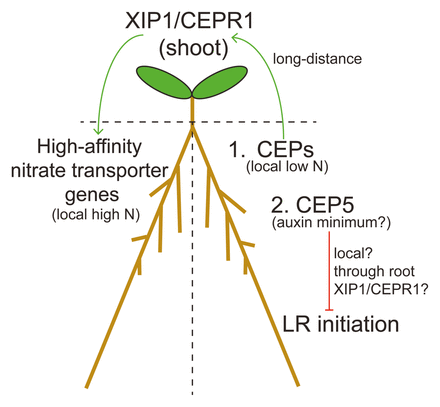
Optimized root system deployment should enable more-efficient nutrient acquisition and increased crop yields. C-TERMINALLY ENCODED PEPTIDE (CEP) hormones and their receptors, which regulate root growth, could be important in research with this aim. Roberts et al. (pages 4889–4899 in this issue) suggest that the full extent of CEP function and signalling is highly complex, and we emerge with a picture of CEPs and their known receptors being involved in long-distance and possibly more local regulatory networks.
Plant growth, development, reproduction and environmental stress responses are tightly regulated by a complex network of signalling pathways. Plant hormones – including salicylic acid, ethylene, jasmonic acid, auxins, gibberellins, cytokinins, abscisic acid and brassinosteroids – have long been considered the major signalling molecules during those processes. However, the discovery that many different (secreted) peptides are involved in signalling has stimulated intensive research, and this special issue reflects the latest developments in this dynamic field.
Molybdenum (Mo) is an essential micronutrient that is required in plant growth and development, and it affects the formation of root nodules and nitrogen fixation in legumes. In this study, Lotus japonicus was grown on MS solid media containing 0 nmol · L−1 (−Mo), 103 nmol · L−1 (+Mo) and 1030 nmol · L−1 (10 × Mo) of Mo. The phenotypes of plants growing on the three different media showed no obvious differences after 15 days, but the plants growing on –Mo for 45 days presented typical symptoms of Mo depletion, such as a short taproot, few lateral roots, and yellowing leaves. A Mo transporter gene, LjMOT1, was isolated from L. japonicus. It encoded 468 amino acids, including two conserved motifs, and was predicted to locate to chromosome 3 of the L. japonicus genome. A homology comparison indicated that LjMOT1 had high similarities to other MOT1 proteins and was closely related to GmMOT1. Subcellular localization indicated that LjMOT1 is localized to the plasma membrane. qRT-PCR analyses showed that increasing Mo concentrations regulated the relative expression level of LjMOT1. Moreover, the Mo concentration in shoots was positively correlated to the expression of LjMOT1, but there was no such evident correlation in the roots. In addition, changes in the nitrate reductase activity were coincident with changes in the Mo concentration. These results suggest that LjMOT1 may be involved in the transport of Mo and provide a theoretical basis for further understanding of the mechanism of Mo transport in higher plants.
In legume-specific rhizobial symbiosis, host plants perceive rhizobial signal molecules, Nod factors, by a couple of LysM receptor like kinases, NFR1/LYK3 and NFR5/NFP, and activate symbiotic responses through the downstream signaling components required also for arbuscular mycorrhizal (AM) symbiosis. Recently, rice NFR1/LYK3 ortholog, OsCERK1, was shown to play crucial roles for AM symbiosis. On the other hand, the roles of NFR5/NFP ortholog in rice have not been elucidated, while it has been shown that NFR5/NFP orthologs, Parasponia PaNFR5 and tomato SlRLK10, engage in AM symbiosis.
OsCERK1 also triggers immune responses in combination with a receptor partner, OsCEBiP, against fungal or bacterial infection, thus regulating opposite responses against symbiotic and pathogenic microbes. However, it has not been elucidated how OsCERK1 switches these opposite functions. Here, we analyzed the function of rice NFR5/NFP ortholog, OsNFR5/OsRLK2, as a possible candidate of the OsCERK1 partner for symbiotic signaling.
Inoculation of AM fungi induced the expression of OsNFR5 in the rice root and the chimeric receptor consisting of the extracellular domain of LjNFR5 and the intracellular domain of OsNFR5 complemented Ljnfr5 mutant for rhizobial symbiosis, indicating that the intracellular kinase domain of OsNFR5 could activate symbiotic signaling in L. japonicus. Although these data suggested the possible involvement of OsNFR5 in AM symbiosis, osnfr5 knockout mutants were colonized by AM fungi similar to the wild-type rice. These observations suggested several possibilities including the presence of functionally redundant genes other than OsNFR5 or involvement of novel ligands, which do not require OsNFR5 for recognition.
Cereals form complex root systems composed of different root types. Lateral root formation is a major determinant of root architecture and is instrumental for the efficient uptake of water and nutrients. Positioning and patterning of lateral roots and cell types involved in their formation are unique in monocot cereals. Recent discoveries advanced the molecular understanding of the intrinsic genetic control of initiation and elongation of lateral roots in cereals by distinct, in part root-type-specific genetic programs. Moreover, molecular networks modulating the plasticity of lateral root formation in response to water and nutrient availability and arbuscular mycorrhizal fungal colonization have been identified. These novel discoveries provide a better mechanistic understanding of postembryonic lateral root development in cereals.
To get content containing either thought or leadership enter:
To get content containing both thought and leadership enter:
To get content containing the expression thought leadership enter:
You can enter several keywords and you can refine them whenever you want. Our suggestion engine uses more signals but entering a few keywords here will rapidly give you great content to curate.


 Your new post is loading...


 Scoop.it!