Your new post is loading...

|
Scooped by
Jean-Michel Ané
January 29, 2017 6:24 PM
|
Quercus liaotungensis is a major tree species in deciduous broad-leaved forests in northern China. In this study, we investigated ectomycorrhizal (ECM) communities associated with Q. liaotungensis from five typical habitats across northern China. We used internal transcribed spacer-polymerase chain reaction and DNA sequencing to identify ECM fungi, and we detected 220 operational taxonomic units. In general, at the regional scale, the dominant ECM lineages were /tomentella-thelephora, /cenococcum, /russula-lactarius, and /inocybe. Analysis of variance demonstrated significant differences in alpha diversity among these ECM communities, and the ECM fungal richness was positively correlated with elevation and soil organic matter. Analysis of similarity and a nonmetric multidimensional scaling analysis revealed that there were significant differences in community composition, and the geographical distance was correlated with the ECM fungal communities. Among the environmental factors we studied, soil parameters and climate factors were the primary direct driving factors of the ECM fungal communities. Our study primarily advances our understanding of environmental factors affecting ECM fungal communities at regional scale.
|
|
Scooped by
Jean-Michel Ané
January 29, 2017 6:21 PM
|
In order to evaluate arbuscular mycorrhizal fungi and rhizobium bacteria effects on leaf nitrogen (N) and phosphorus (P) concentration and root characteristics of green bean and maize under intercropping, experiment was carried out in the research field of College of Agriculture, Payame Noor University of Azna, Lorestan, Iran. In experiment, sandy loam soil with pH 7.3 and EC 0.49 dS m-1 was used.The treatments comprised three cropping systems (sole cropping of green bean and maize, and intercropping), and four inoculations (control, arbuscular mycorrhizal fungi, rhizobium and mix of arbuscular mycorrhizal fungi and rhizobium). The results showed that inoculation with rhizobium improved length, diameter, volume and area of green bean root.The highest of green bean N, P concentration and root dry mass were observed in sole culture of green bean inoculated with arbuscular mycorrhizal fungi. Moreover, root length, diameter, volume and area of maize increased by arbuscular mycorrhizal fungi, and total concentration of N and P enhanced with use of rhizobium in sole cropping. Although the usage of Rhizobium and AMF can be affected on increasing the root growth and nutrient uptake of crops, application of bacterium and fungi combination at the same time would not be suitable. Overall, intercropping of maize with green bean caused to increase of leaf N and P concentrations and root growth of maize.
|
|
Scooped by
Jean-Michel Ané
January 29, 2017 6:00 PM
|
Three organic phosphorus-mineralizing bacteria (OPMB) strains were inoculated to soil planted with soybean (Glycine max) respectively, and their effects on soybean growth and indigenous bacterial community diversity were investigated. Inoculation with Pseudomonas fluorescens Z4-1 and Brevibacillus agri L7-1 increased organic phosphorus degradation by 22% and 30%, respectively, compared with the control at the mature stage. Strains P. fluorescens Z4-1 and B. agri L7-1 significantly improved the soil alkaline phosphatase activity, average well color development, and the soybean root activity. Terminal restriction fragment length polymorphism analysis demonstrated that P. fluorescens Z4-1 and B. agri L7-1 could persist in the soil at relative abundances of 2.0–6.4% throughout soybean growth. Thus, P. fluorescens Z4-1 and B. agri L7-1 could potentially be used in organic phosphorus-mineralizing biofertilizers. OPMB inoculation altered the genetic structure of the soil bacterial communities but it had no apparent influence on the carbon source utilization profiles of the soil bacterial communities. Principal components analysis showed that the changes in the carbon source utilization profiles of bacterial community depended mainly on the plant growth stages rather than inoculation with OPMB. The results help to understand the evolution of the soil bacterial community after OPMB inoculation.
|
|
Rescooped by
Jean-Michel Ané
from Plant Sciences
January 22, 2017 7:55 PM
|
In 2017, INRA will be recruiting 32 research scientists to reinforce its teams. Positions are open to all nationalities. Applications will be open from 26 January to 1st March (for online applications) or 3 March 2017 (for paper applications).
Via Saclay Plant Sciences
Endosymbiosis of bacteria by eukaryotes is a defining feature of cellular evolution. In addition to well known bacterial origins for mitochondria and chloroplasts, multiple origins of bacterial endosymbiosis are known within the cells of diverse animals, plants, and fungi. Early-diverging lineages of terrestrial fungi harbor endosymbiotic bacteria belonging to the Burkholderiaceae. We sequenced the metagenome of the soil-inhabiting fungus Mortierella elongata and assembled the complete circular chromosome of its endosymbiont, Mycoavidus cysteinexigens, which we place within in a lineage of endofungal symbionts that are sister clade to Burkholderia. The M. elongata strain AG77 genome features a core set of primary metabolic pathways for degradation of simple carbohydrates and lipid biosynthesis, while the M. cysteinexigens (AG77) genome is reduced in size and function. Experiments using antibiotics to cure the endobacterium from the host demonstrate that the fungal host metabolism is highly modulated by presence/absence of M. cysteinexigens. Independent comparative phylogenomic analyses of fungal and bacterial genomes are consistent with an ancient origin for M. elongata – M. cysteinexigens symbiosis, most likely over 350 million years ago and concomitant with the terrestrialization and diversification of fungi and plants
Via Francis Martin
|
|
Scooped by
Jean-Michel Ané
January 12, 2017 10:00 AM
|
Several hundred genes are transcriptionally regulated during infection thread formation and development of nitrogen fixing root nodules. We have characterized a set of Lotus japonicus mutants impaired in root nodule formation and found that the causative gene, Ern1, encodes a protein with a characteristic APETALA2/Ethylene Responsive Factor (AP2/ERF) transcription factor domain. Phenotypic characterisation of four ern1 alleles shows that infection pockets are formed but root hair infection threads are absent. Formation of root nodule primordia is delayed and no normal trans-cellular infection threads are found in the infected nodules. Corroborating the role of ERN1 in nodule organogenesis, spontaneous nodulation induced by an autoactive CCaMK and cytokinin induced nodule primordia were not observed in ern1 mutants. Expression of Ern1 is induced in the susceptible zone by Nod factor treatment or rhizobial inoculation. At the cellular level, the pErn1:GUS reporter is highly expressed in root epidermal cells of the susceptible zone and in the cortical cells that form nodule primordia. The genetic regulation of this cellular expression pattern was further investigated in symbiotic mutants. Nod factor induction of Ern1 in epidermal cells was found to depend on Nfr1, Cyclops and Nsp2 but was independent of Nin and Nf-ya1. These results suggest that ERN1 functions as a transcriptional regulator involved in the formation of infection threads and development of nodule primordia, and may coordinate these two processes.
|
|
Scooped by
Jean-Michel Ané
January 10, 2017 12:53 PM
|
The molecular mechanisms of symbiosis in cultivated peanut with a ‘crack entry’ infection process are largely understudied. In this study, we investigated the root transcriptional profiles of two pairs of non-nodulating (nod−) and nodulating (nod+) sister inbred peanut lines, E4/E5 and E7/E6, and their nod+ parents, F487A and PI262090 during rhizobial infection and nodule initiation by using RNA-seq technology. A total of 143, 101, 123, 215, 182, and 289 differentially expressed genes (DEGs) were identified in nod− E4, E7 and nod+ E5, E6, F487A, and PI262090 after inoculation with Bradyrhizobium sp. Different deficiencies at upstream of symbiotic signaling pathway were revealed in the two nod− genotypes. DEGs specific in nod+ genotypes included orthologs to some known symbiotic signaling pathway genes, such as NFR5, NSP2, NIN, ERN1, and many other novel and/or functionally unknown genes. Gene ontology (GO) enrichment analysis of nod+ specific DEGs revealed 54 significantly enriched GO terms, including oxidation-reduction process, metabolic process, and catalytic activity. Genes related with plant defense systems, hormone biosynthesis and response were particularly enriched. To our knowledge, this is the first report revealing symbiosis-related genes in a genome-wide manner in peanut representative of the ‘crack entry’ species.
|
|
Scooped by
Jean-Michel Ané
January 10, 2017 10:02 AM
|
We examine recent evidence for ratchet-like genome degradation in mycoheterotrophs, plants that obtain nutrition from fungi. Initial loss of the NADH dehydrogenase-like (NDH) complex may often set off an irreversible evolutionary cascade of photosynthetic gene losses. Genes for plastid-encoded subunits of RNA polymerase and photosynthetic enzymes with secondary functions (Rubisco and ATP synthase) can persist initially, with nonsynchronous and quite broad windows in the relative timing of their loss. Delayed losses of five core nonbioenergetic genes (especially trnE and accD, which respectively code for glutamyl tRNA and a subunit of acetyl-CoA carboxylase) probably explain long-term persistence of heterotrophic plastomes. The observed range of changes of mycoheterotroph plastomes is similar to that of holoparasites, although greater diversity of both probably remains to be discovered. These patterns of gene loss/retention can inform research programs on plastome function.
|
|
Scooped by
Jean-Michel Ané
January 8, 2017 10:22 PM
|
Abstract: Soil fertility is one of the major limiting factors for crop’s productivity in Egypt and the world in general. Biological nitrogen fixation (BNF) has a great importance as a non-polluting and a cost-effective way to improve soil fertility through supplying N to different agricultural systems. Faba bean (Vicia faba L.) is one of the most efficient nitrogen-fixing legumes that can meet all of their N needs through BNF. Therefore, understanding the impact of rhizobial inoculation and contrasting soil rhizobia on nodulation and N2 fixation in faba bean is crucial to optimize the crop yield, particularly under low fertility soil conditions. This study investigated the symbiotic effectiveness of 17 Rhizobium/Agrobacterium strains previously isolated from different Egyptian governorates in improving the nodulation and N2 fixation in faba bean cv. Giza 843 under controlled greenhouse conditions. Five strains that had a high nitrogen-fixing capacity under greenhouse conditions were subsequently tested in field trials as faba bean inoculants at Ismaillia Governorate in northeast Egypt in comparison with the chemical N-fertilization treatment (96 kg N·ha−1). A starter N-dose (48 kg N·ha−1) was applied in combination with different Rhizobium inoculants. The field experiments were established at sites without a background of inoculation under low fertility sandy soil conditions over two successive winter growing seasons, 2012/2013 and 2013/2014. Under greenhouse conditions, inoculated plants produced significantly higher nodules dry weight, plant biomass, and shoot N-uptake than non-inoculated ones. In the first season (2012/2013), inoculation of field-grown faba bean showed significant improvements in seed yield (3.73–4.36 ton·ha−1) and seed N-yield (138–153 Kg N·ha−1), which were higher than the uninoculated control (48 kg N·ha−1) that produced 2.97 Kg·ha−1 and 95 kg N·ha−1, respectively. Similarly, in the second season (2013/2014), inoculation significantly improved seed yield (3.16–4.68 ton·ha−1) and seed N-yield (98–155 Kg N·ha−1) relative to the uninoculated control (48 kg N·ha−1), which recorded 2.58 Kg·ha−1 and 80 kg N·ha−1, respectively. Interestingly, faba bean inoculated with strain Rlv NGB-FR 126 showed significant increments in seed yield (35%–48%) and seed N-yield (34%–49%) compared to the inorganic N fertilizers treatment (96 kg N·ha−1) over the two cropping seasons, respectively. These results indicate that inoculation of faba bean with effective rhizobial strains can reduce the need for inorganic N fertilization to achieve higher crop yield under low fertility soil conditions.
|
|
Scooped by
Jean-Michel Ané
January 8, 2017 10:20 PM
|
The chemical synthesis of DNA oligonucleotides and their assembly into synthons, genes, circuits, and even entire genomes by gene synthesis methods has become an enabling technology for modern molecular biology and enables the design, build, test, learn, and repeat cycle underpinning innovations in synthetic biology. In this perspective, we briefly review the techniques and technologies that enable the synthesis of DNA oligonucleotides and their assembly into larger DNA constructs with a focus on recent advancements that have sought to reduce synthesis cost and increase sequence fidelity. The development of lower-cost methods to produce high-quality synthetic DNA will allow for the exploration of larger biological hypotheses by lowering the cost of use and help to close the DNA read–write cost gap.
|
|
Rescooped by
Jean-Michel Ané
from Host Microbe Interactions
January 4, 2017 9:51 AM
|
Colonization of plant roots by Bacillus subtilis is mutually beneficial to plants and bacteria. Plants can secrete up to 30% of their fixed carbon via root exudates, thereby feeding the bacteria, and in return the associated B. subtilis bacteria provide the plant with many growth-promoting traits. Formation of a biofilm on the root by matrix-producing B. subtilis is a well-established requirement for long-term colonization. However, we observed that cells start forming a biofilm only several hours after motile cells first settle on the plant. We also found that intact chemotaxis machinery is required for early root colonization by B. subtilis and for plant protection. Arabidopsis thaliana root exudates attract B. subtilis in vitro, an activity mediated by the two characterized chemoreceptors, McpB and McpC, as well as by the orphan receptor TlpC. Nonetheless, bacteria lacking these chemoreceptors are still able to colonize the root, suggesting that other chemoreceptors might also play a role in this process. These observations suggest that A. thaliana actively recruits B. subtilis through root-secreted molecules, and our results stress the important roles of B. subtilis chemoreceptors for efficient colonization of plants in natural environments. These results demonstrate a remarkable strategy adapted by beneficial rhizobacteria to utilize carbon-rich root exudates, which may facilitate rhizobacterial colonization and a mutualistic association with the host.
IMPORTANCE Bacillus subtilis is a plant growth-promoting rhizobacterium that establishes robust interactions with roots. Many studies have now demonstrated that biofilm formation is required for long-term colonization. However, we observed that motile B. subtilis mediates the first contact with the roots. These cells differentiate into biofilm-producing cells only several hours after the bacteria first contact the root. Our study reveals that intact chemotaxis machinery is required for the bacteria to reach the root. Many, if not all, of the B. subtilis 10 chemoreceptors are involved in the interaction with the plant. These observations stress the importance of root-bacterium interactions in the B. subtilis lifestyle.
Via Ryohei Thomas Nakano
|
|
Scooped by
Jean-Michel Ané
January 2, 2017 10:53 AM
|
The effects of inoculation with an arbuscular mycorrhizal (AM) fungus on Cd and Ni tolerance and uptake in Medicago sativa, an AM host, and Sesuvium portulacastrum, a non-host plant, were investigated in a greenhouse experiment. The plants were cultivated in sterilized sand in a two-compartmented system, which prevented root competition but enabled colonization of the whole substrate by AM fungal extraradical mycelium. M. sativa was either left non-inoculated or inoculated with the AM fungus Rhizophagus irregularis, and both plants were either cultivated without heavy metal (HM) addition or supplied with cadmium (Cd) or nickel (Ni), each in two doses. Additional pots with singly cultivated plants were established to control for the effect of the co-cultivation. AM significantly enhanced the growth of M. sativa and substantially increased its uptake of both HMs. The roots of S. portulacastrum became colonized by AM fungal hyphae and vesicles. The presence of the AM fungus in the cultivation system tended to increase the HM uptake of S. portulacastrum, but the effect was less consistent and pronounced than that in M. sativa. We conclude that AM fungal mycelium radiating from M. sativa did not negatively affect the growth and HM uptake of S. portulacastrum. On the contrary, we hypothesize that it stimulated the absorption and translocation of Cd and Ni in the non-host species. Thus, our results suggest that AM fungal mycelium radiating from mycorrhizal plants does not decrease the HM uptake of non-host plants, many of which are considered promising candidate plants for phytoremediation.
|
|
Scooped by
Jean-Michel Ané
December 28, 2016 12:00 PM
|
Just how error-prone and self-correcting is science? We have spent the past 18 months getting a sense of that.
Scientific method: Statistical errors
We are a group of researchers working on obesity, nutrition and energetics. In the summer of 2014, one of us (D.B.A.) read a research paper in a well-regarded journal estimating how a change in fast-food consumption would affect children's weight, and he noted that the analysis applied a mathematical model that overestimated effects by more than tenfold. We and others submitted a letter1 to the editor explaining the problem. Months later, we were gratified to learn that the authors had elected to retract their paper. In the face of popular articles proclaiming that science is stumbling, this episode was an affirmation that science is self-correcting.
|
|
|
Scooped by
Jean-Michel Ané
January 29, 2017 6:21 PM
|
Anthropogenic disturbance is one of the most important forces shaping soil ecosystems. While organisms that live in the soil, such as arbuscular mycorrhizal (AM) fungi, are sensitive to disturbance, their response is not always predictable. Given the range of disturbance types and differences among AM fungi in their growth strategies, the unpredictability of the responses of AM fungi to disturbance is not surprising. We investigated the role of disturbance type (i.e., soil disruption, agriculture, host perturbation, and chemical disturbance) and fungus identity on disturbance response in the AM symbiosis. Using meta-analysis, we found evidence for differential disturbance response among AM fungal species, as well as evidence that particular fungal species are especially susceptible to certain disturbance types, perhaps because of their life history strategies.
|
|
Scooped by
Jean-Michel Ané
January 29, 2017 6:20 PM
|
Background and aims
Seeds are inhabited by diverse bacterial and fungal taxa whose colonization patterns are little understood. We hypothesized, however, that specific niches within seeds host microbes.
Methods
In this study, the putative presence of bacteria, inhabiting the seed endosphere of an angiosperm, the melon Cucumis melo reticulatus group cv. ‘Dulce’, was examined by scanning electron microscopy (SEM) and confocal laser-scanning microscopy coupled with double labeling of oligonucleotide probes for fluorescence in situ hybridization (DOPE-FISH).
Results
SEM images showed microbial-like structures in different tissues and FISH revealed endophytic bacteria colonizing the outer and inner seed parts, on perisperm/endosperm envelope, inside the cotyledons as parts of the embryo, and, to a lesser extent, inside embryonic hypocotyl-root axis tissues. Alphaproteobacteria were shown to inhabit the seed coat and the envelope surrounding the embryonic hypocotyl-root tissues, but could not be seen in the cotyledons, whereas Betaproteobacteria were only detected in the outer seed coat. Some Gammaproteobacteria were also seen in the outer seed coat, but were mainly visualized in the cotyledons with a few inside the seed’s embryonic hypocotyl-root tissues, among other bacteria. Firmicutes were visualized inside the seed coat, but mostly inside the cotyledon tissues, on the perisperm/endosperm envelope and inside the embryonic hypocotyl-root axis tissues. Microscopy revealed Actinobacteria inside the inner and outer seed coat and inside the embryonic parts such as cotyledons, with a few inside the hypocotyl-root axis.
Conclusions
This is the first demonstration of niches for the most active groups of bacteria inhabiting different seed tissues of an angiosperm.
|
|
Scooped by
Jean-Michel Ané
January 29, 2017 11:19 AM
|
Highlights
•
The plant thioredoxin Trx s1 is targeted to nitrogen-fixing bacteroids
•
Trx s1 is necessary for bacteroid differentiation
•
Trx s1 controls the redox state of nodule-specific cysteine-rich peptides (NCRs)
•
Trx s1 regulates the cytotoxic activity of NCR335 in Sinorhizobium meliloti
Summary
Legumes associate with rhizobia to form nitrogen (N2)-fixing nodules, which is important for plant fitness [1 and 2]. Medicago truncatula controls the terminal differentiation of Sinorhizobium meliloti into N2-fixing bacteroids by producing defensin-like nodule-specific cysteine-rich peptides (NCRs) [ 3 and 4]. The redox state of NCRs influences some biological activities in free-living bacteria, but the relevance of redox regulation of NCRs in planta is unknown [ 5 and 6], although redox regulation plays a crucial role in symbiotic nitrogen fixation [ 7 and 8]. Two thioredoxins (Trx), Trx s1 and s2, define a new type of Trx and are expressed principally in nodules [9]. Here, we show that there are four Trx s genes, two of which, Trx s1 and s3, are induced in the nodule infection zone where bacterial differentiation occurs. Trx s1 is targeted to the symbiosomes, the N2-fixing organelles. Trx s1 interacted with NCR247 and NCR335 and increased the cytotoxic effect of NCR335 in S. meliloti. We show that Trx s silencing impairs bacteroid growth and endoreduplication, two features of terminal bacteroid differentiation, and that the ectopic expression of Trx s1 in S. meliloti partially complements the silencing phenotype. Thus, our findings show that Trx s1 is targeted to the bacterial endosymbiont, where it controls NCR activity and bacteroid terminal differentiation. Similarly, Trxs are critical for the activation of defensins produced against infectious microbes in mammalian hosts. Therefore, our results suggest the Trx-mediated regulation of host peptides as a conserved mechanism among symbiotic and pathogenic interactions.
|
|
Scooped by
Jean-Michel Ané
January 22, 2017 7:55 PM
|
Conserved pathogen-associated molecular patterns (PAMPs), such as chitin, are perceived by pattern recognition receptors (PRRs) located at the host cell surface and trigger rapid activation of mitogen-activated protein kinase (MAPK) cascades, which is required for plant resistance to pathogens. However, the direct link from PAMP perception to MAPK activation in plants is elusive. Here, we found that the PRR-associated receptor-like cytoplasmic kinase Oryza sativa RLCK185 transmits immune signaling from the PAMP receptor OsCERK1 to a MAPK signaling cascade through interaction with a MAPK kinase kinase, OsMAPKKKε, which is the initial kinase of the MAPK cascade. OsRLCK185 interacts with and phosphorylates the C-terminal regulatory domain of OsMAPKKKε. Coexpression of phosphomimetic OsRLCK185 and OsMAPKKKε activates MAPK3/6 phosphorylation in Nicotiana benthamiana leaves. OsMAPKKKε interacts with and phosphorylates OsMKK4, a key MAPK kinase that transduces the chitin signal. OsMAPKKKε overexpression increases chitin-induced MAPK3/6 activation. OsMAPKKKε knockdown compromises chitin-induced MAPK3/6 activation and resistance to rice blast fungus. These findings suggest a phospho-signaling pathway from cell surface chitin perception to intracellular activation of a MAPK cascade in rice.
|
|
Scooped by
Jean-Michel Ané
January 17, 2017 12:52 PM
|
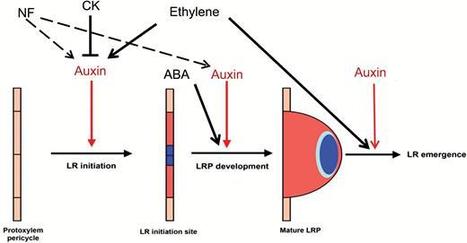
Nodulation (Nod) factors (NFs) are symbiotic molecules produced by rhizobia that are essential for establishment of the rhizobium–legume endosymbiosis. Purified NFs can stimulate lateral root formation (LRF) in Medicago truncatula, but little is known about the molecular mechanisms involved. Using a combination of reporter constructs, pharmacological and genetic approaches, we show that NFs act on early steps of LRF in M. truncatula, independently of the ethylene signaling pathway and of the cytokinin receptor MtCRE1, but in interaction with auxin. We conducted a whole-genome transcriptomic study upon NF and/or auxin treatments, using a lateral root inducible system adapted for M. truncatula. This revealed a large overlap between NF and auxin signaling and, more interestingly, synergistic interactions between these molecules. Three groups showing interaction effects were defined: group 1 contained more than 1500 genes responding specifically to the combinatorial treatment of NFs and auxin; group 2 comprised auxin-regulated genes whose expression was enhanced or antagonized by NFs; and in group 3 the expression of NF regulated genes was antagonized by auxin. Groups 1 and 2 were enriched in signaling and metabolic functions, which highlights important crosstalk between NF and auxin signaling for both developmental and symbiotic processes.
|
|
Scooped by
Jean-Michel Ané
January 11, 2017 3:32 PM
|
|
|
Scooped by
Jean-Michel Ané
January 10, 2017 12:51 PM
|
The presented review discusses state-of-the-art mass spectrometric methods, which have been developed and applied for investigation of chemical processes in the soil-root interface, the so-called rhizosphere. Rhizosphere soil's physical and chemical characteristics are to a great extent influenced by a complex mixture of compounds released from plant roots, i.e. root exudates, which have a high impact on nutrient and trace element dynamics in the soil-root interface as well as on microbial activities or soil physico-chemical characteristics. Chemical characterization as well as accurate quantification of the compounds present in the rhizosphere is a major prerequisite for a better understanding of rhizosphere processes and requires the development and application of advanced sampling procedures in combination with highly selective and sensitive analytical techniques. During the last years, targeted and non-targeted mass spectrometry-based methods have emerged and their combination with specific separation methods for various elements and compounds of a wide polarity range have been successfully applied in several studies. With this review we critically discuss the work that has been conducted within the last decade in the context of rhizosphere research and elemental or molecular mass spectrometry emphasizing different separation techniques as GC, LC and CE. Moreover, selected applications such as metal detoxification or nutrient acquisition will be discussed regarding the mass spectrometric techniques applied in studies of root exudates in plant-bacteria interactions. Additionally, a more recent isotope probing technique as novel mass spectrometry based application is highlighted.
|
|
Scooped by
Jean-Michel Ané
January 8, 2017 10:33 PM
|
Tropical forest productivity is sustained by the cycling of nutrients through decomposing organic matter. Arbuscular mycorrhizal (AM) fungi play a key role in the nutrition of tropical trees, yet there has been little experimental investigation into the role of AM fungi in nutrient cycling via decomposing organic material in tropical forests.
We evaluated the responses of AM fungi in a long-term leaf litter addition and removal experiment in a tropical forest in Panama. We described AM fungal communities using 454-pyrosequencing, quantified the proportion of root length colonised by AM fungi using microscopy, and estimated AM fungal biomass using a lipid biomarker.
AM fungal community composition was altered by litter removal but not litter addition. Root colonisation was substantially greater in the superficial organic layer compared with the mineral soil. Overall colonisation was lower in the litter removal treatment, which lacked an organic layer. There was no effect of litter manipulation on the concentration of the AM fungal lipid biomarker in the mineral soil.
We hypothesise that reductions in organic matter brought about by litter removal may lead to AM fungi obtaining nutrients from recalcitrant organic or mineral sources in the soil, besides increasing fungal competition for progressively limited resources.
|
|
Scooped by
Jean-Michel Ané
January 8, 2017 10:21 PM
|
Rice seedlings (Oryza sativa) inoculated with the plant growth-promoting rhizobacteria Azospirillum brasilense FT326 showed an enhanced development of the root system 3 days after inoculation. Later on, a remarkable enlargement of shoots was also evident. An increase in the Ca2+-dependent histone kinase activity was also detected as a result of inoculation. The biochemical characterization and Western-blot analysis of the kinase strongly supports the hypothesis that it belongs to a member of the rice CDPK family. The fact that the amount of the protein did not change upon inoculation seems to indicate that a posttranslational activation is responsible for the change in the enzymatic activity. An in-gel kinase experiment identified a 46 kDa CDPK like protein kinase as a putative component of the signal transduction pathway triggered by Azospirillum inoculation. To our knowledge, this is the first report on the possible involvement of a Ca2+-dependent protein kinase in promotion of rice plants growth by A. brasilense.
|
|
Scooped by
Jean-Michel Ané
January 7, 2017 12:30 PM
|
Salinity is one of the most severe environmental stress as it decreases crop production of more than 20% of irrigated land worldwide. Hence, it is important to develop salt-tolerant crops. Understanding the mechanisms that enable plant growth under saline conditions is therefore required. Acclimation of plants to salinized conditions depends upon activation of cascades of molecular networks involved in stress sensing, signal transduction, and the expression of specific stress-related genes and metabolites. The stress signal is first perceived at the membrane level by the receptors and then transduced in the cell to switch on the stress-responsive genes which mediate stress tolerance. In addition to stress-adaptative mechanisms developed by plants, arbuscular mycorrhizal fungi have been shown to improve plant tolerance to abiotic environmental factors such as salinity. In this review, we emphasize the significance of arbuscular mycorrhizal fungi alleviation of salt stress and their beneficial effects on plant growth and productivity. Although salinity can affect negatively arbuscular mycorrhizal fungi, many reports show improved growth and performance of mycorrhizal plants under salt stress conditions. These positive effects are explained by improved host plant nutrition, higher K+/Na+ ratios in plant tissues and a better osmotic adjustment by accumulation of compatible solutes such as proline, glycine betaine, or soluble sugars. Arbuscular mycorrhizal plants also improve photosynthetic- and water use efficiency under salt stress. Arbuscular mycorrhizal plants enhance the activity of antioxidant enzymes in order to cope with the reactive oxygen species generated by salinity. At the molecular level, arbuscular mycorrhizal symbiosis regulates the expression of plant genes involved in the biosynthesis of proline, of genes encoding aquaporins, and of genes encoding late embryogenesis abundant proteins, with chaperone activity. The regulation of these genes allows mycorrhizal plants to maintain a better water status in their tissues. Gene expression patterns suggest that mycorrhizal plants are less strained by salt stress than non-mycorrhizal plants. In contrast, scarce information is available on the possible regulation by the arbuscular mycorrhizal symbiosis of plant genes encoding Na+/H+ antiporters or cyclic nucleotide-gated channels. These genes encode proteins with a key role in the regulation of uptake, distribution and compartimentation of sodium and other ions within the plant, and are major determinants for the salt sensitiveness of a plant. Thus, we propose that investigating the participation of cation proton antiporters and cyclic nucleotide-gated channels on arbuscular mycorrhizal symbiosis under salinity is a promising field that should shed further light on new mechanisms involved in the enhanced tolerance of mycorrhizal plants to salt stress.
|
|
Scooped by
Jean-Michel Ané
January 2, 2017 10:55 AM
|
Arbuscular mycorrhizal (AM) symbiosis associates most plants with fungi of the phylum Glomeromycota. The fungus penetrates into roots and forms within cortical cell branched structures called arbuscules for nutrient exchange. We discovered that miR171b has a mismatched cleavage site and is unable to downregulate the miR171 family target gene, LOM1 (LOST MERISTEMS 1). This mismatched cleavage site is conserved among plants that establish AM symbiosis, but not in non-mycotrophic plants. Unlike other members of the miR171 family, miR171b stimulates AM symbiosis and is expressed specifically in root cells that contain arbuscules. MiR171b protects LOM1 from negative regulation by other miR171 family members. These findings uncover a unique mechanism of positive post-transcriptional regulation of gene expression by miRNAs and demonstrate its relevance for the establishment of AM symbiosis.
|
|
Scooped by
Jean-Michel Ané
December 29, 2016 12:09 PM
|
Legume-rhizobium symbiosis is achieved by two major events evolutionarily acquired: root hair infection and organogenesis. Infection thread (IT) development is a distinct element for rhizobial infection. Through ITs, rhizobia are efficiently transported from infection foci on root hairs to dividing meristematic cortical cells. To unveil this process, we performed genetic screening using Lotus japonicus MG-20 and isolated symbiotic mutant lines affecting nodulation, root hair morphology, and IT development. Map-based cloning identified an AP2/ERF transcription factor gene orthologous to Medicago truncatula ERN1. LjERN1 was activated in response to rhizobial infection and depended on CYCLOPS and NSP2. Legumes conserve an ERN1 homolog, ERN2, that functions redundantly with ERN1 in M. truncatula. Phylogenetic analysis showed that the lineages of ERN1 and ERN2 genes originated from a gene duplication event in the common ancestor of legume plants. However, genomic analysis suggested the lack of ERN2 gene in the L. japonicus genome, consistent with Ljern1 mutants exhibited a root hair phenotype that is observed in ern1/ern2 double mutants in M. truncatula. Molecular evolutionary analysis suggested that the nonsynonymous/synonymous rate ratios of legume ERN1 genes was almost identical to that of non-legume plants, whereas the ERN2 genes experienced a relaxed selective constraint.
|


 Scoop.it!