Your new post is loading...
Interfamily transfer of plant pattern recognition receptors (PRRs) represents a promising biotechnological approach to engineer broad-spectrum, and potentially durable, disease resistance in crops. It is however unclear whether new recognition specificities to given pathogen-associated molecular patterns (PAMPs) affect the interaction of the recipient plant with beneficial microbes. To test this in a direct reductionist approach, we transferred the Brassicaceae-specific PRR ELONGATION FACTOR-THERMO UNSTABLE RECEPTOR (EFR) from Arabidopsis thaliana to the legume Medicago truncatula, conferring recognition of the bacterial EF-Tu protein. Constitutive EFR expression led to EFR accumulation and activation of immune responses upon treatment with the EF-Tu-derived elf18 peptide in leaves and roots. The interaction of M. truncatula with the bacterial symbiont Sinorhizobium meliloti is characterized by the formation of root nodules that fix atmospheric nitrogen. Although nodule numbers were slightly reduced at an early stage of the infection in EFR-Medicago when compared to control lines, nodulation was similar in all lines at later stages. Furthermore, nodule colonization by rhizobia, and nitrogen fixation were not compromised by EFR expression. Importantly, the M. truncatula lines expressing EFR were substantially more resistant to the root bacterial pathogen Ralstonia solanacearum. Our data suggest that the transfer of EFR to M. truncatula does not impede root nodule symbiosis, but has a positive impact on disease resistance against a bacterial pathogen. In addition, our results indicate that Rhizobium can either avoid PAMP recognition during the infection process, or is able to actively suppress immune signaling.
Via The Sainsbury Lab

|
Scooped by
Jean-Michel Ané
August 22, 2017 2:34 PM
|
Molybdenum, as a component of the iron-molybdenum cofactor of nitrogenase, is essential for symbiotic nitrogen fixation. This nutrient has to be provided by the host plant through molybdate transporters.
Members of the molybdate transporter family Molybdate Transporter type 1 (MOT1) were identified in the model legume Medicago truncatula and their expression in nodules was determined. Yeast toxicity assays, confocal microscopy, and phenotypical characterization of a Transposable Element from Nicotiana tabacum (Tnt1) insertional mutant line were carried out in the one M. truncatula MOT1 family member specifically expressed in nodules.
Among the five MOT1 members present in the M. truncatula genome, MtMOT1.3 is the only one uniquely expressed in nodules. MtMOT1.3 shows molybdate transport capabilities when expressed in yeast. Immunolocalization studies revealed that MtMOT1.3 is located in the plasma membrane of nodule cells. A mot1.3-1 knockout mutant showed impaired growth concomitant with a reduction of nitrogenase activity. This phenotype was rescued by increasing molybdate concentrations in the nutritive solution, or upon addition of an assimilable nitrogen source. Furthermore, mot1.3-1 plants transformed with a functional copy of MtMOT1.3 showed a wild-type-like phenotype.
These data are consistent with a model in which MtMOT1.3 is responsible for introducing molybdate into nodule cells, which is later used to synthesize functional nitrogenase.
Soil microorganisms are clearly a key component of both natural and managed ecosystems. Despite the challenges of surviving in soil, a gram of soil can contain thousands of individual microbial taxa, including viruses and members of all three domains of life. Recent advances in marker gene, genomic and metagenomic analyses have greatly expanded our ability to characterize the soil microbiome and identify the factors that shape soil microbial communities across space and time. However, although most soil microorganisms remain undescribed, we can begin to categorize soil microorganisms on the basis of their ecological strategies. This is an approach that should prove fruitful for leveraging genomic information to predict the functional attributes of individual taxa. The field is now poised to identify how we can manipulate and manage the soil microbiome to increase soil fertility, improve crop production and improve our understanding of how terrestrial ecosystems will respond to environmental change.
Via Ronny Kellner
|
|
Scooped by
Jean-Michel Ané
August 18, 2017 10:48 AM
|
Breeding for favourable root traits in food and energy crops should be considered in the context of interactions with soil biota, notably those that can increase the nutrient use efficiency of crops. Arbuscular mycorrhizal (AM) fungi can provide services to plants but a better understanding of the interactions between root traits and AM fungi is required to maximise these benefits.
One source of intraspecific variation in root architecture is the allocation of resources to different root types. We hypothesised that different root types would have different traits and be colonised differently by AM fungi, either in the amount of colonisation or identity of colonisers. We studied communities colonising the seminal, coleoptile nodal and leaf nodal roots of seven Brachypodium distachyon accessions grown in three crop or pasture soils.
Leaf nodal roots had low specific root length compared to coleoptile nodal and seminal roots, yet all three root types harboured similar AM fungal communities and levels of colonisation. Most of the variation in the AM fungal communities was explained by soil; significant proportions were explained by plant accession and root type but these effects were weak.
Differential allocation of resources between root types is not a trait that could be selected to maximise beneficial interactions with AM fungi and we found no link between a root phenotypic trait (specific root length) and AM fungal colonisation. Accessions did vary in extent of colonisation by arbuscules, meaning B. distachyon may be a useful model to study mechanisms underlying the symbiotic interface and mycorrhizal growth response of cereals.
|
|
Scooped by
Jean-Michel Ané
August 15, 2017 1:38 PM
|
Molybdenum, as a component of the iron-molybdenum cofactor of nitrogenase, is essential for symbiotic nitrogen fixation. This nutrient has to be provided by the host plant through molybdate transporters. Members of the molybdate transporter family Molybdate Transporter type 1 (MOT1) were identified in the model legume Medicago truncatula and their expression in nodules was determined. Yeast toxicity assays, confocal microscopy, and phenotypical characterization of a Transposable Element from Nicotiana tabacum (Tnt1) insertional mutant line were carried out in the one M. truncatula MOT1 family member specifically expressed in nodules. Among the five MOT1 members present in the M. truncatula genome, MtMOT1.3 is the only one uniquely expressed in nodules. MtMOT1.3 shows molybdate transport capabilities when expressed in yeast. Immunolocalization studies revealed that MtMOT1.3 is located in the plasma membrane of nodule cells. A mot1.3-1 knockout mutant showed impaired growth concomitant with a reduction of nitrogenase activity. This phenotype was rescued by increasing molybdate concentrations in the nutritive solution, or upon addition of an assimilable nitrogen source. Furthermore, mot1.3-1 plants transformed with a functional copy of MtMOT1.3 showed a wild-type-like phenotype. These data are consistent with a model in which MtMOT1.3 is responsible for introducing molybdate into nodule cells, which is later used to synthesize functional nitrogenase.
|
|
Rescooped by
Jean-Michel Ané
from Plant Pathogenomics
August 3, 2017 5:25 PM
|
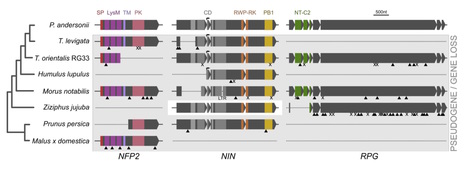
Rhizobium nitrogen-fixing nodules are a well-known trait of legumes, but nodules also occur in other plant lineages either with rhizobium or the actinomycete Frankia as microsymbiont. The widely accepted hypothesis is that nodulation evolved independently multiple times, with only a few losses. However, insight in the evolutionary trajectory of nodulation is lacking. We conducted comparative studies using Parasponia (Cannabaceae), the only non-legume able to establish nitrogen fixing nodules with rhizobium. This revealed that Parasponia and legumes utilize a large set of orthologous symbiosis genes. Comparing genomes of Parasponia and its non-nodulating relative Trema did not reveal specific gene duplications that could explain a recent gain of nodulation in Parasponia. Rather, Trema and other non-nodulating species in the order Rosales show evidence of pseudogenization or loss of key symbiosis genes. This demonstrates that these species have lost the potential to nodulate. This finding challenges a long-standing hypothesis on evolution of nitrogen-fixing symbioses, and has profound implications for translational approaches aimed at engineering nitrogen-fixing nodules in crop plants.
Via Kamoun Lab @ TSL
|
|
Scooped by
Jean-Michel Ané
July 24, 2017 9:29 AM
|
The calcium-based intracellular signalling system is used ubiquitously to couple extracellular stimuli to their characteristic intracellular responses. It is becoming clear from genomic and physiological investigations that while the basic elements in the toolkit are common between plants and animals, evolution has acted in such a way that, in plants, some components have diversified with respect to their animal counterparts, while others have either been lost or have never evolved in the plant lineages. In comparison with animals, in plants there appears to have been a loss of diversity in calcium-influx mechanisms at the plasma membrane. However, the evolution of the calcium-storing vacuole may provide plants with additional possibilities for regulating calcium influx into the cytosol. Among the proteins that are involved in sensing and responding to increases in calcium, plants possess specific decoder proteins that are absent from the animal lineage. In seeking to understand the selection pressures that shaped the plant calcium-signalling toolkit, we consider the evolution of fast electrical signalling. We also note that, in contrast to animals, plants apparently do not make extensive use of cyclic-nucleotide-based signalling. It is possible that reliance on a single intracellular second-messenger-based system, coupled with the requirement to adapt to changing environmental conditions, has helped to define the diversity of components found in the extant plant calcium-signalling toolkit.
|
|
Scooped by
Jean-Michel Ané
July 19, 2017 12:47 PM
|
Orchid mycorrhizal protocorms and roots are heterogeneous structures composed of different plant cell-types, where cells colonized by intracellular fungal coils (the pelotons) are close to non-colonized plant cells. Moreover, the fungal coils undergo rapid turnover inside the colonized cells, so that plant cells containing coils at different developmental stages can be observed in the same tissue section. Here, we have investigated by laser microdissection (LMD) the localization of specific plant gene transcripts in different cell-type populations collected from mycorrhizal protocorms and roots of the Mediterranean orchid Serapias vomeracea colonized by Tulasnella calospora. RNAs extracted from the different cell-type populations have been used to study plant gene expression, focusing on genes potentially involved in N uptake and transport and previously identified as up-regulated in symbiotic protocorms. Results clearly showed that some plant N transporters are differentially expressed in cells containing fungal coils at different developmental stages, as well as in non-colonized cells, and allowed the identification of new functional markers associated to coil-containing cells.
|
|
Scooped by
Jean-Michel Ané
July 8, 2017 2:27 PM
|
Nitrate plays an essential role during plant development as nutrient and also as signal molecule, in both cases working via the activity of nitrate transporters. To date, few studies on NRT2 or NPF nitrate transporters in legumes have been reported, and most of those concern Lotus japonicus and Medicago truncatula. A molecular characterization led to the identification of 4 putative LjNRT2 and 37 putative LjNPF gene sequences in L. japonicus. In M. truncatula, the NRT2 family is composed of 3 putative members. Using the new genome annotation of M. truncatula (Mt4.0), we identified, for this review, 97 putative MtNPF sequences, including 32 new sequences relative to previous studies. Functional characterization has been published for only two MtNPF genes, encoding nitrate transporters of M. truncatula. Both transporters have a role in root system development via abscisic acid signaling: MtNPF6.8 acts as a nitrate sensor during the cell elongation of the primary root, while MtNPF1.7 contributes to the cellular organization of the root tip and nodule formation. An in silico expression study of MtNPF genes confirmed that NPF genes are expressed in nodules, as previously shown for L. japonicus, suggesting a role for the corresponding proteins in nitrate transport, or signal perception in nodules. This review summarizes our knowledge of legume nitrate transporters and discusses new roles for these proteins based on recent discoveries.
|
|
Rescooped by
Jean-Michel Ané
from general stuff
July 6, 2017 10:37 AM
|
Disease is as much about the host as it is the infectious agent — the focus on microbes is hindering research into treatments, say Arturo Casadevall and Liise-anne Pirofski.
Via nemopeeters
|
|
Scooped by
Jean-Michel Ané
July 5, 2017 9:56 AM
|
Technologies enabling in situ metabolic profiling of living plant systems are invaluable for understanding physiological processes and could be used for rapid phenotypic screening (e.g., to produce plants with superior biological nitrogen-fixing ability). The symbiotic interaction between legumes and nitrogen-fixing soil bacteria results in a specialized plant organ (i.e., root nodule) where the exchange of nutrients between host and endosymbiont occurs. Laser-ablation electrospray ionization mass spectrometry (LAESI-MS) is a method that can be performed under ambient conditions requiring minimal sample preparation. Here, we employed LAESI-MS to explore the well characterized symbiosis between soybean (Glycine max L. Merr.) and its compatible symbiont, Bradyrhizobium japonicum. The utilization of ion mobility separation (IMS) improved the molecular coverage, selectivity, and identification of the detected biomolecules. Specifically, incorporation of IMS resulted in an increase of 153 differentially abundant spectral features in the nodule samples. The data presented demonstrate the advantages of using LAESI–IMS–MS for the rapid analysis of intact root nodules, uninfected root segments, and free-living rhizobia. Untargeted pathway analysis revealed several metabolic processes within the nodule (e.g., zeatin, riboflavin, and purine synthesis). Compounds specific to the uninfected root and bacteria were also detected. Lastly, we performed depth profiling of intact nodules to reveal the location of metabolites to the cortex and inside the infected region, and lateral profiling of sectioned nodules confirmed these molecular distributions. Our results established the feasibility of LAESI–IMS–MS for the analysis and spatial mapping of plant tissues, with its specific demonstration to improve our understanding of the soybean-rhizobial symbiosis.
|
|
Scooped by
Jean-Michel Ané
July 3, 2017 3:36 PM
|
Arbuscular mycorrhizal fungi (AMF) constitute a key functional group of soil biota that can greatly contribute to crop productivity and ecosystem sustainability. They improve nutrient uptake and enhance the ability of plants to cope with abiotic stresses. The presence of AMF in coffee (Coffea arabica L.) plant roots have been reported in several locations but not in Saudi Arabia despite the fact that coffee has been in cultivation here since ancient times. The objective of the present study was to investigate the diversity of AMF communities colonizing the roots of coffee trees growing in two sites of Fifa Mountains (south-west Saudi Arabia): site 1 at 700 m altitude and site 2 at 1400 m. The AMF large subunit rDNA regions (LSU) were subjected to nested PCR, cloning, sequencing, and phylogenetic analysis. Microscopic observations indicated higher mycorrhizal intensity (24.3%) and spore density (256 spores/100 g of soil) in site 2 (higher altitude). Phylogenetic analysis revealed 10 phylotypes, six belonging to the family Glomeraceae, two to Claroideoglomercea, one to Acaulosporaceae and one to Gigasporaceae family. Glomus was the dominant genus at both sites and the genus Gigaspora was detected only at site 2. This is the first study reporting the presence of AMF in coffee roots and the composition of this particular mycorrhizal community in Saudi Arabia.
|
|
Scooped by
Jean-Michel Ané
July 3, 2017 3:19 PM
|
At present, drought and soil salinity are among the most severe environmental stresses that affect the growth of plants through marked reduction of water uptake which lowers water potential, leading to osmotic stress. In general, osmotic stress causes a series of morphological, physiological, biochemical, and molecular changes that affect plant performance. Several studies have found that diverse types of soil microorganisms improve plant growth, especially when plants are under stressful conditions. Most important are the arbuscular mycorrhizal fungi (AMF) which form arbuscular mycorrhizas (AM) with approximately 80% of plant species and are present in almost all terrestrial ecosystems. Beyond the well-known role of AM in improving plant nutrient uptake, the contributions of AM to plants coping with osmotic stress merit analysis. With this review, we describe the principal direct and indirect mechanisms by which AM modify plant responses to osmotic stress, highlighting the role of AM in photosynthetic activity, water use efficiency, osmoprotectant production, antioxidant activities, and gene expression. We also discuss the potential for using AMF to improve plant performance under osmotic stress conditions and the lines of research needed to optimize AM use in plant production.
|
|
|
Scooped by
Jean-Michel Ané
August 22, 2017 2:35 PM
|
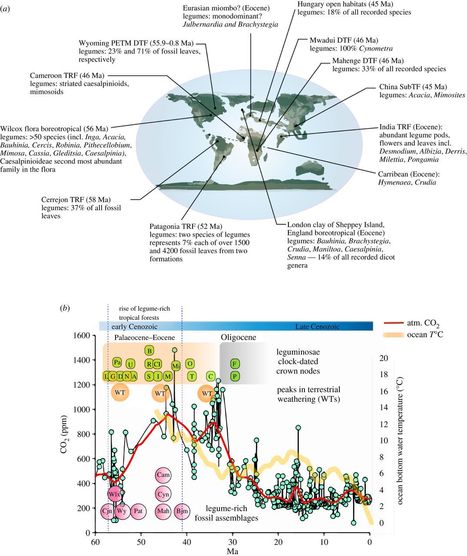
Fossil and phylogenetic evidence indicates legume-rich modern tropical forests replaced Late Cretaceous palm-dominated tropical forests across four continents during the early Cenozoic (58–42 Ma). Tropical legume trees can transform ecosystems via their ability to fix dinitrogen (N2) and higher leaf N compared with non-legumes (35–65%), but it is unclear how their evolutionary rise contributed to silicate weathering, the long-term sink for atmospheric carbon dioxide (CO2). Here we hypothesize that the increasing abundance of N2-fixing legumes in tropical forests amplified silicate weathering rates by increased input of fixed nitrogen (N) to terrestrial ecosystems via interrelated mechanisms including increasing microbial respiration and soil acidification, and stimulating forest net primary productivity. We suggest the high CO2 early Cenozoic atmosphere further amplified legume weathering. Evolution of legumes with high weathering rates was probably driven by their high demand for phosphorus and micronutrients required for N2-fixation and nodule formation.
|
|
Scooped by
Jean-Michel Ané
August 22, 2017 9:52 AM
|
Members of the genus Burkholderia (β-proteobacteria) have only recently been shown to be able to establish a nitrogen-fixing symbiosis with several legumes, which is why they are also referred to as β-rhizobia. Therefore, very little is known about the competitiveness of these species to nodulate different legume host plants. In this study, we tested the competitiveness of several Burkholderia type strains (B. diazotrophica, B. mimosarum, B. phymatum, B. sabiae, B. symbiotica and B. tuberum) to nodulate four legumes (Phaseolus vulgaris, Macroptilium atropurpureum, Vigna unguiculata and Mimosa pudica) under our closely defined growth conditions. The assessment of nodule occupancy of these species on different legume host plants revealed that B. phymatum was the most competitive strain in the three papilionoid legumes (bean, cowpea and siratro), while B. mimosarum outcompeted the other strains in mimosa. The analysis of phenotypes known to play a role in nodulation competitiveness (motility, exopolysaccharide production) and additional in vitro competition assays among β-rhizobial strains suggested that B. phymatum has the potential to be a very competitive legume symbiont.
|
|
Rescooped by
Jean-Michel Ané
from Host:microbe Interactions
August 20, 2017 4:25 PM
|
Like the proverbial tree falling in a forest with no one around to hear it, science discoveries cannot have an impact unless people learn about them. The act of communication is part and parcel of doing research. And in an era increasingly defined by open access, crowdfunding, and citizen science endeavors, there is a growing demand for researchers to communicate their findings not just within their field—via institutional seminars, conference presentations, and peer-reviewed publications—but to general audiences as well. One of our main endeavors as scientists then, must be to present discoveries about which the public will care.
Via Jonathan Plett
|
|
Scooped by
Jean-Michel Ané
August 16, 2017 9:05 PM
|
Plant microbiome research highlights the importance of indigenous microbial communities for host phenotypes such as growth and health. It aims to discover the molecular basis by which host-microbe and microbe-microbe interactions shape and maintain microbial communities and to understand the role of individual microorganisms, as well as their collective ecosystem function. Here, we discuss reductionist approaches to disentangle the inherent complexity of interactions in situ. Experimentally tractable, synthetic communities enable testing of hypotheses by targeted manipulation in gnotobiotic systems. Modifications of microbial, host, and environmental parameters allow for the quantitative assessment of host and microbe characteristics with dynamic and spatial resolution. We summarize first insights from this emerging field and discuss current challenges and limitations. Using multifaceted approaches to detect interactions and functions will provide new insights into the fundamental biology of plant-microbe interactions and help to harness the power of the microbiome.
|
|
Scooped by
Jean-Michel Ané
August 15, 2017 1:24 PM
|
Strigolactones (SLs) influence the ability of legumes to associate with nitrogen-fixing bacteria. In this study we determine the precise stage at which SLs influence nodulation. We show that SLs promote infection thread formation, as a null SL-deficient pea (Pisum sativum L.) mutant forms significantly less infection threads than wild type plants and this reduction can be overcome by the application of the synthetic SL GR24. We found no evidence that SLs influence physical events in the plant before or after infection thread formation, since SL-deficient plants displayed a similar ability to induce root hair curling in response to rhizobia or lipochito-oligosaccharides (LCOs) and SL-deficient nodules appear to fix nitrogen at a similar rate to wild type plants. In contrast, a SL receptor mutant displayed no decrease in infection thread formation or nodule number, suggesting SL-deficiency may influence the bacterial partner. We found this influence of SL-deficiency was not due to altered flavonoid exudation or ability of root exudates to stimulate bacterial growth. The influence of SL-deficiency on infection thread formation was accompanied by reduced expression of some early nodulation (ENOD) genes. Importantly, SL synthesis is down-regulated by mutations in genes of the Nod LCO signalling pathway and this requires the downstream transcription factor NSP2 but not NIN. This, together with the fact that the expression of certain SL biosynthesis genes can be elevated in response to rhizobia/Nod factors suggests that Nod LCOs may induce SL biosynthesis. SLs appear to influence nodulation independently of ethylene action, as SL-deficient and ethylene insensitive double mutant plants display essentially additive phenotypes and we found no evidence that SLs influence ethylene synthesis or vice versa.
|
|
Rescooped by
Jean-Michel Ané
from SEED-DREAM Lab info
July 29, 2017 2:27 PM
|
Plant scientists plan massive effort to sequence 10,000 genomes
By Dennis NormileJul. 27, 2017 , 8:00 AM
SHENZEN, CHINA—Hopes of sequencing the DNA of every living thing on Earth are taking a step forward with the announcement of plans to sequence at least 10,000 genomes representing every major clade of plants and eukaryotic microbes. Chinese sequencing giant BGI and the China National GeneBank (CNGB) held a workshop yesterday on the sidelines of the International Botanical Congress, being held this week in BGI's hometown of Shenzhen, to discuss what they are calling the 10KP plan. About 250 plant scientists participated in the discussions and "are raring to go," says Gane Ka-Shu Wong, a genomicist and bioinformaticist at University of Alberta in Edmonton, Canada.
The 10KP plan will be a key part of the Earth BioGenome Project (EBP), an ambitious and still evolving scheme to get at least rough sequence data on the 1.5 million eukaryotic species, starting with detailed sequences of one member of each of the 9000 eukaryotic families. The effort to sequence plants is moving ahead a bit faster than other aspects of EBP "because plant scientists are more collaborative," Wong says jokingly.
The 10KP plan is also building on a previous 1000 plant (1KP) transcriptome project. That effort, launched in 2012 and now nearing completion, was also led by BGI, where Wong is an associate director.
Via Loïc Lepiniec
|
|
Scooped by
Jean-Michel Ané
July 24, 2017 5:30 AM
|
Background and aims Arbuscular mycorrhizal fungi (AMF) are plant root symbionts highly specialized upon phosphorus (P) supply to their hosts. We investigated plants’ ability to regulate carbon (C) flow to AMF depending on the soil P supply. Methods Leek (Allium porrum), medic (Medicago truncatula), and ryegrass (Lolium perenne) were subjected to AMF inoculation and/or P fertilization in a glasshouse experiment. The C flows were traced using 13C pulse labelling. Results Mycorrhizal P uptake responses were lowered by P fertilization in all tested plant species. Independently from the C flow to the roots, the C flow to AMF-signature fatty acid 16:1ω5 were reduced by P fertilization in leek and ryegrass (but not in medic). Calculated mycorrhizal C costs ranged between 0.9% and 10.5% of the plant C budget. Conclusions Suppression of the C flow from the plants to AMF resulted from both reduced abundance of AMF in the roots and lowered relative C income per unit of AMF biomass in P-fertilized pots. Although inconsistencies amongst different plant species demand caution in making generalizations, these results suggest an active role of host plants in regulating the C flow to AMF. Keywords: Arbuscular mycorrhiza Carbon allocation Mycorrhizal cost Symbiotic benefits Biological market theory Phosphorus fertilization
|
|
Scooped by
Jean-Michel Ané
July 11, 2017 11:11 PM
|
Arbuscular mycorrhizas (AM) are the most common symbiotic associations between plant's root compartment and fungi. They provide nutritional benefit (mostly inorganic phosphate, Pi) leading to improved growth, and non-nutritional benefits including defense responses to environmental cues throughout the host plant, which in return delivers carbohydrates to the symbiont. However, how transcriptional and metabolic changes occurring in leaves of AM plants differ from those induced by Pi fertilization is poorly understood. We investigated systemic changes in the leaves of mycorrhized Medicago truncatula in conditions with no improved Pi status, and compared them with those induced by high Pi treatment in non-mycorrhized plants. Microarray-based genome-wide profiling indicated upregulation by mycorrhization of genes involved in flavonoid, terpenoid, jasmonic acid (JA) and abscisic acid (ABA) biosynthesis as well as enhanced expression of MYC2, the master regulator of JA-dependent responses. Accordingly, total anthocyanins and flavonoids increased, and most flavonoid species were enriched in AM-leaves. Both the AM- and Pi treatment co-repressed iron homeostasis genes resulting in lower levels of available iron in leaves. In addition, higher levels of cytokinins were found in leaves of AM- and Pi-treated plants whereas the level of ABA was specifically increased in AM-leaves. Treatment of non-mycorrhized plants with either ABA or JA induced upregulation of MYC2, whereas JA also induced upregulation of flavonoid and terpenoid biosynthetic genes. Based on these results, we propose that mycorrhization and Pi fertilization share cytokinin-mediated improved shoot growth, whereas enhanced ABA biosynthesis and JA-regulated flavonoid and terpenoid biosynthesis in leaves is specific to mycorrhization.
|
|
Scooped by
Jean-Michel Ané
July 6, 2017 10:17 PM
|
Roots of agricultural crops, including maize, are hosts of different microorganisms, many beneficial, like plant growth and health-promoting arbuscular mycorrhizal fungi (AMF), as well as pathogens including Pythium, Polymyxa and Microdochium. To improve crop nutrition and health, profound knowledge is required regarding how agricultural practices affect field populations of root-associated microorganisms. Hence, the objective of this work was to evaluate the effect of crop genotype and organic fertilizers on the plant growth performance of maize and their root-associated microorganisms. The experiment was conducted as a fully factorial greenhouse pot experiment with maize cultivars (two land races and two hybrids) and organic fertilizers (green manure, cow manure and compost) as the two main factors. Plants were harvested 8 weeks after sowing. In general, the different maize cultivars responded similarly to the applications of the organic fertilizers. Cow manure and compost increased plant growth, whereas green manure had limited effect on plant growth. Root colonization with AMF was reduced by green manure with rape. Infection with the root pathogens Pythium and Polymyxa was reduced by all organic fertilizers, whereas in contrast, infection with Microdochium increased with the majority of the organic fertilizers applied. In conclusion, both maize genotype and organic fertilizers affect the abundance of AMF and root pathogens in maize, which should be considered when developing management strategies of these root-inhabiting microorganisms.
|
|
Scooped by
Jean-Michel Ané
July 5, 2017 11:11 AM
|
Organisms across the tree of life form symbiotic partnerships with microbes for metabolism, protection and resources. While some hosts evolve extreme dependence on their symbionts, others maintain facultative associations. Explaining this variation is fundamental to understanding when symbiosis can lead to new higher-level individuals, such as during the evolution of the eukaryotic cell. Here we perform phylogenetic comparative analyses on 106 unique host–bacterial symbioses to test for correlations between symbiont function, transmission mode, genome size and host dependence. We find that both transmission mode and symbiont function are correlated with host dependence, with reductions in host fitness being greatest when nutrient-provisioning, vertically transmitted symbionts are removed. We also find a negative correlation between host dependence and symbiont genome size in vertically, but not horizontally, transmitted symbionts. These results suggest that both function and population structure are important in driving irreversible dependence between hosts and symbionts.
|
|
Scooped by
Jean-Michel Ané
July 3, 2017 3:42 PM
|
In the past two decades, a large number of studies have investigated the relationship between biodiversity and ecosystem functioning, most of which focussed on a limited set of ecosystem variables. The Jena Experiment was set up in 2002 to investigate the effects of plant diversity on element cycling and trophic interactions, using a multi-disciplinary approach. Here, we review the results of 15 years of research in the Jena Experiment, focussing on the effects of manipulating plant species richness and plant functional richness. With more than 85,000 measures taken from the plant diversity plots, the Jena Experiment has allowed answering fundamental questions important for functional biodiversity research.
First, the question was how general the effect of plant species richness is, regarding the many different processes that take place in an ecosystem. About 45% of different types of ecosystem processes measured in the ‘main experiment’, where plant species richness ranged from 1 to 60 species, were significantly affected by plant species richness, providing strong support for the view that biodiversity is a significant driver of ecosystem functioning. Many measures were not saturating at the 60-species level, but increased linearly with the logarithm of species richness. There was, however, great variability in the strength of response among different processes. One striking pattern was that many processes, in particular belowground processes, took several years to respond to the manipulation of plant species richness, showing that biodiversity experiments have to be long-term, to distinguish trends from transitory patterns. In addition, the results from the Jena Experiment provide further evidence that diversity begets stability, for example stability against invasion of plant species, but unexpectedly some results also suggested the opposite, e.g. when plant communities experience severe perturbations or elevated resource availability. This highlights the need to revisit diversity-stability theory.
Second, we explored whether individual plant species or individual plant functional groups, or biodiversity itself is more important for ecosystem functioning, in particular biomass production. We found strong effects of individual species and plant functional groups on biomass production, yet these effects often occurred mostly in addition to, but not instead of, effects of plant species richness.
Third, the Jena Experiment assessed the effect of diversity on multitrophic interactions. The diversity of most organisms responded positively to increases in plant species richness, and the effect was stronger for above- than for belowground organisms, and stronger for herbivores than for carnivores or detritivores. Thus, diversity begets diversity. In addition, the effect on organismic diversity was stronger than the effect on species abundances.
Fourth, the Jena Experiment aimed to assess the effect of diversity on N, P and C cycling and the water balance of the plots, separating between element input into the ecosystem, element turnover, element stocks, and output from the ecosystem. While inputs were generally less affected by plant species richness, measures of element stocks, turnover and output were often positively affected by plant diversity, e.g. carbon storage strongly increased with increasing plant species richness. Variables of the N cycle responded less strongly to plant species richness than variables of the C cycle.
Fifth, plant traits are often used to unravel mechanisms underlying the biodiversity-ecosystem functioning relationship. In the Jena Experiment, most investigated plant traits, both above- and belowground, were plastic and trait expression depended on plant diversity in a complex way, suggesting limitation to using database traits for linking plant traits to particular functions.
Sixth, plant diversity effects on ecosystem processes are often caused by plant diversity effects on species interactions. Analyses in the Jena Experiment including structural equation modelling suggest complex interactions that changed with diversity, e.g. soil carbon storage and greenhouse gas emission were affected by changes in the composition and activity of the belowground microbial community. Manipulation experiments where particular organisms, e.g. belowground invertebrates, were excluded from plots in split-plot experiments, supported the important role of the biotic component for element and water fluxes.
Seventh, the Jena Experiment aimed to put the results into the context of agricultural practices in managed grasslands. The effect of increasing plant species richness from 1 to 16 species on plant biomass was, in absolute terms, as strong as the effect of a more intensive grassland management, using fertiliser and increasing mowing frequency. Potential bioenergy production from high-diversity plots was similar to that of conventionally used energy crops. These results suggest that diverse ‘High Nature Value Grasslands’ are multifunctional and can deliver a range of ecosystem services including production-related services.
A final task was to assess the importance of potential artefacts in biodiversity–ecosystem functioning relationships, caused by the weeding of the plant community to maintain plant species composition. While the effort (in hours) needed to weed a plot was often negatively related to plant species richness, species richness still affected the majority of ecosystem variables. Weeding also did not negatively affect monoculture performance; rather, monocultures deteriorated over time for a number of biological reasons, as shown in plant-soil feedback experiments.
To summarize, the Jena Experiment has allowed for a comprehensive analysis of the functional role of biodiversity in an ecosystem. A main challenge for future biodiversity research is to increase our mechanistic understanding of why the magnitude of biodiversity effects differs among processes and contexts. It is likely that there will be no simple answer. For example, among the multitude of mechanisms suggested to underlie the positive plant species richness effect on biomass, some have received limited support in the Jena Experiment, such as vertical root niche partitioning. However, others could not be rejected in targeted analyses. Thus, from the current results in the Jena Experiment it seems likely that the positive biodiversity effect results from several mechanisms acting simultaneously in more diverse communities, such as reduced pathogen attack, the presence of more plant growth promoting organisms, less seed limitation, and increased trait differences leading to complementarity in resource uptake. Distinguishing between different mechanisms requires careful testing of competing hypotheses. Biodiversity research has matured such that predictive approaches testing particular mechanisms are now possible.
|
|
Scooped by
Jean-Michel Ané
July 3, 2017 3:35 PM
|
For decades, rhizobia were thought to be the only nitrogen-fixing inhabitants of legume nodules, and biases in culture techniques prolonged this belief. However, other bacteria, which are not typical rhizobia, are often detected within nodules obtained from soil, thus revealing the existence of a phytomicrobiome where the interaction among the individuals is not only complex, but also likely to affect the behavior and fitness of the host plant. Many of these nonrhizobial bacteria are nitrogen fixers, and some also induce nitrogen-fixing nodules on legume roots. Even more striking is the incredibly diverse population of bacteria residing within nodules that elicit neither nodulation nor nitrogen fixation. Yet, this community exists within the nodule, albeit clearly out-numbered by nitrogen-fixing rhizobia. Few studies of the function of these nodule-associated bacteria in nodules have been performed, and to date, it is not known whether their presence in nodules is biologically important or not. Do they confer any benefits to the Rhizobium-legume nitrogen-fixing symbiosis, or are they parasites/saprophytes, contaminants, or commensals? In this review, we highlight the lesser-known bacteria that dwell within nitrogen-fixing nodules and discuss their possible role in this enclosed community as well as any likely benefits to the host plant or to the rhizobial inhabitants of the nodule. Although many of these nodule inhabitants are not capable of nitrogen fixation, they have the potential to enhance legume survival especially under conditions of environmental stress. This knowledge will be useful in defining strategies to employ these bacteria as bioinoculants by themselves or combined with rhizobia. Such an approach will enhance rhizobial performance or persistence as well as decrease the usage of chemical fertilizers and pesticides.
|