Your new post is loading...

|
Scooped by
Jean-Michel Ané
September 2, 2017 9:23 AM
|
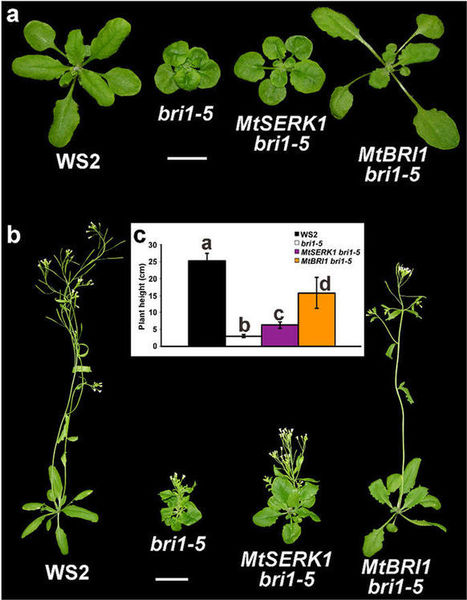
Brassinosteroids are phytohormones involved in plant development and physiological processes. Brassinosteroids Insensitive 1 (BRI1) is required for BR perception and initiation of subsequent signal transduction in Arabidopsis. In this study, the orthologue of BRI1 in the model legume species Medicago truncatula, MtBRI1, was identified and characterised. Three allelic Tnt1 insertion mutants, mtbri1-1, mtbri1-2, and mtbri1-3, were obtained from the M. truncatula Tnt1 insertion population. mtbri1 mutants displayed characteristic bri1 mutant phenotypes: extreme dwarfness, dark green curled leaves, short primary roots, less lateral roots, and insensitive to exogenous brassinolide (BL). Moreover, mtbri1 mutants show decreased total nodule number and defects in nitrogen fixation. MtBRI1 is able to complement an Arabidopsis BRI1 mutant, bri1-5. Similar to the interaction of BRI1 and BAK1 in Arabidopsis, MtBRI1 interacts with MtSERK1 in vivo. Global gene expression profiling revealed that the expression of BR biosynthesis genes and SAUR genes are significantly altered in mtbri1 mutants. MapMan analysis indicated that genes involved in signaling, hormone, cell wall, and biotic stress responses are over-represented in differentially expressed genes. Taken together, the results indicate that MtBRI1 is the BR receptor in M. truncatula and that BR signaling may play a conserved role in balancing plant growth and defenses.
|
|
Scooped by
Jean-Michel Ané
September 2, 2017 3:12 AM
|
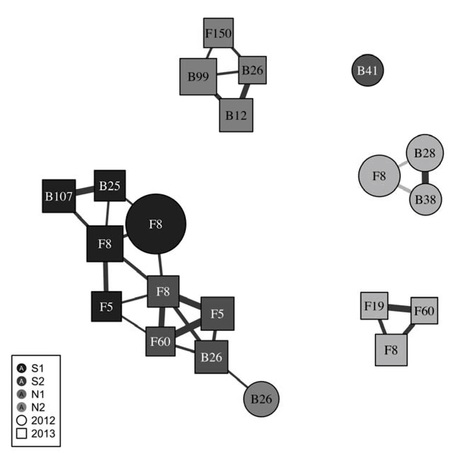
In soils characterized by nutrient-poor conditions trees have developed strategies to maximize the exploration of the environment through their root system. Notably, in shallow soils, trees adopt a deep-rooting strategy to access appropriate levels of water and nutrients from the bedrock. Despite the critical importance of microorganisms in nutrient access in topsoil, understanding their involvement in subsoil was rarely addressed. Our study provides the first comprehensive picture of the bacterial communities colonizing deep roots at the bedrock interface. Particularly, we aimed at deciphering if the subsoil edaphic conditions allowed the enrichment of specific bacterial communities in the rhizosphere. To answer such questioning, we focused on a shallow soil dominated by deep-rooting beech trees (Fagus sylvatica). The taxonomic and functional structures of bacterial communities were investigated through 16S rRNA-pyrosequencing analyses and in vitro bioassays on culturable representatives isolated from the saprolite, the limestone rocks and the roots penetrating those two compartments at the bedrock interface. Our taxonomic analyses revealed a rhizosphere effect, with no difference between the limestone- and saprolite-rhizosphere bacterial communities. Notably, our functional assays highlighted a significant enrichment of bacteria effective at mineral weathering in the limestone-rhizosphere compared to the surrounding environment, whereas organic matter decomposing bacteria were exclusively enriched in the saprolite-rhizosphere. Altogether our results suggest that tree roots select specific bacterial communities in subsoil as potential allies to improve nutrient availability and tree nutrition.
|
|
Scooped by
Jean-Michel Ané
September 2, 2017 3:10 AM
|
BACKGROUND
Bacillus amyloliquefaciens strain CPA-8 has been described as an effective biocontrol agent to control brown rot in stone fruit for both preharvest and postharvest applications. However, no information about the environmental fate and behaviour of this strain under field conditions is available.
RESULTS
The dispersion of the CPA-8 application was evaluated using water-sensitive papers, and complete coverage was observed on the leaves of treated trees, while less than 1 % of non-treated tree leaves had CPA-8. CPA-8 persisted on the fruit of treated trees during preharvest and postharvest conditions, while a significant decrease on leaves and weeds was observed 21 days after treatment. On non-treated trees, CPA-8 was detected on leaves until 180 days after treatment, and on weeds, the CPA-8 population was dependent on the distance from the treated trees. A high persistence of CPA-8 was detected on inert materials, such as clothes and gloves worn by handlers and plastic harvesting boxes. More than 99 % of the samples with a CPA-8 phenotype were confirmed as CPA-8 using PCR.
CONCLUSION
This work demonstrated a good distribution, persistence and adaptation of the CPA-8 strain to field and postharvest conditions. Monitoring of dispersion and persistence is an excellent tool to determine the time of application and provides valuable information for registering issues.
|
|
Scooped by
Jean-Michel Ané
September 2, 2017 3:07 AM
|
This research aims to study the effect of Mycorrizal fungus and Plant-Growth-Promoting Bacteria (PGPB) on Cadmium (Cd) uptake by one-year-old Eucalyptus Camaldulensis seedlings. The treatments have involved three levels of heavy metal (0, 30, and 60 mg/kg) for Cd, and three bacterial levels (no bacteria (B0), Bacillus (Ba105), and Pseudomonas (Ps36, Ps448)), inoculated with mycorrhizal fungus Glomus mosseae (M1) and non-inoculated with fungus (M0). Results show that absorption of these elements in plant increased as Cd concentration in soil became more. Inoculation by Ps448 bacteria had an incremental effect on Cd uptake by 90%, compared to the non-inoculated (control) samples. Moreover, inoculation of the plants with mycorrhizal fungus increased Cd uptake by 24%, compared to the control. Also, it has been observed that plant resistance to metal stress and plant growth under such conditions ascended in treatments wherein inoculation happened with mycorrhizal fungus and bacteria. The highest Cd heavy metal uptake has been observed in Eucalyptus (shoots and roots), treatment (C2B2M1) with 648.19 micrograms per one seedling in pot. According to the obtained results, Eucalyptus with biological factors (fungi and bacteria) has the ability to clean and purify the contaminated soil with Cd heavy metal.
|
|
Scooped by
Jean-Michel Ané
September 2, 2017 3:02 AM
|
Nitrogen deficiency limits crop performance under elevated CO2 (eCO2), depending on the ability of plant N uptake. However, the dynamics and redistribution of N2 fixation, and fertilizer and soil N use in legumes under eCO2 have been little studied. Such an investigation is essential to improve the adaptability of legumes to climate change. We took advantage of genotype-specific responses of soybean to increased CO2 to test which N-uptake phenotypes are most strongly related to enhanced yield. Eight soybean cultivars were grown in open-top chambers with either 390 ppm (aCO2) or 550 ppm CO2 (eCO2). The plants were supplied with 100 mg N kg-1 soil as 15N-labelled calcium nitrate, and harvested at the initial seed-filling (R5) and full-mature (R8) stages. Increased yield in response to eCO2 correlated highly (r=0.95) with an increase in symbiotically fixed N during the R5 to R8 stage. In contrast, eCO2 only led to small increases in the uptake of fertilizer-derived and soil-derived N during R5 to R8, and these increases did not correlate with enhanced yield. Elevated CO2 also decreased the proportion of seed N redistributed from shoot to seeds, and this decrease strongly correlated with increased yield. Moreover, the total N uptake was associated with increases in fixed-N per nodule in response to eCO2, but not with changes in nodule biomass, nodule density or root length.
|
|
Scooped by
Jean-Michel Ané
September 2, 2017 2:59 AM
|
Background and Aims
Abiotic stress conditions cause extensive losses to agricultural production worldwide. Salinity and alkalinity affect plant growth, photosynthesis and availability of nutrients including Fe. Many studies have described the response mechanisms of plants to single abiotic stress conditions. However, in the field, crops and other plants are routinely subjected to a combination of different abiotic stresses. Salinity and alkalinity are wide-spread in Tunisia, where Medicago truncatula occurs as a native species.
Methods
We established a growth system to study the combined effects of salinity and alkalinity conditions in laboratory conditions. We screened 11 Tunisian M. truncatula lines from the SARDI collection based on their phenotypic responses to the double stress.
Results
Salinity and alkalinity affected germination rates, shoot and root dry weights, pigment contents and root morphology parameters. We were able to select among the 11 investigated lines four sensitive and tolerant lines with different abilities to respond to the double stress. Tolerant and sensitive genotypes (two lines each) differed in root flavin contents, root flavin staining patterns and concentrations of root flavins in the nutrient solution.
Conclusions
Root architecture, flavin root localization in epidermal cells and flavin secretion are relevant tolerance mechanisms for salt and alkaline stress in M. truncatula. Pairs of contrasting lines from close origins were identified that will be useful tools to identify genes for the tolerance mechanisms.
|
|
Scooped by
Jean-Michel Ané
September 2, 2017 2:54 AM
|
Plants display an extraordinary ability to regenerate complete shoot systems from a tissue fragment or even from a single cell. Upregulation of the determinants of pluripotency during a precise window of time in response to external inductive cues is a key decisive factor for shoot regeneration. A burst of recent studies has begun to provide an understanding of signaling molecules that are instrumental in the making of the regenerative mass, as well as the developmental regulators that are seminal in shaping the pluripotent state. Here, we discuss how signaling molecules, waves of mutually exclusive stem cell regulators and epigenetic modifiers could contribute to cellular heterogeneity in an island of regenerative mass, thus leading to de novo shoot regeneration.
|
|
Scooped by
Jean-Michel Ané
September 1, 2017 3:47 PM
|
Legumes harbor in their symbiotic nodule organs nitrogen fixing rhizobium bacteria called bacteroids. Some legumes produce Nodule-specific Cysteine-Rich (NCR) peptides in the nodule cells to control the intracellular bacterial population. NCR peptides have antimicrobial activity and drive bacteroids toward terminal differentiation. Other legumes do not produce NCR peptides and their bacteroids are not differentiated. Bradyrhizobia, infecting NCR-producing Aeschynomene plants, require the peptide uptake transporter BclA to cope with the NCR peptides as well as a specific peptidoglycan-modifying DD-carboxypeptidase, DD-CPase1. We show that Bradyrhizobium diazoefficiens strain USDA110 forms undifferentiated bacteroids in NCR-lacking soybean nodules. Unexpectedly, in Aeschynomene afraspera nodules the nitrogen fixing USDA110 bacteroids are hardly differentiated despite the fact that this host produces NCR peptides, suggesting that USDA110 is insensitive to the host peptide effectors and that nitrogen fixation can be uncoupled from differentiation. In agreement with the absence of bacteroid differentiation, USDA110 does not require its bclA gene for nitrogen fixing symbiosis with these two host plants. Furthermore, we show that the BclA and DD-CPase1 act independently in the NCR-induced morphological differentiation of bacteroids. Our results suggest that BclA is required to protect the rhizobia against the NCR stress but not to induce the terminal differentiation pathway.
|
|
Scooped by
Jean-Michel Ané
September 1, 2017 3:42 PM
|
Fluorescent pseudomonads from bean root and rhizosphere in Iran were investigated for biocontrol of the fungal pathogen Rhizoctonia solani. Phylogenetic analysis of concatenated 16S rRNA, gyrB and rpoD sequences for 33 Pseudomonas isolates showed that 15 belonged to four clusters within the ‘P. fluorescens’ group, i.e. one corresponding to P. thivervalensis, two others including P. moraviensis or P. baetica, and the last one without closely-related established species. The 18 other isolates belonged to five clusters within the ‘P. putida’ group, one including P. mosselii and P. entomophila, another including strains currently described as P. putida, and three without closely-related species described. Ten isolates were selected based on in vitro inhibition of R. solani. Cellulase activity was identified in three pseudomonads, chitinase activity in two pseudomonads, extracellular protease activity in two pseudomonads and hydrogen cyanide production in two pseudomonads. Genes coding for production of phenazine, pyoluteorin, pyrrolnitrin and 2,4-diacetylphloroglucinol were not found, whereas the 1-aminocyclopropane-1-carboxylate deamination gene acdS was present in three pseudomonads. The antagonistic acdS+ strain VKh13 from the ‘P. putida’ group effectively protected soil-grown bean from R. solani AG 4-HGI. Results show that pseudomonads from uncharacterized taxa were readily obtained from Iranian soils and displayed biocontrol potential against R. solani.
|
|
Scooped by
Jean-Michel Ané
September 1, 2017 3:37 PM
|
Advances in metagenomics enable high resolution description of complex bacterial communities in their natural environments. Consequently, conceptual approaches for community level functional analysis are in high need. Here, we introduce a framework for a metagenomics-based analysis of community functions. Environment-specific gene catalogs, derived from metagenomes, are processed into metabolic-network representation. By applying established ecological conventions, network-edges (metabolic functions) are assigned with taxonomic annotations according to the dominance level of specific groups. Once a function-taxonomy link is established, prediction of the impact of dominant taxa on the overall community performances is assessed by simulating removal or addition of edges (taxa associated functions). This approach is demonstrated on metagenomic data describing the microbial communities from the root environment of two crop plants – wheat and cucumber. Predictions for environment-dependent effects revealed differences between treatments (root vs. soil), corresponding to documented observations. Metabolism of specific plant exudates (e.g., organic acids, flavonoids) was linked with distinct taxonomic groups in simulated root, but not soil, environments. These dependencies point to the impact of these metabolite families as determinants of community structure. Simulations of the activity of pairwise combinations of taxonomic groups (order level) predicted the possible production of complementary metabolites. Complementation profiles allow formulating a possible metabolic role for observed co-occurrence patterns. For example, production of tryptophan-associated metabolites through complementary interactions is unique to the tryptophan-deficient cucumber root environment. Our approach enables formulation of testable predictions for species contribution to community activity and exploration of the functional outcome of structural shifts in complex bacterial communities. Understanding community-level metabolism is an essential step toward the manipulation and optimization of microbial function. Here, we introduce an analysis framework addressing three key challenges of such data: producing quantified links between taxonomy and function; contextualizing discrete functions into communal networks; and simulating environmental impact on community performances. New technologies will soon provide a high-coverage description of biotic and a-biotic aspects of complex microbial communities such as these found in gut and soil. This framework was designed to allow the integration of high-throughput metabolomic and metagenomic data toward tackling the intricate associations between community structure, community function, and metabolic inputs.
|
|
Scooped by
Jean-Michel Ané
August 31, 2017 1:25 PM
|
New research shows that increases in rainfall and extreme weather because of climate change will increase the amount of nitrogen polluting rivers and other waterways. The findings underscore the urgency of reforming agriculture to dramatically reduce the use of nitrogen fertilizers.
One type of postdoc maltreatment is rarely discussed, despite its prevalence and importance — should a postdoc be able to take their research project with them when they set up their own lab? And if so, should that new principal investigator (PI) be free from direct competition on that project with his or her former mentor? In my view, the answer to both questions is yes. Such 'project porting' is crucial for the success of young scientists and should be a fundamental right for postdocs.
This is such a touchy topic that it is only now that I feel comfortable writing about it. I am at the end of a long academic career and dying of stage four pancreatic cancer. I think it's time for the academic community to start openly discussing the issue of research freedom for postdocs (or lack of it).
Opinions will vary, but different strategies could enable PIs and postdocs to handle the issue more constructively. At the very least, trainees looking for a postdoc job need to find out about the policies of potential mentors before selecting a lab, and assess the implications that these policies could have for their independent success.
Via Francis Martin
|
|
Scooped by
Jean-Michel Ané
August 26, 2017 10:50 AM
|
This protocol describes how to detect protein-DNA and protein-RNA interactions in plant leaves using a FRET-FLIM approach.
|
|
|
Scooped by
Jean-Michel Ané
September 2, 2017 3:13 AM
|
Endophytes are microbial symbionts living inside plants and have been extensively researched in recent decades for their functions associated with plant responses to environmental stress. We conducted a meta-analysis of endophyte effects on host plants’ growth and fitness in response to three abiotic stress factors: drought, nitrogen deficiency, and excessive salinity. Ninety-four endophyte strains and 42 host plant species from the literature were evaluated in the analysis. Endophytes increased biomass accumulation of host plants under all three stress conditions. The stress mitigation effects by endophytes were similar among different plant taxa or functional groups with few exceptions; eudicots and C4 species gained more biomass than monocots and C3 species with endophytes, respectively, under drought conditions. Our analysis supports the effectiveness of endophytes in mitigating drought, nitrogen deficiency, and salinity stress in a wide range of host species with little evidence of plant-endophyte specificity.
|
|
Scooped by
Jean-Michel Ané
September 2, 2017 3:11 AM
|
Le colloque de Génomique Environnementale (GE) est une manifestation nationale permettant aux chercheurs français et internationaux travaillant sur l’écologie, l’évolution de la biodiversité ou le fonctionnement des écosystèmes d’échanger sur l’utilisation des nouvelles technologies de séquençages (NTS) et des développements récents en bioinformatique. Il s’agira de la quatrième édition du colloque de Génomique Environnementale après Lyon (2011), Rennes (2013) et de Montpellier (2015, cf programme en Annexe) organisé sous l'égide du GDR "Génomique Environnementale" (http://gdr3692.wix.com/gdrge) dont les actions sont soutenues par le CNRS, l’INRA et le MNHN.
Ce colloque représente une opportunité exceptionnelle pour échanger entre chercheurs/doctorants/post-doctorants et répondre aux défis posés en matière d’environnement, de réchauffement climatique et plus généralement de maîtrise des impacts globaux sur les écosystèmes.
Le colloque GE est un lieu d’échanges privilégié permettant un dialogue efficace entre, d’une part, la communauté scientifique et, d’autre part, les acteurs gérant les systèmes d’observation et d’analyse des écosystèmes (zones ateliers, ORE, parcs naturels etc...) ou les demandes sociétales dont les entreprises sont souvent porteuses.
|
|
Scooped by
Jean-Michel Ané
September 2, 2017 3:08 AM
|
Glomalin-related soil protein (GRSP) is well-known for its soil conditioning functions, but compositional traits are rarely considered. Farmland in northeastern China is the most important commercial grain basis, and soil degradation becomes the bottleneck for keeping crop productivity. The objective of this study was to uncover the possible associations between GRSP (amount and composition) and soil properties, and make suggestions for soil improvement from soil glomalin rehabilitation in northeastern China. Here, spatial variation in GRSP amount (Easily-extractable-GRSP, EE-GRSP; Total-GRSP, T-GRSP) and its compositional traits from infrared spectroscopy, UV-absorbance, X-ray diffraction (XRD) and 3-D fluorescence spectroscopy were surveyed in 360 soil samples across northeastern China, and their association with 11 soil properties were also analyzed for finding the possible influence of soil properties on GRSP composition in farmland. There about 3-fold spatial variation in GRSP amount was observed, while functional group variations were ranged from 1.2-fold (O–H & N–H stretching) to 2.4-fold (C–O stretching & O–H bending of –COOH) in different locations. The XRD showed that grain size was 113–180Å and crystallinity was 0.71–1.42%, and GRSP contained seven fluorescent compounds of tyrosine-like, tryptophan-like, fulvic acid-like, soluble microbial byproduct, humic acid-like, nitrobenzoxadidole-like, and calcofluor white-like. Both, EE-GRSP and T-GRSP positively associated with soil organic carbon (SOC), soil N (SON), soil P (SOP), alkali-hydrolyzed N (AN), available P (AP), available K (AK), and soil water, while negatively associated with soil pH and soil bulk density. Structural equation model (SEM) analysis indicates that direct effects on GRSP amounts were mainly from soil bulk density (coefficient: –0.27), soil pH (coefficients: –0.51 to –0.57), SOC (coefficients: 0.51 to 0.69) and AP (coefficients: 0.18 to 0.26), while all other soil properties had indirect effects on GRSP amounts via their close associations with these four parameters. Compared with the GRSP amounts, soil properties laid fewer effects on GRSP compositional traits. Of 16 compositional traits, five of them showed possible regulations from soil properties, which were three infrared functional groups (IR-II: aliphatic C–H stretching; IR-V: C–O stretching & O–H bending of –COOH; IR-VII: O–H binding) and two fluorescent compounds (tyrosine-like and humic acid-like). SEM analysis indicates that soil water, pH and EC could directly affect IR-II, IRV, tyrosine-like and humic acid-like, while available nutrients showed more evident influences on infra-red functional groups than total amounts of N, P and K. Moreover, SOC, as a media of various soil nutrients, gave the strongest influence on GRSP compositional traits. As a supplement to previous studies, we found that GRSP is a mixture of different fluorescent compounds with different functional groups. Our findings highlight that soil properties could strongly change both GRSP accumulation in soil and their compositional traits, and the definition of the most probable soil properties in regulating glomalin amount and composition in this paper could favor good soil management in farmland at northeastern China.
|
|
Scooped by
Jean-Michel Ané
September 2, 2017 3:05 AM
|
Calcium signals occur in specific spatio-temporal patterns in response to various stimuli and are coordinated with, for example, hormonal signals, for physiological and developmental adaptations. Quantification of calcium together with other signalling molecules is required for correlative analyses and to decipher downstream calcium-decoding mechanisms.
Simultaneous in vivo imaging of calcium and abscisic acid has been performed here to investigate the interdependence of the respective signalling processes in Arabidopsis thaliana roots. Advanced ratiometric genetically encoded calcium indicators have been generated and in vivo calcium calibration protocols were established to determine absolute calcium concentration changes in response to auxin and ATP.
In roots, abscisic acid induced long-term basal calcium concentration increases, while auxin triggered rapid signals in the elongation zone. The advanced ratiometric calcium indicator R-GECO1-mTurquoise exhibited an increased calcium signal resolution compared to commonly used Förster resonance energy transfer-based indicators. Quantitative calcium measurements in Arabidopsis root tips using R-GECO1-mTurquoise revealed detailed maps of absolute calcium concentration changes in response to auxin and ATP.
Calcium calibration protocols using R-GECO1-mTurquoise enabled high-resolution quantitative imaging of resting cytosolic calcium concentrations and their dynamic changes that revealed distinct hormonal and ATP responses in roots.
|
|
Scooped by
Jean-Michel Ané
September 2, 2017 3:00 AM
|
The aim of this study was to test the hypothesis that Jatropha curcas L. seedlings previously inoculated with arbuscular mycorrhizal fungi (AMF) in non-salinized soil and later transplanted to salinized soil are more tolerant to saline stress. The experiment was conducted in greenhouse using a randomized block design in a 4 × 2 factorial scheme. The first factor consisted of salinized soil with electrical conductivity (EC) of 2, 5, 8 and 10 dS/m, and the second consisted of non-colonized plants, and plants that were pre-colonized with AMF, with eight replicates. Salt had a deleterious effect on plants non-inoculated with AMF, which showed reduced growth and photosynthetic activity and increased stress indicators, such as lipid peroxidation, proline accumulation, and high antioxidant enzymatic activity. On the other hand, pre-colonized plants were less affected by the presence of salt in the soil. Seedlings pre-inoculated with AMF presented the same growth rate and photosynthetic activity in all saline treatments. No increase in lipid peroxidation and antioxidant enzymatic activity was observed in seedlings pre-inoculated with AMF even under high saline concentration of 10 dS/m EC. The results suggest the existence of a mechanism to mitigate the effects of saline stress on pre-colonized seedlings. Therefore, pre-colonized J. curcas seedlings are an alternative for the cultivation of this species in salinized soils.
|
|
Scooped by
Jean-Michel Ané
September 2, 2017 2:56 AM
|
Background and aims
Pseudomonas spp. have previously been isolated from lucerne nodules. The aims of this study were to: 1) investigate the microbiome within a lucerne nodule; and 2) assess the ability of two Pseudomonas spp. isolated from lucerne nodules to form nodules.
Methods
The microbial community within 27 lucerne nodules, collected from plants inoculated with Sinorhizobium meliloti as a seed coat or peat slurry and an uninoculated control, was identified using 16S rRNA based Illumina sequencing. Lucerne seedlings were inoculated with the two Pseudomonas spp. strains. The plants were grown in sterile conditions for 6 weeks and nodulation was assessed. 16S rRNA, nodC, nodA and nifH genes were amplified.
Results
Sinorhizobium was the dominant genus in nodules, comprising 90–99% of all sequences regardless of inoculation treatment. Overall, 9 other genera were identified, with each represented by <3% of the total sequences. Both Pseudomonas strains were able to form nodules with lucerne. From one of these strains, a nodC gene was detected.
Conclusion
Lucerne nodules contained a diverse assemblage of bacterial species, some of which were capable of forming nodules in the absence of rhizobia.
|
|
Scooped by
Jean-Michel Ané
September 1, 2017 3:49 PM
|
Mutualistic interactions can be stabilized against invasion by noncooperative individuals by putting such “cheaters” at a selective disadvantage. Selection against cheaters should eliminate genetic variation in partner quality—yet such variation is often found in natural populations. One explanation for this paradox is that mutualism outcomes are determined not only by responses to partner performance but also by partner signals. Here, we build a model of coevolution in a symbiotic mutualism, in which hosts’ ability to sanction noncooperative symbionts and recognition of symbiont signals are determined by separate loci, as are symbionts’ cooperation and expression of signals. In the model, variation persists without destabilizing the interaction, in part because coevolution of symbiont signals and host recognition is altered by the coevolution of sanctions and cooperation, and vice versa. Individual-based simulations incorporating population structure strongly corroborate these results. The dual systems of sanctions and partner recognition converge toward conditions similar to some economic models of mutualistic symbiosis, in which hosts offering the right incentives to potential symbionts can initiate symbiosis without screening for partner quality. These results predict that mutualists can maintain variation in recognition of partner signals or in the ability to sanction noncooperators without destabilizing mutualism, and they reinforce the notion that studies of mutualism should consider communication between partners as well as the exchange of benefits.
|
|
Scooped by
Jean-Michel Ané
September 1, 2017 3:45 PM
|
The invention relates to methods for the screening, identification and/or application of microorganisms of use in imparting beneficial properties to plants. In one embodiment, the method involves subjecting one or more plants to a growth medium in the presence of a set of microorganisms, selecting one or more plant, acquiring one or more microorganisms associated with the selected plant(s) and repeating the process one or more times. The method further involves the step of subjecting the one or more microorganisms to a conditioning and/or directed evolution process.
|
|
Scooped by
Jean-Michel Ané
September 1, 2017 3:42 PM
|
Plant-associated microbiomes have tremendous potential to improve plant resilience and yields in farming systems. There is increasing evidence that biological technologies that use microbes or their metabolites can enhance nutrient uptake and yield, control pests and mitigate plant stress responses. However, to fully realize the potential of microbial technology, their efficacy and consistency under the broad range of real-world conditions need to be improved. While the optimization of microbial biofertilizers and biopesticides is advancing rapidly to enable use in various soils, crop varieties and environments, crop breeding programmes have yet to incorporate the selection of beneficial plant–microbe interactions to breed ‘microbe-optimized plants’. Emerging efforts exploring microbiome engineering could lead to microbial consortia that are better suited to support plants. The combination of all three approaches could be integrated to achieve maximum benefits and significantly improved crop yields to address food security.
|
|
Scooped by
Jean-Michel Ané
August 31, 2017 4:12 PM
|
Dinitrogen (N2)-fixation by cyanobacteria in symbiosis with feathermosses is the primary pathway of biological nitrogen (N) input into boreal forests. Despite its significance, little is known about the cyanobacterial gene repertoire and regulatory rewiring needed for the establishment and maintenance of the symbiosis. To determine gene acquisitions and regulatory changes allowing cyanobacteria to form and maintain this symbiosis, we compared genomically closely related symbiotic-competent and -incompetent Nostoc strains using a proteogenomics approach and an experimental set up allowing for controlled chemical and physical contact between partners. Thirty-two gene families were found only in the genomes of symbiotic strains, including some never before associated with cyanobacterial symbiosis. We identified conserved orthologs that were differentially expressed in symbiotic strains, including protein families involved in chemotaxis and motility, NO regulation, sulfate/phosphate transport, and glycosyl-modifying and oxidative stress-mediating exoenzymes. The physical moss–cyanobacteria epiphytic symbiosis is distinct from other cyanobacteria–plant symbioses, with Nostoc retaining motility, and lacking modulation of N2-fixation, photosynthesis, GS-GOGAT cycle and heterocyst formation. The results expand our knowledge base of plant–cyanobacterial symbioses, provide a model of information and material exchange in this ecologically significant symbiosis, and suggest new currencies, namely nitric oxide and aliphatic sulfonates, may be involved in establishing and maintaining the cyanobacteria–feathermoss symbiosis.
|
|
Scooped by
Jean-Michel Ané
August 31, 2017 9:50 AM
|
Plants have lived in close association with arbuscular mycorrhizal (AM) fungi for over 400 million years and today this endosymbiosis occurs broadly in the plant kingdom where it has a pronounced impact on plant mineral nutrition. The symbiosis develops deep within the root cortex with minimal alterations in the external appearance of the colonized root; however, the absence of macroscopic alterations belies the extensive signaling, cellular remodeling and metabolic alterations that occur within each colonized cortical cell to enable accommodation of the fungal endosymbiont. Research over the past few years has identified missing calcium channels and potential second messengers in the symbiosis signaling pathway and established connections between this signaling pathway and key transcriptional regulators that direct AM-specific gene expression. Phylogenomics has revealed the existence of genes conserved for AM symbiosis which provide clues as to how plant cells fine-tune their biology to enable symbiosis, and an exciting coalescence of genome mining, lipid profiling and tracer studies collectively led to the conclusion that AM fungi are fatty acid auxotrophs and that plants provide their fungal endosymbionts with fatty acids. Here we provide an overview of the molecular program for AM symbiosis and discuss these recent advances.
|
|
Rescooped by
Jean-Michel Ané
from Plants and Microbes
August 28, 2017 11:14 AM
|
Although the complex interactions between hosts and microbial associates are increasingly well documented, we still know little about how and why hosts shape microbial communities in nature. We characterized the leaf microbiota within 200 clonal accessions in eight field experiments and detected effects of both local environment and host genotype on community structure. Within environments, hosts′ genetics preferentially associate with a core of ubiquitous microbial hubs that, in turn, structure the community. These microbial hubs correlate with host performance, and a GWAS revealed strong candidate genes for the host factors impacting heritable hubs. Our results reveal how selection may act to enhance fitness through microbial associations and bolster the possibility of enhancing crop performance through these host factors.
Via Kamoun Lab @ TSL
|