Your new post is loading...

|
Scooped by
Jean-Michel Ané
October 20, 2017 12:58 PM
|
Soil microbes are essential for soil fertility. However, most studies focus on bacterial and/or fungal communities, while the top-down drivers of this microbiome composition, protists, remain poorly understood. Here, we investigated how soil amendments affect protist communities and inferred potential interactions with bacteria and fungi. Specific fertilization treatments impacted both the structure and function of protist communities. Organic fertilizer amendment strongly reduced the relative abundance of plant pathogenic protists and increased bacterivorous and omnivorous protists. The addition of individual biocontrol bacteria and fungi further altered the soil protist community composition, and eventually function. Network analysis integrating protist, bacterial and fungal community data, placed protists as a central hub in the soil microbiome, linking diverse bacterial and fungal populations. Given their dynamic response to soil management practices and key position in linking soil microbial networks, protists may provide the leverage between soil management and the enhancement of bacterial and fungal microbiota at the service of improved soil health.
|
|
Scooped by
Jean-Michel Ané
October 17, 2017 3:26 PM
|
A hypothesis is proposed on the emergence of N2-fixing plant symbionts from soil diazotrophs and satellites of Glomeromycota fungi that form arbuscular mycorrhizae (AM). This universal form of plant-microbe symbiosis possibly appeared due to the integration of ancestral land plants (rhyniophytes, psylophytes) and microbial consortia composed of AM-fungi assimilating soil phosphates and bacteria fixing atmospheric CO2 and/or N2. The release of these bacteria from AM-fungal hyphae into plant tissues elicited the selection of genotypes capable of fungi-independent multiplication in plants, as well as the fixation in bacterial genomes of the genes for the synthesis of chitin-like signal factors stimulating the development of symbiotic structures. An early stage of this evolution might been represented by the formation of N2-fixing syncyanoses, and the late stage might have been realized by the formation of nodular symbioses of dicots from the Eurosid I clade with rhizobia (α- and β-proteobacteria) and with the actinobacteria Frankia. The emergence of these symbioses was possibly based on the migration of soil and endophytic bacteria into the storage organs (modified stems or lateral roots), where the optimal conditions were established not only for N2 fixation but also for the evolution of bacteria towards increased symbiotic activity. This evolution resulted in the emergence of primary rhizobia (Bradyrhizobium, Burkholderia), which acted as donors of sym genes for a broad spectrum of microbes transformed into secondary rhizobia (Rhizobium, Sinorhizobium). The subsequent evolution of nodular symbioses was directed at an increased efficiency of symbiotrophic nitrogen nutrition in host plants following two scenarios: (a) “expensive,” which is based on an increase in N2-fixing activity via the transformation of bacteria into nonreproducible bacteroids; (b) “economical,” based on the acquisition of the determinate nodule structure and ureide nitrogen assimilation.
|
|
Scooped by
Jean-Michel Ané
October 17, 2017 3:23 PM
|
The functional role of the periplasm of nitrogen-fixing bacteroids has not been determined. Proteins were isolated from the periplasm and cytoplasm of Bradyrhizobium diazoefficiens bacteroids and were analyzed using liquid chromatography tandem mass spectrometry proteomics. Identification of bacteroid periplasmic proteins was aided by periplasm prediction programs. Approximately 40% of all the proteins identified as periplasmic in the B. diazoefficiens genome were found expressed in the bacteroid form of the bacteria, indicating the periplasm is a metabolically active symbiotic space. The bacteroid periplasm possesses many fatty acid metabolic enzymes, which was in contrast to the bacteroid cytoplasm. Amino acid analysis of the periplasm revealed an abundance of phosphoserine, phosphoethanolamine, and glycine, which are metabolites of phospholipid metabolism. These results suggest the periplasm is a unique space and not a continuum with the peribacteroid space. A number of plant proteins were found in the periplasm fraction, which suggested contamination. However, antibodies to two of the identified plant proteins, histone H2A and lipoxygenase, yielded immunogold labeling that demonstrated the plant proteins were specifically targeted to the bacteroids. This suggests that the periplasm is an interkingdom symbiotic space containing proteins from both the bacteroid and the plant.
|
|
Scooped by
Jean-Michel Ané
October 16, 2017 5:07 PM
|
Most eukaryotes harbor a diverse community of parasitic, mutualistic, and commensal microbial symbionts. Although the diversity of these microbial symbiotic communities has recently drawn considerable attention, theory regarding the evolution of interactions among symbionts and with the host is still in its nascent stages. Here we evaluate the role of interactions among coinfecting symbionts in the evolution of symbiont virulence toward the host. To do so, we place the virulence-transmission trade-off into a community context and model the evolution of symbiont trophic modes along the continuum from parasitism (virulence) to mutualism (negative virulence). We establish a framework for studying multiple infections of a host by the same symbiont species and coinfection by multiple species, using a concept of shared costs, wherein the negative consequences of virulence (or harm) toward the host are shared among symbionts. Our results show that mutualism can be maintained under infection by multiple symbionts when shared costs are sufficiently low, while greater virulence and parasitism toward the host are more likely when shared costs are high. Last, for coinfection by more than one species, we show that if the presence of a mutualist ameliorates some of the costs of pathogen virulence, then the symbiotic community may more often evolve to a more commensal state and maintain mutualisms.
|
|
Scooped by
Jean-Michel Ané
October 16, 2017 5:00 PM
|
There is a growing interest in using plants to provide low-cost ecosystem services in a diversity of environments (e.g., polluted, degraded, urban). These utilizations of plants are collectively referred to as phytotechnologies. Many plants used in phytotechnological applications are naturally found to associate with mycorrhizal fungi. These fungal associates can provide numerous ecosystem services, or help plants to do so. There is thus an obvious incentive to better understand how mycorrhizal symbioses can assist phytotechnologies. For some phytotechnological applications, the benefits of using mycorrhizal fungi seem well-established, while for others, these benefits are either uncertain or simply unexplored. In all cases, a trait-based, mechanistic understanding of what allows mycorrhizal fungi to provide any benefit/service is urgently needed. This will help to develop reliable, mycorrhiza-assisted phytotechnologies in the future, while also improving our fundamental understanding of the evolution of stress tolerance in these important plant-associated symbionts.
|
|
Scooped by
Jean-Michel Ané
October 14, 2017 11:42 PM
|
Receiving nodulation and nitrogen fixation genes does not guarantee rhizobia an effective symbiosis with legumes. Here, variations in gene content were determined for three Sinorhizobium species showing contrasting symbiotic efficiency on soybeans. A nitrate-reduction gene cluster absent in S. sojae was found to be essential for symbiotic adaptations of S. fredii and S. sp. III. In S. fredii, the deletion mutation of the nap (nitrate reductase), instead of nir (nitrite reductase) and nor (nitric oxide reductase), led to defects in nitrogen-fixation (Fix-). By contrast, none of these core nitrate-reduction genes were required for the symbiosis of S. sp. III. However, within the same gene cluster, the deletion of hemN1 (encoding oxygen-independent coproporphyrinogen III oxidase) in both S. fredii and S. sp. III led to the formation of nitrogen-fixing (Fix+) but ineffective (Eff-) nodules. These Fix+/Eff- nodules were characterized by significantly lower enzyme activity of glutamine synthetase indicating rhizobial modulation of nitrogen-assimilation by plants. A distant homolog of HemN1 from S. sojae can complement this defect in S. fredii and S. sp. III, but exhibited a more pleotropic role in symbiosis establishment. These findings highlighted the lineage-dependent optimization of symbiotic functions in different rhizobial species associated with the same host. This article is protected by copyright. All rights reserved.
|
|
Scooped by
Jean-Michel Ané
October 14, 2017 10:15 PM
|
During the entire developmental phase of plants, there exists an alliance among the soil, plant and microorganisms. This association is developed when the microbial community in the rhizosphere is stimulated by the release of rhizodeposits from plants. Diverse groups of microorganisms rely on these rhizodeposits, thus establishing a gradient of interactions from plant growth promotion to parasitism. One of the clearly beneficial effects of plant growth-promoting rhizobacteria (PGPR) includes the suppression of deleterious microorganisms along with the promotion of plant growth attributes. PGPR may produce antibiotics, compete for nutrients with pathogens or induce systemic resistance in the host plant to defend it against pathogens. For growth promotion, PGPR employ the production of phyto hormones, fix nitrogen and solubilize phosphorus that directly affects plant growth. Many PGPR have been effectively tested for their performance in biological control as well as plant growth promotion such as Bacillus, Pseudomonas, Serratia and Burkholderia. The use of these strains has significantly promoted plant growth and reduced disease occurrence in various economically important crop plants. Based on these lucrative reports and eco-friendly behaviour, strains of Bacillus, Pseudomonas, Serratia, Azospirillum and Streptomyces have been advertised. Microbial inoculants for the biological control of plant diseases combined with plant growth promoters have great potential for a huge market share worldwide with an annual growth rate of 15%. Successful commercialization of these strains is dependent on improvements and advancements in interdisciplinary research, large-scale production, formulation methods, product marketing and education of farmers.
|
|
Scooped by
Jean-Michel Ané
October 14, 2017 10:11 PM
|
1. Context
Urban areas are often contaminated with various forms of persistent metal (loid) and emerging contaminants such as antimony (Sb). Thus, in the context of urban agriculture where sustainable practices such as biofertilizers application (arbuscular mycorrhizal fungi, AMF) could improve nutrient transfer from the soil to the vegetables, the effect of AMF on metal (loid) mobility and human bioaccessibility is still poorly known.
2. Methods
The role of AMF in Sb uptake by lettuce and carrot grown in artificial substrate spiked with different Sb chemical species was investigated. Plants were grown under hydroponic conditions and half of the treatments received a concentrated spore solution to obtain mycorrhized and non-mycorrhized plants. Three weeks before harvest, plants were exposed to 10 mg.L−1 of either Sb2O3 or KSbO-tartrate (KSb).
3. Results
The presence of AMF significantly increased its accumulation in carrots (all organs) with higher accumulation in roots. In lettuce, accumulation appeared to be dependent on the Sb chemical species. Moreover, it was observed for the first time that AMF changed the human bioaccessible fraction of Sb in edible organs.
4. Implications
The present results highlight a possible risk of Sb transfer from soil to edible plants cultivated in soil naturally containing AMF propagules, or when AMF are added as biofertilizers. After validating the influence of soil environment and AMF on Sb behavior in the field, these results should be considered in health risk assessments.
|
|
Scooped by
Jean-Michel Ané
October 14, 2017 10:09 PM
|
The plant epidermis or cuticle is constantly exposed to external and internal environmental factors, including an enriched and diverse community of bacteria, yeast, fungi, viruses, and mites. It is not only where the plant has its first physical barrier, but also where organisms can be recognized and potentially where the plant defense responses can be triggered. The plant cuticle is a polymeric composite formed by an array of structurally and chemically heterogeneous compounds, including cutin and wax. A few studies have shown that cuticular components are essential and important drivers of the structure and size of the bacterial community. On the other hand, cuticular components are also important for both pathogens and plants, to initiate the pre-invasion and infection process and to activate the innate immune response, respectively. In this review, we explore current knowledge on the role of the cuticle during the intimate interactions between plants and microorganisms, in particular pathogenic and non-pathogenic bacteria and fungi. Finally, we propose new perspectives on the potential use of this information for agriculture.
|
|
Scooped by
Jean-Michel Ané
October 14, 2017 10:04 PM
|
Belowground, microbe-associated molecular patterns (MAMPs) of root-associated microbiota can trigger costly defenses at the expense of plant growth. However, beneficial rhizobacteria, such as Pseudomonas simiae WCS417, promote plant growth and induce systemic resistance without being warded off by local root immune responses. To investigate early root responses that facilitate WCS417 to exert its plant-beneficial functions, we performed time-series RNA-Seq of Arabidopsis roots in response to live WCS417 and compared it to MAMPs flg22417 (from WCS417), flg22Pa (from pathogenic Pseudomonas aeruginosa), and fungal chitin. The MAMP transcriptional responses differed in timing, but displayed a large overlap in gene identity. MAMP-upregulated genes are enriched for genes with functions in immunity, while downregulated genes are enriched for genes related to growth and development. Although 74% of the transcriptional changes inflicted by live WCS417 overlapped with the flg22417 profile, WCS417 actively suppressed more than half of the MAMP-triggered transcriptional responses, possibly to allow the establishment of a mutually beneficial interaction with the host root. Interestingly, the sector of the flg22417-triggered transcriptional network that is suppressed by WCS417 has a strong auxin signature. Using auxin response mutant tir1afb2afb3, we demonstrate a dual role for auxin signaling in finely balancing growth-promoting and defense eliciting activities of beneficial microbes in plant roots.
ITS primers commonly used to describe soil fungi are flawed for AMF although it is unknown the extent to which they distort the interpretation of community patterns. Here, we focus on how the use of a specific ITS2 fungal barcoding primer pair biased for AMF changes the interpretation of AMF community patterns from three mountain vineyards compared to a novel AMF-specific approach on the 18S. We found that although discrepancies were present in the taxonomic composition of the two resulting datasets, the estimation of diversity patterns among AMF communities was similar and resulted in both primer systems being able to correctly assess the community-structuring effect of location, compartment (root vs. soil) and environment. Both methodologies made it possible to detect the same alpha-diversity trend among the locations under study but not between root and soil transects. We show that the ITS2 primer system for fungal barcoding provides a good estimate of both AMF community structure and relation to environmental variables. However, this primer system does not fit in with cross-compartment surveys (roots vs. soil) as it can underestimate AMF diversity in soil samples. When specifically focusing on AMF, the 18S primer system resulted in wide coverage and marginal non-target amplification.
Via Francis Martin
|
|
Scooped by
Jean-Michel Ané
October 13, 2017 11:42 AM
|
Legumes are protein sources for billions of humans and livestock. These traits are enabled by symbiotic nitrogen fixation (SNF), whereby root nodule-inhabiting rhizobia bacteria convert atmospheric nitrogen (N) into usable N. Unfortunately, SNF rates in legume crops suffer from undiagnosed incompatible/suboptimal interactions between crop varieties and rhizobia strains. There are opportunities to test much large numbers of rhizobia strains if cost/labor-effective diagnostic tests become available which may especially benefit researchers in developing countries. Inside root nodules, fixed N from rhizobia is assimilated into amino acids including glutamine (Gln) for export to shoots as the major fraction (amide-exporting legumes) or as the minor fraction (ureide-exporting legumes). Here, we have developed a new leaf punch based technique to screen rhizobia inoculants for SNF activity following inoculation of both amide exporting and ureide exporting legumes. The assay is based on measuring Gln output using the GlnLux biosensor, which consists of Escherichia coli cells auxotrophic for Gln and expressing a constitutive lux operon. Subsistence farmer varieties of an amide exporter (lentil) and two ureide exporters (cowpea and soybean) were inoculated with different strains of rhizobia under controlled conditions, then extracts of single leaf punches were incubated with GlnLux cells, and light-output was measured using a 96-well luminometer. In the absence of external N and under controlled conditions, the results from the leaf punch assay correlated with 15N-based measurements, shoot N percentage, and shoot total fixed N in all three crops. The technology is rapid, inexpensive, high-throughput, requires minimum technical expertise and very little tissue, and hence is relatively non-destructive. We compared and contrasted the benefits and limitations of this novel diagnostic assay to methods.
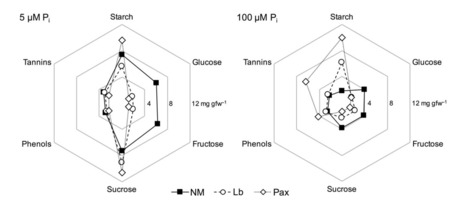
The fate of carbon (C) captured by forest trees during photosynthesis is influenced by the supply of other resources. Fixed C may be partitioned among biomolecules within the leaf and/or allocated throughout the tree to growth, storage and maintenance activities. Phosphorus (P) availability often limits tree productivity due to its high biological demand and strong interactions with soil minerals. As ectomycorrhizal (ECM) fungi play critical roles in enhancing phosphate (Pi) acquisition by their hosts, these symbioses will influence the fate of C within trees and forested ecosystems. Using Populus tremuloides Michx. (trembling aspen) in symbiosis with Laccaria bicolor (Marie) P.D. Orton or Paxillus involutus (Batsch) Fr., we assessed C acquisition, allocation and partitioning under Pi limitation, specifically focusing on primary and secondary C compounds. Both ECM fungi moderated the effects of low P on photosynthesis and C partitioning among carbohydrates and secondary metabolites by sustaining Pi uptake and translocation in P. tremuloides under Pi limitation. As leaf P declined, reductions in photosynthesis were accompanied by significant shifts in C partitioning from nonstructural carbohydrates (NSCs) to phenolic glycosides and tannins. Carbon partitioning in roots exhibited more complex patterns, with distinct increases in NSCs in nonmycorrhizal (NM) plants under Pi limitation that were not evident in plants colonized by either ECM symbiont. In general, aspen colonized by L. bicolor exhibited C partitioning patterns intermediate between those of NM and P. involutus aspen. The C cost of symbiosis was pronounced for plants supporting P. involutus, where ECM plants exhibited maintenance of photosynthesis yet reduced biomass in comparison with NM and L. bicolor aspen under Pi replete conditions. Our results indicate that the ECM symbiosis affects the disposition of C in forest trees in part by altering the acquisition of other limiting resources from soils, but also through ECM species-specific influences on host physiology. This modulation of C partitioning will have broad implications for forest ecosystem C capture, storage and cycling where nutrient resources may be limited.
Via Jonathan Plett, Francis Martin
|
|
|
Scooped by
Jean-Michel Ané
October 19, 2017 9:51 AM
|
|
|
Scooped by
Jean-Michel Ané
October 17, 2017 3:24 PM
|
To date, it has been established that the symbiosome membrane (SM), i.e., plant-derived membrane of symbiosomes, nitrogen-fixing compartments of legume root nodules, is equipped with Ca2+-ATPase transporting Ca2+ ions through the SM from the cytosol of infected cells into the symbiosome space (SS). Earlier in the experiments on the SM vesicles isolated from broad bean root nodules some data indicating the action of the Ca2+-ATPase as ATP-driven Ca2+/H+ antiporter were obtained. In the present work performed on isolated symbiosomes from the same plant object, further evidence in favor of calcium-proton countertransport mechanism of the pump operation was obtained. These were expressed in vanadate-sensitive alkalinization of the SS coupled with Ca2+ uptake by symbiosomes catalyzed by the SM Ca2+-ATPase, stimulation of the kinetics of the latter process in the response to artificial acidification of the SS and expectable modulation of ITP-hydrolyzing activity of this enzyme caused by the variation of pH within this compartment. The above findings are discussed in the framework of the model describing the mechanism of Ca2+-ATPase operation as an ATP-driven Ca2+/H+ exchanger and on this base allow us to put forward the hypothesis about the involvement of this enzyme in symbiosome signaling in a Ca2+- and pH-dependent manner.
Botanic gardens conserve plant diversity ex situ and can prevent extinction through integrated conservation action. Here we quantify how that diversity is conserved in ex situ collections across the world’s botanic gardens. We reveal that botanic gardens manage at least 105,634 species, equating to 30% of all plant species diversity, and conserve over 41% of known threatened species. However, we also reveal that botanic gardens are disproportionately temperate, with 93% of species held in the Northern Hemisphere. Consequently, an estimated 76% of species absent from living collections are tropical in origin. Furthermore, phylogenetic bias ensures that over 50% of vascular genera, but barely 5% of non-vascular genera, are conserved ex situ. While botanic gardens are discernibly responding to the threat of species extinction, just 10% of network capacity is devoted to threatened species. We conclude that botanic gardens play a fundamental role in plant conservation, but identify actions to enhance future conservation of biodiversity.
Via Jessie Uehling
|
|
Scooped by
Jean-Michel Ané
October 16, 2017 5:03 PM
|
Rhizobial bacteria are known for their capacity to fix nitrogen for legume hosts. However ineffective rhizobial genotypes exist and can trigger the formation of nodules but fix little if any nitrogen for hosts. Legumes must employ mechanisms to minimize exploitation by the ineffective rhizobial genotypes to limit fitness costs and stabilize the symbiosis. Here we address two key questions about these host mechanisms. What stages of the interaction are controlled by the host, and can hosts detect subtle differences in nitrogen fixation? We provide the first explicit evidence for adaptive host control in the interaction between Lotus japonicus and Mesorhizobium loti. In both single inoculation and co-inoculation experiments, less effective rhizobial strains exhibited reduced in planta fitness relative to the wildtype M. loti. We uncovered evidence of host control during nodule formation and during post-infection proliferation of symbionts within nodules. We found a linear relationship between rhizobial fitness and symbiotic effectiveness. Our results suggest that L. japonicus can adaptively modulate the fitness of symbionts as a continuous response to symbiotic nitrogen fixation.
|
|
Scooped by
Jean-Michel Ané
October 16, 2017 4:57 PM
|
Over the last decade, we have witnessed extraordinary progress in the understanding of molecular dialogues between the partners in plant root mutualisms and, as such, a considerable amount of new information now needs to be integrated into an already significant body of literature. The topic of symbiosis has become difficult to explore in a teaching venue, as there is seemingly so much to discuss, and yet students are truly interested in the discipline because of its potential applications in conservation, sustainable agriculture, and forestry. In this minireview targeted to instructors, senior students, and scientists, we offer a means of teaching the symbioses between mycorrhizal fungi and vascular plants, whereby we propose a conceptual staircase with three levels of incremental learning difficulty. At the first level, we describe the fundamentals of mycorrhizas with special emphasis on the plant–fungus interface. At the second level, we focus on the pre-communication between the two partners. At the third level, we discuss the physiology of the interface in terms of agriculture and forestry. At the end of each level, we provide a short summary where the most important concepts have been outlined for an instructor. As well, throughout the text, we raise questions of interest to the field at large.
|
|
Scooped by
Jean-Michel Ané
October 14, 2017 11:32 PM
|
Background and aims
Seeds are involved in the transmission of microorganisms from one plant generation to another and consequently may act as the initial inoculum source for the plant microbiota. In this work, we assessed the structure and composition of the seed microbiota of radish (Raphanus sativus) across three successive plant generations.
Methods
Structure of seed microbial communities were estimated on individual plants through amplification and sequencing of genes that are markers of taxonomic diversity for bacteria (gyrB) and fungi (ITS1). The relative contribution of dispersal and ecological drift in inter-individual fluctuations were estimated with a neutral community model.
Results
Seed microbial communities of radish display a low heritability across plant generations. Fluctuations in microbial community profiles were related to changes in community membership and composition across plant generations, but also to variation between individual plants. Ecological drift was an important driver of the structure of seed bacterial communities, while dispersal was involved in the assembly of the fungal fraction of the seed microbiota.
Conclusions
These results provide a first glimpse of the governing processes driving the assembly of the seed microbiota.
|
|
Scooped by
Jean-Michel Ané
October 14, 2017 10:14 PM
|
Soybean is one of the world's most important oil and protein crops. Efficient transformation is a key factor for the improvement of soybean by genetic modification. We describe an optimized protocol for the Agrobacterium rhizogenes-mediated transformation of soybean and the induction of hairy root development in vitro. Cotyledons with 0.5-cm hypocotyls were cut from 5-day-old seedlings and used as explants. After infection and co-cultivation, hairy roots were produced in induction culture medium after 10–12 days. Using this method, 90%–99% of the infected explants of five different cultivars produced hairy roots within one month. Observations using reporter constructs showed that 30%–60% of the hairy roots induced were transformed. Based on high transformation efficiency and short transformation period, this method represents an efficient and rapid platform for study of soybean gene function.
|
|
Scooped by
Jean-Michel Ané
October 14, 2017 10:09 PM
|
Arbuscular mycorrhizal fungi (AMF) colonize up to 90% of all land plants and facilitate the acquisition of mineral nutrients by their hosts. Inorganic orthophosphate (Pi) and nitrogen (N) are the major nutrients transferred from the fungi to plants. While plant Pi transporters involved in nutrient transfer at the plant-fungal interface have been well studied, the plant N transporters participating in this process are largely unknown except for some ammonium transporters (AMT) specifically assigned to arbuscule-colonized cortical cells. In plants, many nitrate transporter 1/peptide transporter family (NPF) members are involved in the translocation of nitrogenous compounds including nitrate, amino acids, peptides and plant hormones. Whether NPF members respond to AMF colonization, however, is not yet known. Here, we investigated the transcriptional regulation of 82 rice (Oryza sativa) NPF genes in response to colonization by the AMF Rhizophagus irregularis in roots of plants grown under five different nutrition regimes. Expression of the four OsNPF genes NPF2.2/PTR2, NPF1.3, NPF6.4 and NPF4.12 was strongly induced in mycorrhizal roots and depended on the composition of the fertilizer solution, nominating them as interesting candidates for nutrient signaling and exchange processes at the plant-fungal interface.
|
|
Scooped by
Jean-Michel Ané
October 14, 2017 10:06 PM
|
Medicago truncatula shows a high level of specificity when interacting with its symbiotic partner Sinorhizobium meliloti. This specificity is mainly manifested at the nitrogen-fixing stage of nodule development, such that a particular bacterial strain forms nitrogen-fixing nodules (Nod+/Fix+) on one plant genotype but ineffective nodules (Nod+/Fix-) on another. Recent studies have just begun to reveal the underlying molecular mechanisms that control this specificity. The S. meliloti strain A145 induces the formation of Fix+ nodules on the accession DZA315.16 but Fix- nodules on Jemalong A17. A previous study reported that the formation of Fix- nodules on Jemalong A17 by S. meliloti A145 was conditioned by a single recessive allele named Mtsym6. Here we demonstrate that the specificity associated with S. meliloti A145 is controlled by multiple genes in M. truncatula, including NFS1 and NFS2 that encode nodule-specific cysteine-rich (NCR) peptides. The two NCR peptides acted dominantly to block rather than promote nitrogen fixation by S. meliloti A145. These two NCR peptides are the same ones that negatively regulate nitrogen-fixing symbiosis associated with S. meliloti Rm41.
|
|
Scooped by
Jean-Michel Ané
October 14, 2017 10:00 PM
|
A large proportion of the genetic diversity on Earth is represented by fungi. The true magnitude of fungal diversity has only recently been appreciated thanks to next-generation sequencing (NGS) and the development of large-scale DNA sequence datasets. In the last years, a great deal of effort has been dedicated to characterizing the fungal communities in soil. Fungal activity influences the structure of plant communities and provides various ecosystem processes. Mycorrhizal fungi are specialized root symbionts that interact with a great diversity of plants, forming the “mycorrhizae”. The development of several genome/transcriptome projects on soil fungi with different lifestyles is allowing to identify new functions and to verify how different mycorrhizal fungi interact and communicate with their host plants. In this brief note, attention will focus on some old and new aspects related to these widespread symbioses, highlighting some of their potentialities in agro-forest environments.
|
|
Rescooped by
Jean-Michel Ané
from Popular Science
October 13, 2017 11:42 AM
|
Amazonian variety apparently died off after European colonization
Via Neelima Sinha
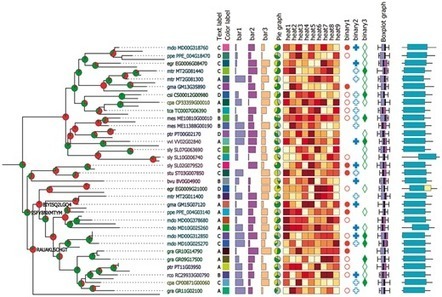
Abstract. Motivation: Comparative and evolutionary studies utilize phylogenetic trees to analyze and visualize biological data. Recently, several web-based too
Via Francis Martin
|