Your new post is loading...
Why should fungi identify nonself?
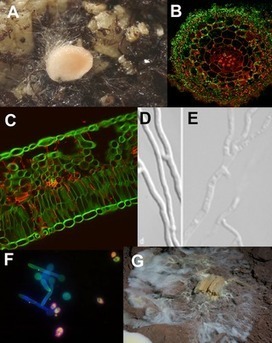
Fungi colonize nearly all environments on Earth (reviewed in [4]), where they interact with every major organismal group: viruses, bacteria, protists, amoeba, plants, and animals. Many of these interactions lead to symbioses ranging from mutualism to pathogenesis (Fig 1) [4]. Examples include fungi that are targeted by pathogens and predators [5] or that become hosts for intracellular bacterial populations [6]. Some of these fungal endosymbiont interactions have coevolved over their 400 million year old [7] symbiosis and likely involve specific bidirectional recognition systems [8–10]. The evolutionary success of the kingdom Fungi and diversity of fungal biotic interactions suggest that, like plants and animals, fungi have developed the ability to accurately identify and respond to interacting organisms. However, mechanisms for such monitoring and response are just beginning to be understood [11]. An intriguing possibility is the involvement of NLR-based nonself recognition mechanisms in Fungi.
Via Francis Martin

|
Scooped by
Jean-Michel Ané
October 25, 2017 9:52 PM
|
The spontaneous deamination of cytosine is a major source of C•G to T•A transitions, which account for half of known human pathogenic point mutations. The ability to efficiently convert target A•T base pairs to G•C could therefore advance the study and treatment of genetic diseases. While the deamination of adenine yields inosine, which is treated as guanine by polymerases, no enzymes are known to deaminate adenine in DNA. Here we report adenine base editors (ABEs) that mediate conversion of A•T to G•C in genomic DNA. We evolved a tRNA adenosine deaminase to operate on DNA when fused to a catalytically impaired CRISPR-Cas9. Extensive directed evolution and protein engineering resulted in seventh-generation ABEs (e.g., ABE7.10), that convert target A•T to G•C base pairs efficiently (~50% in human cells) with very high product purity (typically ≥ 99.9%) and very low rates of indels (typically ≤ 0.1%). ABEs introduce point mutations more efficiently and cleanly than a current Cas9 nuclease-based method, induce less off-target genome modification than Cas9, and can install disease-correcting or disease-suppressing mutations in human cells. Together with our previous base editors, ABEs advance genome editing by enabling the direct, programmable introduction of all four transition mutations without double-stranded DNA cleavage.
|
|
Scooped by
Jean-Michel Ané
October 24, 2017 10:32 AM
|
The establishment of the symbiosis between legumes and nitrogen-fixing rhizobia is finely regulated at the transcriptional, posttranscriptional and posttranslational levels. Argonaute5 (AGO5), a protein involved in RNA silencing, is able to bind both viral RNAs and microRNAs to control plant-microbe interactions and plant physiology. For instance, AGO5 regulates the systemic resistance of Arabidopsis against Potato Virus X as well as the pigmentation of soybean (Glycine max) seeds. Here, we show that AGO5 is also playing a central role in legume nodulation based on its preferential expression in common bean (Phaseolus vulgaris) and soybean roots and nodules. We also report that the expression of AGO5 is induced after 1 hour of inoculation with rhizobia. Down-regulation of AGO5 gene in P. vulgaris and G. max causes diminished root hair curling, reduces nodule formation and interferes with the induction of three critical symbiotic genes: NUCLEAR FACTOR Y-B (NF-YB), NODULE INCEPTION (NIN) and FLOTILIN2 (FLOT2). Our findings provide evidence that the common bean and soybean AGO5 genes play an essential role in the establishment of the symbiosis with rhizobia in determinate legumes.
|
|
Scooped by
Jean-Michel Ané
October 23, 2017 11:26 PM
|
A circle of scientists is gazing skyward, as if watching a ball fly through the air as they play an animated game of catch. But there is no ball — and this game is serious work. It is part of an exercise to help 12 scientists at the University of Connecticut (UConn) Health Center in Farmington to boost their communication skills.
These scientists are engaged in improvisation, a spontaneous, reactive interaction mode more traditionally seen in comedy performances. Improvisation games and communication both require attention to others and the forging of personal connections, says Raquell Holmes, a cell biologist by training who now spends much of her time running workshops for scientific conferences and research institutions through her company, improvscience, based in Boston, Massachusetts. With that in mind, she has adapted some traditional improvisation exercises, and imaginary catch is one of them.
|
|
Scooped by
Jean-Michel Ané
October 23, 2017 11:11 PM
|
Brazilian Microbiome: Current status and perspectives unite a set of distinguished investigators conducting microbiome research and build a comprehensive reference book with up-to-date inf
|
|
Scooped by
Jean-Michel Ané
October 23, 2017 11:01 PM
|
Arbuscular mycorrhizal (AM) fungi produce a recalcitrant glycoprotein, (glomalin-related soil protein (GRSP)), which can contribute to soil carbon sequestration. Here we made a first study to characterize the spatial distribution of GRSP fractions in a mangrove forest at Zhangjiang Estuary, Southeastern China and to explore potential contributions of GRSP to sediment organic carbon (SOC) in this forest. We identified GRSP fractions in surface sediments, as well as those at a depth of 50 cm. The contents of easily extractable GRSP (EE-GRSP), total GRSP (T-GRSP), GRSP in particulate organic matter (POM-GRSP) and GRSP in pore water (PW-GRSP) ranged between 1.20–2.22 mg g− 1, 1.38–2.61 mg g− 1, 1.45–10.78 mg g− 1 and 10.35–39.65 mg L− 1 respectively, and these four GRSPs are significantly affected by sample sites and sediment layers. Carbon in GRSP accounted for 2.8–5.9% of SOC and its contributions can far exceed that of microbial biomass carbon (0.21–0.73%) in the 0–50 cm sediment layers. Our data indicate that GRSP could be transported by pore water and accumulated in sediment profiles. The non-linear regression analysis revealed that as SOC and particulate organic carbon (POC) contents decrease, GRSP proportions increase, indicating the increase of the recalcitrant carbon offsetting the effects of mangrove carbon loss, especially labile C. Regression and ordination analyses indicated that GRSP fractions were mainly positively correlated with sediment carbon fractions and spore density but were negatively correlated with sand, pH. Strikingly, the unfavorable environmental factors for microbial organisms, especially AM fungi, prove to be able to promote the production or accumulation of GRSP. We propose that there are two different pathways for affecting the pool size of GRSP in mangrove ecosystems: (i) directly via indigenous AM fungi propagules; (ii) or via the GRSP transport and deposition by pore water and tides.
|
|
Scooped by
Jean-Michel Ané
October 23, 2017 10:58 PM
|
The implementation of Agrobacterium tumefaciens as a transformation tool revolutionized approaches to discover and understand gene functions in a large number of fungal species. A. tumefaciens mediated transformation (AtMT) is one of the most transformative technologies for research on fungi developed in the last 20 years, a development arguably only surpassed by the impact of genomics. AtMT has been widely applied in forward genetics, whereby generation of strain libraries using random T-DNA insertional mutagenesis, combined with phenotypic screening, has enabled the genetic basis of many processes to be elucidated. Alternatively, AtMT has been fundamental for reverse genetics, where mutant isolates are generated with targeted gene deletions or disruptions, enabling gene functional roles to be determined. When combined with concomitant advances in genomics, both forward and reverse approaches using AtMT have enabled complex fungal phenotypes to be dissected at the molecular and genetic level. Additionally, in several cases AtMT has paved the way for the development of new species to act as models for specific areas of fungal biology, particularly in plant pathogenic ascomycetes and in a number of basidiomycete species. Despite its impact, the implementation of AtMT has been uneven in the fungi. This review provides insight into the dynamics of expansion of new research tools into a large research community and across multiple organisms. As such, AtMT in the fungi, beyond the demonstrated and continuing power for gene discovery and as a facile transformation tool, provides a model to understand how other technologies that are just being pioneered, e.g. CRISPR/Cas, may play roles in fungi and other eukaryotic species.
|
|
Scooped by
Jean-Michel Ané
October 23, 2017 10:13 PM
|
The GRAS gene family is a large plant-specific family of transcription factors that are involved in diverse processes during plant development. Medicago truncatula is an ideal model plant for genetic research in legumes, and specifically for studying nodulation, which is crucial for nitrogen fixation. In this study, 59 MtGRAS genes were identified and classified into eight distinct subgroups based on phylogenetic relationships. Motifs located in the C-termini were conserved across the subgroups, while motifs in the N-termini were subfamily specific. Gene duplication was the main evolutionary force for MtGRAS expansion, especially proliferation of the LISCL subgroup. Seventeen duplicated genes showed strong effects of purifying selection and diverse expression patterns, highlighting their functional importance and diversification after duplication. Thirty MtGRAS genes, including NSP1 and NSP2, were preferentially expressed in nodules, indicating possible roles in the process of nodulation. A transcriptome study, combined with gene expression analysis under different stress conditions, suggested potential functions of MtGRAS genes in various biological pathways and stress responses. Taken together, these comprehensive analyses provide basic information for understanding the potential functions of GRAS genes, and will facilitate further discovery of MtGRAS gene functions.
|
|
Scooped by
Jean-Michel Ané
October 23, 2017 1:45 PM
|
In order to quantify P accumulation and P efflux in the ectomycorrhizal basidiomycete fungus Hebeloma cylindrosporum, we supplied 32P to mycelia previously grown in vitro in liquid medium. The culture had four main steps that are 1) growing the mycelium on complete medium with P, 2) transfer the mycelia into new culture solution with or without P, 3) adding a solution containing 32P and 4) rinsing the mycelia before incubation with or without plant. The main point is to rinse very carefully the mycelia after 32P supply in order to avoid overestimation of 32P efflux into the medium.
|
|
Scooped by
Jean-Michel Ané
October 21, 2017 4:21 PM
|
The spatial arrangement of the plant root system (root system architecture, RSA) is very sensitive to edaphic and endogenous signals that report on the nutrient status of soil and plant. Signalling pathways underpinning RSA responses to individual nutrients, particularly nitrate and phosphate, have been unravelled. Researchers have now started to investigate interactive effects between two or more nutrients on RSA. Several proteins enabling crosstalk between signalling pathways have recently been identified. RSA is potentially an important trait for sustainable and/or marginal agriculture. It is generally assumed that RSA responses are adaptive and optimise nutrient uptake in a given environment, but hard evidence for this paradigm is still sparse. Here we summarize recent advances made in these areas of research.
|
|
Scooped by
Jean-Michel Ané
October 21, 2017 4:15 PM
|
Four strains of symbiotic bacteria from root nodules of hyacinth bean (Lablab purpureus (L.) Sweet) from Namibia were previously identified as a novel group within the genus Bradyrhizobium . To confirm their taxonomic status, these strains were further characterized by taking a polyphasic approach. The type strain possessed 16S rRNA gene sequences identical to Bradyrhizobium paxllaeri LMTR 21T and Bradyrhizobium icense LMTR 13T, the full-length sequences were identical to those retrieved from SAMN05230119 and SAMN05230120, respectively. However, the intergenic spacer sequences of the novel group showed identities of less than 93.1 % to described Bradyrhizobium species and were placed in a well-supported separate lineage in the phylogenetic tree. Phylogenetic analyses of six concatenated housekeeping genes, recA, glnII, gyrB, dnaK, atpD and rpoB, corroborated that the novel strains belonged to a lineage distinct from named species of the genus Bradyrhizobium , with highest sequence identities to Bradyrhizobium jicamae and B. paxllaeri (below 93 %). The species status was validated by results of DNA–DNA hybridization and average nucleotide identity values of genome sequences. The combination of phenotypic characteristics from several tests, including carbon source utilization and antibiotic resistance, could be used to differentiate representative strains from recognized species of the genus Bradyrhizobium . Phylogenetic analysis of nodC and nifH genes placed the novel strains in a group with B. paxllaeri and B. lablabi . Novel strain 5-10T induces effective nodules on Lablab purpureus, Vigna subterranea, Vigna unguiculata and Arachis hypogaea. Based on our results, we conclude that our strains represent a novel species for which the name Bradyrhizobium namibiense sp. nov. is proposed, with type strain 5-10T[LMG 28789, DSM 100300, NTCCM0017 (Windhoek)].
|
|
Scooped by
Jean-Michel Ané
October 21, 2017 4:13 PM
|
Aim
Mycorrhizas are among the most common symbioses on Earth, impacting plant community structure and ecosystem functioning, yet little landscape-scale data linking mycorrhizal fungal diversity to biotic and abiotic properties exist to inform conservation. We examined arbuscular mycorrhizal (AM) fungal diversity in tropical and temperate locations and identified potential drivers of species distributions and diversity for use as proxy indicators in biodiversity conservation.
Location
AM fungal communities were documented at 60 sites in the Colorado Plateau in south-western United States and La Gran Sabana in south-eastern Venezuela.
Methods
Communities of plants and AM fungi and abiotic variables were measured along 50-m transects in three vegetation types (shrublands, forests, and traditional agricultural fields). Model selection and multivariate analyses were used to evaluate environmental predictors of AM fungal diversity and community structure.
Results
AM fungal species richness (α diversity) and community structure, but not among-site turnover (β diversity), differed between tropical and temperate locations; only 15% of taxa were present in both locations. In unmanaged sites, AM fungal richness was not correlated with plant richness, but instead predicted by soil pH and temperature (temperate) or precipitation and latitude (tropics). The structure of AM fungal communities was influenced by plant identity but not plant diversity in both locations. Traditional, sedentary Hopi agriculture influenced AM fungal communities on the Colorado Plateau, but Pemón shifting slash-and-burn agriculture did not alter AM fungal communities at La Gran Sabana. At both locations, AM fungal community structure was linked to soil texture and nitrogen.
Main conclusions
Our study demonstrates similarity between tropical and temperate regions in the biotic and abiotic drivers of landscape-scale AM fungal species distributions. Soil and climate as well as habitat heterogeneity may serve as proxy indicators of AM fungal communities for use in conservation planning to preserve the ecosystem functions and services of mycorrhizas.
|
|
Scooped by
Jean-Michel Ané
October 21, 2017 4:10 PM
|
Plant health in natural environments depends on interactions with complex and dynamic communities comprising macro- and microorganisms. While many studies have provided insights into the composition of rhizosphere microbiomes (rhizobiomes), little is known about whether plants shape their rhizobiomes. Here, we discuss physiological factors of plants that may govern plant–microbe interactions, focusing on root physiology and the role of root exudates. Given that only a few plant transport proteins are known to be involved in root metabolite export, we suggest novel families putatively involved in this process. Finally, building off of the features discussed in this review, and in analogy to well-known symbioses, we elaborate on a possible sequence of events governing rhizobiome assembly.
|
|
|
Scooped by
Jean-Michel Ané
October 28, 2017 3:39 PM
|
Considerable progress has been made in ecological and evolutionary genetics with studies demonstrating how genes underlying plant and microbial traits can influence adaptation and even ‘extend’ to influence community structure and ecosystem level processes. Progress in this area is limited to model systems with deep genetic and genomic resources that often have negligible ecological impact or interest. Thus, important linkages between genetic adaptations and their consequences at organismal and ecological scales are often lacking. Here we introduce the Sphagnome Project, which incorporates genomics into a long-running history of Sphagnum research that has documented unparalleled contributions to peatland ecology, carbon sequestration, biogeochemistry, microbiome research, niche construction, and ecosystem engineering. The Sphagnome Project encompasses a genus-level sequencing effort that represents a new type of model system driven not only by genetic tractability, but by ecologically relevant questions and hypotheses.
Plants accommodate a specific microbiota on and in their roots that, similar to the microbial communities in human or animal guts, supports the host in nutrient acquisition (1). Beneficial associations with fungi are widespread in the plant kingdom and probably best known are so-called mycorrhizal symbioses (Fig. 1), which are formed between soil fungi and ∼90% of land plants (2). In these partnerships, fungi provide limiting nutrients such as phosphorus (P) in return for photosynthetically fixed carbon from the plant host. Up to 80% of plant P can be derived from the symbionts, underpinning the importance of these associations for plant nutrition. However, ∼10% of all plants do not form mycorrhizal associations, and this prompts the question how nonmycorrhizal plants like the Brassicaceae manage to scavenge sufficient amounts of soil nutrients, especially when growing in nutrient poor environments?
Via Francis Martin
|
|
Scooped by
Jean-Michel Ané
October 23, 2017 11:28 PM
|
STEM professionals, with the help of improvscience, are recognizing that creating improvisational ensembles and collaborative communication is critical to their own growth and science. This ability to create new ways of talking and working with each other has paved the way to a new vision of what scientific culture can become.
|
|
Scooped by
Jean-Michel Ané
October 23, 2017 11:14 PM
|
Dissimilarity overlap curve analysis has shown that ‘universality’ is a common feature in many complex microbial communities, suggesting that the same taxa interact in a similar manner when shared between communities. We present evidence that arbuscular mycorrhizal fungi, common plant root symbionts, show universal community compositions in natural ecosystems and that this pattern is conserved even at larger spatial scales. However, universality was not detected in agricultural ecosystems potentially implying that agricultural symbiont communities are formed in a different manner.
|
|
Scooped by
Jean-Michel Ané
October 23, 2017 11:06 PM
|
Plant genetic variation and soil microorganisms are individually known to influence plant responses to climate change, but the interactive effects of these two factors are largely unknown. Using long-term observational studies in the field and common garden and greenhouse experiments of a foundation tree species (Pinus edulis) and its mutualistic ectomycorrhizal fungal (EMF) associates, we show that EMF community composition is under strong plant genetic control. Seedlings acquire the EMF community of their seed source trees (drought tolerant vs. drought intolerant), even when exposed to inoculum from the alternate tree type. Drought-tolerant trees had 25% higher growth and a third the mortality of drought-intolerant trees over the course of 10 y of drought in the wild, traits that were also observed in their seedlings in a common garden. Inoculation experiments show that EMF communities are critical to drought tolerance. Drought-tolerant and drought-intolerant seedlings grew similarly when provided sterile EMF inoculum, but drought-tolerant seedlings grew 25% larger than drought-intolerant seedlings under dry conditions when each seedling type developed its distinct EMF community. This demonstration that particular combinations of plant genotype and mutualistic EMF communities improve the survival and growth of trees with drought is especially important, given the vulnerability of forests around the world to the warming and drying conditions predicted for the future.
|
|
Scooped by
Jean-Michel Ané
October 23, 2017 11:00 PM
|
Ensifer meliloti Mlalz-1 (INSDC = ATZD00000000) is an aerobic, motile, Gram-negative, non-spore-forming rod that was isolated from an effective nitrogen-fixing nodule of Medicago laciniata (L.) Miller from a soil sample collected near the town of Guatiza on the island of Lanzarote, the Canary Islands, Spain. This strain nodulates and forms an effective symbiosis with the highly specific host M. laciniata. This rhizobial genome was sequenced as part of the DOE Joint Genome Institute 2010 Genomic Encyclopedia for Bacteria and Archaea-Root Nodule Bacteria (GEBA-RNB) sequencing project. Here the features of E. meliloti Mlalz-1 are described, together with high-quality permanent draft genome sequence information and annotation. The 6,664,116 bp high-quality draft genome is arranged in 99 scaffolds of 100 contigs, containing 6314 protein-coding genes and 74 RNA-only encoding genes. Strain Mlalz-1 is closely related to Ensifer meliloti IAM 12611 T, Ensifer medicae A 321T and Ensifer numidicus ORS 1407 T, based on 16S rRNA gene sequences. gANI values of ≥98.1% support the classification of strain Mlalz-1 as E. meliloti . Nodulation of M. laciniata requires a specific nodC allele, and the nodC gene of strain Mlalz-1 shares ≥98% sequence identity with nodC of M. laciniata-nodulating Ensifer strains, but ≤93% with nodC of Ensifer strains that nodulate other Medicago species. Strain Mlalz-1 is unique among sequenced E. meliloti strains in possessing genes encoding components of a T2SS and in having two versions of the adaptive acid tolerance response lpiA-acvB operon. In E. medicae strain WSM419, lpiA is essential for enhancing survival in lethal acid conditions. The second copy of the lpiA-acvB operon of strain Mlalz-1 has highest sequence identity (> 96%) with that of E. medicae strains, which suggests genetic recombination between strain Mlalz-1 and E. medicae and the horizontal gene transfer of lpiA-acvB.
|
|
Scooped by
Jean-Michel Ané
October 23, 2017 10:14 PM
|
Common bean (Phaseolus vulgaris L.) is the most important legume consumed worldwide; its genetic origins lie in the Mesoamerican (main centre) and Andean regions. It is promiscuous in establishing root-nodule symbioses; however, in the centres of origin/domestication, the predominant association is with Rhizobium etli . We have previously identified a new lineage (PEL-3) comprising three strains (CNPSo 661, CNPSo 666 and CNPSo 668T) isolated from root nodules of common bean in Mexico, and that have now been analysed in more detail. Sequences of the 16S rRNA gene positioned the three strains in a large clade including R. etli . Multilocus sequence analysis (MLSA) with four housekeeping genes (recA, glnII, gyrB and rpoA) positioned the three strains in a clade distinct from all other described species, with 100 % bootstrap support, and nucleotide identity (NI) of the four concatenated genes with the closest species R. etli was 95.0 %. Average nucleotide identity (ANI) values of the whole genome of CNPSo 668T and the closest species, R. etli , was 92.9 %. In the analyses of the symbiotic genes nifH and nodC, the strains comprised a cluster with other rhizobial symbionts of P. vulgaris. Other phenotypic and genotypic traits were determined for the new group and our data support the description of the three CNPSo strains as a novel species, for which the name Rhizobium esperanzae is proposed. The type strain is CNPSo 668T (=UMR 1320T=Z87-8T=LMG 30030 T=U 10001T), isolated from a common-bean nodule in Mexico.
|
|
Scooped by
Jean-Michel Ané
October 23, 2017 10:11 PM
|
Mycorrhizal symbiosis is known to be the most prevalent form of fungal symbiosis with plants. Although some studies focus on the importance of mycorrhizal symbiosis for enhanced flavonoids in the host plants, a comprehensive understanding of the relationship still is lacking. Therefore, we studied the effects of mycorrhizal inoculation of onions (Allium cepa L.) regarding flavonol concentration and the genes involved in flavonol biosynthesis when different forms of nitrogen were supplied. We hypothesized that mycorrhizal inoculation can act as a biotic stress and might lead to an increase in flavonols and expression of related genes. The three main quercetin compounds [quercetin-3,4′-di-O-β-d-glucoside (QDG), quercetin-4′-O-β-d-glucoside (QMG), and isorhamnetin-4′-O-β-d-glucoside (IMG)] of onion bulbs were identified and analyzed after inoculating with increasing amounts of mycorrhizal inocula at two time points and supplying either predominantly NO3− or NH4+ nitrogen. We also quantified plant dry mass, nutrient element uptake, chalcone synthase (CHS), flavonol synthase (FLS), and phenyl alanine lyase (PAL) gene expression as key enzymes for flavonol biosynthesis. Inoculation with arbuscular mycorrhizal fungi (highest amount) and colonization at late development stages (bulb growth) increased QDG and QMG concentrations if plants were additionally supplied with predominantly NH4+. No differences were observed in the IMG content. RNA accumulation of CHS, FLS, and PAL was affected by the stage of the mycorrhizal symbiosis and the nitrogen form. Accumulation of flavonols was not correlated, however, with either the percentage of myorrhization or the abundance of transcripts of flavonoid biosynthesis genes. We found that in plants at late developmental stages, RNA accumulation as a reflection of a current physiological situation does not necessarily correspond with the content of metabolites that accumulate over a long period. Our findings suggest that nitrogen form can be an important factor determining mycorrhizal development and that both nitrogen form and mycorrhizas interact to influence flavonol biosynthesis.
|
|
Scooped by
Jean-Michel Ané
October 21, 2017 4:25 PM
|
Bacterial core and accessory genome components are analogous to the operating system and applications of smartphones. The core genome provides stable taxonomy and species lists, but phenotypes reflect the mobile pool of accessory genes. This suggests changes to the ways we define bacterial species and describe bacterial communities.
|
|
Scooped by
Jean-Michel Ané
October 21, 2017 4:17 PM
|
The living soil is instrumental to key life support functions (LSF) that safeguard life on Earth. The soil microbiome has a main role as a driver of these LSF. Current global developments, like anthropogenic threats to soil (e.g., via intensive agriculture) and climate change, pose a burden on soil functioning. Therefore, it is important to dispose of robust indicators that report on the nature of deleterious changes and thus soil quality. There has been a long debate on the best selection of biological indicators (bioindicators) that report on soil quality. Such indicators should ideally describe organisms with key functions in the system, or with key regulatory/connecting roles (so-called keystone species). However, in the light of the huge functional redundancy in most soil microbiomes, finding specific keystone markers is not a trivial task. The current rapid development of molecular (DNA-based) methods that facilitate deciphering microbiomes with respect to key functions will enable the development of improved criteria by which molecular information can be tuned to yield molecular markers of soil LSF. This review critically examines the current state-of-the-art in molecular marker development and recommends avenues to come to improved future marker systems.
|
|
Scooped by
Jean-Michel Ané
October 21, 2017 4:14 PM
|
The phylogeny of 16 isolates from root nodules of Genista germanica, Genista tinctoria, Cytisus ratisbonensis, and Cytisus scoparius growing in southeast Poland was estimated by comparative sequence analysis of core (16S rDNA, atpD, glnII, recA) and symbiosis-related (nodC, nodZ, nifH) genes. All the sequences analyzed placed the studied rhizobia in the genus Bradyrhizobium. Phylogenetic analysis of individual and concatenated housekeeping genes showed that the Genisteae microsymbionts form a homogeneous group with B. japonicum strains. The phylogeny of nodulation and nitrogen fixation genes indicated a close relationship of the examined rhizobia with B. japonicum, B. canariense, B. cytisi, B rifense and B. lupini strains infecting other plants of the tribe Genisteae. For the first time, the taxonomic position of G. germanica and C. ratisbonensis rhizobia, inferred from multigenic analysis, is described. The results of the phylogenetic analysis based on the protein-coding gene sequences presented in this study also indicate potential pitfalls concerning the choice of marker and reference strains, which may lead to conflicting conclusions in species delineation.
|
|
Scooped by
Jean-Michel Ané
October 21, 2017 4:10 PM
|
Brachypodium distachyon is a model grass species for economically important cereal crops. Efforts are in progress to develop useful functional genomic resources in Brachypodium. A tobacco retrotransposon, Tnt1, has been used successfully in recent past to generate insertional mutagenesis in several dicot plant species. Tnt1 retrotransposon replicates, transposes, and inserts at multiple random genomic locations in the plant genome. Transposition occurs only during somatic embryogenesis but not during seed transmission. We developed Brachypodium transgenic plants that can express the Tnt1 element. Here, we describe an efficient tissue culture-based approach to generate Tnt1 insertional mutant population using transgenic Brachypodium line expressing the Tnt1 retrotransposon.
|