Your new post is loading...

|
Scooped by
Jean-Michel Ané
October 12, 2017 10:24 PM
|
The idea of eliminating the use of fertilizers which are sometimes environmentally unsafe is slowly becoming a reality because of the emergence of microorganisms that can serve the same purpose or even do better. Depletion of soil nutrients through leaching into the waterways and causing contamination are some of the negative effects of these chemical fertilizers that prompted the need for suitable alternatives. This brings us to the idea of using microbes that can be developed for use as biological fertilizers (biofertilizers). They are environmentally friendly as they are natural living organisms. They increase crop yield and production and, in addition, in developing countries, they are less expensive compared to chemical fertilizers. These biofertilizers are typically called plant growth-promoting bacteria (PGPB). In addition to PGPB, some fungi have also been demonstrated to promote plant growth. Apart from improving crop yields, some biofertilizers also control various plant pathogens. The objective of worldwide sustainable agriculture is much more likely to be achieved through the widespread use of biofertilizers rather than chemically synthesized fertilizers. However, to realize this objective it is essential that the many mechanisms employed by PGPB first be thoroughly understood thereby allowing workers to fully harness the potentials of these microbes. The present state of our knowledge regarding the fundamental mechanisms employed by PGPB is discussed herein.
|
|
Scooped by
Jean-Michel Ané
October 12, 2017 10:14 PM
|
This study aimed to assess the performance of an indigenous arbuscular mycorrhizal fungus (AMF) inoculant isolated from yam rhizosphere on yam (Dioscorea rotundata Poir.) growth and yield in field conditions. For this purpose, a factorial experiment was carried out in two contrasting agricultural soils located in Duokro and INP-HB in Yamoussoukro, Côte d’Ivoire. The Duokro soil was neutral sandy loam with high nutrient content and an established AMF community dominated by Glomeraceae Spain & N.C. Schenck) isolated from cassava rhizosphere, applied singly or together, and Rhizophagus intraradices (N.C whereas the INP-HB soil was acidic sand with low nutrient content and codominance of Glomeraceae and Paraglomeraceae. The inoculation treatments were two native AMF species, namely Rhizophagus irregularis (Blaszk., Wubet, Renker & Buscot) isolated from yam rhizosphere and Acaulospora colombiana (. Schenck & G.S. Sm.), an exotic commercial species. Mycorrhizal colonization frequencies of inoculated yam plants were substantially higher at Duokro than INP-HB. As consequence, all the growth and yield parameters measured were higher at Duokro than at INP-HB. Plants inoculated with the native inoculant R. irregularis had the highest mycorrhizal frequencies, the best growth and tuber production at both sites. Moreover, the exotic commercial inoculant was outcompeted by the native inoculants. R. irregularis appeared therefore to be a good candidate for commercialization as an inoculant for yam crops.
|
|
Scooped by
Jean-Michel Ané
October 12, 2017 9:16 AM
|
Most land plants live in association with arbuscular mycorrhizal (AM) fungi and rely on this symbiosis to scavenge phosphorus (P) from soil. The ability to establish this partnership has been lost in some plant lineages like the Brassicaceae, which raises the question of what alternative nutrition strategies such plants have to grow in P-impoverished soils. To understand the contribution of plant–microbiota interactions, we studied the root-associated fungal microbiome of Arabis alpina (Brassicaceae) with the hypothesis that some of its components can promote plant P acquisition. Using amplicon sequencing of the fungal internal transcribed spacer 2, we studied the root and rhizosphere fungal communities of A. alpina growing under natural and controlled conditions including low-P soils and identified a set of 15 fungal taxa consistently detected in its roots. This cohort included a Helotiales taxon exhibiting high abundance in roots of wild A. alpina growing in an extremely P-limited soil. Consequently, we isolated and subsequently reintroduced a specimen from this taxon into its native P-poor soil in which it improved plant growth and P uptake. The fungus exhibited mycorrhiza-like traits including colonization of the root endosphere and P transfer to the plant. Genome analysis revealed a link between its endophytic lifestyle and the expansion of its repertoire of carbohydrate-active enzymes. We report the discovery of a plant–fungus interaction facilitating the growth of a nonmycorrhizal plant under native P-limited conditions, thus uncovering a previously underestimated role of root fungal microbiota in P cycling.
|
|
Scooped by
Jean-Michel Ané
October 10, 2017 9:48 AM
|
|
|
Scooped by
Jean-Michel Ané
October 8, 2017 3:57 PM
|
Our perception of plants is determined by their visible organs: stem, branches and leaves. The underground parts of a plant are rarely seen; indeed the root system is usually hidden from sight. This is also reflected in science where the interaction between leaves and the atmosphere is much more studied than interactions between roots and soil. One reason for such an imbalance involves the difficulties in studying roots in their heterogeneous and opaque environment. Consequently, relatively little is known about the importance of roots in the soil and how soil physico-chemical properties and soil organisms are influenced by the presence of roots and vice versa. Roots are not merely a passive agent that grow in a challenging environment: roots are engaged in a tremendous number of interactions with soil, which change soil properties and enhance its biotic component.
This paper reviews the current state of understanding on the factors involved in root-soil interactions, bearing in mind the specific aim of underlining more recent advances to identify significant gaps in this research field. We also promote a tree-oriented view of roots, describing how soil physico-chemical properties, micro- and macro-fauna, symbiosis and pathogens affect tree root growth and how roots can interact and modify these abiotic and biotic factors.
We hope our review will provide an impetus for more studies on the intricate soil-root interactions to enhance the importance of this vast, and somewhat hidden topic.
|
|
Scooped by
Jean-Michel Ané
October 8, 2017 3:57 PM
|
Aims
Evaluate biological nitrogen fixation (BNF) and its contribution to total N yield in different grass-clover mixtures under a boreal coastal climate and assess how winter conditions affect the survival of clover and its capability to fix nitrogen (N).
Methods
Grass-clover mixtures sown with 0, 15 and 30% red and white clover were subjected to two N rates and three levels of tractor trafficking over four years. BNF was estimated by N-difference for each of the two harvests per year, whereas the first harvest was used to estimate the fraction of N derived from the atmosphere (NdfA) and its transfer to grasses by 15N natural abundance.
Results
Biological N fixation, mainly by red clover, contributed substantially to total N yield, which was up to 75% greater in grass-clover mixtures than in pure grass stands in the second production year. However, the number of red clover plants and associated BNF decreased dramatically in the third and fourth production year, with N fertilization rate having a more detrimental effect than soil trafficking. Conversely, the amount of biologically fixed N transferred to grass, increased with time, evidencing that some of the biologically fixed N is retained in the system. In the first harvests, NdfA values were generally between 80 and 100%, irrespective of preceding winter conditions.
Conclusions
BNF in high latitude grass-clover mixtures can be substantial but is limited by the poor survival of red clover. Variable winter conditions had no measurable effect on winter survival nor on the sward’s capacity to fix nitrogen in spring.
|
|
Scooped by
Jean-Michel Ané
October 8, 2017 3:49 PM
|
The history of the life–Earth system can be divided into five ‘energetic’ epochs, each featuring the evolution of life forms that can exploit a new source of energy. These sources are: geochemical energy, sunlight, oxygen, flesh and fire. The first two were present at the start, but oxygen, flesh and fire are all consequences of evolutionary events. Since no category of energy source has disappeared, this has, over time, resulted in an expanding realm of the sources of energy available to living organisms and a concomitant increase in the diversity and complexity of ecosystems. These energy expansions have also mediated the transformation of key aspects of the planetary environment, which have in turn mediated the future course of evolutionary change. Using energy as a lens thus illuminates patterns in the entwined histories of life and Earth, and may also provide a framework for considering the potential trajectories of life–planet systems elsewhere. Correspondence (14 August 2017)
Eukaryotes contain three types of lipid kinases that belong to the phosphatidylinositol 3-kinase (PI3K) family. In plants and Saccharomyces cerevisiae, only PI3K class III family members have been identified. These enzymes regulate the innate immune response, intracellular trafficking, autophagy, and senescence. Here, we report that RNAi-mediated downregulation of common bean (Phaseolus vulgaris) PI3K severely impaired symbiosis in composite P. vulgaris plants with endosymbionts such as Rhizobium tropici and Rhizophagus irregularis. Downregulation of Pv-PI3K was associated with a marked decrease in root hair growth and curling. Additionally, infection thread growth, root-nodule number, and symbiosome formation in root nodule cells were severely affected. Interestingly, root colonization by AM fungi and the formation of arbuscules were also abolished in PI3K loss-of-function plants. Furthermore, the transcript accumulation of genes encoding proteins known to interact with PI3K to form protein complexes involved in autophagy was drastically reduced in these transgenic roots. RNAi-mediated downregulation of one of these genes, Beclin1/Atg6, resulted in a similar phenotype as observed for transgenic roots in which Pv-PI3K had been downregulated. Our findings show that an autophagy-related process is crucial for the mutualistic interactions of P. vulgaris with beneficial microorganisms.
Via Uhlmann Charles
|
|
Scooped by
Jean-Michel Ané
October 3, 2017 10:26 PM
|
This book provides a valuable contribution to the field of agriculture microbiology and pooled research in the form of a compendium describing the benign functional role of Rhizobium spp., with biotec
|
|
Scooped by
Jean-Michel Ané
October 3, 2017 10:23 PM
|
For the last two decades, research on legume–rhizobia symbiosis has outlined opportunities for biotechnological approaches to supply nitrogen to crop plants. New research results on legume and rhizobial diversity suggest about the conserved genes/proteins in host and symbionts and help to determine whether the nitrogen-fixing ability can be transferred to non-legume crops. In addition, the wild rhizobia with specific characters are a source for genetic information to improve symbiotic characters of other rhizobia and may be also used for other biotechnological approaches. These approaches include the production of polysaccharides, phytohormones, metabolites, bioremediation, etc. This field of research will be the focus of future investigations for biotechnological purposes.
|
|
Scooped by
Jean-Michel Ané
October 3, 2017 10:22 PM
|
Our understanding of plant biology is increasingly being built upon studies using ‘omics and system biology approaches performed at the level of the entire plant, organ, or tissue. Although these approaches open new avenues to better understand plant biology, they suffer from the cellular complexity of the analyzed sample. Recent methodological advances now allow plant scientists to overcome this limitation and enable biological analyses of single-cells or single-cell-types. Coupled with the development of bioinformatics and functional genomics resources, these studies provide opportunities for high-resolution systems analyses of plant phenomena. In this review, we describe the recent advances, current challenges, and future directions in exploring the biology of single-cells and single-cell-types to enhance our understanding of plant biology as a system.
|
|
Scooped by
Jean-Michel Ané
October 2, 2017 10:57 AM
|
GAINESVILLE, Fla. — A team of researchers at the universities of Florida and Wisconsin-Madison will use a $7.3 million grant from the U.S. Department of Energy to pinpoint genes that could improve plants’ ability to access nitrogen, an essential nutrient for plant growth.
Enhancing plants’ nitrogen uptake could increase food security by promoting crop growth in poor soils and could reduce the need for nitrogen fertilizers, lowering costs for farmers and lessening environmental damage caused by runoff, said Matias Kirst, principal investigator and professor of plant genomics at the UF Institute of Food and Agricultural Sciences.
“This is a critical problem not just for agriculture, but society in general,” Kirst said. “We’re going to use this technology to minimize fertilizer runoff, contamination of waterways and carbon dioxide release in the atmosphere.”
Most plants can only obtain nitrogen from the soil, which offers a limited supply. Many crops depend on nitrogen fertilizers to survive and produce high yields.
But some plants, such as legumes, have a unique way of working around this problem, researchers said. They have evolved a fine-tuned partnership with root-dwelling bacteria that capture nitrogen from the atmosphere and change it into a form that the plant can absorb and use, a process known as nitrogen fixation.
Understanding the evolutionary origins of this partnership and identifying the genes responsible for nitrogen fixation could enable scientists to introduce these genes into other plants, Kirst said. Adding these genes to crops such as wheat, corn and rice could decrease the amount of nitrogen fertilizer they require and increase crop productivity.
|
|
Scooped by
Jean-Michel Ané
September 24, 2017 4:57 PM
|
Challenges in cultivating microorganisms have limited the phylogenetic diversity of currently available microbial genomes. This is being addressed by advances in sequencing throughput and computational techniques that allow for the cultivation-independent recovery of genomes from metagenomes. Here, we report the reconstruction of 7,903 bacterial and archaeal genomes from >1,500 public metagenomes. All genomes are estimated to be ≥50% complete and nearly half are ≥90% complete with ≤5% contamination. These genomes increase the phylogenetic diversity of bacterial and archaeal genome trees by >30% and provide the first representatives of 17 bacterial and three archaeal candidate phyla. We also recovered 245 genomes from the Patescibacteria superphylum (also known as the Candidate Phyla Radiation) and find that the relative diversity of this group varies substantially with different protein marker sets. The scale and quality of this data set demonstrate that recovering genomes from metagenomes provides an expedient path forward to exploring microbial dark matter.
|
|
|
Scooped by
Jean-Michel Ané
October 12, 2017 10:14 PM
|
Arbuscular mycorrhizal fungi form extensive common mycorrhizal networks (CMNs) that may interconnect neighboring root systems of the same or different plant species, thereby potentially influencing the distribution of limiting mineral nutrients among plants. We examined how CMNs affected intra- and interspecific interactions within and between populations of Andropogon gerardii, a highly mycorrhiza dependent, dominant prairie grass and Elymus canadensis, a moderately dependent, subordinate prairie species. We grew A. gerardii and E. canadensis alone and intermixed in microcosms, with individual root systems isolated, but either interconnected by CMNs or with CMNs severed weekly. CMNs, which provided access to a large soil volume, improved survival of both A. gerardii and E. canadensis, but intensified intraspecific competition for A. gerardii. When mixed with E. canadensis, A. gerardii overyielded aboveground biomass in the presence of intact CMNs but not when CMNs were severed, suggesting that A. gerardii with intact CMNs most benefitted from weaker interspecific than intraspecific interactions across CMNs. CMNs improved manganese uptake by both species, with the largest plants receiving the most manganese. Enhanced growth in consequence of improved mineral nutrition led to large E. canadensis in intact CMNs experiencing water-stress, as indicated by 13C isotope abundance. Our findings suggest that in prairie plant communities, CMNs may influence mineral nutrient distribution, water relations, within-species size hierarchies, and between-species interactions.
|
|
Scooped by
Jean-Michel Ané
October 12, 2017 10:10 PM
|
Abiotic stress conditions such as drought, salinity and extreme temperatures are an increasing problem in agriculture. Research efforts are aimed to develop strategies to make agriculture more resilient and to mitigate the stress effects on crop production. In this context, the use of root-associated microbial communities able to improve plant tolerance is attracting increasing attention. In this chapter, we will offer an overview of the researches on the use of soil beneficial microorganisms, focusing mainly on mycorrhizal fungi and biocontrol agents such as Trichoderma species, to improve plant tolerance to different abiotic stresses (e.g. water stress, salinity, extreme temperatures).
|
|
Scooped by
Jean-Michel Ané
October 10, 2017 10:55 AM
|
Biofertilizers are a large part of the global agricultural economy.
Recently, there has been an increase in the number of companies producing fungal inoculants.
Whether these inoculants are useful is not clear; they are difficult to monitor in the field.
The unintended consequences of inoculants in natural systems is not known, but if invasive, they may pose a threat to soil and plant biodiversity and ecosystem functioning.
|
|
Scooped by
Jean-Michel Ané
October 9, 2017 10:49 PM
|
The genome of the liverwort Marchantia polymorpha is an important step toward development of a new plant model system (Bowman et al., 2017). Liverworts may be the sister taxon to all other land plants, and the genome shows features that illuminate the ancestor of all land plants and give insights into how plant systems function and evolved.
|
|
Scooped by
Jean-Michel Ané
October 8, 2017 3:57 PM
|
Soils polluted with heavy metals result into various environmental and ecological tribulations like alterations in microbial community, deterioration of soil, and induction of metals into the human food chain. Noxious heavy metals, for instance, cadmium (Cd) and essential micronutrients like zinc (Zn) have identical chemical properties and are normally taken up by plants via similar carrier proteins as those of indispensable micronutrients. Cohesive interactions between plants and microbes and their co-existence or struggle for survival play a fundamental role in acclimatizing to metal-polluted environments. In this context, arbuscular mycorrhizal (AM) fungi are regarded as a prospective biotechnological approach for increasing tolerance of plants to heavy metal-polluted soils. However, the vital molecular factors responsible for regulating metal homeostasis/balance in these microbes have been poorly understood. Moreover, combined studies assessing the effect of AM fungal inoculation in alleviating Cd and/or Zn toxicity in plants and the underlying mechanisms are still unclear. This review presents the updated information on cross talk between Cd–Zn–AM in plants grown on agricultural and metal-contaminated soils.
|
|
Scooped by
Jean-Michel Ané
October 8, 2017 3:49 PM
|
Background
Although the origin of the eukaryotic cell has long been recognized as the single most profound change in cellular organization during the evolution of life on earth, this transition remains poorly understood. Models have always assumed that the nucleus and endomembrane system evolved within the cytoplasm of a prokaryotic cell.
Results
Drawing on diverse aspects of cell biology and phylogenetic data, we invert the traditional interpretation of eukaryotic cell evolution. We propose that an ancestral prokaryotic cell, homologous to the modern-day nucleus, extruded membrane-bound blebs beyond its cell wall. These blebs functioned to facilitate material exchange with ectosymbiotic proto-mitochondria. The cytoplasm was then formed through the expansion of blebs around proto-mitochondria, with continuous spaces between the blebs giving rise to the endoplasmic reticulum, which later evolved into the eukaryotic secretory system. Further bleb-fusion steps yielded a continuous plasma membrane, which served to isolate the endoplasmic reticulum from the environment.
Conclusions
The inside-out theory is consistent with diverse kinds of data and provides an alternative framework by which to explore and understand the dynamic organization of modern eukaryotic cells. It also helps to explain a number of previously enigmatic features of cell biology, including the autonomy of nuclei in syncytia and the subcellular localization of protein N-glycosylation, and makes many predictions, including a novel mechanism of interphase nuclear pore insertion.
|
|
Scooped by
Jean-Michel Ané
October 6, 2017 9:31 AM
|
The evolution of land flora transformed the terrestrial environment. Land plants evolved from an ancestral charophycean alga from which they inherited developmental, biochemical, and cell biological attributes. Additional biochemical and physiological adaptations to land, and a life cycle with an alternation between multicellular haploid and diploid generations that facilitated efficient dispersal of desiccation tolerant spores, evolved in the ancestral land plant. We analyzed the genome of the liverwort Marchantia polymorpha, a member of a basal land plant lineage. Relative to charophycean algae, land plant genomes are characterized by genes encoding novel biochemical pathways, new phytohormone signaling pathways (notably auxin), expanded repertoires of signaling pathways, and increased diversity in some transcription factor families. Compared with other sequenced land plants, M. polymorpha exhibits low genetic redundancy in most regulatory pathways, with this portion of its genome resembling that predicted for the ancestral land plant.
|
|
Scooped by
Jean-Michel Ané
October 4, 2017 9:29 AM
|
Researchers from the University of Wisconsin–Madison and the University of Florida will use a $7 million grant from the U.S. Department of Energy to study how some plants partner with bacteria to create usable nitrogen and to transfer this ability to the bioenergy crop poplar.
Plants that produce their own nitrogen would require less fertilizer, which would save farmers money and reduce the environmental pollution caused by fertilizer runoff into waterways.
The scientists will study how legumes — alfalfa, beans, and their cousins — evolved the ability to cooperate with bacteria to turn the nitrogen that is so abundant in the air into a form usable by plants. That process is called nitrogen fixation, and it takes place in specialized root organs called nodules that harbor soil bacteria. Recreating this ability in other plants has long been a goal of microbiologists and plant biologists interested in improving agriculture, says Jean-Michel Ané, a professor of bacteriology and agronomy and the lead researcher for the UW–Madison team.
The scientists will use the increasing availability of fully sequenced genomes and datasets on gene expression to investigate the evolutionary history of nitrogen fixation. By comparing closely related plants where one species retains this ability and another has lost it, the researchers can identify the most important genetic elements for nitrogen fixation to take place.
|
|
Scooped by
Jean-Michel Ané
October 3, 2017 10:25 PM
|
This book focuses on food security in sustainable agriculture and nutrient management. The study of plant probiotic microbes’ synergism using existing techniques has greatly improved our grasp of the
|
|
Scooped by
Jean-Michel Ané
October 3, 2017 10:22 PM
|
The most astonishing feature of plant roots is their capability of secreting a broad variety of compounds ranging from low molecular to high molecular weights into the rhizosphere. These compounds act as signals for establishing and regulating the interactions among plant roots and microorganisms present in rhizosphere through different mechanisms. The mechanism of establishment of these relationships includes complex signaling cascades and involves different transporter proteins. Exudation is an important process that influences the microbial diversity and relevant biological activities. In addition, these secretions mediate the phenomena of mineral uptake in soil with low nutrient content either through chelation directly or by affecting biological activity of microbes. Further, microbes associated with plants have the potential to upgrade phytoremediation efficiency by facilitating phytoextraction and phytostabilization and through increase in biomass production by plants. Overall these exudation-mediated plant-microbe interactions influence the soil structurally and functionally via orchestrating microbial richness, nutrient acquisition, and phytoremediation. Hence, in light of this, the chapter is intended to provide the perceptivity to comprehend the impact of root exudation-mediated plant-microbe interactions in enriching the structural and functional characteristics of soil.
|
|
Scooped by
Jean-Michel Ané
October 2, 2017 12:32 PM
|
Marchantia polymorpha is an extant relative of the earliest terrestrial plants and has attracted a substantial interest as a model organism for evolutionary and
|
|
Rescooped by
Jean-Michel Ané
from Plant Pathogenomics
October 2, 2017 10:56 AM
|
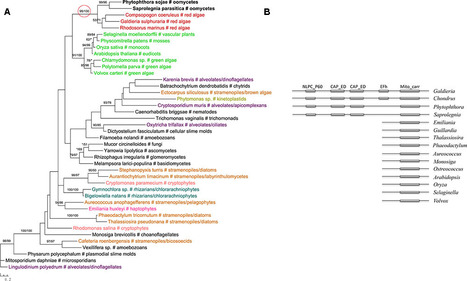
The spread of photosynthesis is one of the most important but constantly debated topics in eukaryotic evolution. Various hypotheses have been proposed to explain the plastid distribution in extant eukaryotes. Notably, the chromalveolate hypothesis suggested that multiple eukaryotic lineages were derived from a photosynthetic ancestor that had a red algal endosymbiont. As such, genes of plastid/algal origin in aplastidic chromalveolates, such as oomycetes, were considered to be important supporting evidence. Although the chromalveolate hypothesis has been seriously challenged, some of its supporting evidence has not been carefully investigated. In this study, we re-evaluate the “algal” genes from oomycetes with a larger sampling and careful phylogenetic analyses. Our data provide no conclusive support for a common photosynthetic ancestry of stramenopiles, but show that the initial estimate of “algal” genes in oomycetes was drastically inflated due to limited genome data available then for certain eukaryotic lineages. These findings also suggest that the evolutionary histories of these “algal” genes might be attributed to complex scenarios such as differential gene loss, serial endosymbioses, or horizontal gene transfer.
Via Kamoun Lab @ TSL
|


 Scoop.it!