Your new post is loading...

|
Scooped by
Jean-Michel Ané
January 28, 2018 10:10 PM
|
Grape surface is an unstable habitat that changes greatly according to the stage of grape ripening. Different bacteria and yeasts can colonise the surface of grape berry and the diversity of microorganisms depends on the stage of ripening, pesticide application and health condition. The aim of this study was to study the microflora of the surface of grape berries. Altogether, 19 grape samples from Slovakia were collected. The spread plate method was applied and a 100 μL inoculum of each dilution (10−2, 10−3) was plated on TSA, MEA, and MRS agar for isolation of microorganisms from grapes. Proteins were extracted from cells by ethanol/formic acid extraction procedure. MALDI-TOF Mass Spectrometry was used for identification of microorganisms. In total, 11 genera of Gram-negative bacteria, 11 of Gram-positive bacteria and nine of yeasts were identified. Among 200 isolates, Gram-negative, Gram-positive bacteria and yeasts represented 11%, 27% and 62% of the total number of isolates studied. The most common genera of isolated yeasts were Hanseniaspora (37%), Metschnikowia (31%), and Rhodotorula (10%). The most frequently isolated among Gram-negative bacteria were Acinetobacter (22%), Pseudomonas (22%) and Sphingomonas (13%). The most common genera of Gram-positive bacteria were Bacillus (20%), Lactobacillus (19%), Leuconostoc and Staphylococcus (11%), respectively.
|
|
Scooped by
Jean-Michel Ané
January 28, 2018 9:59 PM
|
The interaction between legumes and rhizobia leads to the establishment of a beneficial symbiotic relationship. Recent advances in legume – rhizobium symbiosis revealed that various reactive oxygen and nitrogen species including nitric oxide (NO) play important roles during this process. Nodule development occurs with a transition from a normoxic environment during the establishment of symbiosis to a microoxic environment in functional nodules. Such oxygen dynamics are required for activation and repression of various NO production and scavenging pathways. Both the plant and bacterial partners participate in the synthesis and degradation of NO. However, the pathways of NO production and degradation as well as their cross-talk and involvement in the metabolism are still a matter of debate. The plant-originated reductive pathways are known to contribute to the NO production in nodules under hypoxic conditions. Non-symbiotic hemoglobin (phytoglobin) (Pgb) possesses high NO oxygenation capacity, buffers and scavenges NO. Its operation, through a respiratory cycle called Pgb-NO cycle, leads to the maintenance of redox and energy balance in nodules. The role of Pgb/NO cycle under fluctuating NO production from soil needs further investigation for complete understanding of NO regulatory mechanism governing nodule development to attain optimal food security under changing environment.
|
|
Scooped by
Jean-Michel Ané
January 27, 2018 11:09 PM
|
Plant roots associate with microorganisms to acquire phosphorus (P) from the soil including arbuscular mycorrhizal (AM) fungi and phosphate solubilizers such as yeasts. However, information on interactions between AM fungi and yeasts is limited. The objective of the present study was to examine possible cooperation between the AM fungus Rhizophagus irregularis and the rhizosphere yeasts Cryptococcus flavus and Candida railenensis in terms of maize plant growth and P uptake employing P isotope tracer monitoring. Compartmented growth units with root-hyphal (RHC) and hyphal (HC) mesh bags allowed studying interactions between R. irregularis and yeasts with and without roots. The P isotope dilution method was used to measure possible phosphate solubilization in soil by the rhizosphere yeasts with subsequent P uptake by the AM association. Plants were grown for 8 weeks in low P soil under controlled growth chamber conditions. Main results showed strong plant growth promotion after inoculation with R. irregularis and both yeast species altered the specific root length of maize. The yeasts also improved maize shoot P content, but only in mycorrhizal plants. More specifically yeasts improved AM hyphal 32P uptake, but not that of root 33P uptake. On the other hand, yeasts had no effect on extraradical growth of R. irregularis. Inoculation with yeasts did not result in P isotope dilution measured as specific P isotope activity, indicating that the reported improved P uptake from AM associations in combination with yeasts was most likely not related to P solubilization, whereas alteration in root growth and specific root length seems more likely mechanisms of interactions. We conclude that rhizosphere yeasts promote P nutrition of arbuscular mycorrhizal maize linked to improved specific root length and AM hyphal P uptake.
|
|
Scooped by
Jean-Michel Ané
January 27, 2018 11:04 PM
|
BYPASS1 (BPS1), which is a well-conserved gene in plants, is required for normal root and shoot development. In the absence of BPS1 gene function, Arabidopsis overproduces a mobile signalling compound (the BPS1 signal) in roots, and this transmissible signal arrests shoot growth and causes abnormal root development. In addition to the shoot and root meristem activities, the legumes also possess transient meristematic activity in root cortical cells during Rhizobium symbiosis. We explored the role of Phaseolus vulgaris BPS1 during nodule primordium development using an RNA-interference (RNAi) silencing approach. Our results show that upon Rhizobium infection, the PvBPS1-RNAi transgenic roots failed to induce cortical cell divisions without affecting the rhizobia-induced root hair curling and infection thread formation. The transcript accumulation of early nodulin genes, cell cyclins, and cyclin-dependent kinase genes was affected in RNAi lines. Interestingly, the PvBPS1-RNAi root nodule phenotype was partially rescued by exogenous application of fluridone, a carotenoid biosynthesis inhibitor, which was used because the carotenoids are precursors of BPS1 signalling molecules. Furthermore, we show that the PvBPS1 promoter was active in the nodule primordia. Together, our data show that PvBPS1 plays a vital role in the induction of meristematic activity in root cortical cells and in the establishment of nodule primordia during Phaseolus-Rhizobium symbiosis. View Full-Text
|
|
Scooped by
Jean-Michel Ané
January 27, 2018 10:54 PM
|
This experiment aimed to test the combined effects of arbuscular mycorrhizal fungi (AMF) and rhizobium (Sinorhizobium medicae) on the alfalfa root rot (Microdochium tabacinum) disease. The results show a significant increase in alfalfa growth, induced by AMF, independent of inoculation with rhizobium. Inoculation with S. medicae increased alfalfa N concentration compared with un-inoculated plants. In the presence of both AMF and S. medicae, the N, P concentration of plant were significantly greater than in their absence. M. tabacinum caused plant branches wilt and significantly reduced plant total dry weight as well as N, P concentration. Inoculation of AMF increased nodule numbers, independent of the presence of other factors. AMF and rhizobium reduced alfalfa branches discoloration by 18%. Plant disease related enzyme, peroxidase (POD), and catalase (CAT) showed a positive response to both AMF and rhizobium, while the malondialdehyde (MDA) content responded negative.
|
|
Scooped by
Jean-Michel Ané
January 27, 2018 10:51 PM
|
Plant seeds are home to diverse microbial communities whose composition is determined by plant genotype, environment, and management practices. Plant domestication is now recognized as an important driver of plant-associated microbial diversity. To what extent and how domestication affects seed microbiomes is less well studied. Here we propose a ‘back-to-the-future’ approach to harness seed microbiomes of wild relatives of crop cultivars to save and re-instate missing beneficial seed microbes for improved plant tolerance to biotic and abiotic stress.
|
|
Scooped by
Jean-Michel Ané
January 27, 2018 10:44 PM
|
1.Plant roots and the associated mycorrhizal fungal hyphae often selectively proliferate into patchily distributed soil nutrient hotspots, but interactions between these two components of a mycorrhizal root system are usually ignored or experimentally isolated in nutrient foraging studies.
2.From studies in which both roots and mycorrhizal hyphae had access to nutrient hotspots, we compiled data on root foraging precision (increase in roots in nutrient hotspots relative to outside hotspots) of plant species from different ecosystems, ranging from temperate grasslands to subtropical forests. We found that root foraging precision across the wide range of plant species were strongly influenced by root morphology and mycorrhizal type.
3.The precision of root nutrient foraging, as a plant functional trait, may coordinate with other root traits that are related to the economics of nutrient acquisition. High foraging precision is expected to associate with the strategy of fast return on the investment in roots, such as low construction cost, high metabolic rate and rapid turnover.
4.Nutrient foraging by mycorrhizal fungi alone may be influenced by functional traits such as hyphal exploration distance, hyphal turnover, and hyphal uptake capacity and efficiency, but such data are limited to a small portion of mycorrhizal fungal species.
5.We propose a conceptual framework in which to simulate nitrogen and phosphorus acquisition from both nutrient hotspots and outside hotspots in mixed-species plant communities. Simulation outputs suggest that plant species with varying root morphology and mycorrhizal type can be adaptive to a range of nutrient heterogeneity.
6.Although there are still knowledge gaps related to nutrient foraging, as well as many unexplored plant and fungal species, we suggest that scaling nutrient foraging from individual plants to communities would advance understanding of plant species interactions and belowground ecosystem function.
We investigated the effects of the arbuscular mycorrhizal fungus (AMF) Funneliformis mosseae on the growth and root architecture of plantlets of the grape rootstock 41B MGt under hydroponic conditions, and analyzed the concomitant expression of putative mycorrhizal-specific phosphate transporter 1 (PHT1) genes. In vitro propagated plantlets were acclimatized to ex vitro culture before AMF inoculation and grown under low phosphate (Pi) nutrition conditions during 6 weeks. Grape roots could be efficiently colonized by F. mosseae in this culture system, as shown by high mycorrhization frequency and intensity. The presence of many arbuscules in the cortex was coupled with high-level expression of two PHT1 genes in grape roots. These two very similar genes, named VvPht1-1 and VvPht1-2, present P1BS and MYCS regulatory motifs in their promoter, consistent with a specific role in the mycorrhizal pathway of Pi uptake. Although AMF inoculation significantly increased shoot growth, no effect on root biomass was observed. However, inoculated grapes exhibited an enhanced branched root system compared with non-inoculated controls, with a twofold higher number of tips and a higher proportion of fine roots usually involved in nutrient uptake from the soil. Taken together, these results suggest that root colonization by F. mosseae improved grape growth by favoring the uptake of Pi from the substrate via VvPht1-1 and VvPht1-2 high-level expression.
Via Francis Martin
|
|
Scooped by
Jean-Michel Ané
January 26, 2018 5:14 PM
|
Plant health in natural environments depends on interactions with complex and dynamic communities comprising macro- and microorganisms. While many studies have provided insights into the composition of rhizosphere microbiomes (rhizobiomes), little is known about whether plants shape their rhizobiomes. Here, we discuss physiological factors of plants that may govern plant–microbe interactions, focusing on root physiology and the role of root exudates. Given that only a few plant transport proteins are known to be involved in root metabolite export, we suggest novel families putatively involved in this process. Finally, building off of the features discussed in this review, and in analogy to well-known symbioses, we elaborate on a possible sequence of events governing rhizobiome assembly.
|
|
Scooped by
Jean-Michel Ané
January 23, 2018 7:16 PM
|
The emergence of symbiotic interactions has been studied using population genomics in nature and experimental evolution in the laboratory, but the parallels between these processes remain unknown. We compared the emergence of rhizobia after the horizontal transfer of a symbiotic plasmid in natural populations of Cupriavidus taiwanensis, over 10 MY ago, with the experimental evolution of symbiotic Ralstonia solanacearum for a few hundred generations. In spite of major differences in terms of time-span, environment, genetic background and phenotypic achievement, both processes resulted in rapid diversification dominated by purifying selection concomitant with acquisition of positively selected mutations. The latter were lacking in the plasmid carrying the genes responsible for the ecological transition. Instead, adaptation targeted the same set of genes leading to the co-option of the same quorum-sensing system. Our results provide evidence for similarities in experimental and natural evolutionary transitions and highlight the potential of comparisons between both processes to understand symbiogenesis.
|
|
Scooped by
Jean-Michel Ané
January 23, 2018 9:46 AM
|
Arbuscular mycorrhizal fungi (AMF) are known to improve plant fitness through the establishment of mycorrhizal symbioses. Genetic and phenotypic variations among closely related AMF isolates can significantly affect plant growth, but the genomic changes underlying this variability are unclear.
To address this issue, we improved the genome assembly and gene annotation of the model strain Rhizophagus irregularis DAOM197198, and compared its gene content with five isolates of R. irregularis sampled in the same field.
All isolates harbor striking genome variations, with large numbers of isolate-specific genes, gene family expansions, and evidence of interisolate genetic exchange. The observed variability affects all gene ontology terms and PFAM protein domains, as well as putative mycorrhiza-induced small secreted effector-like proteins and other symbiosis differentially expressed genes. High variability is also found in active transposable elements.
Overall, these findings indicate a substantial divergence in the functioning capacity of isolates harvested from the same field, and thus their genetic potential for adaptation to biotic and abiotic changes. Our data also provide a first glimpse into the genome diversity that resides within natural populations of these symbionts, and open avenues for future analyses of plant–AMF interactions that link AMF genome variation with plant phenotype and fitness.
|
|
Scooped by
Jean-Michel Ané
January 22, 2018 11:00 AM
|
Today our world is visually dominated by animals and plants, but this world would not have been possible without fungi, say University of Leeds scientists.
Researchers have carried out experiments where plants and fungi are grown in atmospheres resembling the ancient Earth and, by incorporating their results into computer models, have shown that fungi were essential in the creation of an oxygen-rich atmosphere.
Humans and other mammals require high levels of oxygen to function, and it is generally thought that the planet developed an oxygen-rich atmosphere around 500 to 400 million years ago, as carbon dioxide was gradually photosynthesised by the first land plants.
The research team: Dr. Katie Field from the Centre for Plant Sciences, Dr. Sarah Batterman from the School of Geography and Dr. Benjamin Mills from the School of Earth and Environment, show that fungi played a critical part in establishing the breathable atmosphere on Earth by "mining" the nutrient phosphorus from rocks and transferring it to plants to power photosynthesis.
The new research shows that the amount of phosphorus transferred could have been very large under the ancient atmospheric conditions, and, using an "Earth system" computer model, the team show that fungi had the power to dramatically alter the ancient atmosphere.
|
|
Scooped by
Jean-Michel Ané
January 20, 2018 3:37 PM
|
As big data and multi-omics analyses are becoming mainstream, computational proficiency and literacy are essential skills in a biologist’s tool kit. All “omics” studies require computational biology: the implementation of analyses requires programming skills, while experimental design and interpretation require a solid understanding of the analytical approach. While academic cores, commercial services, and collaborations can aid in the implementation of analyses, the computational literacy required to design and interpret omics studies cannot be replaced or supplemented. However, many biologists are only trained in experimental techniques. We write these 10 simple rules for traditionally trained biologists, particularly graduate students interested in acquiring a computational skill set.
|
|
|
Scooped by
Jean-Michel Ané
January 28, 2018 10:03 PM
|
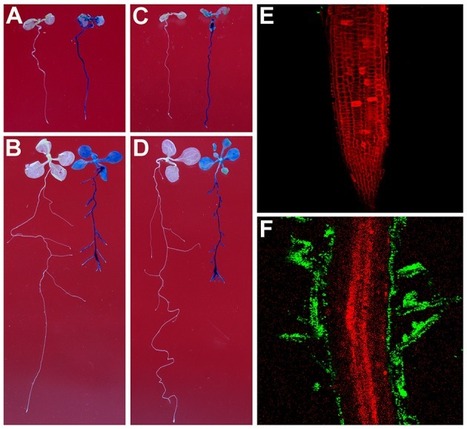
Rhizobium sp. IRBG74 not only nodulates Sesbania cannabina but also can enhance rice growth; however, the underlying molecular mechanisms are not clear. Here, we show that Rhizobium sp. IRBG74 colonizes the roots of Arabidopsis thaliana, which leads to inhibition in the growth of main root but enhancement in the formation of lateral roots. The promotion of lateral root formation by Rhizobium sp. IRBG74 in the fls2-1 mutant, which is insensitive to flagellin, is similar to the wild-type plant, while the auxin response deficient mutant tir1-1 is significantly less sensitive to Rhizobium sp. IRBG74 than the wild type in terms of the inhibition of main root elongation and the promotion of lateral root formation. Further transcriptome analysis of Arabidopsis roots inoculated with Rhizobium sp. IRBG74 revealed differential expression of 50 and 211 genes at 24 and 48 h, respectively, and a majority of these genes are involved in auxin signaling. Consistent with the transcriptome analysis results, Rhizobium sp. IRBG74 treatment induces expression of the auxin responsive reporter DR5:GUS in roots. Our results suggest that in Arabidopsis Rhizobium sp. IRBG74 colonizes roots and promotes the lateral root formation likely through modulating auxin signaling. Our work provides insight into the molecular mechanisms of interactions between legume-nodulating rhizobia and non-legume plants.
|
|
Scooped by
Jean-Michel Ané
January 28, 2018 9:02 PM
|
Across plants and animals, host-associated microbial communities play fundamental roles in host nutrition, development, and immunity. The factors that shape host–microbiome interactions are poorly understood, yet essential for understanding the evolution and ecology of these symbioses. Plant roots assemble two distinct microbial compartments from surrounding soil: the rhizosphere (microbes surrounding roots) and the endosphere (microbes within roots). Root-associated microbes were key for the evolution of land plants and underlie fundamental ecosystem processes. However, it is largely unknown how plant evolution has shaped root microbial communities, and in turn, how these microbes affect plant ecology, such as the ability to mitigate biotic and abiotic stressors. Here we show that variation among 30 angiosperm species, which have diverged for up to 140 million years, affects root bacterial diversity and composition. Greater similarity in root microbiomes between hosts leads to negative effects on plant performance through soil feedback, with specific microbial taxa in the endosphere and rhizosphere potentially affecting competitive interactions among plant species. Drought also shifts the composition of root microbiomes, most notably by increasing the relative abundance of the Actinobacteria. However, this drought response varies across host plant species, and host-specific changes in the relative abundance of endosphere Streptomyces are associated with host drought tolerance. Our results emphasize the causes of variation in root microbiomes and their ecological importance for plant performance in response to biotic and abiotic stressors.
|
|
Scooped by
Jean-Michel Ané
January 27, 2018 11:07 PM
|
Genetic diversity and population structure of 268 Lens culinaris symbiotic rhizobia collected from 40 cultivated fields in the main lentil production regions in Morocco were estimated. Three chromosomal housekeeping genes (recA, glnII and atpD) and one common symbiotic gene (nodC) were sequenced and analyzed in order to identify the local symbionts of lentil. The molecular phylogeny of the concatenated housekeeping genes clustered more than 95% of the isolates in one main clade together with Rhizobium laguerreae species. R. laguerreae represents the main symbiont of cultivated lentil in Morocco and, for the first time, a large sample of individuals is obtained for this species. There is a significant and high genetic differentiation of bacterial populations among the four regions for their symbiotic gene, and much lower for their housekeeping genes. The reasons why R. laguerreae is so frequently recovered in our study is discussed.
|
|
Scooped by
Jean-Michel Ané
January 27, 2018 11:02 PM
|
Abstract: Simultaneous quantification of transcripts of the whole bacterial genome allows the analysis of the global transcriptional response under changing conditions. RNA-seq and microarrays are the most used techniques to measure these transcriptomic changes, and both complement each other in transcriptome profiling. In this review, we exhaustively compiled the symbiosis-related transcriptomic reports (microarrays and RNA sequencing) carried out hitherto in rhizobia. This review is specially focused on transcriptomic changes that takes place when five rhizobial species, Bradyrhizobium japonicum (=diazoefficiens) USDA 110, Rhizobium leguminosarum biovar viciae 3841, Rhizobium tropici CIAT 899, Sinorhizobium (=Ensifer) meliloti 1021 and S. fredii HH103, recognize inducing flavonoids, plant-exuded phenolic compounds that activate the biosynthesis and export of Nod factors (NF) in all analysed rhizobia. Interestingly, our global transcriptomic comparison also indicates that each rhizobial species possesses its own arsenal of molecular weapons accompanying the set of NF in order to establish a successful interaction with host legumes.
|
|
Scooped by
Jean-Michel Ané
January 27, 2018 10:52 PM
|
1.Orchids produce dust seeds dependent on the provision of organic carbon by mycorrhizal fungi for their early development stages. Hence, all chlorophyllous orchids experience a dramatic switch in trophic strategies from initial mycoheterotrophy to either autotrophy or partial mycoheterotrophy during ontogeny. Yet, the degree to which partially mycoheterotrophic orchids gain carbon from their mycorrhizal fungi is unclear based on existing approaches.
2.Here, we propose a novel approach to quantify the fungal-derived organic matter gain of chlorophyllous mature orchids mycorrhizal with rhizoctonia fungi using the stable isotope signatures of their fully mycoheterotrophic (FMH) seedlings in a linear two-source mixing model.
3.We conducted a field germination experiment with seven orchid species and measured carbon, nitrogen and hydrogen stable isotope natural abundances and nitrogen concentrations of mature orchids, underground seedlings and autotrophic references.
4.After in situ burial for 19 – 30 months, germination rates varied considerably among five orchid species and failed for two. On average, underground seedlings were enriched in 13C and 15N relative to mature orchids and had higher nitrogen concentrations. Using the mean enrichment factors ε13C and ε2H of seedlings as FMH endpoint, the organic matter gain derived by mature orchids from mycorrhizas was ca. 20%.
5.Chlorophyllous orchids mycorrhizal with rhizoctonias are predisposed to partially mycoheterotrophic nutrition due to their initially mycoheterotrophic seedling stage. We show that the carbon and hydrogen isotope abundances of underground seedlings can be used in an improved mixing-model to identify a significant proportion of fungal-derived organic matter in mature orchids.
|
|
Scooped by
Jean-Michel Ané
January 27, 2018 10:48 PM
|
This paper reviews the recent development of the scientific, legislative, economic and environmental aspects of plant organic farming. The impact of organic farming on biodiversity and soil fertility is discussed in comparison with conventional systems. A significant barrier for wide application and future development of organic farming is the existing diversity of national and international policy instruments in this sector. Special attention is paid to up-to-date research techniques that could help solve a number of the problems typically faced in plant organic farming. It is argued that organic farming is still not productive enough to be considered fully sustainable. This underlines the necessity of strong support for more effective implementation of scientific research innovations and improvement of the networking between all stakeholders – organic producers, scientists and corresponding policy makers at the national and international level.
|
|
Scooped by
Jean-Michel Ané
January 27, 2018 10:34 PM
|
How mycoheterotrophs have evolved and how they are sustained are an enigma. Structural analyses of the plastid genome and phylogenetic analyses of mycoheterotrophs have been used to identify mycorrhizal fungi. Molecular genetic studies have also revealed the mechanism for plant–fungi interactions. However, the evolution of the small, scale-like vegetative leaves of mycoheterotrophs is unknown. As almost all genes determining leaf size affect the floral organ sizes, it is highly implausible that loss-of-function mutations in leaf size regulators caused the evolution of smaller foliage leaves in mycoheterotrophs. In this Viewpoint, possible evolutionary scenarios of scale-like leaves in mycoheterotrophs are discussed from the perspective of developmental genetics of leaves in model plants, including: vegetative phase-specific changes in expression of leaf size regulator(s); the change from foliage leaves to scale-like lateral organs; and expression of suppressor(s) involved in organ development. These possibilities can be tested in future studies. This approach will provide a new research field in the developmental biology of plants.
|
|
Scooped by
Jean-Michel Ané
January 26, 2018 9:29 PM
|
The application of microbial inoculants (biofertilizers) is a promising technology for future sustainable farming systems in view of rapidly decreasing phosphorus stocks and the need to more efficiently use available nitrogen (N). Various microbial taxa are currently used as biofertilizers, based on their capacity to access nutrients from fertilizers and soil stocks, to fix atmospheric nitrogen, to improve water uptake or to act as biocontrol agents. Despite the existence of a considerable knowledge on effects of specific taxa of biofertilizers, a comprehensive quantitative assessment of the performance of biofertilizers with different traits such as phosphorus solubilization and N fixation applied to various crops at a global scale is missing. We conducted a meta-analysis to quantify benefits of biofertilizers in terms of yield increase, nitrogen and phosphorus use efficiency, based on 171 peer reviewed publications that met eligibility criteria. Major findings are: (i) the superiority of biofertilizer performance in dry climates over other climatic regions (yield response: dry climate +20.0 ± 1.7%, tropical climate +14.9 ± 1.2%, oceanic climate +10.0 ± 3.7%, continental climate +8.5 ± 2.4%); (ii) meta-regression analyses revealed that yield response due to biofertilizer application was generally small at low soil P levels; efficacy increased along higher soil P levels in the order arbuscular mycorrhizal fungi (AMF), P solubilizers, and N fixers; (iii) meta-regressions showed that the success of inoculation with AMF was greater at low organic matter content and at neutral pH. Our comprehensive analysis provides a basis and guidance for proper choice and application of biofertilizers.
|
|
Scooped by
Jean-Michel Ané
January 26, 2018 5:13 PM
|
Establishment of symbiosis between legumes and nitrogen-fixing rhizobia depends on bacterial Nod factors (NFs) that trigger symbiosis-related NF signaling in host plants. NFs are modified oligosaccharides of chitin with a fatty acid moiety. NFs can be cleaved and inactivated by host enzymes, such as MtNFH1 (MEDICAGO TRUNCATULA NOD FACTOR HYDROLASE 1). In contrast to related chitinases, MtNFH1 hydrolyzes neither chitin nor chitin fragments, indicating a high cleavage preference for NFs. Here, we provide evidence for a role of MtNFH1 in the symbiosis with Sinorhizobium meliloti. Upon rhizobial inoculation, MtNFH1 accumulated at the curled tip of root hairs, in the so-called infection chamber. Mutant analysis revealed that lack of MtNFH1 delayed rhizobial root hair infection, suggesting that excess amounts of NFs negatively affect the initiation of infection threads. MtNFH1 deficiency resulted in nodule hypertrophy and abnormal nodule branching of young nodules. Nodule branching was also stimulated in plants expressing MtNFH1 driven by a tandem CaMV 35S promoter and plants inoculated by a NF-overproducing S. meliloti strain. We suggest that fine-tuning of NF levels by MtNFH1 is necessary for optimal root hair infection as well as for NF-regulated growth of mature nodules.
Highlights
• Food Security is at risk by an increasing world population and a growing number of crop pathogens.
• Biological control options emerge as promising alternatives to assist crops to fight pathogens.
• Microbial biocontrol success is inconsistent and depends on a number of environmental, ecological and genetic factors.
• This review provides an overview of existing and new microbial biocontrol strategies and how these can be more stable.
• Emerging strategies include long-term plant colonization, microbiome engineering and breeding of microbe-optimized crops.
To address food security, agricultural yields must increase to match the growing human population in the near future. There is now a strong push to develop low-input and more sustainable agricultural practices that include alternatives to chemicals for controlling pests and diseases, a major factor of heavy losses in agricultural production. Based on the adverse effects of some chemicals on human health, the environment and living organisms, researchers are focusing on potential biological control microbes as viable alternatives for the management of pests and plant pathogens. There is a growing body of evidence that demonstrates the potential of leaf and root-associated microbiomes to increase plant efficiency and yield in cropping systems. It is important to understand the role of these microbes in promoting growth and controlling diseases, and their application as biofertilizers and biopesticides whose success in the field is still inconsistent. This review focusses on how biocontrol microbes modulate plant defense mechanisms, deploy biocontrol actions in plants and offer new strategies to control plant pathogens. Apart from simply applying individual biocontrol microbes, there are now efforts to improve, facilitate and maintain long-term plant colonization. In particular, great hopes are associated with the new approaches of using “plant-optimized microbiomes” (microbiome engineering) and establishing the genetic basis of beneficial plant-microbe interactions to enable breeding of “microbe-optimized crops”.
Via Plant Science
|
|
Scooped by
Jean-Michel Ané
January 23, 2018 9:46 AM
|
Copper is an essential nutrient for symbiotic nitrogen fixation. This element is delivered by the host plant to the nodule, where membrane copper (Cu) transporter would introduce it into the cell to synthesize cupro-proteins.
COPT family members in the model legume Medicago truncatula were identified and their expression determined. Yeast complementation assays, confocal microscopy and phenotypical characterization of a Tnt1 insertional mutant line were carried out in the nodule-specific M. truncatula COPT family member.
Medicago truncatula genome encodes eight COPT transporters. MtCOPT1 (Medtr4g019870) is the only nodule-specific COPT gene. It is located in the plasma membrane of the differentiation, interzone and early fixation zones. Loss of MtCOPT1 function results in a Cu-mitigated reduction of biomass production when the plant obtains its nitrogen exclusively from symbiotic nitrogen fixation. Mutation of MtCOPT1 results in diminished nitrogenase activity in nodules, likely an indirect effect from the loss of a Cu-dependent function, such as cytochrome oxidase activity in copt1-1 bacteroids.
These data are consistent with a model in which MtCOPT1 transports Cu from the apoplast into nodule cells to provide Cu for essential metabolic processes associated with symbiotic nitrogen fixation.
|
|
Scooped by
Jean-Michel Ané
January 20, 2018 4:00 PM
|
This is the fourth updated and revised edition of a well-received book that emphasises on fungal diversity, plant productivity and sustainability. It contains new chapters written by leading experts i
|


 Scoop.it!