Your new post is loading...

|
Scooped by
Jean-Michel Ané
January 20, 2018 3:22 PM
|
Abstract: Arbuscular mycorrhizal fungi (AMF) play an important role in nutrient cycling processes and plant stress resistance. To evaluate the effect of Rhizophagus irregularis CD1 on plant growth promotion (PGP) and Verticillium wilt disease, the symbiotic efficiency of AMF (SEA) was first investigated over a range of 3% to 94% in 17 cotton varieties. The high-SEA subgroup had significant PGP effects in a greenhouse. From these results, the highest-SEA variety of Lumian 1 was selected for a two-year field assay. Consistent with the performance from the greenhouse, the AMF-mediated PGP of Lumian 1 also produced significant results, including an increased plant height, stem diameter, number of petioles, and phosphorus content. Compared with the mock treatment, AMF colonization obviously inhibited the symptom development of Verticillium dahliae and more strongly elevated the expression of pathogenesis-related genes and lignin synthesis-related genes. These results suggest that AMF colonization could lead to the mycorrhiza-induced resistance (MIR) of Lumian 1 to V. dahliae. Interestingly, our results indicated that the AMF endosymbiont could directly inhibit the growth of phytopathogenic fungi including V. dahliae by releasing undefined volatiles. In summary, our results suggest that stronger effects of AMF application result from the high-SEA.
|
|
Scooped by
Jean-Michel Ané
January 20, 2018 3:19 PM
|
The asymbiotic diazotrophic bacteria are important for nitrogen (N) input to soil. Here, we investigated asymbiotic diazotrophic bacteria in an acidic red soil from functional, phylogenetic, and ecological perspectives. We firstly confirmed that phosphorus (P) availability determines the overall asymbiotic N fixation potential in the red soil. Then, we analyzed the soil bacterial community and N fixing (nifH) gene composition. Long-term different fertilizations significantly affected the composition of soil bacterial community. In addition, long-term organic cultivations increased most of the asymbiotic diazotrophic bacteria and the corresponding nifH gene abundances. Few asymbiotic diazotrophic bacteria, belonging to Chloroflexaceae, Methylocystaceae, Enterobacteriaceae, and Pseudomonadaceae, and their corresponding nifH genes were more abundant in N and P co-limited than in not co-limited soils, suggesting that some bacterial taxa from these families might be activated under nutrient limited conditions. Our findings provided new information for the distribution of asymbiotic diazotrophic bacteria in red soil and gave insights into the ecology of diazotrophic bacteria.
|
|
Scooped by
Jean-Michel Ané
January 20, 2018 1:09 PM
|
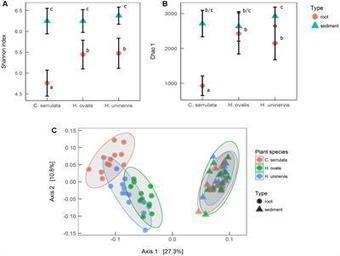
Seagrass roots host a diverse microbiome that is critical for plant growth and health. Composition of microbial communities can be regulated in part by root exudates, but the specifics of these interactions in seagrass rhizospheres are still largely unknown. As light availability controls primary productivity, reduced light may impact root exudation and consequently the composition of the root microbiome. Hence, we analyzed the influence of light availability on root exudation and community structure of the root microbiome of three co-occurring seagrass species, Halophila ovalis, Halodule uninervis and Cymodocea serrulata. Plants were grown under four light treatments in mesocosms for 2 weeks; control (100% surface irradiance (SI), medium (40% SI), low (20% SI) and fluctuating light (10 days 20% and 4 days 100%). 16S rDNA amplicon sequencing revealed that microbial diversity, composition and predicted function were strongly influenced by the presence of seagrass roots, such that root microbiomes were unique to each seagrass species. Reduced light availability altered seagrass root exudation, as characterized using fluorescence spectroscopy, and altered the composition of seagrass root microbiomes with a reduction in abundance of potentially beneficial microorganisms. Overall, this study highlights the potential for above-ground light reduction to invoke a cascade of changes from alterations in root exudation to a reduction in putative beneficial microorganisms and, ultimately, confirms the importance of the seagrass root environment – a critical, but often overlooked space.
|
|
Scooped by
Jean-Michel Ané
January 20, 2018 9:39 AM
|
Harnessing beneficial microbes presents a promising strategy to optimize plant growth and agricultural sustainability. Little is known to which extent and how specifically soil and plant microbiomes can be manipulated through different cropping practices. Here, we investigated soil and wheat root microbial communities in a cropping system experiment consisting of conventional and organic managements, both with different tillage intensities. While microbial richness was marginally affected, we found pronounced cropping effects on community composition, which were specific for the respective microbiomes. Soil bacterial communities were primarily structured by tillage, whereas soil fungal communities responded mainly to management type with additional effects by tillage. In roots, management type was also the driving factor for bacteria but not for fungi, which were generally determined by changes in tillage intensity. To quantify an “effect size” for microbiota manipulation, we found that about 10% of variation in microbial communities was explained by the tested cropping practices. Cropping sensitive microbes were taxonomically diverse, and they responded in guilds of taxa to the specific practices. These microbes also included frequent community members or members co-occurring with many other microbes in the community, suggesting that cropping practices may allow manipulation of influential community members. Understanding the abundance patterns of cropping sensitive microbes presents the basis towards developing microbiota management strategies for smart farming. For future targeted microbiota management—e.g., to foster certain microbes with specific agricultural practices—a next step will be to identify the functional traits of the cropping sensitive microbes.
|
|
Scooped by
Jean-Michel Ané
January 19, 2018 5:18 PM
|
Key message
Our results show that Sorghum bicolor is able to recognize bacteria through its volatile compounds and differentially respond to beneficial or pathogens via eliciting nutritional or defense adaptive traits.
Abstract
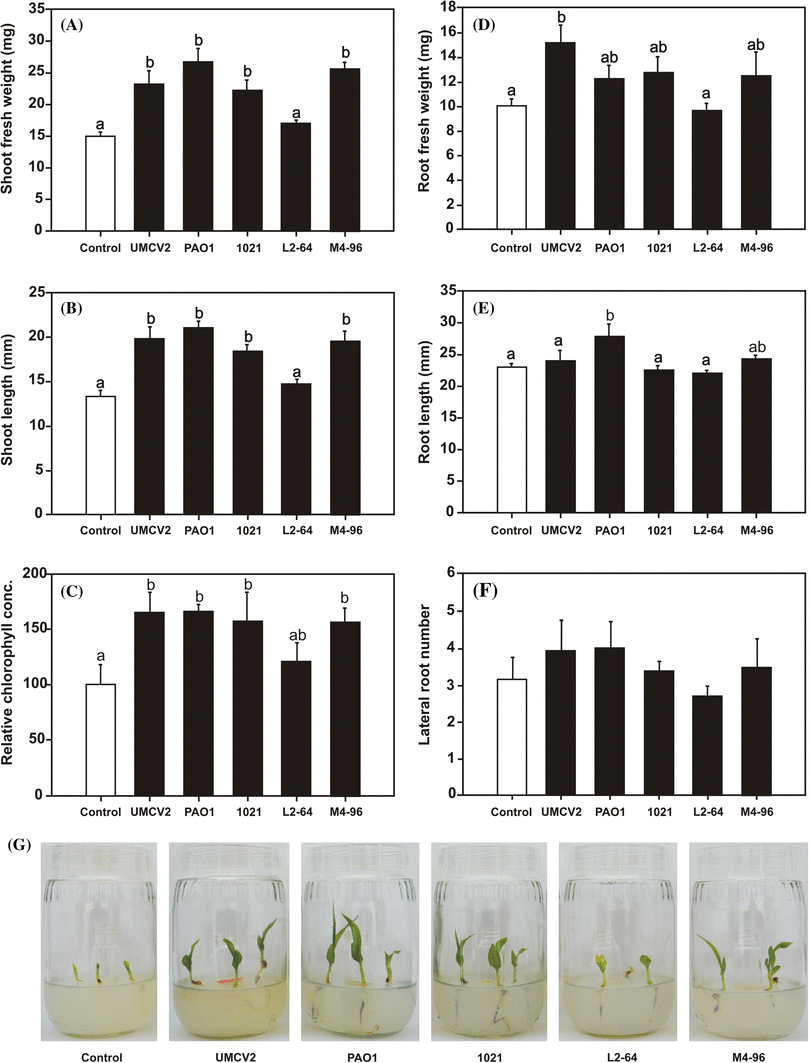
Plants establish beneficial, harmful, or neutral relationships with bacteria. Plant growth promoting rhizobacteria (PGPR) emit volatile compounds (VCs), which may act as molecular cues influencing plant development, nutrition, and/or defense. In this study, we compared the effects of VCs produced by bacteria with different lifestyles, including Arthrobacter agilis UMCV2, Bacillus methylotrophicus M4-96, Sinorhizobium meliloti 1021, the plant pathogen Pseudomonas aeruginosa PAO1, and the commensal rhizobacterium Bacillus sp. L2-64, on S. bicolor. We show that VCs from all tested bacteria, except Bacillus sp. L2-64, increased biomass and chlorophyll content, and improved root architecture, but notheworthy A. agilis induced the release of attractant molecules, whereas P. aeruginosa activated the exudation of growth inhibitory compounds by roots. An analysis of the expression of iron-transporters SbIRT1, SbIRT2, SbYS1, and SbYS2 and genes related to plant defense pathways COI1 and PR-1 indicated that beneficial, pathogenic, and commensal bacteria could up-regulate iron transporters, whereas only beneficial and pathogenic species could induce a defense response. These results show how S. bicolor could recognize bacteria through their volatiles profiles and highlight that PGPR or pathogens can elicit nutritional or defensive traits in plants.
|
|
Scooped by
Jean-Michel Ané
January 19, 2018 5:12 PM
|
Introduction. Species of the genus Rhizobium are opportunistic, usually saprophytic, glucose-non-fermenting, Gram-negative bacilli found in agricultural soil. Rhizobium pusense infections are the least common Rhizobium infections and have low incidence.
Case presentation. Herein, we report the first case of sepsis with R. pusense in Japan in a 67-year-old Japanese woman with a history of hyperlipidaemia, hypertension, diabetes, hypothyroidism and osteoporosis. She had undergone cerebrovascular treatment because she was diagnosed with a subarachnoid haemorrhage. The results of postoperative blood culture showed oxidase-positive, urease-positive, non-lactose-fermenting Gram-stain-negative rods. Using the Vitek2 system, the isolate was distinctly identified as Rhizobium radiobacter. However, 16S rRNA gene sequencing showed 99.93 % similarity with the type strain of R. pusense and 99.06 % similarity with the type strain of R. radiobacter. Additional gene sequencing analysis using recA (97.2 %) and atpD (96.2 %) also showed that the isolated strain is most closely related to R. pusense. The patient was cured by treatment using intravenous meropenem (3 g/d) for 4 weeks and was discharged safely.
Conclusion. The definite source of sepsis was unknown. However, the possibility of having been infected through the catheter during the cerebrovascular operation was speculated.
|
|
Scooped by
Jean-Michel Ané
January 19, 2018 5:08 PM
|
Arbuscular mycorrhizal (AM) fungi are essential elements of soil fertility, plant nutrition and productivity, facilitating soil mineral nutrient uptake. Helianthus annuus is a non-model, widely cultivated species. Here we used an RNA-seq approach for evaluating gene expression variation at early and late stages of mycorrhizal establishment in sunflower roots colonized by the arbuscular fungus Rhizoglomus irregulare. mRNA was isolated from roots of plantlets at 4 and 16 days after inoculation with the fungus. cDNA libraries were built and sequenced with Illumina technology. Differential expression analysis was performed between control and inoculated plants. Overall 726 differentially expressed genes (DEGs) between inoculated and control plants were retrieved. The number of up-regulated DEGs greatly exceeded the number of down-regulated DEGs and this difference increased in later stages of colonization. Several DEGs were specifically involved in known mycorrhizal processes, such as membrane transport, cell wall shaping, and other. We also found previously unidentified mycorrhizal-induced transcripts. The most important DEGs were carefully described in order to hypothesize their roles in AM symbiosis. Our data add a valuable contribution for deciphering biological processes related to beneficial fungi and plant symbiosis, adding an Asteraceae, non-model species for future comparative functional genomics studies.
|
|
Scooped by
Jean-Michel Ané
January 17, 2018 9:53 AM
|
Temporally and spatially defined changes in Ca2+ concentration in distinct compartments of cells represent a universal information code in plants. Recently, it has become evident that Ca2+ signals not only govern intracellular regulation but also appear to contribute to long distance or even organismic signal propagation and physiological response regulation. Ca2+ signals are shaped by an intimate interplay of channels and transporters, and during past years important contributing individual components have been identified and characterized. Ca2+ signals are translated by an elaborate toolkit of Ca2+-binding proteins, many of which function as Ca2+ sensors, into defined downstream responses. Intriguing progress has been achieved in identifying specific modules that interconnect Ca2+ decoding proteins and protein kinases with downstream target effectors, and in characterizing molecular details of these processes. In this review, we reflect on recent major advances in our understanding of Ca2+ signaling and cover emerging concepts and existing open questions that should be informative also for scientists that are currently entering this field of ever-increasing breath and impact.
|
|
Scooped by
Jean-Michel Ané
January 13, 2018 2:45 PM
|
The rhizosphere hosts a considerable microbial community. Among that community, bacteria called plant growth-promoting rhizobacteria (PGPR) can promote plant growth and defense against diseases using diverse distinct plant-beneficial functions. Crop inoculation with PGPR could allow to reduce the use of pesticides and fertilizers in agrosystems. However, microbial crop protection and growth stimulation would be more efficient if cooperation between rhizosphere bacterial populations was taken into account when developing biocontrol agents and biostimulants. Rhizospheric bacteria live in multi-species biofilms formed all along the root surface or sometimes inside the plants (i.e., endophyte). PGPR cooperate with their host plants and also with other microbial populations inside biofilms. These interactions are mediated by a large diversity of microbial metabolites and physical signals that trigger cell–cell communication and appropriate responses. A better understanding of bacterial behavior and microbial cooperation in the rhizosphere could allow for a more successful use of bacteria in sustainable agriculture. This review presents an ecological view of microbial cooperation in agrosystems and lays the emphasis on the main microbial metabolites involved in microbial cooperation, plant health protection, and plant growth stimulation. Eco-friendly inoculant consortia that will foster microbe–microbe and microbe–plant cooperation can be developed to promote crop growth and restore biodiversity and functions lost in agrosystems.
|
|
Scooped by
Jean-Michel Ané
January 13, 2018 2:39 PM
|
Background
Legume biological nitrogen (N2)-fixation is stimulated by neighbouring non-fixing species, but studies of legume N2-fixation in temporary grasslands including non-leguminous forage herb (forb) species are rare.
Methodology
We investigated N2-fixation, N yield, and total herbage production in a range of species mixtures consisting of three forb species—chicory (Cichorium intybus L.), ribwort plantain (Plantago lanceolata L.), and caraway (Carum carvi L.)—mixed into a traditional red clover (Trifolium pratense L.) and perennial ryegrass (Lolium perenne L.) mixture at two fertilisation levels.
Results
The percentage of red clover N derived from the atmosphere (%Ndfa) was higher in mixtures containing non-legumes than in pure stand but, did not increase with inclusion of forbs. On a whole-seasonal basis, red clover in mixtures derived 90% or more of its N from fixation even when fertilised with 216 kg total N ha−1. Forbs, in particular chicory, reduced the amount of N2-fixation and total N yields by affecting the red clover proportion in the harvested biomass.
Conclusions
Generally, inclusion of forbs in red clover-ryegrass mixtures had no negative effect on total herbage production and percentage of legume N2-fixation. However, to maintain a high total N and N2-fixation yields, mixtures should not include a high seeding proportion of chicory.
|
|
Scooped by
Jean-Michel Ané
January 13, 2018 2:33 PM
|
Jasmonic acid (JA), its derivatives and its precursor cis-12-oxo phytodienoic acid (OPDA) form a group of phytohormones, the jasmonates, representing signal molecules involved in plant stress responses, in the defense against pathogens as well as in development. Elevated levels of JA have been shown to play a role in arbuscular mycorrhiza and in the induction of nitrogen-fixing root nodules. In this study, the gene families of two committed enzymes of the JA biosynthetic pathway, allene oxide synthase (AOS) and allene oxide cyclase (AOC), were characterized in the determinate nodule-forming model legume Lotus japonicus JA levels were to be analysed in the course of nodulation. Since in all L. japonicus organs examined, JA levels increased upon mechanical disturbance and wounding, an aeroponic culture system was established to allow for a quick harvest, followed by the analysis of JA levels in whole root and shoot systems. Nodulated plants were compared with non-nodulated plants grown on nitrate or ammonium as N source, respectively, over a five week-period. JA levels turned out to be more or less stable independently of the growth conditions. However, L. japonicus nodules formed on aeroponically grown plants often showed patches of cells with reduced bacteroid density, presumably a stress symptom. Immunolocalization using a heterologous antibody showed that the vascular systems of these nodules also seemed to contain less AOC protein than those of nodules of plants grown in perlite/vermiculite. Hence, aeroponically grown L. japonicus plants are likely to be habituated to stress which could have affected JA levels.
|
|
Scooped by
Jean-Michel Ané
January 11, 2018 11:23 AM
|
Nitrogen is a macronutrient which plays an important role in the net primary productivity of terrestrial ecosystems, and is critical to understand how nitrogen addition affects above- and below-ground organisms. However, direct and indirect interactions between microbial species response to nitrogen addition for wheat growth are still unclear. In this study, arbuscular mycorrhizal fungi (AMF) and diazotrophs (nifH gene) were selected as two groups of key functional microbes in wheat soil to investigate the comprehensive impact of diversity and community structures between them on wheat yield under a nitrogen gradient. Nitrogen addition resulted in a significant shift in AMF and nifH phylogenetic diversity and community structure. The interactions among AMF and nifH species were diminished in high N-treated soils compared to those in low N-treated soils. Structural equation model analysis showed that AMF community structure affected wheat yield directly, however, which was influenced by AMF diversity, diazotrophic diversity and community structure indirectly. The comprehensive effects of AMF and diazotrophs on wheat productivity indicated the importance of soil functional microbes as drivers for farmland ecosystem and plant growth. These results could be useful in understanding soil nutrient cycling and may help improve the mechanistic understanding of the tripartite interaction among nitrogen addition, microbes and wheat productivity.
|
|
Scooped by
Jean-Michel Ané
January 11, 2018 10:54 AM
|
Abstract: Plant lipid-transfer proteins (LTPs) are small basic secreted proteins, which are characterized by lipid-binding capacity and are putatively involved in lipid trafficking. LTPs play a role in several biological processes, including the root nodule symbiosis. In this regard, the Medicago truncatula nodulin 5 (MtN5) LTP has been proved to positively regulate the nodulation capacity, controlling rhizobial infection and nodule primordia invasion. To better define the lipid transfer protein MtN5 function during the symbiosis, we produced MtN5-downregulated and -overexpressing plants, and we analysed the transcriptomic changes occurring in the roots at an early stage of Sinorhizobium meliloti infection. We also carried out the lipid profile analysis of wild type (WT) and MtN5-overexpressing roots after rhizobia infection. The downregulation of MtN5 increased the root hair curling, an early event of rhizobia infection, and concomitantly induced changes in the expression of defence-related genes. On the other hand, MtN5 overexpression favoured the invasion of the nodules by rhizobia and determined in the roots the modulation of genes that are involved in lipid transport and metabolism as well as an increased content of lipids, especially galactolipids that characterize the symbiosome membranes. Our findings suggest the potential participation of LTPs in the synthesis and rearrangement of membranes occurring during the formation of the infection threads and the symbiosome membrane.
|
|
|
Scooped by
Jean-Michel Ané
January 20, 2018 3:21 PM
|
The infection of legume plants by rhizobia is tightly regulated to ensure accurate bacterial penetration, infection and development of functionally efficient nitrogen-fixing root nodules. Rhizobial Nod Factors (NF) have key roles in the elicitation of nodulation signalling. Infection of white clover roots also involves the tightly regulated specific breakdown of the non-crystalline apex of cell walls in growing root hairs, which is mediated by Rhizobium leguminosarum bv. trifolii cellulase CelC2. Here, we have analyzed the impact of this endoglucanase on symbiotic signalling in the model legume Medicago truncatula. Ensifer meliloti constitutively expressing celC gene exhibited delayed nodulation and elicited aberrant ineffective nodules, hampering plant growth in the absence of nitrogen. Co-treatment of roots with NF and CelC2 altered Ca2+ spiking in root hairs and the induction of the early nodulin gene ENOD11. Our data suggest that CelC2 alters early signalling between the partners in the rhizobia-legume interaction.
|
|
Scooped by
Jean-Michel Ané
January 20, 2018 1:12 PM
|
Actinorhizal plants are ecologically and economically important. Symbiosis with nitrogen-fixing bacteria allows these woody dicotyledonous plants to colonise soils under nitrogen deficiency, water-stress or other extreme conditions. However, proteins involved in xerotolerance of symbiotic microorganisms have yet to be identified. Here we characterise the polyethylene glycol (PEG)-responding desiccome from the most geographically widespread Gram-positive nitrogen-fixing plant symbiont, Frankia alni, by next-generation proteomics, taking advantage of a Q-Exactive HF tandem mass spectrometer equipped with an ultra-high-field Orbitrap analyser. A total of 2,052 proteins were detected and quantified. Under osmotic stress, PEG-grown F. alni cells increased the abundance of envelope-associated proteins like ABC transporters, mechano-sensitive ion channels and Clustered Regularly Interspaced Short Palindromic Repeats CRISPR-associated (cas) components. Conjointly, dispensable pathways, like nitrogen fixation, aerobic respiration and homologous recombination, were markedly down-regulated. Molecular modelling and docking simulations suggested that the PEG is acting on Frankia partly by filling the inner part of an up-regulated osmotic-stress large conductance mechanosensitive channel.
|
|
Scooped by
Jean-Michel Ané
January 20, 2018 9:40 AM
|
Legume–rhizobia symbiosis is coordinated through the production and perception of signal molecules by both partners with legume LysM receptor kinases performing a central role in this process. Receptor complex formation and signalling outputs derived from these are regulated through ligand binding and further modulated by a diverse variety of interactors. The challenge now is to understand the molecular mechanisms of these reported interactors. Recently attributed roles of LysM receptors in the perception of rhizobial exopolysaccharide, distinguishing between pathogens and symbionts, and assembly of root and rhizosphere communities expand on the importance of these receptors. These studies also highlight challenges, such as identification of cognate ligands, formation of responsive receptor complexes and separation of downstream signal transduction pathways.
|
|
Scooped by
Jean-Michel Ané
January 19, 2018 5:19 PM
|
Domestication has induced major genetic changes in crop plants to satisfy human needs and as a consequence of adaptation to agroecosystems. This adaptation might have affected root exudate composition, which can influence the interactions in the rhizosphere. Here, using two different soil types (sand, soil), we provide an original example of the impact of domestication and crop evolution on root exudate composition through metabolite profiling of root exudates for a panel of 10 wheat genotypes that correspond to the key steps in domestication of tetraploid wheat (wild emmer, emmer, durum wheat). Our data show that soil type can dramatically affect the composition of root exudates in the rhizosphere. Moreover, the composition of the rhizosphere metabolites is associated with differences among the genotypes of the wheat domestication groups, as seen by the high heritability of some of the metabolites. Overall, we show that domestication and breeding have had major effects on root exudates in the rhizosphere, which suggests the adaptive nature of these changes.
|
|
Scooped by
Jean-Michel Ané
January 19, 2018 5:13 PM
|
The milpa is a traditional maize-based polyculture in Mexico that is typically practiced as rainfed agriculture. Because milpa cultivation has been practiced over a vast range of environmental and cultural conditions, this agroecosystem is recognized as an important repository of biological and cultural diversity. As for any agroecosystem, the relationship between plant development and the biogeochemical processes of the soil is critical. Although the milpa has been studied from different perspectives, the diversity and structure of microbial communities within milpa soils remain largely unexplored. In this study, we surveyed a milpa system in Central Mexico across cropping season: before planting (dry season; t1), during the early growth of plants (onset of the rainy season; t2), and before harvest (end of the rainy season; t3). In order to examine changes in community structure through time, we characterized bacterial diversity through high-throughput sequencing of 16S rRNA gene amplicons and recorded the nutrient status of multiple (5–10) soil samples from our milpa plots. We estimated microbial diversity from a total of 90 samples and constructed co-occurrence networks. Although we did not find significant changes in diversity or composition of bacterial communities across time, we identified significant rearrangements in their co-occurrence network structure. We found particularly drastic changes between the first and second time points. Co-occurrence analyses showed that the bacterial community changed from a less structured network at (t1) into modules with a non-random composition of taxonomic groups at (t2). We conclude that changes in bacterial communities undetected by standard diversity analyses can become evident when performing co-occurrence network analyses. We also postulate possible functional associations among keystone groups suggested by biogeochemical processes. This study represents the first contribution on soil microbial diversity of a maize-based polyculture and shows its dynamic nature in short-term scales.
|
|
Scooped by
Jean-Michel Ané
January 19, 2018 5:11 PM
|
After abandonment of agricultural fields, some grassland plant species colonize these sites with a frequency equivalent to dry grasslands (generalists) while others are missing or underrepresented in abandoned fields (specialists). We aimed to understand the inability of specialists to spread on abandoned fields by exploring whether performance of generalists and specialists depended on soil abiotic and/or biotic legacy. We performed a greenhouse experiment with 12 species, six specialists and six generalists. The plants were grown in sterile soil from dry grassland or abandoned field inoculated with microbial communities from one or the other site. Plant growth, abundance of mycorrhizal structures and plant response to inoculation were evaluated. We focused on arbuscular mycorrhizal fungi (AMF), one of the most important parts of soil communities affecting plant performance. The abandoned field soil negatively affected plant growth, but positively affected plant response to inoculation. The AMF community from both sites differed in infectivity and taxa frequencies. The lower AMF taxa frequency in the dry grassland soil suggested a lack of functional complementarity. Despite the fact that dry grassland AMF produced more arbuscules, the dry grassland inoculum did not improve phosphorus nutrition of specialists contrary to the abandoned field inoculum. Inoculum origin did not affect phosphorus nutrition of generalists. The lower effectiveness of the dry grassland microbial community toward plant performance excludes its inoculation in the abandoned field soil as a solution to allow settlement of specialists. Still, the distinct response of specialists and generalists to inoculation suggested that they differ in AMF responsiveness.
|
|
Scooped by
Jean-Michel Ané
January 17, 2018 3:50 PM
|
While leading an attack on academic freedom at the University of Wisconsin, Rep. Jesse Kremer says he is certain the Earth is 6,000 years old.
Kremer, a documented Christian extremist and an intellectually incompetent buffoon is currently leading the charge to pass legislation that would expel or suspend students who disrupt speakers at the University of Wisconsin.
Kremer is the author of a controversial campus free speech bill that would intrude “on the University of Wisconsin System’s authority to run its campuses” and would “squelch expression — not encourage it.”
|
|
Scooped by
Jean-Michel Ané
January 16, 2018 11:59 AM
|
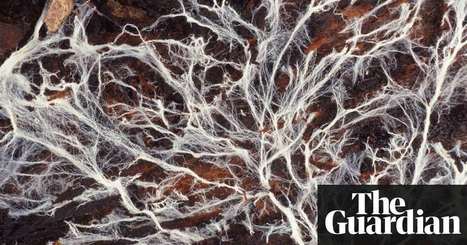
Much of the weirdness depicted in the TV show Stranger Things is distinctly fungal. The massive organic underground network, the floating spores, and even the rotting pumpkin fields all capture the “otherness” of fungi: neither plants nor animals, often bizarre-looking, and associated with decay. As weird as they may seem to us, fungi are integral to the story of the evolution of our landscapes and climate.
|
|
Scooped by
Jean-Michel Ané
January 13, 2018 2:43 PM
|
Plasmids are important “vehicles” for the communication of genetic information between bacteria. The exchange of plasmids transmits pathogenically and environmentally relevant traits to the host bacteria, promoting their rapid evolution and adaptation to various environments. Over the past six decades, a large number of plasmids have been identified and isolated from different microbes. With the revolution of sequencing technology, more than 4600 complete sequences of plasmids found in bacteria, archaea, and eukaryotes have been determined. The classification of a wide variety of plasmids is not only important to understand their features, host ranges, and microbial evolution but is also necessary to effectively use them as genetic tools for microbial engineering. This review summarizes the current situation of the classification of fully sequenced plasmids based on their host taxonomy and their features of replication and conjugative transfer. The majority of the fully sequenced plasmids are found in bacteria in the Proteobacteria, Firmicutes, Spirochaetes, Actinobacteria, Cyanobacteria and Euryarcheota phyla, and key features of each phylum are included. Recent advances in the identification of novel types of plasmids and plasmid transfer by culture-independent methods using samples from natural environments are also discussed.
|
|
Scooped by
Jean-Michel Ané
January 13, 2018 2:39 PM
|
Soybean grain yields in sub-Saharan Africa have remained at approximately 50% below those attained in South America despite numerous efforts. A study was conducted in Siaya County (western Kenya) involving 107 farms with soils of different fertility status. The main objective was to test combinations of two inoculants (Legumefix and Biofix) and nutrient sources (Minjingu and Sympal) to raise soybean grain yields. Inoculation used Legumefix or Biofix with and without Minjingu or Sympal in a factorial design. There was soil acidity and a widespread deficiency of potassium, nitrogen, and phosphorus. Inoculation and nutrient source led to increases in nodulation and nodule occupancy. For grain yields the response varied from nil in some sites to high increases in others. Highest grain yields (3000–4000 kg ha−1) were obtained with Legumefix + Sympal (12% of the farmers testing it). The formulation of the nutrient source was important to meet other nutrient deficiencies in most of the soils. Farmers using Legumefix + Sympal require yield increases of 35% for profitability (Value cost ratio of 3) while farmers using Minjingu + inoculant require a yield increase of at least 68%. Inoculants used alone were most profitable but this is advisable only when farmers are too resource constrained to afford fertilizer. For sustainable yields Legumefix + Sympal or Biofix + Sympal were recommended.
|
|
Scooped by
Jean-Michel Ané
January 13, 2018 2:32 PM
|
Arbuscular mycorrhiza (AM) is a mutualistic association between most plant species and the ancient fungal phylum Glomeromycota in roots, and it plays a key role in a plant’s nutrient uptake from the soil. Roots synthesize strigolactones (SLs), derivatives of carotenoids, and exude them to induce energy metabolism and hyphal branching of AM fungi. Despite the well-documented roles of SLs in the presymbiotic phase, little is known about the role of SLs in the process of root colonization. Here we show that the expansion of root colonization is suppressed in the mutants of rice (Oryza sativa) SL biosynthesis genes, carotenoid cleavage dioxygenase D10 and more severely in D17. Interestingly, most of the colonization process is normal; i.e., AM fungal hyphae approach the roots and cling around them, and epidermal penetration, arbuscule size, arbuscule number per hyphopodium, and metabolic activity of the intraradical mycelium are not affected in d10 and d17 mutants. In contrast, hyphopodium formation is severely attenuated. Our observations establish requirement of SL biosynthesis genes for efficient hyphopodium formation, suggesting that SLs are required in this process. Efficient hyphopodium formation is required for the punctual internalization of hyphae into roots and maintaining the expansion of colonization.
|
|
Scooped by
Jean-Michel Ané
January 11, 2018 11:17 AM
|
Strigolactones (SLs) first evolved as regulators of simple developmental processes in very ancient plant lineages, and then assumed new roles to sustain the increasing biological complexity of land plants. Their versatility is also shown by the fact that during evolution they have been exploited, once released in the rhizosphere, as a communication system towards plant-interacting organisms even belonging to different kingdoms. Here, we reviewed the impact of SLs on soil microbes, paying particular attention to arbuscular mycorrhizal fungi (AMF). SLs induce several responses in AMF, including spore germination, hyphal branching, mitochondrial metabolism, transcriptional reprogramming, and production of chitin oligosaccharides which, in turn, stimulate early symbiotic responses in the host plant. In the specific case study of the AMF Gigaspora margarita, SLs are also perceived, directly or indirectly, by the well-characterized population of endobacteria, with an increase of bacterial divisions and the activation of specific transcriptional responses. The dynamics of SLs during AM root colonization were also surveyed. Although not essential for the establishment of this mutualistic association, SLs act as positive regulators as they are relevant to achieve the full extent of colonization. This possibly occurs through a complex crosstalk with other hormones such as auxin, abscisic acid, and gibberellins.
|


 Scoop.it!