Your new post is loading...

|
Scooped by
Jean-Michel Ané
January 31, 2018 9:16 AM
|
Rhizobia are some of the best-studied plant microbiota. These oligotrophic Alphaproteobacteria or Betaproteobacteria form symbioses with their legume hosts. Rhizobia must exist in soil and compete with other members of the microbiota before infecting legumes and forming N2-fixing bacteroids. These dramatic lifestyle and developmental changes are underpinned by large genomes and even more complex pan-genomes, which encompass the whole population and are subject to rapid genetic exchange. The ability to respond to plant signals and chemoattractants and to colonize nutrient-rich roots are crucial for the competitive success of these bacteria. The availability of a large body of genomic, physiological, biochemical and ecological studies makes rhizobia unique models for investigating community interactions and plant colonization.
|
|
Scooped by
Jean-Michel Ané
January 30, 2018 10:53 PM
|
Legume-rhizobium symbioses have the potential to remediate soils contaminated with chlorinated organic compounds. Here, the model symbiosis between Medicago sativa and Sinorhizobium meliloti was used to explore the relationships between symbiotic nitrogen fixation and transformation of tetrachlorobiphenyl PCB 77 within this association. 45-day-old seedlings in vermiculite were pre-treated with 5 mg L-1 PCB 77 for 5 days. In PCB-supplemented nodules, addition of the nitrogenase enhancer molybdate significantly stimulated dechlorination by 7.2-fold, and reduced tissue accumulation of PCB 77 (roots by 96% and nodules by 93%). Conversely, dechlorination decreased in plants exposed to a nitrogenase inhibitor (nitrate) or harboring nitrogenase-deficient symbionts (nifA mutant) by 29% and 72%, respectively. A range of dechlorinated products (biphenyl, methylbiphenyls, hydroxylbiphenyls, and trichlorobiphenyl derivatives) were detected within nodules and roots under nitrogen-fixing conditions. Levels of nitrogenase-derived hydrogen and leghemoglobin expression correlated positively with nodular dechlorination rates, suggesting a more reducing environment promotes PCB dechlorination. Our findings demonstrate for the first time that symbiotic nitrogen fixation acts as a driving force for tetrachlorobiphenyl dechlorination. In turn, this opens new possibilities for using rhizobia to enhance phytoremediation of halogenated organic compounds.
|
|
Scooped by
Jean-Michel Ané
January 30, 2018 10:51 PM
|
Background
DNA methylation has a potential role in controlling gene expression and may, therefore, contribute to salinity adaptation in plants. Caliph medic (Medicago truncatula) is a model legume of moderate salinity tolerance capacity; however, a base-resolution DNA methylome map is not yet available for this plant.
Results
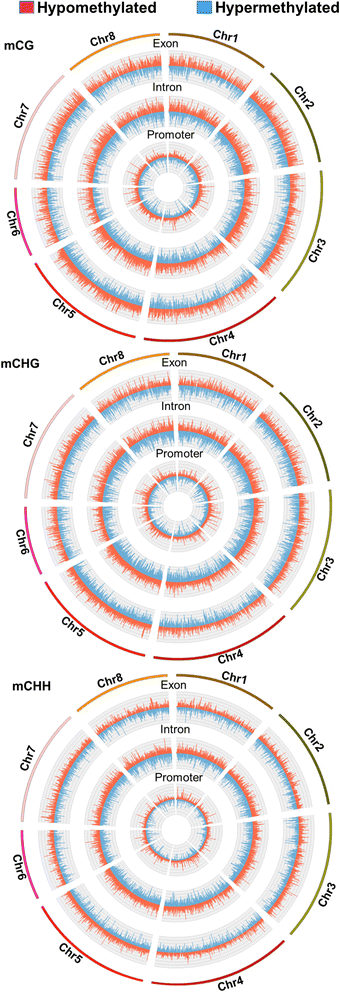
In this report, a differential whole-genome bisulfite sequencing (WGBS) was carried out using DNA samples extracted from root tissues exposed to either control or saline conditions. Around 50 million differentially methylated sites (DMSs) were recognized, 7% of which were significantly (p < 0.05, FDR < 0.05) altered in response to salinity. This analysis showed that 77.0% of the contexts of DMSs were mCHH, while only 9.1% and 13.9% were mCHG and mCG, respectively. The average change in methylation level was increased in all sequence contexts, ranging from 3.8 to 10.2% due to salinity stress. However, collectively, the level of the DNA methylation in the gene body slightly decreased in response to salinity treatment. The global increase in DNA methylation due to salinity was confirmed by mass spectrometry analysis. Gene expression analysis using qPCR did not reveal a constant relationship between the level of mCG methylation and the transcription abundance of some genes of potential importance in salinity tolerance, such as the potassium channel KAT3, the vacuolar H+-pyrophosphatase (V-PPase), and the AP2/ERF and bZIP transcription factors, implying the involvement of other epigenetic gene expression controllers. Computational functional prediction of the annotated genes that embrace DMSs revealed the presence of enzymes with potential cellular functions in biological processes associated with salinity tolerance mechanisms.
Conclusions
The information obtained from this study illustrates the effect of salinity on DNA methylation and shows how plants can remodel the landscape of 5-methylcytosine nucleotide (5-mC) in the DNA across gene structures, in response to salinity. This remodeling varies between gene regions and between 5-mC sequence contexts. The mCG has a vague impact on the expression levels of a few selected potentially important genes in salt tolerant mechanisms.
|
|
Scooped by
Jean-Michel Ané
January 30, 2018 10:45 PM
|
Cyclic nucleotide gated channels (CNGCs) play multifaceted roles in plants, particularly with respect to signaling processes associated with abiotic stress signaling and during host-pathogen interactions. Despite key roles during plant survival and response to environment, little is known about the activity and function of CNGC family in common wheat (Triticum aestivum L.), a key stable food around the globe. In this study, we performed a genome-wide identification of CNGC family in wheat and identified a total 47 TaCNGCs in wheat, classifying these genes into four major groups (I–IV) with two sub-groups (IVa and IVb). Sequence analysis revealed the presence of several conserved motifs, including a phosphate binding cassette (PBC) and a “hinge” region, both of which have been hypothesized to be critical for the function of wheat CNGCs. During wheat infection with Pst, the transcript levels of TaCNGC14 and TaCNGC16, both members of group IVb, showed significant induction during a compatible interaction, while a reduction in gene expression was observed in incompatible interactions. In addition, TaCNGC14 and TaCNGC16 mRNA accumulation was significantly influenced by exogenously applied hormones, including abscisic acid (ABA), methyl jasmonate (MeJA), and salicylic acid (SA), suggesting a role in hormone signaling and/or perception. Silencing of TaCNGC14 and TaCNGC16 limited Pst growth and increased wheat resistance against Pst. The results presented herein contribute to our understanding of the wheat CNGC gene family and the mechanism of TaCNGCs signaling during wheat-Pst interaction.
|
|
Scooped by
Jean-Michel Ané
January 30, 2018 10:42 PM
|
The plant-specific GAI-RGA-and-SCR (GRAS) family of proteins function as transcriptional regulators and play critical roles in development and signaling. Recent structural studies have shed light on the molecular functions at the structural level. The conserved GRAS domain comprises an α-helical cap and α/β core subdomains. The α-helical cap mediates head-to-head heterodimerization between SHR and SCR GRAS domains. This type of dimerization is predicted for the NSP1-NSP2 heterodimer and DELLA proteins such as RGA and SLR1 homodimers. The α/β core subdomain possesses a hydrophobic groove formed by surface α3- and α7-helices and mediates protein-protein interactions. The groove of the SHR GRAS domain accommodates the zinc fingers of JKD, a BIRD/IDD family transcription factor, while the groove of the SCL7 GRAS domain mediates the SCL7 homodimerization.
|
|
Scooped by
Jean-Michel Ané
January 30, 2018 10:38 PM
|
Cenococcum geophilum is an ectomycorrhizal fungus with global distribution in numerous habitats and associates with a large range of host species including gymnosperm and angiosperm trees. Moreover, C. geophilum is the unique ectomycorrhizal species within the clade Dothideomycetes, the largest class of Ascomycetes containing predominantly saprotrophic and many devastating phytopathogenic fungi. Recent studies highlight that mycorrhizal fungi, as pathogenic ones, use effectors in form of Small Secreted Proteins (SSPs) as molecular keys to promote symbiosis. In order to better understand the biotic interaction of C. geophilum with its host plants, the goal of this work was to characterize mycorrhiza-induced small-secreted proteins (MiSSPs) that potentially play a role in the ectomycorrhiza formation and functioning of this ecologically very important species. We combined different approaches such as gene expression profiling, genome localization and conservation of MiSSP genes in different C. geophilum strains and closely related species as well as protein subcellular localization studies of potential targets of MiSSPs in interacting plants using in tobacco leaf cells. Gene expression analyses of C. geophilum interacting with Pinus sylvestris and Populus sp. showed that similar sets of genes coding for secreted proteins were up-regulated and only few were specific to each host. Whereas pine induced more carbohydrate active enzymes (CAZymes), the interaction with poplar induced the expression of specific SSPs.
We identified a set of 22 MiSSPs, which are located in both, gene-rich, repeat-poor or gene-sparse, repeat-rich regions of the C. geophilum genome, a genome showing a bipartite architecture as seen for some pathogens but not yet for an ectomycorrhizal fungus. Genome re-sequencing data of 15 C. geophilum strains and two close relatives Glonium stellatum and Lepidopterella palustris were used to study sequence conservation of MiSSP-encoding genes. The 22 MiSSPs showed a high presence-absence polymorphism among the studied C. geophilum strains suggesting an evolution through gene gain/gene loss. Finally, we showed that six CgMiSSPs target four distinct sub-cellular compartments such as endoplasmic reticulum, plasma membrane, cytosol and tonoplast. Overall, this work presents a comprehensive analysis of secreted proteins and MiSSPs in different genetic level of C. geophilum opening a valuable resource to future functional analysis.
|
|
Scooped by
Jean-Michel Ané
January 30, 2018 10:29 PM
|
Abstract: Terpenes are the largest and most diverse class of secondary metabolites in plants and play a very important role in plant adaptation to environment. 3-Hydroxy-3-methylglutaryl coenzyme A reductase (HMGR) is a rate-limiting enzyme in the process of terpene biosynthesis in the cytosol. Previous study found the HMGR genes underwent gene expansion in Gossypium raimondii, but the characteristics and evolution of the HMGR gene family in Gossypium genus are unclear. In this study, genome-wide identification and comparative study of HMGR gene family were carried out in three Gossypium species with genome sequences, i.e., G. raimondii, Gossypium arboreum, and Gossypium hirsutum. In total, nine, nine and 18 HMGR genes were identified in G. raimondii, G. arboreum, and G. hirsutum, respectively. The results indicated that the HMGR genes underwent gene expansion and a unique gene cluster containing four HMGR genes was found in all the three Gossypium species. The phylogenetic analysis suggested that the expansion of HMGR genes had occurred in their common ancestor. There was a pseudogene that had a 10-bp deletion resulting in a frameshift mutation and could not be translated into functional proteins in G. arboreum and the A-subgenome of G. hirsutum. The expression profiles of the two pseudogenes showed that they had tissue-specific expression. Additionally, the expression pattern of the pseudogene in the A-subgenome of G. hirsutum was similar to its paralogous gene in the D-subgenome of G. hirsutum. Our results provide useful information for understanding cytosolic terpene biosynthesis in Gossypium species.
|
|
Scooped by
Jean-Michel Ané
January 30, 2018 10:24 PM
|
Rhizobium leguminosarum bv. viciae is a soil α-proteobacterium that establishes a diazotrophic symbiosis with different legumes of the Fabeae tribe. The number of genome sequences from rhizobial strains available in public databases is constantly increasing, although complete, fully annotated genome structures from rhizobial genomes are scarce. In this work, we report and analyse the complete genome of R. leguminosarum bv. viciae UPM791. Whole genome sequencing can provide new insights into the genetic features contributing to symbiotically relevant processes such as bacterial adaptation to the rhizosphere, mechanisms for efficient competition with other bacteria, and the ability to establish a complex signalling dialogue with legumes, to enter the root without triggering plant defenses, and, ultimately, to fix nitrogen within the host. Comparison of the complete genome sequences of two strains of R. leguminosarum bv. viciae, 3841 and UPM791, highlights the existence of different symbiotic plasmids and a common core chromosome. Specific genomic traits, such as plasmid content or a distinctive regulation, define differential physiological capabilities of these endosymbionts. Among them, strain UPM791 presents unique adaptations for recycling the hydrogen generated in the nitrogen fixation process.
|
|
Scooped by
Jean-Michel Ané
January 30, 2018 3:43 PM
|
Mutualistic and pathogenic plant-colonizing fungi use effector molecules to manipulate the host cell metabolism to allow plant tissue invasion. Some small secreted proteins (SSPs) have been identified as fungal effectors in both ectomycorrhizal and arbuscular mycorrhizal fungi, but it is currently unknown whether SSPs also play a role as effectors in other mycorrhizal associations. Ericoid mycorrhiza is a specific endomycorrhizal type that involves symbiotic fungi mostly belonging to the Leotiomycetes (Ascomycetes) and plants in the family Ericaceae. Genomic and RNASeq data from the ericoid mycorrhizal fungus Oidiodendron maius led to the identification of several symbiosis-upregulated genes encoding putative SSPs. OmSSP1, the most highly symbiosis up-regulated SSP, was found to share some features with fungal hydrophobins, even though it lacks the Pfam hydrophobin domain. Sequence alignment with other hydrophobins and hydrophobin-like fungal proteins placed OmSSP1 within Class I hydrophobins. However, the predicted features of OmSSP1 may suggest a distinct type of hydrophobin-like proteins. The presence of a predicted signal peptide and a yeast-based signal sequence trap assay demonstrate that OmSSP1 is secreted during symbiosis. OmSSP1 null-mutants showed a reduced capacity to form ericoid mycorrhiza with Vaccinium myrtillus roots, suggesting a role as effectors in the ericoid mycorrhizal interaction.
|
|
Scooped by
Jean-Michel Ané
January 28, 2018 10:51 PM
|
The Lower Devonian Rhynie chert is one of the most important rock deposits yielding comprehensive information on early continental plant, animal and microbial life. Fungi are especially abundant among the microbial remains, and include representatives of all major fungal lineages except Basidiomycota. This paper surveys the evidence assembled to date of fungal hyphae, mycelial cords and reproductive units (e.g. spores, sporangia, sporocarps), and presents examples of fungal associations and interactions with land plants, other fungi, algae, cyanobacteria and animals from the Rhynie chert. Moreover, a small, chytrid-like organism that occurs singly, in chain-like, linear arrangements, planar assemblages and three-dimensional aggregates of less than 10 to individuals in degrading land plant tissue in the Rhynie chert is formally described, and the name Perexiflasca tayloriana proposed for the organism. Perexiflasca tayloriana probably colonized senescent or atrophied plant parts and participated in the process of biological degradation. The fungal fossils described to date from the Rhynie chert constitute the largest body of structurally preserved evidence of fungi and fungal interactions from any rock deposit, and strongly suggest that fungi played important roles in the functioning of the Early Devonian Rhynie ecosystem.
|
|
Scooped by
Jean-Michel Ané
January 28, 2018 10:48 PM
|
Competition is a key process that determines plant community structure and dynamics, often mediated by nutrients and water availability. However, the role of soil microorganisms on plant competition, and the links between above- and belowground processes, are not well understood. Here we show that the effects of interspecific plant competition on plant performance are mediated by feedbacks between plants and soil bacterial communities. Each plant species selects a singular community of soil microorganisms in its rhizosphere with a specific species composition, abundance and activity. When two plant species interact, the resulting soil bacterial community matches that of the most competitive plant species, suggesting strong competitive interactions between soil bacterial communities as well. We propose a novel mechanism by which changes in belowground bacterial communities promoted by the most competitive plant species influence plant performance and competition outcome. These findings emphasise the strong links between plant and soil communities, paving the way to a better understanding of plant community dynamics and the effects of soil bacterial communities on ecosystem functioning and services.
|
|
Scooped by
Jean-Michel Ané
January 28, 2018 10:25 PM
|
The common language of bacteria and higher life forms is a lexicon of small molecules that the research community is only beginning to decipher. While many new signaling molecules have been discovered in recent years, the identification of their targets is mostly lagging. This review will focus on the latest chemical-probe based research aimed at understanding how bacteria interact chemically with mammals and plants. In general, chemical biology strategies remain under-utilized in this complex field of research, with a few key exceptions, and we hope that this review encourages others to implement these techniques in their research. Specifically, we highlight the chemical biology techniques used in recent studies, especially activity-based protein profiling, that have been applied to unravel the chemical mechanisms of interkingdom interactions.
|
|
Scooped by
Jean-Michel Ané
January 28, 2018 10:21 PM
|
Fungi of yield soils represent a significant portion of the microbial biomass and reflect sensitivity to changes in the ecosystem. Our hypothesis was that crops included in cropping regimes under the zero tillage system modify the structure of the soil fungi community. Conventional and molecular techniques provide complementary information for the analysis of diversity of fungal species and successful information to accept our hypothesis. The composition of the fungal community varied according to different crops included in the cropping regimes. However, we detected other factors as sources of variation among them, season and sampling depth. The mixed cropping regimes including perennial pastures and one crop per year promote fungal diversity and species with potential benefit to soil and crop. The winter season and 0–5 cm depth gave the largest evenness and fungal diversity. Trichoderma aureoviride and Rhizopus stolonifer could be used for monitoring changes in soil under zero tillage.
|
|
|
Scooped by
Jean-Michel Ané
January 30, 2018 10:55 PM
|
Disclosed herein are methods of increasing nitrogen fixation in a non-leguminous plant. The methods can comprise exposing the plant to a plurality of bacteria. Each member of the plurality comprises one or more genetic variations introduced into one or more genes or non-coding polynucleotides of the bacteria's nitrogen fixation or assimilation genetic regulatory network, such that the bacteria are capable of fixing atmospheric nitrogen in the presence of exogenous nitrogen. The bacteria are not intergeneric microorganisms. Additionally, the bacteria, in planta, produce 1% or more of the fixed nitrogen in the plant.
|
|
Scooped by
Jean-Michel Ané
January 30, 2018 10:53 PM
|
Aims
Purple corn (Zea mays var. purple amylaceum) is a native variety of the Peruvian Andes, cultivated at 3000 m since pre-Inca times without N fertilization. We aimed to isolate and identify native plant growth promoting rhizobacteria (PGPR) for future microbial-based inoculants.
Methods and Results
Eighteen strains were isolated from the rhizosphere of purple corn plants grown without N-fertilization in Ayacucho (Peru). The 16S rRNA gene clustered the 18 strains into 9 groups that contained species of Bacillus, Stenotrophomonas, Achromobacter, Paenibacillus, Pseudomonas and Lysinibacillus. A representative strain from each group was selected and assayed for N2-fixation, phosphate solubilization, indol acetic (IAA) and siderophores production, ACC deaminase activity and biocontrol abilities. Inoculation of purple corn plants with single and combined strains selected after a principal component analysis (PCA) caused significant increases in root and shoot dry weight, total C and N contents of the plants.
Conclusions
PGPRs can support growth and crop production of purple corn in the Peruvian Andes and constitute the base for microbial-based inoculants.
Significance and Impact of the Study
This study enlarges our knowledge on plant-microbial interactions in high altitude mountains and provides new applications for PGPRs inoculation in purple amylaceum corn, which is part of the staple diet for the native Quechua communities.
|
|
Scooped by
Jean-Michel Ané
January 30, 2018 10:48 PM
|
Interactions between communities of plants and arbuscular mycorrhizal (AM) fungi shape fundamental ecosystem properties. Experimental evidence suggests that compositional changes in plant and AM fungal communities should be correlated, but empirical data from natural ecosystems are scarce. We investigated the dynamics of covariation between plant and AM fungal communities during three stages of grassland succession, and the biotic and abiotic factors shaping these dynamics.
Plant communities were characterised using vegetation surveys. AM fungal communities were characterised by 454-sequencing of the small subunit rRNA gene and identification against the AM fungal reference database MaarjAM. AM fungal abundance was estimated using neutral-lipid fatty acids (NLFAs).
Multivariate correlation analysis (Procrustes) revealed a significant relationship between plant and AM fungal community composition. The strength of plant–AM fungal correlation weakened during succession following cessation of grassland management, reflecting changes in the proportion of plants exhibiting different AM status. Plant–AM fungal correlation was strong when the abundance of obligate AM plants was high, and declined as the proportion of facultative AM plants increased.
We conclude that the extent to which plants rely on AM symbiosis can determine how tightly communities of plants and AM fungi are interlinked, regulating community assembly of both symbiotic partners.
|
|
Scooped by
Jean-Michel Ané
January 30, 2018 10:43 PM
|
This book explores basic and applied aspects of microorganisms, which have a unique ability to cope with abiotic stresses such as drought, salinity and changing climate, as well as biodegrader microor
|
|
Scooped by
Jean-Michel Ané
January 30, 2018 10:40 PM
|
Pea forms symbiotic nodules with Rhizobium leguminosarum sv. viciae (Rlv). In the field, pea roots can be exposed to multiple compatible Rlv strains. Little is known about the mechanisms underlying the competitiveness for nodulation of Rlv strains and the ability of pea to choose between diverse compatible Rlv strains. The variability of pea-Rlv partner choice was investigated by co-inoculation with a mixture of five diverse Rlv strains of a 104-pea collection representative of the variability encountered in the genus Pisum. The nitrogen fixation efficiency conferred by each strain was determined in additional mono-inoculation experiments on a subset of 18 pea lines displaying contrasted Rlv choice. Differences in Rlv choice were observed within the pea collection according to their genetic or geographical diversities. The competitiveness for nodulation of a given pea-Rlv association evaluated in the multi-inoculated experiment was poorly correlated with its nitrogen fixation efficiency determined in mono-inoculation. Both plant and bacterial genetic determinants contribute to pea-Rlv partner choice. No evidence was found for co-selection of competitiveness for nodulation and nitrogen fixation efficiency. Plant and inoculant for an improved symbiotic association in the field must be selected not only on nitrogen fixation efficiency but also for competitiveness for nodulation.
|
|
Scooped by
Jean-Michel Ané
January 30, 2018 10:31 PM
|
Rhizobia colonize legumes and reduce N2 to NH3 in root nodules. The current model is that symbiotic rhizobia bacteroids avoid assimilating this NH3. Instead, host legume cells form glutamine from NH3, and the nitrogen is returned to the bacteroid as dicarboxylates, peptides, and amino acids. In soybean cells surrounding bacteroids, glutamine also is converted to ureides. One problem for soybean cultivation is inefficiency in symbiotic N2 fixation, the biochemical basis of which is unknown. Here, the proteomes of bacteroids of Bradyrhizobium elkanii USDA76 isolated from N2 fixation-efficient Peking and -inefficient Williams 82 soybean nodules were analyzed by mass spectrometry. Nearly half of the encoded bacterial proteins were quantified. Efficient bacteroids produced greater amounts of enzymes to form Nod factors and had increased amounts of signaling proteins, transporters, and enzymes needed to generate ATP to power nitrogenase and to acquire resources. Parallel investigation of nodule proteins revealed that Peking had no significantly greater accumulation of enzymes needed to assimilate NH3 than Williams 82. Instead, efficient bacteroids had increased amounts of enzymes to produce amino acids, including glutamine, and to form ureide precursors. These results support a model for efficient symbiotic N2 fixation in soybean where the bacteroid assimilates NH3 for itself.
|
|
Scooped by
Jean-Michel Ané
January 30, 2018 10:27 PM
|
Root-associated bacterial communities play a vital role in maintaining health of the plant host. These communities exist in complex relationships, where composition and abundance of community members is dependent on a number of factors such as local soil chemistry, plant genotype and phenotype, and perturbations in the surrounding abiotic environment. One common perturbation, drought, has been shown to have drastic effects on bacterial communities, yet little is understood about the underlying causes behind observed shifts in microbial abundance. As drought may affect root bacterial communities both directly by modulating moisture availability, as well as indirectly by altering soil chemistry and plant phenotypes, we provide a synthesis of observed trends in recent studies and discuss possible directions for future research that we hope will provide for more knowledgeable predictions about community responses to future drought events.
|
|
Scooped by
Jean-Michel Ané
January 30, 2018 10:22 PM
|
The majority of vascular plants are mycorrhizal: 72% are arbuscular mycorrhizal (AM), 2.0% are ectomycorrhizal (EcM), 1.5% are ericoid mycorrhizal and 10% are orchid mycorrhizal. Just 8% are completely nonmycorrhizal (NM), whereas 7% have inconsistent NM–AM associations. Most NM and NM–AM plants are nutritional specialists (e.g. carnivores and parasites) or habitat specialists (e.g. hydrophytes and epiphytes). Mycorrhizal associations are consistent in most families, but there are exceptions with complex roots (e.g. both EcM and AM). We recognize three waves of mycorrhizal evolution, starting with AM in early land plants, continuing in the Cretaceous with multiple new NM or EcM linages, ericoid and orchid mycorrhizas. The third wave, which is recent and ongoing, has resulted in root complexity linked to rapid plant diversification in biodiversity hotspots.
|
|
Scooped by
Jean-Michel Ané
January 28, 2018 11:00 PM
|
Plant growth promoting rhizobacteria (PGPR) impact the root morphogenesis and subsequently modify the root system architecture of a plant. This study was conducted to assess the early modifications of rice root architecture by a PGPR strain, Bacillus altitudinis (strain FD48). Rice seedlings grown in culture tubes under gnotobiotic conditions were inoculated with FD48, and root architecture variables of growing roots were measured in a nondestructive manner using 2-dimensional imaging and processing at periodic intervals. Among the twenty root architecture variables pulled out from the image analysis, the variables such as maximum number of roots, number of lateral roots, root thickness, area, volume and bushiness were significantly increased with time course due to PGPR inoculation than uninoculated control. Specific root length, root depth and length distribution were negatively impacted by PGPR. FD48 inoculation regulated the indole-3-acetic acid accumulation in rice root as compared to uninoculated control. To validate the hormonal modulation leading the root phenotypic modification, the expression of auxin-responsive genes (AUX/IAA) of rice were assessed by reverse transcriptase quantitative PCR. The time course expression pattern of the genes responsible for shortening of primary roots (OsIAA1 and OsIAA4) and genes for lateral root formation (OsIAA11 and OsIAA13) were modulated by PGPR inoculation. These results demonstrate that PGPR play a major role in controlling endogenous IAA levels in rice roots by regulating the auxin-responsive genes and thereby cause changes in root architecture of rice.
|
|
Scooped by
Jean-Michel Ané
January 28, 2018 10:48 PM
|
Symbiosis of common bean with nitrogen-fixing bacteria can lead to a reduction in production costs and in environmental impacts. Considering the diversity of soils and climates, it is important to validate bacterial strains under different conditions to consolidate their recommendation as inoculants. Studies concerning the economic viability of Rhizobium inoculation in common bean are few, but they could assist in choosing the strain to be adopted. The aim of this study was to evaluate the performance of Rhizobium strains isolated from acid soils from the Amazon inoculated in seeds of the BRSMG Madrepérola cultivar and to evaluate the economic viability of their use in the field. Four field experiments were conducted in the state of Minas Gerais, Brazil. A randomized block experimental design was used with four replications and seven treatments: inoculation with the strains CIAT 899 (Rhizobium tropici), UFLA 02-100 (R. etli), UFLA 02-68 (R. etli bv. mimosae), UFLA 02-127 (R. leguminosarum bv. phaseoli), and UFLA 04-173 (R. miluonense),plus two controls, one without inoculation + mineral nitrogen (N-urea) at a rate of 80 kg N ha-1 and another without inoculation and without mineral N. The strain CIAT 899 is already recommended for the manufacture of a commercial inoculant, and the others, collected in the Amazon Forest, have proven to be highly effective in biological nitrogen fixation. Symbiosis of common bean with all the strains evaluated leads to satisfactory yields, with reduction in the application rate of mineral nitrogen and in environmental impacts and, consequently, reduction in economic costs, with higher profitability.
|
|
Scooped by
Jean-Michel Ané
January 28, 2018 10:26 PM
|
The association between terrestrial plants and arbuscular mycorrhizal (AM) fungi is one of the most common and widespread mutualistic plant-fungi interaction. AM fungi are of beneficial effects on the water and nutrient uptake of plants and increase plant defense mechanisms to alleviate different stresses. The aim of this study was to determine the level of polyphenol oxidase (PPO), guaiacol peroxidase (POX) and glutathione S-transferase (GST) enzyme activities and to track the expression of glutathione S-transferase (GST) gene in plant-arbuscular mycorrhizal system under temperature- and mechanical stress conditions. Our results suggest that induced tolerance of mycorrhizal sunflower to high temperature may be attributed to the induction of GST, POX and PPO enzyme activities as well as to the elevated expression of GST. However, the degree of tolerance of the plant is significantly influenced by the age which is probably justified by the energy considerations.
|
|
Scooped by
Jean-Michel Ané
January 28, 2018 10:24 PM
|
Strigolactones (SLs) first evolved as regulators of simple developmental processes in very ancient plant lineages, and then assumed new roles to sustain the increasing biological complexity of land plants. Their versatility is also shown by the fact that during evolution they have been exploited, once released in the rhizosphere, as a communication system towards plant-interacting organisms even belonging to different kingdoms. Here, we reviewed the impact of SLs on soil microbes, paying particular attention to arbuscular mycorrhizal fungi (AMF). SLs induce several responses in AMF, including spore germination, hyphal branching, mitochondrial metabolism, transcriptional reprogramming, and production of chitin oligosaccharides which, in turn, stimulate early symbiotic responses in the host plant. In the specific case study of the AMF Gigaspora margarita, SLs are also perceived, directly or indirectly, by the well-characterized population of endobacteria, with an increase of bacterial divisions and the activation of specific transcriptional responses. The dynamics of SLs during AM root colonization were also surveyed. Although not essential for the establishment of this mutualistic association, SLs act as positive regulators as they are relevant to achieve the full extent of colonization. This possibly occurs through a complex crosstalk with other hormones such as auxin, abscisic acid, and gibberellins.
|