 Your new post is loading...

|
Scooped by
Jean-Michel Ané
March 1, 2018 10:36 PM
|
Parasponia represents five fast-growing tropical tree species in the Cannabeaceae and is the only plant lineage besides legumes that can establish nitrogen-fixing nodules with rhizobium. Comparative analyses between legumes and Parasponia allows identification of conserved genetic networks controlling this symbiosis. However, such studies are hampered due to the absence of powerful reverse genetic tools for Parasponia. Here, we present a fast and efficient protocol for Agrobacterium tumefaciens-mediated transformation and CRISPR/Cas9 mutagenesis of Parasponia andersonii. Using this protocol, knock-out mutants are obtained within three months. Due to efficient micro-propagation, bi-allelic mutants can be studied in the T0 generation, allowing phenotypic evaluation within six months after transformation. We mutated four genes - PanHK4, PanEIN2, PanNSP1, and PanNSP2 - that control cytokinin, ethylene or strigolactone hormonal networks and that in legumes commit essential symbiotic functions. Knockout mutants in Panhk4 and Panein2 displayed developmental phenotypes, namely reduced procambium activity in Panhk4 and disturbed sex differentiation in Panein2 mutants. The symbiotic phenotypes of Panhk4 and Panein2 mutant lines differ from those in legumes. In contrast, PanNSP1 and PanNSP2 are essential for nodule formation, a phenotype similar as reported for legumes. This indicates a conserved role for these GRAS-type transcriptional regulators in rhizobium symbiosis, illustrating the value of Parasponia trees as a research model for reverse genetic studies.
|
|
Scooped by
Jean-Michel Ané
March 1, 2018 10:25 PM
|
A survey of the truffle Tuber melanosporum genome has shown the presence of 67 programmed cell death (PCD)-related genes. The 67 genes are all expressed during fruit body (FB) development of T. melanosporum development; their expression has been detected by DNA microarrays and qPCR. A set of 14 PCD-related genes have been chosen, those with the highest identities to the homologs of other species, for a deeper investigation. That PCD occurs during T. melanosporum development has been demonstrated by the TUNEL reaction and transmission electron microscopy. The findings of this work, in addition to the discovery of PCD-related genes in the T. melanosporum genome and their expression during the differentiation and development of the FB, would suggest that one of the PCD subroutines, maybe autophagy, is involved in the FB ripening, i.e., sporogenesis.
|
|
Scooped by
Jean-Michel Ané
March 1, 2018 10:20 PM
|
Improving symbiotic nitrogen fixation would reduce reliance on synthetic fertilizers, but establishment of effective bacterial strains is hampered due to competition by indigenous, less effective rhizobia. This study investigated the origins, diversity, and competitiveness of Sinorhizobium meliloti (syn. Ensifer meliloti) strains isolated from root nodules of alfalfa (lucerne; Medicago sativa L.) grown in soils that had not been in alfalfa cultivation for over 30 years. Sets of PCR primers were developed to identify Sinorhizobium spp. and to identify strains with virD 4 , the defining gene for a type IV secretion system (T4SS), which has been implicated in increasing strain competitiveness for nodule colonization of M. truncatula, an annual species closely related to alfalfa. A collection of S. meliloti isolates was made from nodules of field-grown plants and from seeds used for establishing field plots that had been inoculated with rhizobia by the manufacturer prior to packaging. Diversity among strains was examined by repetitive element palindromic PCR (rep-PCR) DNA fingerprinting using the BOXA1R primer. Strains originating from the seed inoculant could not be detected in nodules, even in the first year of alfalfa establishment, which were occupied exclusively by indigenous rhizobia originating from soil. Field strains were very diverse within and among field sites, and genetically distinct from inoculant strains. Approximately 33% of field strains were positive for virD 4 , a component of the T4SSb gene cluster, which putatively mobilizes effector proteins across the bacterial cell envelop into the host cell. Strains with virD 4 , the presence of which suggests that they have a functional T4SS, had more rapid nodulation kinetics than did those lacking virD 4 . These results provide additional support for the role of the S. meliloti T4SS in competitiveness for nodule occupancy.
|
|
Scooped by
Jean-Michel Ané
March 1, 2018 10:02 PM
|
Legume-Rhizobium symbiosis results in root nodules where rhizobia fix atmospheric nitrogen into plant usable forms in exchange for plant-derived carbohydrates. The development of these specialized root organs involves a set of carefully orchestrated plant hormone signaling. In particular, a spatio-temporal balance between auxin and cytokinin appears to be crucial for proper nodule development. We put together a construct that carried nuclear localized fluorescence sensors for auxin and cytokinin, and used two photon induced fluorescence microscopy for concurrent quantitative 3-dimensional imaging to determine cellular level auxin and cytokinin outputs and ratios in root and nodule tissues of soybean. The use of nuclear localization signals on the markers, and nuclei segmentation during image processing enabled accurate monitoring of outputs in 3D image volumes. The ratiometric method used here largely compensates for variations in individual outputs due to sample turbidity and scattering, an inherent issue when imaging thick root and nodule samples typical of many legumes. Overlays of determined auxin/CK ratios on specific root zones and cell types accurately reflected those predicted based on previously reported outputs for each hormone individually. Importantly, distinct auxin/cytokinin ratios corresponded to distinct nodule cell types indicating a key role for these hormones in nodule cell type identity.
|
|
Scooped by
Jean-Michel Ané
March 1, 2018 9:52 PM
|
Bacterial interactions with animals and plants have been examined for over a century; by contrast, the study of bacterial–fungal interactions has received less attention. Bacteria interact with fungi in diverse ways, and endobacteria that reside inside fungal cells represent the most intimate interaction. The most significant bacterial endosymbionts that have been studied are associated with Mucoromycota and include two main groups: Burkholderia-related and Mycoplasma-related endobacteria (MRE). Examples of Burkholderia-related endobacteria have been reported in the three Mucoromycota subphyla. By contrast, MRE have only been identified in Glomeromycotina and Mucoromycotina. This study aims to understand whether MRE dwell in Mortierellomycotina and, if so, to determine their impact on the fungal host. We carried out a large-scale screening of 394 Mortierellomycotina strains and employed a combination of microscopy, molecular phylogeny, next-generation sequencing and qPCR. We detected MRE in 12 strains. These endosymbionts represent novel bacterial phylotypes and show evidence of recombination. Their presence in Mortierellomycotina demonstrates that MRE occur within fungi across Mucoromycota and they may have lived in their common ancestor. We cured the fungus of its endosymbionts with antibiotics and observed improved biomass production in isogenic lines lacking MRE, demonstrating that these endobacteria impose some fitness costs to their fungal host. Here we provided the first functional insights into the lifestyle of MRE. Our findings indicate that MRE may be antagonistic to their fungal hosts, and adapted to a non-lethal parasitic lifestyle in the mycelium of Mucoromycota. However, context-dependent adaptive benefits to their host at minimal cost cannot not be excluded. Finally, we conclude that Mortierellomycotina represent attractive model organisms for exploring interactions between MRE and fungi.
|
|
Scooped by
Jean-Michel Ané
February 28, 2018 9:44 AM
|
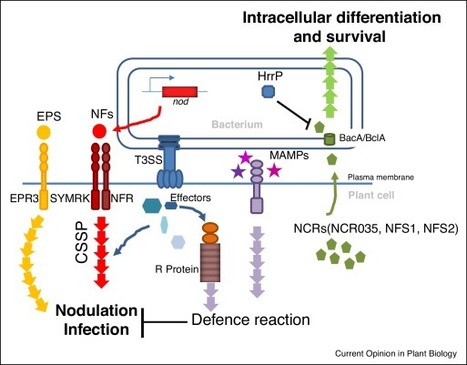
By evolving the dual capacity of intracellular survival and symbiotic nitrogen fixation in legumes, rhizobia have achieved an ecological and evolutionary success that has reshaped our biosphere. Despite complex challenges, including a dual lifestyle of intracellular infection separated by a free-living phase in soil, rhizobial symbiosis has spread horizontally to hundreds of bacterial species and geographically throughout the globe. This symbiosis has also persisted and been reshaped through millions of years of history. Here, we summarize recent advances in our understanding of the molecular mechanisms, ecological settings, and evolutionary pathways that are collectively responsible for this symbiotic success story. We offer predictions of how this symbiosis can evolve under new influences and for the benefit of a burgeoning human population.
|
|
Scooped by
Jean-Michel Ané
February 27, 2018 11:35 AM
|
The account of a recent workshop (at the 9th International Conference on Mycorrhiza (ICOM 9), Prague 2017) ‘Glomeromycotina: what is a species and why should we care?’ by Bruns et al. (2017) summarizes the current state of knowledge on genetic variation, sexual reproduction, phylogeny and species concepts in these important plant symbionts. In the section ‘Do they have sex?’ Bruns and colleagues summarize current knowledge on the arrangement of genetic variation and whether current evidence points to sexuality in these fungi. Current evidence supports the existence of a monokaryote–dikaryote state in the species Rhizophagus irregularis, and the possible existence of meiosis and recombination. However, several points need clarification concerning: (1) assumptions on the biology of this subphylum based on observations in one species; (2) the authors’ interpretation that some cited studies promote heterokaryosis as a substitute for sex; (3) the suggested discrepancy among recent studies of genomic organization; (4) the existence of sex in R. irregularis.
|
|
Scooped by
Jean-Michel Ané
February 26, 2018 10:52 AM
|
Extracellular vesicles (EVs) are lipid compartments capable of trafficking proteins, lipids, RNA and metabolites between cells. Plant cells have been shown to secrete EVs during immune responses, but virtually nothing is known about their formation, contents or ultimate function. Recently developed methods for isolating plant EVs have revealed that these EVs are enriched in stress response proteins and signaling lipids, and appear to display antifungal activity. Comparison to work on animal EVs, and the observation that host-derived small interfering RNAs and microRNAs can silence fungal genes, suggests that plant EVs may also mediate trans-kingdom RNA interference. Many fundamental questions remain, however, regarding how plant EVs are produced, how they move, and if and how they are taken up by target cells.
|
|
Scooped by
Jean-Michel Ané
February 25, 2018 11:40 AM
|
One of the nation’s top college towns is Madison, whose economic engine is largely fueled by the University of Wisconsin-Madison. The city’s main thoroughfare is State Street, which links the college campus to Capitol Square and is lined with popular cafes, shops and restaurants.
|
|
Scooped by
Jean-Michel Ané
February 23, 2018 9:46 AM
|
Nitrogen is the main nutrient that limits crop yield. Biologically reactive nitrogen is therefore routinely supplied to crops as synthetic nitrogen fertilizer. In the developed world, the extensive use of synthetic fertilizer in agriculture has substantial financial and environmental costs (1). By contrast, in the developing world, the lack of fertilizer causes low crop yields, resulting in hunger and malnutrition. Many of these problems could be avoided if plants could be engineered to fix nitrogen directly from air.
One hundred years ago, Burrill and Hansen asked whether symbiosis is possible between nonlegume plants and the bacteria that produce nitrogen-fixing nodules on the roots of legumes (2). This approach involves creating the capacity for nonlegumes to form a tight symbiotic relationship with nitrogen-fixing bacteria.
The advent of DNA technologies in the 1970s led to a second approach: introducing nitrogen-fixation genes directly into a plant. However, this dream remains unrealized (3, 4). Here, we look at the current status and future of engineering nitrogen-fixing cereal plants by directly introducing the genes required to make a functional nitrogenase in a plant.
|
|
Scooped by
Jean-Michel Ané
February 22, 2018 11:17 PM
|
It is broadly accepted that signal-induced elevations in cellular calcium levels (calcium signatures) carry information identifying the causative stimuli and ensure the correct downstream responses. In an effort to explore the mechanistic detail of how these changes are realized, Lenzoni et al., in this issue of New Phytologist (pp. 1598–1609), have developed a mathematical model to predict how the artificially triggered cytosolic calcium transients could result in changes in the expression of EDS1 and ICS1, two genes targeted by calcium/calmodulin-regulated transcription factors, which play a critical role in the salicylic acid (SA)-mediated plant immune response (Fig. 1). Their experimental results revealed that the prediction could be empirically confirmed. We deem this study to be an exciting step forward in exploring how these cryptic calcium signals are deciphered in plant cells. Lenzoni et al. suggest that this approach can be applied to explore the decoding mechanisms of other plant calcium signaling pathways.
|
|
Scooped by
Jean-Michel Ané
February 22, 2018 11:15 PM
|
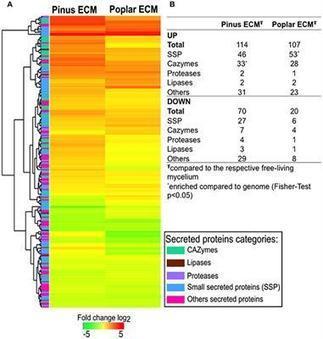
Cenococcum geophilum is an ectomycorrhizal fungus with global distribution in numerous habitats and associates with a large range of host species including gymnosperm and angiosperm trees. Moreover, C. geophilum is the unique ectomycorrhizal species within the clade Dothideomycetes, the largest class of Ascomycetes containing predominantly saprotrophic and many devastating phytopathogenic fungi. Recent studies highlight that mycorrhizal fungi, as pathogenic ones, use effectors in form of Small Secreted Proteins (SSPs) as molecular keys to promote symbiosis. In order to better understand the biotic interaction of C. geophilum with its host plants, the goal of this work was to characterize mycorrhiza-induced small-secreted proteins (MiSSPs) that potentially play a role in the ectomycorrhiza formation and functioning of this ecologically very important species. We combined different approaches such as gene expression profiling, genome localization and conservation of MiSSP genes in different C. geophilum strains and closely related species as well as protein subcellular localization studies of potential targets of MiSSPs in interacting plants using in tobacco leaf cells. Gene expression analyses of C. geophilum interacting with Pinus sylvestris (pine) and Populus tremula × Populus alba (poplar) showed that similar sets of genes coding for secreted proteins were up-regulated and only few were specific to each host. Whereas pine induced more carbohydrate active enzymes (CAZymes), the interaction with poplar induced the expression of specific SSPs. We identified a set of 22 MiSSPs, which are located in both, gene-rich, repeat-poor or gene-sparse, repeat-rich regions of the C. geophilum genome, a genome showing a bipartite architecture as seen for some pathogens but not yet for an ectomycorrhizal fungus. Genome re-sequencing data of 15 C. geophilum strains and two close relatives Glonium stellatum and Lepidopterella palustris were used to study sequence conservation of MiSSP-encoding genes. The 22 MiSSPs showed a high presence-absence polymorphism among the studied C. geophilum strains suggesting an evolution through gene gain/gene loss. Finally, we showed that six CgMiSSPs target four distinct sub-cellular compartments such as endoplasmic reticulum, plasma membrane, cytosol and tonoplast. Overall, this work presents a comprehensive analysis of secreted proteins and MiSSPs in different genetic level of C. geophilum opening a valuable resource to future functional analysis.
|
|
Scooped by
Jean-Michel Ané
February 22, 2018 11:10 PM
|
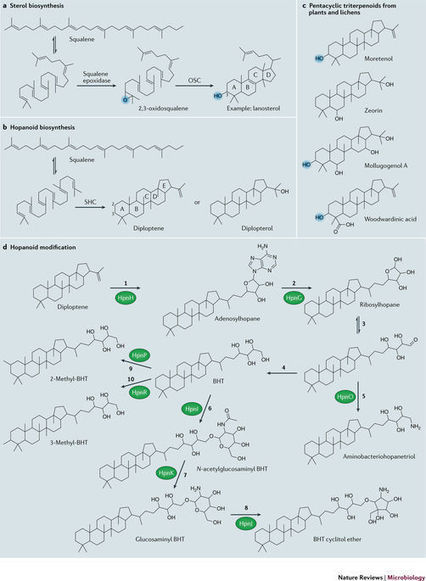
Lipid research represents a frontier for microbiology, as showcased by hopanoid lipids. Hopanoids, which resemble sterols and are found in the membranes of diverse bacteria, have left an extensive molecular fossil record. They were first discovered by petroleum geologists. Today, hopanoid-producing bacteria remain abundant in various ecosystems, such as the rhizosphere. Recently, great progress has been made in our understanding of hopanoid biosynthesis, facilitated in part by technical advances in lipid identification and quantification. A variety of genetically tractable, hopanoid-producing bacteria have been cultured, and tools to manipulate hopanoid biosynthesis and detect hopanoids are improving. However, we still have much to learn regarding how hopanoid production is regulated, how hopanoids act biophysically and biochemically, and how their production affects bacterial interactions with other organisms, such as plants. The study of hopanoids thus offers rich opportunities for discovery.
|
|
|
Scooped by
Jean-Michel Ané
March 1, 2018 10:26 PM
|
Aims
Although arbuscular mycorrhizal symbiosis is common in many plants with either C3 or C4 photosynthesis, it remains poorly understood whether photosynthesis type has any significant impact on carbon (C) fluxes in mycorrhizal plants. Thus, we compared mycorrhizal and non-mycorrhizal (NM) plants belonging to Panicum bisulcatum (C3) to its congeneric P. maximum (C4).
Methods
Plants were or were not exposed to arbuscular mycorrhiza (AM) fungal inoculation and/or phosphorus (P) fertilization. Plants’ C budgets were assembled based on 13CO2 pulse-chase labelling and sequential harvesting.
Results
Mycorrhizal plants allocated on average 3.9% more recently fixed C belowground than did their NM counterparts. At low P, mycorrhizal C3-Panicum plants allocated less C to aboveground respiration as compared to their respective NM controls. In contrast, mycorrhizal C4-Panicum increased the rates of photosynthesis and allocated more C to aboveground respiration than the respective NM controls. At high P, the differences were less prominent.
Conclusions
We demonstrated consistent differences in aboveground C allocation due to AM symbiosis formation in congeneric C3 and C4 grasses. Both grasses benefited from AM symbiosis in terms of improved P uptake (at least at low P). These results advocate a holistic (whole-plant) perspective in studying C fluxes in mycorrhizal plants.
|
|
Scooped by
Jean-Michel Ané
March 1, 2018 10:22 PM
|
Legumes have the almost unique ability to establish symbiotic associations with rhizobia and arbuscular mycorrhizal fungi. Forward and reverse genetics have identified a large number of genes that are required for either or both interactions. However, and in sharp contrast to natural soils, these interactions have been almost exclusively investigated under laboratory conditions by using separate inoculation systems, whereas both symbionts are simultaneously present in the field. Considering our recent understanding of the individual symbioses the community is now promisingly positioned to co-inoculate plants with two or more microbes in order to mechanistically understand how legumes efficiently balance, regulate and potentially separate these symbioses and other endophytic microbes within the same root. Here, we discuss a number of key control layers that should be considered when assessing tri- or multipartite beneficial interactions and that may contribute to colonization patterns in legume roots.
|
|
Scooped by
Jean-Michel Ané
March 1, 2018 10:11 PM
|
The effect of cultivation of mycorrhizal and non-mycorrhizal plants and mineral fertilization on the arbuscular mycorrhizal fungal (AMF) community structure of maize (Zea mays L.) plants was studied. Soil samples were collected from two field experiments treated for 5 years with three fertilization systems (Control – no fertilization; Mineral – NPK fertilization; and Organic – Farmyard manure fertilization). Soil samples containing soil and root fragments of rapeseed (Brassica napus L., non-mycorrhizal plant) and wheat (Triticum aestivum L., mycorrhizal plant) collected from the field plots were used as native microbial inoculum sources to maize plants. Maize plants were sown in pots containing these inoculum sources for four months under glasshouse conditions. Colonization of wheat roots by AMF, AMF community structure, AMF diversity (Shannon’s index), AMF dominance (Simpson’s index) and growth of maize were investigated. Sixteen AMF species were identified from rhizosphere soil samples as different species of genera Acaulospora, Claroideoglomus, Dentiscutata, Funneliformis, Gigaspora, Quatunica, Racocetra, and Rhizoglomus. Maize plants grown in manure-fertilized soils had a distinct AMF community structure from plants either fertilized with mineral NPK-fertilizer or non-fertilized. The results also showed that inoculum from non-mycorrhizal plants combined with mineral fertilization decreased AMF diversity (Shannon’s index), AMF dominance (Simpson’s index) and growth of maize. Our findings suggest that non-mycorrhizal plants, such as B. napus, can negatively affect the presence and the effects of soil inoculation on maize growth. Also, our results highlight the importance of considering the long-term effect of rapeseed cultivation system on the reduction of population sizes of infective AMF, and its effect on succeeding annual crops.
|
|
Scooped by
Jean-Michel Ané
March 1, 2018 9:53 PM
|
Beneficial fungal and rhizobial symbioses share commonalities in phytohormones responses, especially in auxin signalling. Mutualistic fungus Phomopsis liquidambari effectively increases symbiotic efficiency of legume peanut (Arachis hypogaea L.) with another microsymbiont, bradyrhizobium, but the underlying mechanisms are not well understood. We quantified and manipulated the IAA accumulation in ternary P. liquidambari-peanut-bradyrhizobial interactions to uncover its role between distinct symbioses. We found that auxin signalling is both locally and systemically induced by the colonization of P. liquidambari with peanut and further confirmed by Arabidopsis harboring auxin-responsive reporter, DR5:GUS, and that auxin action, including auxin transport is required to maintain fungal symbiotic behaviours and beneficial traits of plant during the symbiosis. Complementation and action inhibition experiments reveal that auxin signalling is involved in P. liquidambari-mediated nodule development and N2-fixation enhancement and symbiotic gene activation. Further analyses showed that blocking of auxin action compromised the P. liquidambari-induced nodule phenotype and physiology changes, including vascular bundle development, symbiosome and bacteroids density and malate concentrations, while induced the accumulation of starch granules in P. liquidambari-inoculated nodules. Collectively, our study demonstrated that auxin signalling activated by P. liquidambari symbiosis is recruited by peanut for bradyrhizobial symbiosis via symbiotic signalling pathway activation and nodule carbon metabolism enhancement.
|
|
Scooped by
Jean-Michel Ané
March 1, 2018 9:41 PM
|
Background: Below-ground linkage between plant and fungal communities is one of the major drivers of terrestrial ecosystem dynamics. However, we still have limited knowledge of how such plant-fungus associations vary in their community-scale properties depending on fungal functional groups and geographic locations. Methods: Based on high-throughput sequencing of root-associated fungi in forest ecosystems, we performed a comparative analysis of arbuscular mycorrhizal, ectomycorrhizal, and saprotrophic/endophytic associations across a latitudinal gradient from cool-temperate to subtropical regions. Results: In most of the plant-fungus networks analyzed, host-symbiont associations were significantly specialized but lacked "nested" architecture, which has been commonly reported in plant-pollinator and plant-seed disperser networks. Meanwhile, the structure of arbuscular mycorrhizal networks was differentiated from that of ectomycorrhizal and saprotrophic/endophytic networks, characterized by high connectance. Our data also suggested that geographic factors affected the organization of plant-fungus network structure. For example, the southernmost subtropical site analyzed in this study displayed lower network-level specificity of host-symbiont associations and higher (but still low) nestedness than northern localities. Conclusions: Our comparative analyses suggest that arbuscular mycorrhizal, ectomycorrhizal, and saprotrophic/endophytic plant-fungus associations often lack nested network architecture, while those associations can vary, to some extent, in their community-scale properties along a latitudinal gradient. Overall, this study provides a basis for future studies that will examine how different types of plant-fungus associations collectively structure terrestrial ecosystems.
|
|
Scooped by
Jean-Michel Ané
February 27, 2018 8:46 PM
|
Post-translational modification of receptor proteins is involved in activation and de-activation of signaling systems in plants. Both ubiquitination and deubiquitination have been implicated in plant interactions with pathogens and symbionts. Here we present LjPUB13, a PUB35 ARMADILLO repeat E3 ligase that specifically ubiquitinates the kinase domain of the Nod Factor receptor NFR5 and has a direct role in nodule organogenesis events in Lotus japonicus. Phenotypic analyses of three LORE1 retroelement insertion plant lines revealed that pub13 plants display delayed and reduced nodulation capacity and retarded growth. LjPUB13 expression is spatially regulated during symbiosis with Mesorhizobium loti, with increased levels in young developing nodules. Thus, LjPUB13 is an E3 ligase with a positive regulatory role during the initial stages of nodulation in L. japonicus.
|
|
Scooped by
Jean-Michel Ané
February 26, 2018 10:52 AM
|
Plant roots are colonized by complex communities of bacterial and archaeal microbiota from the soil, with the potential to affect plant nutrition and fitness. Although root-associated microbes are known to have the potential to be utilized to promote crop productivity, their exploitation has been hindered by a lack of understanding of the compositional dynamics of these communities. Here we investigate temporal changes in the root-associated bacterial and archaeal communities throughout the plant life cycle in field-grown rice over multiple seasons and locations. Our results indicate that root microbiota composition varies with both chronological age and the developmental stage of the plants. We find that a major compositional shift correlates with the transition to reproductive growth, suggestive of distinct root microbiota associations for the juvenile and adult plant phases. The results from this study highlight dynamic relationships between plant growth and associated microbiota that should be considered in strategies for the successful manipulation of microbial communities to enhance crop performance.
|
|
Scooped by
Jean-Michel Ané
February 25, 2018 1:55 PM
|
Nitrogen (N) availability can impact plant resistance to pathogens by the regulation of plant immunity. To better understand the links between N nutrition and plant defence, we analysed the impact o
|
|
Scooped by
Jean-Michel Ané
February 23, 2018 1:21 PM
|
Currently, the only compounds known to support fixation and functionalization of dinitrogen (N2) under nonmatrix conditions are based on metals. Here we present the observation of N2 binding and reduction by a nonmetal, specifically a dicoordinate borylene. Depending on the reaction conditions under which potassium graphite is introduced as a reductant, N2 binding to two borylene units results in either neutral (B2N2) or dianionic ([B2N2]2–) products that can be interconverted by respective exposure to further reductant or to air. The 15N isotopologues of the neutral and dianionic molecules were prepared with 15N-labeled dinitrogen, allowing observation of the nitrogen nuclei by 15N nuclear magnetic resonance spectroscopy. Protonation of the dianionic compound with distilled water furnishes a diradical product with a central hydrazido B2N2H2 unit. All three products were characterized spectroscopically and crystallographically.
|
|
Scooped by
Jean-Michel Ané
February 22, 2018 11:26 PM
|
For a mutualism to remain evolutionarily stable, theory predicts that mutualists should limit their associations to high-quality partners. However, most mutualists either simultaneously or sequentially associate with multiple partners that confer the same type of reward. By viewing mutualisms through the lens of niche breadth evolution, we outline how the environment shapes partner availability and relative quality, and ultimately a focal mutualist's partner breadth. We argue that mutualists that associate with multiple partners may have a selective advantage compared to specialists for many reasons, including sampling, complementarity, and portfolio effects, as well as the possibility that broad partner breadth increases breadth along other niche axes. Furthermore, selection for narrow partner breadth is unlikely to be strong when the environment erodes variation in partner quality, reduces the costs of interacting with low-quality partners, spatially structures partner communities, or decreases the strength of mutualism. Thus, we should not be surprised that most mutualists have broad partner breadth, even if it allows for ineffective partners to persist.
|
|
Scooped by
Jean-Michel Ané
February 22, 2018 11:15 PM
|
Arbuscular mycorrhizal (AM) fungi can significantly contribute to plant nitrogen (N) uptake from complex organic sources, most likely in concert with activity of soil saprotrophs and other microbes releasing and transforming the N bound in organic forms. Here, we tested whether AM fungus (Rhizophagus irregularis) extraradical hyphal networks showed any preferences towards certain forms of organic N (chitin of fungal or crustacean origin, DNA, clover biomass, or albumin) administered in spatially discrete patches, and how the presence of AM fungal hyphae affected other microbes. By direct 15N labeling, we also quantified the flux of N to the plants (Andropogon gerardii) through the AM fungal hyphae from fungal chitin and from clover biomass. The AM fungal hyphae colonized patches supplemented with organic N sources significantly more than those receiving only mineral nutrients, organic carbon in form of cellulose, or nothing. Mycorrhizal plants grew 6.4-fold larger and accumulated, on average, 20.3-fold more 15N originating from the labeled organic sources than their nonmycorrhizal counterparts. Whereas the abundance of microbes (bacteria, fungi, or Acanthamoeba sp.) in the different patches was primarily driven by patch quality, we noted a consistent suppression of the microbial abundances by the presence of AM fungal hyphae. This suppression was particularly strong for ammonia oxidizing bacteria. Our results indicate that AM fungi successfully competed with the other microbes for free ammonium ions and suggest an important role for the notoriously understudied soil protists to play in recycling organic N from soil to plants via AM fungal hyphae.
|
|
Scooped by
Jean-Michel Ané
February 22, 2018 11:12 PM
|
Various types of other fungi colonize glomeromycotinan (Mucoromycota) spores in the Early Devonian Rhynie chert. However, relatively few of these associations have been described and evaluated in detail. One particular type of glomoid spore located in degrading land plant axes from the Rhynie chert provides evidence of (simultaneous) interaction with three different fungi. Massive callosities occur around the intrusion filaments of a chytrid-like parasite with epibiotic sporangia, while the hyphae of a delicate mycelial fungus extend into the spore lumen without triggering a recognizable host response. Several spores show large numbers of inwardly directed projections, which are regularly distributed and consist of a short hyphal branch encased in host wall material. The projections represent the penetration sites of a distinctive, mycelial fungus that forms a mantle-like hyphal sheath around the spores. This type of fungal interaction with glomeromycotinan spores has not previously been reported, and thus expands our knowledge of the numerous interfungal relationships that existed in early continental ecosystems.
|


 Scoop.it!











Nice work!