Your new post is loading...

|
Scooped by
Jean-Michel Ané
March 11, 2018 1:49 PM
|
Synthetic Biology is defined as the application of engineering principles to biology. It aims to increase the speed, ease and predictability with which desirable changes and novel traits can be conferred to living cells. The initial steps in this process aim to simplify the encoding of new instructions in DNA by establishing low-level programming languages for biology. Together with advances in the laboratory that allow multiple DNA molecules to be efficiently assembled together into a desired order in a single step, this approach has simplified the design and assembly of multigene constructs and has even facilitated the automated construction of synthetic chromosomes. These advances and technologies are now being applied to plants, for which there are a growing number of software and wetware tools for the design, construction and delivery of DNA molecules and for the engineering of endogenous genes. Here we review the efforts of the past decade that have established synthetic biology workflows and tools for plants and discuss the constraints and bottlenecks of this emerging field.
|
|
Scooped by
Jean-Michel Ané
March 11, 2018 1:37 PM
|
The presence of dark septate endophytes (DSEs) or arbuscular mycorrhizal fungi (AMF) in plant roots and their effects on plant fitness have been extensively described. However, little is known about their interactions when they are simultaneously colonizing a plant root, especially in trace element (TE)-polluted soils. We therefore investigated the effects of Cadophora sp. and Funneliformis mosseae on ryegrass (Lolium perenne) growth and element uptake in a Cd/Zn/Pb-polluted soil. The experiment included four treatments, i.e., inoculation with Cadophora sp., inoculation with F. mosseae, co-inoculation with Cadophora sp. and F. mosseae, and no inoculation. Ryegrass biomass and shoot Na, P, K, and Mg concentrations significantly increased following AMF inoculation as compared to non-inoculated controls. Similarly, DSE inoculation increased shoot Na concentration, whereas dual inoculation significantly decreased shoot Cd concentration. Moreover, oxidative stress determined by ryegrass leaf malondialdehyde concentration was alleviated both in the AMF and dual inoculation treatments. We used quantitative PCR and microscope observations to quantify colonization rates. They demonstrated that DSEs had no effect on AMF colonization, while AMF colonization slightly decreased DSE frequency. We also monitored fluorescein diacetate (FDA) hydrolysis and alkaline phosphatase (AP) activity in the rhizosphere soils. FDA hydrolysis remained unchanged in the three inoculated treatments, but AMF colonization increased AP activity and P mobility in the soil whereas DSE colonization did not alter AP activity. In this experiment, we unveiled the interactions between two ecologically important fungal groups likely to occur in roots which involved a decrease of oxidative stress and Cd accumulation in shoots. These results open promising perspectives on the fungal-based phytomanagement of TE-contaminated sites by the production of uncontaminated and marketable plant biomass.
The rhizosphere microbiome has a key role in plant growth and health, providing a first line of defense against root infections by soil-borne pathogens. Here, we investigated the composition and metabolic potential of the rhizobacterial community of different common bean (Phaseolus vulgaris) cultivars with variable levels of resistance to the fungal root pathogen Fusarium oxysporum (Fox). For the different bean cultivars grown in two soils with contrasting physicochemical properties and microbial diversity, rhizobacterial abundance was positively correlated with Fox resistance. Pseudomonadaceae, bacillaceae, solibacteraceae and cytophagaceae were more abundant in the rhizosphere of the Fox-resistant cultivar. Network analyses showed a modular topology of the rhizosphere microbiome of the Fox-resistant cultivar, suggesting a more complex and highly connected bacterial community than in the rhizosphere of the Fox-susceptible cultivar. Metagenome analyses further revealed that specific functional traits such as protein secretion systems and biosynthesis genes of antifungal phenazines and rhamnolipids were more abundant in the rhizobacterial community of the Fox-resistant cultivar. Our findings suggest that breeding for Fox resistance in common bean may have co-selected for other unknown plant traits that support a higher abundance of specific beneficial bacterial families in the rhizosphere with functional traits that reinforce the first line of defense.
Via Ronny Kellner
|
|
Scooped by
Jean-Michel Ané
March 9, 2018 5:01 PM
|
Disease suppressive soils typically develop after a disease outbreak due to the subsequent assembly of protective microbiota in the rhizosphere. The role of the plant immune system in the assemblage of a protective rhizosphere microbiome is largely unknown. In this study, we demonstrate that Arabidopsis thaliana specifically promotes three bacterial species in the rhizosphere upon foliar defense activation by the downy mildew pathogen Hyaloperonospora arabidopsidis. The promoted bacteria were isolated and found to interact synergistically in biofilm formation in vitro. Although separately these bacteria did not affect the plant significantly, together they induced systemic resistance against downy mildew and promoted growth of the plant. Moreover, we show that the soil-mediated legacy of a primary population of downy mildew infected plants confers enhanced protection against this pathogen in a second population of plants growing in the same soil. Together our results indicate that plants can adjust their root microbiome upon pathogen infection and specifically recruit a group of disease resistance-inducing and growth-promoting beneficial microbes, therewith potentially maximizing the chance of survival of their offspring that will grow in the same soil.
|
|
Scooped by
Jean-Michel Ané
March 5, 2018 3:39 AM
|
Several nucleoporins in the nuclear pore complex (NPC) have been reported to be involved in abiotic stress responses in plants. However, the molecular mechanism of how NPC regulates abiotic stress responses, especially the expression of stress responsive genes remains poorly understood. From a forward genetics screen using an abiotic stress-responsive luciferase reporter (RD29A-LUC) in the sickle-1 (sic-1) mutant background, we identified a suppressor caused by a mutation in NUCLEOPORIN 85 (NUP85), which exhibited reduced expression of RD29A-LUC in response to ABA and salt stress. Consistently, the ABA and salinity induced expression of several stress responsive genes such as RD29A, COR15A and COR47 was significantly compromised in nup85 mutants and other nucleoporin mutants such as nup160 and hos1. Subsequently, Immunoprecipitation and mass spectrometry analysis revealed that NUP85 is potentially associated with HOS1 and other nucleoporins within the nup107-160 complex, along with several mediator subunits. We further showed that there is a direct physical interaction between MED18 and NUP85. Similar to NUP85 mutations, MED18 mutation was also found to attenuate expression of stress responsive genes. Taken together, we not only revealed the involvement of NUP85 and other nucleoporins in regulating ABA and salt stress responses, but also uncovered a potential relation between NPC and mediator complex in modulating the gene expression in plants.
|
|
Scooped by
Jean-Michel Ané
March 5, 2018 3:31 AM
|
Paraburkholderia caballeronis is a plant-associated bacterium. Strain TNe-841T was isolated from the rhizosphere of tomato (Solanum lycopersicum L. var. lycopersicum) growing in Nepantla Mexico State. Initially this bacterium was found to effectively nodulate Phaseolus vulgaris L. However, from an analysis of the genome of strain TNe-841T and from repeat inoculation experiments, we found that this strain did not nodulate bean and also lacked nodulation genes, suggesting that the genes were lost. The genome consists of 7,115,141 bp with a G + C content of 67.01%. The sequence includes 6251 protein-coding genes and 87 RNA genes.
|
|
Scooped by
Jean-Michel Ané
March 3, 2018 5:17 PM
|
The term endophytes refers to a group of endosymbionts usually bacterium, fungus or interactive bacterium-fungal species residing asymptomatically and grows within plants for at least a part of their life cycle intra- and intercelullarly in the tissues of higher plants without causing any visible manifestation of disease. The endophytes represent a potential source of novel natural and ecofriendly products for medicinal, agricultural and industrial uses with least adverse effect on the environment.
The enormous biological diversity coupled with their capability to biosynthesize bioactive secondary metabolites has provided the momentum for the researchers working on endophytes. The present review was undertaken to highlight the biotechnological processes and bioprospection of endophytes as potential antimicrobial agents, secondary metabolites, antibiotics, antagonists against disease causing phytopathogens, cytotoxic, anticancer, insecticidal, antioxidant antiviral compounds andisolation and production of bioactive compounds with potent enzymatic activities.
Endophyte enhances biodegradation and hydrolysis processes significantly important against pathogenic infection, biotransformation studies and production of compounds with immense industrial applications. The interaction of the endophytic microbiota with the plants are more protected and can withstand the adverse environmental conditions and contribute to plant growth, productivity, carbon sequestration, enhanced phytoremediation efficiencies and amelioration of metal induced toxicity. The strategies governed by the endophytes for efficient production of novel bioactive phytocompounds was comprehensively discussed.
The review envisaged the biodiversity, transmission of endophytes, plant endophyte interactions for the production of bioactive compounds for therapeutic, environmental and agricultural sustainability.
|
|
Scooped by
Jean-Michel Ané
March 3, 2018 5:06 PM
|
The roots of most terrestrial plants are colonized by mycorrhizal fungi. They play a key role in terrestrial environments influencing soil structure and ecosystem functionality. Around them a peculiar region, the mycorrhizosphere, develops. This is a very dynamic environment where plants, soil and microorganisms interact. Interest in this fascinating environment has increased over the years. For a long period the knowledge of the microbial populations in the rhizosphere has been limited, because they have always been studied by traditional culture-based techniques. These methods, which only allow the study of cultured microorganisms, do not allow the characterization of most organisms existing in nature. The introduction in the last few years of methodologies that are independent of culture techniques has bypassed this limitation. This together with the development of high-throughput molecular tools has given new insights into the biology, evolution, and biodiversity of mycorrhizal associations, as well as, the molecular dialog between plants and fungi. The genomes of many mycorrhizal fungal species have been sequenced so far allowing to better understanding the lifestyle of these fungi, their sexual reproduction modalities and metabolic functions. The possibility to detect the mycelium and the mycorrhizae of heterothallic fungi has also allowed to follow the spatial and temporal distributional patterns of strains of different mating types. On the other hand, the availability of the genome sequencing from several mycorrhizal fungi with a different lifestyle, or belonging to different groups, allowed to verify the common feature of the mycorrhizal symbiosis as well as the differences on how different mycorrhizal species interact and dialog with the plant. Here, we will consider the aspects described before, mainly focusing on ectomycorrhizal fungi and their interactions with plants and other soil microorganisms.
|
|
Scooped by
Jean-Michel Ané
March 3, 2018 4:52 PM
|
The effect of phosphorus deficiency on growth, nodulation and phytase activity was studied in glasshouse for four symbioses involving two faba bean cultivars, namely Aguadulce (AG) and Alfia (AL), and two local rhizobial isolates, namely RhF1 and RhF2. The P deficiency was applied by adding 25 µmol of Pi plant−1 week−1 to nutrient solution, whereas the sufficient control received 125 µmol plant−1 week−1. At flowering stage, the plants were harvested for assessment of growth and nodulation, P and N contents in organs as well as activities of phytase and phosphatases in nodules. The latter were highly stimulated by P deficiency, particularly for AL–RhF1 symbiosis for which shoot growth and P content were not affected by P deficiency. Using in situ RT-PCR, the expression of a plant histidine acid phytase HAP gene was detected in the nodule cortex under P deficiency. It is concluded that high nodule phytase activity constitutes a mechanism for faba bean plants to adapt their nitrogen fixation to P deficiency.
|
|
Scooped by
Jean-Michel Ané
March 3, 2018 4:37 PM
|
Abstract: The root nodule symbiosis established between legumes and rhizobia is an exquisite biological interaction responsible for fixing a significant amount of nitrogen in terrestrial ecosystems. The success of this interaction depends on the recognition of the right partner by the plant within the richest microbial ecosystems on Earth, the soil. Recent metagenomic studies of the soil biome have revealed its complexity, which includes microorganisms that affect plant fitness and growth in a beneficial, harmful, or neutral manner. In this complex scenario, understanding the molecular mechanisms by which legumes recognize and discriminate rhizobia from pathogens, but also between distinct rhizobia species and strains that differ in their symbiotic performance, is a considerable challenge. In this work, we will review how plants are able to recognize and select symbiotic partners from a vast diversity of surrounding bacteria. We will also analyze recent advances that contribute to understand changes in plant gene expression associated with the outcome of the symbiotic interaction. These aspects of nitrogen-fixing symbiosis should contribute to translate the knowledge generated in basic laboratory research into biotechnological advances to improve the efficiency of the nitrogen-fixing symbiosis in agronomic systems.
|
|
Scooped by
Jean-Michel Ané
March 3, 2018 4:12 PM
|
A life-affirming, climate-changing, bee-saving film about mushrooms. Director Louie Schwartzberg. With Paul Stamets, Dr. Andrew Weil. Producer: Lyn Lear.
|
|
Scooped by
Jean-Michel Ané
March 1, 2018 10:42 PM
|
Under combined drought and mechanical stresses, mechanical stress primarily controlled physiological responses of maize. Piriformospora indica mitigated the adverse effects of stresses, and inoculated maize experienced less oxidative damage and had better adaptation to stressful conditions.
The objective of this study was to investigate the effect of maize root colonization by an endophytic fungus P. indica on plant water status, physiological traits and root morphology under combined drought and mechanical stresses. Seedlings of inoculated and non-inoculated maize (Zea mays L., cv. single cross 704) were cultivated in growth chambers filled with moistened siliceous sand at a matric suction of 20 hPa. Drought stress was induced using PEG 6000 solution with osmotic potentials of 0, − 0.3 and − 0.5 MPa. Mechanical stress (i.e., penetration resistances of 1.05, 4.23 and 6.34 MPa) was exerted by placing weights on the surface of the sand medium. After 30 days, leaf water potential (LWP) and relative water content (RWC), root and shoot fresh weights, root volume (RV) and diameter (RD), leaf proline content, leaf area (LA) and catalase (CAT) and ascorbate peroxidase (APX) activities were measured. The results show that exposure to individual drought and mechanical stresses led to higher RD and proline content and lower plant biomass, RV and LA. Moreover, increasing drought and mechanical stress severity increased APX activity by about 1.9- and 3.1-fold compared with the control. When plants were exposed to combined stresses, mechanical stress played the dominant role in controlling plant responses. P. indica-inoculated plants are better adapted to individual and combined stresses. The inoculated plants had greater RV, LA, RWC, LWP and proline content under stressful conditions. In comparison with non-inoculated plants, inoculated plants showed lower CAT and APX activities which means that they experienced less oxidative stress induced by stressful conditions.
|
|
Scooped by
Jean-Michel Ané
March 1, 2018 10:38 PM
|
A Gram-positive, fast-growing, endophytic bacterium was isolated from root nodules of Medicago polymorpha and identified as Bacillus megaterium. The isolate, named NMp082, co-inhabited nodules with the symbiotic rhizobium Ensifer medicae. B. megaterium NMp082 contained nifH and nodD genes that were 100% identical to those of Ensifer meliloti, an unusual event that suggested previous lateral gene transfer from a different rhizobial species. Despite the presence of nodulation and nitrogen fixation genes, the endophyte was not able to form effective nodules; however, it induced nodule-like unorganised structures in alfalfa roots. Axenic inoculation promoted plant growth in M. polymorpha, Medicago lupulina, Medicago truncatula and Medicago sativa, and co-inoculation with E. medicae enhanced growth and nodulation of Medicago spp. plants compared with inoculation with either bacterium alone. B. megaterium NMp082 also induced tolerance to salt stress in alfalfa and Arabidopsis plants. The ability to produce indole acetic acid (IAA) and the 1-aminocyclopropane-1-carboxylate (ACC) deaminase activity displayed by the endophyte in vitro might explain the observed plant growth promotion and salt stress alleviation. The isolate was also highly tolerant to salt stress, water deficit and to the presence of different heavy metals. The newly characterised endophytic bacterium possessed specific characteristics that point at potential applications to sustain plant growth and nodulation under abiotic stress.
|
|
|
Scooped by
Jean-Michel Ané
March 11, 2018 1:38 PM
|
The marine nitrogen cycle is dominated by redox-controlled biogeochemical processes and, therefore, is likely to have been revolutionised in response to Earth-surface oxygenation. The details, timing, and trajectory of nitrogen cycle evolution, however, remain elusive. Here we couple nitrogen and carbon isotope records from multiple drillcores through the Rooihoogte–Timeball Hill Formations from across the Carletonville area of the Kaapvaal Craton where the Great Oxygenation Event (GOE) and its aftermath are recorded. Our data reveal that aerobic nitrogen cycling, featuring metabolisms involving nitrogen oxyanions, was well established prior to the GOE and that ammonium may have dominated the dissolved nitrogen inventory. Pronounced signals of diazotrophy imply a stepwise evolution, with a temporary intermediate stage where both ammonium and nitrate may have been scarce. We suggest that the emergence of the modern nitrogen cycle, with metabolic processes that approximate their contemporary balance, was retarded by low environmental oxygen availability.
|
|
Scooped by
Jean-Michel Ané
March 11, 2018 11:26 AM
|
The dinitrogenase reductase gene (nifH) is the most widely established molecular marker for the study of nitrogen-fixing prokaryotes in nature. A large number of PCR primer sets have been developed for nifH amplification, and the effective deployment of these approaches should be guided by a rapid, easy-to-use analysis protocol. Bioinformatic analysis of marker gene sequences also requires considerable expertise. In this study, we advance the state of the art for nifH analysis by evaluating nifH primer set performance, developing an improved amplicon sequencing workflow, and implementing a user-friendly bioinformatics pipeline. The developed amplicon sequencing workflow is a three-stage PCR-based approach that uses established technologies for incorporating sample-specific barcode sequences and sequencing adapters. Based on our primer evaluation, we recommend the Ando primer set be used with a modified annealing temperature of 58°C, as this approach captured the largest diversity of nifH templates, including paralog cluster IV/V sequences. To improve nifH sequence analysis, we developed a computational pipeline which infers taxonomy and optionally filters out paralog sequences. In addition, we employed an empirical model to derive optimal operational taxonomic unit (OTU) cutoffs for the nifH gene at the species, genus, and family levels. A comprehensive workflow script named TaxADivA (TAXonomy Assignment and DIVersity Assessment) is provided to ease processing and analysis of nifH amplicons. Our approach is then validated through characterization of diazotroph communities across environmental gradients in beach sands impacted by the Deepwater Horizon oil spill in the Gulf of Mexico, in a peat moss-dominated wetland, and in various plant compartments of a sugarcane field.
|
|
Rescooped by
Jean-Michel Ané
from Host:microbe Interactions
March 9, 2018 5:03 PM
|
Arbuscular mycorrhiza (AM) is a mutualistic association between most plant species and the ancient fungal phylum Glomeromycota in roots, and it plays a key role in a plant’s nutrient uptake from the soil. Roots synthesize strigolactones (SLs), derivatives of carotenoids, and exude them to induce energy metabolism and hyphal branching of AM fungi. Despite the well-documented roles of SLs in the pre-symbiotic phase, little is known about the role of SLs in the process of root colonization. Here we show that the expansion of root colonization is suppressed in the mutants of rice (Oryza sativa) SL biosynthesis genes, carotenoid cleavage dioxygenase D10 and more severely in D17. Interestingly, most of the colonization process is normal, i.e. AM fungal hyphae approach the roots and cling around them, and epidermal penetration, arbuscule size, arbuscule number per hyphopodium and metabolic activity of the intraradical mycelium are not affected in d10 and d17 mutants. In contrast, hyphopodium formation is severely attenuated. Our observations establish the requirement for SL biosynthesis genes for efficient hyphopodium formation, suggesting that SLs are required in this process. Efficient hyphopodium formation is required for the punctual internalization of hyphae into roots and maintaining the expansion of colonization.
Via Jonathan Plett
|
|
Scooped by
Jean-Michel Ané
March 8, 2018 12:59 PM
|
|
|
Scooped by
Jean-Michel Ané
March 5, 2018 3:32 AM
|
Strain CCMM B554, also known as FSM-MA, is a soil dwelling and nodule forming, nitrogen-fixing bacterium isolated from the nodules of the legume Medicago arborea L. in the Maamora Forest, Morocco. The strain forms effective nitrogen fixing nodules on species of the Medicago, Melilotus and Trigonella genera and is exceptional because it is a highly effective symbiotic partner of the two most widely used accessions, A17 and R108, of the model legume Medicago truncatula Gaertn. Based on 16S rRNA gene sequence, multilocus sequence and average nucleotide identity analyses, FSM-MA is identified as a new Ensifer meliloti strain. The genome is 6,70 Mbp and is comprised of the chromosome (3,64 Mbp) harboring 3574 predicted genes and two megaplasmids, pSymA (1,42 Mbp) and pSymB (1,64 Mbp) with respectively 1481 and 1595 predicted genes. The average GC content of the genome is 61.93%. The FSM-MA genome structure is highly similar and co-linear to other E. meliloti strains in the chromosome and the pSymB megaplasmid while, in contrast, it shows high variability in the pSymA plasmid. The large number of strain-specific sequences in pSymA as well as strain-specific genes on pSymB involved in the biosynthesis of the lipopolysaccharide and capsular polysaccharide surface polysaccharides may encode novel symbiotic functions explaining the high symbiotic performance of FSM-MA.
|
|
Scooped by
Jean-Michel Ané
March 5, 2018 3:31 AM
|
Abstract: Paraburkholderia phymatum belongs to the β-subclass of proteobacteria. It has recently been shown to be able to nodulate and fix nitrogen in symbiosis with several mimosoid and papilionoid legumes. In contrast to the symbiosis of legumes with α-proteobacteria, very little is known about the molecular determinants underlying the successful establishment of this mutualistic relationship with β-proteobacteria. In this study, we performed an RNA-sequencing (RNA-seq) analysis of free-living P. phymatum growing under nitrogen-replete and -limited conditions, the latter partially mimicking the situation in nitrogen-deprived soils. Among the genes upregulated under nitrogen limitation, we found genes involved in exopolysaccharides production and in motility, two traits relevant for plant root infection. Next, RNA-seq data of P. phymatum grown under free-living conditions and from symbiotic root nodules of Phaseolus vulgaris (common bean) were generated and compared. Among the genes highly upregulated during symbiosis, we identified—besides the nif gene cluster—an operon encoding a potential cytochrome o ubiquinol oxidase (Bphy_3646-49). Bean root nodules induced by a cyoB mutant strain showed reduced nitrogenase and nitrogen fixation abilities, suggesting an important role of the cytochrome for respiration inside the nodule. The analysis of mutant strains for the RNA polymerase transcription factor RpoN (σ54) and its activator NifA indicated that—similar to the situation in α-rhizobia—P. phymatum RpoN and NifA are key regulators during symbiosis with P. vulgaris.
|
|
Scooped by
Jean-Michel Ané
March 3, 2018 5:13 PM
|
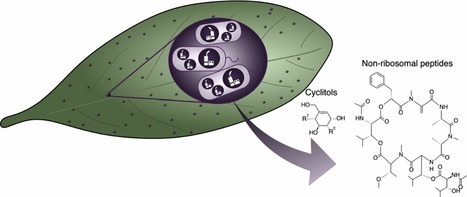
Various plant species establish intimate symbioses with bacteria within their aerial organs. The bacteria are contained within nodules or glands often present in distinctive patterns on the leaves, and have been used as taxonomic marker since the early 20th century. These structures are present in very diverse taxa, including dicots (Rubiaceae and Primulaceae) and monocots (Dioscorea). The symbionts colonize the plants throughout their life cycles and contribute bioactive secondary metabolites to the association. In this review, we present recent progress in the understanding of these plant–bacteria symbioses, including the modes of transmission, distribution and roles of the symbionts.
|
|
Scooped by
Jean-Michel Ané
March 3, 2018 4:54 PM
|
Several studies have investigated soil microbial biodiversity, but understanding of the mechanisms underlying plant responses to soil microbiota remains in its infancy. Here, we focused on tomato (Solanum lycopersicum), testing the hypothesis that plants grown on native soils display different responses to soil microbiotas.
Using transcriptomics, proteomics, and biochemistry, we describe the responses of two tomato genotypes (susceptible or resistant to Fusarium oxysporum f. sp. lycopersici) grown on an artificial growth substrate and two native soils (conducive and suppressive to Fusarium).
Native soils affected tomato responses by modulating pathways involved in responses to oxidative stress, phenol biosynthesis, lignin deposition, and innate immunity, particularly in the suppressive soil. In tomato plants grown on steam-disinfected soils, total phenols and lignin decreased significantly. The inoculation of a mycorrhizal fungus partly rescued this response locally and systemically. Plants inoculated with the fungal pathogen showed reduced disease symptoms in the resistant genotype in both soils, but the susceptible genotype was partially protected from the pathogen only when grown on the suppressive soil.
The ‘state of alert’ detected in tomatoes reveals novel mechanisms operating in plants in native soils and the soil microbiota appears to be one of the drivers of these plant responses.
|
|
Scooped by
Jean-Michel Ané
March 3, 2018 4:38 PM
|
Nitrogenase catalyzes the reduction of dinitrogen (N2) using low potential electrons from ferredoxin (Fd) or flavodoxin (Fld) through an ATP dependent process. Since its emergence in an anaerobic chemoautotroph, this oxygen (O2) sensitive enzyme complex has evolved to operate in a variety of genomic and metabolic backgrounds including those of aerobes, anaerobes, chemotrophs, and phototrophs. However, whether pathways of electron delivery to nitrogenase are influenced by these different metabolic backgrounds is not well understood. Here, we report the distribution of homologs of Fds, Flds, and Fd/Fld-reducing enzymes in 359 genomes of putative N2 fixers (diazotrophs). Six distinct lineages of nitrogenase were identified and their distributions largely corresponded to differences in the host cells' ability to integrate O2 or light into energy metabolism. Predicted pathways of electron transfer to nitrogenase in aerobes, facultative anaerobes, and phototrophs varied from those in anaerobes at the level of Fds/Flds used to reduce nitrogenase, the enzymes that generate reduced Fds/Flds, and the putative substrates of these enzymes. Proteins that putatively reduce Fd with hydrogen or pyruvate were enriched in anaerobes, while those that reduce Fd with NADH/NADPH were enriched in aerobes, facultative anaerobes, and anoxygenic phototrophs. The energy metabolism of aerobic, facultatively anaerobic, and anoxygenic phototrophic diazotrophs often yields reduced NADH/NADPH that is not sufficiently reduced to drive N2 reduction. At least two mechanisms have been acquired by these taxa to overcome this limitation and to generate electrons with potentials capable of reducing Fd. These include the bifurcation of electrons or the coupling of Fd reduction to reverse ion translocation.
IMPORTANCE Nitrogen fixation supplies fixed nitrogen to cells from a variety of genomic and metabolic backgrounds including those of aerobes, facultative anaerobes, chemotrophs, and phototrophs. Here, using informatics approaches applied to genomic data, we show that pathways of electron transfer to nitrogenase in metabolically diverse diazotrophic taxa have diversified primarily in response to host cells' acquired ability to integrate O2 or light into their energy metabolism. Acquisition of two key enzyme complexes enabled aerobic and facultatively anaerobic phototrophic taxa to generate electrons of sufficiently low potential to reduce nitrogenase: the bifurcation of electrons via the Fix complex or the coupling of Fd reduction to reverse ion translocation via the Rhodobacter nitrogen fixation (Rnf) complex.
|
|
Scooped by
Jean-Michel Ané
March 3, 2018 4:21 PM
|
The arbuscular mycorrhizal (AM) symbiosis is a nearly ubiquitous association formed by most land plants. Numerous insights into the molecular mechanisms governing this symbiosis have been obtained in recent years leading to the identification of a core set of plant genes essential for successful formation of the AM symbiosis by angiosperm hosts. Recent phylogenetic analyses indicate that while the origin of some of these symbiotic genes predated the first land plants, the rest appeared through processes including de novo evolution and gene duplication that occurred specifically in the land plants. Purifying selection on this core gene set has been maintained over millions of years of plant evolution to conserve the AM symbiosis. However, several independent losses of this association have been recorded in numerous embryophyte lineages. In these lineages, potential compensatory mechanisms have been identified that could have helped these plants overcome the adversities imposed by the loss of the AM symbiosis. This review will focus on the processes governing the conservation of the AM symbiosis in the land plant lineage.
|
|
Scooped by
Jean-Michel Ané
March 3, 2018 12:05 PM
|
N-myristoylation and S-acylation promote protein membrane association, allowing regulation of membrane proteins. However, how widespread this targeting mechanism is in plant signaling processes remains unknown. Through bioinformatics analyses, we determined that among plant protein kinase families, the occurrence of motifs indicative for dual lipidation by N-myristoylation and S-acylation is restricted to only five kinase families, including the Ca2+-regulated CDPK-SnRK and CBL protein families. We demonstrated N-myristoylation of CDPK-SnRKs and CBLs by incorporation of radiolabeled myristic acid. We focused on CPK6 and CBL5 as model cases and examined the impact of dual lipidation on their function by fluorescence microscopy, electrophysiology and functional complementation of Arabidopsis mutants. We found that both lipid modifications were required for proper targeting of CBL5 and CPK6 to the plasma membrane. Moreover, we identified CBL5–CIPK11 complexes as phosphorylating and activating the guard cell anion channel SLAC1. SLAC1 activation by CPK6 or CBL5–CIPK11 was strictly dependent on dual lipid modification, and loss of CPK6 lipid modification prevented functional complementation of cpk3 cpk6 guard cell mutant phenotypes. Our findings establish the general importance of dual lipid modification for Ca2+ signaling processes, and demonstrate their requirement for guard cell anion channel regulation.
|
|
Scooped by
Jean-Michel Ané
March 1, 2018 10:41 PM
|
There is little information about the effect of arbuscular mycorrhizal fungi (AMF) and phosphate solubilizing bacteria (PSB) on maize productivity in the presence of sparingly soluble forms of phosphorus (P) under water stress in natural conditions. The aim of this study was to investigate the effect of Funneliformis mosseae and Pseudomonas fluorescens, triple superphosphate (TSP) (as an easily available form of P) and rock phosphate (RP) (as a poorly soluble form of P) on vegetative and reproductive parts of maize, root colonization, content of P and N in the plant tissue, and grain yield of maize plant under conditions of water deficit stress. For this purpose, a field experiment was carried out as split–split plot arrangement based on completely randomized block experimental design with three replications for 100 days. The results demonstrated that water deficit stress inhibited the growth and biomass of vegetative and reproductive parts and grain yield of maize; however, co-inoculation of maize with F. mosseae and P. fluorescens resulted in a significant increase in the vegetative and reproductive traits, root colonization, the grain yield of maize, content of P and N nutrients in plant tissue under water deficit and normal conditions compared with non-inoculated controls and single inoculation treatments, indicating AMF and P. fluorescens could make the plants more tolerant to water stress. Efficiency of TSP in combination with microbial inoculants on all measured traits was higher than that of RP. The results indicated that interactions of inoculants depend upon high or low solubility of the used P source (P availability). In general, the results of this study showed that the plants inoculated with a combination of P. fluorescens and F. mosseae expressed synergistic effect to increase maize yield under water deficit stress, while keeping safe natural resources such as P stocks.
|