Your new post is loading...

|
Scooped by
Jean-Michel Ané
March 30, 2018 10:07 PM
|
Depolymerization and de-N-acetylation of chitin by chitinases and deacetylases generates a series of derivatives including chitosans and chitooligosaccharides (COS), which are involved in molecular recognition events such as modulation of cell signaling and morphogenesis, immune responses, and host-pathogen interactions. Chitosans and COS are also attractive scaffolds for the development of bionanomaterials for drug/gene delivery and tissue engineering applications. Most of the biological activities associated with COS seem to be largely dependent not only on the degree of polymerization but also on the acetylation pattern, which defines the charge density and distribution of GlcNAc and GlcNH2 moieties in chitosans and COS. Chitin de-N-acetylases (CDAs) catalyze the hydrolysis of the acetamido group in GlcNAc residues of chitin, chitosan, and COS. The deacetylation patterns are diverse, some CDAs being specific for single positions, others showing multiple attack, processivity or random actions. This review summarizes the current knowledge on substrate specificity of bacterial and fungal CDAs, focusing on the structural and molecular aspects of their modes of action. Understanding the structural determinants of specificity will not only contribute to unravelling structure-function relationships, but also to use and engineer CDAs as biocatalysts for the production of tailor-made chitosans and COS for a growing number of applications.
|
|
Scooped by
Jean-Michel Ané
March 30, 2018 9:47 PM
|
Symbiotic N2 fixation research thus far, has been primarily focused on bacteria selection. However, little progress in impacting crop yields has resulted from this approach. Bacteria introduced in field soils rarely compete well with indigenous bacteria, including mutated lines selected for high nitrogen fixation capacity. Consequently, introduction of ‘elite’ bacteria in fields commonly does not result in crop yield increase. This review highlights that the primary regulation of N2 fixation is a result of response of integrated physiological activity at the plant level. Nitrogen feedback from the host plant plays an important role in regulating N2 fixation rate. Rapid sequestration of fixed nitrogen by the plant is especially important for high N2 fixation activity. In addition, water cycling in the plant between the shoot and nodules plays a key role in sustaining high N2 fixation activity. Therefore, attention in selecting host plant genotype is suggested to be the next step to increasing N2 fixation activity of grain legumes.
|
|
Scooped by
Jean-Michel Ané
March 30, 2018 9:40 PM
|
MODELING THE MICROBIOME: Using synthetic communities of microbes to colonize Arabidopsis plants grown in a sterile substrate—the botanical equivalent of germ-free mice—researchers can begin to understand how the microbiome affects plant health. © SIMON FRASER/SCIENCE SOURCEAfew years ago, as a postdoc in the lab of Paul Schulze-Lefert at the Max Planck Institute for Plant Breeding Research in Cologne, Germany, I used next-generation sequencing to study the bacterial communities that populate roots of the model plant Arabidopsis thaliana. Although scientists had known for many years that roots interact with a variety of microorganisms, the composition of these communities was still poorly understood. As our sequencing data began rolling in, I was stunned by the staggering taxonomic diversity of bacteria that a single, tiny root can host. Yet there was an order in this apparent chaos. Almost invariably, members of the phyla Actinobacteria, Bacteroidetes, and Proteobacteria were enriched, differentiating the root specimens from the surrounding environment.Subsequent studies by other labs supported our findings and posited Firmicutes as an additional dominant member of the plant microbiota. In addition to these bacterial groups, genomic surveys of plants have revealed certain fungal and eukaryotic microbes. And all of these groups of organisms are making themselves at home not just beneath the soil in and around plants’ roots, but in other tissues, such as leaves, as well.This research immediately raised new questions: Why were certain microbes more abundant in roots and leaves? How did these microbial communities assemble? And most critically, how did they affect plant health?Recently, in addition to genomic surveys of the microbes present in various plant tissues, researchers have begun to probe the functional consequences of these bacterial, fungal, and eukaryotic symbionts. A better understanding of the molecular dialog between plants and their microbiota could revolutionize agriculture. The world population is expected to reach 9.8 billion in 2050, more than 30 percent larger than at present. This will put enormous pressure on food production globally—pressure that won’t be relieved solely by the agrochemicals farmers currently use to increase yield and protect crops from pests and pathogens. To encourage a sustainable food source for humanity, radical changes in the crop production process are needed—changes that could come in the form of microbial manipulation.The interface between plant roots and soil—a zone called the rhizosphere—and the root itself are sites of colonization for microbes capable of enhancing mineral uptake by the plant, of both actively synthesizing and modulating the plant’s synthesis of chemical compounds called phytohormones that modulate plant growth and development, and of protecting plants from soil-derived pests and pathogens. For these reasons, scientists are looking to manipulate the microbes populating this belowground habitat to sustainably increase crop production. And in my lab, we are looking at ancient varieties and wild relatives of crops as a source of insights into beneficial associations between plants and microbes that could be adapted for agricultural settings.
|
|
Scooped by
Jean-Michel Ané
March 29, 2018 11:27 AM
|
Arbuscular mycorrhizal fungus (AMF) species are one of the most widespread symbionts of land plants. Our substantially improved reference genome assembly of a model AMF, Rhizophagus irregularis DAOM-181602 (total contigs = 210), facilitated discovery of repetitive elements with unusual characteristics. R. irregularis has only ten or eleven copies of complete 45S rDNAs, whereas the general eukaryotic genome has tens to thousands of rDNA copies. R. irregularis rDNAs are highly heterogeneous and lack a tandem repeat structure. These findings provide evidence for the hypothesis that rDNA heterogeneity depends on the lack of tandem repeat structures. RNA-Seq analysis confirmed that all rDNA variants are actively transcribed. Observed rDNA/rRNA polymorphisms may modulate translation by using different ribosomes depending on biotic and abiotic interactions. The non-tandem repeat structure and intragenomic heterogeneity of AMF rDNA/rRNA may facilitate adaptation to a various environmental condition including the broad host range.
|
|
Scooped by
Jean-Michel Ané
March 26, 2018 11:25 AM
|
Various plant species establish intimate symbioses with bacteria within their aerial organs. The bacteria are contained within nodules or glands often present in distinctive patterns on the leaves, and have been used as taxonomic marker since the early 20th century. These structures are present in very diverse taxa, including dicots (Rubiaceae and Primulaceae) and monocots (Dioscorea). The symbionts colonize the plants throughout their life cycles and contribute bioactive secondary metabolites to the association. In this review, we present recent progress in the understanding of these plant–bacteria symbioses, including the modes of transmission, distribution and roles of the symbionts.
|
|
Scooped by
Jean-Michel Ané
March 24, 2018 7:47 PM
|
Arbuscular mycorrhizal fungi form the most wide‐spread endosymbiosis with plants. There is very little host‐specificity in this interaction, however host preferences as well as varying symbiotic efficiencies have been observed. We hypothesize that secreted proteins (SPs) may act as fungal effectors to control symbiotic efficiency in a host‐dependent manner. Therefore, we studied whether AM fungi adjust their secretome in a host‐ and stage‐dependent manner to contribute to their extremely wide host‐range. We investigated the expression of SP‐encoding genes of Rhizophagus irregularis in three evolutionary distantly‐related plant species, Medicago truncatula, Nicotiana benthamiana and Allium schoenoprasum. In addition we used laser microdissection in combination with RNAseq to study SP expression at different stages of the interaction in Medicago. Our data indicate that most expressed SPs show roughly equal expression levels in the interaction with all three host plants. In addition, a subset shows significant differential expression depending on the host plant. Furthermore, SP expression is controlled locally in the hyphal network in response to host dependent cues. Overall, this study presents a comprehensive analysis of the R. irregularis secretome, which now offers a solid basis to direct functional studies on the role of fungal SPs in AM symbiosis.
|
|
Scooped by
Jean-Michel Ané
March 21, 2018 5:18 PM
|
Cytokinins are essential for legume plants to establish a nitrogen-fixing symbiosis with rhizobia. Recently, the expression level of cytokinin biosynthesis IPTs (ISOPENTENYLTRANSFERASES) genes was shown to be increased in response to rhizobial inoculation in Lotus japonicus, Medicago truncatula and Pisum sativum. In addition to its well-established positive role in nodule primordium initiation in root cortex, cytokinin negatively regulates infection processes in the epidermis. Moreover, it was reported that shoot-derived cytokinin inhibits the subsequent nodule formation through AON (autoregulation of nodulation) pathway. In L. japonicus, LjIPT3 gene was shown to be activated in the shoot phloem via the components of AON system, negatively affecting nodulation. However, in M. truncatula, the detailed analysis of MtIPTs expression, both in roots and shoots, in response to nodulation has not been performed yet, and the link between IPTs and AON has not been studied so far. In this study, we performed an extensive analysis of MtIPTs expression levels in different organs, focusing on the possible role of MtIPTs in nodule development. MtIPTs expression dynamics in inoculated roots suggest that besides its early established role in the nodule primordia development, cytokinin may be also important for later stages of nodulation. According to expression analysis, MtIPT3, MtIPT4, and MtIPT5 are activated in the shoots in response to inoculation. Among these genes, MtIPT3 is the only one the induction of which was not observed in leaves of the sunn-3 mutant defective in CLV1-like kinase, the key component of AON, suggesting that MtIPT3 is activated in the shoots in an AON-dependent manner. Taken together, our findings suggest that MtIPTs are involved in the nodule development at different stages, both locally in inoculated roots and systemically in shoots, where their expression can be activated in an AON-dependent manner.
|
|
Scooped by
Jean-Michel Ané
March 20, 2018 1:56 PM
|
Microbiologists are often active in research institutions and universities after earning a graduate degree, and may also find employment in pharmaceutical companies and genetic engineering firms. These are the best science schools for microbiology.
|
|
Scooped by
Jean-Michel Ané
March 19, 2018 9:19 PM
|
Imagine that you’re up for a promotion at your job, but before your superior decides whether you deserve it, you have to submit the comments section of an internet article that was written about you for assessment.
Sound a little absurd?
That’s in essence what we ask professors in higher education to do when they submit their teaching evaluations in their tenure and promotion portfolios. At the end of each semester, students are asked to fill out an evaluation of their professor. Typically, they are asked both to rate their professors on an ordinal scale (think 1–5, 5 being highest) and provide written comments about their experience in the course.
Global trade increases plant introductions, but joint introduction of associated microbes is overlooked. We analyzed the ectomycorrhizal fungi of a Caribbean beach tree, seagrape (Coccoloba uvifera, Polygonacaeae), introduced pantropically to stabilize coastal soils and produce edible fruits. Seagrape displays a limited symbiont diversity in the Caribbean. In five regions of introduction (Brazil, Japan, Malaysia, Réunion and Senegal), molecular barcoding showed that seagrape mostly or exclusively associates with Scleroderma species (Basidiomycota) that were hitherto only known from Caribbean seagrape stands. An unknown Scleroderma species dominates in Brazil, Japan and Malaysia, while Scleroderma bermudense exclusively occurs in Réunion and Senegal. Population genetics analysis of S. bermudense did not detect any demographic bottleneck associated with a possible founder effect, but fungal populations from regions where seagrape is introduced are little differentiated from the Caribbean ones, separated by thousands of kilometers, consistently with relatively recent introduction. Moreover, dry seagrape fruits carry Scleroderma spores, probably because, when drying on beach sand, they aggregate spores from the spore bank accumulated by semi-hypogeous Scleroderma sporocarps. Aggregated spores inoculate seedlings, and their abundance may limit the founder effect after seagrape introduction. This rare pseudo-vertical transmission of mycorrhizal fungi likely contributed to efficient and repeated seagrape/Scleroderma co-introductions.
Via Gabriel R. Smith
|
|
Scooped by
Jean-Michel Ané
March 16, 2018 10:40 AM
|
Basic molecular knowledge on plant–pathogen interactions has largely been gained from reverse and forward genetics in Arabidopsis thaliana. However, as this model plant is unable to establish endosymbiosis with mycorrhizal fungi or rhizobia, plant responses to mutualistic symbionts have been studied in parallel in other plant species, mainly legumes. The resulting analyses led to the identification of gene networks involved in various functions, from microbe recognition to signalling and plant responses, thereafter assigned to either mutualistic symbiosis or immunity, according to the nature of the initially inoculated microbe. The increasing development of new pathosystems and genetic resources in model legumes and the implementation of reverse genetics in plants such as rice and tomato that interact with both mycorrhizal fungi and pathogens, have highlighted the dual role of plant genes previously thought to be specific to mutualistic or pathogenic interactions. The next challenges will be to determine whether such genes have similar functions in both types of interaction and if not, whether the perception of microbial compounds or the involvement of specific plant signalling components is responsible for the appropriate plant responses to the encountered microorganisms.
Partitioning of soil phosphorus (P) pools has been proposed as a key mechanism maintaining plant diversity, but experimental support is lacking. Here, we provided different chemical forms of P to 15 tree species with contrasting root symbiotic relationships to investigate plant P acquisition in both tropical and subtropical forests. Both ectomycorrhizal (ECM) and arbuscular mycorrhizal (AM) trees responded positively to addition of inorganic P, but strikingly, ECM trees acquired more P from a complex organic form (phytic acid). Most ECM tree species and all AM tree species also showed some capacity to take up simple organic P (monophosphate). Mycorrhizal colonisation was negatively correlated with soil extractable P concentration, suggesting that mycorrhizal fungi may regulate organic P acquisition among tree species. Our results support the hypothesis that ECM and AM plants partition soil P sources, which may play an ecologically important role in promoting species coexistence in tropical and subtropical forests.
Via Gabriel R. Smith
|
|
Scooped by
Jean-Michel Ané
March 11, 2018 1:49 PM
|
Auxins can induce the formation of nodule-like structures (NLS) in plant roots even in the absence of rhizobia and nitrogen-fixing bacteria can colonize these structures. Interestingly, NLS can be induced in roots of both legumes and non-legumes. However, our understanding of NLS formation in non-legumes at a molecular level is limited. This study aims to investigate NLS formation at a developmental and molecular level in Brachypodium distachyon. We treated Brachypodium roots with the synthetic auxin, 2,4-D, to induce NLS at a high frequency (> 80%) under controlled conditions. A broad base and a diffuse meristem characterized these structures. Next, we performed a comprehensive RNA-sequencing experiment to identify differentially expressed genes (DEGs) in Brachypodium roots during NLS formation. We identified 618 DEGs; several of which are promising candidates for control of NLS based on their biological and molecular functions. We validated the expression pattern of several genes via RT-PCR. Next, we compared the expression profile of Brachypodium roots with rice roots during NLS formation. We identified 76 single-copy ortholog pairs in rice and Brachypodium that are both differentially expressed during this process. Some of these genes are involved in auxin signaling, root development, and legume-rhizobia symbiosis. We established an experimental system to study NLS formation in Brachypodium at a developmental and genetic level, and used RNA-sequencing analysis to understand the molecular mechanisms controlling this root organogenesis program. Furthermore, our comparative transcriptome analysis in Brachypodium and rice identified a key set of genes for further investigating this genetic pathway in grasses.
|
|
|
Scooped by
Jean-Michel Ané
March 30, 2018 10:01 PM
|
Despite the general appreciation that arbuscular mycorrhizal fungi (AMF) can influence decomposition of organic materials, the underlying mechanisms remain unclear. Here we investigated whether AMF influence decomposition and change the associated soil bacterial and fungal communities through nutrient acquisition and whether this effect is altered by the level of soil phosphorus (P). We conducted a pot experiment using Medicago truncatula as host plant without or with AMF (a mixture of six species) and with two levels of soil P (4 and 24 mg kg−1). Hyphal-ingrowth mesh bags (which excluded roots but not hyphae or other microbes) were used to measure the effect of AMF hyphae on decomposition. Maize leaves dual-labeled with 15N:13C stable isotopes were used as the organic substrate. Bacterial and fungal communities were accessed via sequencing of partial 16S rRNA and ITS genes. The results showed the 15N and 13C content of the organic matter remaining in the mesh bags under low soil P availability were significantly lower in the treatment with AMF than without AMF. Under high soil P availability, however, no significant difference of 15N content remaining was found between AMF and non-AMF treatments, while 13C content remaining was higher in AMF than in non-AMF treatment. Levels of mycorrhizal colonization and 15N transport from organic matter to the host by AMF hyphae were higher at low P availability than at high P availability, suggesting that the host can acquire more nutrients through the AM from organic matter when soil P availability was low. The composition of bacterial and fungal communities were altered by AMF at both soil P levels. For bacterial community, the richness and diversity were higher with low P availability, especially for the phyla Saccharibacteria and Nitrospirae. For fungal community, AMF increased the richness but not the diversity under low P availability. Together, we show that AMF acquire nutrients from organic matter for host, influence decomposition and alter the bacterial and fungal communities, and that these effects were modulated by the soil P availability.
|
|
Scooped by
Jean-Michel Ané
March 30, 2018 9:45 PM
|
A major research topic nowadays is to study and understand the functions of the increasing number of predicted genes that have been discovered through the complete genome sequencing of many plant species. With the aim of developing tools for rapid and convenient gene function analysis, we have developed a set of “pGate” vectors based on the principle of Golden gate and Gateway cloning approaches. These vectors combine the positive aspects of both Golden gate and Gateway cloning strategies. pGate vectors can not only be used as Golden gate recipient vectors to assemble multiple DNA fragments in a pre-defined order, but they can also work as an entry vector to transfer the assembled DNA fragment(s) to a large number of already-existing, functionally diverse, Gateway compatible destination vectors without adding additional nucleotides during cloning. We show the pGate vectors are effective and convenient in several major aspects of gene function analyses, including BiFC (Bimolecular fluorescence complementation) to analyze protein–protein interaction, amiRNA (artificial microRNA) candidate screening and as assembly of CRISPR/Cas9 (Clustered regularly interspaced short palindromic repeats, CRISPR-associated protein-9 nuclease) system elements together for genome editing. The pGate system is a practical and flexible tool which can facilitate plant gene function research.
|
|
Scooped by
Jean-Michel Ané
March 29, 2018 11:30 AM
|
Plant–microbe interactions are great model systems to study co-evolutionary dynamics across multiple timescales. However, mechanistic research on plant–microbe interactions has often been conducted with little consideration of evolutionary concepts and methods. Conversely, evolutionary research has rarely integrated the range of mechanisms and models from the molecular plant–microbe interactions field. In recent years, the incipient field of evolutionary molecular plant–microbe interactions (EvoMPMI) has emerged to bridge this gap. Here, we report on some of the recent advances in EvoMPMI. In particular, we highlight new systems to study microbe interactions with early diverging land plants, and new findings from studies of adaptive evolution in pathogens and plants. By linking mechanistic and evolutionary research, EvoMPMI promises to expand our understanding of plant–microbe interactions.
|
|
Scooped by
Jean-Michel Ané
March 28, 2018 11:23 AM
|
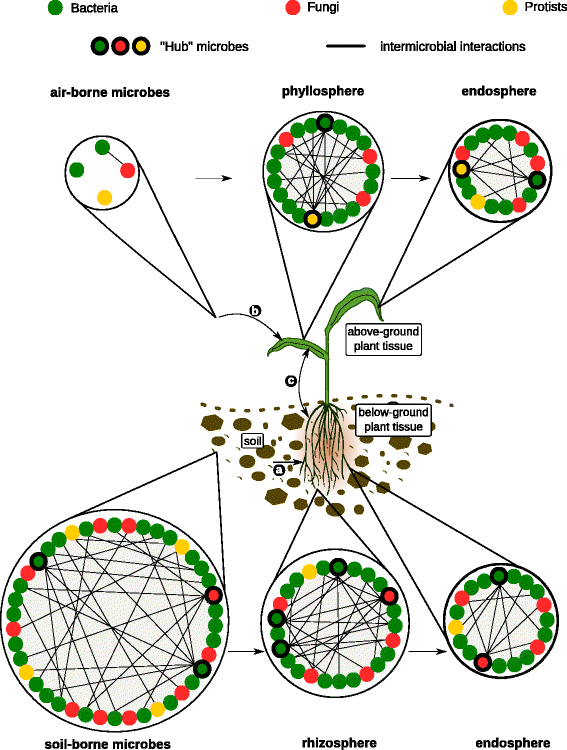
Since the colonization of land by ancestral plant lineages 450 million years ago, plants and their associated microbes have been interacting with each other, forming an assemblage of species that is often referred to as a “holobiont.” Selective pressure acting on holobiont components has likely shaped plant-associated microbial communities and selected for host-adapted microorganisms that impact plant fitness. However, the high microbial densities detected on plant tissues, together with the fast generation time of microbes and their more ancient origin compared to their host, suggest that microbe-microbe interactions are also important selective forces sculpting complex microbial assemblages in the phyllosphere, rhizosphere, and plant endosphere compartments. Reductionist approaches conducted under laboratory conditions have been critical to decipher the strategies used by specific microbes to cooperate and compete within or outside plant tissues. Nonetheless, our understanding of these microbial interactions in shaping more complex plant-associated microbial communities, along with their relevance for host health in a more natural context, remains sparse. Using examples obtained from reductionist and community-level approaches, we discuss the fundamental role of microbe-microbe interactions (prokaryotes and micro-eukaryotes) for microbial community structure and plant health. We provide a conceptual framework illustrating that interactions among microbiota members are critical for the establishment and the maintenance of host-microbial homeostasis.
|
|
Scooped by
Jean-Michel Ané
March 25, 2018 12:02 PM
|
The ability of fungi to form mycorrhizas with plants is one of the most remarkable and enduring adaptations to life on land. The occurrence of mycorrhizas is now well established in c. 85% of extant plants, yet the geological record of these associations is sparse. Fossils preserved under exceptional conditions provide tantalizing glimpses into the evolutionary history of mycorrhizas, showing the extent of their occurrence and aspects of their evolution in extinct plants. The fossil record has important roles to play in establishing a chronology of when key fungal associations evolved and in understanding their importance in ecosystems through time. Together with calibrated phylogenetic trees, these approaches extend our understanding of when and how groups evolved in the context of major environmental change on a global scale. Phylogenomics furthers this understanding into the evolution of different types of mycorrhizal associations, and genomic studies of both plants and fungi are shedding light on how the complex set of symbiotic traits evolved. Here we present a review of the main phases of the evolution of mycorrhizal interactions from palaeontological, phylogenetic and genomic perspectives, with the aim of highlighting the potential of fossil material and a geological perspective in a cross‐disciplinary approach.
|
|
Scooped by
Jean-Michel Ané
March 21, 2018 5:18 PM
|
We investigated whether the performance of cork oak under drought could be improved by colonization with the ectomycorrhizal fungus Pisolithus tinctorius. Results show that inoculation alone had a positive effect on plant height, shoot biomass, shoot basal diameter, and root growth. Under drought, root growth of mycorrhizal plants was significantly increased showing that inoculation was effective in increasing tolerance to drought. In accordance, mycorrhizal plants subjected to drought showed less symptoms of stress when compared to non-mycorrhizal plants, such as lower concentration of soluble sugars and starch, increased ability to maintain fatty acid content and composition, and increased unsaturation level of membrane lipids. After testing some of the mechanisms suggested to contribute to the enhanced tolerance of mycorrhizal plants to drought, we could not find any by which Pisolithus tinctorius could benefit cork oak, at least under the drought conditions imposed in our experiment. Inoculation did not increase photosynthesis under drought, suggesting no effect in sustaining stomatal opening at low soil water content. Similarly, plant water status was not affected by inoculation suggesting that P. tinctorius does not contribute to an increased plant water uptake during drought. Inoculation did increase nitrogen concentration in plants but it was independent of the water status. Furthermore, no significant mycorrhizal effect on drought-induced ROS production or osmotic adjustment was detected, suggesting that these factors are not important for the improved drought tolerance triggered by P. tinctorius.
|
|
Scooped by
Jean-Michel Ané
March 20, 2018 2:34 PM
|
Plants need to take up water and nutrients through their roots, while keeping out pathogens and toxins. To achieve this, the roots’ inner transport tissues are enclosed in a protective, impermeable barrier of endodermal cells, interspersed with ‘openings’ in the form of a specific type of endodermal cell called a passage cell, which is thought to serve as a cellular gatekeeper, controlling access to the root interior1–4. In a paper in Nature, Andersen et al.5 describe molecular mechanisms that control the formation of passage cells, and show how the numbers of such cells are regulated by nutrient availability. The findings offer insights into the formation of these key plant cells, and link this to the patterning processes that form the embryonic root, providing an intriguing demonstration of the continuity of developmental mechanisms.
|
|
Scooped by
Jean-Michel Ané
March 20, 2018 10:52 AM
|
The cyanobacteria belonging to the genus Nostoc comprise free-living strains but also facultative plant-symbionts. Symbiotic strains can enter into symbiosis with taxonomically diverse range of host plants. Little is known about genomic changes associated with evolutionary transition of Nostoc from free-living to plant symbiont. Here we compared the genomes derived from eleven symbiotic Nostoc strains isolated from different host plants and infer phylogenetic relationships between strains. Phylogenetic reconstructions of 89 Nostocales showed that symbiotic Nostoc strains with a broad host range, entering epiphytic and intracellular or extracellular endophytic interactions, form a monophyletic clade indicating a common evolutionary history. A polyphyletic origin was found for Nostoc strains which enter only extracellular symbioses, and inference of transfer events implied that this trait was likely acquired several times in the evolution of the Nostocales. Symbiotic Nostoc strains showed enriched functions in transport and metabolism of organic sulfur, chemotaxis and motility, as well as the uptake of phosphate, branched-chain amino acid, and ammonium. The genomes of the intracellular clade differ from that of other Nostoc strains, with a gain/enrichment of genes encoding proteins to generate L-methionine from sulfite and pathways for the degradation of the plant metabolites vanillin and vanillate, and of the macromolecule xylan present in plant cell-walls. These compounds could function as C sources for members of the intracellular clade. Molecular clock analysis indicated that the intracellular clade emerged ca. 600 million years ago, suggesting that intracellular Nostoc symbioses predate the origin of land plants and the emergence of their extant hosts.
|
|
Scooped by
Jean-Michel Ané
March 19, 2018 11:07 AM
|
Legume plants form symbiotic associations with either nitrogen-fixing bacteria or arbuscular mycorrhizal (AM) fungi, which are regulated by a set of common symbiotic signaling pathway genes. Central to the signaling pathway is the activation of the DMI3/IPD3 protein complex by Ca2+ oscillations, and the initiation of nodule organogenesis and mycorrhizal symbiosis. DMI3 is essential for rhizobial infection and nodule organogenesis; however, ipd3 mutants have been shown to be impaired only in infection thread formation but not in root nodule organogenesis in Medicago truncatula. We identified an IPD3-like (IPD3L) gene in the M. truncatula genome. A single ipd3l mutant exhibits a normal root nodule phenotype. The ipd3l/ipd3-2 double mutant is completely unable to initiate infection threads and nodule primordia. IPD3L can functionally replace IPD3 when expressed under the control of the IPD3 promoter, indicating functional redundancy between these two transcriptional regulators. We constructed a version of IPD3 that was phosphomimetic with respect to two conserved serine residues (IPD3-2D). This was sufficient to trigger root nodule organogenesis, but the increased multisite phosphorylation of IPD3 (IPD3-8D) led to low transcriptional activity, suggesting that the phosphorylation levels of IPD3 fine-tune its transcriptional activity in the root nodule symbiosis. Intriguingly, the phosphomimetic version of IPD3 triggers spontaneous root-like nodules on the roots of dmi3-1 and dmi2-1 (DMI2 is an LRR-containing receptor-like kinase gene which is required for Ca2+ spiking), but not on the roots of wild-type or ipd3l ipd3-2 plants. In addition, fully developed arbuscules were formed in the ipd3l ipd3-2 mutants but not the ccamk/dmi3-1 mutants. Collectively, our data indicate that, in addition to IPD3 and IPD3L, another new genetic component or other new phosphorylation sites of IPD3 function downstream of DMI3 in rhizobial and mycorrhizal symbioses.
|
|
Scooped by
Jean-Michel Ané
March 16, 2018 10:42 AM
|
The colonization of early terrestrial ecosystems by embryophytes (i.e. land plants) irreversibly changed global biogeochemical cycles (Berner & Kothavala, 2001; Berner et al., 2007; Song et al., 2012). However, when and how the process of plant terrestrialization took place is still intensely debated (Kenrick & Crane, 1997; Kenrick et al., 2012; Edwards et al., 2014; Edwards & Kenrick, 2015). Current knowledge suggests that the earliest land plants evolved from charophycean green algae (Karol et al., 2001) most probably during Early-Middle Ordovician times (Rubinstein et al., 2010; and references cited therein). They were represented by small nonvascular bryophyte-like organisms (Edwards & Wellman, 2001; Wellman et al., 2003; Kenrick et al., 2012). The oldest fossil evidence from dispersed spores of presumable bryophytic nature is known from a Middle Ordovician locality (c. 470 million years ago (Ma), Rubinstein et al., 2010; Fig. 1) from Argentina (Gondwana palaeocontinent). The dispersed spore fossil record also suggests that the first radiation of vascular plants probably occurred during Late Ordovician times (c. 450 Ma, Steemans et al., 2009). However, unequivocal macrofossils of vascular plants appear much later, during mid-Silurian (c. 430 Ma, Edwards et al., 1992). This macrofossil evidence comes from the fossil-genus Cooksonia, an early polysporangiophyte (i.e. a plant with bifurcating axes and more than one sporangium), which is considered the earliest vascular land plant (Edwards et al., 1992; Fig. 1). Further advances in knowledge about the origin and early dispersion of polysporangiophytes are needed for a better understanding of the initial plant diversification. Unfortunately, unravelling the initial steps of polysporangiophyte evolution is hindered by gaps in the fossil record of the earliest plants as well as by limitations of inference based on molecular clocks (Kenrick et al., 2012; Edwards & Kenrick, 2015).
|
|
Scooped by
Jean-Michel Ané
March 15, 2018 11:08 PM
|
|
|
Scooped by
Jean-Michel Ané
March 14, 2018 9:07 PM
|
Legumes are able to form a symbiotic relationship with nitrogen-fixing soil bacteria called rhizobia. The result of this symbiosis is to form nodules on the plant root, within which the bacteria can convert atmospheric nitrogen into ammonia that can be used by the plant. Establishment of a successful symbiosis requires the two symbiotic partners to be compatible with each other throughout the process of symbiotic development. However, incompatibility frequently occurs, such that a bacterial strain is unable to nodulate a particular host plant or forms nodules that are incapable of fixing nitrogen. Genetic and molecular mechanisms that regulate symbiotic specificity are diverse, involving a wide range of host and bacterial genes/signals with various modes of action. In this review, we will provide an update on our current knowledge of how the recognition specificity has evolved in the context of symbiosis signaling and plant immunity.
|