Your new post is loading...

|
Scooped by
Jean-Michel Ané
April 1, 2018 12:26 AM
|
Many land plant-like features evolved in freshwater algae.
The cell wall, alternation of division plane and polyplastidy were probably important for terrestrialization.
Phenylpropanoids are important protective substances that evolved by gene duplication and retention.
Many gametophytic regulatory pathways have been co-opted for the sporophyte.
Alternation of generations, embryogenesis and mutualistic fungal symbioses are hallmarks of land plants.
|
|
Scooped by
Jean-Michel Ané
March 31, 2018 11:39 PM
|
Calcium sensors are indispensable tools to study the role of Ca2+ and visualize Ca2+ dynamics during biological processes. Over the past years, the field of Ca2+ imaging has strongly expanded by the development of a wide palette of sensors and optimization of sample handling. Here, we provide guidelines for imaging of the Ca2+ sensor R-GECO1 in Arabidopsis thaliana roots which can be interpolated to other intensiometric Ca2+ sensors. Furthermore, we demonstrate a procedure for image analysis of the acquired time-lapse recordings.
|
|
Scooped by
Jean-Michel Ané
March 31, 2018 11:26 PM
|
A mechanistic understanding of community ecology requires tackling the nonadditive effects of multispecies interactions, a challenge that necessitates integration of ecological and molecular complexity– namely moving beyond pairwise ecological interaction studies and the ‘gene at a time’ approach to mechanism. Here, we investigate the consequences of multispecies mutualisms for the structure and function of genome‐wide differential coexpression networks for the first time, using the tractable and ecologically‐important interaction between legume Medicago truncatula, rhizobia, and mycorrhizal fungi. First, we found that genes whose expression is affected nonadditively by multiple mutualists are more highly connected in gene networks than expected by chance and had 94% greater network centrality than genes showing additive effects, suggesting that nonadditive genes may be key players in the widespread transcriptomic responses to multispecies symbioses. Second, multispecies mutualisms substantially changed coexpression network structure of 18 modules of host plant genes and 22 modules of the fungal symbionts’ genes, indicating that third‐party mutualists can cause significant rewiring of plant and fungal molecular networks. Third, we found that 60% of the coexpressed gene sets that explained variation in plant performance had coexpression structure that was altered by interactive effects of rhizobia and fungi. Finally, an ‘across‐symbiosis’ approach identified sets of plant and mycorrhizal genes whose coexpression structure was unique to the multiple mutualist context, and suggested coupled responses across the plant‐mycorrhizal interaction to rhizobial mutualists. Taken together, these results show multispecies mutualisms have substantial effects on the molecular interactions in host plants, microbes, and across symbiotic boundaries.
|
|
Scooped by
Jean-Michel Ané
March 31, 2018 11:08 PM
|
Arbuscular mycorrhizal (AM) fungi are important components of grassland ecosystems and are sensitive to enhanced atmospheric nitrogen (N) deposition. Enhanced N deposition has been widely reported to reduce species richness and alter species composition across different types of grasslands world‐wide. Despite extensive studies on effects of N deposition on AM fungal communities of grasslands, few studies have specifically focused on effects of N deposition on AM fungi associated with dominant species in grasslands.
We investigated long‐term (12‐year) effects of N addition (80 kg ha−1 year−1) on AM fungal community richness in roots and rhizosphere biomass of two dominant plant species (forb Artemisia frigida and grass Stipa krylovii) in temperate steppes of northern China.
We found that AM fungi associated with the two dominant plant species differed in their responses to N addition. Nitrogen addition led to a significant reduction in AM fungal richness colonized in roots, and biomass in the rhizosphere of A. frigida, while N addition had little impacts on AM fungi colonized in roots and rhizosphere of S. krylovii. Nitrogen addition significantly reduced AM fungal colonization in roots and AM fungal spore density in the rhizosphere soils of A. frigida. In contrast, N addition had no effect on AM fungal colonization in roots and spore density in the rhizosphere of S. krylovii. Nitrogen addition markedly suppressed photosynthetic rates in A. frigida due to excessive foliar accumulation of manganese. The N‐induced reduction in photosynthetic rates reduced allocation of C into roots in A. frigida, leading to a lower root/shoot ratio, and suppression of AM fungal community associated with A. frigida. The inhibition of AM fungi would render A. frigida less competitive in terms of acquisition of mineral nutrients in soils, thus contributing to its loss in the steppe community under conditions of elevated N deposition.
These findings provide a mechanistic explanation for N‐evoked differential responses of AM fungal communities associated with A. frigida and S. krylovii by linking soil properties and host plants to AM fungal communities.
|
|
Scooped by
Jean-Michel Ané
March 31, 2018 11:00 PM
|
domain-organized proteins located in the plasma membrane and involved in cellular responses in plants. The dynamic assembly of the membrane nanodomains represents an essential tool of the versatile membrane barriers to control and modulate cellular functions. Nevertheless, the assembly mechanisms and protein organization strategies of nanodomains are poorly understood and many structural aspects are difficult to visualize. Using an ensemble of biophysical approaches, including solid-state nuclear magnetic resonance, cryo-electron microscopy and in vivo confocal imaging, we provide first insights on the role and the structural mechanisms of REMORIN trimerization. Our results suggest that the formation of REMORIN coiled-coil trimers is essential for membrane recruitment and promotes REMORIN assembly in vitro into long filaments by trimer-trimer interactions that might participate in nanoclustering into membrane domains in vivo.
|
|
Scooped by
Jean-Michel Ané
March 31, 2018 10:58 PM
|
Arbuscular mycorrhizal fungi (AMF) are widespread, important plant symbionts. They absorb and translocate mineral nutrients from the soil to host plants through an extensive extraradical mycelium, consisting of indefinitely large networks of nonseptate, multinucleated hyphae which may be interconnected by hyphal fusions (anastomoses). This work investigated whether different lineages of the same isolate may lose the ability to establish successful anastomoses, becoming vegetatively incompatible, when grown separately. The occurrence of hyphal incompatibility among five lineages of Funneliformis mosseae, originated from the same ancestor isolate and grown in vivo for more than 20 years in different European locations, was assessed by systematic detection of anastomosis frequency and cytological studies. Anastomosis frequencies ranged from 60 to 80% within the same lineage and from 17 to 44% among different lineages. The consistent detection of protoplasm continuity and nuclei in perfect fusions showed active protoplasm flow both within and between lineages. In pairings between different lineages, post-fusion incompatible reactions occurred in 6–48% of hyphal contacts and pre-fusion incompatibility in 2–17%. Molecular fingerprinting profiles showed genetic divergence among lineages, with overall Jaccard similarity indices ranging from 0.85 to 0.95. Here, phenotypic divergence among the five F. mosseae lineages was demonstrated by the reduction of their ability to form anastomosis and the detection of high levels of vegetative incompatibility. Our data suggest that potential genetic divergence may occur in AMF over only 20 years and represent the basis for detailed studies on the relationship between genes regulating anastomosis formation and hyphal compatibility in AMF.
|
|
Scooped by
Jean-Michel Ané
March 31, 2018 10:55 PM
|
The process of biological nitrogen fixation which is carried out by a number of prokaryotic organisms via the nitrogenase enzyme complex remains rate-limiting in many agricultural areas. There has been much discussion about improving biological nitrogen fixation, especially the Rhizobium-legume symbiosis which is the best known. However, many other symbiotic associations occur, and these have been recently reviewed. 1 , 2 Symbiosis between woody, dicotyledonous plants and Frankia, a filamentous prokaryote which is classified in the order Actinomycetales, 3 is particularly interesting, and several reviews have been published recently that describe in detail various aspects of the Frankia-actinorhizal plant symbiosis. These include the biology of Frankia, 4 the efficiency of the nitrogen-fixing activity of the actinorhizal association, 5 the ecology, 6 host plant-endophyte specificity, and the genetics of Frankia. 7 The progress in Frankia-actinorhizal plant symbiosis has been presented in the proceedings of symposia on this subject during the last decade
|
|
Scooped by
Jean-Michel Ané
March 30, 2018 11:04 PM
|
Phylogenetically diverse bacteria respond to various stress conditions by mounting a general stress response (GSR) resulting in the induction of protection or damage repair functions. In α-proteobacteria, the GSR is induced by a regulatory cascade consisting of the extracytoplasmic function (ECF) σ factor σEcfG, its anti-σ factor NepR, and the anti-anti-σ factor PhyR. We have reported previously that σEcfG and PhyR of Bradyrhizobium diazoefficiens (formerly named Bradyrhizobium japonicum), the nitrogen-fixing root nodule symbiont of soybean and related legumes, are required for efficient symbiosis; however, the precise role of the GSR remained undefined. Here, we analyze the symbiotic defects of a B. diazoefficiens mutant lacking σEcfG by comparing distinct infection stages of enzymatically or fluorescently tagged wild-type and mutant bacteria. Although root colonization and root hair curling were indistinguishable, the mutant was not competitive, and showed delayed development of emerging nodules and only a few infection threads. Consequently, many of the mutant-induced nodules were aborted, empty, or partially colonized. Congruent with these results, we found that σEcfG was active in bacteria present in root-hair-entrapped microcolonies and infection threads but not in root-associated bacteria and nitrogen-fixing bacteroids. We conclude that GSR-controlled functions are crucial for synchronization of infection thread formation, colonization, and nodule development.
|
|
Scooped by
Jean-Michel Ané
March 30, 2018 10:57 PM
|
Arbuscular mycorrhizal and ectomycorrhizal symbioses are among the most important drivers of terrestrial ecosystem dynamics. Historically, the two types of symbioses have been investigated separately because arbuscular mycorrhizal and ectomycorrhizal plant species are considered to host discrete sets of fungal symbionts (i.e., arbuscular mycorrhizal and ectomycorrhizal fungi, respectively). Nonetheless, recent studies based on high-throughput DNA sequencing technologies have suggested that diverse non-mycorrhizal fungi (e.g., endophytic fungi) with broad host ranges play roles in relationships between arbuscular mycorrhizal and ectomycorrhizal plant species in forest ecosystems. By analyzing an Illumina sequencing dataset of root-associated fungi in a temperate forest in Japan, we statistically examined whether co-occurring arbuscular mycorrhizal (Chamaecyparis obtusa) and ectomycorrhizal (Pinus densiflora) plant species could share non-mycorrhizal fungal communities. Among the 919 fungal operational taxonomic units (OTUs) detected, OTUs in various taxonomic lineages were statistically designated as “generalists,” which associated commonly with both coniferous species. The list of the generalists included fungi in the genera Meliniomyces, Oidiodendron, Cladophialophora, Rhizodermea, Penicillium, and Mortierella. Meanwhile, our statistical analysis also detected fungi preferentially associated with Chamaecyparis (e.g., Pezicula) or Pinus (e.g., Neolecta). Overall, this study provides a basis for future studies on how arbuscular mycorrhizal and ectomycorrhizal plant species interactively drive community- or ecosystem-scale processes. The physiological functions of the fungi highlighted in our host-preference analysis deserve intensive investigations for understanding their roles in plant endosphere and rhizosphere.
|
|
Scooped by
Jean-Michel Ané
March 30, 2018 10:53 PM
|
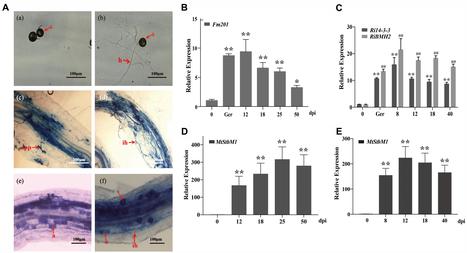
Arbuscular mycorrhizal (AM) fungi are soil-borne fungi belonging to the ancient phylum Glomeromycota and are important symbionts of the arbuscular mycorrhiza, enhancing plant nutrient acquisition and resistance to various abiotic stresses. In contrast to their significant physiological implications, the molecular basis involved is poorly understood, largely due to their obligate biotrophism and complicated genetics. Here, we identify and characterize three genes termed Fm201, Ri14-3-3 and RiBMH2 that encode 14-3-3-like proteins in the AM fungi Funneliformis mosseae and Rhizophagus irregularis, respectively. The transcriptional levels of Fm201, Ri14-3-3 and RiBMH2 are strongly induced in the pre-symbiotic and symbiotic phases, including germinating spores, intraradical hyphae- and arbuscules-enriched roots. To functionally characterize the Fm201, Ri14-3-3 and RiBMH2 genes, we took advantage of a yeast heterologous system owing to the lack of AM fungal transformation systems. Our data suggest that all three genes can restore the lethal Saccharomyces cerevisiae bmh1 bmh2 double mutant on galactose-containing media. Importantly, yeast one-hybrid analysis suggests that the transcription factor RiMsn2 is able to recognize the STRE (CCCCT/AGGGG) element present in the promoter region of Fm201 gene. More importantly, Host-Induced Gene Silencing of both Ri14-3-3 and RiBMH2 in Rhizophagus irregularis impairs the arbuscule formation in AM symbiosis and inhibits the expression of symbiotic PT4 and MST2 genes from plant and fungal partners, respectively. We further subjected the AM fungus-Medicago truncatula association system to drought or salinity stress. Accordingly, the expression profiles in both mycorrhizal roots and extraradical hyphae reveal that these three 14-3-3-like genes are involved in response to drought or salinity stress. Collectively, our results provide new insights into molecular functions of the AM fungal 14-3-3 proteins in abiotic stress responses and arbuscule formation during AM symbiosis.
|
|
Scooped by
Jean-Michel Ané
March 30, 2018 10:43 PM
|
Like all higher organisms, plants have evolved in the context of a microbial world, shaping both their evolution and their contemporary ecology. Interactions between plant roots and soil microorganisms are critical for plant fitness in natural environments. Given this co-evolution and the pivotal importance of plant–microbial interactions, it has been hypothesized, and a growing body of literature suggests, that plants may regulate the composition of their rhizosphere to promote the growth of microorganisms that improve plant fitness in a given ecosystem. Here, using a combination of comparative genomics and exometabolomics, we show that pre-programmed developmental processes in plants (Avena barbata) result in consistent patterns in the chemical composition of root exudates. This chemical succession in the rhizosphere interacts with microbial metabolite substrate preferences that are predictable from genome sequences. Specifically, we observed a preference by rhizosphere bacteria for consumption of aromatic organic acids exuded by plants (nicotinic, shikimic, salicylic, cinnamic and indole-3-acetic). The combination of these plant exudation traits and microbial substrate uptake traits interact to yield the patterns of microbial community assembly observed in the rhizosphere of an annual grass. This discovery provides a mechanistic underpinning for the process of rhizosphere microbial community assembly and provides an attractive direction for the manipulation of the rhizosphere microbiome for beneficial outcomes.
|
|
Scooped by
Jean-Michel Ané
March 30, 2018 10:30 PM
|
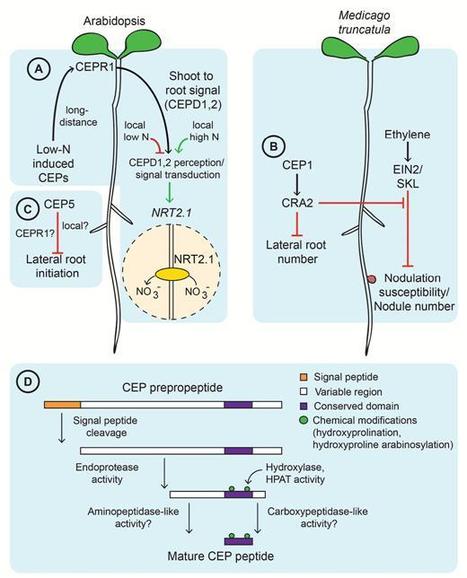
Secreted peptide hormones play pivotal roles in plant growth and development. So far, CEPs (C-TERMINALLY ENCODED PEPTIDEs) have been shown to act through CEP receptors (CEPRs) to control nitrogen (N)-demand signalling, nodulation, and lateral root development. Secreted CEP peptides can enter the xylem stream to act as long-distance signals, but evidence also exists for CEPs acting in local circuits. Recently, CEP peptide species varying in sequence, length, and post-translational modifications have been identified. A more comprehensive understanding of CEP biology requires insight into the in planta function of CEP genes, CEP peptide biogenesis, the components of CEP signalling cascades and, finally, how CEP peptide length, amino-acid composition, and post-translational modifications affect biological activity. In this review, we highlight recent studies that have advanced our understanding in these key areas and discuss some future directions.
|
|
Scooped by
Jean-Michel Ané
March 30, 2018 10:24 PM
|
Aims
The mechanisms by which rhizosphere bacteria increase the availability of mineral P precipitates for plant use are understudied. However, Paraburkholderia bryophila Ha185 is known to solubilize inorganic phosphate in vitro via a novel process. Therefore, this study aimed to demonstrate P solubilization by Ha185 in association with roots of perennial ryegrass (Lolium perenne L.).
Methods
We developed a gnotobiotic plant assay to assess P solubilization by Ha185 on ryegrass roots under various nutrient conditions. A green fluorescent protein (GFP)-tagged derivative of Ha185 was used in conjunction with fluorescent microscopy and confocal microscopy to visualize colonization of ryegrass roots.
Results
Ha185 solubilized mineral P (hydroxyapatite) in association with ryegrass roots and increased ryegrass growth by 20% under P-limited conditions. The GFP-tagged Ha185 strain colonized the rhizoplane and penetrated the primary root of ryegrass, possibly through “crack entry” at the point of lateral root emergence, but also by entering the epidermal cells via root hairs.
Conclusions
Ha185 supported ryegrass growth under P-limited conditions, indicating this strain may improve availability of soil P for uptake by ryegrass. Tools developed in this study have broad application in the study of rhizobacteria-plant interactions.
|
|
|
Scooped by
Jean-Michel Ané
March 31, 2018 11:46 PM
|
Both strigolactones (SLs) and abscisic acid (ABA) biosynthetically originate from carotenoids. Considering their common origin, the interaction of these two hormones at the biosynthetic and/or regulatory level may be anticipated. Here we show that, in rice, drought simultaneously induces SL production in the root, and ABA production and the expression of SL biosynthetic genes in the shoot. Under control conditions, the ABA concentration was higher in shoots of the SL biosynthetic rice mutants dwarf10 (d10) and d17 than in wild-type plants, while a similar trend was observed for the SL perception mutant d3. These differences were enhanced under drought. However, drought did not result in an increase in leaf ABA content in the rice mutant line d27, carrying a mutation in the gene encoding the first committed enzyme in SL biosynthesis, to the same extent as in the other SL mutants and the wild type. Accordingly, d10, d17, and d3 lines were more drought tolerant than wild-type plants, whereas d27 displayed decreased tolerance. Finally, overexpression of OsD27 in rice resulted in increased levels of ABA when compared with wild-type plants. We conclude that the SL and ABA pathways are connected with each other through D27, which plays a crucial role in determining ABA and SL content in rice.
|
|
Scooped by
Jean-Michel Ané
March 31, 2018 11:36 PM
|
The term symbiosis was first used in biology to describe the ‘living together’ of fungi and algae in lichens. For much of the 20th century, the fungal partner was assumed to be invested with the ability to produce the lichen body plan in presence of a photosynthesizing partner. However, studies of fungal evolution have uncovered discordance between lichen symbiotic outcomes and genome evolution of the fungus. At the same time, evidence has emerged that the structurally important lichen cortex contains lichen-specific, single-celled microbes, suggesting it may function like a biofilm. Together, these observations suggest we may not have a complete overview of symbiotic interactions in lichens. Understanding phenotype development and evolution in lichens will require greater insight into fungal–fungal and fungal–bacterial interplay and the physical properties of the cortex.
|
|
Scooped by
Jean-Michel Ané
March 31, 2018 11:20 PM
|
An ongoing signal exchange fine-tunes the symbiotic interaction between rhizobia and legumes, ensuring the establishment and maintenance of mutualism. In a recently identified regulatory loop, endosymbiotic S. meliloti exert a negative feedback on root infection in response to unknown plant cues. Upon signal perception, three bacterial Adenylate Cyclases (ACs) of the inner membrane, CyaD1, CyaD2 and CyaK, synthesize the second messenger cAMP that, together with the cAMP-dependent Clr transcriptional activator, activates the expression of genes involved in root infection control. The pathway that links signal perception at the surface of the cell to cytoplasmic cAMP production by ACs was so far unknown.
Here we first show that CyaK is the cognate AC for the plant signal, called signal 1, previously evidenced in mature nodule and shoot extracts. Second, we show that inactivation of the gene immediately upstream of cyaK, nsrA (smb20775) that encodes a β-barrel protein of the outer membrane, also abolished signal 1 perception ex planta whereas nsrA overexpression increased signal 1 responsiveness. Inactivation of the nsrA gene abolished all Clr-dependent gene expression in nodules and led to a marked hyperinfection phenotype on plants, similar to that of a triple cyaD1cyaD2cyaK mutant. We suggest that the NsrA protein acts as the (co)receptor for two signal molecules, signal 1 and a hypothetical signal 1’ , in mature and young nodules that cooperate in controlling secondary infection in the S. meliloti/Medicago symbiosis. The predicted topology and domain composition of the NsrA protein hints at a mechanism of transmembrane signaling.
Importance: Symbiotic interactions, especially mutualistic ones, rely on a continuous signal exchange between the symbionts. Here we report advances on a recently discovered signal transduction pathway that fine-tunes the symbiotic interaction between S. meliloti and its Medicago host plant. We have identified an outer membrane protein of S. meliloti, called NsrA, that transduces Medicago plant signals to Adenylate cyclases in the Inner membrane thereby triggering a cAMP-signaling cascade controlling infection.
Besides their relevance for the rhizobium legume symbiosis, these findings shed light on the mechanisms of signal perception and transduction by adenylate cyclases and of transmembrane signaling in bacteria.
|
|
Scooped by
Jean-Michel Ané
March 31, 2018 11:03 PM
|
We investigate crop rotation with legumes from economic and environmental perspectives by asking how effective they are at providing profits and reducing nutrient runoff and greenhouse gas emissions compared with monoculture cultivation. We study this effectiveness in three alternative policy regimes: the free market optimum, the Finnish agri-environmental scheme, and socially optimal cultivation, and also design policy instruments to achieve the socially optimal outcomes in land use and fertilization. We first develop an analytical model to describe crop rotation and the role of legumes, and examine its implications for water and climate policies. Drawing on Finnish agricultural data, we then use numerical simulations and show that shifting from monoculture cultivation to crop rotation with legumes provides economically and environmentally better outcomes. Crop rotation with legumes also reduces the variability in profits caused by stochastic weather. The optimal instruments implementing the social optimum depend on nutrient and climate damage (nitrogen tax), as well as carbon sequestration and nutrient reduction benefits (buffer strip subsidy).
|
|
Scooped by
Jean-Michel Ané
March 31, 2018 10:58 PM
|
A fundamental challenge in the field of symbiotic nitrogen fixation is to determine the genetic and biochemical basis of the recognition of a compatible host by bacteria. This is especially true since the often unstated aim of most research in this area is to be able to manipulate the host range of these organisms to advantage. The association between Bradyrhizobium or Rhizobium strains and tropical nonlegume woody dicot trees from the genus Parasponia has provided a system in which the genetics of symbiotic nitrogen fixation can be easily studied outside the Leguminosae. Although there are at least 15 different genera of nonlegume plants that are capable of symbiotic nitrogen fixation, the microbial symbiont in all of these associations except Parasponia (viz., the actinomycete Frankia; see chapter 4) has proved difficult to manipulate. In contrast, the ability to manipulate genetically the rhizobia has advanced substantially in the last 10 years.
|
|
Scooped by
Jean-Michel Ané
March 31, 2018 10:55 PM
|
Knowledge of rhizobium diversity is helping to enable the utilization of rhizobial resources. To analyze the phenotypic and genetic diversity and the symbiotic divergence of rhizobia of Medicago sativa, 30 endophytic and non-endophytic isolates were collected from different parts of five alfalfa varieties in three geographic locations in Gansu, China. Numerical analyses based on 72 phenotypic properties and restriction fragment length polymorphism (RFLP) fingerprinting indicated the abundant phenotypic and genetic diversity of the tested strains. According to the phylogenetic analysis of 16S RNA, atpD, glnII, and recA gene sequences, Rhizobium and Ensifer were further classified into four different genotypes: Rhizobium radiobacter, Rhizobium sp., Rhizobium rosettiformans, and Ensifer meliloti. The differences in architecture and functioning of the rhizobial genomes and, to a lesser extent, environment diversification helped explain the diversity of tested strains. The tested strains exhibited similar symbiotic feature when inoculated onto M. sativa cvs. Gannong Nos. 3 and 9 and Qingshui plants for the clustering feature of their parameter values. An obvious symbiotic divergence of rhizobial strains was observed in M. sativa cvs. Longzhong and WL168HQ plants because of the scattered parameter values. Their symbiotic divergence differed according to alfalfa varieties, which indicated that the sensitivity of different alfalfa varieties to rhizobial strains may differ. Most of the tested strains exhibited plant growth-promoting traits including phosphate solubilization and production of indole-3-acetic acid (IAA) when colonizing plant tissues and soil.
|
|
Scooped by
Jean-Michel Ané
March 31, 2018 10:52 PM
|
The evolution of land plants from algae is an age-old question in biology. The entire terrestrial flora stems from a grade of algae, the streptophyte algae. Recent phylogenomic studies have pinpointed the Zygnematophyceae as the modern-day streptophyte algal lineage that is most closely related to the algal land plant ancestor. Here, we provide insight into the biology of this ancestor that might have aided in its conquest of land. Specifically, we uncover the existence of stress-signaling pathways and the potential for intimate plastid-nucleus communication. Plastids act as environmental sensors in land plants; our data suggest that this feature was present in a common ancestor they shared with streptophyte algae.
|
|
Scooped by
Jean-Michel Ané
March 30, 2018 11:01 PM
|
The purpose of this work was to study further two Bradyrhizobium japonicum strains with high nitrogen-fixing capacity that were identified within a collection of approximately 200 isolates from the soils of Argentina. Nodulation and nitrogen-fixing capacity and the level of expression of regulatory as well as structural genes of nitrogen fixation and the 1-aminocyclopropane-1-carboxylate (ACC) deaminase gene of the isolates were compared with that of E109-inoculated plants. Both isolates of B. japonicum, 163 and 366, were highly efficient to fix nitrogen compared to commercial strain E109. Isolate 366 developed a higher number and larger biomass of nodules and because of this fixed more nitrogen. Isolate 163 developed the same number and nodule biomass than E109. However, nodules developed by isolate 163 had red interiors for a longer period, had a higher leghemoglobin content, and presented high levels of expression of acdS gene, that codes for an ACC deaminase. In conclusion, naturalized rhizobia of the soils of Argentina hold a diverse population that might be the source of highly active nitrogen-fixing rhizobia, a process that appears to be based on different strategies.
|
|
Scooped by
Jean-Michel Ané
March 30, 2018 10:57 PM
|
Abstract: The legume tribe Genisteae comprises 618, predominantly temperate species, showing an amphi-Atlantic distribution that was caused by several long-distance dispersal events. Seven out of the 16 authenticated rhizobial genera can nodulate particular Genisteae species. Bradyrhizobium predominates among rhizobia nodulating Genisteae legumes. Bradyrhizobium strains that infect Genisteae species belong to both the Bradyrhizobium japonicum and Bradyrhizobium elkanii superclades. In symbiotic gene phylogenies, Genisteae bradyrhizobia are scattered among several distinct clades, comprising strains that originate from phylogenetically distant legumes. This indicates that the capacity for nodulation of Genisteae spp. has evolved independently in various symbiotic gene clades, and that it has not been a long-multi-step process. The exception is Bradyrhizobium Clade II, which unlike other clades comprises strains that are specialized in nodulation of Genisteae, but also Loteae spp. Presumably, Clade II represents an example of long-lasting co-evolution of bradyrhizobial symbionts with their legume hosts.
|
|
Scooped by
Jean-Michel Ané
March 30, 2018 10:47 PM
|
Rates of biological nitrogen fixation (BNF) via crop legumes remain low by comparison with amounts of nitrogen (N) added in fertilizer produced using industrial nitrogen fixation (INF). This remains a key sustainability issue on a global scale.
Lumping BNF and INF together as sources of N pollutants ignores the strong end-product inhibition that regulates BNF, but not INF. Mitigating the pollutant costs of overuse of INF is presently impractical.
The intrinsic water use efficiency (WUE) of crop legumes is generally greater than that of non-legume crops, but we make poor use of this knowledge in agriculture. Breeding programs for legumes, with well-defined goals and trait metrics, could greatly enhance the WUE of current global agriculture.
Biological nitrogen fixation (BNF) by crop legumes reduces demand for industrial nitrogen fixation (INF). Nonetheless, rates of BNF in agriculture remain low, with strong negative feedback to BNF from reactive soil nitrogen (N) and drought. We show that breeding for yield has resulted in strong relationships between photosynthesis and leaf N in non-leguminous crops, whereas grain legumes show strong relations between leaf N and water use efficiency (WUE). We contrast these understandings with other studies that draw attention to the water costs of grain legume crops, and their potential for polluting the biosphere with N. We propose that breeding grain legumes for reduced stomatal conductance can increase WUE without compromising production or BNF. Legume crops remain a better bet than relying on INF.
|
|
Scooped by
Jean-Michel Ané
March 30, 2018 10:40 PM
|
Characterization of arbuscular mycorrhizal (AM) fungal communities increasingly relies on high throughput sequencing (HTS) datasets, but whether sequence data accurately depict AM fungal communities is unknown. We sequenced mock communities of 16 AM fungal morphospecies from six families that varied in relative abundance. To assess sequence variation within fungal individuals, we sequenced single spores of Rhizophagus irregularis. We observed that the relative abundance and taxonomic identity of operational taxonomic units (OTUs) within AM fungal families closely matched expected values, but this decreased at lower taxonomic levels. Multiple OTUs were observed within single spores, suggesting that using OTUs to estimate species richness may inflate richness estimates and reflect sequence variation within individuals. While HTS may introduce some bias in relative abundance estimates and taxonomic identification, we observed high consistency among replicate samples from the same mock community, indicating that these data can inform ecological patterns.
|
|
Scooped by
Jean-Michel Ané
March 30, 2018 10:28 PM
|
Arbuscular mycorrhizal fungi (AMF) association increases plant stress tolerance. This study aimed to determine the mitigation effect of AMF on the growth and metabolic changes of cucumbers under adverse impact of salt stress. Salinity reduced the water content and synthesis of pigments. However, AMF inoculation ameliorated negative effects by enhancing the biomass, synthesis of pigments, activity of antioxidant enzymes, including superoxide dismutase, catalase, ascorbate peroxidase and glutathione reductase, and the content of ascorbic acid, which might be the result of lower level lipid peroxidation and electrolyte leakage. An accumulation of phenols and proline in AMF-inoculated plants also mediated the elimination of superoxide radicals. In addition, jasmonic acid, salicylic acid and several important mineral elements (K, Ca, Mg, Zn, Fe, Mn and Cu) were enhanced with significant reductions in the uptake of deleterious ions like Na+. These results suggested that AMF can protect cucumber growth from salt stress.
|