Your new post is loading...

|
Scooped by
Jean-Michel Ané
April 26, 2018 9:54 AM
|
MtCLE12 and MtCLE13 encode CLAVATA3/EMBRYO‐SURROUNDING REGION RELATED (CLE) peptides which regulate autoregulation of nodulation (AON) in Medicago through the shoot receptor, SUNN (SUPER NUMERIC NODULES). Genetics suggests RDN1 (ROOT‐DETERMINED NODULATION 1) arabinosylates MtCLE12 to enable SUNN perception. The functional structures of MtCLE12 and MtCLE13 peptides, however, remain elusive.
We combined genetic and chemical synthesis approaches to determine if glyco‐modifications of three nodule‐expressed CLE peptides are essential for AON. We also examined how root and shoot applied AON‐CLEs inhibit nodulation.
MtCLE12, MtCLE13 and MtCLE42 peptides were synthesized with hydroxylation, mono‐arabinosylation or tri‐arabinosylation (TaP) at proline 7. Only MtCLE12‐TaP and MtCLE13‐TaP peptides induced AON in wild‐type (WT) and rdn1‐1, but not in sunn‐4. The application of MtCLE13‐TaP to cotyledons 1 d before rhizobial inoculation completely inhibited both rhizobial infection and nodulation. By contrast, MtCLE12‐TaP induced significant AON without abolishing rhizobial infection.
The results indicate that key CLE domain amino acids and TaP modifications to MtCLE12 and MtCLE13 are essential for SUNN‐dependent AON. We also show evidence that RDN1 does not tri‐arabinosylate MtCLE13. Finally, MtCLE13‐TaP can induce a strong AON response in shoots that inhibits the entire symbiotic processes in roots. We present a new model for AON in Medicago.
|
|
Rescooped by
Jean-Michel Ané
from Plant and Seed Biology
April 25, 2018 9:53 AM
|
High throughput RNA sequencing (RNA‐seq) has recently become the method of choice to define and analyse transcriptomes. For the model moss Physcomitrella patens, although this method has been used to help the analysis of specific perturbations, no overall reference dataset has been established yet. In the framework of its Gene Atlas project, the Joint Genome Institute selected P. patens as a flagship genome, opening the way to generate the first comprehensive transcriptome dataset for this moss. The first round of sequencing described here is composed of 99 independent libraries spanning 34 different developmental stages and conditions. Upon dataset quality control and processing through read mapping, 28,509 of the 34,361 v3.3 gene models (83%) were detected to be expressed across the samples. Differentially expressed genes (DEGs) were calculated across the dataset to permit perturbation comparisons between conditions. The analysis of the three most distinct and abundant P. patens growth stages, protonema, gametophore and sporophyte, allowed us to define both general transcriptional patterns and stage‐specific transcripts. As an example of variation of physico‐chemical growth conditions, we detail here the impact of ammonium supplementation under standard growth conditions on the protonemal transcriptome. Finally, the cooperative nature of this project allowed us to analyse inter‐laboratory variation, as 13 different laboratories around the world provided samples. We compare the differences between single‐laboratory experiment replication with the comparison of the same experiment between different laboratories.
Via Loïc Lepiniec
|
|
Scooped by
Jean-Michel Ané
April 19, 2018 11:54 AM
|
Arbuscular mycorrhizal (AM) fungi can improve iron (Fe) acquisition of their host plants. Here, we report a characterization of two components of the high‐affinity reductive Fe uptake system of Rhizophagus irregularis, the ferric reductase (RiFRE1) and the high affinity Fe permeases (RiFTR1‐2). In the extraradical mycelia (ERM), Fe deficiency induced activation of a plasma membrane‐localized ferric reductase, an enzyme that reduces Fe(III) sources to the more soluble Fe(II). Yeast mutant complementation assays showed that RiFRE1 encodes a functional ferric reductase and RiFTR1 an iron permease. In the heterologous system, RiFTR1 was expressed in the plasma membrane while RiFTR2 was expressed in the endomembranes. In the ERM, the highest expression levels of RiFTR1 were found in mycelia grown in media with 0.045 mM Fe, while RiFTR2 was up‐regulated under Fe‐deficient conditions. RiFTR2 expression also increased in the intraradical mycelia (IRM) of maize plants grown without Fe. These data indicate that the Fe permease RiFTR1 plays a key role in Fe acquisition and that RiFTR2 is involved in Fe homeostasis under Fe‐limiting conditions. RiFTR1 was highly expressed in the (IRM), which suggests that maintenance of Fe homeostasis in the IRM might be essential for a successful symbiosis. This article is protected by copyright. All rights reserved.
|
|
Scooped by
Jean-Michel Ané
April 19, 2018 11:46 AM
|
The collective challenges to global food security posed by climate change, resource depletion, and land degradation necessitate the development of sustainable innovations that provide a growing world population with food, fiber and fuel. While biofuels from purpose‐grown crops offer a renewable alternative to fossil fuels, competition with food crops for land presents a difficult choice between feeding the world, and preserving its environment through sustainable fuel production. The need for this trade‐off could be largely eliminated by growing biofuel crops on marginal lands, which are unsuitable for food production. Furthermore, a growing understanding of plant‐associated microbial communities; phytomicrobiomes, could increase biomass production on marginal lands. The important functions of the phytomicrobiome in maintaining plant health and resilience are currently beginning to be characterized. Interactions with microbial communities and specific strains of microbes can help plants cope with stressful conditions associated with marginal lands, and a better understanding of these interactions has great potential to sustainably increase biofuel production without competing for quality agricultural land. Here we consider the role of the phytomicrobiome in supporting the production purpose‐grown biofuel crops on marginal lands.
|
|
Scooped by
Jean-Michel Ané
April 16, 2018 10:46 AM
|
A Gram‐positive, fast‐growing, endophytic bacterium was isolated from root nodules of Medicago polymorpha and identified as Bacillus megaterium. The isolate, named NMp082, co‐inhabited nodules with the symbiotic rhizobium Ensifer medicae. B. megaterium NMp082 contained nifH and nodD genes that were 100% identical to those of Ensifer meliloti, an unusual event that suggested previous lateral gene transfer from a different rhizobial species. Despite the presence of nodulation and nitrogen fixation genes, the endophyte was not able to form effective nodules; however, it induced nodule‐like unorganised structures in alfalfa roots. Axenic inoculation promoted plant growth in M. polymorpha, Medicago lupulina, Medicago truncatula and Medicago sativa, and co‐inoculation with E. medicae enhanced growth and nodulation of Medicago spp. plants compared with inoculation with either bacterium alone. B. megaterium NMp082 also induced tolerance to salt stress in alfalfa and Arabidopsis plants. The ability to produce indole acetic acid (IAA) and the 1‐aminocyclopropane‐1‐carboxylate (ACC) deaminase activity displayed by the endophyte in vitro might explain the observed plant growth promotion and salt stress alleviation. The isolate was also highly tolerant to salt stress, water deficit and to the presence of different heavy metals. The newly characterised endophytic bacterium possessed specific characteristics that point at potential applications to sustain plant growth and nodulation under abiotic stress.
|
|
Scooped by
Jean-Michel Ané
April 14, 2018 7:27 PM
|
Endogonales is a lineage of early diverging fungi within Mucoromycota. Many species in this order produce small sporophores (“sporocarps”) containing a large number of zygospores, and many species form symbioses with plants. However, due to limited collections, subtle morphological differentiation, difficulties in growing these organisms in vitro, and idiosyncrasies in their rDNA that make PCR amplification difficult, the systematics and character evolution of these fungi have been challenging to resolve. To overcome these challenges we generated a multigene phylogeny of Endogonales using sporophores collected over the past three decades from four continents. Our results show that Endogonales harbour significant undescribed diversity and form two deeply divergent and well-supported phylogenetic clades, which we delimit as the families Endogonaceae and Densosporaceae fam. nov. The family Densosporaceae consists of the genus Densospora, Sphaerocreas pubescens, and many diverse lineages known only from environmental DNA sequences of plant-endosymbiotic fungi. Within Endogonaceae there are two clades. One corresponds to Endogone and includes the type species, E. pisiformis. Species of Endogone are characterized by above- and below-ground sporophores, a hollow and infolded sporophore form, a loose zygosporangial hyphal mantle, homogeneous gametangia, and an enigmatic trophic mode with no evidence of ectomycorrhizal association for most species. For the other clade we introduce a new generic name, Jimgerdemannia gen. nov. Members of that genus (J. flammicorona and J. lactiflua species complexes, and an undescribed species) are characterized by hypogeous sporophores with a solid gleba, a well-developed zygosporangial hyphal mantle, heterogeneous gametangia, and an ectomycorrhizal trophic mode. Future studies on Densosporaceae and Endogonaceae will be important for understanding fungal innovations including evolution of macroscopic sporophores and symbioses with plants.
|
|
Scooped by
Jean-Michel Ané
April 14, 2018 7:23 PM
|
Sinorhizobium meliloti enters into a beneficial symbiotic interaction with species of Medicago legumes. Bacterial exopolysaccharides play critical signaling roles in infection thread initiation and growth during the early stages of root nodule formation. After endocytosis of S. meliloti by plant cells in the developing nodule, plant-derived nodule-specific cysteine-rich (NCR) peptides mediate terminal differentiation of the bacteria into nitrogen-fixing bacteroids. Previous transcriptional studies have shown that the intensively studied cationic peptide NCR247 induces expression of the exo genes that encode the proteins required for succinoglycan biosynthesis. In addition, genetic studies have shown that some exo mutants exhibit increased sensitivity to NCR247's antimicrobial action. We therefore investigated whether the S. meliloti symbiotically active exopolysaccharide, succinoglycan can protect S. meliloti against the antimicrobial activity of NCR247. We discovered that high molecular weight forms of succinoglycan have the ability to protect from the antimicrobial action of the NCR247 peptide, but that low molecular weight forms of wild-type succinoglycan do not. The protective function of high molecular weight succinoglycan occurs via direct molecular interactions between anionic succinoglycan and the cationic NCR247 peptide but this interaction is not chiral. Taken together, our observations suggest that S. meliloti exopolysaccharides may not only be critical during early stage nodule invasion, but are also up-regulated again at a late stage of symbiosis to protect bacteria against the bactericidal action of cationic NCR peptides. Our findings are an important step forward in fully understanding the complete set of exopolysaccharide functions during the legume symbiosis.
|
|
Scooped by
Jean-Michel Ané
April 12, 2018 10:49 PM
|
Diazotrophic Bradyrhizobium spp. are well known for their ability to trigger nodule formation on a variety of legume species. In nodules, Bradyrhizobium utilizes plant-derived carbohydrates in exchange for fixed nitrogen. The genes essential for the nodulation and nitrogen-fixation trait are clustered in a genomic region, which is known as the ‘symbiotic island’. Recently, novel non-diazotrophic Bradyrhizobium spp. have been found to be highly abundant in soils, suggesting that these species can also have a ‘free-living’ life history. However, whether non-diazotrophic Bradyrhizobium spp. can live in association with plants remains elusive.
In this study, we show that Bradyrhizobium spp. are common root endophytes of non-legume plant species – including Arabidopsis thaliana (Arabidopsis) – grown in an ecological setting. From a single Arabidopsis root, four Bradyrhizobium sp. strains (designated MOS001 to MOS004) were isolated. Comparative genome analysis revealed that these strains were genetically and functionally highly diverse, but did not harbour the nodulation and the nitrogen fixation gene clusters. Comparative colonization experiments, with MOS strains and nitrogen-fixing symbiotic strains, revealed that all tested Bradyrhizobium spp. can colonize the root endophytic compartment of Arabidopsis.
|
|
Scooped by
Jean-Michel Ané
April 12, 2018 3:36 PM
|
Common mycorrhizal networks (CMNs) formed by arbuscular mycorrhizal fungi (AMF) interconnect plants of the same and/or different species, redistributing nutrients and draining carbon (C) from the different plant partners at different rates. Here, we conducted a plant co-existence (intercropping) experiment testing the role of AMF in resource sharing and exploitation by simplified plant communities composed of two congeneric grass species (Panicum spp.) with different photosynthetic metabolism types (C3 or C4). The grasses had spatially separated rooting zones, conjoined through a root-free (but AMF-accessible) zone added with 15N-labeled plant (clover) residues. The plants were grown under two different temperature regimes: high temperature (36/32°C day/night) or ambient temperature (25/21°C day/night) applied over 49 days after an initial period of 26 days at ambient temperature. We made use of the distinct C-isotopic composition of the two plant species sharing the same CMN (composed of a synthetic AMF community of five fungal genera) to estimate if the CMN was or was not fed preferentially under the specific environmental conditions by one or the other plant species. Using the C-isotopic composition of AMF-specific fatty acid (C16:1ω5) in roots and in the potting substrate harboring the extraradical AMF hyphae, we found that the C3-Panicum continued feeding the CMN at both temperatures with a significant and invariable share of C resources. This was surprising because the growth of the C3 plants was more susceptible to high temperature than that of the C4 plants and the C3-Panicum alone suppressed abundance of the AMF (particularly Funneliformis sp.) in its roots due to the elevated temperature. Moreover, elevated temperature induced a shift in competition for nitrogen between the two plant species in favor of the C4-Panicum, as demonstrated by significantly lower 15N yields of the C3-Panicum but higher 15N yields of the C4-Panicum at elevated as compared to ambient temperature. Although the development of CMN (particularly of the dominant Rhizophagus and Funneliformis spp.) was somewhat reduced under high temperature, plant P uptake benefits due to AMF inoculation remained well visible under both temperature regimes, though without imminent impact on plant biomass production that actually decreased due to inoculation with AMF.
|
|
Scooped by
Jean-Michel Ané
April 12, 2018 3:32 PM
|
Arbuscular mycorrhizal (AM) fungi play important functional roles in ecosystems, including the uptake and transfer of nutrients, modification of the physical soil environment and alteration of plant interactions with other biota. Several studies have demonstrated the potential for variation in AM fungal diversity to also affect ecosystem functioning, mainly via effects on primary productivity. Diversity in these studies is usually characterized in terms of the number of species, unique evolutionary lineages or complementary mycorrhizal traits, as well as the ability of plants to discriminate among AM fungi in space and time. However, the emergent outcomes of these relationships are usually indirect, and thus context dependent, and difficult to predict with certainty. Here, we advocate a fungal‐centric view of AM fungal biodiversity–ecosystem function relationships that focuses on the direct and specific links between AM fungal fitness and consequences for their roles in ecosystems, especially highlighting functional diversity in hyphal resource economics. We conclude by arguing that an understanding of AM fungal functional diversity is fundamental to determine whether AM fungi have a role in the exploitation of marginal/novel environments (whether past, present or future) and highlight avenues for future research.
|
|
Scooped by
Jean-Michel Ané
April 12, 2018 3:25 PM
|
Arbuscular mycorrhizal (AM) fungi form diverse communities and are known to influence above‐ground community dynamics and biodiversity. However, the multiscale patterns and drivers of AM fungal composition and diversity are still poorly understood.
We sequenced DNA markers from roots and root‐associated soil from Plantago lanceolata plants collected across multiple spatial scales to allow comparison of AM fungal communities among neighbouring plants, plant subpopulations, nearby plant populations, and regions. We also measured soil nutrients, temperature, humidity, and community composition of neighbouring plants and nonAM root‐associated fungi.
AM fungal communities were already highly dissimilar among neighbouring plants (c. 30 cm apart), albeit with a high variation in the degree of similarity at this small spatial scale. AM fungal communities were increasingly, and more consistently, dissimilar at larger spatial scales. Spatial structure and environmental drivers explained a similar percentage of the variation, from 7% to 25%. A large fraction of the variation remained unexplained, which may be a result of unmeasured environmental variables, species interactions and stochastic processes.
We conclude that AM fungal communities are highly variable among nearby plants. AM fungi may therefore play a major role in maintaining small‐scale variation in community dynamics and biodiversity.
|
|
Scooped by
Jean-Michel Ané
April 11, 2018 9:09 AM
|
Processing of double‐stranded RNA precursors into small RNAs is an essential regulator of gene expression in plant development and stress response. Small RNA processing requires the combined activity of a functionally diverse group of molecular components. However, in most of the plant species, there are insufficient mutant resources to functionally characterize each encoding gene. Here, mutations in loci encoding protein machinery involved in small RNA processing in soya bean and Medicago truncatula were generated using the CRISPR/Cas9 and TAL‐effector nuclease (TALEN) mutagenesis platforms. An efficient CRISPR/Cas9 reagent was used to create a bi‐allelic double mutant for the two soya bean paralogous Double‐stranded RNA‐binding2 (GmDrb2a and GmDrb2b) genes. These mutations, along with a CRISPR/Cas9‐generated mutation of the M. truncatula Hua enhancer1 (MtHen1) gene, were determined to be germ‐line transmissible. Furthermore, TALENs were used to generate a mutation within the soya bean Dicer‐like2 gene. CRISPR/Cas9 mutagenesis of the soya bean Dicer‐like3 gene and the GmHen1a gene was observed in the T0 generation, but these mutations failed to transmit to the T1 generation. The irregular transmission of induced mutations and the corresponding transgenes was investigated by whole‐genome sequencing to reveal a spectrum of non‐germ‐line‐targeted mutations and multiple transgene insertion events. Finally, a suite of combinatorial mutant plants were generated by combining the previously reported Gmdcl1a, Gmdcl1b and Gmdcl4b mutants with the Gmdrb2ab double mutant. Altogether, this study demonstrates the synergistic use of different genome engineering platforms to generate a collection of useful mutant plant lines for future study of small RNA processing in legume crops.
|
|
Scooped by
Jean-Michel Ané
April 8, 2018 5:41 PM
|
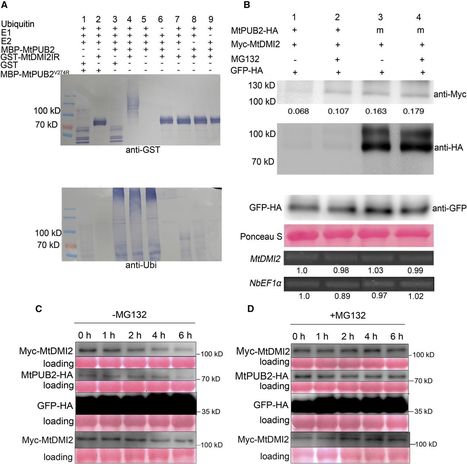
DOES NOT MAKE INFECTION 2 (MtDMI2) is a Leu rich repeat-type receptor kinase required for signal transduction in the Medicago truncatula/Sinorhizobium meliloti symbiosis pathway. However, the mechanisms through which MtDMI2 participates in nodulation homeostasis are poorly understood. In this study, we identified MtPUB2—a novel plant U-box (PUB)–type E3 ligase—and showed that it interacts with MtDMI2. MtDMI2 and MtPUB2 accumulation were shown to be similar in various tissues. Roots of plants in which MtPUB2 was silenced by RNAi (MtPUB2-RNAi plants) exhibited impaired infection threads, fewer nodules, and shorter primary root lengths compared to those of control plants transformed with empty vector. Using liquid chromatography-tandem mass spectrometry, we showed that MtDMI2 phosphorylates MtPUB2 at Ser-316, Ser-421, and Thr-488 residues. When MtPUB2-RNAi plants were transformed with MtPUB2S421D, which mimics the phosphorylated state, MtDMI2 was persistently ubiquitinated and degraded by MtPUB2S421D, resulting in fewer nodules than observed in MtPUB2/MtPUB2-RNAi-complemented plants. However, MtPUB2S421A/MtPUB2-RNAi-complemented plants showed no MtPUB2 ubiquitination activity, and their nodulation phenotype was similar to that of MtPUB2-RNAi plants transformed with empty vector. Further studies demonstrated that these proteins form a negative feedback loop of the prey (MtDMI2)-predator (MtPUB2) type. Our results suggest that the MtDMI2-MtPUB2 negative feedback loop, which displays crosstalk with the long-distance autoregulation of nodulation via MtNIN, plays an important role in nodulation homeostasis.
|
|
|
Scooped by
Jean-Michel Ané
April 25, 2018 3:21 PM
|
Abscisic acid (ABA) and its signaling system are important for land plants to survive in terrestrial conditions. Here, we took a phosphoproteomic approach to elucidate the ABA signaling network in Physcomitrella patens, a model species of basal land plants. Our phosphoproteomic analysis detected 4630 phosphopeptides from wild‐type P. patens and two ABA‐responsive mutants, a disruptant of group‐A type‐2C protein phosphatase (PP2C; ppabi1a/b) and AR7, a defective mutant in ARK, identified as an upstream regulator of SnRK2. Quantitative analysis detected 143 ABA‐responsive phosphopeptides in P. patens. The analysis indicated that SnRK2‐mediated phosphorylation and target motifs were partially conserved in bryophytes. Our data demonstrate that the PpSnRK2B and AREB/ABF‐type transcription factors are phosphorylated in vivo in response to ABA under the control of ARK. On the other hand, our data also revealed the following: (i) the entire ABA‐responsive phosphoproteome in P. patens is quite diverse; (ii) P. patens PP2C affects additional pathways other than the known ABA signaling pathway; and (iii) ARK is mainly involved in ABA signaling. Taken together, we propose that the core ABA signaling pathway is essential in all land plants; however, some ABA‐responsive phosphosignaling uniquely developed in bryophytes during the evolutionary process.
|
|
Scooped by
Jean-Michel Ané
April 21, 2018 1:31 PM
|
Arbuscular mycorrhizal fungi form the most wide‐spread endosymbiosis with plants. There is very little host specificity in this interaction, however host preferences as well as varying symbiotic efficiencies have been observed. We hypothesize that secreted proteins (SPs) may act as fungal effectors to control symbiotic efficiency in a host‐dependent manner. Therefore, we studied whether arbuscular mycorrhizal (AM) fungi adjust their secretome in a host‐ and stage‐dependent manner to contribute to their extremely wide host range. We investigated the expression of SP‐encoding genes of Rhizophagus irregularis in three evolutionary distantly related plant species, Medicago truncatula, Nicotiana benthamiana and Allium schoenoprasum. In addition we used laser microdissection in combination with RNA‐seq to study SP expression at different stages of the interaction in Medicago. Our data indicate that most expressed SPs show roughly equal expression levels in the interaction with all three host plants. In addition, a subset shows significant differential expression depending on the host plant. Furthermore, SP expression is controlled locally in the hyphal network in response to host‐dependent cues. Overall, this study presents a comprehensive analysis of the R. irregularis secretome, which now offers a solid basis to direct functional studies on the role of fungal SPs in AM symbiosis.
|
|
Scooped by
Jean-Michel Ané
April 19, 2018 11:49 AM
|
Cereals (rice, maize, wheat, sorghum and the millets) provide over 50% of the world's caloric intake, a value that rises to > 80% in developing countries. Since domestication, cereals have been under artificial selection, largely directed towards higher yield. Throughout this process, cereals have maintained their capacity to interact with arbuscular mycorrhizal (AM) fungi, beneficial symbionts that associate with the roots of most terrestrial plants. It has been hypothesized that the shift from the wild to cultivation, and above all the last c. 50 years of intensive breeding for high‐input farming systems, has reduced the capacity of the major cereal crops to gain full benefit from AM interactions. Recent studies have shed further light on the molecular basis of establishment and functioning of AM symbiosis in cereals, providing insight into where the breeding process might have had an impact. Classic phytohormones, targets of artificial selection during the generation of Green Revolution semi‐dwarf varieties, have emerged as important regulators of AM symbiosis. Although there is still much to be learnt about the mechanistic basis of variation in symbiotic outcome, these advances are providing an insight into the role of arbuscular mycorrhiza in agronomic systems.
|
|
Scooped by
Jean-Michel Ané
April 19, 2018 11:45 AM
|
Beneficial rhizobacteria have been reported to produce various elicitors that induce plant systemic resistance, but there is little knowledge concerning the relative contribution of multiple elicitors from a single beneficial rhizobacterium on the induced systemic resistance in plants and the interactions of these elicitors with plant signaling pathways. In this study, nine mutants of the plant growth–promoting rhizobacterium Bacillus amyloliquefaciens SQR9 deficient in producing the extracellular compounds, including fengycin, bacillomycin D, surfactin, bacillaene, macrolactin, difficidin, bacilysin, 2,3-butandiol, and exopolysaccharides, were tested for the induction of systemic resistance against Pseudomonas syringae pv. tomato DC3000 and Botrytis cinerea and the transcription of the salicylic acid, jasmonic acid, and ethylene signaling pathways in Arabidopsis. Deficiency in producing any of these compounds in SQR9 significantly weakened the induced plant resistance against these phytopathogens. These SQR9-produced elicitors induced different plant defense genes. For instance, the enhancement of 1,3-glucanase (PR2) by SQR9 was impaired by a deficiency of macrolactin but not surfactin. SQR9 mutants deficient in the lipopeptide and polyketide antibiotics remained only 20% functional for the induction of resistance-related gene transcription. Overall, these elicitors of SQR9 could act synergistically to induce plant systemic resistance against different phytopathogens through different signaling pathway genes, and the bacterial antibiotics are major contributors to the induction.
|
|
Scooped by
Jean-Michel Ané
April 14, 2018 7:33 PM
|
We explored the resilience of arbuscular mycorrhizal fungal (AMF) communities of a tropical dry forest ecosystem to land use as pastures. We compared spore community species richness, composition, abundance, and similarity between old-growth forests and active pastures, as a measure of resistance and examined the trajectory of change in successional fields when pasture use stopped to evaluate recovery. Despite a few changes in species richness, community composition and structure were strikingly similar in all sites, including the active pastures. The spore communities were considered resistant to land use as pastures and showed minor changes along succession when management stopped. We found a significant negative relation between the frequency of Diversisporales and Glomerales indicating a selective species turnover driven mainly by the families Gigasporaceae and Glomeraceae. This was, however, unrelated to land use or successional time. These results suggest the AMF communities of this ecosystem seem resilient to management as pastures.
|
|
Scooped by
Jean-Michel Ané
April 14, 2018 7:26 PM
|
Nitrous oxide (N2O) is a potent, globally important, greenhouse gas, predominantly released from agricultural soils during nitrogen (N) cycling. Arbuscular mycorrhizal fungi (AMF) form a mutualistic symbiosis with two‐thirds of land plants, providing phosphorus and/or N in exchange for carbon. As AMF acquire N, it was hypothesized that AMF hyphae may reduce N2O production.
AMF hyphae were either allowed (AMF) or prevented (nonAMF) access to a compartment containing an organic matter and soil patch in two independent microcosm experiments. Compartment and patch N2O production was measured both before and after addition of ammonium and nitrate.
In both experiments, N2O production decreased when AMF hyphae were present before inorganic N addition. In the presence of AMF hyphae, N2O production remained low following ammonium application, but increased in the nonAMF controls. By contrast, negligible N2O was produced following nitrate application to either AMF treatment.
Thus, the main N2O source in this system appeared to be via nitrification, and the production of N2O was reduced in the presence of AMF hyphae. It is hypothesized that AMF hyphae may be outcompeting slow‐growing nitrifiers for ammonium. This has significant global implications for our understanding of soil N cycling pathways and N2O production.
|
|
Scooped by
Jean-Michel Ané
April 14, 2018 7:23 PM
|
Aims
The evaluation of 15N abundance of N derived from biological N2 fixation (BNF) in legume shoots (‘B S ’ value) is essential for quantifying BNF inputs to field-grown legumes. The aim of this study was to investigate the impact of shading, development stage of soybean (Glycine max) and rhizobium strain on the ‘B S ’ value.
Methods
Soybean plants were grown in pots of autoclaved sand/perlite mixture in the open field. Plants were harvested at weekly intervals from 46 days after planting (DAP) to 75 DAP. All material was analysed for N and 15N abundance. ‘B S ’ was calculated assuming 50% of seed N was translocated to the shoots.
Results
‘B S ’ was stable until 60 DAP but subsequently increased for the three strains tested. Nodule efficiency (N2 fixed g DM nodule−1) was greatly increased by shading and was significantly different between Bradyrhizobium species. ‘B S ’ was greatly increased by shading.
Conclusion
We recommend that ‘B S ’ should be evaluated on plants of the same development stage and light intensity as those where BNF is quantified in the field. Different Bradyrhizobium strains make a large impact on ‘B S ’ and may lead to considerable errors in estimation of BNF inputs to plants with high %N derived from BNF.
|
|
Scooped by
Jean-Michel Ané
April 12, 2018 3:37 PM
|
Abstract: Inoculation with mycorrhizal fungi, proven mediators of soil fertility, has great potential in agricultural and silvicultural systems. This is particularly true in short-rotation coppices (SRCs), where questions of food displacement and fertilization are causes of concern for researchers and policy makers. We set out to thoroughly test if current inoculation methods, coupled with reduced fertilization, can demonstrate a growth benefit in SRC willows on marginal lands. Roughly 21,600 Salix miyabeana Seeman (‘SX61’ and ‘SX64’) were planted in a hierarchical design with inoculation treatments randomized first, cultivars randomized second, and fertilization treatments randomized third. This process was repeated across three fields of different marginal soil type (which, in our experiment, were given the descriptive names Sandy, Rocky, and Dry). The inoculum species, Rhizoglomus irregulare Błaszk., Wubet, Renker & Buscot Sieverd., G.A. Silva & Oehl and Hebeloma longicaudum (Pers.) P. Kumm., were chosen as they are most likely to be commercially available, and because they represent both arbuscular and ectomycorrhizal inoculum types. Growth was measured over 2.5 years, or three growing seasons. Fertilization treatment (75 kg/ha Nitrogen), however, was only applied during the second growing season. Our results conclusively showed no benefit from mycorrhizal inoculation across fields that exhibited significantly different growth rates, as well as significant differentiation from fertilization.
|
|
Scooped by
Jean-Michel Ané
April 12, 2018 3:32 PM
|
Nitrogen (N) availability is increasing dramatically in many ecosystems, but the influence of elevated N on the functioning of arbuscular mycorrhizal (AM) fungi in natural ecosystems is not well understood.
We measured AM fungal community structure and mycorrhizal function simultaneously across an experimental N addition gradient in an alpine meadow that is limited by N but not by phosphorus (P). AM fungal communities at both whole‐plant‐community (mixed roots) and single‐plant‐species (Elymus nutans roots) scales were described using pyro‐sequencing, and the mycorrhizal functioning was quantified using a mycorrhizal‐suppression treatment in the field (whole‐plant‐community scale) and a glasshouse inoculation experiment (single‐plant‐species scale).
Nitrogen enrichment progressively reduced AM fungal abundance, changed AM fungal community composition, and shifted mycorrhizal functioning towards parasitism at both whole‐plant‐community and E. nutans scales. N‐induced shifts in AM fungal community composition were tightly linked to soil N availability and/or plant species richness, whereas the shifts in mycorrhizal function were associated with the communities of specific AM fungal lineages.
The observed changes in both AM fungal community structure and functioning across an N enrichment gradient highlight that N enrichment of ecosystems that are not P‐limited can induce parasitic mycorrhizal functioning and influence plant community structure and ecosystem sustainability.
|
|
Scooped by
Jean-Michel Ané
April 12, 2018 3:27 PM
|
In ectomycorrhiza, root ingress and colonization of the apoplast by colonizing hyphae is thought to rely mainly on the mechanical force that results from hyphal tip growth, but this could be enhanced by secretion of cell‐wall‐degrading enzymes, which have not yet been identified. The sole cellulose‐binding module (CBM1) encoded in the genome of the ectomycorrhizal Laccaria bicolor is linked to a glycoside hydrolase family 5 (GH5) endoglucanase, LbGH5‐CBM1.
Here, we characterize LbGH5‐CBM1 gene expression and the biochemical properties of its protein product. We also immunolocalized LbGH5‐CBM1 by immunofluorescence confocal microscopy in poplar ectomycorrhiza.
We show that LbGH5‐CBM1 expression is substantially induced in ectomycorrhiza, and RNAi mutants with a decreased LbGH5‐CBM1 expression have a lower ability to form ectomycorrhiza, suggesting a key role in symbiosis. Recombinant LbGH5‐CBM1 displays its highest activity towards cellulose and galactomannans, but no activity toward L. bicolor cell walls. In situ localization of LbGH5‐CBM1 in ectomycorrhiza reveals that the endoglucanase accumulates at the periphery of hyphae forming the Hartig net and the mantle.
Our data suggest that the symbiosis‐induced endoglucanase LbGH5‐CBM1 is an enzymatic effector involved in cell wall remodeling during formation of the Hartig net and is an important determinant for successful symbiotic colonization.
|
|
Scooped by
Jean-Michel Ané
April 12, 2018 9:52 AM
|
A modular and hierarchical DNA assembly platform for synthetic biology based on Golden Gate (Type IIS restriction enzyme) cloning is described. This enabling technology, termed MIDAS (for Modular Idempotent DNA Assembly System), can be used to precisely assemble multiple DNA fragments in a single reaction using a standardized assembly design. It can be used to build genes from libraries of sequence-verified, reusable parts and to assemble multiple genes in a single vector, with full user control over gene order and orientation, as well as control of the direction of growth (polarity) of the multigene assembly, a feature that allows genes to be nested between other genes or genetic elements. We describe the detailed design and use of MIDAS, and its exemplification by the reconstruction, in the filamentous fungus Penicillium paxilli, of the metabolic pathway for production of paspaline and paxilline, key intermediates in the biosynthesis of a range of indole diterpenes — a class of secondary metabolites produced by several species of filamentous fungi. MIDAS was used to efficiently assemble a 25.2 kb plasmid from 21 different modules (seven genes, each composed of three basic parts). By using a parts library-based system for construction of complex assemblies, and a unique set of vectors, MIDAS can provide a flexible route to assembling tailored combinations of genes and other genetic elements, thereby supporting synthetic biology applications in a wide range of expression hosts.
|
|
Scooped by
Jean-Michel Ané
April 8, 2018 6:17 PM
|
Black truffles that morphologically resemble Tuber indicum have been known to occur in Japan since 1979. Our previous studies showed that there are two phylotypes of these truffles, both of which fell into the T. indicum complex (hereinafter “Tuber sp. 6” and “Tuber sp. 7”). However, their taxonomic treatment is still unclear. In this study, we conducted morphological and phylogenetic analyses for a total of 52 specimens from Japan (16 Tuber sp. 6 and 13 Tuber sp. 7), China (10 T. himalayense and 8 T. indicum), and Taiwan (5 T. formosanum). We compared ascospore ornamentation, size, distribution of asci with average number of spores per ascus, spine size and shape of the Japanese specimens with their allied taxa. For phylogenetic analysis, we sequenced two mating loci (MAT1-1-1 and MAT1-2-1) and three commonly used loci (ITS, β-tubulin, and TEF1-α). Three distinct lineages were recognized by phylogenetic analyses based on the sequences of the two mating-related loci and three independent loci. The Tuber sp. 6 sequences clustered with those of T. himalayense and T. formosanum, and there was no clear difference in morphology among them. Tuber sp. 7 formed a distinct lineage in each phylogram. The specimens tended to have five-spored asci more frequently than other allied species and could be characterized as having ascospore ornamentation with longer spines and narrower spine bases. We therefore described Tuber sp. 7 as a new species (T. longispinosum), and treat Tuber sp. 6 and T. formosanum as synonyms of T. himalayense.
|